Two central-Arizona towns get the same phone call every June: it’s 110 in Phoenix, where do we go? Prescott and Sedona both sit high enough to answer it, and both are close enough to reach in an afternoon. If you’re choosing between them for a summer trip, the honest question isn’t which one is cooler — it’s how much that difference actually matters once you factor in scenery, crowds, and what you plan to do all weekend.
Here’s the short version, and I’ll back up every piece of it below: Prescott is the cooler town, by about seven degrees. Sedona has the red rocks. And if pickleball is the reason for the trip, the outdoor temperature in either town matters less than you’d think, because the play that this comparison is really about happens on an indoor court that doesn’t care what the thermometer says.
The temperature question, answered honestly
People assume Sedona is a mountain town. It sits at about 4,350 feet, which is high desert — cooler than Phoenix, but not cool. Prescott sits higher, right around 5,400 feet, a bit over a mile up in the Bradshaw Mountains. That thousand-foot difference is the whole story, and it shows up consistently in the numbers.
Using NOAA’s 1991–2020 climate normals, here’s how the two towns compare across the summer:
| Month | Sedona high / low | Prescott high / low |
|---|---|---|
| June | 94° / 61° | 87° / 54° |
| July | 97° / 68° | 90° / 61° |
| August | 94° / 67° | 87° / 60° |
The pattern barely moves: Prescott runs about seven degrees cooler than Sedona, both by day and at night, every summer month. That’s real relief and I won’t pretend otherwise. If your single goal is the lowest number on the thermometer, Prescott wins this comparison outright.
But look at the daytime highs again before you book anything. Prescott’s July average high is around 90 degrees. Sedona’s is 97. Different weather services put Prescott anywhere from the high 80s to the low 90s depending on the years they average, but the honest read is the same in every version: Prescott in July is warm, not cold. Nearly half the days in June, July, and August see highs in the 90s there. Neither of these towns is Flagstaff, which sits at 7,000 feet and genuinely feels like a different season. If you want an alpine escape where you reach for a jacket at noon in July, that’s a different trip — I’ve laid out the Sedona-versus-Flagstaff version of this question separately, and Flagstaff wins it on cool air alone.
The nights tell a friendlier story for both towns. Prescott’s July lows drop into the low 60s; Sedona’s into the high 60s. Either one gives you a comfortable evening on a deck, which is more than Phoenix can say — the desert floor stays in the mid-80s overnight in July. If you want the full desert-versus-high-country breakdown with Phoenix in the mix, the is-Sedona-cooler-than-Phoenix data page runs every month side by side.
Why Prescott runs cooler, and what you get with it
Elevation is most of it. Air cools roughly three to five degrees for every thousand feet you climb, and Prescott’s extra thousand feet over Sedona lands right in that range. But the landscape changes with the elevation, and that’s worth understanding before you pick, because the two towns don’t just differ by seven degrees — they look and feel like different states.
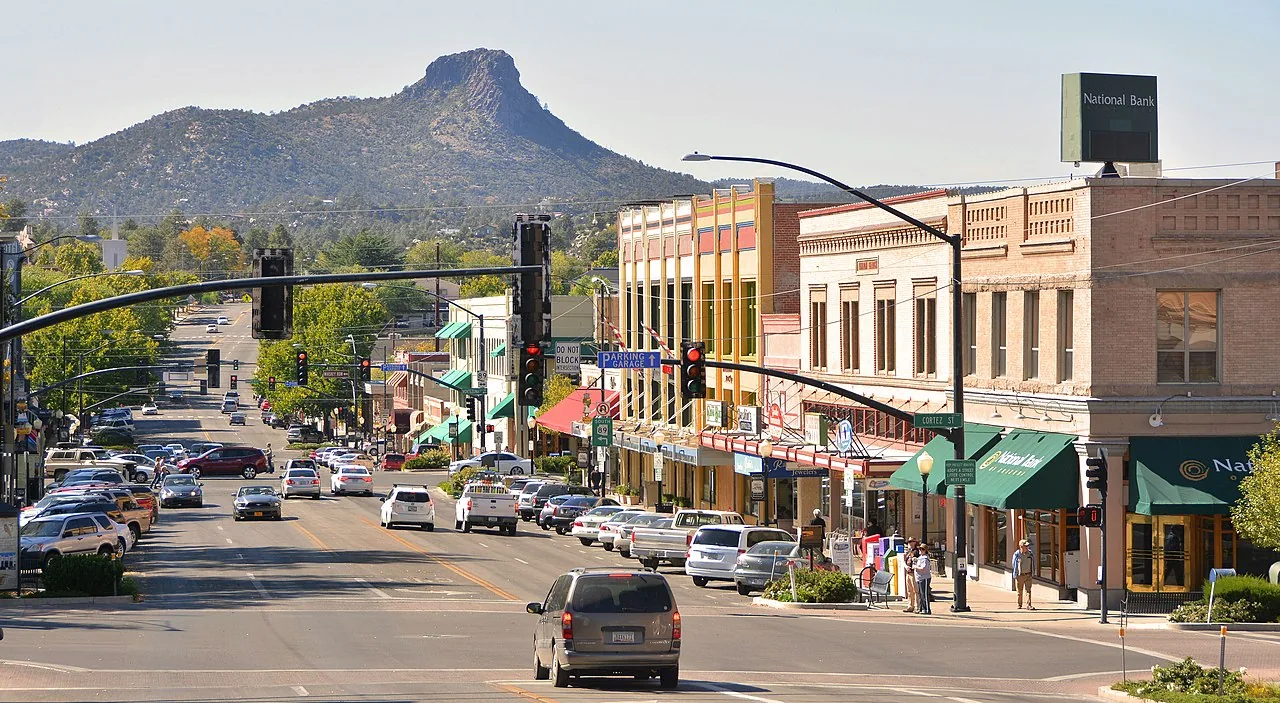
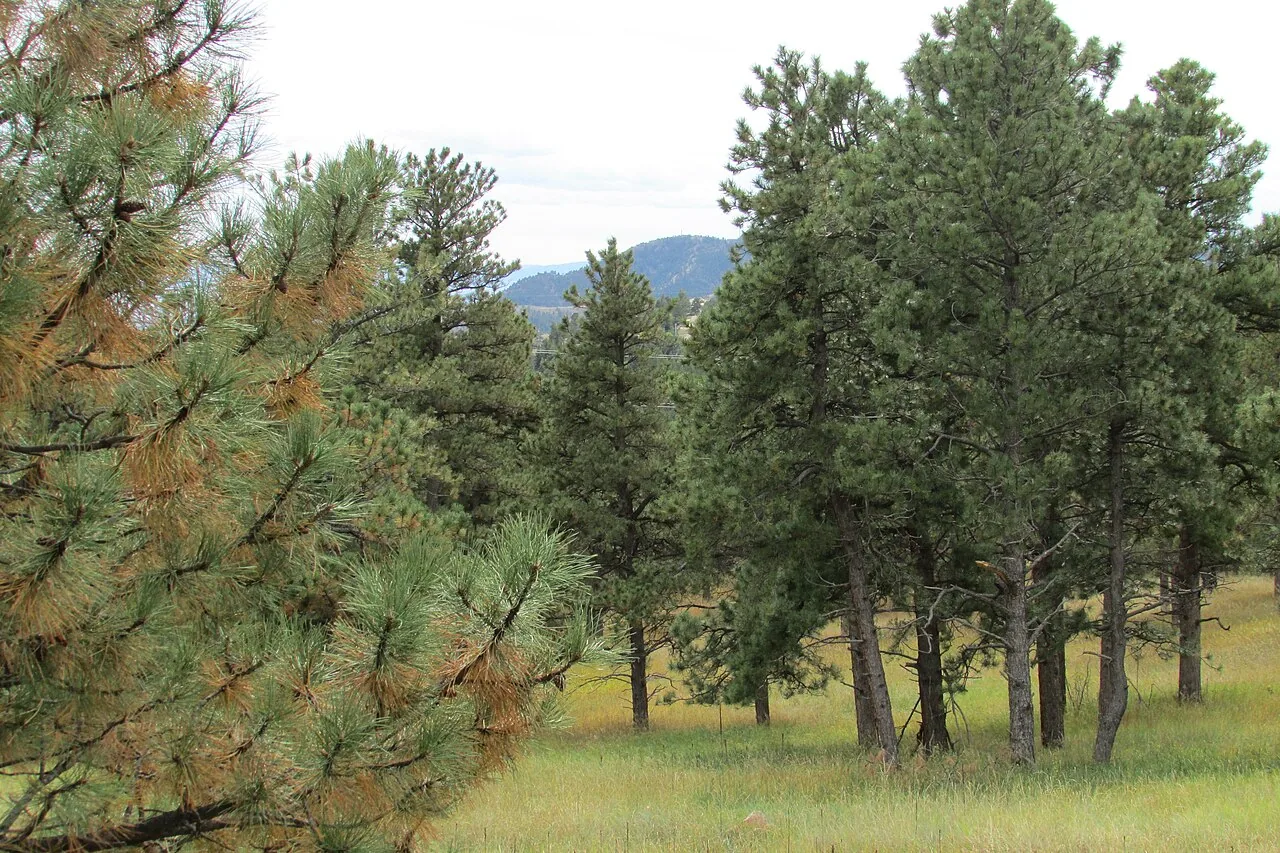
Prescott is pine country. It’s surrounded on three sides by the Prescott National Forest, a 1.25-million-acre spread of ponderosa pine, and the town grew up around that timber after it was founded in 1864 as Arizona’s first territorial capital. Downtown is a Midwestern-looking square: the granite Yavapai County Courthouse on a green lawn shaded by elm trees, with the old saloons of Whiskey Row lined up across Montezuma Street. A few minutes out, Watson Lake and the Granite Dells give you house-sized granite boulders piled around still water. It reads as cool, green, and historic — closer to a small mountain town than to the desert most people picture when they think Arizona.
Sedona is red rock. The town sits in high desert at the mouth of Oak Creek Canyon, ringed by the sandstone formations that put it on postcards. It’s drier, more open, and more dramatic, but it’s also seven degrees warmer for exactly the reasons that make it look the way it does — lower, more exposed, less tree cover. You trade shade and pine for scale and color.
Both towns catch the Arizona monsoon from roughly mid-July into September, so both get afternoon thunderstorms, brief humidity, and cloud cover that can knock a few degrees off the day’s peak. Prescott picks up two to four inches of rain in each of July and August. That’s a summer feature in both places, not a reason to pick one over the other.
“Cooler” and “playable” are not the same thing
Here’s where the seven-degree gap starts to matter less than it first appears.
Ninety degrees and ninety-seven degrees are both too warm for a comfortable outdoor pickleball session at noon in July. Court surfaces run hotter than the air — a paved court in direct sun can read fifteen or twenty degrees above the ambient temperature — so whether you’re in Prescott at 90 or Sedona at 97, the honest midday move in either town is to get off an exposed outdoor court. Prescott’s advantage buys you a slightly longer comfortable window in the morning and evening. It does not turn a July afternoon into good outdoor playing weather.
That’s the case for playing indoors, and it’s where this whole comparison tips. If your group’s plan is to play a real amount of pickleball, the deciding factor isn’t the outdoor high in the town you pick — it’s whether you have a court you can use at 1 p.m. in July without cooking. Prescott has excellent public pickleball, more courts than most towns its size, and a strong club scene, but those are outdoor courts and shared indoor slots you reserve and rotate through. The heat still sets your schedule.
That’s the honest reframe. On raw air temperature, Prescott wins. On playability, an air-conditioned indoor court erases the gap entirely, and then the decision comes down to everything else — which is mostly scenery and how your weekend is set up.
The scenery tiebreaker
If temperature is a wash once you’re playing indoors, what breaks the tie? For most people it’s what they want to look at between games.
Sedona’s pitch is the red rocks, and they’re a short drive from anywhere in town — Cathedral Rock, Bell Rock, the formations along the Red Rock Scenic Byway. West Sedona, where this house sits, is high-desert neighborhood ground a few minutes from the trailheads rather than perched in the rocks themselves, so you drive to the views rather than waking up inside them. But that drive is ten or fifteen minutes, and the payoff is scenery that Prescott, for all its charm, simply doesn’t have. Nowhere in the country looks quite like the country around Sedona.
Prescott’s pitch is a different kind of pretty: a walkable historic downtown, pine forest you can hike straight into from Thumb Butte, granite and lake scenery at the Dells, and a genuine four-season feel that Sedona’s desert doesn’t deliver. It’s the better town for someone who wants a cool, green, small-town square with good bars and an easy pace. It’s less of a landscape spectacle and more of a place to settle into.
So the tiebreaker is honest and personal: pick Prescott if you want cooler air, pines, and a historic-town feel; pick Sedona if you want the red-rock landscape and don’t mind trading a few degrees for it. There’s no wrong answer here — they’re both good summer calls out of the Phoenix heat, which is the whole beat-the-heat premise this site is built around.
What each town does better
Stripped down, here’s the trade, stated plainly:
Prescott does better on cool air (about 7°F, consistently), on public pickleball infrastructure, on downtown walkability and nightlife along Whiskey Row, and on that four-season mountain-town feel. If you already play in Prescott or Prescott Valley, you have plenty of courts and don’t need to go anywhere for a game.
Sedona does better on scenery, on the specific thing this comparison exists for — a private, indoor, climate-controlled court attached to the house your group is sleeping in — and on the range of day trips within reach, from Oak Creek swimming holes to the Verde Valley wineries. It’s the stronger pick when the group wants a court to themselves, no reservation and no rotation, and red rock out the windshield on the way to dinner.
One quiet advantage worth naming: because the court here is fully enclosed, there’s no neighbor, no HOA, and no noise complaint to manage. Night games bother nobody. If you’ve ever had a home or club court run into a noise problem, that’s the quiet-play case in one sentence.
Both towns share the same altitude wrinkle, too, and it’s worth a heads-up if your group is coming up from sea level or the Phoenix basin: play feels a little different a mile up. The ball moves faster in thinner, drier air and you’ll tire quicker for the first day or two. It’s minor, it affects Prescott slightly more than Sedona since it’s higher, and it evens out fast — the full version is in the pickleball-at-altitude guide.
The drive between them
These two towns are close. Depending on the route, Prescott to Sedona is roughly 60-some miles and about an hour and a half of driving. The fast way runs down through Camp Verde and up I-17. The good way climbs SR-89A over Mingus Mountain — the pass tops out at 7,023 feet — and drops through the old copper-mining town of Jerome before running down into the Verde Valley and on to Sedona. That scenic route is one of the better short drives in the state, and it’s worth doing at least once in daylight.
If you’re a Prescott-area group specifically, the full drive breakdown, winter route notes, and a three-day plan live on the Prescott getaway page. This post is the should-we-even-go version; that one is the how-to-get-here version.
So which should you pick?
If the only thing you’re optimizing for is the coolest possible air, go to Prescott — or honestly, go to Flagstaff, which is cooler than both. If you want red-rock scenery and a weekend built around a court your group actually controls, book Sedona and stop worrying about the seven degrees, because you’ll be playing at 68 inside no matter what the afternoon does outside.
For most groups reading this, the decision was never really about temperature. It was about whether you’d rather look at pines or red rock, and whether you want to reserve court time around the weather or just walk down the hall and play. If those answers point to Sedona, check dates and bring court shoes — paddles and balls are already here. If they point to Prescott, you’ll have a fine trip too. I’d just make the drive over Mingus Mountain either way.
Frequently asked questions
Is Prescott cooler than Sedona in the summer?
Yes. Prescott sits about 1,000 feet higher, at roughly 5,400 feet, and runs about 7°F cooler than Sedona across the summer — its July average high is near 90°F versus Sedona’s 97°F, and its nights run about seven degrees cooler too. That gap holds fairly steady through June, July, and August.
How much cooler is Prescott, exactly?
Using NOAA’s 1991–2020 normals, Prescott averages about 90°/61°F in July against Sedona’s 97°/68°F. Call it seven degrees cooler, day and night. Different weather services put Prescott’s July high anywhere from the high 80s to low 90s, but every version shows Prescott a handful of degrees below Sedona.
Does the temperature difference matter for pickleball?
Not much, if you’re playing indoors. Both towns are too warm for a comfortable outdoor court at midday in July — 90 and 97 are both hot in direct sun. A private, air-conditioned indoor court like the one at this house neutralizes the gap completely, so the outdoor high in either town stops being the deciding factor.
Which town is prettier?
They’re pretty in different ways. Sedona has the red-rock landscape, which is a short drive from anywhere in town. Prescott has pine forest, a historic courthouse square, Whiskey Row, and the granite boulders of Watson Lake and the Granite Dells. Sedona is the bigger landscape spectacle; Prescott is the cooler, greener, more walkable town.
How far apart are Sedona and Prescott?
Roughly 60-some miles and about an hour and a half of driving. The quick route goes through Camp Verde and up I-17; the scenic route climbs SR-89A over Mingus Mountain and down through Jerome. Full drive details are on the Prescott getaway page.
Can you see the red rocks from the house?
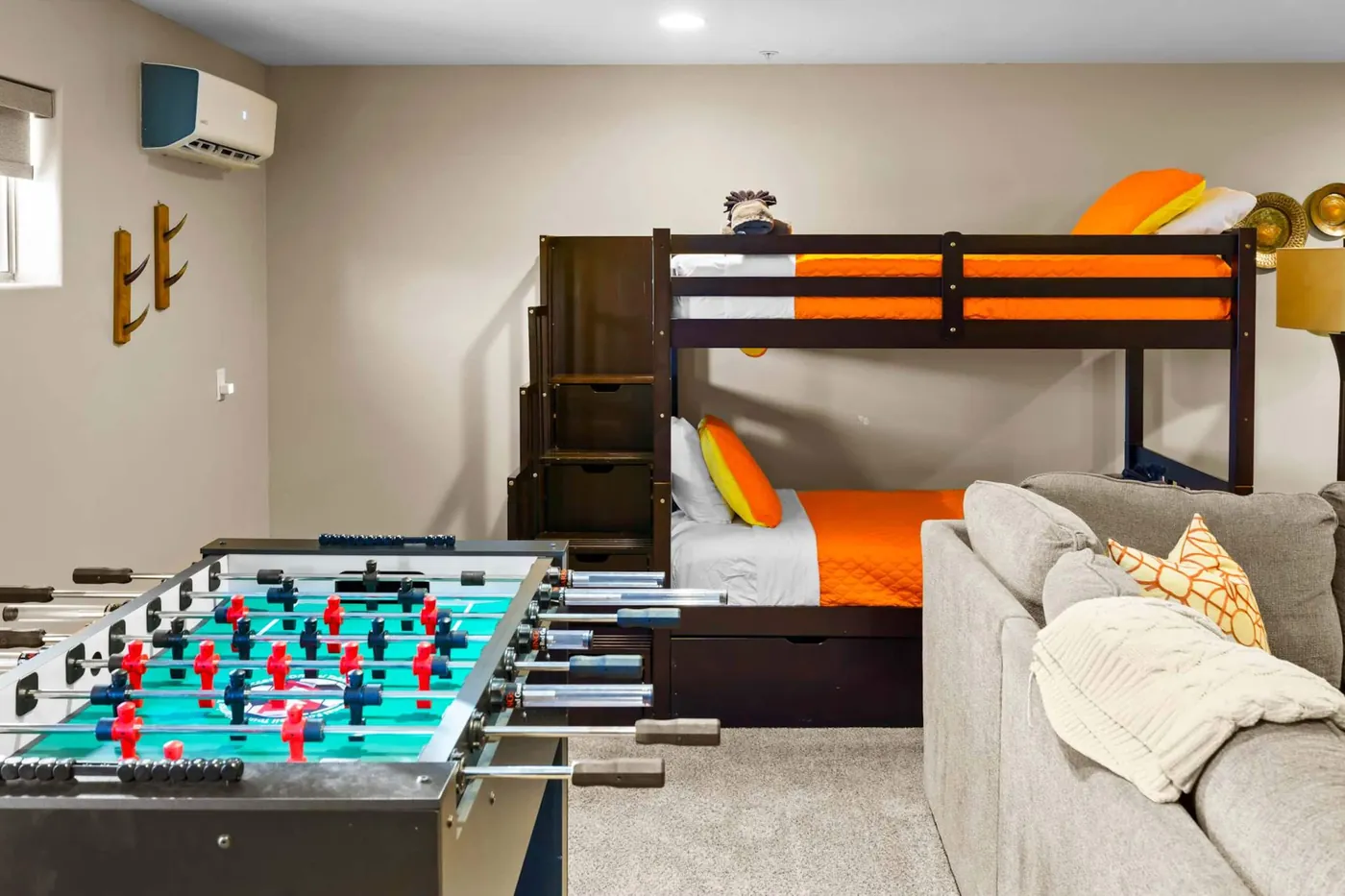
The house is in a West Sedona neighborhood, minutes from the trailheads and formations rather than sitting inside them, so you drive a short way to the best red-rock views. What’s at the house is the private indoor court, two soaking tubs, a firepit, and room for eight — the scenery is a ten-minute drive in most directions.
Play year-round in red rock country
Sedona Pickler is a private Sedona home with its own indoor, climate-controlled pickleball court. Rally any season, any hour — heated, cooled and lit, with paddles and balls provided.
Check dates & book