Sedona, Explained
Red rock that started as coastal sand dunes 270 million years ago. A town named after a homesteader's wife in 1902. Around a hundred Hollywood films. And today, one of the few places in the Southwest where a group can hike world-class trails in the morning and play pickleball indoors at night. This is the background that makes a Sedona trip make sense.
From Sinagua cliff houses to a post office named Sedona
People have lived under these rocks for a very long time. The Sinagua built cliff dwellings at Palatki and Honanki around 1150–1300 CE, and left rock art that is thousands of years older still. The Yavapai and Apache lived here after them — until 1875, when the U.S. Army force-marched about 1,400 people out of the Verde Valley to the San Carlos reservation, a removal their descendants still mark every year.
The first Anglo homesteader, J.J. Thompson, settled at Indian Gardens in Oak Creek Canyon in 1876. In 1902, when settler T.C. Schnebly applied for a post office, Washington rejected his first two name ideas — Oak Creek Crossing and Schnebly Station — as too long. His brother suggested the name of T.C.'s wife instead. The post office opened as Sedona on June 26, 1902, and the town has carried Sedona Schnebly's invented first name ever since. It didn't incorporate as a city until 1988.


Hollywood's other Monument Valley
Starting with The Call of the Canyon in 1923 — shot in Oak Creek Canyon from the Zane Grey novel — around a hundred films used Sedona as a set. John Wayne fought through Angel and the Badman here. James Stewart made Broken Arrow. Joan Crawford made Johnny Guitar. The 1957 3:10 to Yuma used these rocks, and so did Elvis. West Sedona still has streets named after the productions that camped on them.
The rocks in those frames are the same ones outside your windshield today, which makes Sedona one of the few places where you can watch a 1950 western at night and stand inside the shot the next morning.
The westerns filmed in Sedona → Film locations you can visit →
Why a vacation home is the right way to do Sedona
Sedona is a group town
The things people come for — trail days, jeep tours, long dinners, sunset lookouts — are better with your people around one table. A house gives a group of 8 one kitchen, one living room, and parking at the door instead of three hotel rooms down a corridor.
Evenings are the point
Sedona quiets down early and the sky is the show. A home trades the hotel lobby for a firepit, a hot tub, and dark-sky stargazing from your own deck — and at this one, an indoor court means the game doesn't end at sunset either.
West Sedona beats the traffic
Staying in a West Sedona neighborhood puts you minutes from the Dry Creek trailheads and the town's everyday restaurants, on the quiet side of the weekend crush around Uptown. You start ahead of the day-trip crowds every morning.
The honest home-vs-hotel math → Check availability on Airbnb
Most of the Southwest is within a tank of gas
Sedona is a drive-to destination, and that's the appeal: no flights, no rental car, the whole group and all the gear in two vehicles.
Go deeper
 History & Film
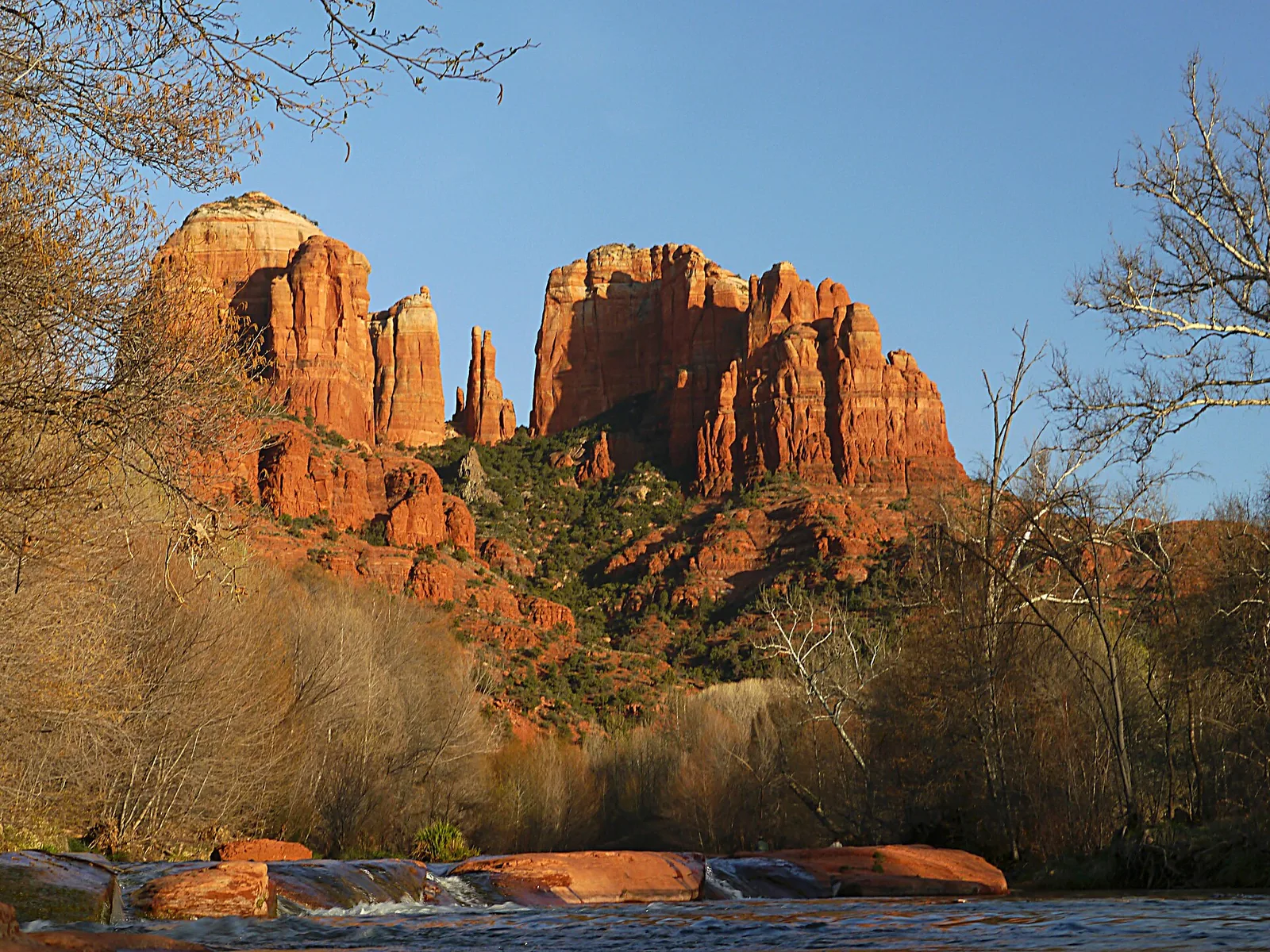
History of Sedona AZ: From Sinagua Cliff Dwellings to Today
How Sedona went from Sinagua cliff dwellings to a 1902 post office named after a homesteader's wife to one of Arizona's busiest small towns.
 History & Film
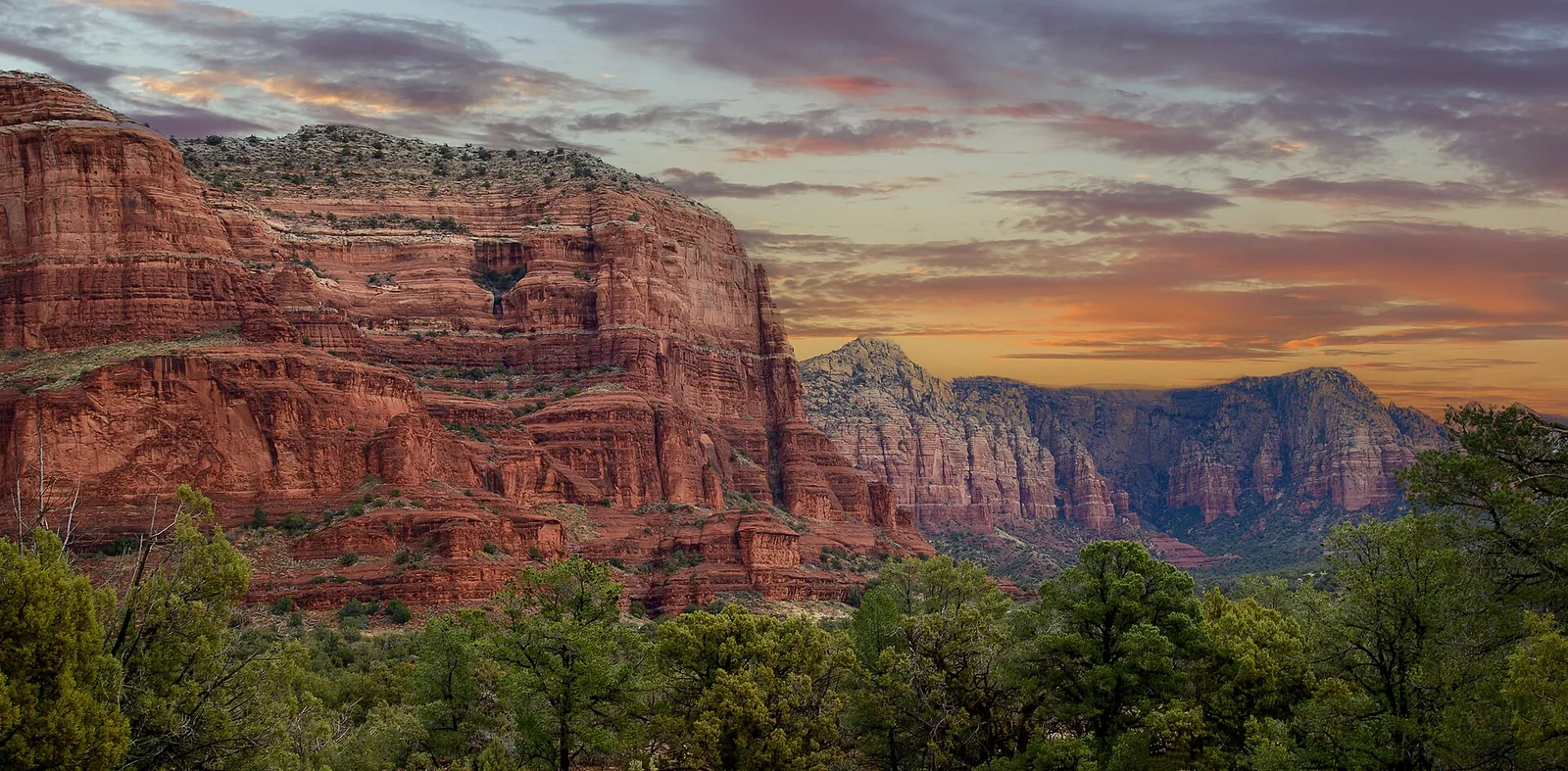
Western Movies Filmed in Sedona: Arizona's Little Hollywood
Nearly 100 films were shot in Sedona between 1923 and 1968. The verified list of Westerns filmed here - John Wayne, Elvis, Johnny Guitar - decade by decade.
 History & Film
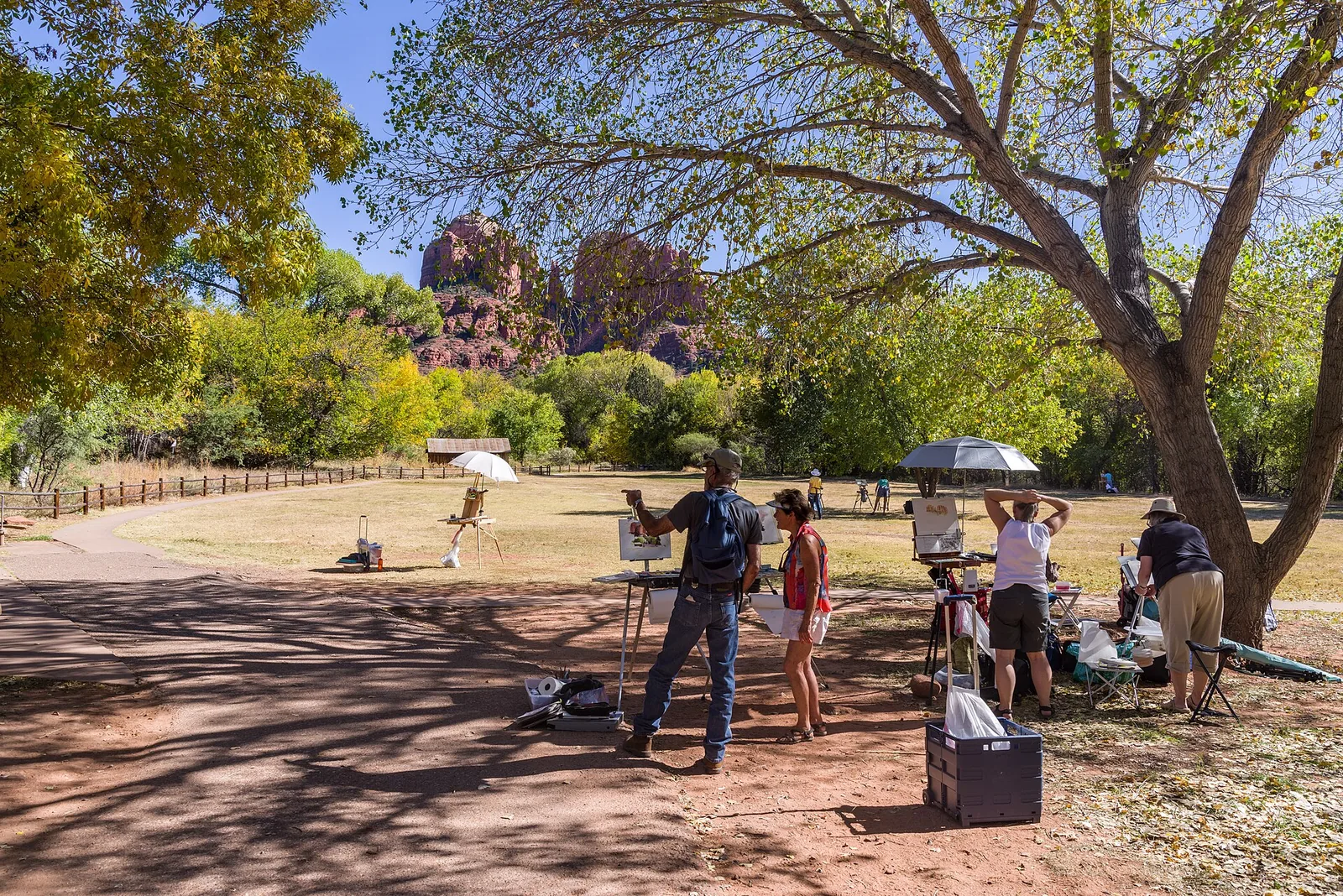
Sedona Film Locations You Can Visit Today: A Driving Tour
A self-guided driving tour of real Sedona movie locations — Red Rock Crossing, Schnebly Hill, the old western town site, and the streets named for films.
 Plan Your Trip
Best Time to Visit Sedona: A Month-by-Month Guide
When to visit Sedona: month-by-month temps, crowds, fall color, monsoon and winter snow, plus what to pack and how to dodge the peak-season crowds.
 Plan Your Trip
The Perfect 3-Day Sedona Itinerary: Day-by-Day Plan
A time-blocked 3-day Sedona plan with hikes, jeep tours, where to eat, passes and parking tips, plus variants for families, adventurers and relaxing.
 Rentals & Getting Around
Getting Around Sedona: Parking, Passes & Shuttle
How to get to Sedona, when you need a Red Rock Pass, and how the free Sedona Shuttle beats full trailhead lots. Honest, practical logistics for your trip.
Stay inside the story
Sedona Pickler is a private West Sedona vacation home for up to 8, minutes from the trailheads and the old film country — with the region's rare private indoor pickleball court waiting after the day's exploring.
Check availability on Airbnb