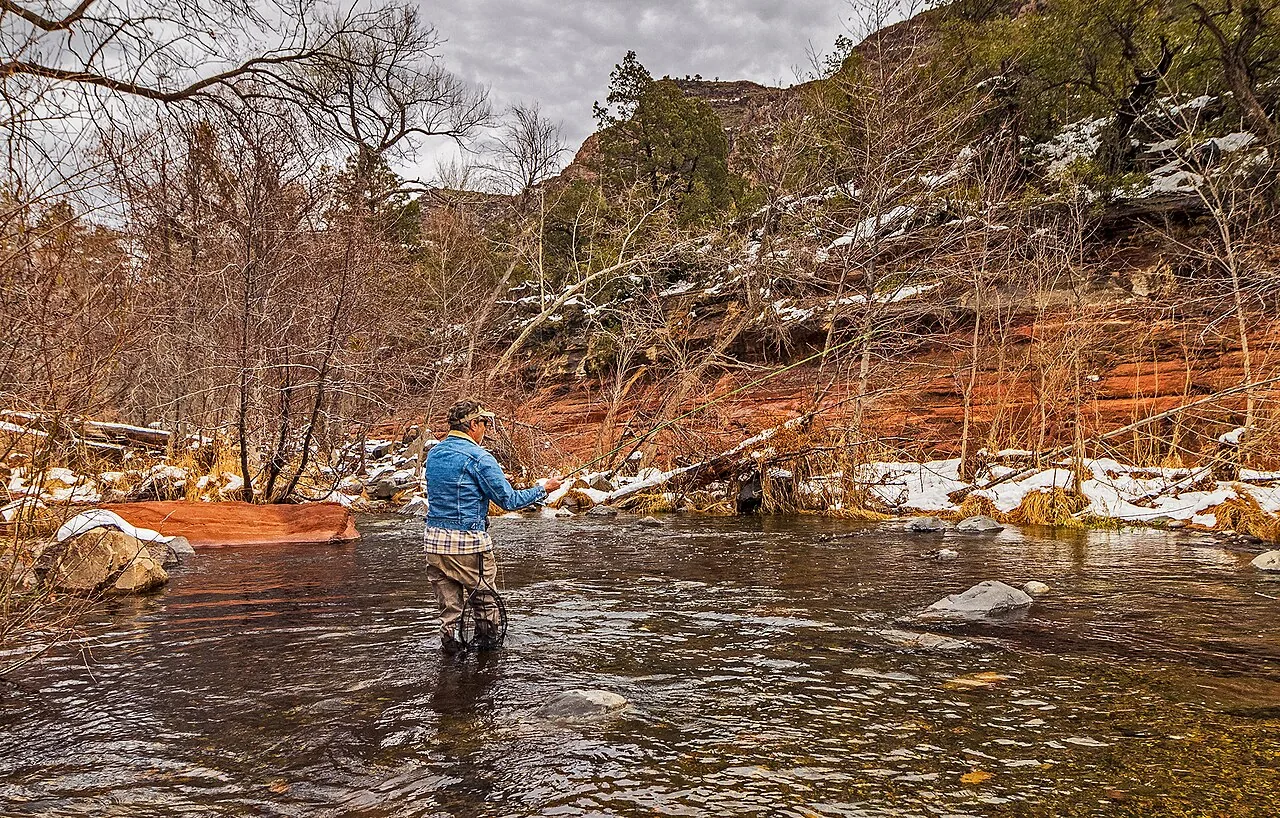
If you’re driving up from Phoenix or Tucson to get out of the summer heat, northern Arizona gives you two obvious choices about half an hour apart: Sedona and Flagstaff. They get lumped together a lot, but they are not the same trip. One is warm red-rock country at 4,350 feet. The other is a mountain pine town near 7,000 feet where you might want a jacket at dinner in July. Which one you should base a group in depends on what you actually want out of the days and, just as much, out of the evenings.
This is a fair look at both. No spin: Flagstaff is genuinely cooler, and if raw temperature is the only thing you’re optimizing for, that’s the honest answer. But temperature is not the whole story, and “cooler” cuts both ways once the sun goes down. Here’s how the two towns compare on the things that change how a summer stay actually feels.
The short answer
Flagstaff is cooler than Sedona. It sits about 2,500 feet higher, and that elevation buys real relief — summer highs there rarely climb out of the low 80s, while Sedona’s run into the mid-to-upper 90s. If your only goal is the lowest possible daytime number, Flagstaff wins and it isn’t especially close.
The catch is that the same elevation that keeps Flagstaff cool by day makes it cold and often wet by night. July nights in Flagstaff average around 51°F, and during the July–August monsoon the town gets thunderstorms almost daily. Sedona, meanwhile, cools to a comfortable 68°F on a typical July night — patio-and-firepit weather, not fleece weather. So the real question isn’t “which is cooler.” It’s “cooler in a way you’ll enjoy, or cooler in a way that sends you indoors after dinner?”
The elevation story
Almost every difference between these two towns traces back to how high they sit.
Sedona is at roughly 4,350 feet. Flagstaff is up around 6,900 feet — commonly rounded to 7,000 — which puts it more than a mile and a quarter above Phoenix. That 2,500-foot gap between the two towns is why Flagstaff runs consistently cooler in both directions: cooler afternoons, but also markedly colder mornings and nights. Air keeps dropping a few degrees for every thousand feet you climb, and Flagstaff is high enough to feel it year-round.
You cover that whole climb in about 30 miles. The drive up State Route 89A through Oak Creek Canyon gains roughly 2,000 feet through a series of switchbacks, and you can watch the landscape change on the way — red rock and juniper at the bottom, ponderosa pine at the top. It’s one of the better short drives in the state, and it means you’re never forced to pick one town at the total expense of the other. More on that below.
Summer temperatures, side by side
Here are the numbers that matter, using NOAA’s 1991–2020 climate normals for both towns. No rounding tricks, no cherry-picked record days — just the averages.
| Month | Sedona high / low | Flagstaff high / low | Day gap | Night gap |
|---|---|---|---|---|
| June | 94°F / 61°F | 79°F / 43°F | 15°F | 18°F |
| July | 97°F / 68°F | 82°F / 51°F | 15°F | 17°F |
| August | 94°F / 67°F | 79°F / 51°F | 15°F | 16°F |
A few honest takeaways from that table:
The daytime gap is real and steady: Flagstaff runs about 15°F cooler than Sedona through the whole core of summer. That is a meaningful break. A 97°F Sedona afternoon and an 82°F Flagstaff afternoon are two different experiences, and if you plan to be outside and active at noon, Flagstaff is simply more comfortable.
The nighttime gap runs the other way in terms of comfort. Flagstaff’s July nights average 51°F, and June nights drop into the low 40s. That’s genuinely cold for anyone hoping to sit outside after dinner in shorts. Sedona’s nights sit around 68°F — warm enough for the deck, the firepit, or a hot soak in the deck tubs under the stars without a second layer. So Sedona gives back at night much of what it loses at midday.
And both towns get the monsoon. From roughly early July into September, afternoon thunderstorms build over the high country most days. Flagstaff, sitting higher and closer to the San Francisco Peaks, tends to get them harder and more often. Those storms are part of the appeal — dramatic skies, a cooldown, green everywhere — but they also mean outdoor plans, in either town, can get rained out on short notice in the afternoon.
Where Flagstaff wins
Let’s give Flagstaff its due, because on several counts it’s the better call.
Raw coolness. If you want the lowest daytime temperature within a couple hours of Phoenix, Flagstaff is the answer. Nothing about Sedona changes that.
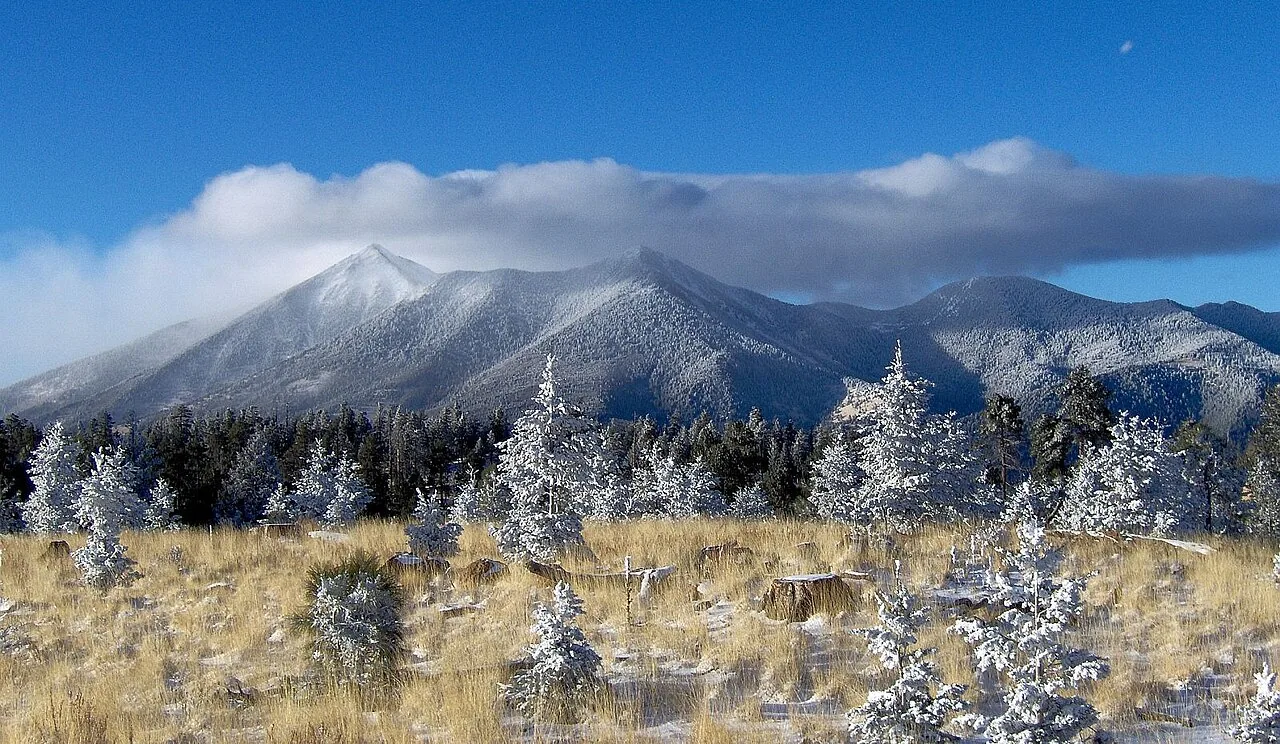
Pine forest and the peaks. Flagstaff sits in the largest contiguous ponderosa pine forest in the country, at the foot of the San Francisco Peaks. Humphreys Peak, the tallest of them, is the highest point in Arizona at 12,633 feet. In summer, Arizona Snowbowl runs a scenic gondola up the mountain — it climbs from about 9,500 to 11,500 feet, operates daily in season, and on a clear day the view stretches all the way to the Grand Canyon. That’s a kind of alpine scenery Sedona simply doesn’t have.
Dark skies and science. Flagstaff was the world’s first International Dark Sky City, designated in 2001, building on a lighting ordinance the town first passed back in 1958. Lowell Observatory, built in 1894, is where Clyde Tombaugh discovered Pluto in 1930, and it’s open to visitors. For a stargazing-and-astronomy trip, Flagstaff has a real edge.
A base for touring. Flagstaff is a natural launch point for the Grand Canyon, Wupatki, Walnut Canyon, and Route 66 history. If your trip is about touring northern Arizona rather than settling into one spot, its location helps.
If those are your priorities — the coldest days, mountain hikes, and dark-sky nights — book Flagstaff. It’s the right tool for that job.
Where Sedona wins
Sedona’s case is about the evenings, the scenery, and the shape of the trip.
Warm, usable evenings. This is the big one. A summer night you can actually spend outside is worth a lot, and Sedona’s 68°F is built for it while Flagstaff’s 51°F sends most people indoors or into a jacket. If your idea of a good night is a firepit, a soak in an outdoor tub, a glass of wine on a covered deck, and a sky full of stars in shirtsleeves, Sedona delivers that in July and Flagstaff mostly doesn’t.
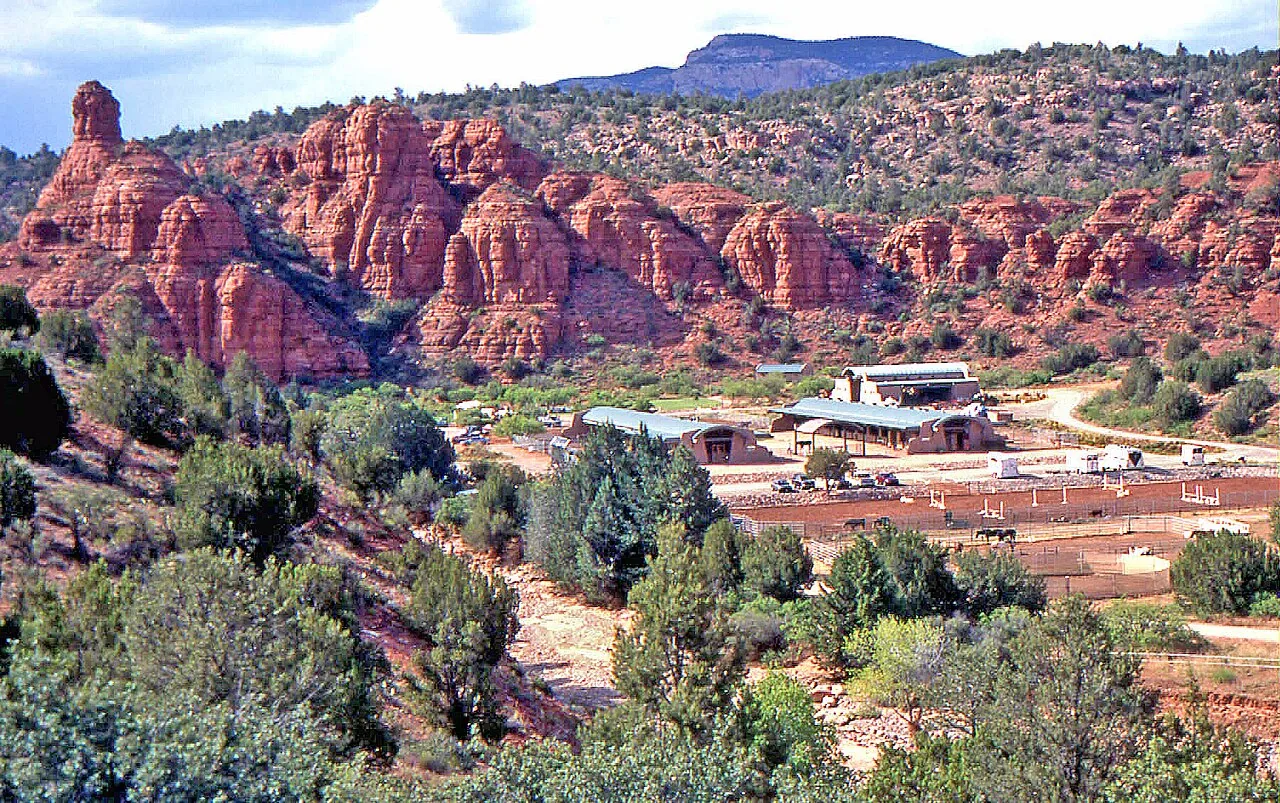
The red rocks. Sedona’s setting is the reason people cross the country for it. Cathedral Rock, Bell Rock, the Devil’s Bridge arch, Oak Creek — all a short drive from the West Sedona neighborhoods. Flagstaff’s forest is beautiful in its own right, but it’s a different, quieter kind of scenery.
A slightly shorter, easier drive. From the Phoenix area, Sedona is about two hours; Flagstaff is a bit longer at roughly 144 miles up I-17. It’s a small difference, but Sedona also skips the last stretch of mountain grade. If you’re coming up to relax rather than to keep driving, that counts.
Midday is the one weak spot — and it’s a real one. Sedona afternoons in July sit near 97°F. That’s hot. Outdoor hiking is best saved for early morning or the hour before sunset, and midday outdoor activity gets uncomfortable fast. Flagstaff genuinely beats Sedona here. The question is whether that midday weakness has a fix. It does.
The evening problem, and the indoor fix
Step back and look at what each town’s weakness really is.
Sedona’s weakness is midday heat. Flagstaff’s weakness is cold, often stormy evenings. An outdoor pickleball court in either town is compromised at exactly those hours — Sedona’s is too hot at 1 p.m., Flagstaff’s is too cold and too wet at 8 p.m., and both can lose the whole afternoon to a monsoon cell. That’s the gap a heated, air-conditioned indoor court closes. It’s comfortable at noon in Sedona’s heat and comfortable after dark when the temperature drops, and it plays right through a thunderstorm.
That’s why, for a group whose trip is partly about playing, the indoor court reframes the whole Sedona-versus-Flagstaff question. You get Sedona’s warm evenings and red-rock scenery, and you take its one real disadvantage — the hot midday — off the table entirely. You’re no longer choosing between cool days and warm nights. You get warm nights outside and a controlled climate whenever you want to play. If you want the longer version of why four walls and a set thermostat outplay the weather, our piece on indoor versus outdoor pickleball courts goes deeper, and pickleball at altitude covers how the thinner air up here changes the ball whether you’re at 4,350 or 7,000 feet.
The drive between them means you don’t have to fully choose
One more point in Sedona’s favor as a base: from Sedona you can have a Flagstaff day without moving your bags.
The drive up Oak Creek Canyon on SR 89A is about 30 miles and 45 minutes to an hour, and it’s a genuine highlight rather than a slog. You can spend a hot Sedona afternoon up in Flagstaff’s pines — ride the Snowbowl gondola, walk the campus of Northern Arizona University, poke around the Route 66 downtown, or tour Lowell Observatory — and be back to Sedona’s warm evening and your own court by dinner. Our Oak Creek Canyon scenic drive guide covers the stops, and if you want a full day up top, the Flagstaff day trip guide lays it out.
The reverse works too, but less well. Basing in Flagstaff and daytripping to Sedona means driving down into the heat, then back up the switchbacks at the end of a tired day — and you still go home to a 51°F night.
So which should be your base?
Here’s the plain recommendation, no hedging:
Choose Flagstaff if your top priority is the coldest possible days, you want alpine hikes and the San Francisco Peaks, you’re building a trip around dark-sky stargazing or the Grand Canyon, and you don’t mind — or actively like — bundling up at night. It’s cooler, and for that kind of trip it’s the right pick.
Choose Sedona if you want warm, usable evenings outside, red-rock scenery at your doorstep, a slightly shorter drive from the Valley, and a group setup where the one downside — hot midday — is solved by a private indoor court. You trade a few degrees of afternoon coolness for nights you’ll actually spend outdoors and a place that plays regardless of the weather.
For a group that wants to play pickleball, cook and gather under one roof, sit outside after dark, and still be able to escape to the pines for an afternoon, Sedona makes the stronger base. Flagstaff is the better call for a cold-days, alpine-hiking, telescope-nights trip. Both are honest answers; they’re just answers to slightly different questions.
If the Sedona version is the trip you’re picturing, you can check dates on the whole-home rental with the indoor court, and read up on how much cooler Sedona really runs than Phoenix or browse the wider beat-the-heat guide while you plan. If you’re still weighing towns, the Sedona vs. Prescott and Sedona vs. Scottsdale comparisons cover the other two obvious summer bases, and the Flagstaff getaway page has the drive details either way.
Frequently asked questions
Is Flagstaff cooler than Sedona in summer?
Yes, clearly. Flagstaff sits about 2,500 feet higher, so its summer highs average around 82°F in July versus Sedona’s 97°F — roughly 15°F cooler by day. The trade-off is that Flagstaff also gets cold at night, averaging about 51°F in July, while Sedona stays near a comfortable 68°F.
How much warmer are Sedona's nights than Flagstaff's?
About 16 to 18°F warmer through the summer. Sedona’s July nights average 68°F, comfortable for sitting outside, while Flagstaff’s average 51°F and June nights there drop into the low 40s. If evenings outdoors matter to you, that’s Sedona’s biggest advantage.
How far is Sedona from Flagstaff?
Roughly 30 miles, about a 45-minute to one-hour drive on State Route 89A through Oak Creek Canyon. The road climbs around 2,000 feet through a series of switchbacks, so it takes longer than the distance suggests, but it’s one of the prettier short drives in Arizona.
Which is a better base for a summer group trip?
It depends on your priorities. Flagstaff wins for the coolest days, alpine hikes, and dark-sky stargazing. Sedona wins for warm evenings, red-rock scenery, a slightly shorter drive from Phoenix, and — with a heated, air-conditioned indoor court — the ability to play midday without the heat or after dark without the chill.
Do both towns get monsoon storms?
Yes. From about July into September, both get afternoon thunderstorms, and Flagstaff, being higher and near the peaks, tends to get them more often. Plan outdoor activity for clear mornings, watch the sky after mid-afternoon, and be aware of flash-flood risk in canyons and washes in either area.
Can I stay in Sedona and still visit Flagstaff?
Easily. The drive up Oak Creek Canyon is under an hour, so a Flagstaff day trip — the Snowbowl gondola, Lowell Observatory, the Route 66 downtown — pairs well with a Sedona base, letting you cool off in the pines by day and come back to a warm Sedona evening at night.
Play year-round in red rock country
Sedona Pickler is a private Sedona home with its own indoor, climate-controlled pickleball court. Rally any season, any hour — heated, cooled and lit, with paddles and balls provided.
Check dates & book