Pickleball Noise Complaints, Solved
Pickleball's one real problem is the sound it makes. That sharp pop has cost players court hours, court access, and goodwill in neighborhoods across the country. There is exactly one complete fix — take the game indoors — and this house was built around it.
Why the pop carries
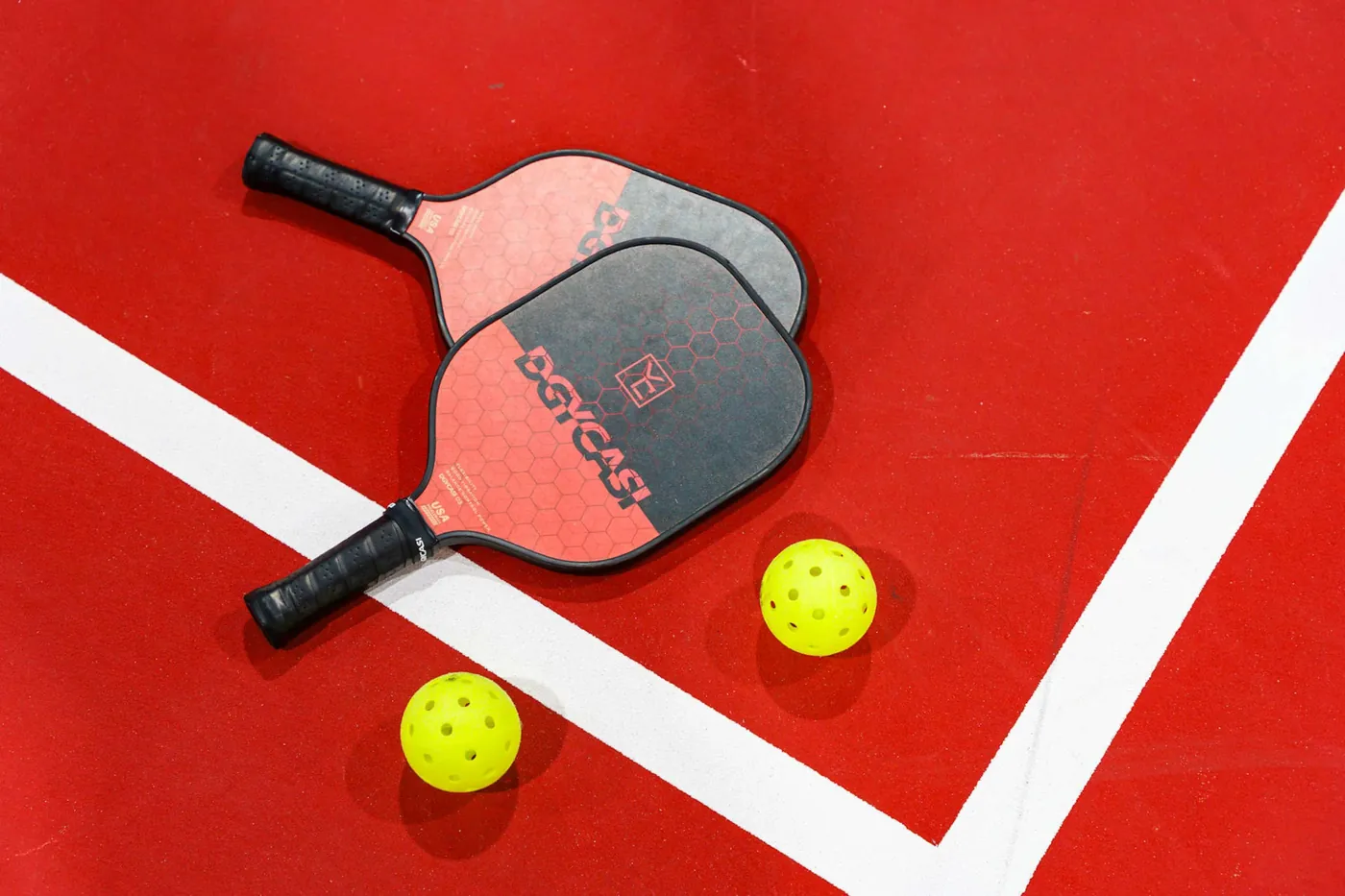
A hard paddle striking a hard plastic ball produces a sharp, impulsive crack — a very different sound from the dull thud of a tennis ball. It happens hundreds of times an hour, it cuts through ambient noise, and it carries much farther than most people expect. That's not a matter of opinion; it's why acoustic consultants now get hired before new courts are approved.
The consequences are familiar to anyone who plays: communities across the country have shortened court hours, required expensive sound studies, wrapped courts in acoustic fencing, or shut courts down entirely after neighbor complaints. Our player's guide to the noise problem walks through documented cases and what they mean for where you play.
What players try first — and where it falls short
Quiet-category paddles and foam balls take the edge off, but they change how the game feels, and they only lower the volume — they don't remove it. Acoustic fencing helps the neighbors most directly behind it and does little for homes above or beyond it. Distance setbacks work, but only when a court was planned that way from the start.
Every outdoor fix is a negotiation: quieter gear, shorter hours, fewer courts. Indoors, there is nothing to negotiate. Walls and a roof do what no paddle redesign can — the sound simply never reaches a neighbor. Our comparison of indoor vs. outdoor courts covers the rest of the trade-offs.
A court with walls, heat, air-conditioning, and lights
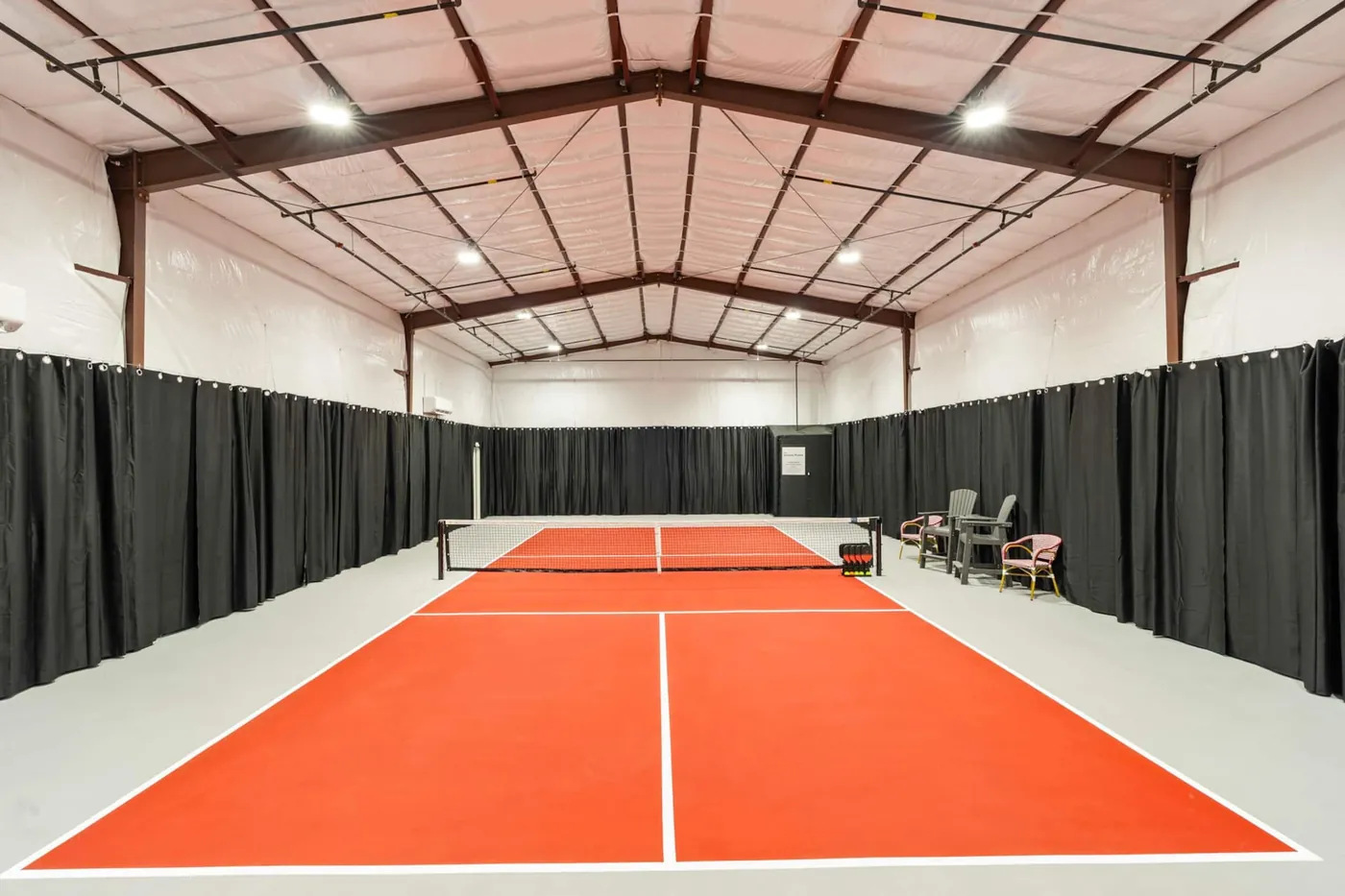
Sedona Pickler is a private West Sedona vacation home for up to 8 whose centerpiece is a fully indoor, climate-controlled pickleball court. Because it's indoors, everything the noise fight takes away is given back.
Play at any hour
Outdoor courts near homes lose their early mornings and evenings first — that's what noise ordinances target. This court is lit and enclosed, so a 6 AM game and a 10 PM game are equally fine. Nobody outside the house hears either one.
Play in any season
The same walls that contain the sound carry the heat and the air-conditioning. July afternoons and January mornings play identically — a rally in shorts while it snows on the red rocks outside.
Play without the politics
No HOA letters, no petition at the city council, no sound study. The court is private, it comes with the house, and paddles and balls are already there. You bring shoes and people.
Built for a group of 8
Four bedrooms — two kings, a queen, and a bunk game room — plus two baths, a full kitchen, a media lounge, a hot tub and outdoor soaking tubs, a firepit, and a covered deck with red-rock views. The court is steps away, not a drive away, so play happens in the gaps of the day: before the hike, between lunch and the pool, after dark.
It sits in a quiet West Sedona neighborhood minutes from trailheads and restaurants — and stays a good neighbor precisely because the game never leaves the building.

Frequently asked questions
Why do pickleball courts get noise complaints?
Do quiet paddles and foam balls fix the problem?
Is the pickleball court at Sedona Pickler really indoors?
Can we play early in the morning or late at night?
How many people can stay and play?
The quietest court in Sedona
Most of the Southwest can drive here — Phoenix in about two hours, Flagstaff in under one. Book the house, bring your group, and play as early, as late, and as loud as you like.
Book on Airbnb