
Tucson takes pickleball seriously. This is a town where a volunteer club raised the money to build and maintain its own 12-court complex, where the county built 20 competition courts at a pro sports facility, and where a PPA Tour Challenger now shows up on the calendar. It is also a town where, from June through September, the sun decides when you play — and the answer is dawn or after dark. Sedona is 232 miles up the road, 2,000 feet higher, and the house this site belongs to has something no park in Pima County can offer: a private indoor court with air conditioning, 30 seconds from your bed. Here is the honest case for loading up two cars and making it a three-night weekend.
Tucson has courts. June has other plans.
Start with what Tucson players already know. Morris K. Udall Park on Tanque Verde Road is the heart of the scene — 12 outdoor lighted courts, free to play, built and kept up in large part by Tucson Area Pickleball, the volunteer group whose benefit tournaments have paid for lights, shade structures, and benches over the years. The Udall community’s Facebook group runs well past 2,000 members, and the courts have hosted the USA Pickleball-sanctioned Tucson International Pickleball Championships, an event that draws players from outside the country to a public park in midtown Tucson.
Then there’s Kino. The South Complex at Kino Sports Complex has 20 lighted, competition-style pickleball courts with spectator seating — good enough that the PPA Tour ran its Tucson Challenger there January 23-25, 2026. Court reservations run about $10 an hour (confirm current). But look at the posted hours: mornings 7 to noon, evenings 5 to 10. The schedule skips midday entirely. In a Tucson summer, nobody needs to ask why.
Beyond those two anchors, Himmel Park has 6 lighted courts, Reffkin Tennis Center has 8, Tucson Racquet Club runs 12, and The Pad has brought indoor padel-and-pickleball courts to town for players willing to pay for climate control. And if you’ve heard talk of a big pickleball complex at Purple Heart Park on the southeast side — that one is ahead of the facts. As of mid-2026 it’s still at the community-input stage; the ward’s councilmember has said she’d support courts if residents want them, but nothing has been built and nothing is playable. Demand in Tucson keeps outrunning supply, which is exactly the point.
Because here is the constraint none of those court counts fix: the National Weather Service puts Tucson’s normal June high at 101.2 degrees, and July barely relents at 100.2. Real Junes run hotter — heat waves have pushed the city to 115 and 116 in recent years, and the all-time record is 117. From late May to late September, outdoor pickleball in Tucson is a 6 a.m. sport or a 9 p.m. sport. The lit courts at Udall and Kino make evening play possible, but you’re sharing them with everyone else who had the same idea, and the concrete is still radiating the day’s heat back at you through your shoes.
Every Tucson regular knows the summer routine by heart: alarm before sunrise, first paddle in the rack at Udall by 6, done by 9 because the court surface is already cooking. Then, once the monsoon builds in July and August, the evening window gets its own tax — the humidity climbs, and any lightning within range clears the outdoor courts no matter how good the games are. Between the dawn patrol and the storm roulette, a summer week that should hold ten sessions often delivers four.
What changes at 4,350 feet
Sedona sits at about 4,350 feet — nearly 2,000 feet above Tucson’s 2,389. That elevation is worth real degrees: a typical June afternoon in Sedona tops out in the low 90s against Tucson’s 101, and the mornings and evenings drop off in a way desert-floor summer nights never do. Cooler, yes. Cool, no. If the pitch were “drive four hours to play outdoors in 92 instead of 101,” it would be a weak pitch.
That is not the pitch. The court at the house is indoors — a regulation court that’s air-conditioned in summer, heated in winter, and lit for play at any hour. The temperature outside stops being part of the decision. So does the wait: it’s private, so there’s no paddle stacked against a fence, no open-play rotation with strangers, no 6 a.m. alarm to beat the heat and the crowd. And because it’s fully enclosed, there’s no noise reaching any neighbor — the whack of a pickleball at 10 p.m. bothers exactly no one, which is a bigger deal than most players realize until they’ve dealt with the alternative. There’s more on that at the quiet pickleball page.
For a Tucson group, the practical translation is this: every hour of a three-night trip is a possible court hour. Morning session before the hikers head out. Afternoon games while it’s 92 outside and 72 inside. A night round-robin that runs as late as the group wants. Nobody checks a weather app.
The drive: 232 miles, and how to handle Phoenix
The route is the simple part: I-10 West out of Tucson, through Phoenix, then I-17 North, and finally Exit 298 onto SR-179 for the last stretch into Sedona. It’s 232 miles from central Tucson and about 3.5 hours nonstop; with a food stop, call it 4 to 4.5. The only strategic question on the whole drive is Phoenix.
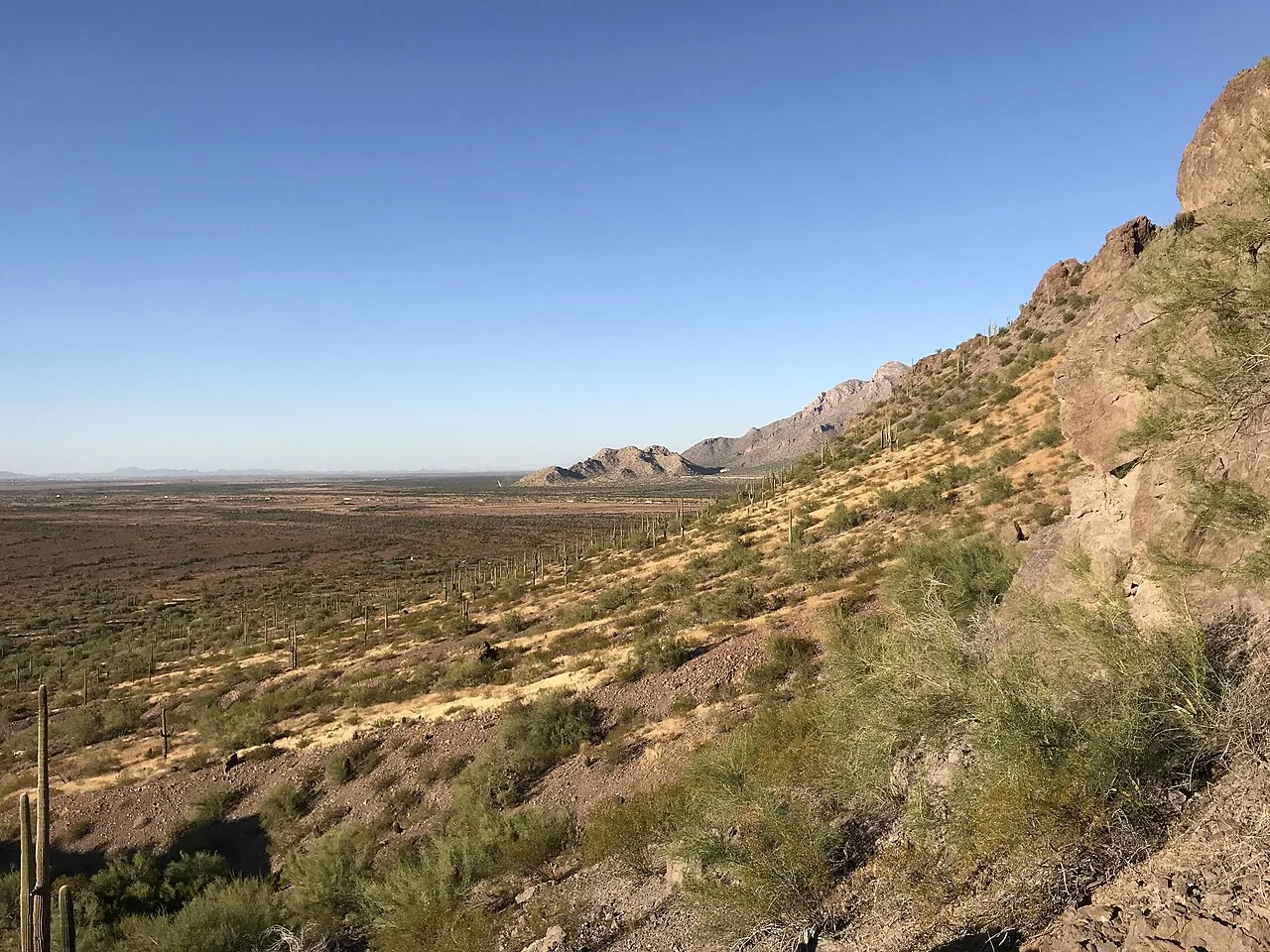
The first hundred-plus miles are easy interstate across the desert floor. Forty miles in, Picacho Peak State Park sits right off I-10 at Exit 219 — you’ll see the spire long before you reach it, since it’s visible from downtown Tucson on a clear day. It’s a fine leg-stretch and photo stop with a visitor center and picnic areas (park hours 5 a.m. to 8 p.m.; there’s a day-use fee, confirm current). Skip the summit trail in summer: Hunter Trail climbs roughly 1,500 feet on exposed rock with cables, and it’s a genuinely bad idea in triple-digit heat. In March, the peak is famous for wildflowers; in June, admire it from the ramada.
Then comes the metro. The I-10 corridor through Phoenix’s Broadway Curve is the busiest stretch of freeway in Arizona — more than 300,000 vehicles a day. A widening project finished in 2024 helped, but physics is physics: Phoenix rush hour runs roughly 6 to 9 in the morning and 3 to 6 in the afternoon, worst from 4 to 5. The clean move for a Friday departure is to leave Tucson by about 9:30 a.m. so you cross the metro in the 10-to-2 window, or to accept an early start and be through Phoenix before 6:30 a.m. — which also puts you at the house before check-in opens at 4 p.m., so build in a long lunch or a Sedona trailhead first.
If you’re stuck crossing at a bad hour and I-10 through the Curve shows solid red, there is a workaround locals use: Loop 202, the South Mountain Freeway, peels off I-10 near Chandler, swings around the south and west sides of the city, and rejoins I-10 at 59th Avenue; from there Loop 101 north connects back to I-17. It adds miles and only pays when the Curve is truly stopped — glance at your map app around Casa Grande and let the colors decide.
Once you’re on I-17 northbound, the drive turns into the good kind. The freeway climbs steadily out of the Valley, and the saguaros thin out as the elevation stacks up. The one stop worth planning around is Rock Springs Cafe at Exit 242 in Black Canyon City — it’s been feeding travelers on this grade since 1918, and the pie counter is the reason most people pull off. A slice of the jalapeño-laced Rock Springs classics or a whole pie boxed for the house both work; the bakery is right next to the historic cafe. From there it’s about an hour to Exit 298, where SR-179 — the Red Rock Scenic Byway — carries you the final miles into red rock country. The last 15 minutes of this drive are the best 15 minutes, so try to hit them in daylight.
Three nights, mapped out
At 232 miles, an overnight is a bad trade — seven hours of windshield time for one day of play. Three nights is where the math flips, and Friday-to-Monday is the natural shape for a Tucson group. Here’s a working plan for eight players; steal what fits.
Friday: arrival and first blood. Leave Tucson mid-morning, stop at Rock Springs, roll into West Sedona around 4 p.m. check-in. Unload, claim bedrooms, and get the first session in before dinner — the court is lit and indoors, so a 5:30 warm-up and an hour of games is easy. Dinner out afterward; the Sedona restaurant guide covers who’s serving late and who needs a reservation. Cap the night with the hot tub and the firepit.
Saturday: the full Sedona day. Early crew hikes — Cathedral Rock is short and steep with a payoff out of proportion to its 1.2 miles, and Devil’s Bridge is the one everybody’s seen photos of; both want early starts, even in the milder Sedona summer. Everyone’s back by late morning. Midday is court time — while Tucson’s outdoor courts sit empty in the heat, you’re playing games at 72 degrees. Late afternoon is for the deck and the game room, and Saturday night is the main event: a full round-robin. With eight players you can run a tight rotation where nobody sits more than one game; the round-robin guide has formats and scoring that keep it moving.
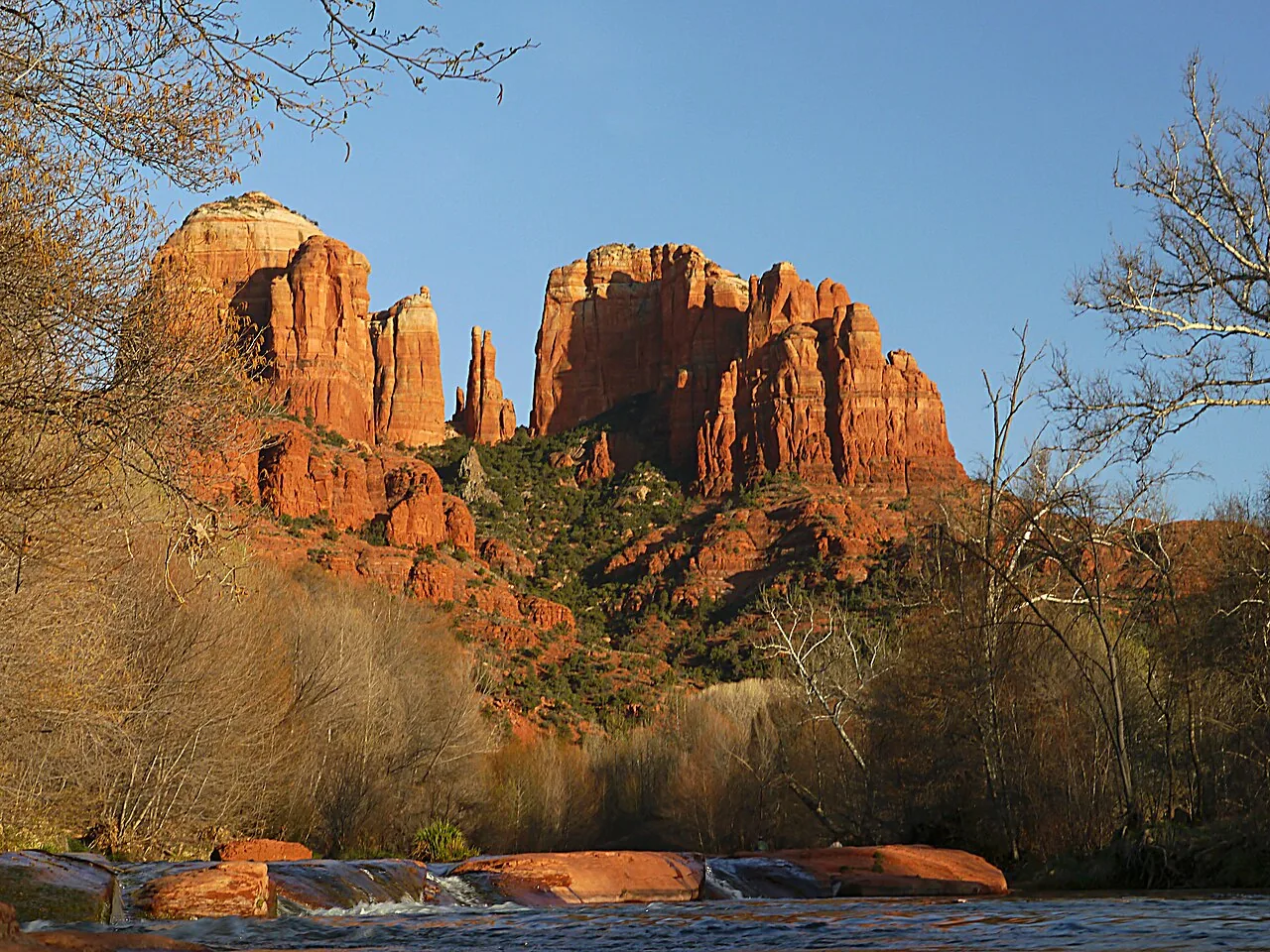
Sunday: spread out. This is the day for the things Sedona does that Tucson doesn’t. Drive the Red Rock Scenic Byway slowly in the morning light, browse Uptown, or book a jeep tour. In summer, Oak Creek gives you the thing no Tucson weekend has: moving water — Slide Rock State Park up Oak Creek Canyon is the classic swim, and it fills to capacity on hot weekends, so go early or admire the canyon from a quieter pull-off. Players who want a skills day can run drills on the private court without anyone waiting on the fence. Come sunset, get to a viewpoint — the sunset spots guide ranks them — then play the late session after dark, because you can.
Monday: last licks and the drive home. Checkout is 10 a.m., so the pattern writes itself: early court block at 7, breakfast, pack the cars. Leaving Sedona by 10 puts you through Phoenix right in the midday window and home in Tucson by mid-afternoon, ahead of the evening rush on both ends.
What eight players get at the house
The house is built for exactly this group size. Four bedrooms sleep 8: two kings, a queen, and a game room with twin-over-twin bunks — a fair setup for two or three couples plus singles, decided by rock-paper-scissors or seniority. Two baths keep the morning shuffle manageable.
The court is the reason you came: private, indoor, regulation, climate-controlled, and lit. Paddles and balls are provided, so the only gear anyone has to remember is court shoes. Around it, the house carries the between-sessions hours — hot tub and outdoor soaking tubs, a firepit, a covered deck with red-rock views, a media lounge, and a full kitchen that makes group breakfasts cheaper and faster than eight people waiting on a table.
House rules, so nobody’s surprised: guests must be 25+ to book, no pets, no parties, no smoking. There’s free driveway parking for four cars — no street parking — which for a Tucson eight means two cars is the clean play. Check-in is 4 p.m., checkout 10 a.m., and booking is through Airbnb.
Practical notes
Book ahead of the calendar, not behind it. Sedona’s spring (March-May) and fall (September-November) are its busiest seasons, and a whole-house property that sleeps 8 books earlier than hotel rooms do. Tucson groups fleeing summer heat have a quiet advantage: June-August is when Sedona lodging softens, and it’s precisely when the indoor court is worth the most. For a summer trip, a few weeks of lead time is usually workable; for a fall weekend, think in months.
Packing is short: court shoes, more shirts than you think, a swimsuit for the hot tub, layers for mornings — even summer mornings at 4,350 feet start cool — and sunscreen for the trails. The packing guide has the complete list, but the headline is that the pickleball gear itself is mostly handled.
One more season worth flagging: winter. The court is heated, so the same trip works in January, when Tucson players are actually in their best outdoor months but Sedona is at its quietest and cheapest. And if you’ve got friends in Phoenix, note that they’re only two hours out — the Phoenix getaway plan covers their half of the drive, and a joint Tucson-Phoenix group filling all 8 spots splits everything two ways.
The honest summary: Tucson’s pickleball scene doesn’t need rescuing — 20 courts at Kino and a homegrown club that built its own complex are proof of that. What Tucson can’t manufacture is a 72-degree court at 2 p.m. in June that belongs to just your group. That’s a 232-mile problem, and it has a three-night solution.
Frequently asked questions
How long is the drive from Tucson to Sedona?
What's the best way to get past Phoenix traffic?
Is Sedona actually cooler than Tucson in summer?
Where should we stop on the way up?
Can eight players really share one court?
Is a quick overnight worth it from Tucson?
Your court is ~3.5 hours nonstop; plan 4-4.5 with a stop away
Sedona Pickler is a private West Sedona vacation home for up to 8 with its own indoor, climate-controlled pickleball court — heated, air-conditioned, and lit. Load the car, drive up, and play the moment you arrive.
Check dates & book


