Sedona Vortexes: A Complete, Honest Guide
Sedona’s vortexes are the reason a lot of people come here in the first place, and they’re also the thing visitors are most confused about before they arrive. The short version: a vortex is a spot where many people believe the earth’s energy is concentrated, there’s no hard science behind it, and you do not need to believe a word of it to have a genuinely good time standing on a beautiful red rock at sunset. This guide lays it out honestly, so you can decide for yourself what you’re walking into.
What a vortex actually is (and isn’t)
A “vortex” (locals say vortexes, not vortices) is a New Age idea: a place where spiritual or earth energy is said to swirl up out of, or down into, the ground. People who feel it describe a tingling in the hands, a lightness, a sense of calm, or a charge that makes the hair on their arms stand up. The concept was popularized in the early 1980s, when a psychic named Page Bryant identified and named several of Sedona’s energy sites, and writers like Dick Sutphen spread the idea through books and seminars. It caught fire in the New Age community and never really left.
Here’s the honest part: there is no scientific proof that vortexes exist as a measurable force. No instrument reliably detects them, and you’ll see claims online about “electromagnetic anomalies” that don’t hold up when you look for the actual studies. What you can say truthfully is that a lot of people, including plenty of self-described skeptics, report feeling something at these sites, and that the places themselves are some of the most striking landscapes in the American Southwest.
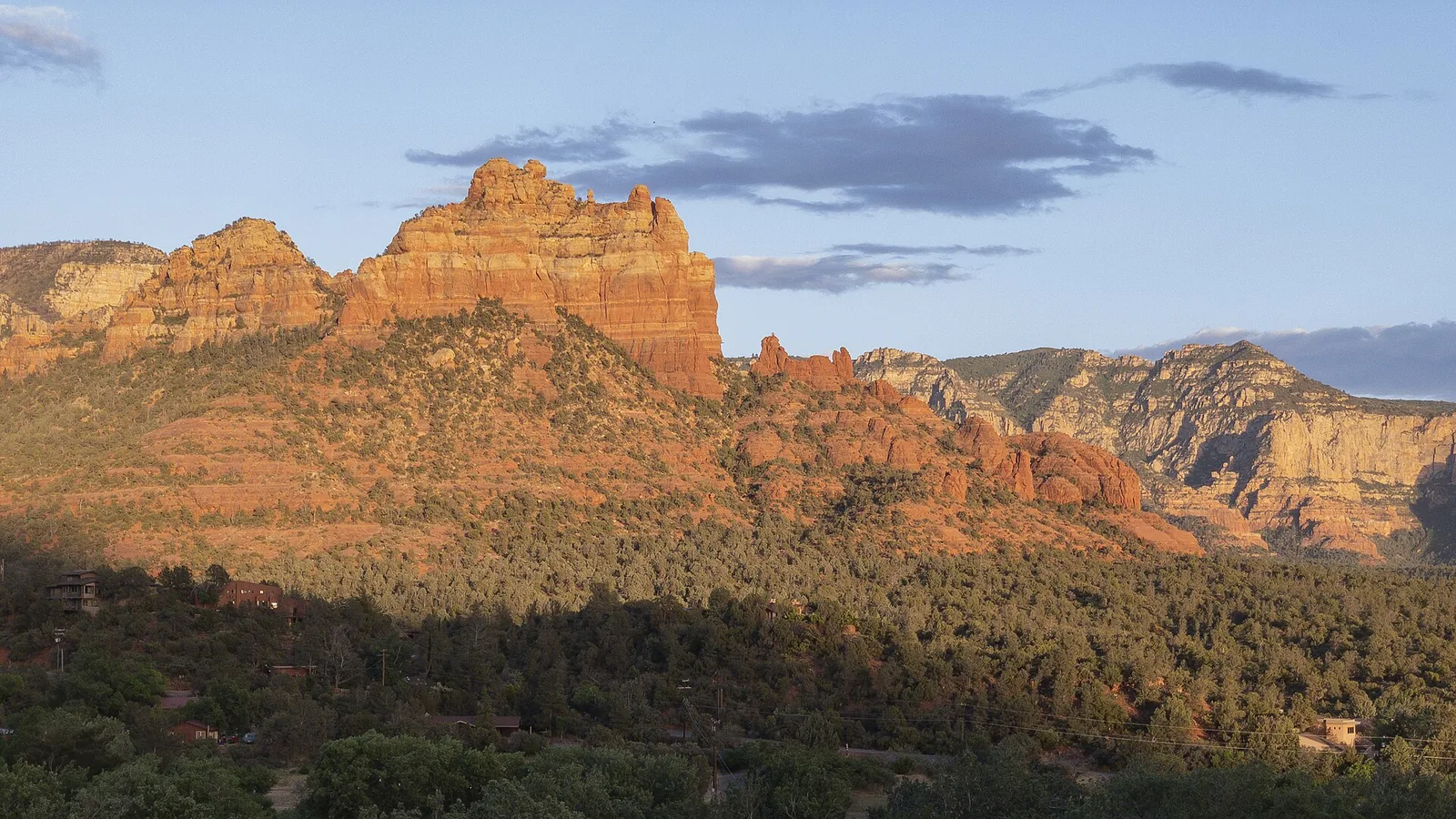
So how should you approach it? My advice: drop the pressure to decide whether it’s “real.” You’re standing on a 1,000-foot tower of Schnebly Hill sandstone with the light going gold across the valley. Whether you call the feeling that gives you “vortex energy” or just “being somewhere gorgeous and quiet” is up to you. Both kinds of visitors leave happy.
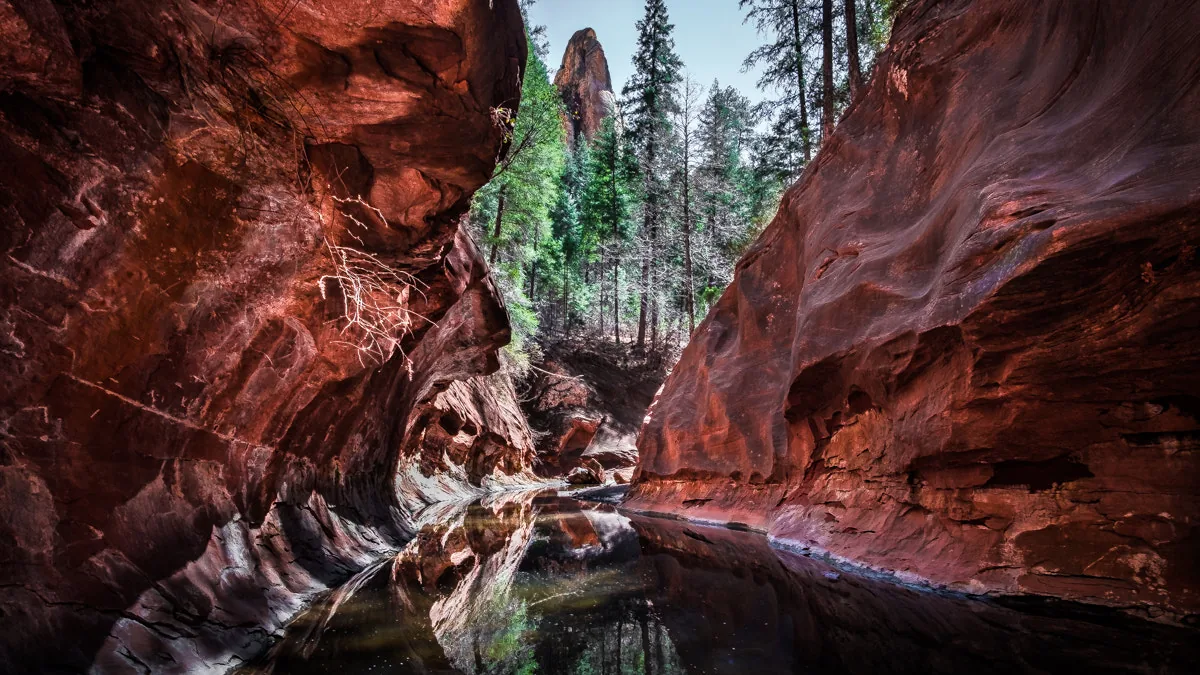
Upflow vs. inflow energy
If you read the brochures or take a tour, you’ll hear vortexes sorted into two types, sometimes with a third “combination” category:
- Upflow (sometimes called masculine, or electric): energy said to flow upward out of the earth. The feeling people describe is uplifting, expansive, good for meditation, big-picture thinking, and feeling charged up. These sites tend to be up high, on domes and saddles.
- Inflow (sometimes called feminine, or magnetic): energy said to flow inward and downward. The feeling is described as calming, grounding, introspective, good for letting go and emotional healing. These sites are often lower, in canyons and along creeks.
- Combination / balanced: a site said to hold both. Boynton Canyon is the one most often described this way.
You don’t have to take the labels literally. They’re a useful shorthand for the kind of place each is: high and panoramic versus low and sheltered. Even if you ignore the energy talk entirely, the distinction tells you what sort of experience to expect.
The twisted juniper myth
You’ll hear that the juniper trees near vortexes grow with twisted, spiraling trunks because the energy bends them, and that the more twisted the tree, the stronger the vortex. It’s a lovely story and it’s not true. Alligator and Utah junipers twist their grain as a natural response to wind, sun, drought, and lopsided growth, and you can find gnarled, corkscrewed junipers all over the high desert, vortex or no vortex. Enjoy them anyway. They’re genuinely beautiful, often centuries old, and they photograph wonderfully. Just don’t read them as proof of anything.
The four classic vortex sites
Sedona has dozens of spots people will call a vortex, but four are the long-standing, widely agreed-upon classics. Here’s the quick comparison, then the detail on each.
| Site | Energy type | Effort to reach | Best for | Crowds |
|---|---|---|---|---|
| Airport Mesa | Upflow (masculine) | Easy short scramble | First-timers, sunset, sweeping views | High at sunset |
| Cathedral Rock | Inflow (feminine) | Short but steep climb | Emotional grounding, iconic photos | Very high |
| Bell Rock | Upflow (masculine) | Easy, flat to optional scramble | Families, easy access, acclimatizing | High |
| Boynton Canyon | Combination / balanced | Moderate hike + spur | Quiet, ceremony, longer outings | Moderate |
Airport Mesa
Airport Mesa is the easiest of the four to reach and the one I’d send a first-timer to. It’s an upflow site, the kind of high, open spot people say lifts you up. The vortex itself sits on a low, knobby rise just off the Airport Mesa Loop trail, and from the lower trailhead parking on Airport Road it’s only about a tenth to two-tenths of a mile of walking, with a short, easy scramble up the slickrock knoll at the end. No real hike required.
Two parking notes that trip people up. There’s a small free lot at the Airport Saddle trailhead partway up Airport Road, with maybe a dozen spaces; this is where you start for the vortex and the loop. Higher up the road, the Airport Scenic Overlook has a paved lot that charges a fee (around $3, subject to change) and is the famous sunset perch. The overlook is paved and accessible, but it is not the vortex; it’s the panoramic viewpoint. Many people mix them up, so know which one you’re aiming for.
Cathedral Rock
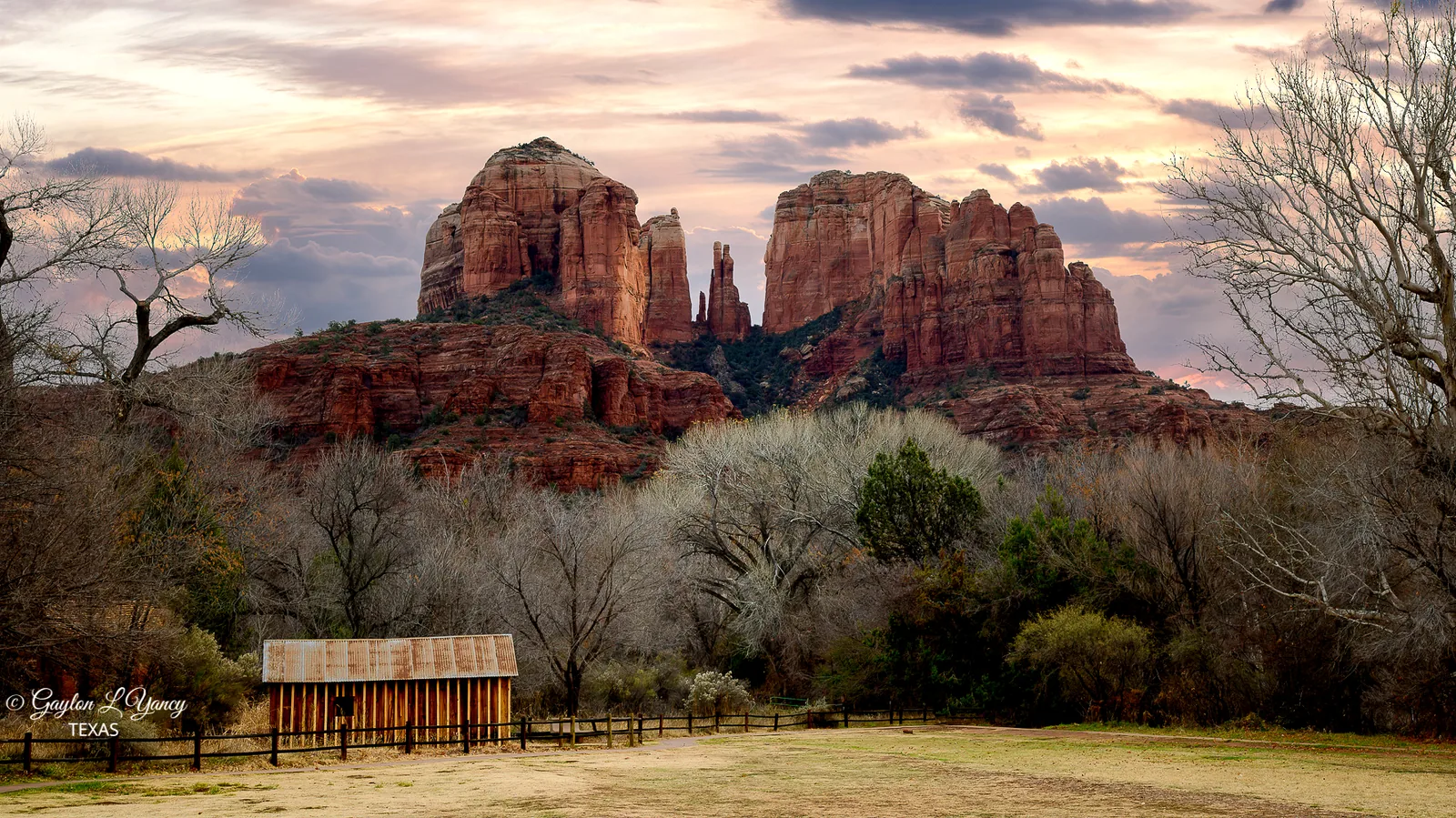
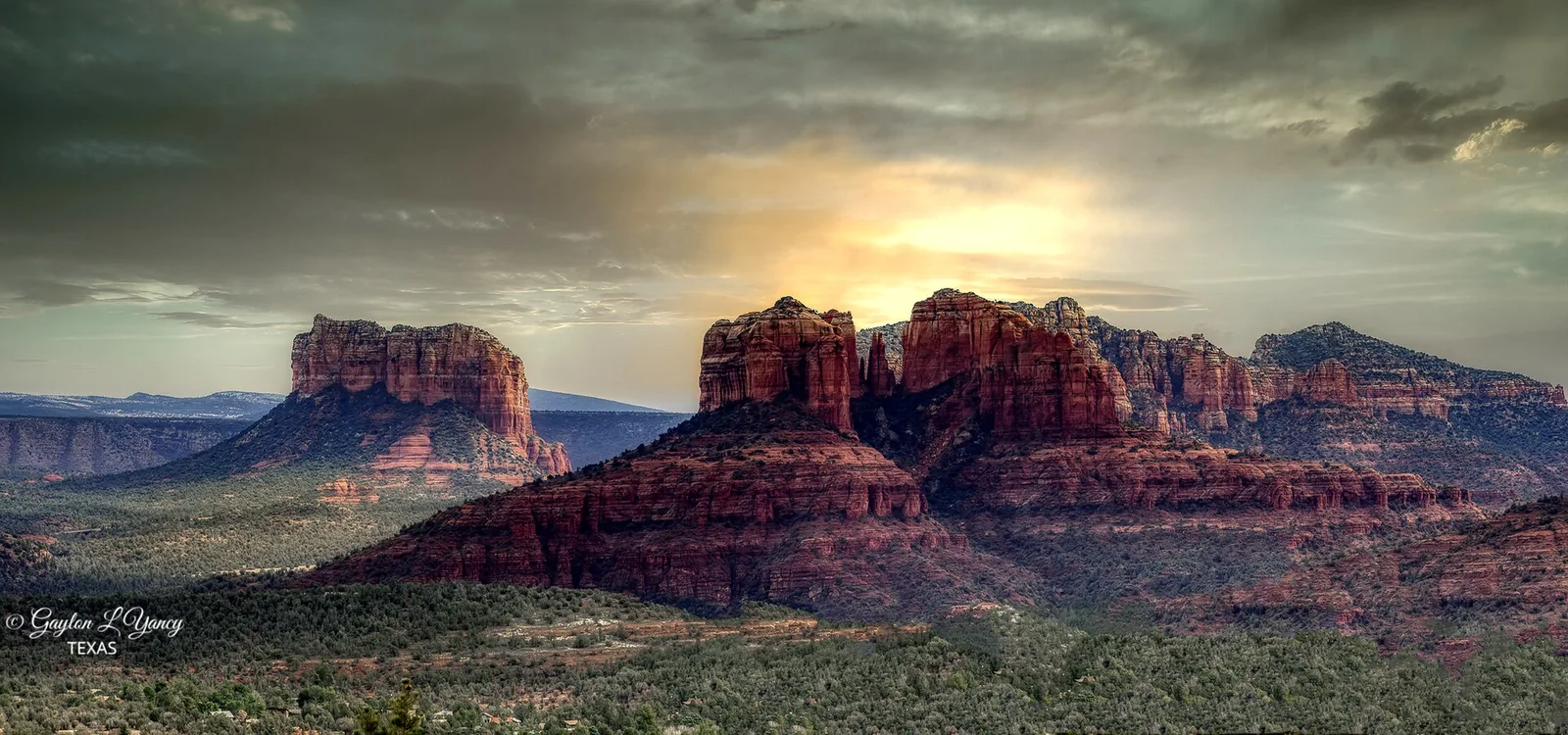
Cathedral Rock is Sedona’s signature postcard formation and its strongest inflow (feminine) vortex, the one associated with grounding, nurturing, and emotional release. The catch: getting to the vortex area means doing the Cathedral Rock Trail, which is short but no joke. It’s roughly 1.2 miles round-trip with around 600 to 740 feet of elevation gain, almost all of it packed into a steep slickrock climb up to a saddle (“the End of Trail”). Expect to use your hands in a couple of spots. It’s rated moderate to strenuous, and the crowds and heat can make it feel harder.
Parking is the other wrinkle. The Back O’ Beyond Road trailhead lots hold just over 40 cars and fill fast. On the days the free Sedona Shuttle runs (typically Thursday through Sunday, plus expanded weeks in spring), driving to the trailhead is prohibited and you must take the shuttle from the satellite lot off SR 179. On non-shuttle days the road and lots are open. A Red Rock Pass (or America the Beautiful pass) is required to park at the trailhead. Check the shuttle schedule before you go, because showing up to a closed road is the classic Cathedral Rock mistake.
Bell Rock
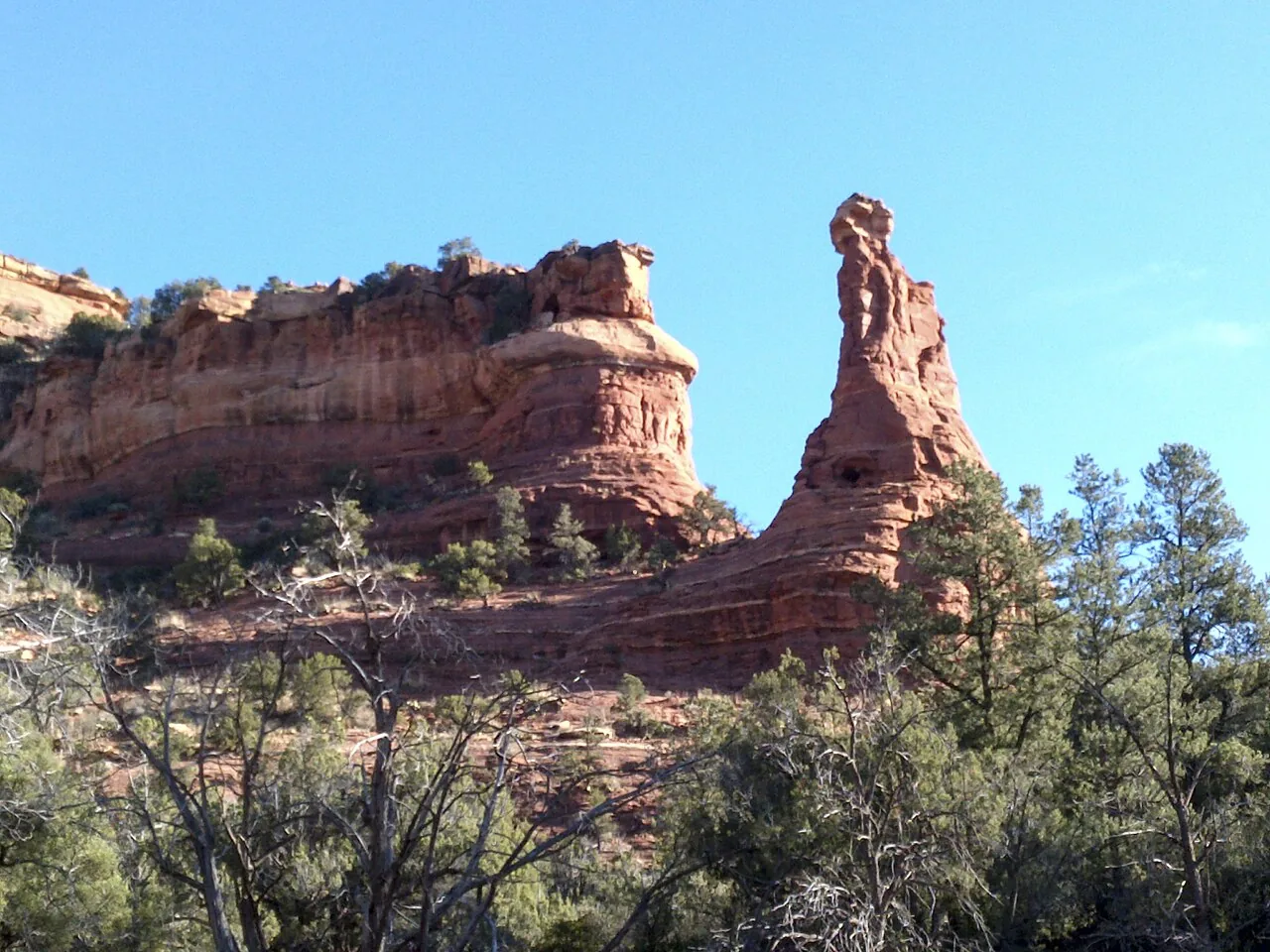
Bell Rock is the friendly one. It’s an upflow vortex, easy to spot from the highway (it really does look like a bell), and the easiest of the four to simply walk up to. The flat Bell Rock Pathway from the Courthouse Vista lot off SR 179 gets you to the base in well under a mile on smooth, mostly level dirt, and the wider Bell Rock and Courthouse Butte Loop runs around 3.6 to 4 miles with only 300 to 400 feet of gain. Families, kids, and anyone acclimatizing to Sedona’s 4,500-foot elevation do well here.
If you want the “on the vortex” feeling, scramble up the lower benches of Bell Rock itself on the marked routes. The lower slopes are fun and forgiving; the rock gets genuinely steep and dangerous higher up, so turn around when it stops feeling like walking up a ramp. You cannot safely reach the actual summit, and people get cliffed out trying. A Red Rock Pass is required at Courthouse Vista. For the full hiking detail, see the Bell Rock guide.
Boynton Canyon
Boynton Canyon is the most atmospheric and, to many, the most powerful of the four, a combination site said to hold both upflow and inflow energy. It’s also sacred ground to the Yavapai-Apache people, who consider the canyon a place of origin, so it asks for extra respect. The main Boynton Canyon Trail is about 6 miles round-trip with roughly 900 feet of gain, but the vortex most people seek is on the short Boynton Vista spur near the start: a moderate climb of about half a mile up to a saddle beneath the spire called Kachina Woman, gaining a couple hundred feet. You’ll see cairns stacked everywhere near the top, and on many days a local musician playing a flute on the knoll, a tradition that’s been going for years.
The trailhead is right at the entrance to Enchantment Resort off Boynton Pass Road, and a Red Rock Pass is required. It’s a bit of a drive from town but worth it for the quiet and the scale of the canyon walls. The full route is covered in the Boynton Canyon guide.
Getting there, parking, and the Red Rock Pass
Three of the four classic vortexes sit on Coconino National Forest land, which means you need a Red Rock Pass to park at the trailhead. Here’s the deal, straight:
- Daily pass: around $5
- Weekly pass: around $15
- Annual pass: around $20
- America the Beautiful federal interagency pass (and Golden Age/Access passes) works in place of the Red Rock Pass
Prices change, so confirm the current rate before you go. You can buy at the self-serve machines at trailheads (credit card), at the Red Rock Ranger District Visitor Center on SR 179, at the Uptown visitor center, and at many businesses and hotels around town. Display it on your dashboard.
A genuinely useful exemption: if you’re only stopping briefly, roughly 15 minutes or less, to take a photo or enjoy a vista, you don’t need a pass. That covers a quick pull-off but not a hike.
Local tip: The Red Rock Pass does not cover everything. A few high-traffic spots like Crescent Moon (Red Rock Crossing) and Grasshopper Point charge their own gate fee instead and aren’t covered by the standard pass. And Airport Mesa’s paved overlook lot has its own small fee separate from the forest pass. When in doubt, read the sign at the lot you’re actually parking in.
Skip the parking stress with the shuttle
For Cathedral Rock especially, the free Sedona Shuttle is the move. It runs trailhead routes (typically Thursday through Sunday, with expanded daily service during busy spring weeks, roughly 7 a.m. to 5:30 p.m.) from satellite lots to Cathedral Rock and Little Horse, plus Soldier Pass, Mescal, and Dry Creek Vista. You park free at the satellite lot and ride in, which sidesteps the worst of the parking scrum. It does not serve Bell Rock, Boynton Canyon, or Airport Mesa, so plan to drive to those. For the bigger picture on moving around town, see getting around Sedona.
How to experience a vortex
You don’t need a ritual, but if you want to lean into it, here’s a simple, no-nonsense approach that works whether you’re a true believer or just curious:
- Pick the right site for your mood. Want to feel energized and expansive? Go to an upflow spot like Airport Mesa or Bell Rock. Want to calm down and reflect? Choose an inflow spot like Cathedral Rock or the canyon floor at Boynton.
- Get there when it’s quiet. Energy or not, you’ll feel more at a vortex with ten people around than two hundred. Early morning is ideal.
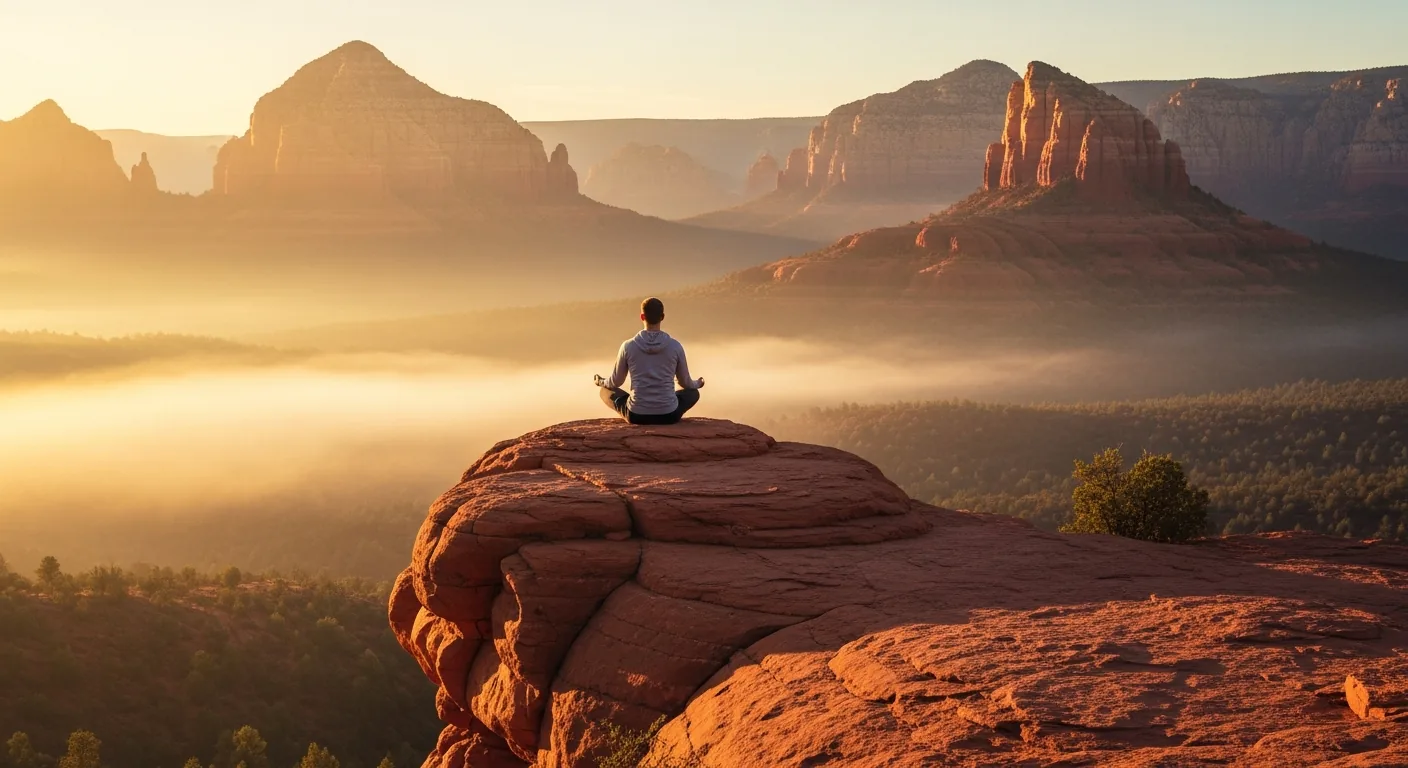
- Settle in. Find a comfortable rock, sit, and stop moving for at least ten minutes. A lot of “I didn’t feel anything” comes from people who spent ninety seconds there taking selfies.
- Breathe slowly. A simple count, inhale for four, hold for four, exhale for four, settles your nervous system. That alone produces real, physical calm, which is at least part of what people are describing.
- Set an intention, if that’s your thing. Believers suggest holding a clear thought, a question, a hope, something you want to release, and seeing what comes up. Skeptics can treat it as quiet reflection or a digital detox. Same posture, different framing.
- Notice without forcing. Don’t strain to feel a tingle. Just pay attention. Whatever you notice, or don’t, is fine.
If nothing “happens,” you’ve still spent unhurried time in an extraordinary place, which is more than most people manage on a trip. And when you’re done, it’s a short drive back to stay at Pickler House and shake off the calm with a few rallies on the indoor court.
Guided vortex tours
If you’d rather have someone explain the lore, drive the rough roads, and lead a meditation, a guided tour is a good use of money, especially on a short trip. Two well-established, real operators:
- Earth Wisdom Tours runs vortex-focused Jeep tours and is one of the longest-running vortex tour outfits in town. Their tours lean into the spiritual and educational side.
- Pink Adventure Tours (the Pink Jeep folks) offers a “Touch the Earth” vortex tour that covers the history, the beliefs, and the geology in a more general-audience way.
There are also retreat centers and individual practitioners who lead vortex meditations and ceremonies; for the wellness-and-spa side of Sedona, see spas and wellness and the dedicated spiritual tours guide. Whatever you book, confirm current prices, departure times, and what’s included before you commit, since those change with the season.
Best time of day and year
Time of day. Early morning is the sweet spot at every vortex: cooler air, soft light, parking that actually exists, and a fraction of the crowd. Sunset is gorgeous, particularly from Airport Mesa’s overlook and out at Bell Rock, but you’ll share it with a lot of people and the lots fill an hour or more ahead. Midday is the worst of both worlds, hot and crowded.
Time of year. Spring (March through May) and fall (September through November) are the prime windows: mild days, comfortable for sitting still on rock. Winter is quietly excellent, often sunny, crisp, and uncrowded, with the occasional dusting of snow on the red rock that’s stunning. Summer is hot, with afternoon highs that can top 95 to 100°F and little shade at most sites, so summer visitors should go at dawn and be off the rocks before the heat and the afternoon monsoon storms roll in.
What to bring
Even though some of these are short walks, the desert doesn’t care:
- Water, more than you think; at least a liter per person for anything beyond the overlook
- Sun protection: hat, sunglasses, sunscreen. Shade is scarce
- Real shoes with grip; slickrock is slick when dusty, and the Cathedral and Boynton climbs are no place for flip-flops
- Layers in the cooler months, since mornings and evenings get cold
- A small mat or towel to sit on if you plan to meditate
- Your Red Rock Pass or America the Beautiful pass, displayed on the dash
- A map or offline trail app; cell service is spotty in the canyons
Accessibility
The four sites vary a lot in how reachable they are:
- Airport Mesa Scenic Overlook is the most accessible: a paved lot and viewpoint with sweeping views and no hiking, suitable for wheelchairs and limited mobility (though the vortex knoll itself involves a short scramble and is not accessible).
- Bell Rock Pathway from Courthouse Vista is wide, firm, and mostly flat near the base, with accessible restrooms at the trailhead, friendly for strollers and easier mobility, though it isn’t a paved or graded accessible trail.
- Cathedral Rock is the least accessible: a steep, hands-on slickrock climb with significant exposure. Not suitable for wheelchairs, strollers, or anyone uneasy with scrambling.
- Boynton Canyon’s main trail is relatively flat for the first mile or so on a packed surface, but the Vista spur to the actual vortex is a moderate, rocky climb.
How to avoid the crowds
Sedona is busy, and the famous vortexes are the busiest part of it. To dodge the worst of it:
- Go at dawn. This is the single biggest lever. Lots are empty, light is best, temperatures are kind.
- Visit midweek if you can. Weekends and holidays are jammed.
- Use the shuttle for Cathedral Rock instead of circling the lots.
- Pick the quieter classic. Boynton Canyon sees fewer people than the others, especially if you go beyond the Vista spur into the canyon.
- Save Airport Mesa overlook for a weekday sunset, or watch sunset from somewhere less mobbed; see sunset spots for alternatives.
- Go off-season. Winter weekdays can feel like you have the place to yourself.
Safety and respectful visiting
A few things to keep everyone (and the land) safe:
- Heat is the real danger. Most Sedona rescues are heat-related. Carry water, start early, turn back if you’re cooked.
- Don’t over-climb. Bell Rock and Cathedral Rock both tempt people higher than they should go. The descent is harder than the climb, and the rock gets dangerously steep. Know your limit.
- Watch your footing on slickrock, especially when it’s dusty or wet.
- Respect sacred ground. Boynton Canyon and other sites are sacred to Native peoples. Be quiet, be reverent, and don’t treat it like a theme park.
- Leave No Trace. Stay on designated trails to prevent erosion, pack out everything you bring in, and don’t pick plants or pocket rocks.
- On the cairns: you’ll see stacked-rock “medicine wheels” and cairn art at vortex sites. The Forest Service generally discourages building new ones, as moving rocks damages habitat and confuses trail navigation. Admire what’s there; don’t add to it.
Local tip: If you’re chasing that pristine, empty-vortex feeling, the move is a weekday winter sunrise at Bell Rock or the canyon floor at Boynton. You’ll trade a little warmth for a lot of solitude, and solitude is what makes these places feel like more than a parking lot with a view.
What to pair it with nearby
You can string the vortexes together with plenty else, since they’re spread across the area:
- Airport Mesa is right above town, so pair it with Uptown and Tlaquepaque shopping or a meal; it’s a five-minute drive from the best restaurants.
- Bell Rock and Cathedral Rock sit along SR 179, the Red Rock Scenic Byway, so combine them with the Chapel of the Holy Cross (chapel guide), itself a place many people consider a fifth, unofficial vortex.
- Boynton Canyon is out in west Sedona near other quieter trails like Fay Canyon, so make a half-day of it.
- For a gentle first day while you acclimatize, the easy hikes roundup pairs naturally with the flatter vortex walks.
However you slice it, the vortexes work for both kinds of traveler. The believer gets the energy and the ceremony; the skeptic gets some of the most beautiful, peaceful real estate in Arizona and a perfectly good reason to sit still on a rock and watch the light change. Either way, you win.
Frequently asked questions
Are the Sedona vortexes real?
Which vortex is best for first-timers?
Do I need a pass to visit the vortexes?
What's the difference between upflow and inflow vortexes?
Do the twisted juniper trees prove vortexes exist?
When is the best time to visit a Sedona vortex?
Stay where you can rally any season
Sedona Pickler is a private West Sedona vacation home with its own indoor, climate-controlled pickleball court — a short drive from the trailheads, viewpoints and restaurants in this Sedona guide. Play at sunrise or after dark, in any weather.
Check availability on Airbnb