Ask ten players whether indoor or outdoor pickleball is better and you’ll get ten answers, most of them shaped by where the person happens to live. Somebody in San Diego will swear by the open air. Somebody in Phoenix in July will tell you they haven’t touched an outdoor court since May. The honest truth is that they’re slightly different games, and “better” depends on what you’re after on a given day. This is a fair look at how the two compare across the things that actually change how the ball moves and how the session feels — wind, the ball itself, glare, temperature, surface, time of day, and noise.
The short version
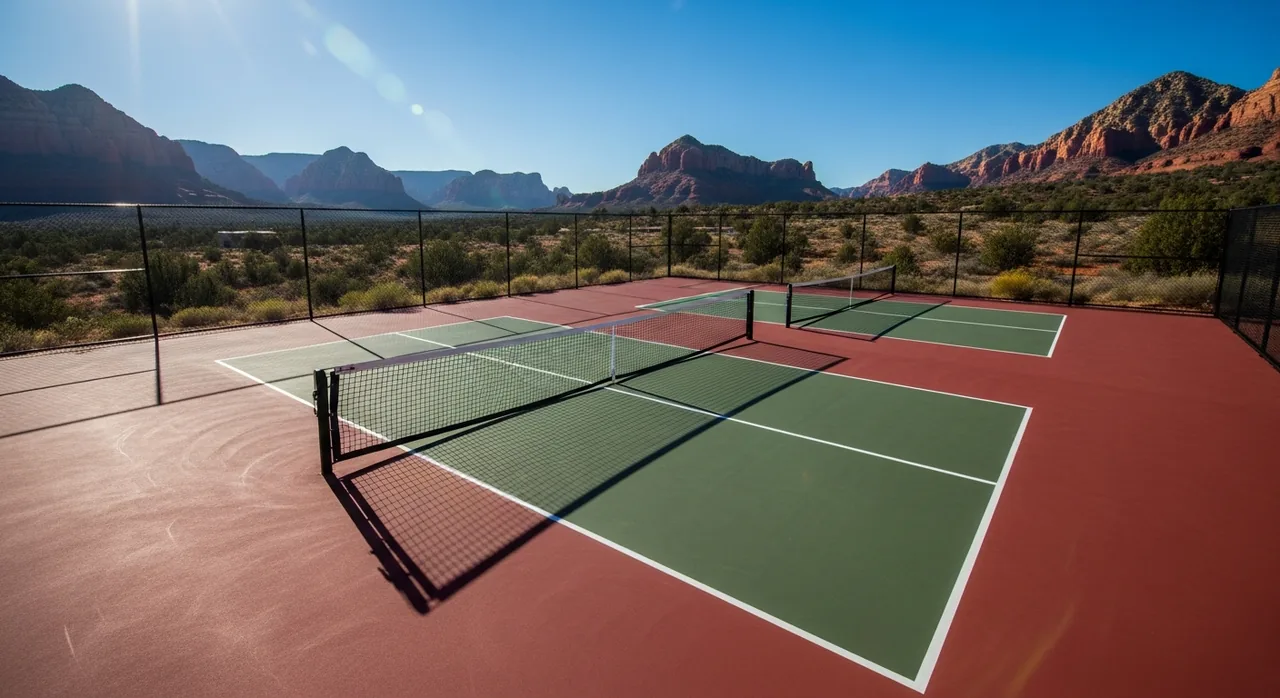
Outdoor pickleball is the classic version of the sport: open air, sunshine, and a slightly faster, harder ball. Indoor pickleball is the controlled version: no wind, even light, a softer ball, and a climate that doesn’t care what’s happening outside. Neither is objectively superior. What changes is how predictable the conditions are, and how much the weather gets a vote in your day.
Let’s go through the variables one at a time, because each one tips the balance a little differently.
Wind
Wind is the single biggest difference between the two settings, and it’s the one most new outdoor players underestimate.
A breeze that feels pleasant on your skin will still nudge a dink off course, lift a lob long, or knock a third-shot drop into the net. Players adapt — you learn to read the wind, hit with more margin, and switch ends knowing which side is harder. That adaptation is part of the fun for a lot of people, and a calm morning on an outdoor court is genuinely lovely. It’s also genuinely frustrating on a gusty day when you can’t trust the same shot twice and a 20-mph crosswind is rewriting your soft game for you.
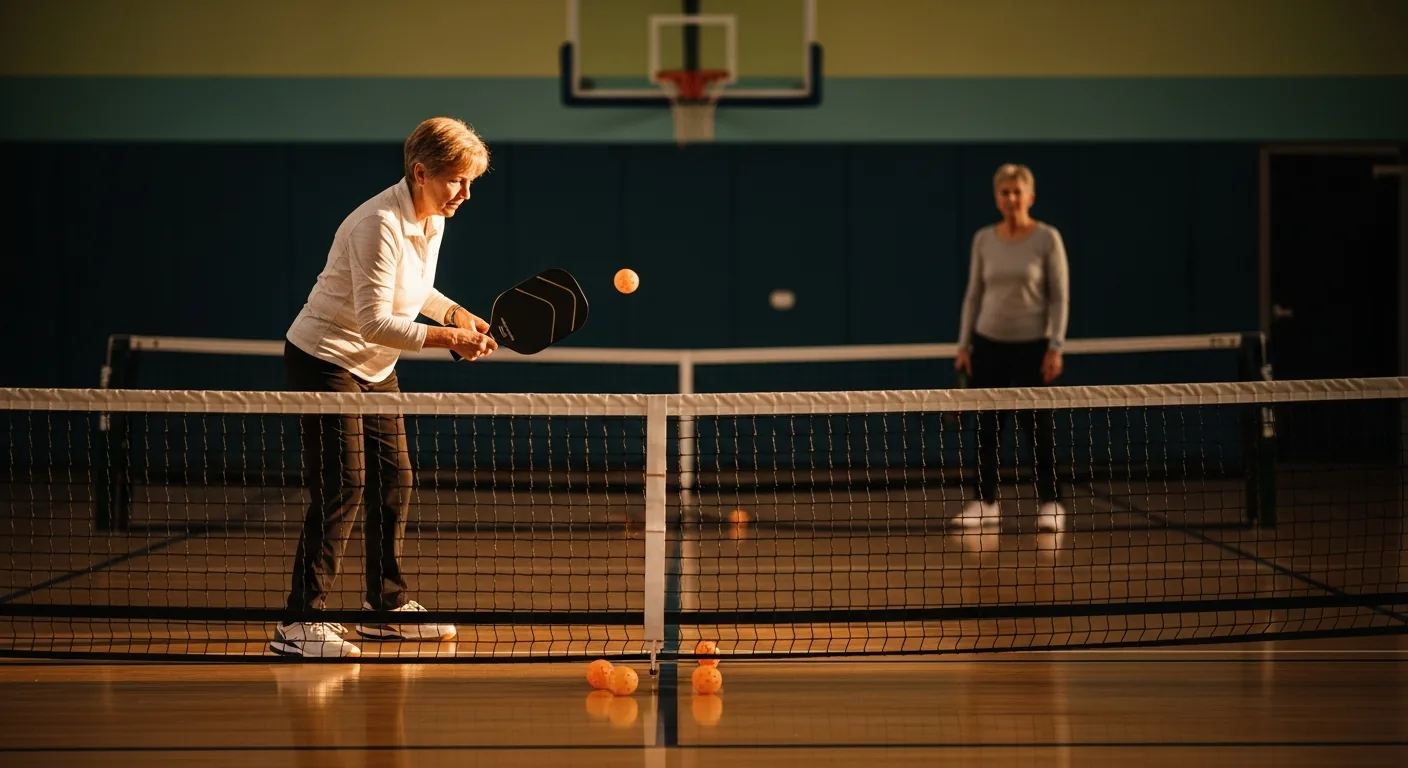
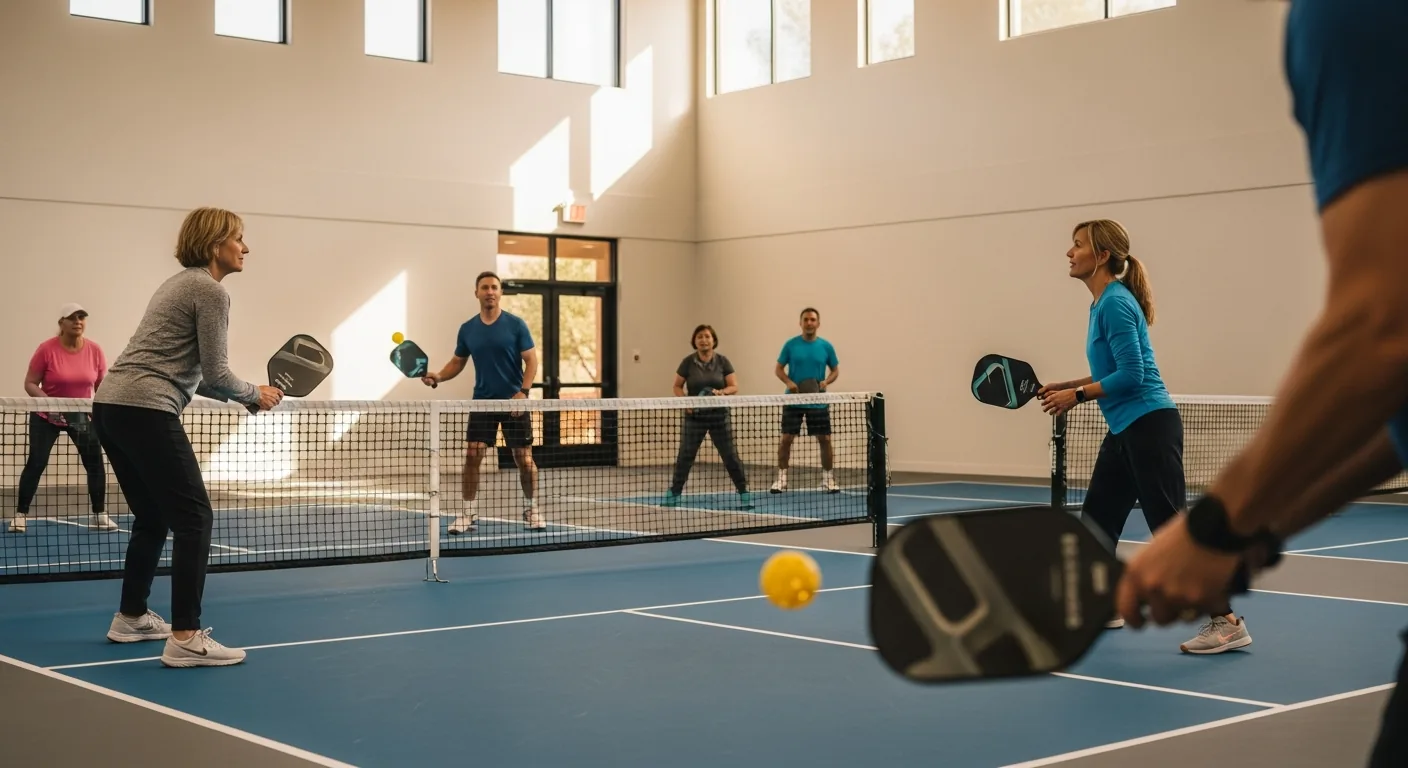
Indoors, wind simply isn’t a factor. The ball goes where you send it. That’s less romantic and, for some, less interesting — but it’s why indoor play tends to reward clean technique and longer rallies. If you’re working on a drop shot or a reset, four walls and still air are the better classroom.
The ball itself
This surprises people: indoor and outdoor pickleball are usually played with different balls, and they don’t behave the same way.
- Outdoor balls are harder, slightly heavier, and have around 40 smaller holes. The smaller holes help the ball cut through wind and hold a straighter line. The trade-off is a harder, faster, slightly less forgiving feel — and outdoor balls crack more often in cold weather.
- Indoor balls are softer, a touch lighter, and have around 26 larger holes. They play a bit slower with a softer, more predictable bounce — well suited to smooth indoor floors. (Paddletek has a good breakdown if you want the specifics.)
If you’ve only ever played one kind, switching can feel strange at first. An outdoor regular often finds indoor balls “mushy”; an indoor player often finds outdoor balls fast and lively. Neither reaction means anything is wrong — it’s just two different tools, and most players get the feel back within a game or two.
Your paddle matters less here than the ball does. If you’re rethinking your setup, how to choose a pickleball paddle is a reasonable place to start — but don’t blame the paddle for what’s really a ball you haven’t adjusted to yet.
Sun and glare
Outdoor sun does two things. It warms you up nicely on a cool morning, and it can blind you on an overhead at the wrong hour. Tracking a high ball straight into the sun is a real disadvantage, and it’s why outdoor players obsess over court orientation and time of day. Sunglasses help; they don’t solve it. Neither does sunscreen, which you will still want, because an afternoon of doubles in open desert sun adds up fast.
Indoors, lighting is even and constant. A well-lit indoor court has no glare, no shadows creeping across the kitchen line at 5 p.m., and no “bad end” to dread. You see the ball the same way at noon and at night, and nobody loses a point because the lob disappeared into the sky.
Temperature and comfort
This is where geography decides a lot.
In mild climates, outdoor temperature is a non-issue most of the year, and playing outside is simply pleasant. In places with real extremes, it’s a different story. Sedona sits at roughly 4,300 feet, which means hot summer afternoons and genuinely cold winter mornings. Outdoor play here is wonderful in the shoulder hours and rough in the middle of a July afternoon or at sunrise in January. Court surfaces bake in direct sun, too — dark acrylic can run well above the air temperature, which is its own kind of tired by game three.
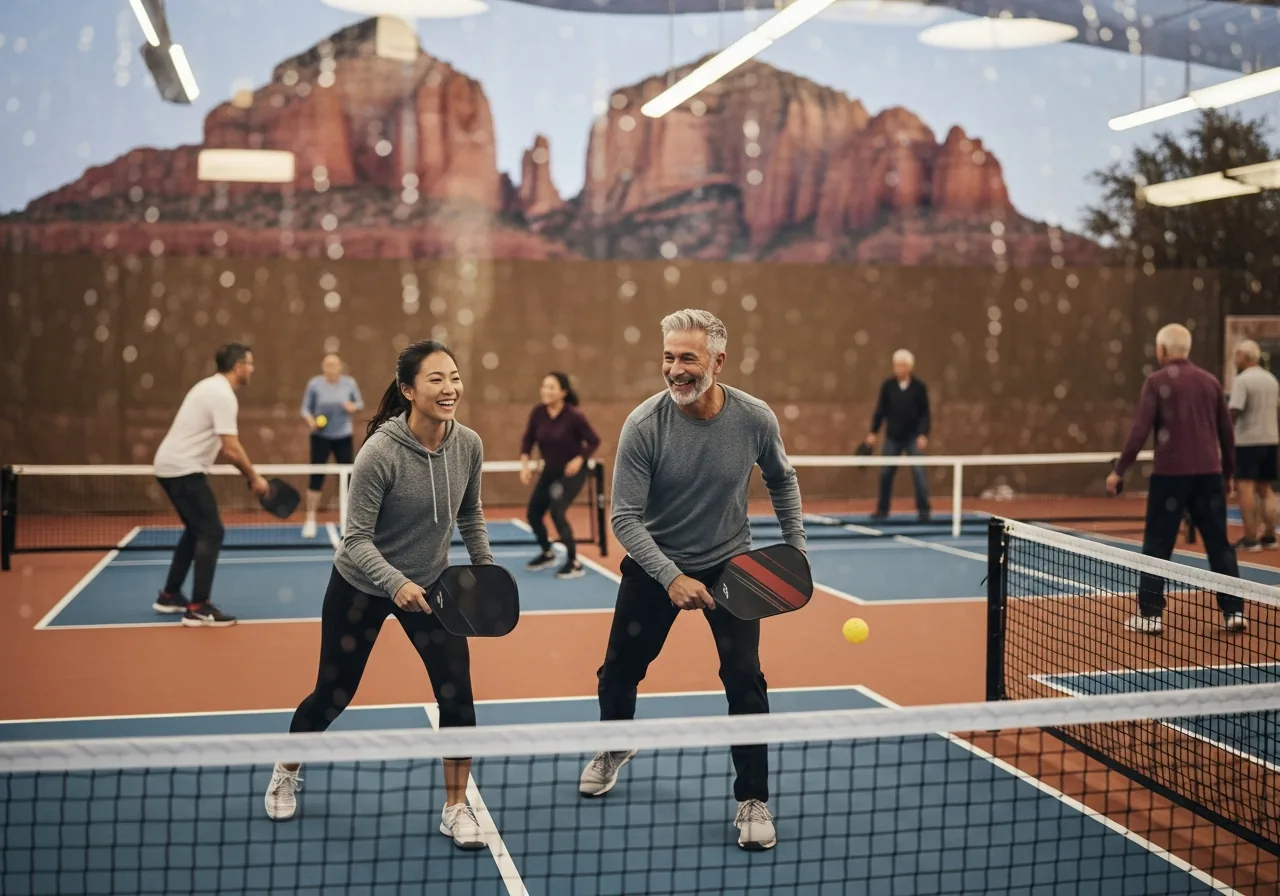
Indoor courts that are heated and cooled erase that swing entirely. You play in the same comfortable conditions in August as you do in December, and the only sweat is the kind you earned. For more on timing an outdoor session around the heat, see the best time to visit Sedona for pickleball, which breaks down the months when outdoor play is actually at its best.
Surface and bounce
Surfaces differ in both settings, but the patterns are fairly consistent.
Outdoor courts are typically acrylic-coated concrete or asphalt — firm, with a lively, true bounce and a bit more grip and abrasion. Indoor courts are often wood or a cushioned sport surface, which tends to play a touch softer underfoot and is easier on the knees over a long session. Combine an indoor floor with a softer indoor ball and you get a slightly slower, more controlled rally. Neither bounce is “correct” — they’re just different baselines you calibrate to within a few points.
If you’re curious about the lines and spacing that stay the same no matter where you play, the regulation court dimensions don’t change between indoor and outdoor. A court is 20 by 44 feet with a 7-foot non-volley zone whether it’s under the sky or under a roof.
Lighting and time of day
Outdoors, your playable hours are tied to daylight unless the court has lights, and even lit outdoor courts can attract bugs and feel different after dark. The sweet spots are early morning and evening, especially in summer — which is lovely, but it also means everyone wants the same two windows, and public courts get crowded right when the temperature is bearable.
Indoors, time of day is irrelevant. You can play at 6 a.m. before a hike or at 9 p.m. after dinner, and the court looks and plays exactly the same. That flexibility is easy to dismiss until you’ve tried to organize four people around a narrow weather window and watched a thunderstorm roll in twenty minutes before your game.
Noise
Pickleball is famously loud — that sharp pop of paddle on ball carries. Outdoors, the sound dissipates into the open air, which is part of why public outdoor courts sometimes end up in disputes with neighbors. Whole communities have written ordinances over it.
Indoors, the sound is contained within four walls, so it doesn’t travel to the people around you. The flip side is that it can echo inside the room, depending on the space and how it’s finished. If court noise is something you think about — as a player or a neighbor — the indoor solution to pickleball noise goes deeper on why walls and a roof solve the neighbor problem that open-air courts can’t.
Side by side
| Factor | Outdoor | Indoor |
|---|---|---|
| Wind | A real variable; you learn to play it | None |
| Ball | Harder, faster, ~40 small holes | Softer, slower, ~26 larger holes |
| Sun / glare | Can blind overheads; orientation matters | Even, glare-free light |
| Temperature | Tied to weather and season | Constant, when heated and cooled |
| Surface | Firm acrylic concrete; lively bounce | Wood or cushioned; slightly softer |
| Time of day | Limited by daylight unless lit | Anytime, always the same |
| Noise | Dissipates outward; can bother neighbors | Contained indoors; may echo in the room |
| Atmosphere | Fresh air, sun, open-court feel | Predictable, private, weatherproof |
So which is better?
For pure atmosphere on a calm, mild day, outdoor is hard to beat. Fresh air, sunshine, and the open feel of a court under the sky are a genuine pleasure, and the wind and light are part of the challenge that many players genuinely enjoy. If you live somewhere temperate and you like reading conditions as part of the game, there’s no reason to play under a roof. We’re not here to talk you out of a beautiful morning outside.
What indoor offers instead is consistency and control. The ball does the same thing every time. The light never changes. The temperature is whatever you set it to. You can play on a schedule rather than around a forecast. That matters most in two situations: when the climate runs to extremes, and when you simply want to play and not gamble on the weather.
Sedona is a clear example of both. The red-rock setting is stunning, but the same elevation that gives you crisp mornings also gives you blazing afternoons and cold dawns. Outdoor courts here are at their best for a few hours a day in the right season — and they’re worth seeking out in those hours. If you’re planning a trip and want to know your outdoor options too, where to play pickleball in Sedona covers the local public scene. An indoor court doesn’t replace any of that; it just takes the weather off the table for the rest of the day, so you get a full, regulation game whenever it suits you, summer or winter, morning or night.
If you’re weighing a visit, it’s worth thinking about the best time to visit Sedona for pickleball and scoping out where to play pickleball in Sedona before you go — and if quiet, weatherproof play is the priority, the indoor solution to pickleball noise makes the case for four walls and a roof. You can always https://www.airbnb.com/rooms/1650915758723763330 if a private indoor court is the version of the trip you’re after.
Frequently asked questions
Are indoor and outdoor pickleballs really different?
Yes. Outdoor balls are harder and slightly heavier with around 40 small holes, which helps them cut through wind. Indoor balls are softer and a touch lighter with around 26 larger holes, so they play a bit slower with a more forgiving bounce. If you switch, the new ball can feel strange for a game or two — that’s normal, not a sign anything’s wrong.
Is indoor pickleball easier than outdoor?
Not easier, just more predictable. Indoors there’s no wind and no sun glare, so the ball does the same thing every time and clean technique gets rewarded. Outdoors you’re managing real variables, which some players love and some find frustrating. They’re slightly different games rather than easy versus hard.
Why does indoor pickleball matter so much in Sedona?
Elevation. Sedona sits around 4,300 feet, so summer afternoons get hot and winter mornings get cold. Outdoor courts are at their best for a few hours a day in the right season, while an indoor, climate-controlled court plays the same in August as it does in December — any hour, any forecast.
Can you play pickleball indoors year-round?
On a heated, air-conditioned, lit indoor court, yes — weather and daylight stop being the limiting factor, so you can play at 6 a.m. or 9 p.m. in any season. That’s the main reason indoor courts appeal to anyone who wants to keep a schedule instead of planning around the sky.
Play year-round in red rock country
Sedona Pickler is a private Sedona home with its own indoor, climate-controlled pickleball court. Rally any season, any hour — heated, cooled and lit, with paddles and balls provided.
Check availability on Airbnb