Slide Rock State Park: Sedona's Natural Water Slide
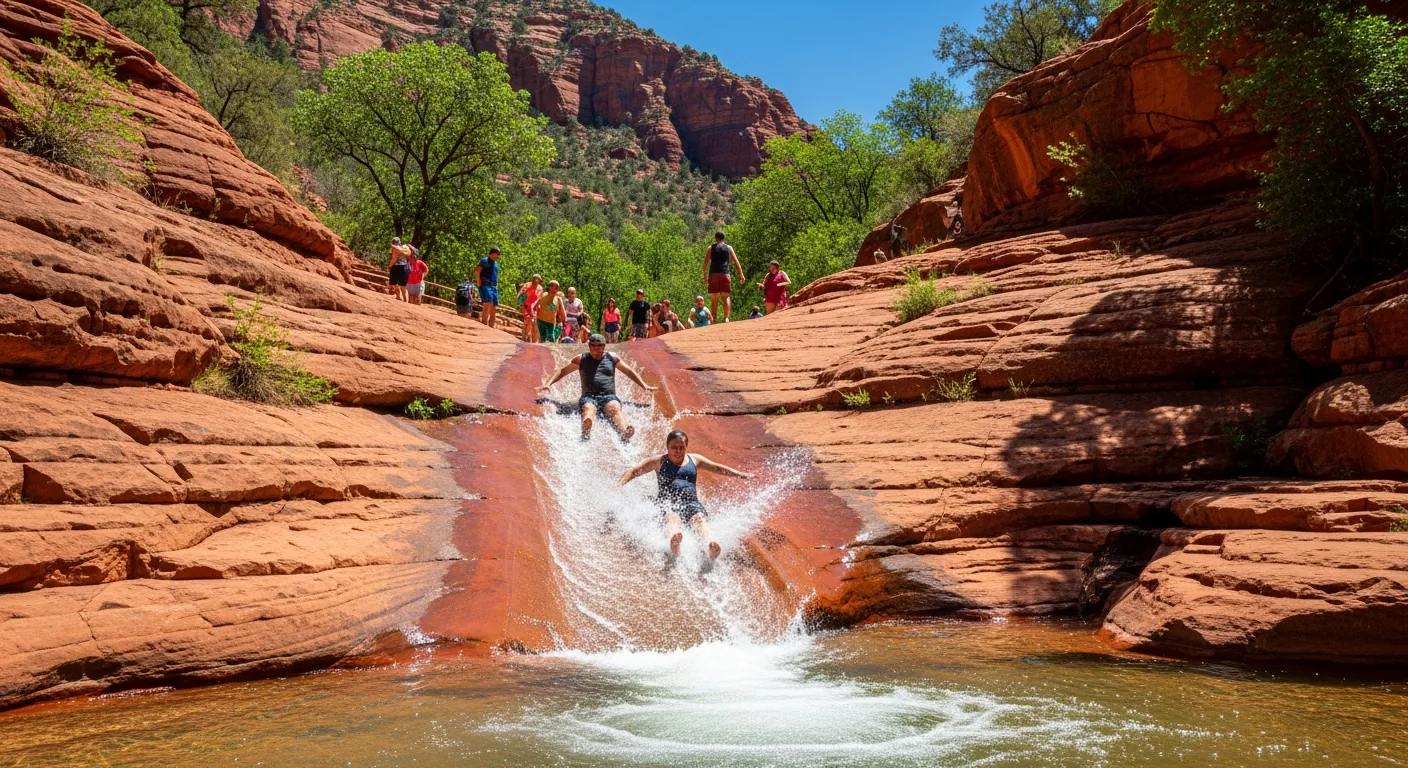
Slide Rock is one of those rare Sedona spots that lives up to the postcards and the warnings at the same time. It’s a genuinely fun, genuinely cold natural water slide carved into red sandstone by Oak Creek, set on a century-old apple farm about seven miles north of town. It’s also crowded, the parking lot fills early, the rocks are slick with algae, and on a bad week the creek can get closed for bacteria — so it pays to know what you’re walking into before you load up the car.
What Slide Rock Actually Is
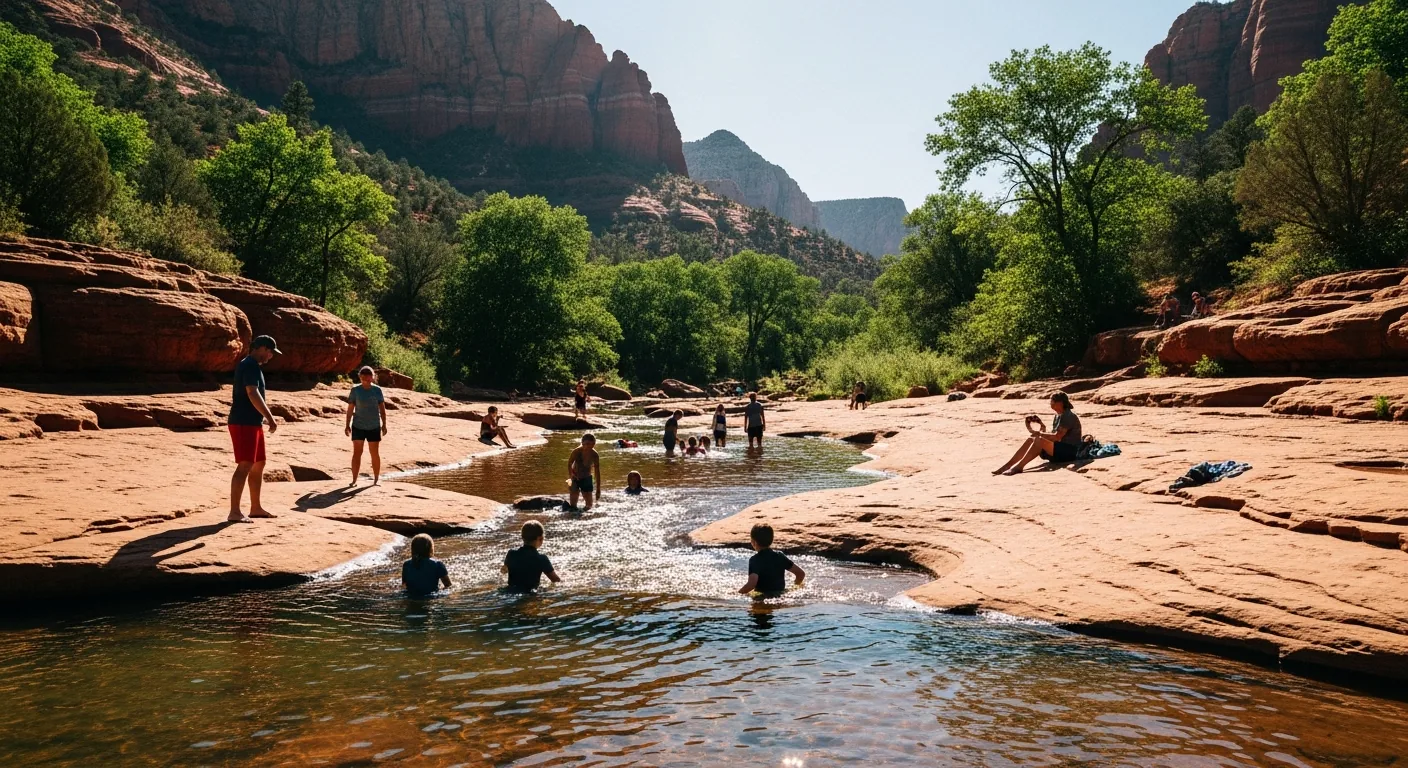
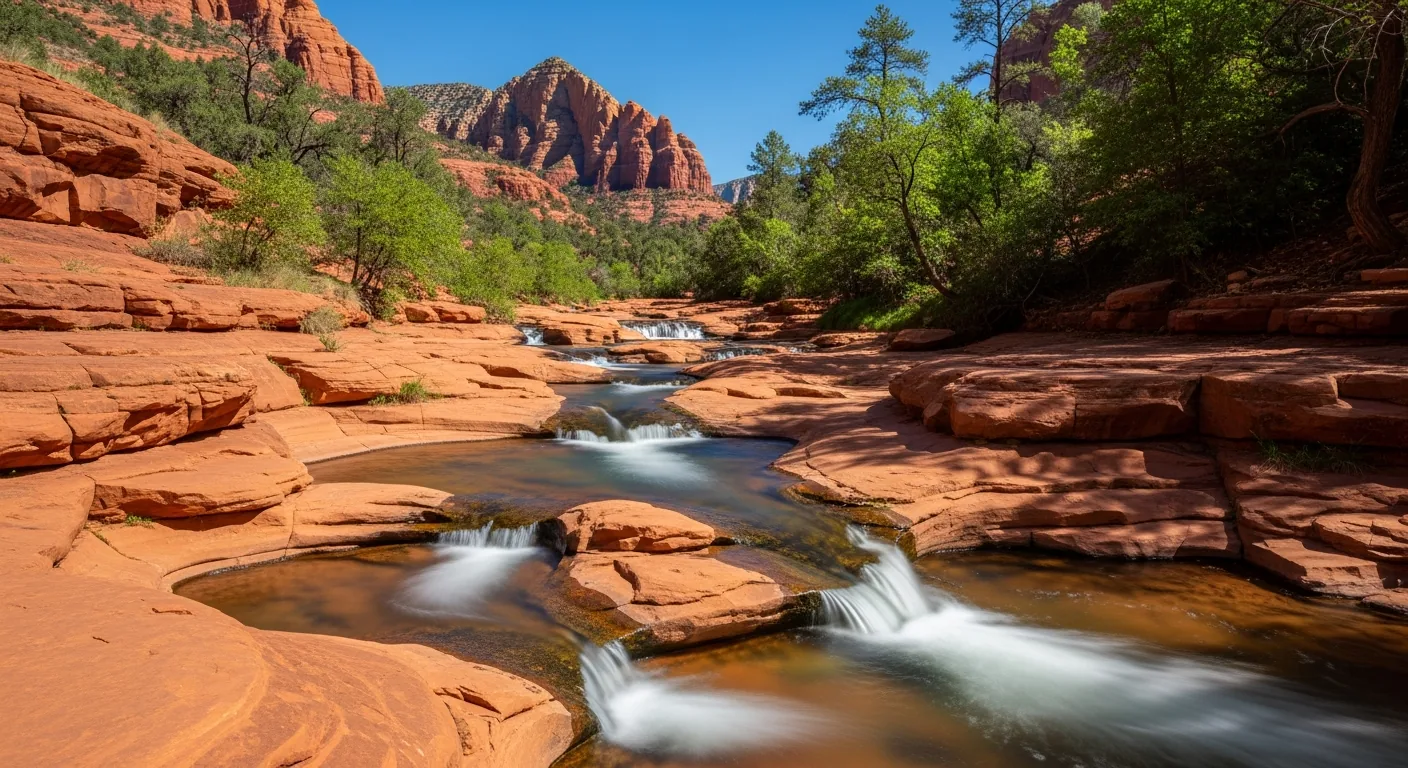
Slide Rock State Park takes its name from exactly what it sounds like: a natural chute in the bed of Oak Creek where the water has polished the sandstone smooth over thousands of years. The main slide runs about 80 feet long and 2.5 to 4 feet wide, with a gentle grade — roughly a 7 percent decline from top to bottom. You sit down in the moving water, the current does the rest, and you skitter down into a pool at the bottom. It’s not an engineered flume with a smooth fiberglass surface; it’s real rock, with real bumps, and a thin coat of algae that makes it both slippery and a little abrasive.
The whole swimming stretch of the creek runs close to half a mile, so even on a busy day there’s more water than just the famous slide. People wade, float, find quieter pools upstream and down, and stake out boulders to dry off on. The water comes off the high country around Flagstaff, so it stays cold most of the year — refreshing in July, teeth-chattering in May and September. That cold is part of the appeal and part of the reason kids tap out faster than they expect.
This is a state park, not a national forest site, which matters for one practical reason: you pay an Arizona State Parks per-vehicle entrance fee at the gate, and a Red Rock Pass does not get you in here. (The Red Rock Pass covers Coconino National Forest day-use lots like the ones for Cathedral Rock or West Fork — not Slide Rock.) More on the money below.
A Working Apple Farm With a Swimming Hole
One of the things that makes Slide Rock different from a plain swimming hole is that you’re walking through a piece of Oak Creek Canyon history. The land was homesteaded by Frank Pendley, who came into the canyon in 1907 and formally claimed the property under the Homestead Act in 1910. Pendley built an irrigation system — still in use by the park today — that let him plant his first apple orchard in 1912. Apples became the family’s cash crop, and the homestead grew to include a house, an apple packing shed, and a cluster of small tourist cabins from the 1920s and 30s.
Arizona State Parks bought the Pendley Homestead in 1985 and dedicated it as Slide Rock State Park in 1987. The historic apple orchard is still here — a few hundred trees that the park keeps going — along with the original buildings you can walk past on the short stroll from the parking lot down toward the creek. In late summer and fall, if the harvest cooperates, the on-site market sells apples, cider, and apple products. It’s a low-key thing, not a tourist trap, and it gives you a reason to linger that has nothing to do with getting wet.
The Short Walk In
From the parking lot you’ll walk roughly half a mile down to the creek and the slide area. It’s a relatively easy paved-then-dirt path past the orchard and the old farm buildings, but the last stretch down to the water involves stairs and uneven, slippery rock. Budget more time than the distance suggests, especially with kids, coolers, and chairs in tow.
The walk in is genuinely pleasant and worth slowing down for. You pass the historic farmhouse and the old apple packing shed, interpretive signs that lay out the Pendley story, and rows of apple trees that the park still irrigates with Frank Pendley’s original ditch system. It’s the kind of approach that turns a swim stop into a small history lesson — kids who don’t care about homesteading still notice that they’re walking through a real, old, working farm to get to the swimming hole. If you’re carrying a heavy cooler, this is the part where you’ll wish you’d packed lighter, so be realistic about what you actually need at the creek versus what can stay in the car.
Getting There and Parking
Slide Rock sits at 6871 N. Highway 89A, about 7 miles north of Sedona in Oak Creek Canyon. From Uptown Sedona you simply head north on AZ-89A — the same gorgeous, twisting canyon road you’d take for the Oak Creek Canyon scenic drive — and the park entrance is well signed on the right (the creek side). Coming from the north, it’s about 21 miles south of Flagstaff on the same highway, down the switchbacks.
The drive itself is short on paper but slow in practice. 89A through the canyon is a two-lane road with a 25–35 mph feel, lots of slow-moving traffic in summer, and frequent stops where people pull over for photos. Give yourself 20–30 minutes from town, more on a weekend morning.
The Parking Reality (Read This Part)
Parking is the single biggest headache at Slide Rock, and it got stricter in 2026. The lot holds about 156 vehicles, and on a summer day it fills fast — often by mid-to-late morning. Here’s what changed and what you need to know:
- No more lining up on the highway. Starting in May 2026, the park stopped letting cars queue in the 89A right-turn lane waiting for a spot. When the lot is full, the gate simply closes and stays closed until enough cars leave to admit a new batch.
- The lot can stay closed for hours — sometimes the better part of a day on a peak weekend.
- Vehicle entry only. No walk-ins, no bicycle entry, and no drop-offs. You cannot park down the road and hike in to dodge the fee or the closure — the park admits people by vehicle through the entry station, period.
The practical upshot: arrive at opening, or come in the off-season, or have a real backup plan. I’ll cover timing strategy below.
Fees, Hours, and Confirming Before You Go
Slide Rock charges a per-vehicle entrance fee that changes with the season, and both fees and hours get adjusted from time to time — so treat the numbers below as a guide and confirm the current rates and hours on the Arizona State Parks website or by calling the park (928-282-3034) before you drive out.
| Item | Typical (confirm before visiting) |
|---|---|
| Entrance fee, peak season (roughly May–Sept) | ~$30 per vehicle, up to 4 people |
| Entrance fee, off-season (roughly Oct–April) | ~$20 per vehicle, up to 4 people |
| Each additional adult over 4 | ~$5 |
| Kids under 6 | Free |
| Daily hours, most of the year | ~8 a.m.–6 p.m. (swim area closes earlier) |
| Daily hours, winter | ~9 a.m.–5 p.m. (swim area closes earlier) |
| Last entry | About 1 hour before closing |
A few notes that don’t fit neatly in a table:
- The swim area closes before the park does — usually about an hour ahead of the gate. If you show up at 4:30 in summer expecting to slide, you may find the water portion already roped off.
- The fee is charged per vehicle, not per person, which makes it a good deal for a carful and a steeper one for a couple. Cram four or five people into one car if you can.
- Payment is taken at the gate; check the park’s site for current accepted payment methods before you go.
Local tip: The per-vehicle fee is the same whether you arrive at 8 a.m. or 2 p.m. — so the smartest play is to make the most of it. Get there at opening, snag a parking spot, claim a shady rock, and treat it as a half-day. Bailing after 40 minutes because the lot was a nightmare means you paid full price for a sliver of the experience.
Best Time of Day and Season
Time of Day
Go at opening. I can’t say it plainly enough. If the gate opens at 8 a.m., be in line at 7:45. You’ll get a parking spot, the rocks will be in shade and less brutal underfoot, the water will be glassy, and you’ll have a good hour or two before the crowds and the heat arrive. By late morning on a summer weekend, the lot is often full and the slide is shoulder-to-shoulder.
The other workable window is late afternoon, after the lunchtime peak thins out — but watch the clock, because the swim area closes before the gate does, and you don’t want to pay full freight for 30 minutes of water.
Season
- Summer (June–August): Peak everything. Warmest air, most crowded, highest fees, and the season when monsoon storms can spike bacteria levels (see safety). The water is still cold but the air makes it bearable. This is when the no-lineup parking rule bites hardest.
- Late spring (May) and early fall (September): A sweet spot. Fewer people, the water’s still swimmable on a warm day, and the orchard looks great in fall. The creek is genuinely cold in May.
- Fall (October–November): Apple season and beautiful canyon color. Many people come just for the orchard, the market, and the walk — not the swim, which gets too cold for most.
- Winter: Quiet, cheap, and scenic if there’s snow on the rocks, but nobody’s sliding. Shorter hours. A nice contemplative stop, not a swim day.
What to Bring
Slide Rock rewards a little preparation. The single most important item:
- Water shoes. Not optional. The rocks are slick with algae and sharp in spots, and barefoot is a recipe for a fall or a cut. Closed-toe water shoes or an old pair of sneakers you don’t mind soaking are ideal. Flip-flops will float away and won’t protect your feet.
- A towel and a change of clothes — the water is cold and you’ll want dry layers, especially in spring and fall.
- Sunscreen and a hat. There’s shade among the trees and rocks, but the swim area itself gets direct sun.
- Water and snacks. There’s a market on site (seasonal hours), but bringing your own is cheaper and avoids lines. No glass containers near the creek.
- A cooler and camp chairs if you’re making a day of it. Stake out a flat rock or grassy spot early.
- Cash or card for the gate, and don’t count on cell service in the canyon.
- A dry bag or zip-top bags for phones, keys, and wallets. People drop phones in the creek constantly.
Skip the inflatables and the glass. And don’t bother bringing the dog into the swim area — check current pet rules on the park site, as they’re restricted around the water.
Accessibility
Be honest with yourself and your group about this one. The route down to the creek and the slide includes a roughly half-mile walk that ends in stairs and uneven, slippery rock. The swimming and sliding area is not wheelchair accessible, and even able-bodied visitors with balance concerns should take the rocks slowly.
That said, the upper part of the park is more manageable. There are modern, ADA-accessible restrooms with sinks and a drinking fountain located above the creek, and the orchard area and historic buildings are reachable on a relatively gentle path. A flush-free vault toilet sits closer to the creek but is not ADA accessible. So someone who can’t make it down to the water can still enjoy the farm, the orchard, the views into the canyon, and a picnic up top while the rest of the group goes sliding.
How to Avoid the Crowds
There’s no magic trick that empties Slide Rock on a July Saturday, but you can stack the odds:
- Arrive at opening. This is 80 percent of the battle. The lot fills mid-morning in summer; first arrivals win.
- Go midweek. Tuesday through Thursday are noticeably calmer than weekends and holidays.
- Avoid holiday weekends entirely — Memorial Day, July 4th, and Labor Day are the worst, with the gate often closing by late morning.
- Come in the shoulder season. A warm day in May, September, or early October gives you most of the experience with a fraction of the people.
- Have a backup. If you roll up at 11 a.m. and the gate’s closed, don’t sit and stew. Drive a few more minutes up the canyon to a Forest Service swimming area, or pivot to a nearby hike. (Pairings below.)
- Walk upstream or downstream. Even on a busy day, the crowd clusters at the main slide. The creek runs nearly half a mile through the park; wander a bit and you’ll find quieter pools.
Safety: The Honest Version
Slide Rock is fun, but it’s a natural waterway, not a regulated pool. A few things genuinely matter.
Slips and Falls
The rocks are slick with algae and unpredictably slippery — that’s literally why the slide works. Walk slowly, wear water shoes, and watch kids constantly. Most injuries here are bumps, scrapes, and the occasional sprained ankle from a fall on the rocks.
Cliff Jumping
There are spots in and around the park where people jump from rocks and ledges into pools, including a well-known jump near the highway bridge, and you’ll see TikToks of much bigger leaps. Water depth and submerged rocks change with the season and with flow. There are no lifeguards anywhere in the park. If you’re going to jump at all, check the depth yourself first, never jump into water you haven’t verified, and understand that serious injuries happen here. Plenty of people skip the jumping entirely and have a great time on the slide.
Cold Water and Current
The creek is cold enough to cause cold-shock and tire weak swimmers quickly. After rain, flow can pick up fast. Keep an eye on kids and anyone who isn’t a strong swimmer. The water comes off the high country and stays cold even in midsummer, so don’t assume a hot day means warm water — the contrast is exactly what makes a quick dunk so refreshing and a long soak so chilly. If a thunderstorm is building over the canyon, get out and head up to the orchard; flash flooding is rare here but flow and debris can change quickly, and lightning over open water is never worth the risk.
Sun, Heat, and Hydration
Even though there’s shade among the trees, the swim area and the rocks take direct sun for much of the day, and the canyon traps heat in summer. The reflective rock can leave you more sunburned than you expect. Reapply sunscreen, wear a hat, drink more water than you think you need, and take breaks in the shade — heat plus cold water plus a long slick walk back to the car is how a fun day turns into a miserable one.
Water Quality — Check Before You Swim
This is the one people don’t expect. Oak Creek periodically gets closed to swimming because of elevated E. coli bacteria, usually after summer monsoon runoff washes contamination into the water. The park and the Arizona Department of Environmental Quality test the creek weekly through the warm season, and when levels exceed safe thresholds, swimming is posted as closed at the gate.
- Closures most often happen in July and August, after storms.
- The park doesn’t always announce them far in advance — they post signs at the entrance.
- Call ahead (928-282-3034) or check the park’s water-quality page and social media during monsoon weeks before you commit to a swim day.
- If the creek is posted unsafe, you can still visit the orchard and grounds — just keep yourself and the kids out of the water.
Local tip: During monsoon season (roughly July into September), check the water-quality status the morning of your visit, not the night before. A storm overnight can flip a clean creek to a posted closure by morning, and it’s a long drive to find out at the gate.
What to Pair It With Nearby
Slide Rock is a half-day at most, and it’s in the heart of the canyon, so it pairs beautifully with other stops along 89A north of town. A few ideas:
- West Fork Trail. A few miles further up the canyon, this is one of the most loved hikes in the area — shaded, creekside, with multiple stream crossings. It’s a perfect “we got rained out of the slide” or “the gate was closed” backup. See the West Fork guide. Note it has its own Forest Service parking fee.
- The Oak Creek Canyon drive itself. If you’re already on 89A, keep going up to the switchbacks and the overlook near the top for one of the best views in northern Arizona. We cover the whole route in the Oak Creek Canyon drive guide.
- Easier red-rock hikes. If the swim plans fall apart, Sedona’s classic easy trails are 20–30 minutes back toward town. Start with our easy hikes roundup.
- A real meal afterward. You’ll be hungry and waterlogged. Head back into town for a bite from our best restaurants guide.
And honestly, if the lot’s full, the creek’s posted closed, and the canyon’s a zoo, there’s no shame in turning around. When we stay at Pickler House, some of our best Sedona afternoons have been a quiet morning at the slide followed by a hot shower and a few rallies on the indoor court while a monsoon storm rolls over the rocks outside.
A Quick Honest Summary
Slide Rock is worth doing, with eyes open. It’s a real, fun, photogenic natural water slide on a beautiful old apple farm, and for families it can be the highlight of a Sedona trip. It’s also crowded, the parking is now genuinely unforgiving, the water is cold, the rocks are slick, and it occasionally closes for bacteria. Do these four things and you’ll have a great day:
- Arrive at opening, or come in the shoulder season.
- Wear water shoes.
- Check the water-quality status before you swim during monsoon season.
- Have a backup plan for the day the gate is closed when you arrive.
Get those right and the rest is just cold water, smooth sandstone, and the smell of apple trees in the canyon.
Frequently asked questions
Does a Red Rock Pass cover Slide Rock State Park?
How much does it cost to get into Slide Rock?
What time should I arrive to get parking?
Is the water at Slide Rock safe to swim in?
Do I really need water shoes?
Is Slide Rock wheelchair accessible?
Stay where you can rally any season
Sedona Pickler is a private West Sedona vacation home with its own indoor, climate-controlled pickleball court — a short drive from the trailheads, viewpoints and restaurants in this Sedona guide. Play at sunrise or after dark, in any weather.
Check availability on Airbnb