Sedona Wineries & the Verde Valley Wine Trail
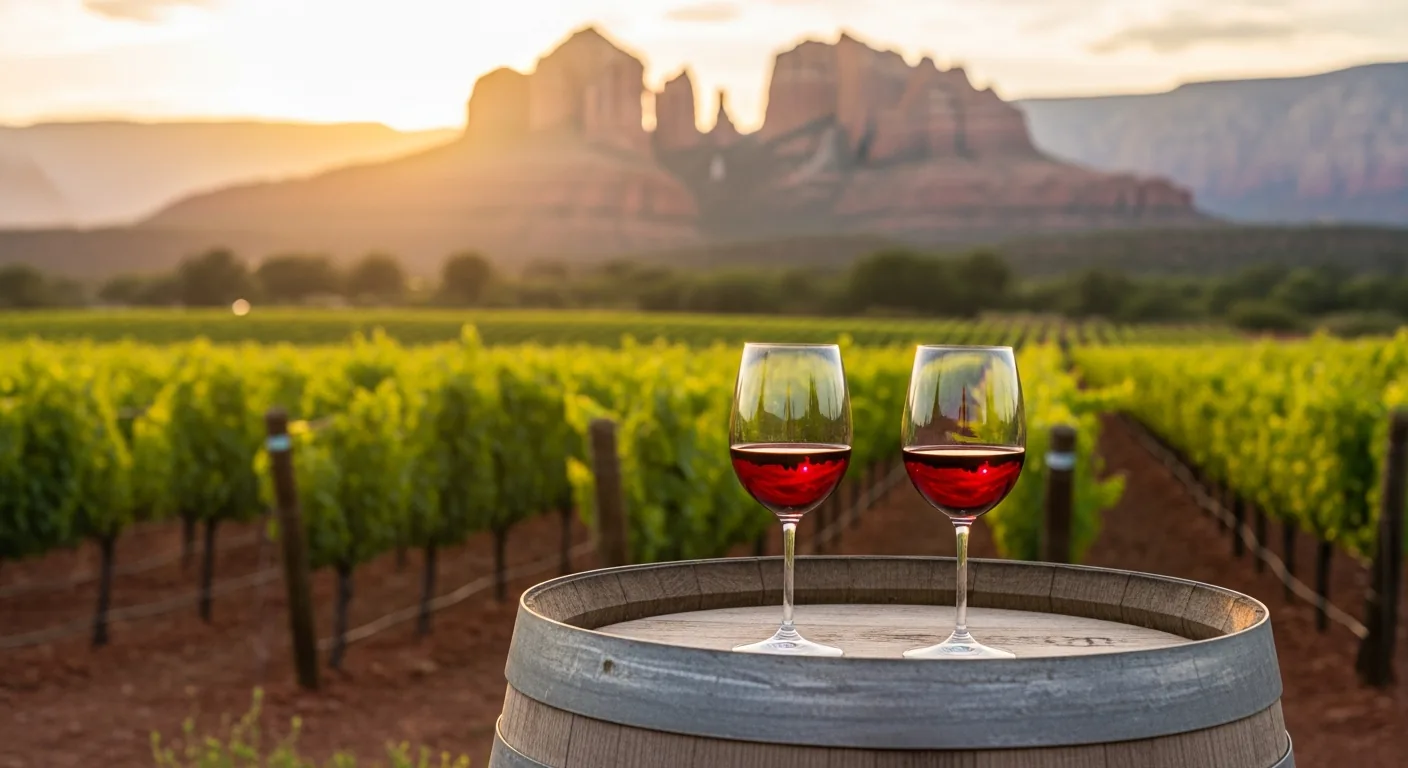
Here’s the thing most first-time visitors don’t realize: Sedona itself has only a couple of tasting rooms, but it sits about fifteen to thirty minutes from one of the most interesting young wine regions in the country. The Verde Valley grows grapes at elevation in volcanic soil, and the wines lean toward warm-climate reds and Mediterranean whites rather than the buttery Chardonnays people sometimes expect. Plan a half-day, line up a designated driver, and you’ll come away surprised — Arizona wine is real, and some of it is genuinely good.
This guide walks you through where to taste in Sedona, the three main clusters out in the valley (Page Springs/Cornville, Old Town Cottonwood, and Jerome), what actually grows here, the annual festival, and how to do all of it without anyone having to white-knuckle the drive home.
What the Verde Valley AVA actually is
In November 2021 the federal Alcohol and Tobacco Tax and Trade Bureau granted the Verde Valley its own American Viticultural Area (AVA) — Arizona’s third, after Sonoita and Willcox down south. An AVA is a legally defined grape-growing region, the U.S. equivalent of the appellation system you’d see in Europe. Getting one is a milestone: it means the area has a distinct enough climate and geology to put its name on a bottle and have it mean something.
The Verde Valley AVA covers roughly 219 square miles of northeastern Yavapai County, centered on where Oak Creek meets the Verde River. The whole thing sits at a surprisingly high elevation — most vineyards are between about 3,400 and 5,000 feet. That altitude is the secret sauce. Hot days and cool nights create a big day-to-night temperature swing during the growing season, which slows the grapes’ ripening, stretches out the season, and tends to produce more complex, balanced wine. The soils are largely volcanic, with patches of loam and gravel, which the local growers will happily tell you echoes parts of the Rhône and southern Italy.
What this all means for you, the visitor: don’t come expecting Napa. Come expecting something more rugged and experimental, made by a relatively small group of growers who are still figuring out exactly what this land does best. That’s part of the fun.
What grows here (and what to order)
The Verde Valley is warm and high, so it favors grapes that handle heat and sun. Across the region’s vineyards you’ll find more than forty varieties planted, but a handful show up again and again and tend to be where the region shines.
| Style | Varieties you’ll see a lot | What to expect |
|---|---|---|
| Bold reds | Syrah, Petite Sirah, Tannat, Cabernet Sauvignon | Ripe, sometimes peppery; the region’s calling card |
| Italian-leaning reds | Sangiovese, Barbera, Aglianico | Brighter acidity, food-friendly |
| Aromatic whites | Malvasia Bianca, Viognier, Vermentino, Picpoul Blanc | Floral, citrusy, often the surprise hit of a tasting |
| Crisp/varietal whites | Chardonnay, Seyval Blanc | More familiar styles, less common here |
| Blends & rosé | Rhône-style and Italian-style blends | Where a lot of winemakers do their best work |
A few honest notes. The whites — particularly Malvasia Bianca and Viognier — convert a lot of skeptics, so don’t skip them just because you came for reds. Rhône-style and Italian-style blends are often more interesting than the single-varietal bottles, because they let the winemaker balance Arizona’s intense fruit. And if a tasting room is pouring something you’d never find at home, that’s the one to try; you didn’t drive out here for a Cabernet you can buy anywhere.
Local tip: Buy the bottle you loved at the tasting room itself. Many of these producers are small and don’t distribute far beyond Arizona, so that wine you really liked may be genuinely hard to find once you’re home. Tasting fees are also frequently waived or credited if you buy a bottle or two — just ask.
Tasting in Sedona itself
If you only have a couple of hours, or you don’t want to drive out into the valley at all, Sedona has two solid options. Neither is a working winery — they’re tasting rooms and wine bars — but both pour Arizona wines alongside bottles from around the world.
The Art of Wine (Uptown)
Tucked into Uptown at the north end of town, The Art of Wine is the easy in-town choice. It’s a husband-and-wife-run wine bar with indoor and patio seating, red-rock views, and a tasting list that includes a rotating set of Arizona wines along with several hundred bottles from elsewhere. They also pour craft beer, local mead, and sake, so it works even if your group isn’t all wine drinkers. Hours generally run late morning into the evening, a bit later on weekends — confirm before you go.
Vino di Sedona (West Sedona)
Out on 89A in West Sedona, Vino di Sedona is the bigger, livelier room — a deep wine list (they advertise hundreds of selections), craft beer on tap, mead, a real food menu of flatbreads, sandwiches, salads, and tapas, plus a big outdoor space that often has live acoustic music. It’s a good landing spot for an evening rather than a quick flight. Again, hours vary by season and by night; check ahead.
Both are walkable-ish to other things in town, which makes them an easy add-on rather than a dedicated trip. If you’re staying central, you could taste here in the evening and save the valley wineries for a full day.
Page Springs & Cornville: the vineyard cluster
This is the one to do if you want to actually stand in a vineyard. The Page Springs and Cornville area sits about fifteen minutes south of Sedona, and several wineries are clustered close together along North Page Springs Road, which makes hopping between them easy. This is the prettiest of the three clusters — green, creek-fed, and genuinely scenic.
Page Springs Cellars
The anchor of the area. Page Springs Cellars is a family-owned winery and vineyard built into the volcanic hillside overlooking Oak Creek, focused heavily on Rhône-style wines (think Syrah, Grenache, Mourvèdre, Viognier). They offer vineyard tours, have a tasting room and patios over the creek, and tend to be the busiest spot in the cluster — which is both a recommendation and a warning. Go early or on a weekday if you can.
Oak Creek Vineyards
A short distance away, Oak Creek Vineyards sits roughly 500 feet from Oak Creek at about 3,400 feet, in the shadow of House Mountain, on mostly volcanic soil. It has a relaxed, picnic-friendly feel — bring a blanket, grab a glass, and settle in. It’s a good middle stop because it slows the day down.
Javelina Leap
Right in the same stretch, Javelina Leap Vineyard & Winery is a true vine-to-wine operation — they grow, ferment, bottle, and label on site, processing Arizona-grown fruit into a few thousand cases a year, with a lean toward bigger reds. There’s a bistro element too, so it’s another spot you can eat as well as taste.
A practical sequence for a half-day in the cluster:
- Start at the room that opens earliest (often late morning) to beat the crowd.
- Do your most-anticipated winery second, before palate fatigue sets in.
- Use a third stop with food or a picnic area to eat and slow down.
- Keep it to three or four rooms total — more than that and you stop tasting and start drinking.
Old Town Cottonwood: walkable tasting rooms
If the vineyard experience is about scenery, Old Town Cottonwood is about convenience and personality. Cottonwood is about 20 to 25 minutes from Sedona, and its historic Old Town district packs roughly a five-block stretch of tasting rooms in among restaurants, antique shops, and galleries. You park once and walk — which, not coincidentally, also makes it the easiest cluster to enjoy responsibly.
A few of the rooms worth knowing:
- Arizona Stronghold — one of the state’s larger producers, with daily flights, a tapas-style menu, and frequent live music. A reliable, well-run room and a good first stop.
- Pillsbury Wine Company — owned by former film director Sam Pillsbury, who’s been known to be around and tell a story or two. The wines are well regarded and the room has character.
- Merkin Vineyards Osteria — the restaurant-and-tasting-room arm of Maynard James Keenan’s wine world (yes, the Tool/A Perfect Circle frontman), with a farm-to-table Italian menu built around Arizona-sourced ingredients. Worth a meal as much as a tasting.
There are several more along the same blocks, so it’s the cluster where you can wander, follow your nose, and not commit to a plan. Because everything is on foot, Cottonwood is my pick if your group is split between “serious wine people” and “people who just want a nice afternoon.”
Jerome: Caduceus Cellars and the cliffside town
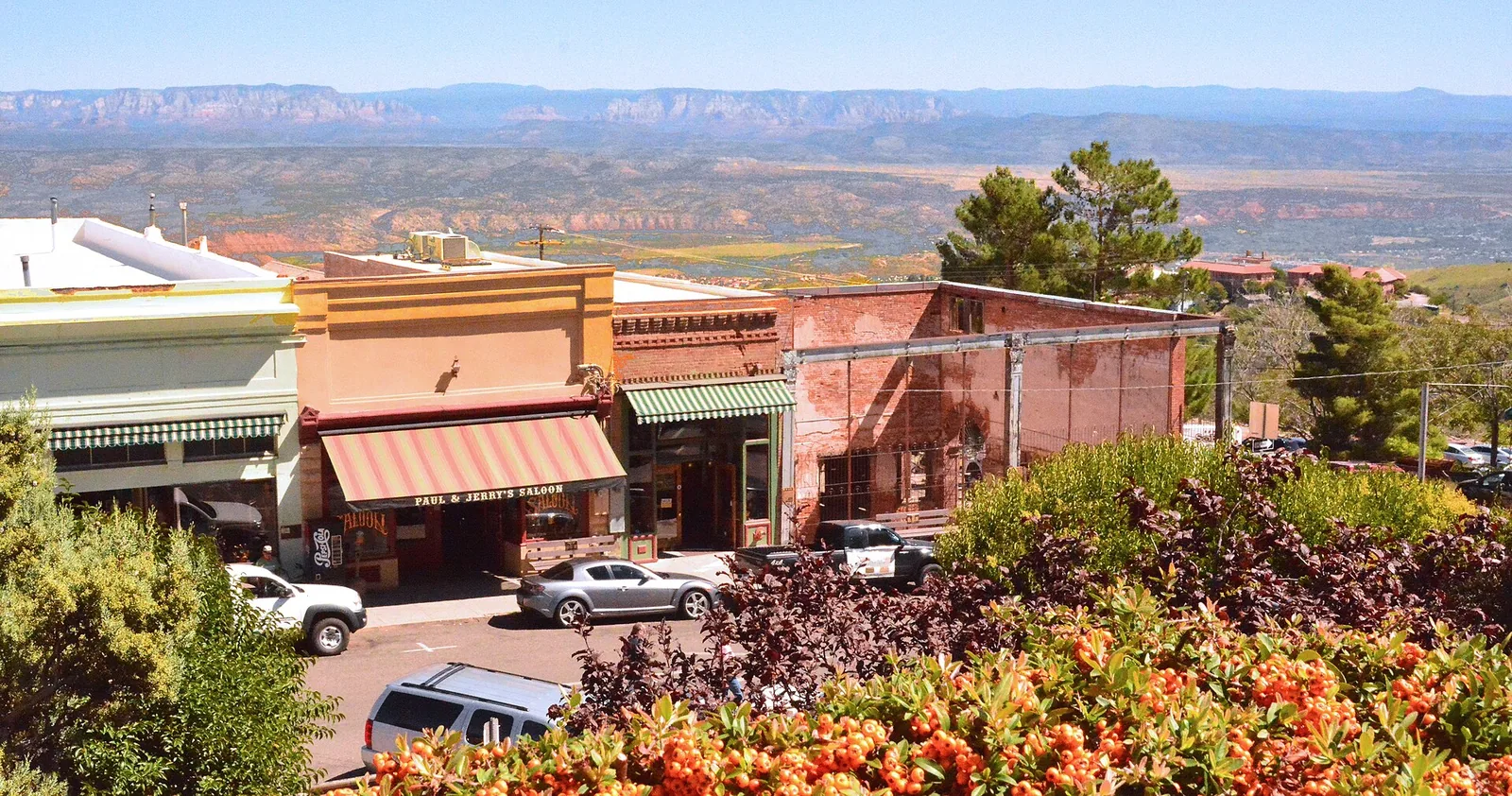
Jerome is its own day, really — a former copper-mining town clinging to the side of Cleopatra Hill at just over 5,000 feet, about 27 miles (roughly 45 minutes) southwest of Sedona via the winding stretch of Route 89A past Cottonwood. The drive up is steep and curvy with serious switchbacks, so this is doubly a place where you want someone sober at the wheel.
The wine draw here is the Caduceus Cellars tasting room on Main Street, the public face of Maynard James Keenan’s Caduceus and Merkin labels. The wines are made in small quantities (he’s described the production facility as a tiny underground “bunker”), and the room itself is compact and frequently busy, so expect to wait at peak times. Tasting hours generally run late morning into early evening, a little later on weekends — verify before you make the drive, because a closed room after that climb is a real letdown.
Beyond the wine, Jerome is worth it for the town itself: the views back across the whole valley are some of the best in the region, and the streets are full of old buildings, art, ghost-town lore, and good people-watching. Pair the tasting with a wander. If you want the fuller picture, see our Jerome day trip guide.
How to get there, and how to do it safely
This is the part people underplan. The wineries are spread across three towns, the roads include a genuinely twisty climb to Jerome, and tasting at multiple stops adds up fast even with small pours. Sort out transportation before you go.
Your realistic options:
- Designated driver in your own car. Cheapest and most flexible. Decide who’s driving before the first pour, not after.
- A guided wine tour with transportation. Several Sedona and Cottonwood operators run private and small-group tours that pick you up, drive you between three or four wineries, and handle the route for you. Expect per-person pricing that often runs well over a hundred dollars and sometimes includes lunch or a charcuterie spread; tasting fees may or may not be bundled in, so ask. This is the easiest way to do Page Springs plus Jerome in one day without driving.
- A car service or rideshare for a single cluster. Rideshare coverage is thinner out here than in a city and can be slow or unavailable in the more rural spots, so don’t count on summoning a car instantly from a vineyard. It’s most reliable around Cottonwood and in Sedona itself.
A note on cost: tasting fees in the region commonly land somewhere in the mid-teens to low twenties of dollars per flight, and some rooms include a souvenir glass or credit the fee toward a bottle. Those numbers move, so treat them as a ballpark and confirm at each room.
Local tip: Eat a real lunch partway through, not just cheese cubes. The Verde Valley sits at elevation, the days get hot, and alcohol hits harder when you’re dehydrated and a mile-ish above sea level. Drink water between tasting rooms and you’ll feel a lot better the next morning.
When to go — season and time of day
Sedona’s shoulder seasons are the sweet spot for almost everything, and wine country is no exception.
| Season | What it’s like for wine touring |
|---|---|
| Spring (Mar–May) | Mild, green, and lovely; also peak tourist season, so rooms and roads are busy |
| Summer (Jun–Aug) | Hot in the valley; patios are warm midday, monsoon storms roll in afternoons. Go in the morning |
| Fall (Sep–Nov) | Arguably the best — harvest energy, comfortable temps, the festival in September; also busy |
| Winter (Dec–Feb) | Quiet and cool; fewer crowds, some rooms keep shorter hours. A good time for the unhurried |
For time of day, late morning to mid-afternoon is ideal. Rooms open later in the morning, the light in the vineyards is good, and you finish with time to get back. Avoid trying to cram a Jerome run into late afternoon — you don’t want to be descending those switchbacks at dusk after a full day of tasting. Weekdays are noticeably calmer than weekends across all three clusters.
The Sedona WineFest
If you can time it, the Sedona WineFest is the region’s signature event — a two-day festival held each September at Posse Grounds Park in Sedona, organized by the Verde Valley Wine Consortium and running for well over a decade now. It gathers 20-plus Arizona wineries in one place, alongside food vendors, local breweries, artisans, and live music. It’s the single easiest way to taste a wide cross-section of Verde Valley producers in an afternoon without driving anywhere.
A few honest notes: it’s a festival, so it’s crowded, and it’s a tasting-by-the-pour event rather than a sit-down experience. Buy tickets ahead, wear sun protection, pace yourself, and — say it with me — arrange a ride home. Dates shift year to year, so check the current schedule before you build a trip around it.
What to bring
Nothing exotic, but a little prep makes the day better:
- Water — more than you think. Elevation plus alcohol plus Arizona sun.
- Sun protection — hat, sunglasses, sunscreen, especially for patio tastings and the festival.
- Layers — mornings and Jerome’s elevation can be cool; midday in the valley gets hot.
- A cooler in the car — so the bottles you buy don’t cook on the back seat while you finish the day.
- Cash — handy for tips and the occasional vendor, though most rooms take cards.
- A picnic blanket — for the vineyards (Oak Creek Vineyards in particular) that welcome lingering.
- An ID — obviously, and bring it even if you don’t look 20.
Accessibility
Access varies a lot by location, which is worth knowing in advance. The Cottonwood tasting rooms are the most accessible as a group — flat sidewalks, street-level entries, and short distances between rooms make Old Town the friendliest cluster for anyone with mobility limitations or a stroller. The Page Springs/Cornville wineries are built into a hillside along a creek, so expect some slopes, steps, gravel, and uneven ground between the parking and the patios; call ahead and ask about the specific room if this matters. Jerome is the hardest — it’s a steep town built on a mountainside, with hills, stairs, and narrow historic buildings throughout. If accessibility is a concern, lead with Cottonwood and ask each room directly, since older buildings don’t always have what their websites imply.
How to avoid the crowds
The wine region gets busy in the same windows as the rest of Sedona. To dodge the worst of it:
- Go on a weekday. Tuesday through Thursday is dramatically calmer than the weekend everywhere.
- Start early. Be at your first room when it opens; the crowds build through the afternoon.
- Hit the anchor wineries first. Page Springs Cellars and the Caduceus room in Jerome are the busiest — do them before the buses and tour groups arrive.
- Choose Cottonwood when Sedona is slammed. It’s a bit farther out and absorbs visitors better, especially in peak season.
- Avoid festival weekend unless the festival is the point — the whole region is busier then.
Safety and the honest downsides
A region built around drinking and driving through hill country deserves some straight talk:
- The Jerome drive is no joke. Steep grades, tight switchbacks, and drop-offs on a road that’s busy with other cars and motorcycles. Do not drive it impaired, and take it slow even sober.
- Pace and hydrate. Elevation amplifies alcohol. Small pours add up across four rooms faster than you’d guess.
- Heat is real in summer. Afternoons in the valley can be brutal; monsoon storms bring sudden downpours and even brief flooding on low spots. Build in shade and water.
- Rideshare is unreliable in the rural spots. Don’t assume you can summon a car from a vineyard at closing time. Have a plan B.
- Hours genuinely change. Small producers adjust seasonally and sometimes close for private events. A quick call the morning of can save you a wasted drive.
What to pair it with nearby
The wine clusters dovetail nicely with the rest of a Sedona trip:
- Jerome is a natural combo with a wine tasting — make a half-day of the town itself, not just the tasting room. See the Jerome day trip guide.
- Oak Creek Canyon and the scenic drive sit between Sedona and the high country, and the Oak Creek Canyon drive makes an easy morning before an afternoon of tasting.
- A big dinner in town caps the day well; our best restaurants roundup covers where to land, and several spots have red-rock views if you want to keep the scenery going.
- An easy morning hike before you start drinking is a great rhythm — pick something from the easy hikes list, then head to the valley once the sun’s up.
And if you’d rather skip the road entirely on a given day, there’s no shame in opening a bottle you bought in the valley back at the house and settling a friendly score on the indoor court. When you stay at Pickler House, a low-key evening rally after an afternoon of tasting is its own kind of perfect — no designated driver required.
Whatever you do, treat Verde Valley wine on its own terms. It’s young, it’s high-desert, and at its best it’s making things you can’t get anywhere else. Go in curious, drink the weird whites and the blends, buy the bottles you love, and get yourself home safely. That’s the whole game.
Frequently asked questions
Are there wineries in Sedona itself?
Is Arizona wine actually good?
How do I tour the wineries without driving?
How much are tasting fees in the Verde Valley?
When is the Sedona WineFest?
Which wine area is best if someone in my group has mobility limits?
Stay where you can rally any season
Sedona Pickler is a private West Sedona vacation home with its own indoor, climate-controlled pickleball court — a short drive from the trailheads, viewpoints and restaurants in this Sedona guide. Play at sunrise or after dark, in any weather.
Check availability on Airbnb