How much cooler is Sedona, really?
Sedona summers run about 10°F cooler by day than Phoenix — and roughly 17°F cooler at night — at 4,350 feet. And because this court is indoors with air-conditioning, the afternoon heat never gets a vote.
- ~10°Fcooler afternoons than Phoenix
- ~17°Fcooler July nights than Phoenix
- 4,350 ftSedona's elevation
- A/Cindoor court — play any hour
Daytime highs tell only half the story: Sedona's summer nights average in the 60s while Phoenix stays in the mid-80s. And the home's court is indoors and air-conditioned either way — so you rally in comfort while outdoor courts across the valley sit empty. Check availability on Airbnb →
If you live in the Valley, you already know the pattern. The first 100°F day shows up in spring, and then the calendar just stops cooling off. In 2025 Phoenix recorded 122 days at 100°F or hotter and 37 days at 110°F or hotter, and the National Weather Service logged it as the city’s second-warmest year on record. That is not a freak season anymore. It is the shape of a Phoenix summer.
So the question most households in the Valley end up asking by July is a practical one: where can we go for two or three days that is actually cooler, close enough to drive before dinner, and set up to hold a group of friends or family? Sedona is one honest answer. It sits about 4,350 feet up, roughly 116 miles north on Interstate 17, and it runs about 10°F cooler by day than Phoenix through the summer. That is real relief. It is not a mountain-town miracle — Sedona still lands in the mid-to-upper 90s at midday in July. This page lays out what the drive actually buys you, where it falls short, and how a whole-home rental with a private indoor, air-conditioned court covers the hours the weather can’t.
What a Phoenix summer actually looks like now
The heat is not a spike anymore; it is a long season. Phoenix averages about 111 days a year at 100°F or hotter, and those days are stacked from late May into late September. The 2025 totals — 122 days over 100°F, 37 days over 110°F — ran well above that long-term average, and the year finished as the second-warmest on record behind only 2024. In recent years the city has strung together 100-degree runs that lasted into triple-digit day counts before the first real break arrived in fall.
For a family that likes to be outside, that math is unforgiving. Morning walks get pushed earlier and earlier. Backyard courts and neighborhood pools turn into afternoon liabilities. Kids’ camps and weekend plans bend around the heat instead of the other way around. None of that is news to anyone who has spent a summer here — but it is the backdrop that makes a two-hour drive north worth doing on purpose rather than just talking about.
How much cooler is Sedona, really?
Here is the honest version, using the NOAA/NWS 1991–2020 climate normals rather than a brochure. The daytime gap between Sedona and Phoenix in summer is about 10°F. Meaningful, but modest.
| Summer month | Sedona high | Phoenix high | Sedona low | Phoenix low |
|---|---|---|---|---|
| June | 94°F | 104°F | 61°F | 79°F |
| July | 97°F | 107°F | 68°F | 85°F |
| August | 94°F | 105°F | 67°F | 84°F |
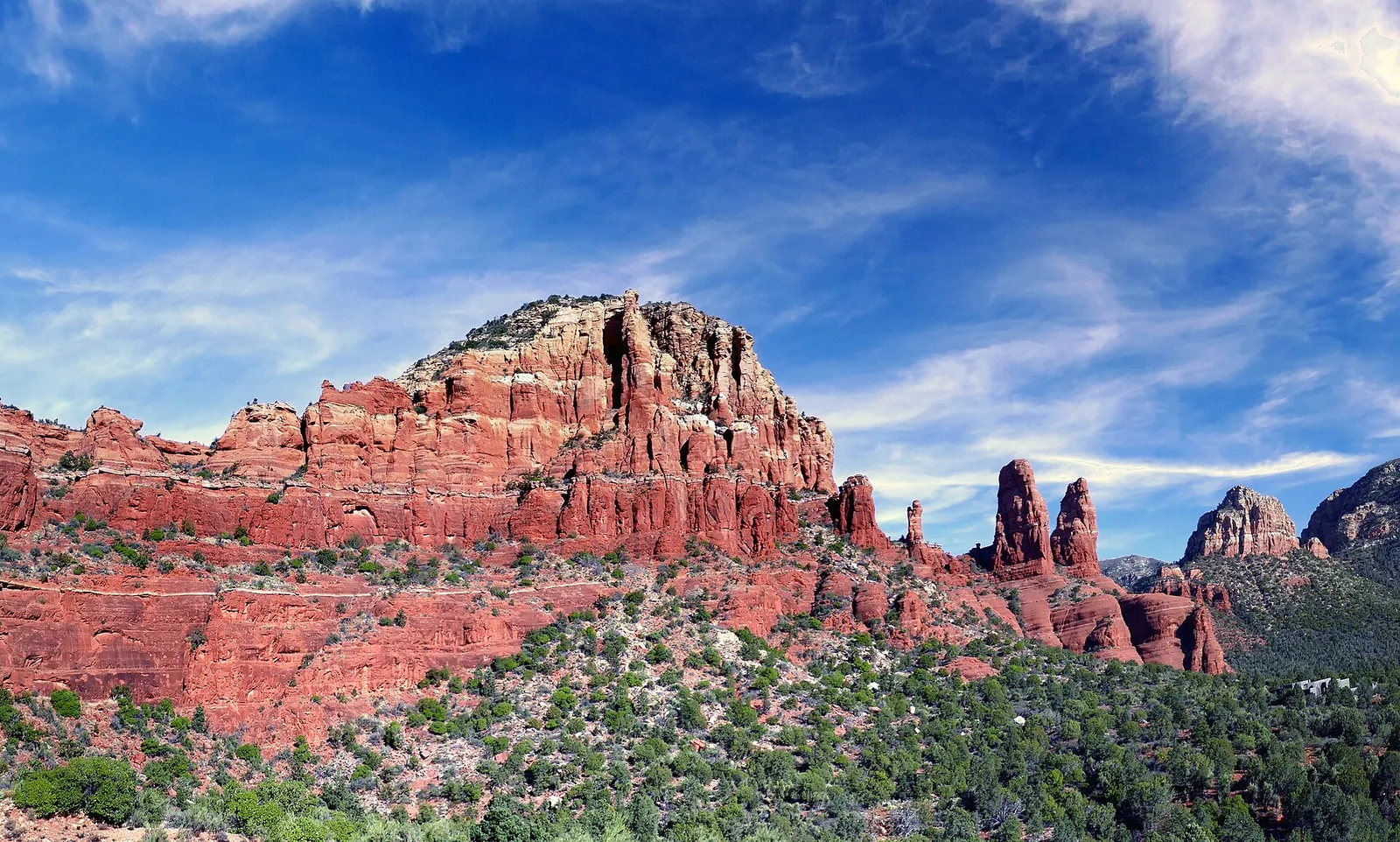
The reason is elevation. Phoenix sits near 1,100 feet; Sedona is about 4,350. Every thousand feet of climb shaves a few degrees off the high, which is why Sedona’s July afternoons top out in the mid-to-upper 90s instead of the 105–110°F range down in the Valley.
What Sedona is not is Flagstaff. Flagstaff sits around 7,000 feet and stays in the 70s and low 80s all summer — that is a true alpine escape, and it is a longer drive over the rim. Sedona splits the difference: cooler than Phoenix, warmer than Flagstaff, close to the Valley. If you want the full month-by-month breakdown, including why the numbers still favor the trip, see is Sedona cooler than Phoenix and the temperature chart on the main beat-the-heat guide.
The nights are where you actually win
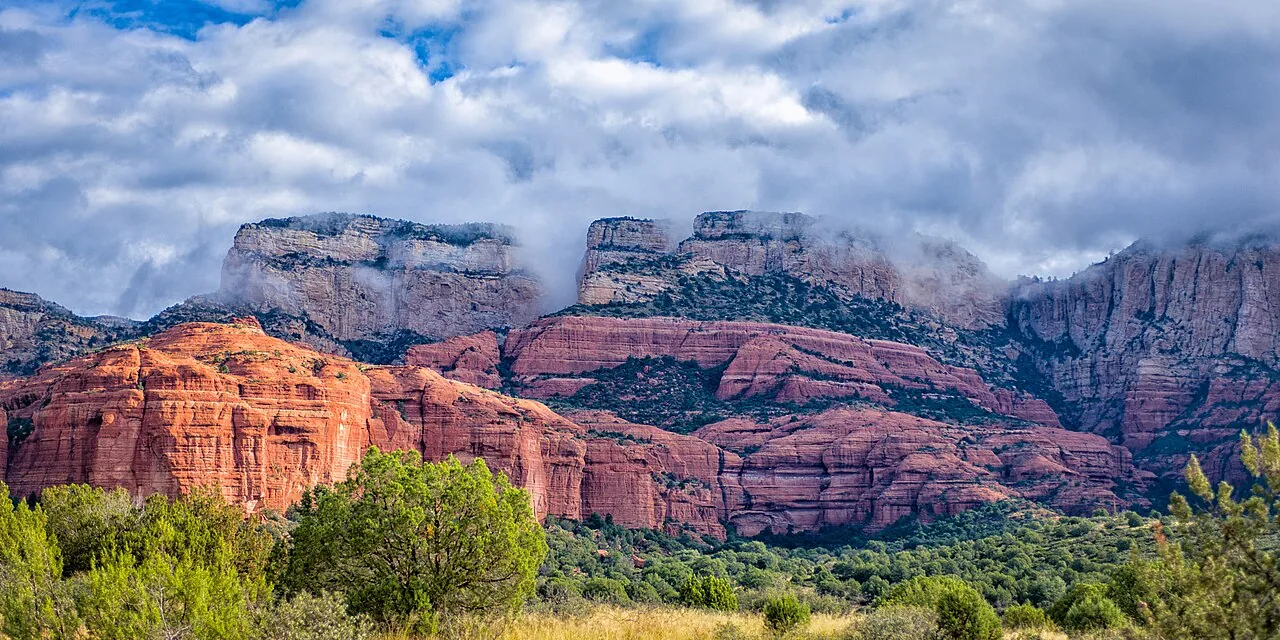
If the daytime difference is the modest part of the story, the overnight difference is the good part. Sedona’s July low averages about 68°F. Phoenix’s July low averages about 85°F. That is a 15-to-17°F swing, and you feel every degree of it.
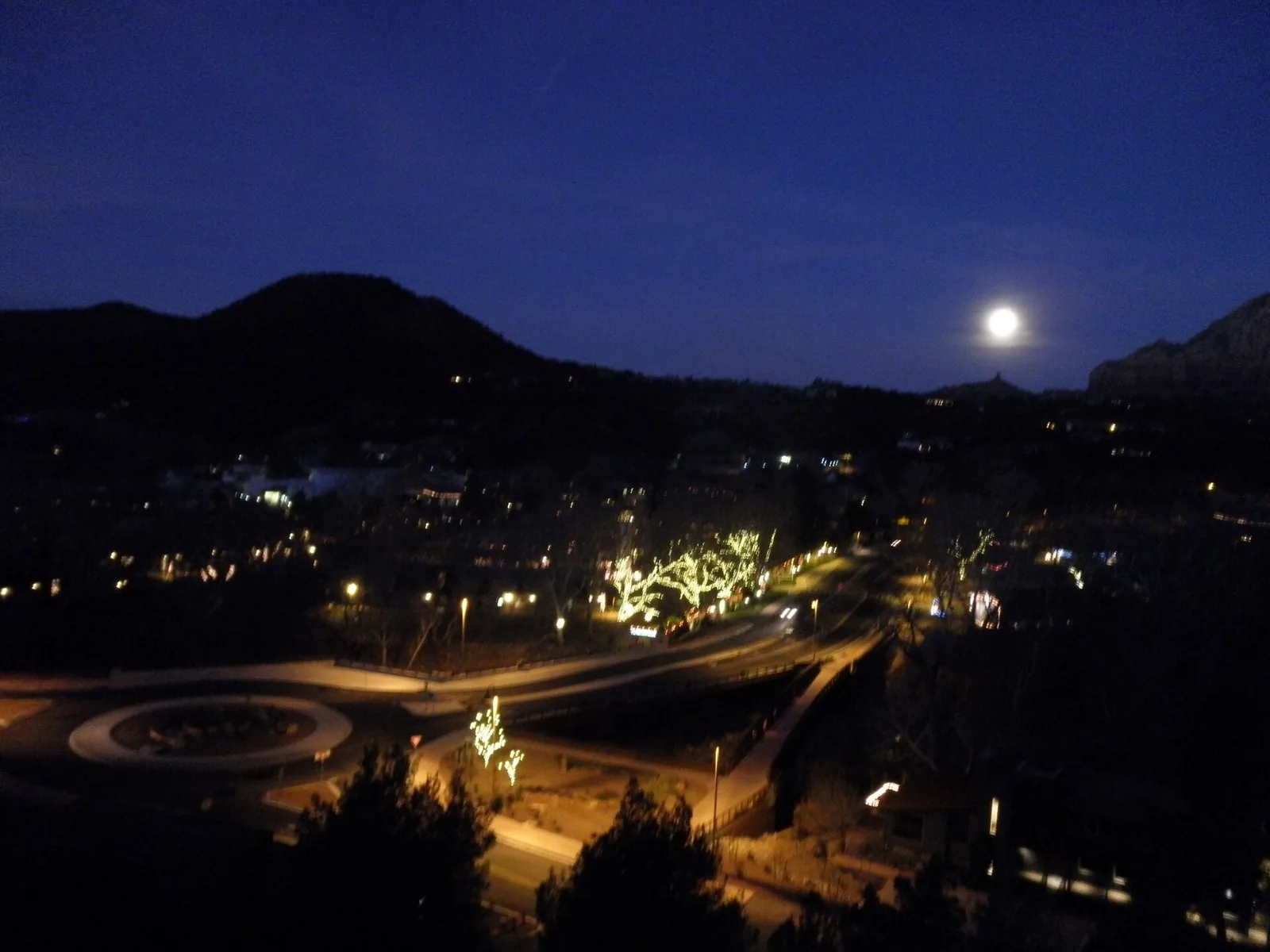
The physics is simple. At 4,350 feet in dry desert air, the ground radiates the day’s heat straight back to the sky after sunset, and there is very little humidity to trap it. Phoenix, lower and more built up, holds its warmth well past midnight — an 85°F “low” that arrives around 5 a.m. So the practical payoff of a Sedona weekend is not really the noon reading. It is the evening. You can sit on a covered deck at 9 p.m. in a t-shirt. You can run the firepit without regretting it. You can take a hot soak in the deck tubs and actually cool down afterward, and the sky at this elevation is dark enough for real stargazing. Early mornings are the same gift in reverse: 60s at dawn, which is when the trails are worth doing. We make the full case for the evenings on Sedona’s cool summer nights.
The catch nobody puts in the brochure — and the fix
Now the honest catch. Ten degrees cooler than Phoenix still leaves Sedona in the 90s from late morning through late afternoon in July. Outdoor pickleball at noon is just as rough here as it is in Scottsdale — the paddle gets slick, the ball plays fast in the heat, and the court surface radiates. A cooler outside temperature does not fix a hot outdoor court; it only makes the shade more bearable.
That gap is exactly what the home was built around. The court here is indoors, under a roof, and it is heated in winter and air-conditioned in summer, with proper lighting. When it is 96°F and cloudless outside, a group of up to eight can play a full round-robin at 1 p.m. in controlled air, then step out to the deck when the afternoon cools. Paddles and balls are provided; you just bring court shoes. Because the court is enclosed, there is also no neighbor or HOA noise complaint to manage — the reason indoor play works so well is covered on the quiet pickleball page. If you would rather scout the by-the-hour options closer to the Valley first, we lay out the Phoenix-area choices on where to play when it’s too hot in Phoenix — then explain why a private whole-home court beats reserving a lane for a weekend group.
The drive: about two hours north
This is a drive-to escape, and the drive is easy. From central Phoenix it is roughly 116 miles and about two hours in normal traffic: Interstate 17 north, then a right onto State Route 179, the Red Rock Scenic Byway, which drops you into town past Bell Rock and the Village of Oak Creek. I-17 climbs steadily the whole way, so you can watch the truck thermometer fall as you gain elevation.
A few practical notes. Friday afternoons out of the Valley and Sunday evenings back into it are the slow windows, so leaving a little early on both ends saves real time. There is no gas or reliable food for a long middle stretch on I-17, so top off before you go. And once you turn onto 179, the last few miles into Sedona can crawl on busy weekends. For the full driving rundown, stops, and timing, see the Phoenix-to-Sedona getaway guide.
A weekend that holds up when it’s 110 back home
The trick to a summer Sedona weekend is to run it on the cool hours and cover the hot middle indoors. A rhythm that works:
Morning. Get on a trail by 7 a.m. while it is still in the 60s and low 70s. West Sedona puts you minutes from trailheads, so you are hiking before the heat builds. Save the exposed red-rock routes for this window.
Midday. This is the hard part of the day, and the part the house solves. When the reading climbs into the 90s, move to the indoor court for a round-robin, or cool off in the water instead — Slide Rock State Park and the swimming spots along Oak Creek are where Valley families have escaped the heat for generations. Go early; the parking fills, and in monsoon season keep an eye upstream, because a storm miles away can raise the creek fast.
Evening. This is the reward. With the temperature sliding back toward the 60s, the deck, firepit, and soaking tubs come into their own, and the sky goes dark enough to pick out real constellations. It is the opposite of a Phoenix July evening, and it is the reason people make the drive.
Run the second day the same way, and you can build a genuine two-day pickleball trip around it. For a fuller plan, the group-trip planning guide and the Sedona pickleball weekend itinerary map out how to keep eight people fed, rested, and on the court.
Who this home actually suits
This is a whole-home rental, not an hourly court, so it earns its keep when a group comes together. It sleeps eight across four bedrooms — two kings, a queen, and a game room with twin-over-twin bunks — with two baths, a full kitchen, a media lounge, and free driveway parking for four cars. It is set up for a friend group, a couple of families, or a small team weekend where everyone wants to be under one roof rather than scattered across resort rooms. Guests need to be 25 or older to book; there are no pets, parties, or smoking; check-in is 4 p.m. and checkout is 10 a.m.
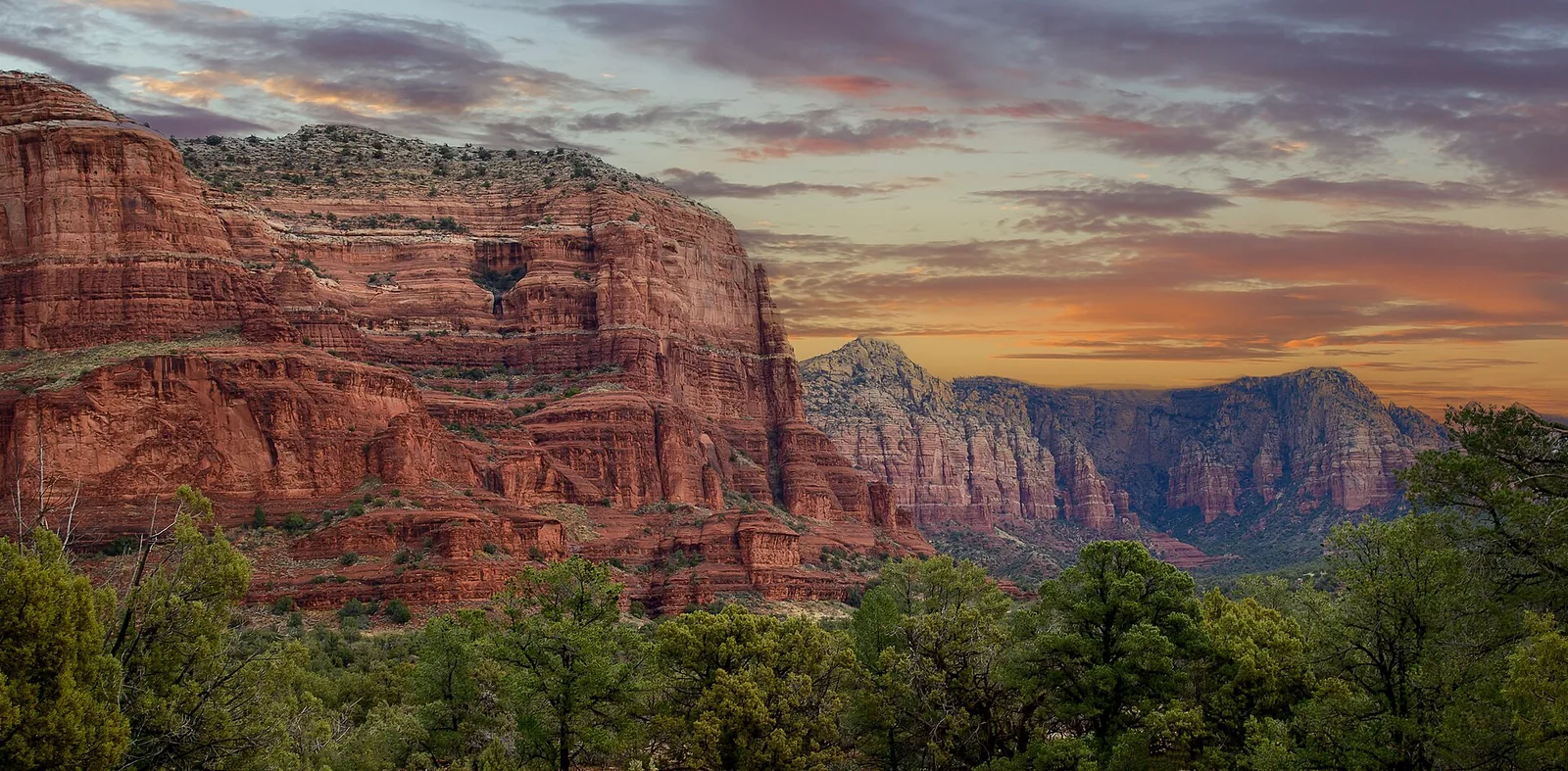
West Sedona itself is the quiet, residential side of town — high-desert, minutes from trailheads, restaurants, and Uptown. The famous red rocks are a short drive rather than out the front window, which is a fair trade for being close to the trails and the highway home. If you are weighing months and crowds before you book, the best time to visit rundown is a good next stop.
The short version: Sedona will not turn a 110°F Phoenix weekend into a 70°F one. What it will do is knock about 10°F off your days, hand you nights that are 15-to-17°F cooler, and — through the indoor, air-conditioned court — give a group of eight a way to actually play through the middle of the day. When the Valley is deep in another triple-digit stretch, that is a weekend worth the two-hour drive. Check the dates that work for your group and book the whole home on Airbnb.
Frequently asked questions
How much cooler is Sedona than Phoenix in summer?
How long is the drive from Phoenix to Sedona?
Is it still too hot to play pickleball outside in Sedona in July?
When is the best window to escape the Phoenix heat for Sedona?
Does Sedona actually cool off at night, or is that overstated?
Trade the heat for a cool indoor court
Sedona Pickler is a private West Sedona vacation home with its own indoor, air-conditioned pickleball court — comfortable play at noon in July or after dark in January, while outdoor courts across the valley sit empty. See the whole heat-escape guide.
Check dates & book