The Best Time to Visit Sedona
There’s no bad time to visit Sedona, but there are wildly different versions of it depending on when you show up. The same red rocks that bake at 100°F in July glow under a dusting of snow in January, and the trail that’s elbow-to-elbow on a March weekend can feel close to empty on a Tuesday in early December. This is an honest, season-by-season rundown so you can match your trip to the weather and the crowds you actually want.
The short version
Sedona sits at roughly 4,350 to 4,500 feet, which is the single most useful fact for planning a trip here. That elevation makes it noticeably milder than Phoenix two hours south, gives you four real seasons instead of one long furnace, and means the nights stay cool even when the days are hot. Most of the year is genuinely pleasant; the trade-off is almost always between perfect weather and big crowds.
If you want the quick answer:
- Best overall weather: mid-March through May, and again mid-September through November.
- Fewest crowds: December through February, with a smaller lull in mid-summer.
- Most crowded: spring break (mid-March to early April) and fall color weekends in October.
- Hottest: late June through August.
- Snow on the red rocks: a handful of times each winter, usually melting within a day or two.
The honest catch is that Sedona’s best weather and Sedona’s worst crowds arrive at the same time. Spring and fall are gorgeous, and everyone knows it. If you can travel midweek, or lean into the shoulders of those seasons, you get most of the upside without the parking-lot misery.
Sedona by the month
Here’s the year at a glance. Temperatures are long-term averages (1991–2020 normals); any given week can run warmer or cooler, so treat these as a guide, not a guarantee.
| Month | Avg High | Avg Low | Crowds | What stands out |
|---|---|---|---|---|
| January | 58°F | 34°F | Lowest | Sunny mild days, freezing nights, occasional snow |
| February | 61°F | 36°F | Low | Quiet trails, cold mornings, great light |
| March | 68°F | 40°F | High | Spring break peak; wildflowers begin |
| April | 75°F | 44°F | High | Near-perfect weather, busiest stretch |
| May | 84°F | 53°F | Moderate–High | Warm, dry, wildflowers winding down |
| June | 94°F | 61°F | Moderate | Hot and dry; hike at dawn |
| July | 97°F | 68°F | Moderate | Hottest month; monsoon storms begin |
| August | 94°F | 67°F | Moderate | Monsoon afternoons, dramatic skies |
| September | 89°F | 61°F | High | Heat eases late month; crowds return |
| October | 79°F | 51°F | High | Peak fall color, the marquee month |
| November | 67°F | 41°F | Moderate | Crisp, clear, late foliage, thinning crowds |
| December | 58°F | 33°F | Low | Cold nights, sunny days, holiday week aside |
A quick note on those lows: the desert sheds heat fast once the sun drops. Even in a hot stretch, expect a real temperature swing from midday to evening, which is why layering matters here in every season. The other thing the table can’t show is how much the day-of-week swing dwarfs the month-to-month one — a weekday in a “busy” month frequently feels calmer than a weekend in a “quiet” one, so if your dates are flexible at all, pick the day before you pick the month.
Spring (March–May): the postseason favorite
Spring is what most people picture when they think of the perfect Sedona trip, and for good reason. March and April highs in the high 60s to mid-70s are about as comfortable as hiking weather gets. By May you’re climbing into the 80s, which is still fine if you start early. The desert wakes up too: depending on the year’s winter rain, you’ll see desert plants and wildflowers blooming roughly March through May.
The catch is the crowd. March and April are the busiest months of the year, and spring break (roughly mid-March to early April) is the single most congested window. Popular trailheads fill by mid-morning, the Red Rock Scenic Byway backs up, and uptown parking turns into a sport. Weekends are dramatically worse than weekdays.
How to do spring well:
- Travel midweek if you possibly can. The difference between a Tuesday and a Saturday in April is night and day.
- Hit marquee trails like Devil’s Bridge and Cathedral Rock at first light, or save them for late afternoon.
- Use the Sedona Shuttle (it’s free) for the busiest trailheads on peak weekends rather than fighting for parking. The shuttle runs seven days a week during the spring break stretch — in 2026 that expanded schedule runs late February through late April — and serves Cathedral Rock, Little Horse, Soldier Pass, and the Dry Creek (Mescal) trailheads. Outside the peak windows it typically runs Thursday through Sunday, so check the current calendar at sedonashuttle.com before you count on it.
Local tip: Late February into early March is a sweet spot a lot of people miss. The weather is already mild, the wildflowers are just starting, and you beat the spring-break wave by a couple of weeks.
What to pack in spring: layers, more than you’d guess. Mornings can start near freezing in March and warm into shirt-sleeve weather by noon. Bring a light jacket or fleece, a hat, sunscreen (the high-elevation sun is stronger than it feels), and more water than you think you need. A trekking pole helps on the slickrock if your knees are particular, and you’ll want shoes with real grip — Cathedral Rock’s final pitch is a steep scramble on bare sandstone, not a stroll.
If you’re hiking with people of mixed ability or energy, spring is the season to spread out across difficulty levels: send the strong hikers up the hard hikes at dawn and let everyone else enjoy the lower, flatter easy hikes once the morning chill lifts.
Summer (June–August): hot, dry, and surprisingly doable
Summer gets a bad rap, and it’s half deserved. June and July highs in the mid-90s — occasionally tipping over 100°F a few days a month — are no joke on an exposed red-rock trail. But it’s dry heat at altitude, the nights cool into the 60s, and the crowds thin compared to spring. If you’re willing to rearrange your day around the sun, summer can be a real bargain, and lodging rates often soften with it.
The golden rule is simple: hike early. Be on the trail by sunrise and off it before late morning. By midday the rocks radiate heat and shade is scarce. Afternoons are for the pool, the shade, a drive up into cooler Oak Creek Canyon, or honestly a few rallies back at the house on the indoor court while it’s brutal outside.
A few summer-specific habits worth building into the day:
- Front-load your mileage. Trailhead temperatures climb fast after about 9 a.m. Aim to be turning around when most people are just lacing up.
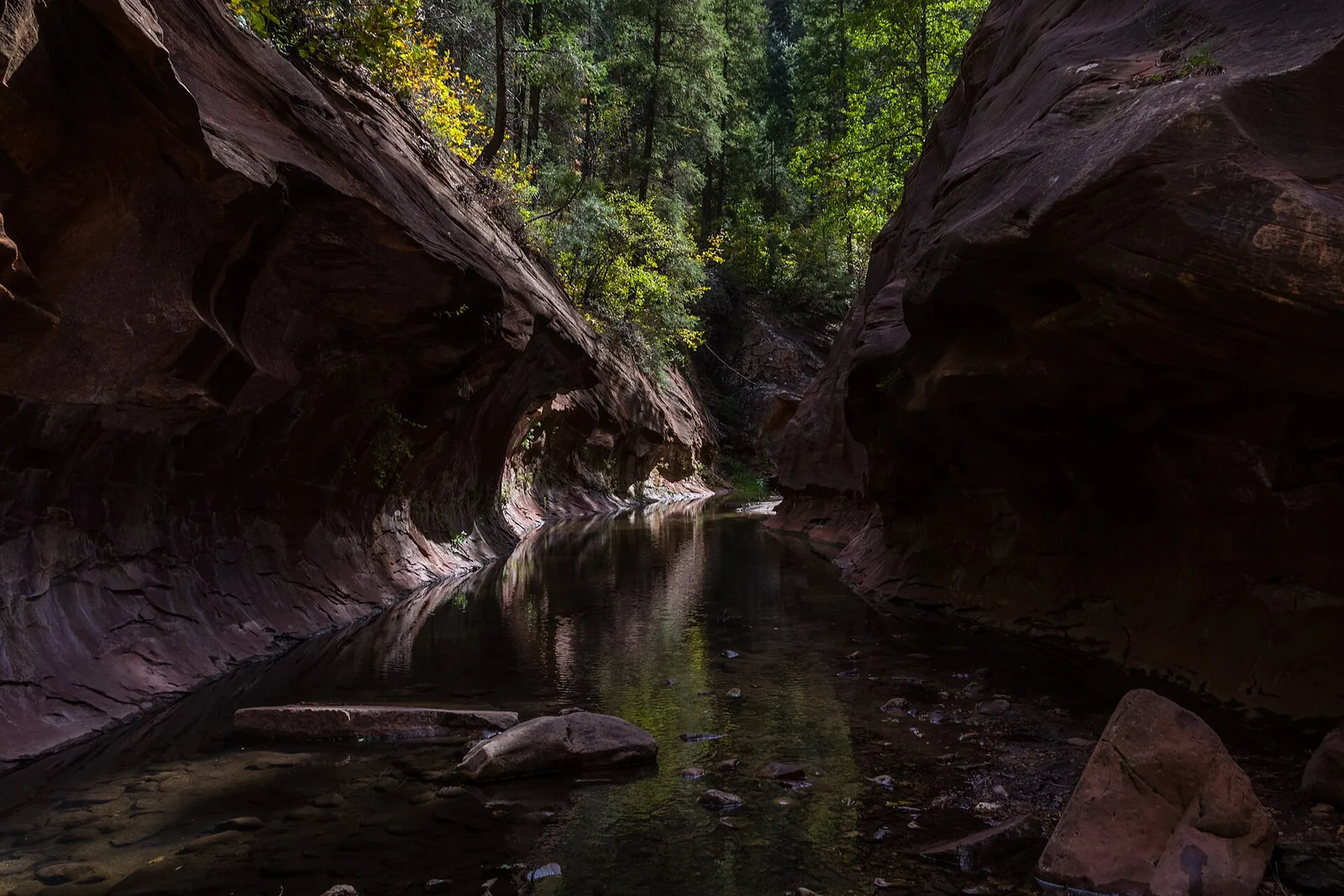
- Pick shade and water on purpose. The creekside stretches of West Fork and the swimming holes at Slide Rock State Park stay far more bearable than the open rock of Bear Mountain, which sits fully exposed.
- Know the heat signs. Headache, nausea, and the chills in the heat are warnings, not toughness tests. Stop, get to shade, and drink. Cell coverage is patchy in the canyons, so don’t count on calling for help mid-trail.
- Go up in elevation when it’s miserable. The drive up SR 89A into upper Oak Creek Canyon and toward Flagstaff climbs into pine country that runs ten to twenty degrees cooler. A Flagstaff day trip is a genuine summer escape valve.
Monsoon season (roughly mid-June–September)
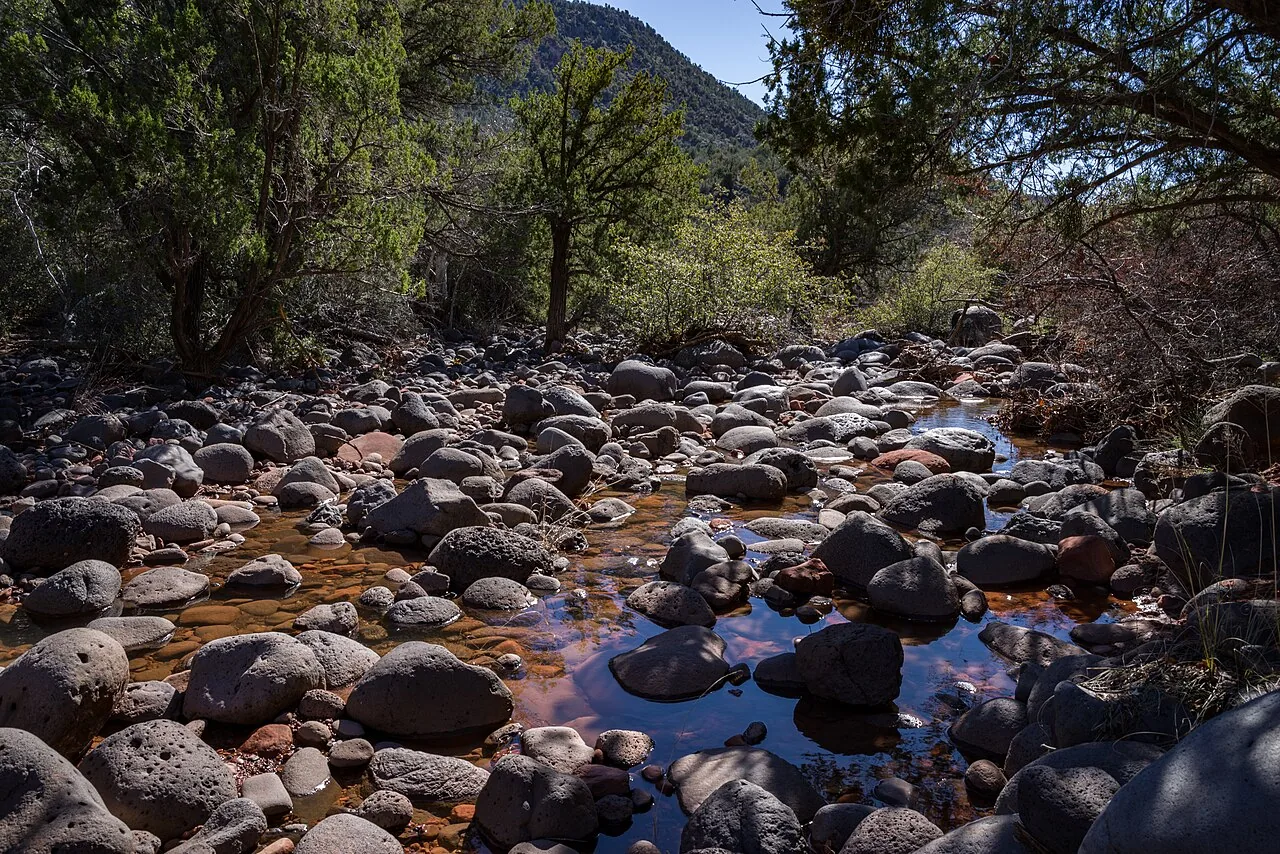
This is the part of summer that genuinely changes how you plan. Arizona’s monsoon has an official window of June 15 through September 30, with the most active stretch usually mid-July through mid-August. Humid air builds through the morning and erupts into thunderstorms, typically in the afternoon. The storms are spectacular — towering clouds, sheets of rain, lightning over the red rocks — and they’re also the most dangerous weather Sedona sees.
Two real hazards to respect:
- Flash floods. Water can rise fast in washes, side canyons, and creek drainages even when the rain is falling miles upstream and the sky above you looks fine. Slot canyons and narrow drainages are the worst place to be caught. If there’s a Flash Flood Watch or Warning, treat narrow canyons and creek crossings as off-limits. And never drive into a flooded roadway or around a barricade — beyond the obvious danger, Arizona’s “Stupid Motorist Law” lets authorities bill you for the cost of a water rescue.
- Lightning. If you can hear thunder, you’re close enough to be struck. Get off exposed ridges and summits, and wait at least 30 minutes after the last thunderclap before heading back out.
The fix is the same one that works for summer heat: do your hiking in the morning and be back before storms build in the afternoon. Check the forecast for the day, and check it for the areas upstream of wherever you’re hiking, not just the trailhead. The West Fork hike, beautiful as it is, follows a creek through a canyon and crosses the water more than a dozen times — exactly the kind of place to skip when storms are in the forecast.
What to pack in summer: sun protection first — wide-brim hat, sunglasses, high-SPF sunscreen, and a sun shirt if you burn. Carry far more water than feels necessary (electrolytes help), and add a light rain shell in monsoon months. Wear real trail shoes; wet rock and the polished sandstone at swimming holes are genuinely slick. If the kids are sliding at Slide Rock, old sneakers or water shoes save a lot of bruised tailbones.
Fall (September–November): the other perfect season
If spring is the favorite, fall is the connoisseur’s pick. The heat breaks in late September, October settles into high-70s days and crisp 50-degree nights, and the light turns golden and clean. It’s arguably the best all-around hiking weather of the year.
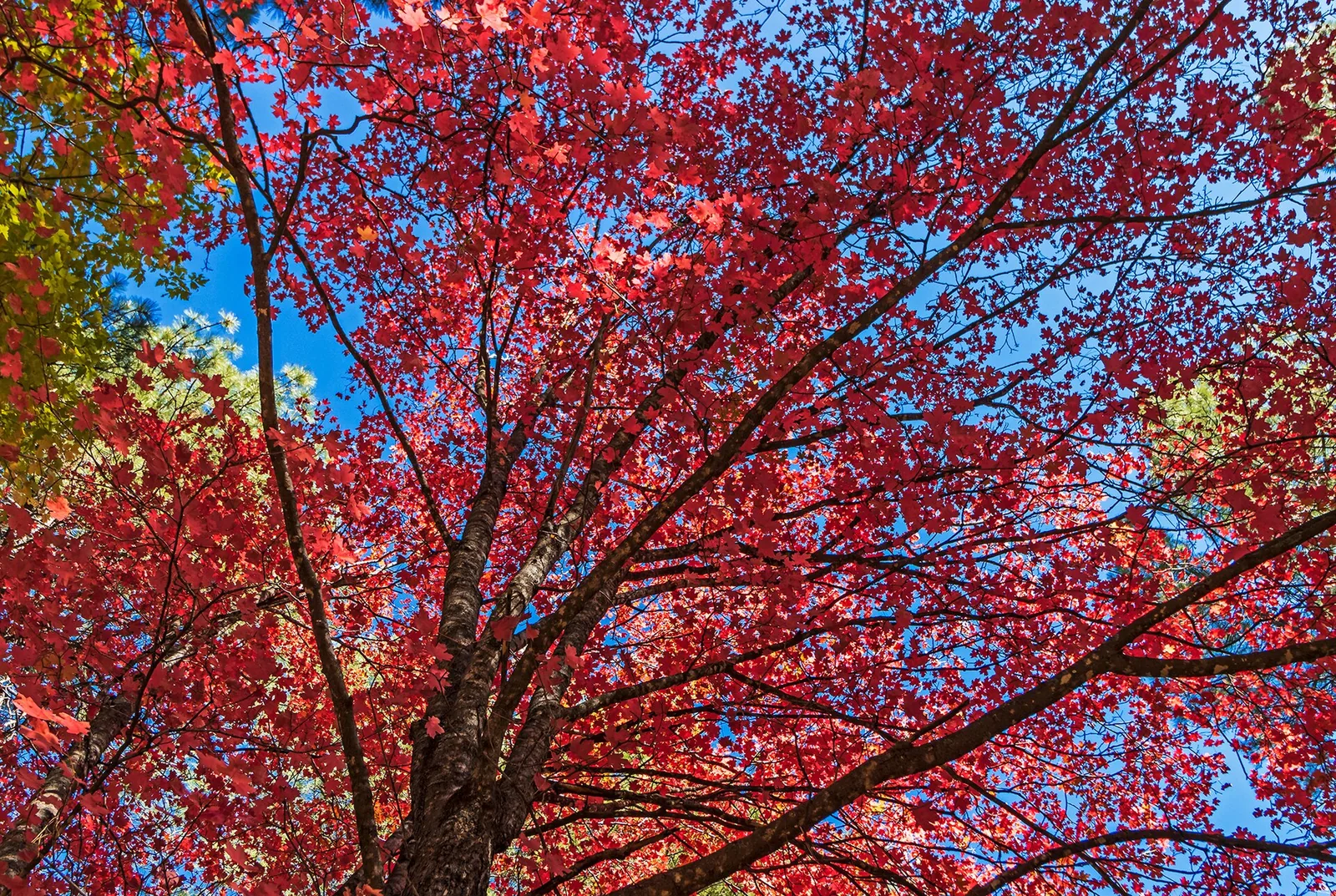
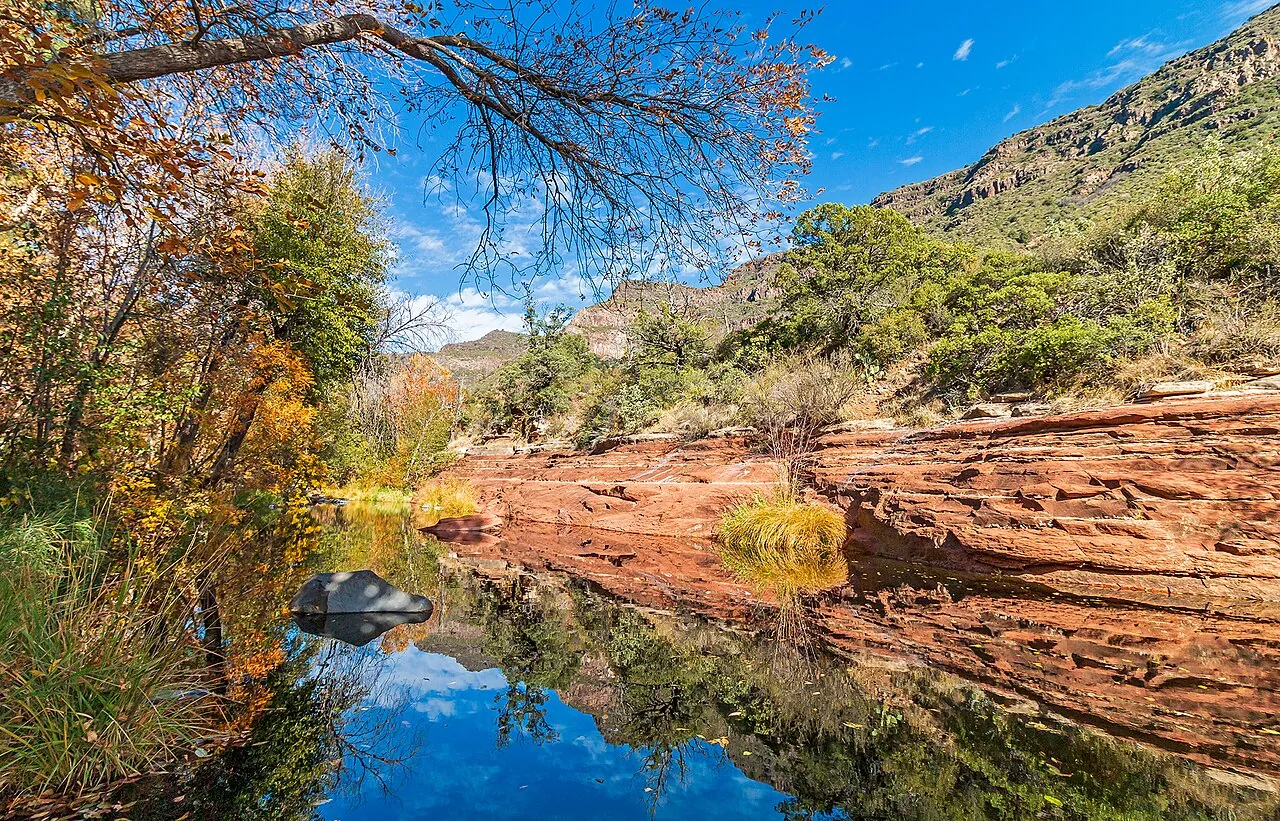
Fall has one extra trick spring doesn’t: color. Along Oak Creek and on the West Fork trail, the maples, oaks, sycamores, and cottonwoods turn gold and crimson against the red rock. Peak color typically runs mid-October through early November, though it shifts a week or two each year with the weather — cool nights are what trigger the turn, so a warm autumn pushes it later. A drive up Oak Creek Canyon on SR 89A during peak is one of the best things you can do in Sedona, period.
The downside, predictably, is crowds. Fall is the second-busiest season after spring, and color weekends in October pack the canyon. The West Fork parking lot and the pullouts along 89A fill early, and the lot is small relative to the demand.
How to do fall well:
- Go for color on a weekday if you can. Weekend mornings at West Fork mean a real wait for parking, and the lot regularly fills by mid-morning at peak.
- Start early for both trailheads and the scenic drive — the canyon light is best in the morning anyway, and you’ll beat the worst of the parking crunch.
- Don’t write off November. The color lingers into early November, the crowds thin noticeably, and the weather is still excellent.
- If color is the whole point of your trip, build in a flex day. Peak shifts year to year, so a two- or three-day window beats betting everything on one date.
For West Fork specifically: it’s an out-and-back of roughly 6.5 to 7 miles round trip if you walk the maintained section to its end, with around thirteen creek crossings on stepping stones. Most families turn around well before the end and still get the best of the color. Note the pass quirk in the next section — it’s the one trailhead near town where your other Sedona passes won’t get you in.
Winter (December–February): the quiet, underrated season
Here’s the season most visitors skip, and the one I’d steer a lot of people toward. Winter days are usually sunny and mild — highs in the upper 50s to low 60s — which is comfortable hiking weather if you start mid-morning once the chill burns off. The nights are genuinely cold, with lows around freezing and a good number of nights dipping into the 20s. And the crowds? At their lowest of the year, the holiday week aside.
The wild card is snow. Sedona only gets a real snowfall a handful of times a winter, and it rarely sticks for long — but a dusting of white powder on the red rocks is one of the most striking things you’ll see in the Southwest. It’s worth keeping an eye on the forecast and being ready to drop everything for a morning if it’s coming.
A few honest caveats for winter:
- Cold mornings and shade matter. North-facing trails and shaded canyon stretches can stay icy and slick well into the day. Microspikes for your shoes are cheap insurance on icy trail, and the climb out of Soldier Pass or the shaded approach to Devil’s Bridge can hold ice long after the sunny spots have dried.
- High roads can close. Backcountry and high-elevation routes — the unpaved upper stretch of Schnebly Hill Road is the classic example — close seasonally and can be impassable with snow and mud. The lower shelf section above town (Forest Road 153) is the part that shuts down; check the Coconino National Forest road-status page before counting on any unpaved route after a storm, and stick to paved roads and lower-elevation trails in the meantime.
- Short days. You’ve got less daylight, so start earlier than you think and carry a headlamp just in case. Sunset in December can come before 5:30, and canyon walls steal the light earlier still.
- Bring real cold-weather layers. People underestimate how cold a clear Sedona night gets. A puffy, gloves, and a beanie are not overkill in January.
Local tip: If snow is in the forecast, be up and out early. The dusting on the rocks often melts off by midday once the winter sun hits, so the magic window is the first few hours after sunrise. Airport Mesa and the Chapel of the Holy Cross are quick to reach and give you wide views of snow on the formations without a long, icy hike.
What to pack in winter: a real warm layer for mornings and evenings (puffy jacket, gloves, beanie), plus lighter layers for the warm midday, traction devices if you’re hiking after snow, and sunglasses — the winter sun off light-colored rock is bright.
How to avoid the crowds (any season)
Sedona’s crowding is real, but it’s also predictable, which means it’s beatable. The pattern barely changes from season to season:
- Weekdays beat weekends, every time. This is the single biggest lever you have. A midweek visit in a busy month often feels quieter than a weekend in a slow one.
- Early beats late. The popular trailheads — Devil’s Bridge, Cathedral Rock, Soldier Pass — fill by mid-morning in peak season. Sunrise starts mean parking and solitude both, and the photography is better.
- Shoulder weeks beat peak weeks. Late February, early June, and November all deliver most of the good weather with a fraction of the people.
- Less-famous trails beat the icons. If the headline hikes are mobbed, there are dozens of easy hikes and quieter trails that are just as scenic without the line for a photo. Fay Canyon and Brins Mesa carry a fraction of the foot traffic of Devil’s Bridge for comparable scenery.
- Use the free Sedona Shuttle on peak weekends for the busiest trailheads — several no longer allow private parking on the worst days, so the shuttle is often the only way in anyway.
- Eat off-peak. The crowd logic applies to restaurants too. Uptown and the popular patios get slammed at standard dinner hours in season; an early or late reservation, or a meal away from the main drag, saves you the wait. Our guide to the best restaurants flags the ones worth planning around.
Passes, parking, and a couple of fees
A few logistics that apply year-round. Prices change, so confirm current rates before you go — but here’s the lay of the land:
| What | Typical cost | Notes |
|---|---|---|
| Red Rock Pass | ~$5/day, $15/week, $20/year | Covers most National Forest trailheads around Sedona |
| America the Beautiful | $80/year | Honored in place of the Red Rock Pass at most Forest sites |
| Slide Rock State Park | ~$30/vehicle (Mar–May), ~$20 (Oct–Feb) | State park, separate fee; passes above not accepted |
| West Fork (Call of the Canyon) | ~$12/vehicle | Concession-run; honors only the Coconino Pass, not the others |
A few things worth spelling out:
- Red Rock Pass. Most National Forest trailheads around Sedona require one to park. A federal America the Beautiful pass works in place of it at most of those sites, so if you already own one, you’re covered there. Quick stops under 15 minutes generally don’t need a pass.
- The big exception is West Fork. The Call of the Canyon site (the West Fork trailhead) is run by a concessionaire, and it does not honor the Red Rock Pass or the America the Beautiful pass. You pay the site’s own per-vehicle fee at the entrance. Plenty of visitors get caught off guard by this, so budget for it separately.
- Slide Rock is a state park. It charges its own per-vehicle entry, which is higher in the busy spring months than in winter, and none of the Forest Service passes apply. Park hours run roughly 8 a.m.–6 p.m. most of the year and 9 a.m.–5 p.m. in deep winter, with last entry an hour before closing — and on hot summer weekends it can fill and temporarily close to new cars, so arrive early.
- Parking fills early in peak season regardless of which pass you hold. A pass guarantees you can pay to park; it doesn’t guarantee a space. If you’d rather not manage any of it, the getting around guide covers the shuttle and other options.
Accessibility and easier-weather options
Not everyone wants to scramble a steep trail at dawn, and you don’t have to in order to enjoy Sedona. The scenic drives — the Red Rock Scenic Byway (SR 179) and Oak Creek Canyon (SR 89A) — deliver world-class views from the car, with paved pullouts along the way. The Chapel of the Holy Cross and the shops and grounds at Tlaquepaque are easy, mostly flat, and gorgeous in any season. The viewpoint at the top of Airport Mesa is a short, gentle walk from the parking area for one of the widest panoramas in town.
A couple of access realities to plan around: trailhead lots have limited accessible parking and fill fast, and the Chapel has a steep paved approach ramp that some visitors find demanding. The Sedona Shuttle vehicles are accessible, which can be the easiest way to reach a busy trailhead without circling for a spot.
Weather-wise, the most forgiving months for low-effort sightseeing are October, November, March, and early April: mild enough to be outside comfortably all day, without summer’s heat or winter’s icy mornings. If mobility or heat is a concern, those are your windows. In summer, lean on the early-morning and early-evening hours and the air-conditioned stops — galleries, Tlaquepaque, a long lunch — through the hot middle of the day.
Time of day matters as much as time of year
Pick the right hours and almost any month works; pick the wrong ones and even a perfect-weather week can feel hot, crowded, or harsh.
- Sunrise is the quietest, coolest, and best-lit part of the day in every season. It’s the answer to summer heat, peak-season crowds, and flat midday photos all at once.
- Midday is the time to be indoors, in shade, or on the water in summer — and the worst light for photography year-round.
- Late afternoon to sunset brings the famous warm glow on the rocks. The classic sunset spots draw a crowd, so arrive with time to spare and a backup viewpoint in mind.
- After dark, Sedona’s status as an International Dark Sky Community pays off. Clear winter nights are especially good for stargazing once you’re away from town lights.
Why the weather matters a little less here
One genuine advantage of staying at a place with its own indoor, climate-controlled pickleball court: the weather stops dictating your whole day. When it’s 100°F at 2 p.m. in July, or there’s a monsoon cell parked over the canyon, or it’s a frosty winter morning before the sun’s had a chance to warm the rocks, you’ve still got something active to do without leaving the house. You can hike at dawn, ride out the hot or stormy hours with a few games on the court, then head back out when conditions ease — and you can do it any month of the year. If that sounds like the kind of flexibility you want, stay at Pickler House and plan your outdoor time around the good hours instead of hoping the whole day cooperates.
What to pair with each season
A quick cheat sheet for matching activities to the calendar:
- Spring: prime hiking everywhere — knock out the hard hikes before the heat, and catch wildflowers on lower trails.
- Summer: dawn hikes, then cool off — Slide Rock State Park and the swimming holes of Oak Creek are the move when it’s hot, and the higher country toward Flagstaff is a true escape from the heat.
- Fall: chase color on the West Fork and drive Oak Creek Canyon at peak; the light is unbeatable for photography.
- Winter: quiet trails, snow-dusted rocks, and the season’s best deals — pair clear cold nights with some of the darkest skies of the year for stargazing.
However you time it, build your plan around two things: when the trailheads are quietest (early, midweek) and when the weather is on your side (mornings, shoulder seasons). Get those right and Sedona delivers in every month on the calendar. If you want help turning all of this into an actual day-by-day plan, our 3-day itinerary lays out a route that already works around the heat, the light, and the crowds.
Frequently asked questions
What is the overall best time to visit Sedona?
When is Sedona least crowded?
When do the fall colors peak in Sedona?
Is it safe to hike Sedona during monsoon season?
Does it snow in Sedona?
How hot does Sedona get in summer?
Stay where you can rally any season
Sedona Pickler is a private West Sedona vacation home with its own indoor, climate-controlled pickleball court — a short drive from the trailheads, viewpoints and restaurants in this Sedona guide. Play at sunrise or after dark, in any weather.
Check availability on Airbnb