A pickleball trip for a group sounds simple right up until you start the group chat. Then you’re juggling six calendars, two hotel blocks, a court that’s booked solid, and someone’s cousin who doesn’t play and just wants to hike. None of that is hard on its own. It just piles up.
This is a practical walkthrough for organizing a trip for a group of up to eight — a club outing, a couple of families, or the friends who finally stopped saying “we should do this” and actually picked a weekend. The goal is fewer decisions made at the last minute and far more time on the court. Work through it in order and the trip mostly plans itself.
Start with the date, not the destination
The most common reason a group trip never happens is that nobody picks a date. People wait for a consensus that never comes. Don’t wait.
- Send a poll with three or four candidate weekends. A free scheduling tool works fine; so does a simple list in the chat.
- Give a hard deadline to respond, usually about a week out.
- Pick the date that works for the most people and commit. You will not get everyone. Aim for the largest workable group and move on.
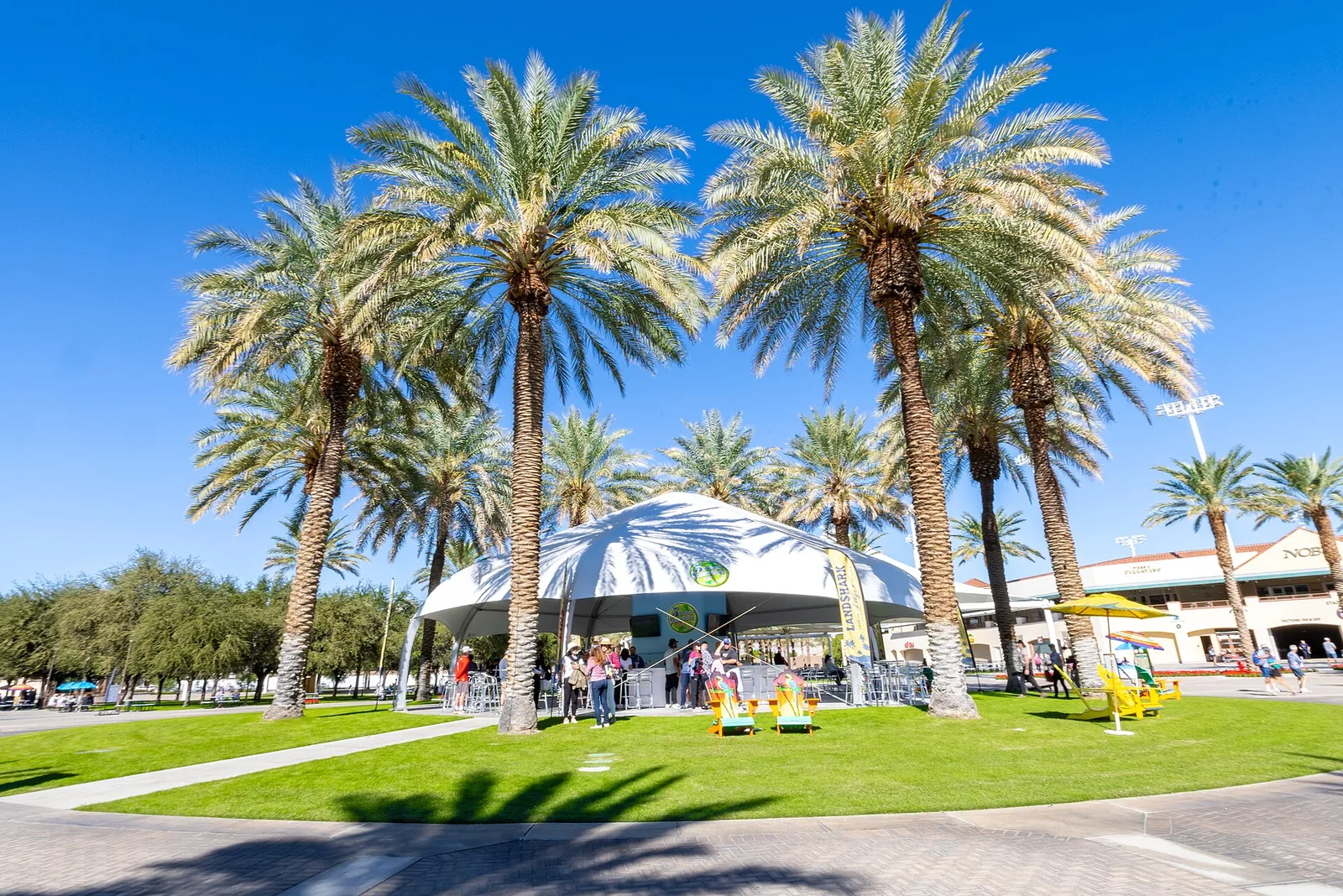
For pickleball specifically, weather matters more than for most trips. If you’re playing outdoors, summer afternoons in the desert can hit triple digits, and a sudden cold snap or rain can wipe out a day you can’t get back. If your court is indoor and climate-controlled, the calendar opens way up and you stop gambling on the forecast. For more on timing a Sedona trip around the weather, see the best time to visit for pickleball.
Choose lodging that solves your two hardest problems
Two problems quietly wreck group pickleball trips: keeping everyone together, and guaranteeing court time. Lodging is where you solve both — or neither.
Keeping the group together
Booking three hotel rooms across two properties means you spend the trip texting “which lobby?” and driving in separate cars. A whole-home rental keeps everyone under one roof. You share a kitchen, a living room, and a deck, which is where the actual hangout happens. For a group your size, look for a place that genuinely sleeps your number comfortably rather than one you’ll be cramming into — a house that sleeps eight means eight people who aren’t on an air mattress in the hall.
Guaranteeing court access
This is the part people underestimate. Public courts are first-come, first-served, and on a nice weekend they fill up.
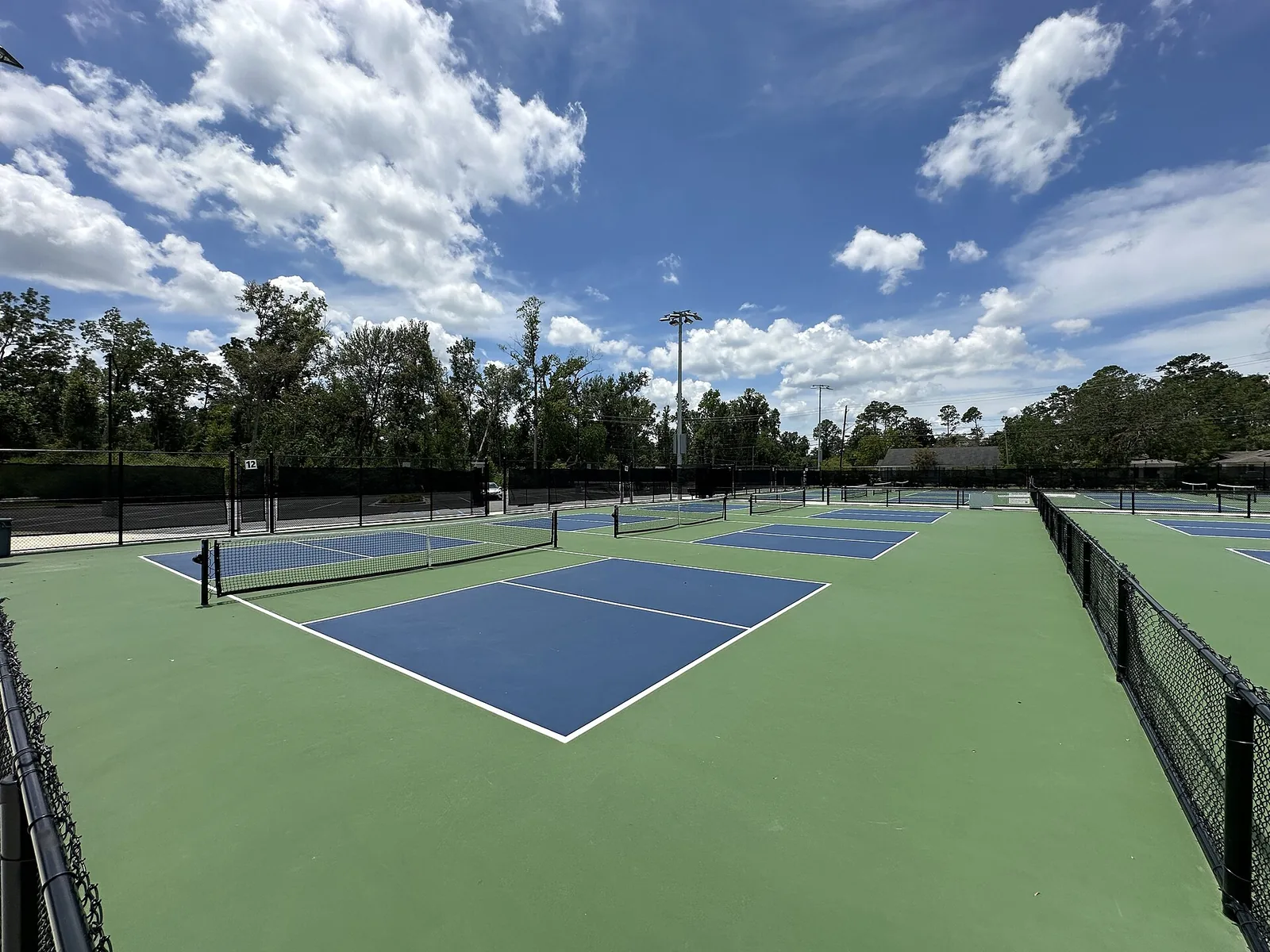
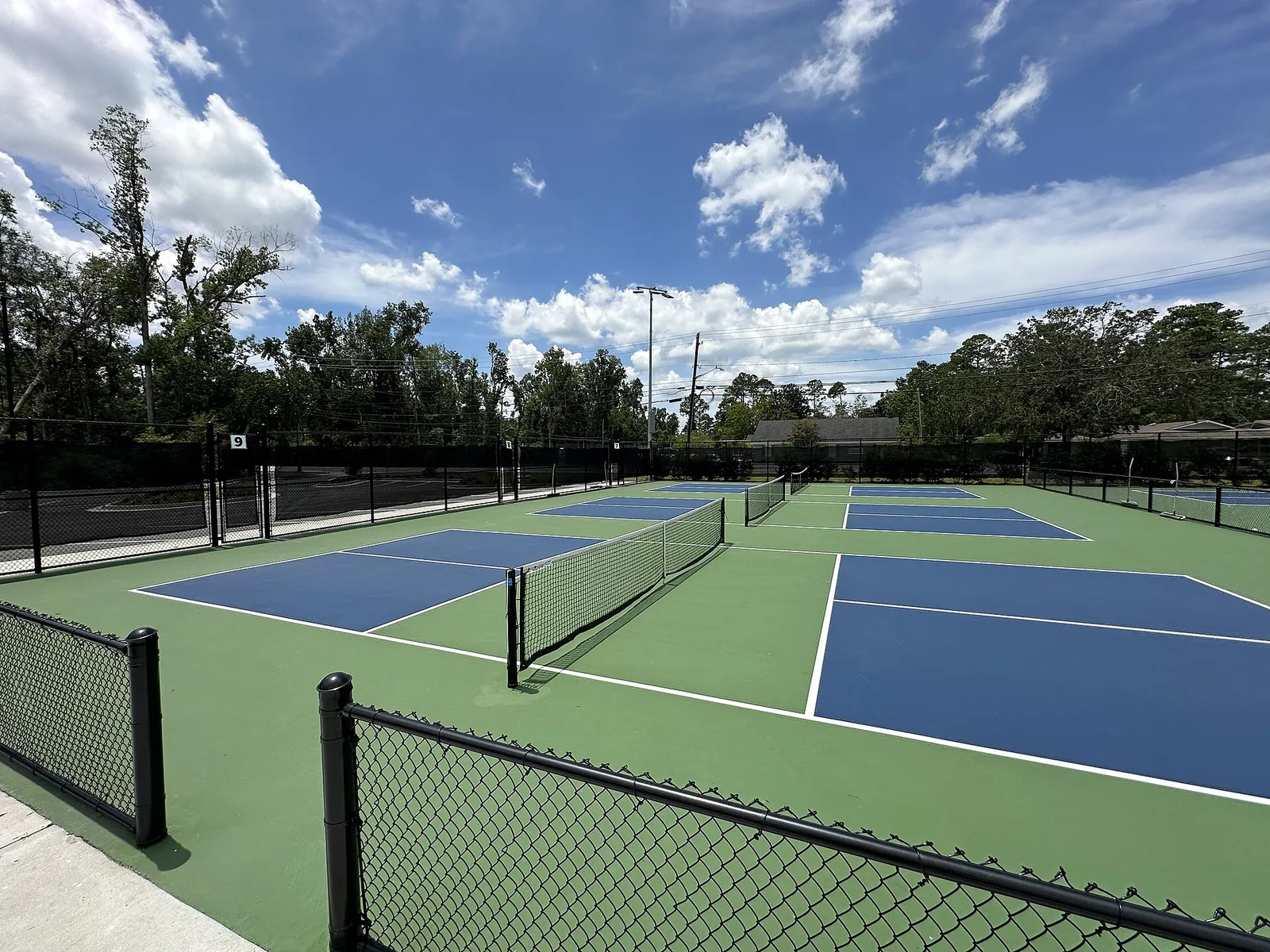
Take Sedona as an example. The main public option is Posse Grounds Park, which has eight free outdoor courts on a first-come basis. They’re good courts, but eight serve the whole town, and the city has no public indoor courts at all. On a busy Saturday, a group of eight can spend the morning waiting for two courts to open up, or playing in heat that nobody signed up for.
A private home with its own court takes that whole question off the table. You play when you want, for as long as you want, without coordinating around strangers or the clock. An indoor court adds weather-proofing on top of that — the temperature outside stops deciding when your group plays.
The simple version: a whole-home rental with its own court fixes the two things that go wrong most often. Everyone stays together, and your court time is guaranteed in any weather.
This is the gap Sedona Pickler in West Sedona was built to fill. It’s a home that sleeps eight, with its own indoor, regulation-size court that’s heated, air-conditioned, and lit, plus paddles and balls on site. You’re minutes from the red-rock trailheads, so the non-players in your group always have somewhere to go.
Split the costs so nobody feels squeezed
Money is the awkward part, so handle it early and out loud. The fairest approach is usually to total the shared costs, divide them, and let people cover their own extras.
| Cost | How to split |
|---|---|
| Lodging | Per person, or per bedroom if rooms differ a lot |
| Groceries for shared meals | Split evenly among everyone who eats them |
| One group dinner out | Each person pays their own tab |
| Rental car / gas | Split among riders in that car |
| Personal extras (drinks, souvenirs, solo activities) | On you |
A few ground rules that keep the peace:
- Agree on the split before anyone pays a deposit, not after.
- Pick one person to front the lodging and collect reimbursements through a payment app.
- Write the numbers down where everyone can see them. A shared note is enough.
- Decide in advance how you’ll handle a late cancellation so the group isn’t stuck covering an empty bed.
One quiet advantage of a single whole-home booking: the math is simpler. There’s one lodging total to divide instead of three hotel folios with different rates, resort fees, and check-out times to reconcile.
Feed the group without cooking three times a day
You don’t need a meal plan worthy of a spreadsheet, but a little structure beats six people staring into an empty fridge at noon.
- Stock breakfast and lunch at the house. Eggs, fruit, sandwich stuff, coffee, and plenty of water. People graze around play, so easy beats fancy.
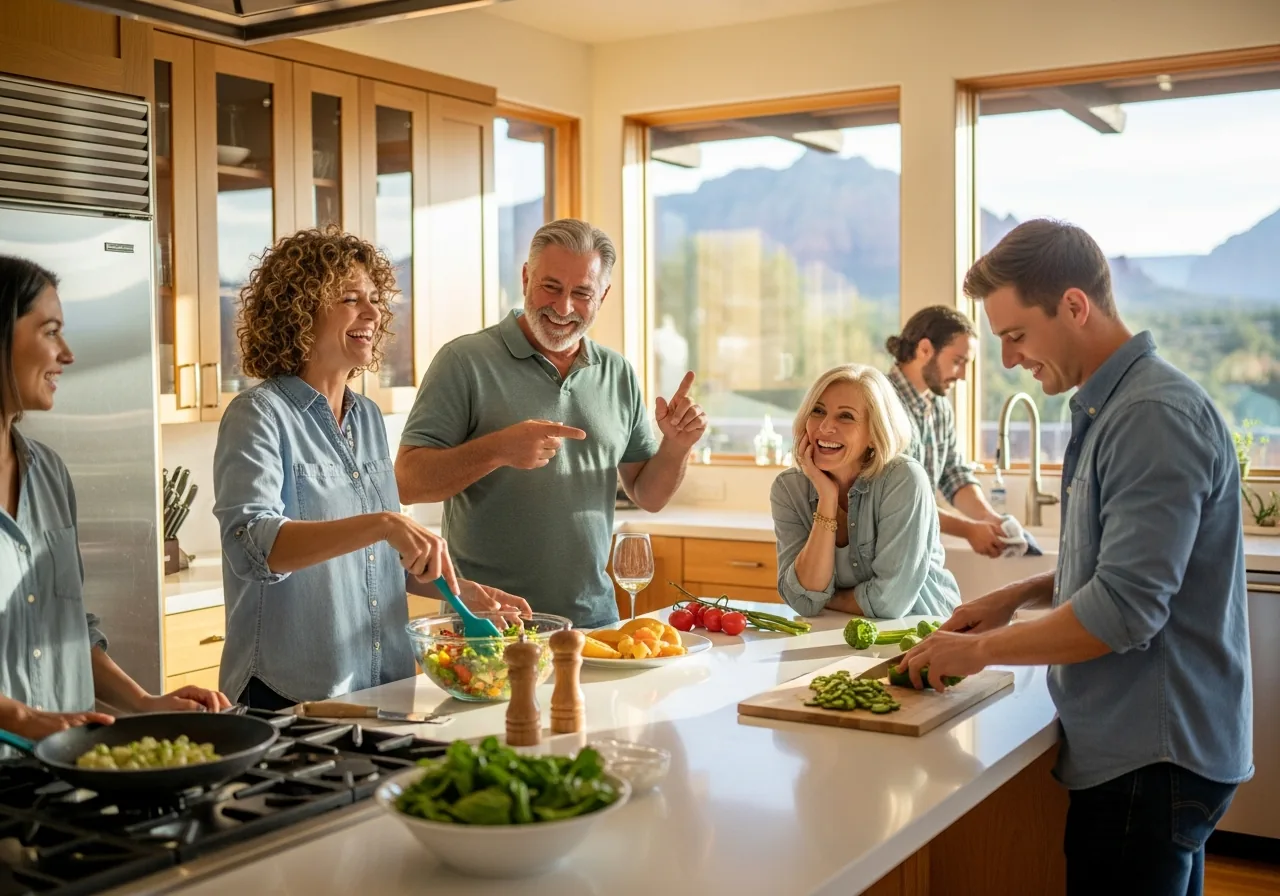
- Plan one or two group dinners. Either cook together one night or go out one night — not both, every night. Cooking together is half the fun of a shared kitchen, and it’s usually where the trip’s best conversations happen.
- Assign a grocery run on arrival day. Two people, one list, done in an hour.
- Hydrate more than feels necessary. Sedona sits at about 4,500 feet and the air is dry. You’ll lose water faster than you expect, especially mid-match.
Pick one play format and keep it light
For a casual group, the format that almost always works is a round robin. Everyone rotates partners and opponents, nobody sits too long, and skill differences even out over the day. You don’t need brackets or a trophy.
If you want a tested structure, here’s how to run a round robin for a group your size. A few principles:
- Rotate partners every game so the same two people aren’t stuck losing all afternoon.
- Keep games short — to 11, win by 2 — so the rotation keeps moving.
- Mix skill levels on purpose. Lopsided teams are no fun for anyone.
- Keep score casually, or not at all. This is a trip, not a tournament.
If your group has newer players, it helps to skim the basic rules the night before so the first morning isn’t spent explaining the kitchen line. And because you control your own court the whole weekend, you’re not rushing the rotation to free up a public court for the next group — you can let a close game run long without watching the clock.
Plan for downtime and the people who don’t play
Not everyone wants to play for six hours, and even the diehards need a break. Build the trip so the court isn’t the only thing happening.
- Block out a half-day with no pickleball on the schedule. Knees and shoulders will thank you.
- Have a plan for non-players. In Sedona that’s easy: the trailheads are close, and a morning hike or a slow afternoon in town fills the gap nicely.
- Keep one evening completely open. The best parts of these trips usually happen on the deck, not the court.
If you want a day-by-day template you can adapt, the Sedona pickleball weekend itinerary lays one out. Planning something more buttoned-up for a team? Our guide to a corporate retreat in Sedona built around pickleball covers the same ideas with an eye on company logistics.
Pre-trip checklist
Run through this a week out, and again the night before you leave:
- [ ] Dates locked and confirmed with everyone coming
- [ ] One whole-home rental booked, with court access confirmed in writing
- [ ] Cost split agreed and written down
- [ ] One person assigned to collect reimbursements
- [ ] Grocery list drafted and a shopping run planned
- [ ] One or two group meals decided
- [ ] Play format chosen and shared with the group
- [ ] Paddles and balls sorted (confirm what the house provides so you don’t over-pack)
- [ ] Court shoes, sunscreen, and refillable water bottles on everyone’s packing list
- [ ] Downtime and a non-player plan on the schedule
- [ ] One driver per car knows the route
The short version
Pick a date and commit. Choose lodging that keeps everyone together and guarantees court time, so you’re not fighting for public courts or watching the forecast. Sort the money up front, keep the food simple, run a relaxed round robin, and leave room to do nothing. Get those right and the trip mostly runs itself.
Frequently asked questions
How many people should a pickleball group trip be?
Four to eight is the sweet spot for a trip based around one house and one court. That’s enough players to keep a round robin rotating without anyone sitting too long, and small enough that everyone fits comfortably under one roof. Sedona Pickler sleeps eight, so that’s the ceiling we’d plan around rather than trying to squeeze in more.
How do we guarantee court time so we're not waiting around?
Book lodging that comes with its own court. Public courts are first-come, first-served and fill up on nice weekends — Sedona’s main public option has eight outdoor courts and no public indoor courts at all. A whole-home rental with a private court means you play on your own schedule, for as long as you want, no waiting and no coordinating around strangers.
What's the fairest way to split the costs?
Total the shared costs — lodging, groceries for group meals, a shared rental car — divide them evenly, and let everyone cover their own extras like drinks and souvenirs. Agree on the split before anyone pays a deposit, have one person front the lodging and collect reimbursements through a payment app, and write the numbers down where the whole group can see them.
What do people who don't play do?
In Sedona, plenty. The red-rock trailheads are minutes from West Sedona, so a morning hike or a slow afternoon in town fills the time easily, and non-players can come and go while the games run. Build a half-day with no pickleball into the schedule too — it gives tired knees a rest and keeps the trip from feeling like it’s only about the court.
Play year-round in red rock country
Sedona Pickler is a private Sedona home with its own indoor, climate-controlled pickleball court. Rally any season, any hour — heated, cooled and lit, with paddles and balls provided.
Check availability on Airbnb