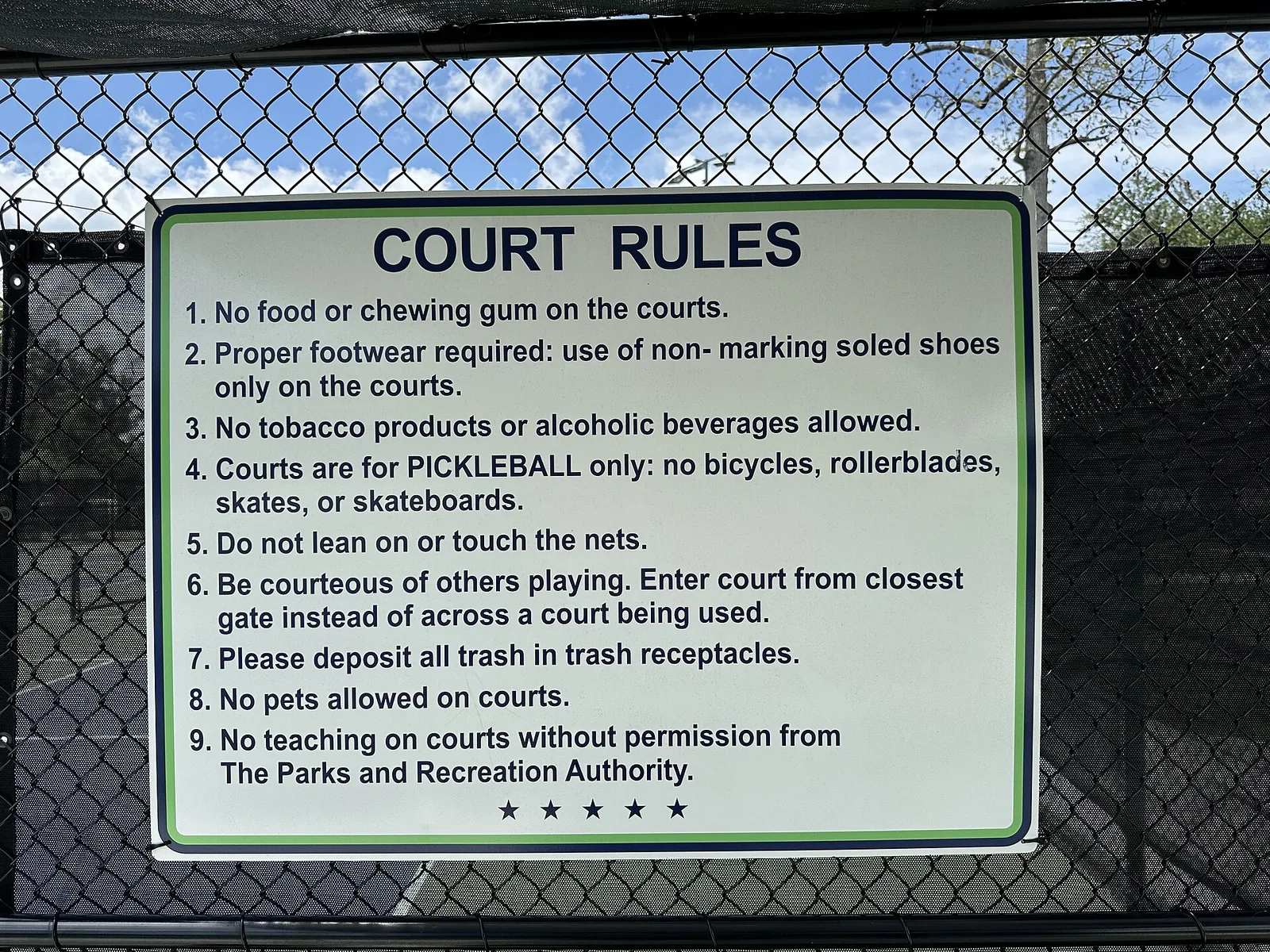
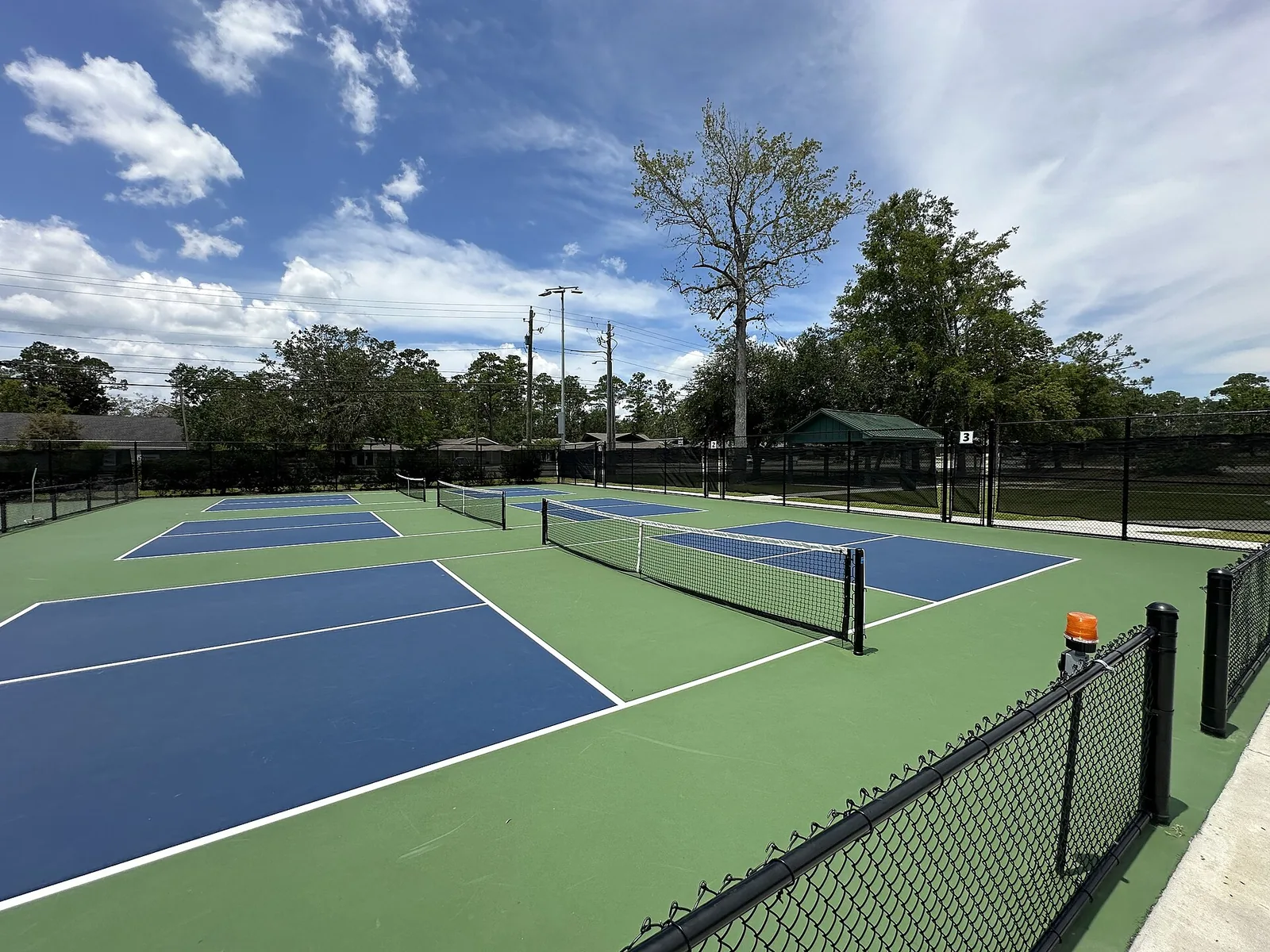
If you’ve ever stood near an outdoor pickleball court, you already know the sound. It isn’t a roar. It’s a quick, bright pock every time a paddle meets the ball, over and over, for as long as people are playing. That single sound is at the center of nearly every pickleball noise complaint in the country, and it’s worth understanding why before you write it off as cranky neighbors — or, on the other side, before you dismiss the players as the problem. There are real people on both ends of that fence line, and the disagreement is more about acoustics than attitude.
The short version is that this is a solvable problem, and the cleanest solution turns out to be the most obvious one. But it helps to understand the noise itself first.
It’s Not About Volume
Most people assume “loud” means high decibels, like a leaf blower or a passing truck. Pickleball isn’t especially loud by that measure. What makes it carry is the kind of sound it is.
Acoustics experts describe the paddle-on-ball noise as impulsive: a sharp, sudden spike rather than a steady hum. Our ears and brains are wired to notice impulsive sounds. They’re the snap of a twig, the crack of something breaking, signals that historically meant “pay attention.” A steady drone fades into the background. A repeating pock-pock-pock does not.
That’s the real issue. It isn’t the peak loudness of any single hit. It’s that the sound is sharp, repetitive, and almost impossible to tune out, especially when it goes on for hours.
A few things make it worse:
- The hard surfaces. A rigid paddle striking a hard plastic ball produces a tighter, higher-pitched crack than the soft thock of a tennis ball on strings.
- The pace. A pickleball rally has a lot of contact in a short time. More hits per minute means more spikes of sound.
- The setting. Courts often go in close to homes, in parks and converted tennis areas, where the sound has a clear path to nearby yards and windows.
Why It Sparks So Many Disputes
As the sport has grown, courts have been built closer and closer to where people live, and that’s where the friction starts. Residents near busy courts report the sound carrying well past the fence line, making it hard to enjoy a backyard or keep the windows open. That’s a fair complaint, and it deserves to be taken on its own terms rather than waved off.
It’s worth being even-handed here. Pickleball is, by most measures, a genuinely good thing — affordable, social, easy on the joints, and a rare activity that gets people of very different ages onto the same court. The players aren’t doing anything wrong by enjoying it. The neighbors aren’t being precious by wanting a quiet evening at home. The conflict isn’t a villain problem; it’s a placement problem. A great amenity got built a little too close to where people sleep, faster than most communities planned for.
This has moved well beyond grumbling, though. Homeowners around the country have taken legal action over court noise, and some cities have responded in dramatic ways. In one widely reported case, Boise, Idaho settled a lawsuit by agreeing to convert courts at two complexes back to tennis. In Falmouth, Massachusetts, residents organized to have courts relocated or shut down. Similar disputes have surfaced from Florida to California as the game spreads, and many municipalities now run noise studies before they’ll approve new courts near a residential street.
The complaint is almost never “this is too loud.” It’s “this never stops.” A sharp, repeating sound near a home, for hours at a stretch, wears on people in a way a single noisy event doesn’t.
None of this means pickleball is the problem. It means the sport collided with a real acoustics challenge faster than most communities planned for — and that the fix is about where and how you play, not whether you play.
What People Do to Quiet It Down
The good news is the problem is well understood, and there’s a whole toolkit of solutions. None is perfect on its own, but together they help.
Quieter equipment
There’s a genuine push toward gear that makes less noise. USA Pickleball runs a “Quiet Category,” launched in 2023, that certifies paddles and balls (and accessories like covers and screens) designed to cut acoustic output. To earn the designation, products generally need to deliver around half the acoustic output of typical park equipment. The first certified product was the OWL paddle, and the list has grown since. Quieter gear won’t make a court silent, but it meaningfully softens that sharp spike.
Sound barriers
Purpose-built acoustic fencing and sound-absorbing screens around a court can block and dampen the noise before it reaches a property line. They’re a common requirement when courts sit near homes, and the better systems combine a solid barrier (to block) with an absorptive face (to keep the sound from simply bouncing somewhere else).
Setbacks and distance
Distance does a lot of work. Mitigation guidance often calls for added measures when courts fall within a few hundred feet of homes, with heavier sound treatment for the closest properties. Put simply: the farther a court is from where people live and sleep, the smaller the problem.
Scheduling
Many facilities limit hours, closing early in the evening and opening later in the morning, so play doesn’t run into the quiet parts of the day. It’s low-tech, but it directly addresses the “for hours, at the wrong time” part of the complaint. The trade-off is obvious — it also takes the early-morning and after-work slots, which are exactly when a lot of people actually want to play.
If you want to dig deeper into the gear side of this, our guide on how to choose a pickleball paddle walks through the trade-offs, and our court dimensions reference covers the spacing that drives a lot of these setback rules.
The Cleanest Fix: Four Walls
Here’s the simplest answer of all. Every solution above is really trying to do one thing: keep the sound from reaching someone who doesn’t want to hear it. Quiet paddles soften the spike. Barriers block its path. Setbacks add distance. Curfews limit when it happens. Walls and a roof do all of that at once.
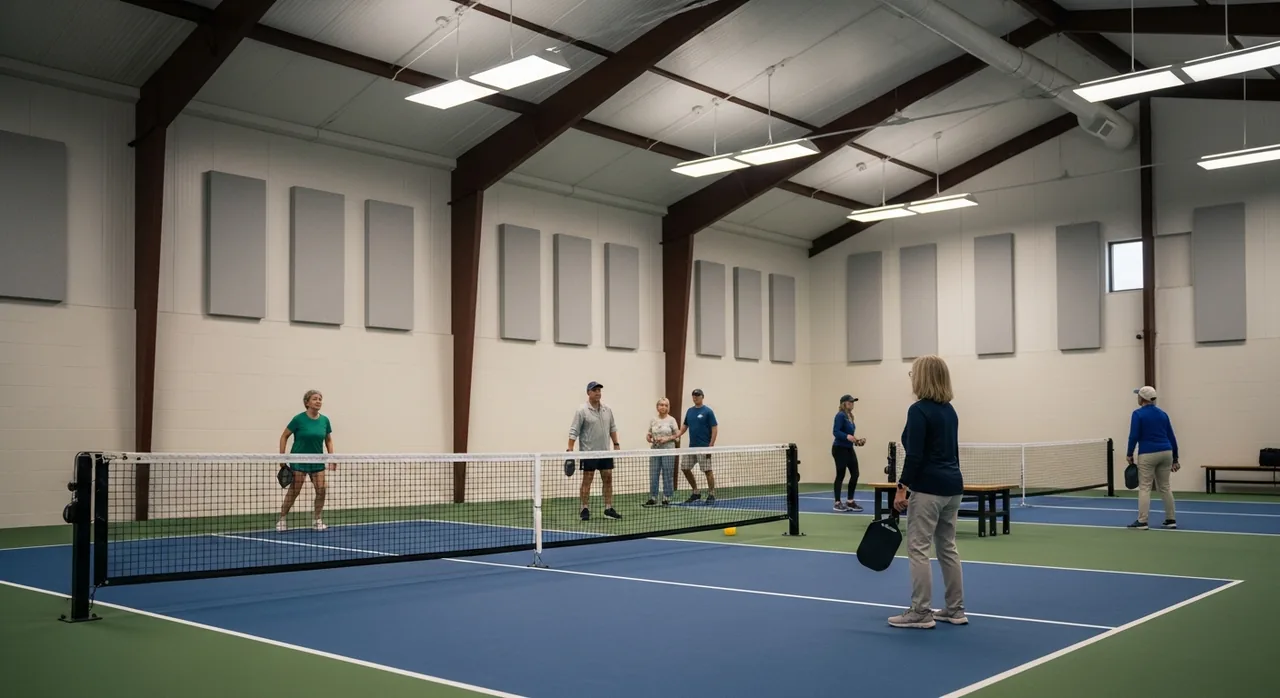
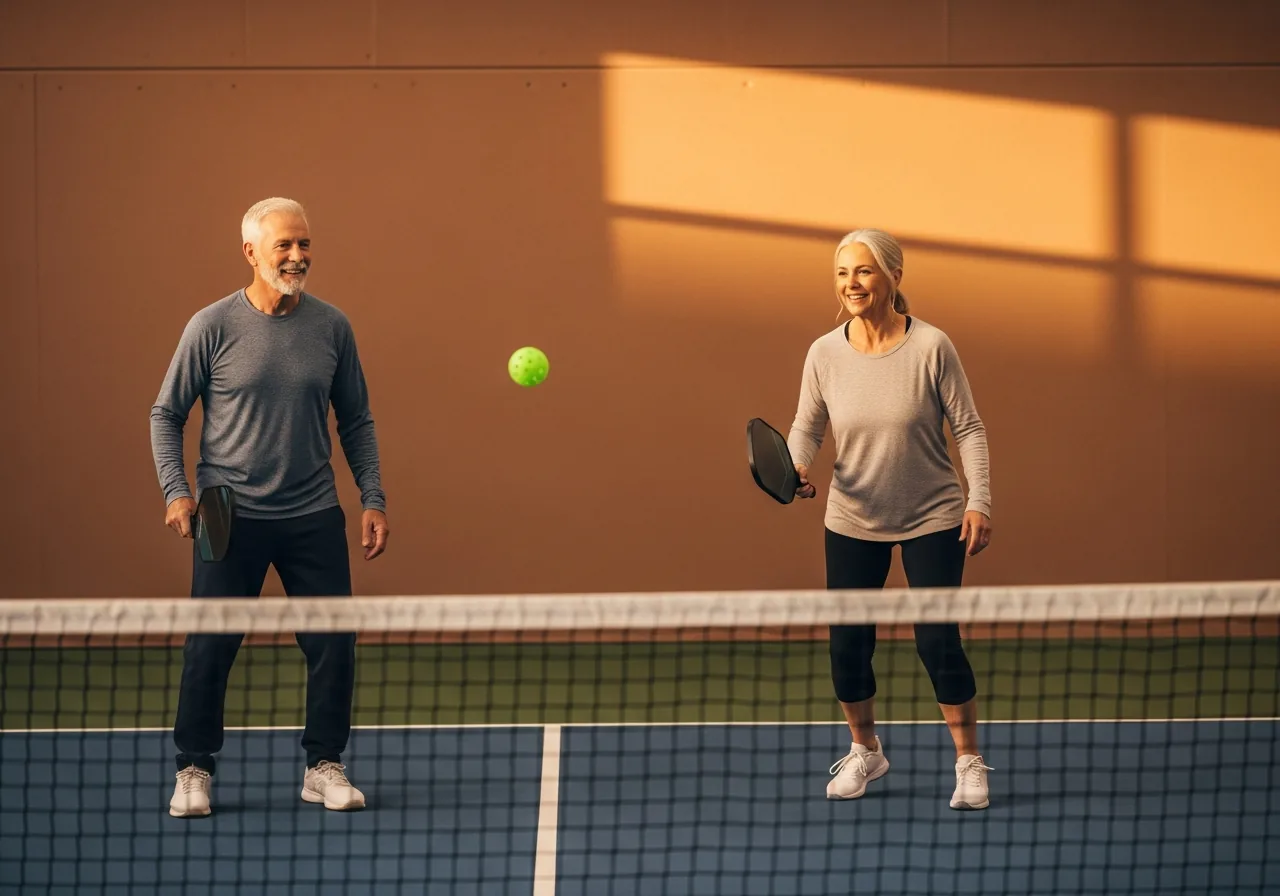
When you play on an enclosed indoor court, the pock stays inside. There’s no fence line to carry it past, no neighbor’s window to drift through, no evening curfew to respect. The sound that causes every dispute described above simply doesn’t leave the building. An insulated room with a solid roof and acoustic treatment on the walls contains the impulsive crack at its source — which is the one place every other method is trying to reach after the fact.
That changes the experience in a way that’s easy to underrate until you’ve done it. You stop scheduling your game around other people’s quiet hours. A 7 a.m. warm-up before a hike and a 10 p.m. rally after dinner are both fine, because nobody outside the room can tell the difference. We get into the broader trade-offs — light, surface, climate, cost — in our piece on indoor versus outdoor pickleball courts, but on the noise question specifically, indoor wins cleanly.
It’s also why a private indoor court is such a relaxed way to play. Nobody’s keeping score on the volume, nobody’s drafting a letter to the HOA, and you can run the same drills on a private court for an hour without feeling like you’re imposing on anyone. The sound stays where you are.
If you’re visiting the area and want to mix in some public play, our roundup of where to play pickleball in Sedona covers the outdoor options too.
The Short Version
Pickleball isn’t unusually loud. It’s unusually noticeable, because that bright, impulsive pock repeats and refuses to fade into the background. Outdoors, near homes, that’s led to real complaints, real lawsuits, and even courts being torn out — not because anyone was in the wrong, but because a popular game ended up too close to where people live. The fixes (quieter gear, barriers, setbacks, limited hours) all chip away at the same goal, and they genuinely help.
But if you’d rather skip the whole equation, play where the sound has nowhere to go. Four walls and a roof settle the noise question for good, and they let you play whenever the mood strikes — early, late, or both — without a second thought about who might hear it. If that’s the kind of trip you’re after, you can https://www.airbnb.com/rooms/1650915758723763330 and serve at any hour you like.
Frequently asked questions
How loud is pickleball, exactly?
It’s not especially loud in raw decibels — comparable to ordinary outdoor activity, and quieter than a leaf blower or passing traffic. The reason it draws complaints isn’t peak volume; it’s that the paddle-on-ball “pock” is an impulsive sound — sharp, sudden, and repetitive — which the human ear is wired to keep noticing instead of tuning out.
Why do neighbors complain about pickleball noise?
Less because it’s loud and more because it doesn’t stop. A bright, repeating crack near a home, for hours at a time, is hard to ignore even at moderate volume — especially in the early morning or evening. When courts sit close to houses, that sound carries past the fence line into yards and through windows.
Do quieter paddles and balls actually work?
They help. USA Pickleball’s Quiet Category, launched in 2023, certifies gear designed to cut acoustic output by roughly half compared with typical park equipment. It won’t make a court silent, but it softens the sharp spike that bothers people most. Sound barriers, setbacks, and limited hours all stack on top of it.
Is an indoor court really quieter for neighbors?
On the neighbor question, an enclosed indoor court is the cleanest answer there is. The sound is contained at its source, so it never reaches a property line at all — there’s nothing for a neighbor to hear, at any hour. That’s different from a quiet paddle, which only reduces a sound the neighbor still hears. It’s why a private indoor court like Sedona Pickler’s lets you play at sunrise or near midnight without thinking about it.
Play year-round in red rock country
Sedona Pickler is a private Sedona home with its own indoor, climate-controlled pickleball court. Rally any season, any hour — heated, cooled and lit, with paddles and balls provided.
Check availability on Airbnb