Walk into any pickleball conversation and someone will tell you the paddle that changed their game. Maybe it did. But the paddle that’s right for them isn’t automatically right for you, and the marketing around paddles has gotten loud enough that it’s easy to overspend on the wrong thing — a fistful of acronyms, a pro’s signature, a price tag that implies you’ll play better just by holding it.
The good news: the decision is simpler than it looks. A handful of factors actually matter, and once you understand them you can shop with confidence instead of guessing. This guide walks through each one in plain terms — what it does, who it suits, and where it’s safe to ignore the hype — then helps you decide what to prioritize as a beginner versus an improving player. No brand loyalty required.
The five things that actually matter
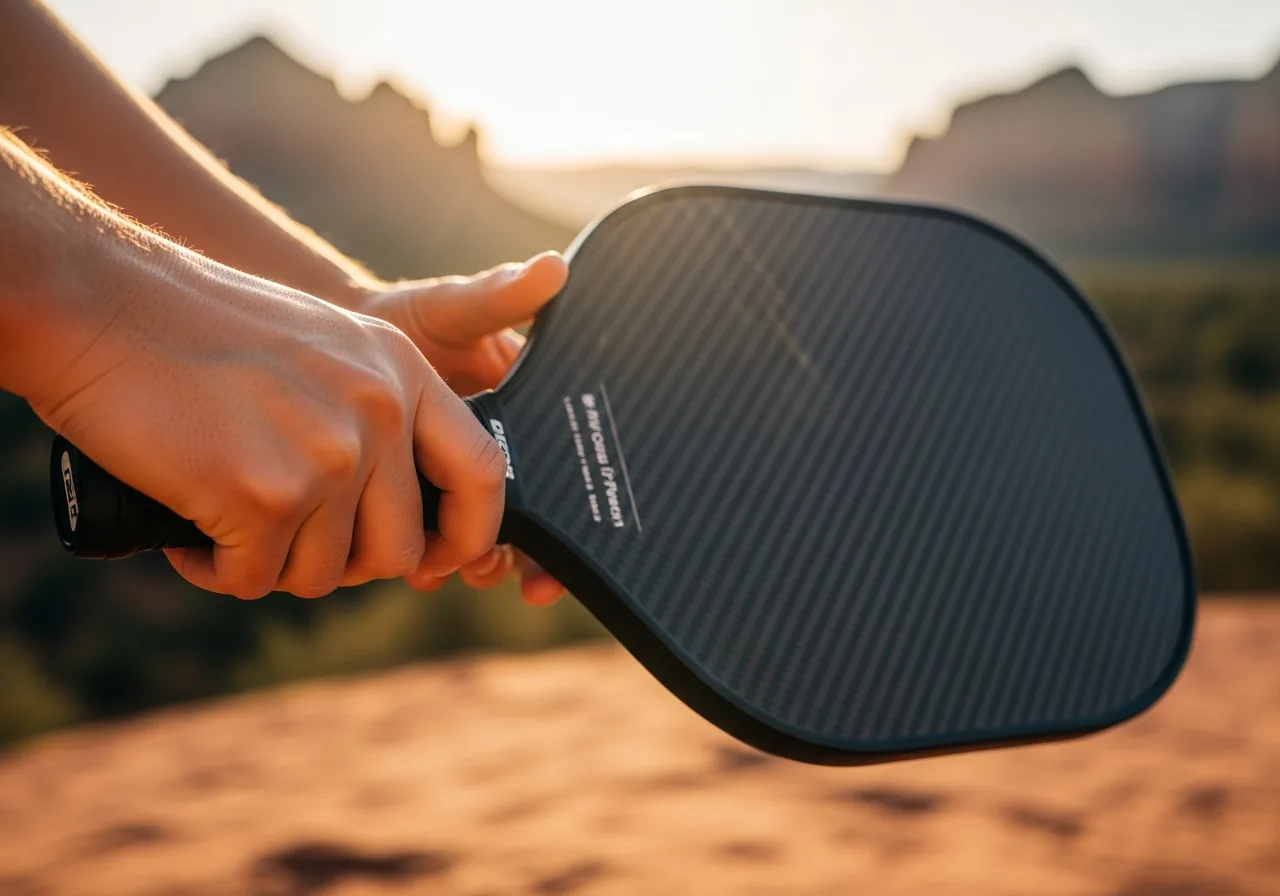
Forget color, and forget which pro endorses it. What changes how a paddle plays comes down to five things: weight, core, surface, shape, and grip size. Settle these and you’ve made every decision that matters. Everything else is paint.
Weight
Weight is the first thing to settle because you feel it on every single shot — the swing, the recovery, the strain on your arm after two hours. Paddles fall into three rough classes:
- Lightweight (under about 7.3 oz) — quick and easy to maneuver, good for soft dinks and fast hands at the net, but you supply more of the power yourself.
- Midweight (about 7.3 to 8.4 oz) — the balanced middle. Enough mass for a solid drive, still nimble near the kitchen.
- Heavy (above about 8.4 oz) — more power and stability with less effort, at the cost of quick maneuverability and a little more arm fatigue.
Here’s how that translates to feel:
| Weight class | Feel | Best for |
|---|---|---|
| Light (under ~7.3 oz) | Fast, maneuverable, more touch | Net play, quick hands, players easing an arm injury |
| Midweight (~7.3–8.4 oz) | Balanced power and control | Most beginners and all-court players |
| Heavy (above ~8.4 oz) | More power, more stability | Players who want effortless drives and don’t mind slower hands |
For most people picking a first paddle, midweight is the safe starting point. It doesn’t force you to commit to a power or control style before you know which one you are — and you may not know for a season or two. One honest note: a heavier paddle does more of the work on a drive, but it also asks more of your elbow and shoulder over a long session. If you’ve ever had tennis elbow or a cranky wrist, lean lighter and let your technique supply the pace.
Core
Nearly every modern paddle is built around a honeycomb core, and polymer honeycomb is by far the most common. It’s a soft, quiet, forgiving material that does a lot of the quiet work in how a paddle plays. You’ll occasionally see older aluminum or Nomex cores, but for a first or second paddle, polymer is the default and there’s little reason to chase anything else.
The detail worth knowing is core thickness, usually listed in millimeters. A thicker core (around 16 mm) generally feels softer, more stable, and more controlled — it absorbs pace and forgives an off-center hit. A thinner one (around 13 mm) feels poppier and gives you a bit more put-away power, at the cost of some control and a smaller margin for error. If you’re not sure, a thicker core is the friendlier place to start, because control is the harder skill to learn and the easier one to outgrow.
Surface
The face is where a lot of the marketing lives, so it helps to know what the materials actually do:
- Graphite — light and responsive, with a clean, consistent feel that favors touch and control.
- Carbon fiber — durable and grippy, popular for the spin it helps generate; many players like its forgiving sweet spot. (Raw or “T700” carbon faces are the current favorite for spin, but you don’t need to memorize the grades.)
- Fiberglass (composite) — typically a bit more power and pop, often at a friendlier price, with a slightly smaller effective sweet spot.
“Composite” usually just means a blend of these. None of them is objectively best. Graphite and carbon faces tend to favor control and spin; fiberglass tends to favor power. That’s the honest summary, and it’s worth repeating because the box will try to convince you the surface is the whole story. It isn’t — for a new player, grip and weight will shape your game far more than whether the face is carbon or glass.
Shape
Paddle shape comes in two broad styles. A standard shape (around 16″ by 8″) is the more forgiving choice, with a wider, more stable sweet spot that sits lower on the face — closer to where most new players actually make contact. An elongated shape (around 16.5″ by 7.5″) trades some of that forgiveness for extra reach, leverage, and spin potential, with the sweet spot pushed higher up the face. Newer players are almost always better served by a standard shape while their contact point is still settling in. Reach feels great until you’re shanking balls off the throat of the paddle.
Grip size
Grip size is the most overlooked factor and one of the most important. Too big and the paddle is hard to maneuver and tougher on your wrist; too small and you’ll squeeze too hard and lose touch — and a too-tight grip is a fast track to a sore forearm.
A simple way to gauge it: hold your hitting hand open, then measure from the middle crease of your palm to the tip of your ring finger. That measurement in inches is a good estimate of your ideal grip circumference. Most adult grips land somewhere between about 4″ and 4.5″.
When in doubt, size down. You can always build a grip up with an overgrip, but you can’t shave one down. A slightly smaller grip also lets you generate a little more wrist action and spin — and it’s the cheapest, easiest adjustment you’ll ever make to a paddle.
What to prioritize, and when
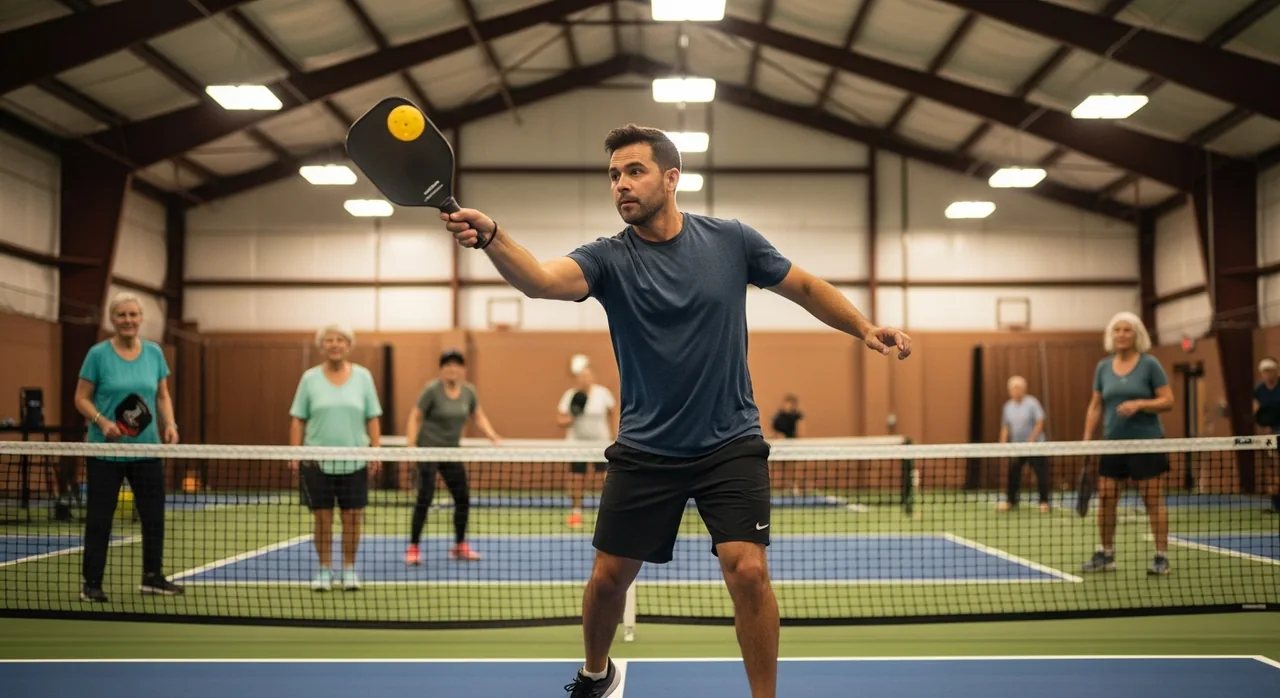
If you’re brand new, keep it simple. Reach for a midweight, standard-shape paddle with a polymer core and the right grip size, and don’t agonize over the face material. The fit matters more than the spec sheet at this stage. A comfortable paddle you swing freely will beat a “better” paddle you’re fighting every point. If you’re still learning how the game is scored and where you’re allowed to stand, our guide to pickleball for beginners: rules and scoring is the place to start before you spend anything.
As you improve and your style starts to show, you can lean into it:
- Live at the net and trust your hands? A lighter paddle rewards that — faster blocks, quicker resets, more touch on the dink.
- Want easier power on drives? Nudge heavier, or toward a fiberglass face, and let the paddle do more of the work.
- Chasing reach and spin with a consistent contact point? That’s when an elongated shape, a thinner core, and a grippy carbon face start to make real sense.
The key word is consistent. These upgrades reward players who’ve grooved their stroke; they punish players who haven’t. There’s no shame in staying with a forgiving paddle for a long time — plenty of strong 4.0-plus players do exactly that.
Price tiers and the point of diminishing returns
You don’t need to spend a fortune. Roughly:
- Entry level (about $40–75) — perfectly playable, fine for learning the game.
- Mid-range (about $100–160) — the sweet spot for most recreational players, with better materials and a noticeably nicer feel.
- Premium (about $200 and up) — real but incremental gains aimed at competitive players.
The honest math: a $100 paddle is meaningfully better than a $30 one, but a $200 paddle is only marginally better than a $100 one. The biggest jump in quality happens early. Unless you’re playing sanctioned tournaments, the mid-range usually gives you almost everything the premium tier does for a lot less.
And if you do plan to compete, check that any paddle you’re considering is on the USA Pickleball approved list, since sanctioned tournament and league play requires it. It costs nothing to check, and it saves the heartbreak of buying a paddle you can’t actually use in a bracket. (For casual play at a park or a vacation rental, none of this applies — any paddle is fine.)
The smartest move: play before you buy
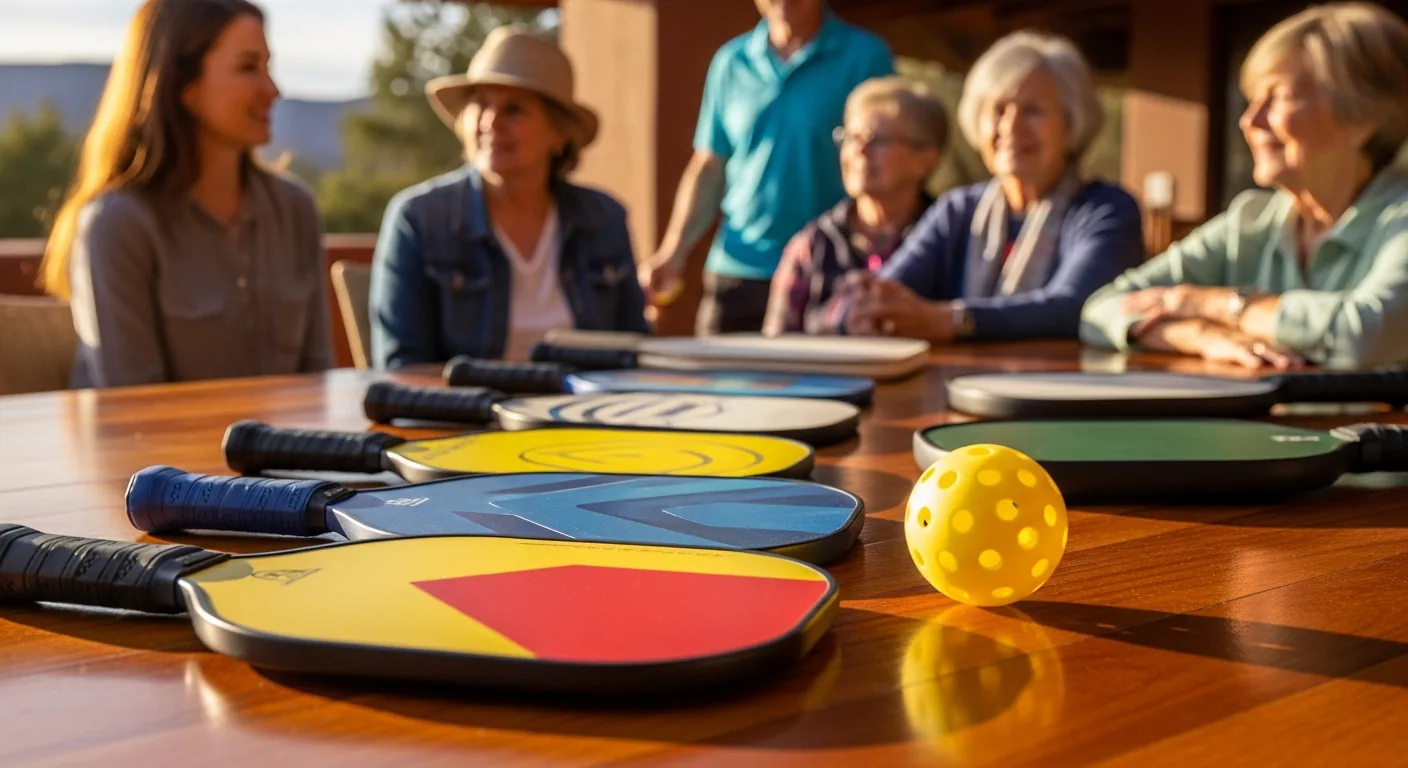
Reading about feel only gets you so far. The single best thing you can do is hit with a few different paddles before spending anything. A light paddle and a heavy one feel like different sports in your hand, and ten minutes of actual play tells you more than any review or spec sheet ever will. Try a control paddle and a power paddle back to back and you’ll feel the difference immediately — which is exactly the kind of thing words on a page can’t give you.
That’s one of the quiet perks of staying somewhere with a court on site. You can borrow a club’s demo program, hit with friends who’ll lend you theirs, or — easiest of all — book a stay where the paddles are already waiting by the door.
A few more reads worth a look as you sort out your gear:
- What to pack for a pickleball vacation — so the paddle isn’t the only thing you forget.
- Pickleball drills for a private court — once you’ve got a paddle you like, here’s how to groove it.
- The pickleball glossary — plain-English definitions for every term on the box.
Pick the paddle that fits your hand and matches how you actually play. The rest is just practice. And if you’d like a few days of court time to test what you’ve learned, you can always https://www.airbnb.com/rooms/1650915758723763330.
Frequently asked questions
What's the best pickleball paddle for a beginner?
There’s no single “best,” but the safe starting point is a midweight (about 7.3–8.4 oz), standard-shape paddle with a polymer core and a grip that fits your hand. Don’t overthink the face material at first — a comfortable, forgiving paddle helps you learn faster than a high-end power paddle you’re fighting. Plan to spend in the $40–75 range to start; you can upgrade once your style shows.
How do I know my pickleball grip size?
Open your hitting hand and measure from the middle crease of your palm to the tip of your ring finger. That number in inches is a close estimate of your ideal grip circumference — most adults land between about 4″ and 4.5″. When you’re between sizes, size down: you can build a grip up with an overgrip, but you can’t shave one down.
Is carbon fiber or fiberglass better for a pickleball paddle?
Neither is objectively better — they suit different games. Carbon (and graphite) faces favor control and spin with a forgiving sweet spot, while fiberglass favors power and pop, often at a lower price. New players usually do well with a carbon or graphite face for the control; players who want easy power on drives often prefer fiberglass.
How much should I spend on a pickleball paddle?
For most recreational players, the $100–160 mid-range is the sweet spot — clearly better than a $30 paddle, while a $200-plus premium paddle only adds small, incremental gains. Spend at the entry level (~$40–75) while you’re learning, step up to the mid-range once you’re playing regularly, and only chase premium if you’re competing in sanctioned events.
Play year-round in red rock country
Sedona Pickler is a private Sedona home with its own indoor, climate-controlled pickleball court. Rally any season, any hour — heated, cooled and lit, with paddles and balls provided.
Check availability on Airbnb