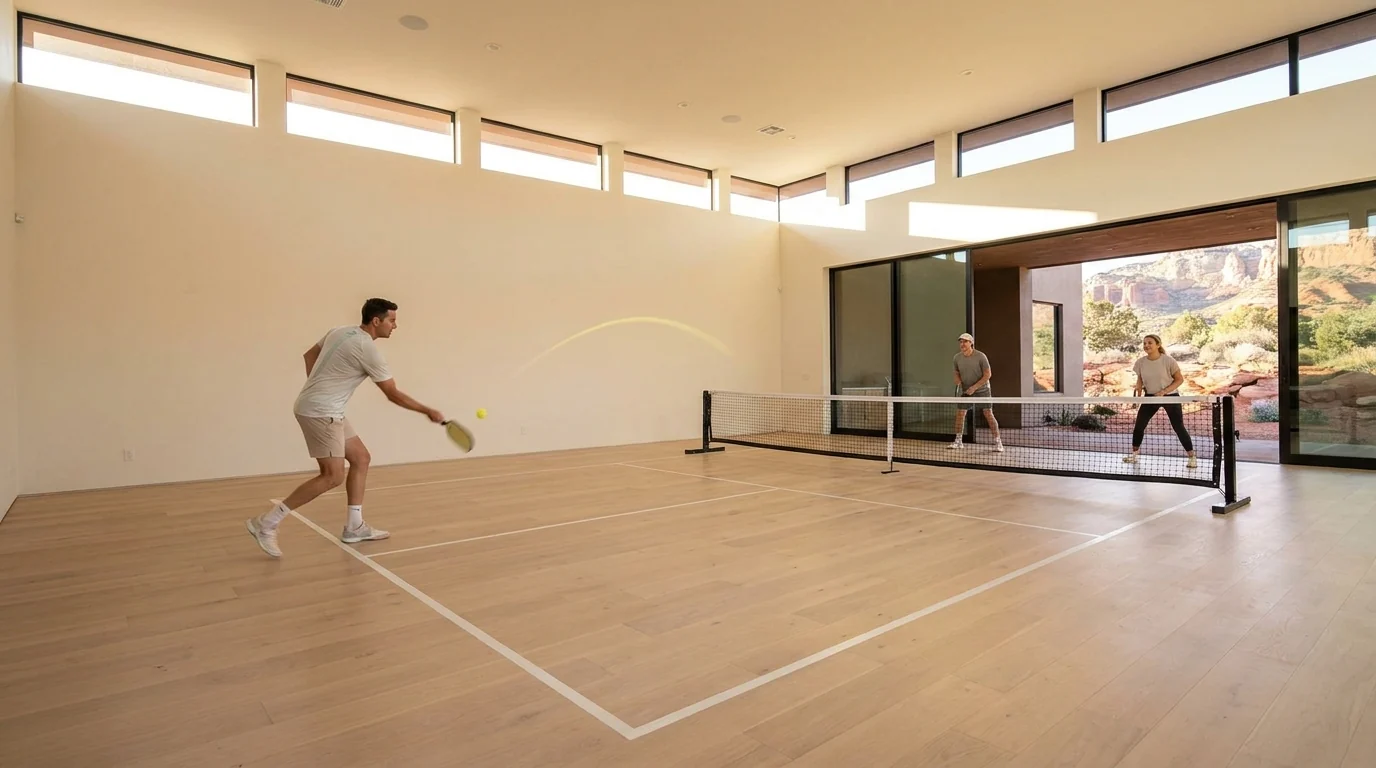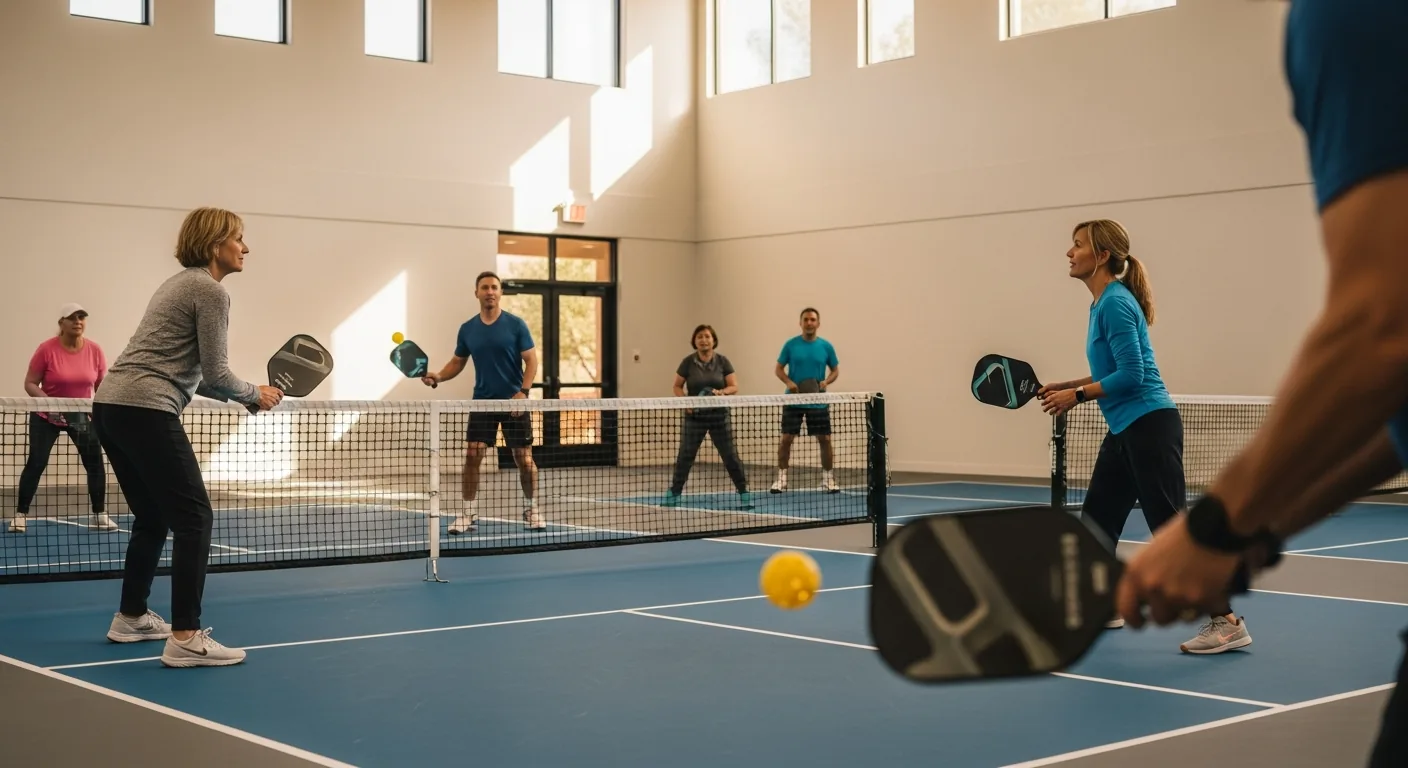
You can rally. You can serve, return, and trade drives from the baseline without falling apart. But something changes when both teams get up to the net and the ball slows down: you start losing. Not because you got outhit, but because you got out-waited. Three or four soft shots into the exchange, you try to do a little too much — a dink with a touch too much lift, a flick you did not need — the ball floats up an inch too high, and the other team puts it away at your feet. If that is the pattern, the problem is not your athleticism or your hands. It is the soft game, and the soft game is learnable.
Most of pickleball’s points are decided in a seven-foot strip of court next to the net called the kitchen. This is the part of the game that looks like nothing is happening — two teams patting a ball back and forth a few inches over the net — and it is exactly where steady players quietly take points from impatient ones. The dink is the shot at the center of it. Learn to dink well and you stop handing away the rallies you should be winning.
This is a full guide to that soft game: what the kitchen is and why it exists, what a dink actually is and why you hit one, the mechanics of a clean one, the cross-court pattern that does most of the work, the offensive dinks and the speed-up that end points, the footwork that keeps you in position, and the mindset that beats the impatience out of your game. It runs long because the soft game rewards detail. Read it once, then go put in the reps.
What the kitchen is, and why it exists
The kitchen is a nickname. The rulebook calls it the non-volley zone, and it is the seven-foot strip of court on each side of the net. A pickleball court is 20 feet wide and 44 feet long, and that seven-foot zone runs the full width on both sides, marked off by a line — the kitchen line — painted parallel to the net. The net itself stands 36 inches tall at the posts and sags to 34 inches at the center. That two-inch dip in the middle is small, and it matters more than almost anything else about how you should aim.
One rule defines the whole zone: you may not volley while standing in the kitchen or touching its line. A volley is any ball you hit out of the air before it bounces. So if you are inside that seven-foot strip, or your foot is on the line, you cannot pick a ball out of the air — you have to let it bounce first. The rule reaches past where your feet are at contact, too. If your momentum from a volley carries you into the kitchen after you hit, that is a fault as well, even if you struck the ball from behind the line. You cannot volley, drift in, and call it clean.
What you can do is step into the kitchen to play a ball that has already bounced. That is legal and normal — it is exactly how you retrieve a dink that lands short. Hit your shot, then get your feet back out behind the line before the next volley comes.
Why does this zone exist at all? Because without it, pickleball would be a game of standing on top of the net and swatting everything downward out of the air. The kitchen pushes both teams back off the net just far enough that the close-quarters game has to be played softly, off the bounce or with control. It is the single rule that creates the dinking game, and everything else in this article follows from it. If you are still shaky on the volley rule and the rest of the fundamentals, our beginner’s guide to the rules and scoring lays the whole framework out.
What a dink is, and why you bother
A dink is a soft, controlled shot, usually hit from at or near the kitchen line, that arcs gently over the net and drops into the opponent’s kitchen — low enough and short enough that they cannot attack it. That is the whole definition, and every word in it is doing work. Soft, so it does not carry long. Controlled, so it lands where you meant it to. Into their kitchen, so they have to hit up on it rather than down. Low, so they cannot volley it away with any pace.
The purpose of a dink is not to win the point outright. It is to keep the rally neutral while denying your opponent any chance to attack, and to wait for the moment they can’t return the favor. When both teams are up at the kitchen line, the court is even. Nobody has an angle to hit down through, because any ball low over the net has to be lifted, and any ball lifted can be handled. In that standoff, one simple truth decides everything: whoever hits the ball high first loses. The instant one team’s shot floats up above the height of the net, the other team steps in and drives it down. So the dink is a patience contest. You are working to make the other team be the one who pops a ball up — through pressure, through movement, or through their own restlessness — while making sure it is not you.
That reframes what a “good” dink is. A good dink is not pretty. It is unattackable. If your opponent can do nothing with your shot except dink it back, you did your job, even when it looked like you did nothing at all. The whole soft game is a slow squeeze, and the team that keeps squeezing without cracking is the team that eventually gets a ball it can hit.
The mechanics of a clean dink
A dink is a small motion, which fools people into thinking it is easy. The small motion hides how much control it takes. Here is what a repeatable dink is actually made of.
Start with the paddle out in front and up. Your ready position at the line should have the paddle ahead of your body and roughly at chest height, tip up, not hanging down by your knees. You dink from there. Meeting the ball out in front of you, rather than letting it come back to your hip, is most of the battle, because contact in front is contact you can see and steer.
Hold the paddle loosely. The single most common cause of a popped-up dink is a tight grip. A tight grip turns the paddle face into a trampoline: the ball hits it and springs off with pace you never asked for. Coaches tell people to hold the paddle “like a bird” — firmly enough that it will not fly out of your hand, gently enough that you would not hurt the bird. On a scale of one to ten, aim for about a three. Loose hands absorb pace instead of adding it.
Push and lift from the shoulder, not the wrist. A dink is a gentle push forward and slightly up, driven by your shoulder and arm moving together as one unit, with a quiet wrist. The wristy flick feels natural, and it is a trap. The wrist is small, fast, and inconsistent, and it is the reason your dinks vary from one to the next. Take the wrist out of it and let the bigger, slower muscles do the work. Your dinks get boring, and boring is exactly what you want.
Keep the face slightly open. Tilt the paddle face open just a little — angled up toward the sky — so it naturally lifts the ball over the net. You are not scooping; you are presenting an open face and giving the ball a small forward push. The open face plus a low-to-high path is what floats a soft ball over a 34-inch net without you having to hit it hard.
Absorb the pace on the ball you receive. When your opponent’s dink comes in with some steam on it, do not meet it with a firm paddle. Soften your grip further and let the paddle give a touch on contact, almost catching the ball and redirecting it. This is how you turn their harder dink into your soft one, instead of blocking it back up into an attackable floater.
Get low with your knees, not your paddle. To dink a low ball, players drop the paddle head down toward the ground. That changes the face angle and makes the shot unpredictable. The fix is to bend your knees and lower your whole body so you can keep the paddle out front with the same face you use on every other dink. Your legs should be tired after a long dink rally — you are doing a lot of small squats. If your paddle head is pointing at the floor, you are cheating your legs and paying for it in errors.
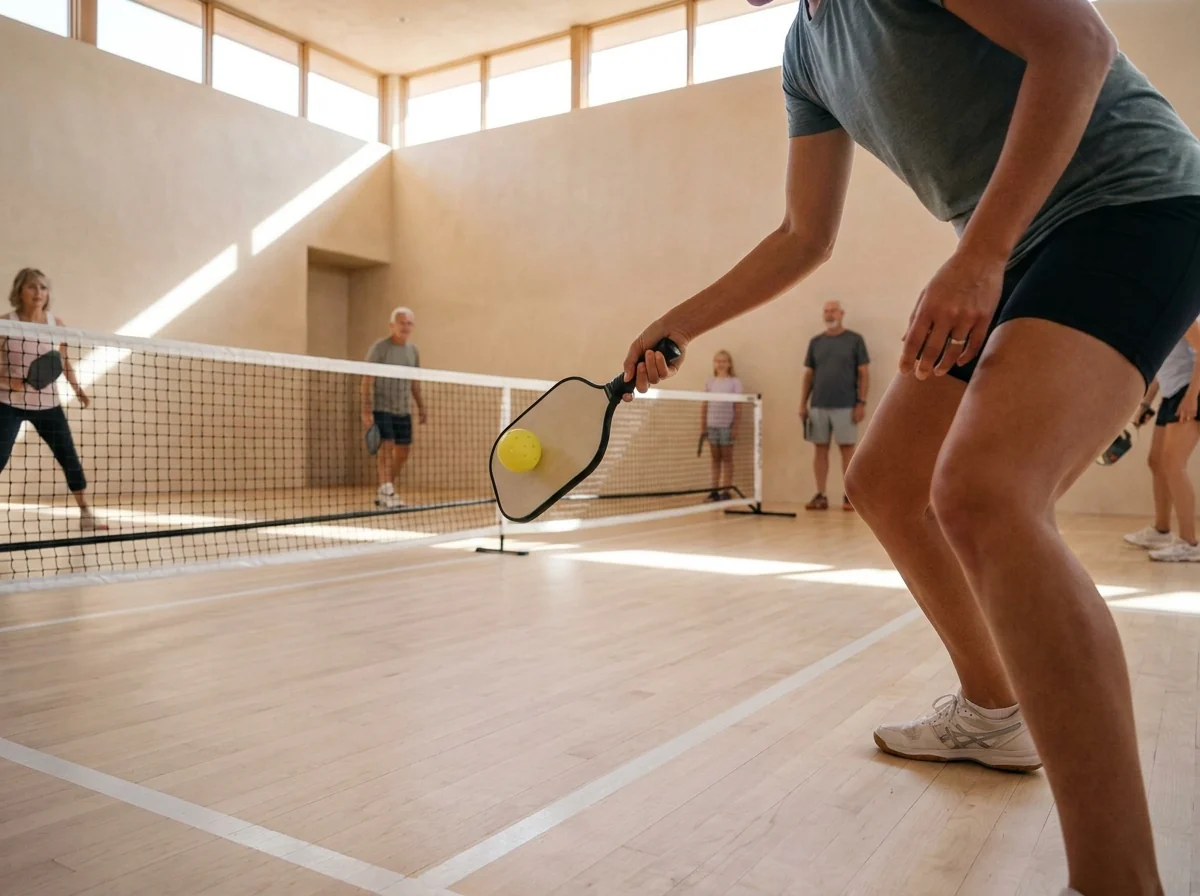
Put those together and the motion is almost dull: paddle out front, loose hand, small push from the shoulder, open face, soft on the catch, knees bent. Groove that one motion until it is the same every time and you have the foundation. One more piece of the puzzle sits in your hand: if your dinks keep popping up no matter how loose your grip, the paddle itself may be part of it. A firmer, more powerful paddle springs the ball off the face, while a softer control paddle is more forgiving on touch shots — our paddle-choosing guide covers that control-versus-power tradeoff in detail. And if you want a structured way to build the motion, the wall and partner progressions in our private-court drills guide are built around exactly this kind of repetition.
Cross-court is the workhorse
Once you can dink, the next question is where to aim it. The answer, most of the time, is cross-court — diagonally, from your side to the kitchen box catty-corner from you. The cross-court dink is the workhorse of the soft game for two concrete, physical reasons.
The diagonal is longer. A straight-ahead dink travels the short way across a 20-foot-wide court. A cross-court dink travels the diagonal, which is simply a longer path from you to the target. More distance means more room for the ball to land in and more margin before it sails long. You can hit the same soft shot with the same pace and it will be more forgiving cross-court than down the line, purely because of the geometry.
The net is lower where a cross-court dink crosses it. Remember the sag: 36 inches at the posts, 34 inches at the center. A cross-court dink travels over the middle of the net, its lowest point, while a down-the-line dink has to clear the higher stretch near the sideline. Two inches sounds trivial until you remember that a dink lives or dies by inches of net clearance. Lower net, more margin, again.
Put those together and cross-court is the safer, higher-percentage shot, which is why steady players hit it over and over. So why ever go down the line? To change the pattern. A down-the-line dink is tighter and riskier, but it catches an opponent who has settled into a cross-court rhythm, and it can pull them out of position or jam a player who was leaning the other way. The rule of thumb: dink cross-court by default, go down the line on purpose, never by accident.
| Factor | Cross-court dink | Down-the-line dink |
|---|---|---|
| Path length | Longer (the diagonal) — more room to land | Shorter — a tighter window |
| Net height crossed | About 34 in (center sag) | Closer to 36 in (near the sideline) |
| Risk | Lower; the high-percentage default | Higher; easier to miss wide or long |
| Best use | The rally workhorse; most of your dinks | A change-up to break rhythm or jam a leaner |
| If it floats | The angle back at you is narrower | Opponent gets a cleaner look down the line |
Turning defense into offense: types of dinks
Not every dink does the same job. Early on, every dink you hit is a defensive one — you are just trying to get it back low and live to dink again. As you improve, the dink becomes a tool you aim, and a soft game that was all defense starts creating offense. Here are the ones worth knowing.
Unattackable versus attackable. This is the only distinction that matters at first. An unattackable dink lands low in the kitchen and forces your opponent to hit up. An attackable dink is any dink that gives them a ball at net height or above — a floater they can take out of the air and drive down. Your first goal is simply to hit dinks that consistently land in the first category. Every refinement below assumes you already can.
Dink to the feet. The best target for an offensive dink is the opponent’s feet, specifically the spot right where they are standing, just in front of their toes. A ball at the feet is the hardest ball in pickleball to lift cleanly. They have to half-volley it or scoop it off the ground, and that is where pop-ups are born. You are not trying to ace them past their reach. You are trying to jam their next shot.
Dink to the middle. A dink down the middle between two opponents does two useful things. It takes away the sharp cross-court angles they could otherwise hit back at you, and it creates a split second of “yours or mine?” hesitation between partners. Hesitation produces late, sloppy dinks. The middle is an underused target precisely because it looks unaggressive.
Dink to the backhand. Most players have a weaker backhand dink than forehand, so moving the ball to their backhand side raises your odds of getting a loose reply. Watch which side an opponent keeps scooting away from, then put the ball there.
The reset, or “dead,” dink. Sometimes you are the one under pressure — pushed off balance, reaching, out of position. The reset dink is a purely defensive absorb: soft hands, no pace added, drop it just over the net and low, and use the beat it buys to recover your spot at the line. It does not try to win anything. It tries to make the rally neutral again so you are not the one who cracks.
Move them side to side. A dink threatens with distance, not only with pace. Dinking one ball to a corner, then the next to the opposite corner, drags an opponent laterally along the kitchen line. Movement produces reaching, reaching produces high balls, and a player on the move eventually floats one up. Over enough shots, the movement manufactures the mistake for you.
Dink to set up the speed-up. The most advanced job of a dink is to bait the very attack you are about to hit. Put a dink somewhere awkward, read that the reply is going to sit up a little, and be already loaded to accelerate it. That hand-off from soft to sudden is the next section.
The speed-up: when to pull the trigger
The speed-up is the moment the soft game turns hard. It is when you take a dink that has floated up a little too high and, instead of dinking it back, accelerate it flat and fast at your opponent. Timed right, it ends the point or forces a weak reply you can finish. Timed wrong, it hands the other team an easy counter. Timing is the whole thing.
Speed up a ball that is at net height or above. The clean speed-up comes off a ball you can drive on a flat or slightly downward path, which means it has to be high enough to begin with. If the ball is sitting up around net height or above when it reaches you, you can accelerate through it and still keep it low over the net. That is the green light.
Aim at the body, not the open court. The instinct is to blast a speed-up into the open part of the court. Resist it. The highest-percentage target is the opponent’s body — the shoulder or hip on their paddle side, or right at the belly button so they cannot decide between a forehand and a backhand. A ball driven at the body is the hardest to defend, because there is no clean way to get the paddle out in front of it. The goal is a jam that produces a weak pop-up or an outright miss, not a winner threaded past them.
Do not speed up a ball that is too low. This is the discipline that separates smart attackers from reckless ones. If the ball is below the height of the net when it reaches you, speeding it up means hitting up on it, which either buries it in the net or floats it out to your opponent at a hittable height — and now you are the one defending. When the ball is low, dink it. Keep dinking until you earn one you can actually attack. Impatience with this single rule is the number-one reason club players lose dink rallies they were winning.
A useful way to hold both jobs in your head at once: the dink rally is you and your opponent each waiting for the other to give up a ball above the net. On defense, your task is to never hand one over. On offense, your task is to pounce the instant one arrives. Everything in between is patience.
Footwork: stay at the line and move to the ball
You can have the softest hands in your group and still lose the dink battle if your feet are wrong. The soft game is a footwork game disguised as a hands game.
Stay at the line. The kitchen line is the most valuable real estate on the court, because it is the closest you can legally stand to the net and still be ready to volley the balls that pop up. Get there and stay there. Your toes should be just behind the line — close enough to reach dinks that land short, far enough back that you do not fault by stepping on the line during a volley.
Split-step as your opponent hits. A split-step is a small hop that lands you balanced on the balls of both feet right as your opponent makes contact. It leaves you ready to move in any direction. Without it you are flat-footed and late; with it you are already loaded to shuffle to the ball. Time it to their contact, every single shot.
Move your feet to the ball; do not reach for it. The most common footwork error is standing still and stretching the paddle out to a ball that is a step away. A reached dink is a bad dink — you cannot control a shot you are lunging for, and it usually floats up into trouble. Take the small shuffle step, get your body behind the ball, and dink from a balanced base with contact in front. Feet first, paddle second.
Keep a stable base and recover. After each dink, reset: feet about shoulder-width, knees bent, paddle back out in front and up, ready in the middle of the area you are responsible for. A dink rally is a long series of small moves and small resets, not one big lunge.
Do not back off the line under pressure. When a dink jams you or a speed-up comes at your feet, the instinct is to step back to buy room. Fight it. Backing up off the kitchen line cedes the net, and the team holding the net wins the large majority of points. If you are jammed, the answer is a compact reset dink or block from where you stand, not a retreat. Hold your ground, neutralize the rally, and stay in the position that is winning you games. Getting up to the line in the first place — and earning the right to stay there — starts with a good third shot, which our guide to the third-shot drop covers in full. The drop is the shot that carries you to the line where the dinking game begins.
Common mistakes, and the fix
Most dink problems are a handful of errors repeating themselves. Here they are with the fix next to each, so you can diagnose your own game between games.
| The mistake | What it looks like | The fix |
|---|---|---|
| Dinks too high | The ball floats up around net height; the opponent keeps attacking | Lower the arc, make contact further in front, and soften the grip so the ball carries less |
| Dinks into the net | You aim at the tape and come up short | Aim deeper into the kitchen, not at the net; add a touch of lift with an open face |
| Reaching, not moving | Lunging the paddle out at balls a full step away | Split-step, shuffle your feet, and dink from a balanced base |
| Backing off the line | Stepping backward the moment you get jammed | Hold the line; reset with a soft, dead dink from where you stand |
| Getting impatient | Speeding up a low ball to try to end it early | Only attack balls at net height or above; keep dinking otherwise |
| Dropping the paddle head | The paddle points at the floor on low dinks | Bend the knees to get low and keep the paddle out front with a steady face |
| All wrist | Pace is inconsistent — one dink soft, the next one long | Push from the shoulder and quiet the wrist |
If you can watch yourself for one game and honestly name which two rows describe you, you have your practice plan. Almost nobody has all seven problems at once; most players have two or three that account for the bulk of their popped-up dinks.
The patience contest
Here is the part no amount of paddle technique fixes: the soft game is mostly patience, and patience is a skill you can train. Watch a competitive dink rally between strong players and count the shots. It is not three or four. Long exchanges routinely run into the double digits — a dozen, two dozen soft shots back and forth — before anyone gets a ball worth attacking. The players who win those rallies are not the ones hiding a secret shot. They are the ones willing to hit one more boring dink than their opponent.
Amateurs lose dink rallies for a predictable emotional reason: it feels passive, so they get restless and try to force something. They speed up a ball that was too low. They aim a dink two inches finer than they can actually hit. They swing for a winner off a ball that was never a winner. Each of those is the same mistake wearing different clothes — trying to end the point before the point was ready to end. The discipline is accepting that your job, most of the time, is to hit a good dink and wait. The attackable ball will come. Your only task is to still be in the rally, and still be unattackable, when it does.
A helpful reframe: you are not trying to win the dink rally. You are trying to not lose it. Hit unattackable dinks, keep your feet moving, stay glued to the line, and let your opponent be the one who runs out of patience. In a soft-game exchange, boredom is a competitive advantage.
Why the soft game rewards a private court
Everything above comes down to one thing: repetition. Soft hands, a quiet wrist, knees that bend on every ball, feet that move instead of reach — none of it arrives from reading about it. It arrives from hitting a few thousand dinks until the motion is automatic and dull. Which raises a practical question: where do you actually grind out that many reps?
Outdoors, the soft game has an enemy the power game barely notices — wind. A drive is fast and heavy and pushes straight through a breeze; a dink is slow, high-arced, and light, which is exactly the kind of shot a gust shoves around. Ten miles an hour of wind can turn a well-struck dink into a pop-up or a shot into the net through no fault of your technique, and you learn nothing from a rep the weather decided. Sun glare and the wait for an open public court do not help either. If you have ever tried to work on your dinks on a windy afternoon at a packed park, you know the reps you wanted were not the reps you got. Our comparison of indoor and outdoor courts goes deeper on this, but the short version is that the soft game is the part of pickleball that benefits most from four walls and a roof.
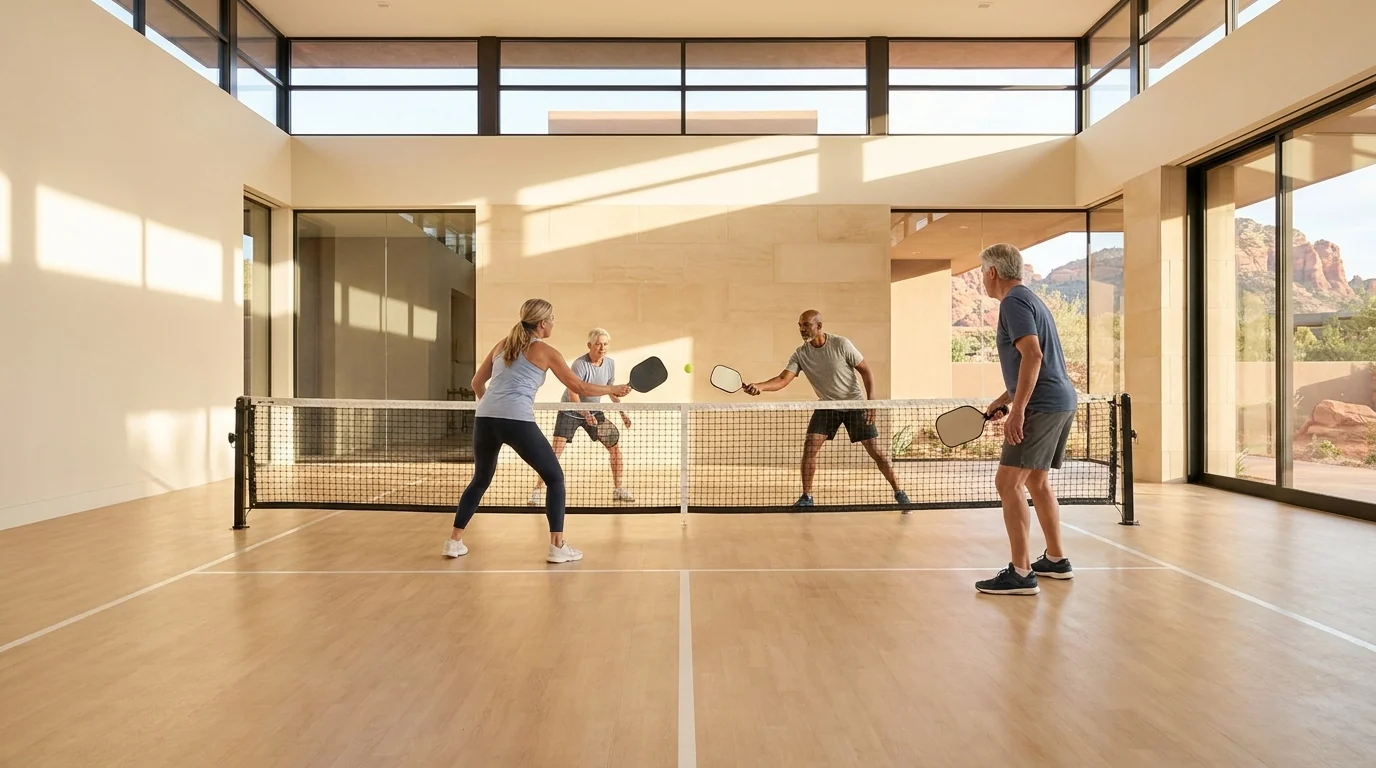
Indoors, the only variables left are you and your partner. The ball does what you told it to do, every time, so a floated dink is real feedback instead of a weather report. Altitude is the one thing an indoor court does not remove — the air inside is the same thin Sedona air — but as we cover in our pickleball-at-altitude guide, dinks are the shots elevation changes the least, since slow, soft shots were never fighting much air resistance to begin with. Your soft game travels to Sedona almost fully intact, which makes it close to the perfect thing to drill here. If your group wants a weekend built around long, uninterrupted rallies, check dates and plan a few sessions of nothing but the kitchen line.

The bottom line
The soft game is where pickleball stops being about how hard you can hit and starts being about how long you can stay disciplined. A clean dink is not complicated — loose hand, a push from the shoulder, an open face, the ball out in front, knees bent — but hitting it low and unattackable a dozen times in a row, moving your feet to every ball, holding the line when you are jammed, and refusing to attack anything below the net takes practice and patience in equal measure. Build those, and the rallies you used to lose at the net become the rallies you win. The other team pops one up, and this time you are the one who is ready. Put in the reps at home, and book a few days on a private court when you want to put in a lot of them at once.
Frequently asked questions
What is a dink in pickleball?
A dink is a soft, controlled shot, usually hit from at or near the kitchen line, that arcs over the net and drops into the opponent’s kitchen. The point is to land it low enough that they cannot attack it, which keeps the rally neutral and pressures them into eventually hitting a ball high enough for you to attack.
Can you step into the kitchen in pickleball?
Yes — you are allowed to step into the kitchen to play a ball that has already bounced. What you cannot do is volley, meaning hit a ball out of the air, while standing in the kitchen or touching its line. Your momentum from a volley also cannot carry you into the zone afterward, or it is a fault.
Why are cross-court dinks better than down the line?
Two reasons, both physical. The cross-court path is a longer diagonal, so there is more room for the ball to land in before it sails long, and it crosses the net at the center, which sags to 34 inches versus 36 inches at the posts. More landing room and a lower net make cross-court the safer, higher-percentage shot. Down the line is a useful change-up, not your default.
How do I stop popping my dinks up too high?
Loosen your grip so the paddle stops acting like a trampoline, push from the shoulder instead of flicking the wrist, and make contact out in front of your body with a slightly open face. On low balls, bend your knees to get down to the ball rather than dropping the paddle head. Softer hands that absorb pace, rather than add it, fix most pop-ups.
When should I speed up a dink instead of dinking it back?
Only when the ball reaches you at net height or above, where you can drive it on a flat path and still keep it low. Aim at the opponent’s body, usually the paddle-side shoulder or hip, since that is hardest to defend. Never speed up a ball that is below the net — you would have to hit up on it, which either finds the net or floats a sitter to your opponent.
How long should a dink rally last?
Longer than most beginners expect. Competitive dink rallies routinely run into the double digits, with a dozen or more soft shots traded before anyone gets an attackable ball. The team that wins is usually the one willing to hit one more patient dink, so treat a long exchange as normal rather than a sign that something has gone wrong.
Play year-round in red rock country
Sedona Pickler is a private Sedona home with its own indoor, climate-controlled pickleball court. Rally any season, any hour — heated, cooled and lit, with paddles and balls provided.
Check dates & book