So you’re about to play pickleball for the first time. Maybe a friend talked you into it, or maybe you’ve watched a game and the paddles looked manageable in a way a tennis racket never did. Either way, here’s the good news: you can learn enough to play a real, fun game in about ten minutes. The rest you’ll pick up on the court, which is the only place anyone really learns it.
This is a plain walkthrough of your first session. No jargon you don’t need yet, no firehose of regulations. Just what to expect and the handful of rules that actually matter when you start. If you’ve never held a paddle, you’re exactly who this is written for.
What to expect on your first day
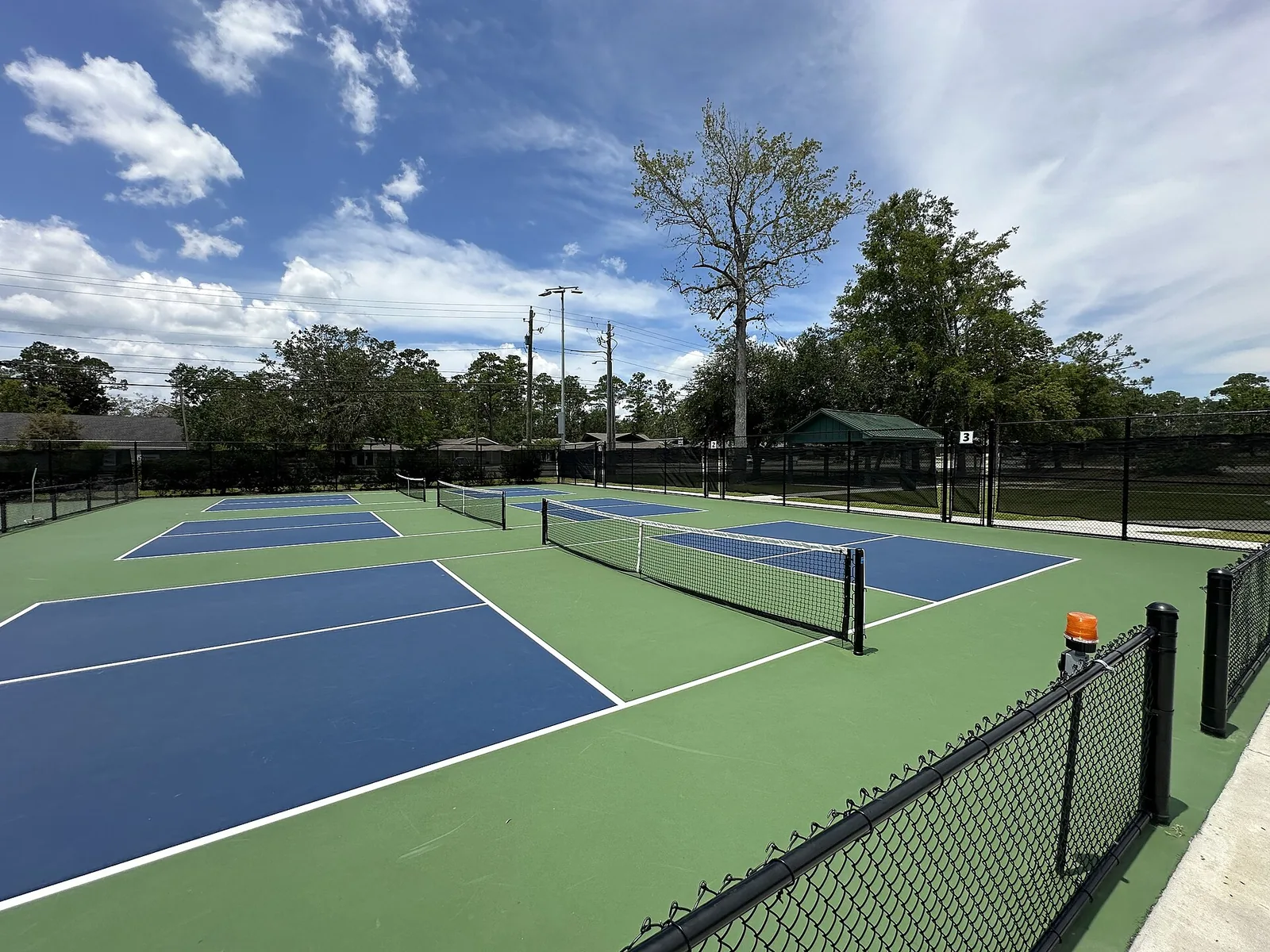
Pickleball is played on a court about the size of a badminton court — 20 feet wide and 44 feet long — with a net a touch lower than a tennis net. You’ll play either singles (one against one) or, far more commonly, doubles (two against two). Doubles is where most people begin, and it’s the friendlier introduction. You cover less ground, you have a partner, and the points last longer, which means more chances to figure out what your hands are doing.
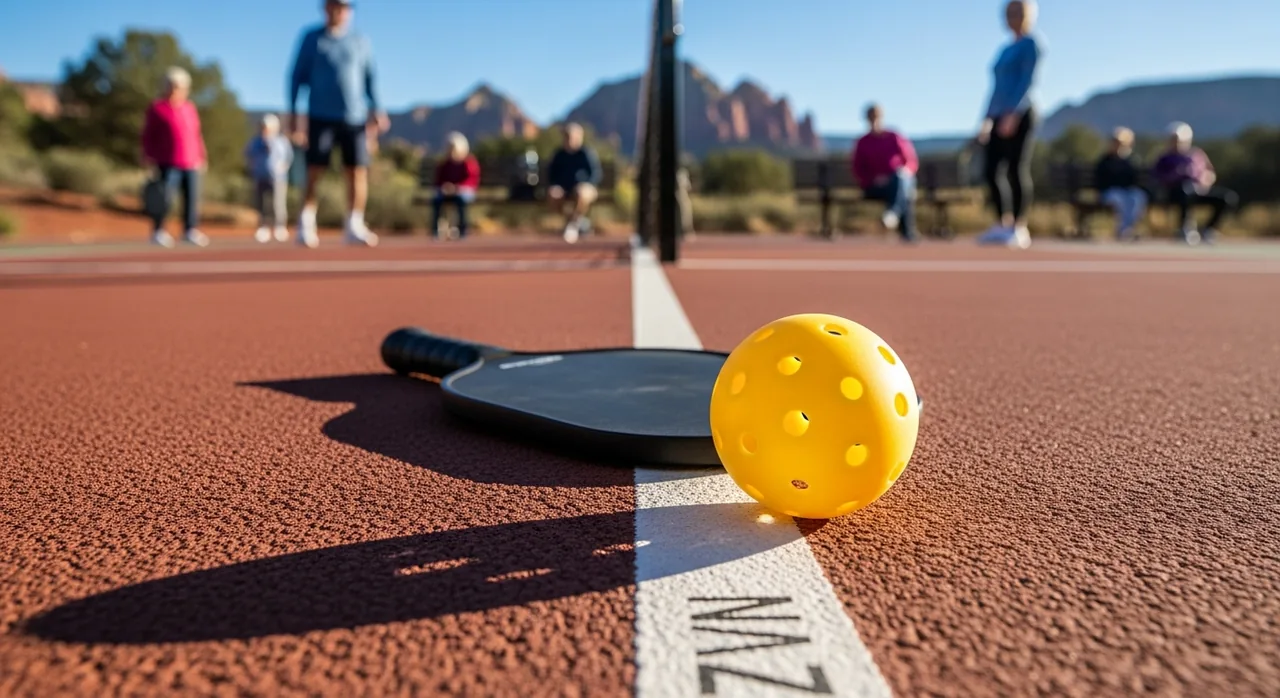
The ball is plastic and full of holes, a little like a whiffle ball. It doesn’t fly as fast or as far as a tennis ball, and that’s a big part of why beginners can rally so quickly. You hit it, it comes back, and within a few minutes you’re having actual exchanges rather than chasing the ball into the next county.
Your first session usually looks like this:
- A few minutes of hitting back and forth to get a feel for the paddle and the bounce
- A quick rundown of where to stand and how to serve
- A game or two where someone patient explains the score as you go
- The slow, satisfying realization that you’re keeping the ball in play
That’s it. You don’t need to memorize a rulebook to begin. You need four ideas.
The little gear you actually need
Almost nothing, which is part of the appeal.
- A paddle. Solid, smaller than a tennis racket, no strings. A beginner-friendly paddle is light and forgiving. You don’t need to buy one to try the sport. When you’re ready to think about your own, our guide on how to choose a pickleball paddle walks through the tradeoffs without the marketing noise.
- Balls. The plastic ones described above. There are indoor and outdoor versions — indoor balls are a bit lighter with larger holes — but the difference matters more later than it does on day one.
- Court shoes and comfortable clothes. Shoes with decent grip and side-to-side support beat running shoes, since you’ll move laterally. But plenty of people start in whatever sneakers they own.
Here, paddles and balls are already waiting for you, so a first-timer can show up with nothing and play. That removes the most common excuse for never trying.
The four rules that matter to start
You’ll eventually meet the full rulebook, maintained by USA Pickleball at usapickleball.org. For your first game, ignore most of it and hold onto these four.
1. The serve
Serving is gentler than in tennis. You hit the ball underhand, contacting it below your waist, and you send it diagonally across the court to the other side. The serve has to clear the net and land in the diagonal box, past the kitchen line. You get one fault-free attempt in standard play, so aim for safe and deep rather than fancy. Nobody expects an ace from a beginner, and you don’t need one.
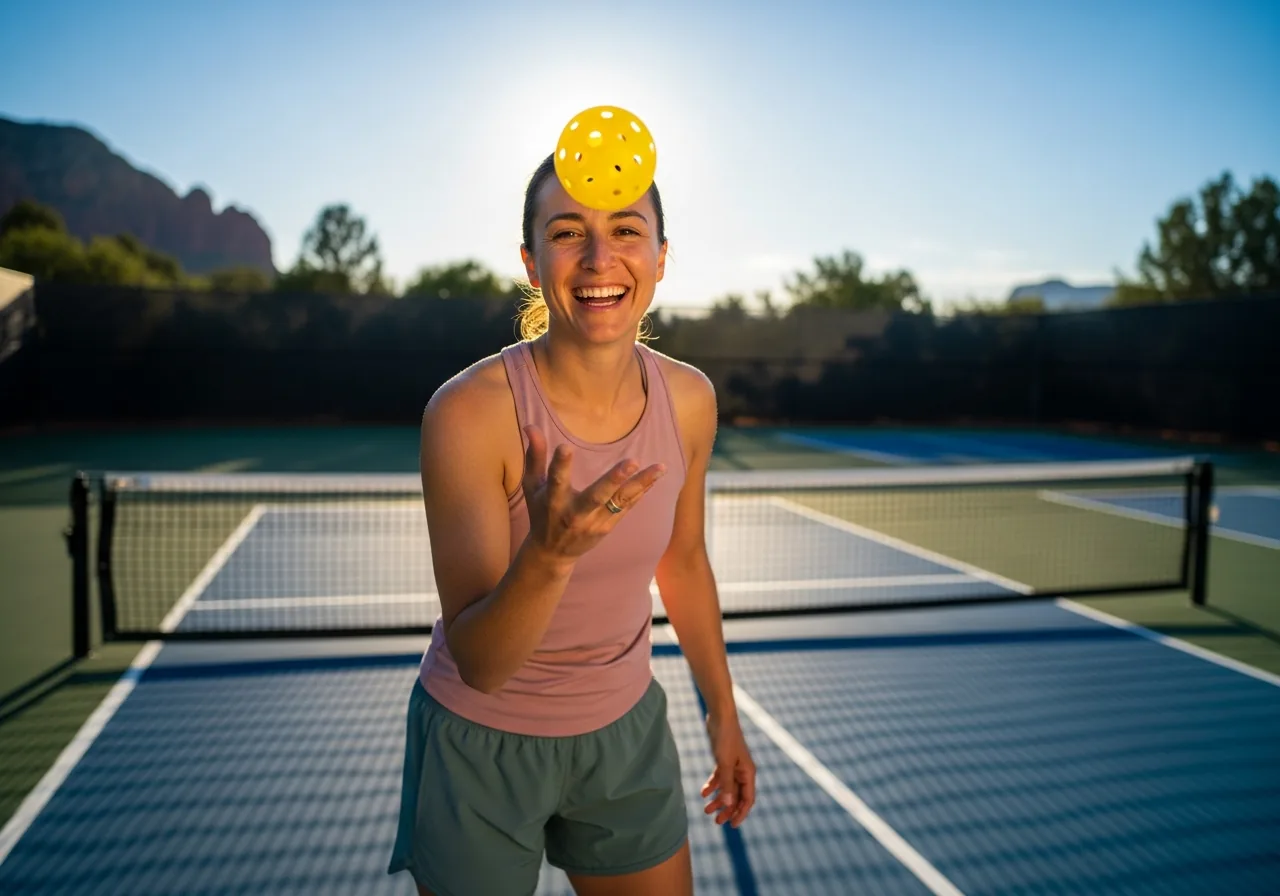
There are two legal ways to put the ball in play. The classic volley serve drops the ball from your free hand and strikes it out of the air, below the waist, with an upward arc to the paddle. The newer drop serve lets you simply drop the ball and hit it after it bounces — many beginners find it easier because there’s no timing to get wrong. Either is fine. Start with whichever feels natural.
2. The two-bounce rule
This is the one that surprises newcomers, so it’s worth a second read. After the serve, the ball must bounce once on each side before anyone is allowed to hit it out of the air.
- The serve is hit, and it bounces on the receiving side.
- The receiver hits it back, and it bounces on the serving side.
- After those two bounces, anyone can start volleying (hitting it before it bounces).
The two-bounce rule keeps the serving team from rushing the net and slamming the return, which makes the early part of every point fairer and longer. Once you internalize it, the rhythm of the game clicks into place.
3. The kitchen
There’s a seven-foot zone on each side of the net, officially the non-volley zone, that everyone calls the kitchen. The rule is simple: you can’t volley the ball (hit it out of the air) while standing in the kitchen or touching its line. If you want to volley, your feet stay behind that line.
You’re allowed to step into the kitchen anytime to play a ball that has bounced. You just can’t be in there when you take a ball out of the air. Most beginner faults happen here, and that’s fine. It’s the most natural mistake in the sport, and noticing it is half of fixing it.
4. Scoring, kept simple
Two things to remember, and the rest follows.
- You only score points when your side is serving. If you’re receiving and you win the rally, you don’t get a point — you earn the right to serve, which is how you get your chance to score.
- Games usually go to 11, win by 2. The first side to 11 points with at least a 2-point lead takes the game. If it’s 10–10, you keep playing until someone leads by two.
In doubles the spoken score has three numbers — your score, their score, and which server you are (1 or 2) — and that third number trips people up at first. Don’t worry about announcing it perfectly on day one. Let a steady player call the score while you focus on the ball.
Here’s the reassuring part: nobody keeps score flawlessly on their first afternoon, and it doesn’t ruin anything. The game still works while you learn it.
When you want the scoring to actually stick, keep our pickleball scoring cheat sheet nearby, and the full pickleball rules page is there when you’re ready to go deeper than these four ideas. If a word comes up that you don’t recognize — dink, poach, side out — the pickleball glossary is a quick place to look it up.
A little court etiquette
Pickleball is a sociable sport, and a few small courtesies go a long way.
- Call the score before you serve, loud enough for everyone to hear. It keeps the game honest and gives the returner a beat to get ready.
- Make line calls fairly. Players call balls on their own side, and the convention is to give the benefit of the doubt to your opponent on anything genuinely close.
- Hold your serve a moment until the other side looks ready. There’s no rush.
- Say “nice shot” when someone earns it. People do, and it’s part of why the sport spreads the way it does.
- Retrieve a stray ball safely if it rolls onto a neighboring court, and wait for a break before crossing behind players who are mid-point.
None of this is hard. Most of it is just paying attention to the people across the net.
You’ll get good faster than you think
Here’s what makes pickleball genuinely great for a group of mixed abilities: the gap between a total beginner and a competent player closes quickly. The slower ball, the smaller court, and the underhand serve all flatten the learning curve. Within a session or two you’re not just hitting the ball back, you’re choosing where to put it. Within a few weeks you’re a real opponent.
That’s why a household of varying ages and experience levels can play together and all have a good time. Grandparents and teenagers, athletes and people who haven’t picked up a paddle since gym class, end up in the same competitive games sooner than they’d guess. When you’re ready to sharpen specifics, a short set of drills you can run on a private court will move you along faster than open play alone.
Learn the game on your own court
You don’t need a coach or a league to start — just a little space and someone willing to call the score for a game or two. If you’d like to https://www.airbnb.com/rooms/1650915758723763330 a few quiet days to figure it out at your own pace, the court is here whenever you’re ready.
Frequently asked questions
How does pickleball scoring work for beginners?
Games go to 11 and you must win by 2, so at 10–10 you keep playing until someone leads by two. The catch most newcomers miss: you only score points when your own side is serving. If you win a rally on the return, you don’t get a point — you earn the serve, which is your chance to score. Let a steady player call the three-number doubles score while you focus on the ball.
What is the two-bounce rule?
After the serve, the ball has to bounce once on each side before anyone can hit it out of the air. The serve bounces on the receiving side, the return bounces on the serving side, and only then can players volley. It keeps the serving team from charging the net and ending the point early.
What is the kitchen in pickleball?
The kitchen is the seven-foot non-volley zone on each side of the net. You can’t hit the ball out of the air (volley) while standing in it or touching its line. You can step in anytime to play a ball that has already bounced — just step back out before you volley again.
Do I need my own paddle and balls to try pickleball?
No. A beginner-friendly paddle is light and forgiving, and most people borrow one to start. Here, paddles and balls are provided, so you can show up with nothing and play. When you’re ready to buy your own, our paddle guide covers the tradeoffs.
Play year-round in red rock country
Sedona Pickler is a private Sedona home with its own indoor, climate-controlled pickleball court. Rally any season, any hour — heated, cooled and lit, with paddles and balls provided.
Check availability on Airbnb