Eight friends decide they want a weekend built around pickleball. Someone floats a resort with courts on site. Someone else drops a link to a whole house that has its own court. Both can work, and the group chat usually stalls right there, because the two options are not really the same trip.
A resort or club gives you courts you share with other guests, booked in blocks. A house with its own court gives you one court that belongs to your group for the length of the stay. For a group that wants pickleball to be the point of the trip rather than a scheduled amenity, that one difference decides most of what follows — when you play, who you play with, and whether a session survives a hot afternoon or a rainy one.
This is the honest case for planning a group trip around a home with a private court: what it actually gets you, what you give up, and who it suits. If you want a side-by-side on the raw tradeoffs, we go deeper in resort courts vs a private home court. This piece is about the group angle — why a private court changes the shape of the whole weekend.
Two ways to run a pickleball group trip
Strip away the marketing and there are really two models.
The first is the resort or club model. You stay somewhere with a bank of courts and book time on them — often in 60- or 90-minute blocks, shared with every other guest who had the same idea, sometimes with a court fee on top of the room. The upside is real: a good club runs multiple courts at once, with a pro for clinics, ball machines, open play, and organized events. If your group wants coaching or twenty people on courts at once, that infrastructure is hard to beat.
The second is the whole-home model. You rent a house that has a court on the property, and it comes with the place. There is one court, not eight, but it is yours around the clock with nobody else in line for it. Nobody swipes a membership card, nobody reserves a lane, and nobody gets bumped at the top of the hour. You trade a facility full of courts for a single court you never have to share or schedule.
Neither is the “right” answer in the abstract; they answer different questions. The club answers “where can our group get a lot of court time and some coaching?” The home answers “where can our group have a court to ourselves for a weekend?” The rest of this guide is about why, for a lot of groups, the second question is the one that matters.
The advantage that matters most: you are never on the clock
When the court comes with the house, the reservation goes away. There is no window you have to hit, no block you paid for that is ticking down, no front desk to call. Someone wants to warm up at seven in the morning before the others are awake? The court is open. The group gets a second wind after dinner and wants to play until midnight? The lights are already on. A weekend built around a private court runs on your group’s rhythm instead of a facility’s schedule.
Be honest about one detail, because it is where the “no waiting” pitch oversells itself: it is one court. With eight people and doubles, four play and four wait, so you are still rotating. The difference is that you control the rotation — your group decides who is on and for how long, not a clock forcing everyone off so the next reservation can start. Run a quick game to eleven and swap, or let two people keep a long game going while others grab a drink. Nobody is at the fence waiting to take your court, and you never stop because your hour is up.
That control is worth more to a group than an extra court would be. Most groups of eight are not all playing at once anyway — they play in fours, cheer, argue line calls, and drift between the court and the kitchen. A single court you own outright fits that reality better than four you have to reserve and share.
Everybody plays, and every age
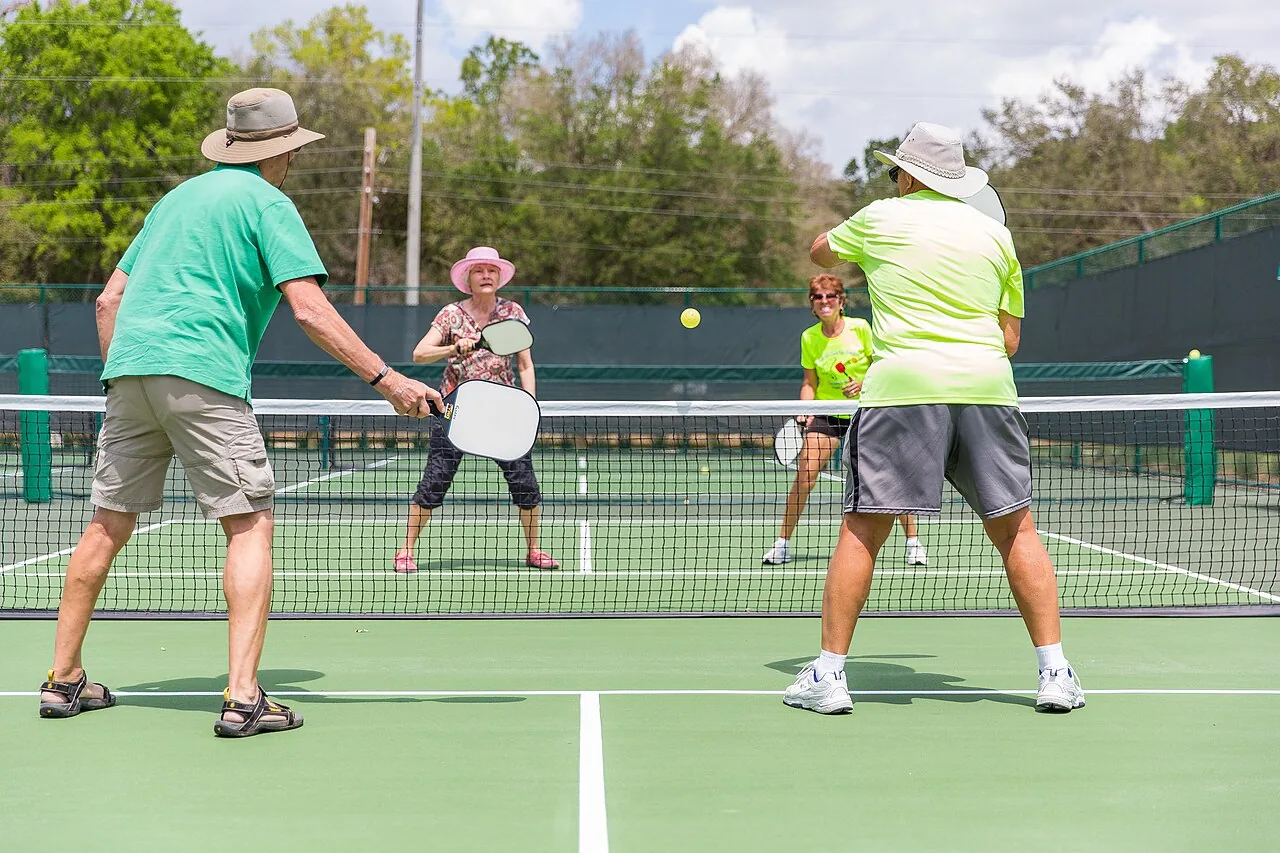
Part of what makes pickleball good for a group is how fast people get competent. The court is small, the paddle is forgiving, and the underhand serve takes the intimidation out of starting. Most people are playing real points and keeping score within the first hour, which means nobody sits on the sideline feeling like they are holding the group back.
The growth numbers say the same thing. According to the Sports & Fitness Industry Association, 19.8 million Americans played pickleball in 2024, up 311% over three years, and it has been the country’s fastest-growing sport for four years running. The largest age group is now 25 to 34, but the game spans generations — a grandparent and a teenager can be on the same court and both have a good time, which is exactly what a family or mixed friend group needs.
A private court makes that inclusiveness easier. A beginner who is nervous about looking foolish is a lot more relaxed learning on a court where the only people watching are the ones who love them, versus a public facility full of strangers and better players waiting for the court. Grandparents can rally at their own pace. Kids can flail and laugh without anyone sighing at the delay. If a couple of people in your group have never picked up a paddle, our beginner’s guide to the rules and scoring gets them up to speed in a few minutes, and by the second morning they are usually in the mix.
All weekend, in any weather
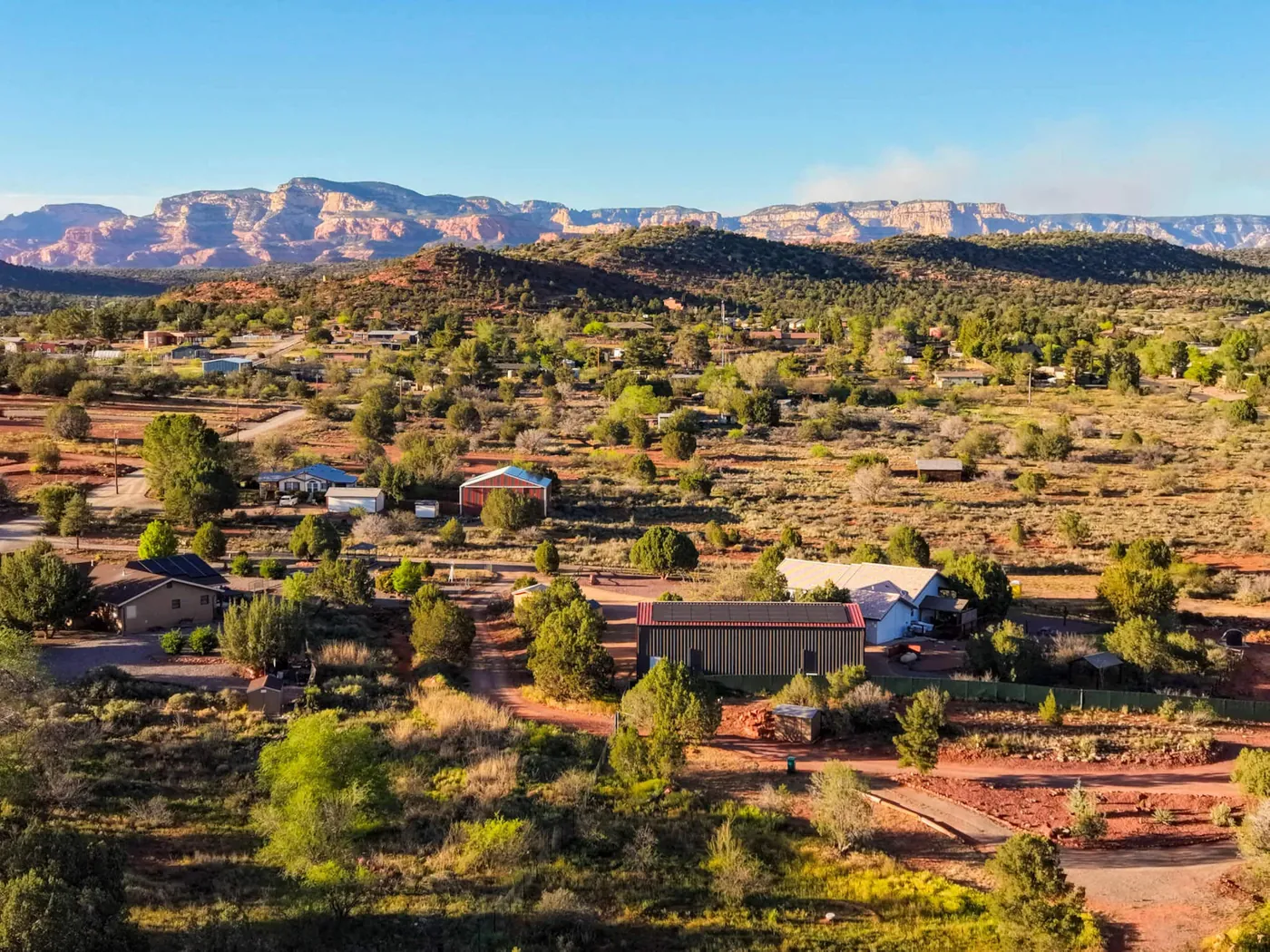
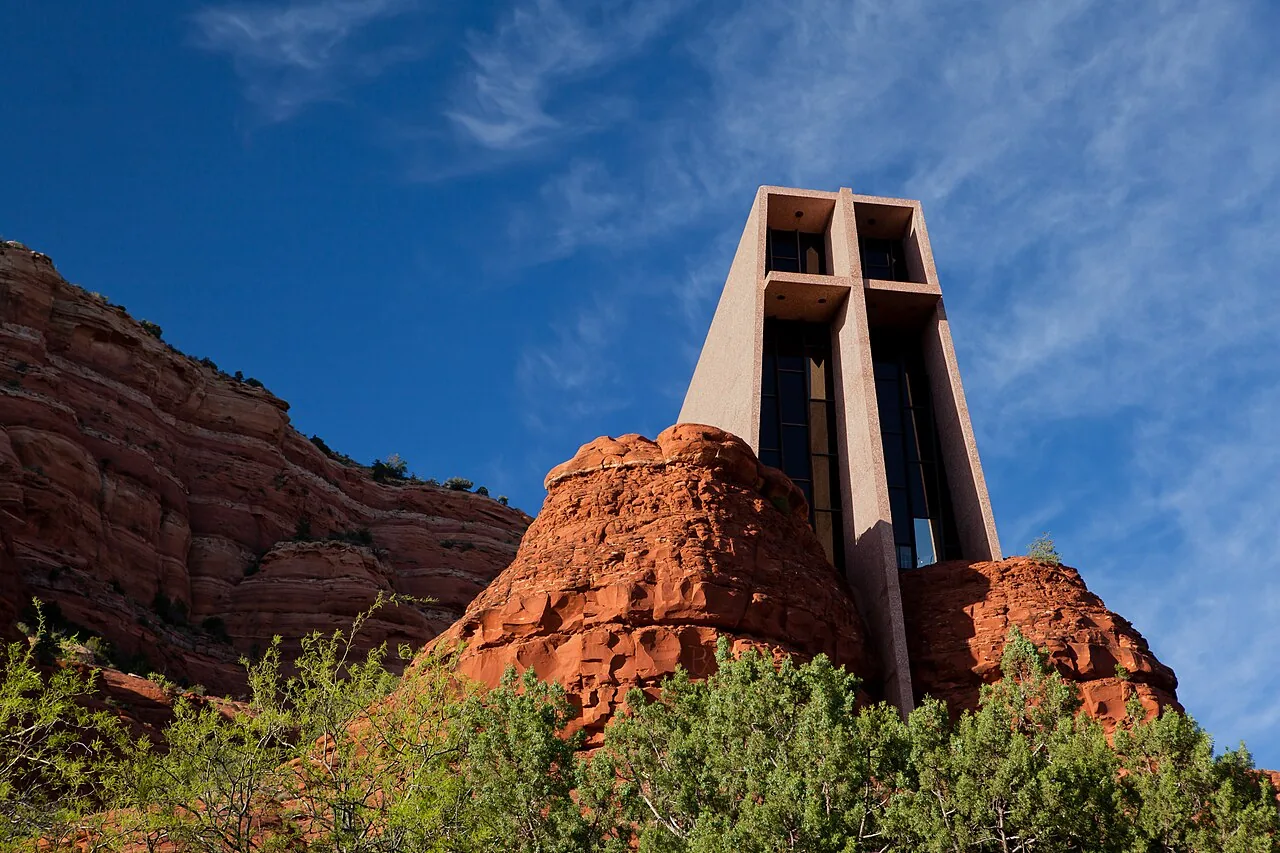
The other reason “all weekend” is more than a slogan with an indoor court: weather stops being a variable. An outdoor court, whether at a resort or a park, is at the mercy of the forecast. In the desert that is not a small thing. Sedona sits at about 4,350 feet, so summer days still climb into the mid-90s at midday, monsoon afternoons in July and August bring sudden storms, and winter mornings can start below freezing.
The court at this home is indoors, heated, air-conditioned, and lit, which takes all of that off the table. You play at noon in July while outdoor courts across the valley sit empty in the heat. You keep the session going when an afternoon storm rolls through. You warm up on a cold January morning without waiting for the day to thaw. And because the court is lit, play is never tied to daylight.
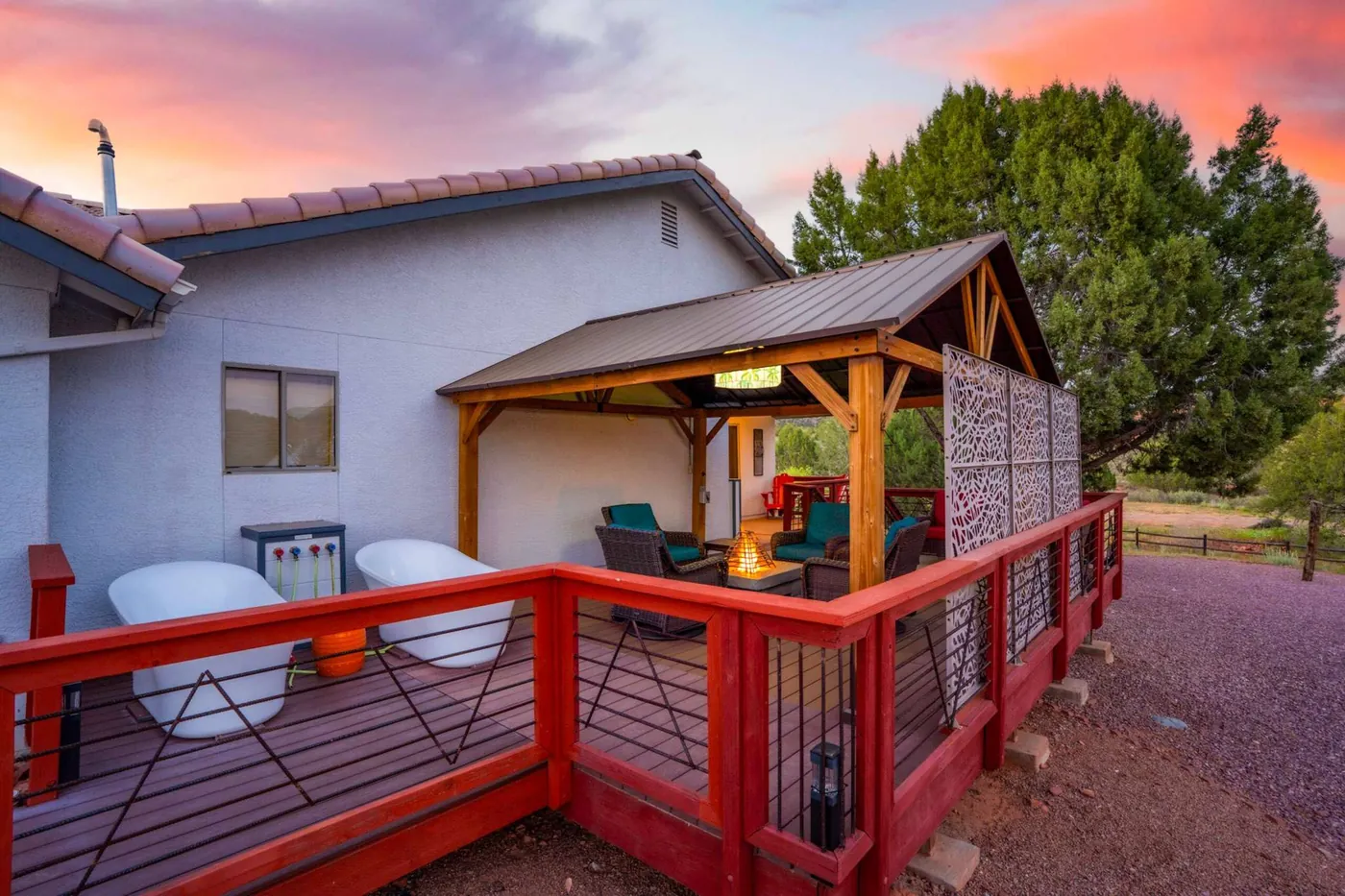
One honest footnote, because it gets exaggerated a lot: Sedona is cooler than Phoenix, but it is not an alpine escape. Summer days here run roughly 10 degrees cooler — think mid-90s instead of 105-plus, not fifteen or twenty degrees less. The bigger gap is at night, when dry air and elevation drop July lows to around 68 degrees while Phoenix stays in the mid-80s. So the evenings are comfortable for the deck and the firepit, the midday is still hot, and the air-conditioned court bridges the difference. We lay it out with the temperature chart on the beat-the-heat page.
What a resort still does better
A guide that only sold you the upside would not be worth much, so here is the honest other side. There are things a good club or resort does that a single private court cannot.
Coaching is the big one. If your group wants lessons, a pro to run drills, or a clinic to level everyone up, a facility with staff delivers that and a house does not — this home has no instructors, no clinics, and no scored tournaments. Organized play is another: leagues, ladders, and open-play put you in front of new opponents, which a private court by definition does not.
And volume. If you are bringing a big crew — more than eight, or a group that wants a dozen people on courts at the same moment — you want multiple courts, and a resort has them. A single court is the right tool for a group that plays in fours and takes turns, not for a large event where everyone needs to be on a court at once. If organized competition is the actual goal, a home like this works better as a private base near the action than as the venue itself; we get into that in our look at where to stay for an Arizona tournament weekend.
Know which trip you are planning. If it is coaching and competition, lean toward a club. If it is a group that wants the court to themselves and a house to come home to, the private court wins on the things it is built for.
The cost math for a group
Cost is where the private-court home quietly makes its best argument, and it is worth walking through the logic rather than the numbers, since the actual rate depends on your dates.
At a resort, eight people usually means several rooms, plus court fees or a facility charge, plus the markup on food and drinks on site. Those line items add up per person and per night. A whole-home rental flips the math: one rate for the house, split eight ways, with a full kitchen so you can cook a few meals instead of eating out every time. The court is not a separate charge — it is included. For a group that fills the place, the cost-per-person on a whole-home buyout tends to land below separate resort rooms with court time on top, though you should run the real numbers for your dates.
The softer savings are real too: nobody rents paddles, nobody pays by the hour to play, and a group that cooks a couple of dinners instead of booking a table for eight every night keeps a surprising amount in the pot.
Who it is for, and who it is not
This trip suits a specific group, and being clear about that saves everyone a bad booking.
It is a good fit for a friend group, a family, or a small team of up to eight who want a court to themselves, a home base with a kitchen and firepit, and the freedom to play whenever the mood strikes. Multi-generational groups do especially well, because everyone plays at their own level without an audience. Sedona does the rest — the red rock trailheads are minutes away in West Sedona, so the court anchors the weekend and the landscape fills the gaps. It also works for a small company offsite, which we cover in the Sedona corporate retreat guide.
It is not the fit for a group over eight, for anyone who wants daily coaching, or for a crew whose real goal is bracket play with a lot of courts. And it is a private home with house rules — guests must be 25 or older to book, and it is a whole-home stay, not a party venue.
If a private-court weekend sounds like your group, the mechanics of pulling it off — how many days, how to split costs, how to keep a mixed-skill group happy on one court — live in our pickleball group trip planning guide, and the round-robin walkthrough gives you a rotation that keeps everyone playing without a scorekeeper. One more perk worth mentioning: because the court is indoors, there are no neighbor or HOA noise complaints to manage, which is a bigger deal for backyard courts than most people expect — more on that in our note on quiet, indoor play.
When you are ready to look at dates for a group of eight, https://www.airbnb.com/rooms/1650915758723763330 and see what is open.
Frequently asked questions
Can our whole group play at the same time on a private court?
There is one regulation court, so four play at a time in doubles while the rest of an eight-person group waits their turn. The difference from a resort is that you control the rotation — no reservation blocks, no time limit, and no strangers waiting to take the court. Most groups of eight play in fours and rotate anyway, so a single private court fits how they actually play.
Is a whole-home rental with a court cheaper than a resort for a group?
For a group that fills the house, it usually works out lower per person, because you split one nightly rate eight ways instead of booking several resort rooms plus court fees, and a full kitchen lets you cook a few meals. The court is included rather than charged by the hour. Run the real numbers for your dates to be sure, since rates vary by season.
What if it rains or gets too hot during our trip?
It does not change your plans. The court is indoor, heated, air-conditioned, and lit, so summer heat, a monsoon afternoon, or a cold winter morning will not cancel play. That reliability is a big part of why a private indoor court beats an outdoor one for a scheduled group trip.
Do we need to bring paddles and balls?
No. Paddles and balls are provided, so nobody has to pack gear or shop after they arrive. Bring court shoes and clothes you can move in, and you are set.
How many people does the home sleep?
Eight. It has four bedrooms — two kings, a queen, and a game room with twin-over-twin bunks — so it fits a friend group, a family, or a small team booked as a whole-home buyout. It is not set up for groups larger than eight.
Is this a good option for lessons or a tournament?
Not really. There is no coaching, no clinics, and no scored events here — it is a private court with gear provided, not a program. For coaching or bracket play you want a club with staff and multiple courts, though a private-court home makes a good quiet base near a tournament.
Play year-round in red rock country
Sedona Pickler is a private Sedona home with its own indoor, climate-controlled pickleball court. Rally any season, any hour — heated, cooled and lit, with paddles and balls provided.
Check dates & book