The problem with most company retreats
You already know the script. Everyone flies in, sits through a session that could have been an email, does one awkward “team-building” exercise, and goes home. The exercise is usually the part people dread. Trust falls, ropes courses, a facilitator asking you to share something vulnerable with a coworker you met yesterday. It rarely produces the thing it promises, which is a team that actually works better together on Monday.
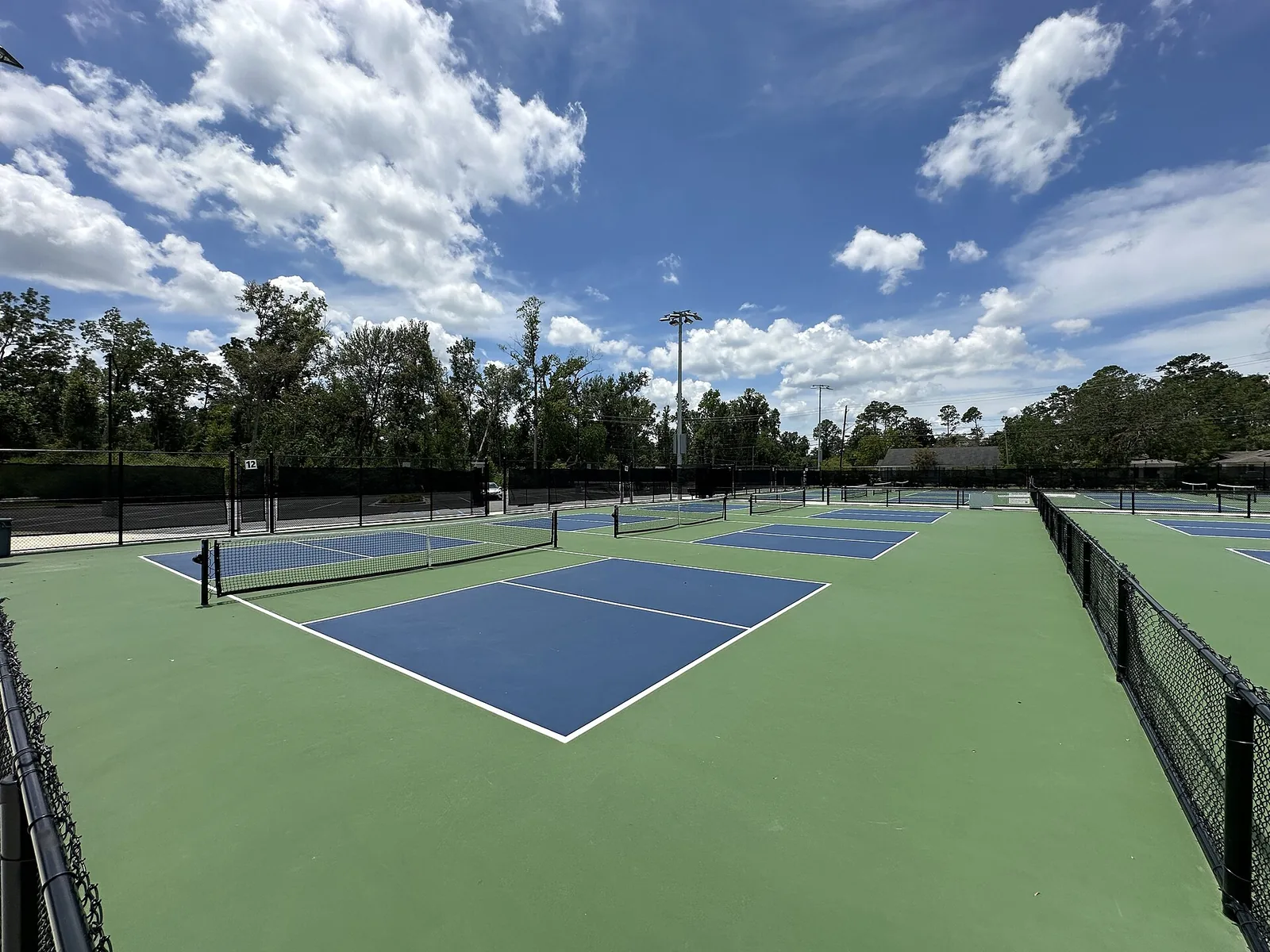
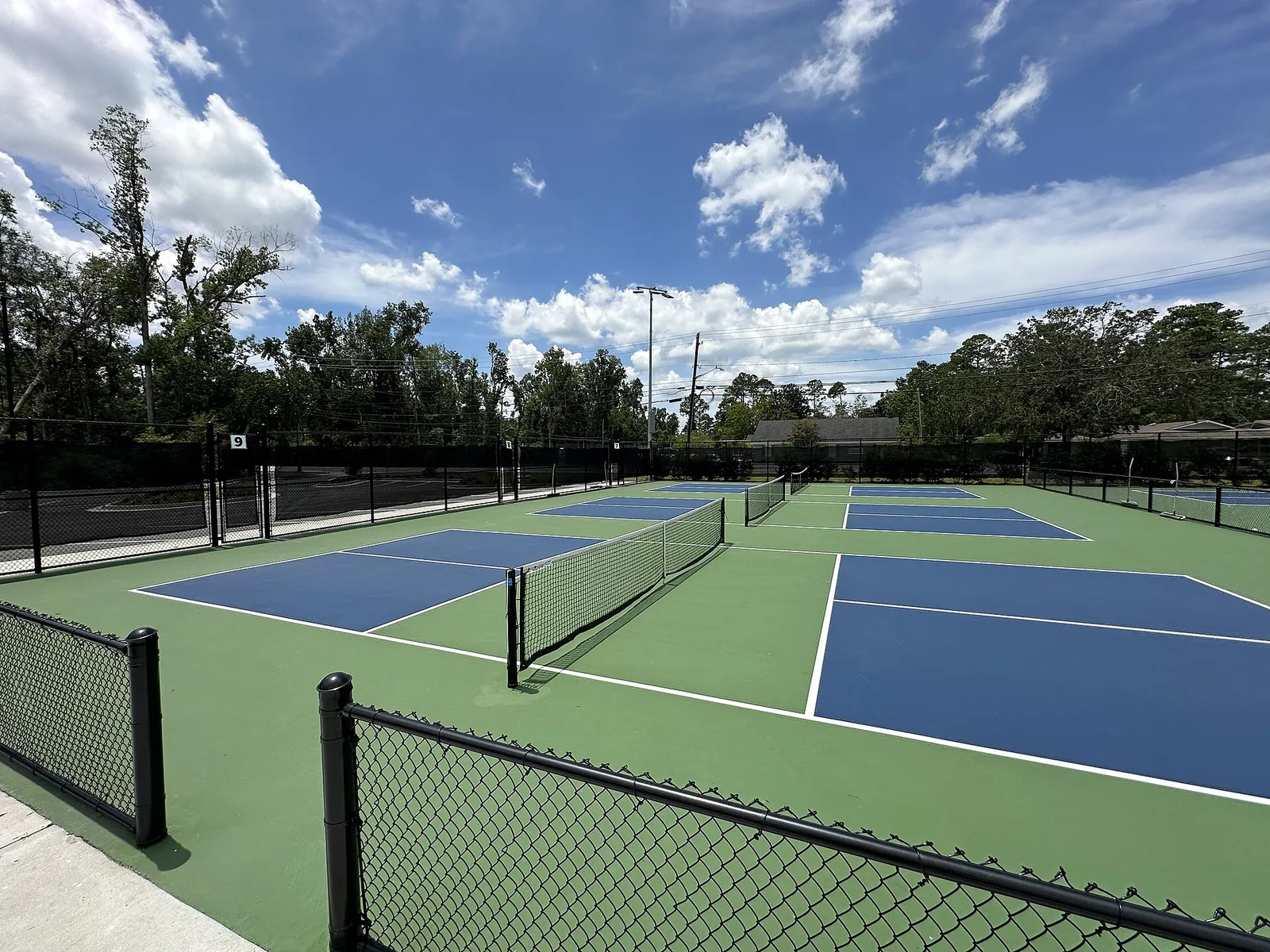
The reason is simple. Those activities are performances. People watch themselves doing them, feel a little silly, and check the box. What you want instead is something people get genuinely absorbed in, where they forget to manage how they look and just play. That’s where a sport helps, and it’s why pickleball has quietly become one of the better reasons to get a small team out of the office.
This isn’t a pitch for a packed agenda or a hired facilitator. It’s the opposite. The argument here is that the right shared activity, in the right setting, does most of the work on its own — and that you can plan a retreat people remember without scripting every hour of it.
Why pickleball, specifically
Plenty of sports build camaraderie. The trouble is that most of them have a steep entry ramp. Put a mixed group on a tennis court or a golf course and you’ll spend the first two hours watching half the team get frustrated while the other half gets bored. That gap is exactly what you don’t want on a retreat.
Pickleball closes the gap. The court is small, the paddle is forgiving, and the underhand serve takes the intimidation out of starting. Most people are playing real points, keeping score, and laughing about a missed shot within the first hour. That matters more than it sounds. When everyone is competent quickly, no one is sitting on the sidelines, and no one is carrying the group. You get a level playing field almost immediately, which is the whole point of bringing people together.
It mixes fitness levels without anyone noticing
A retreat usually includes a range of people. Someone runs marathons, someone hasn’t done anything athletic since high school, and most are somewhere in between. Pickleball absorbs that range gracefully. The court is compact enough that you don’t need to be fast, and doubles play means strategy and placement matter as much as raw athleticism. A 25-year-old and a 55-year-old can be genuinely competitive on the same court, which almost never happens in other sports.
That inclusiveness is the real basis of the team-building argument. You’re not asking anyone to be brave or to expose a weakness in front of the boss. You’re just asking them to play a game that’s easy to pick up and hard to stop playing. And because the court is yours for the stay, the people who want to keep going at midnight can, and the people who’d rather watch from the side aren’t holding up a reserved time slot.
It flattens hierarchy
Something happens on a doubles court that’s hard to manufacture in a conference room. The VP and the new hire end up as partners, calling shots, covering for each other, and high-fiving after a good rally. Titles don’t help you at the kitchen line. For a couple of hours, the org chart goes quiet, and people relate as people. You can’t schedule that breakthrough, but you can create the conditions for it, and a low-stakes game does it better than an icebreaker ever will.
The best moments on a retreat aren’t planned. They happen in the gap between a missed shot and the next serve, when someone laughs at themselves and the whole group relaxes. A game gives you those gaps. A workshop usually doesn’t.
If you want the format to do some of this work for you, a rotating partner system is the simplest tool there is. You don’t need a bracket or a scorekeeper — just rotate so everyone plays with and against everyone. Our walkthrough of how to run a round robin lays out a version that takes about a minute to explain and keeps the pairings changing all afternoon.
Why an indoor court changes the math
Here’s the practical wrinkle most people miss when they plan an outdoor activity into a retreat. Weather doesn’t care about your agenda. Sedona is high desert, which means sun most of the year, but it also means real summer heat, the occasional monsoon afternoon, and cold snaps in winter. If your big bonding activity is exposed to all of that, you’re one bad forecast away from a scramble.
An indoor court takes the weather off the table entirely. Sedona Pickler, a private home in West Sedona, is built around exactly this: a regulation-size indoor court that’s heated, air-conditioned, and fully lit, so the schedule you wrote on Tuesday is the schedule you actually run on Saturday. Paddles and balls are provided, so nobody is shopping for gear or hauling equipment across the country. You decide when you play, not the sky.
That reliability is worth more on a retreat than it is on a vacation. When you’ve flown a team in and every hour is accounted for, you can’t afford to lose the centerpiece activity to a thunderstorm. A lit court also means play isn’t bound to daylight — a session can run long into the evening without anyone watching the sun.
Planning notes for a small-team retreat
A home like this sleeps eight, so be honest about scale. This is the right setup for a leadership team, a founding group, or a single department, not a 50-person all-hands. That’s a feature, not a limitation. Smaller groups get more out of a retreat anyway, because everyone actually talks to everyone instead of fracturing into cliques.
A few things worth thinking through before you go:
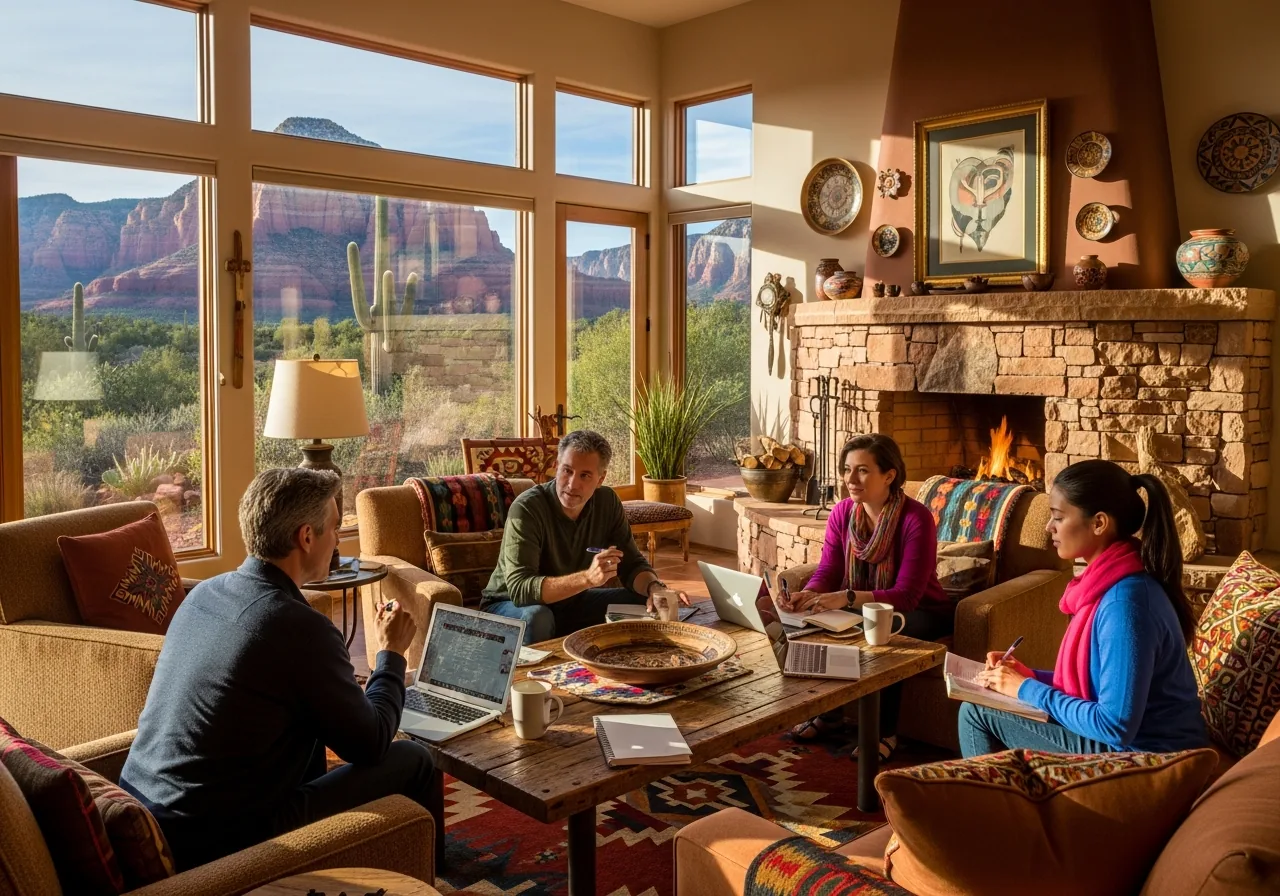
- Keep work sessions short and front-loaded. Two focused hours in the morning beats a vague all-day “working session.” Get the real decisions made early, then earn the afternoon on the court. The great room gives you a single open space to gather around a laptop or a whiteboard without renting a meeting room.
- Don’t over-program the play. You don’t need a tournament. A loose round-robin where partners rotate every game gets everyone playing with everyone, which is the social point. Switch partners often so the pairings keep changing.
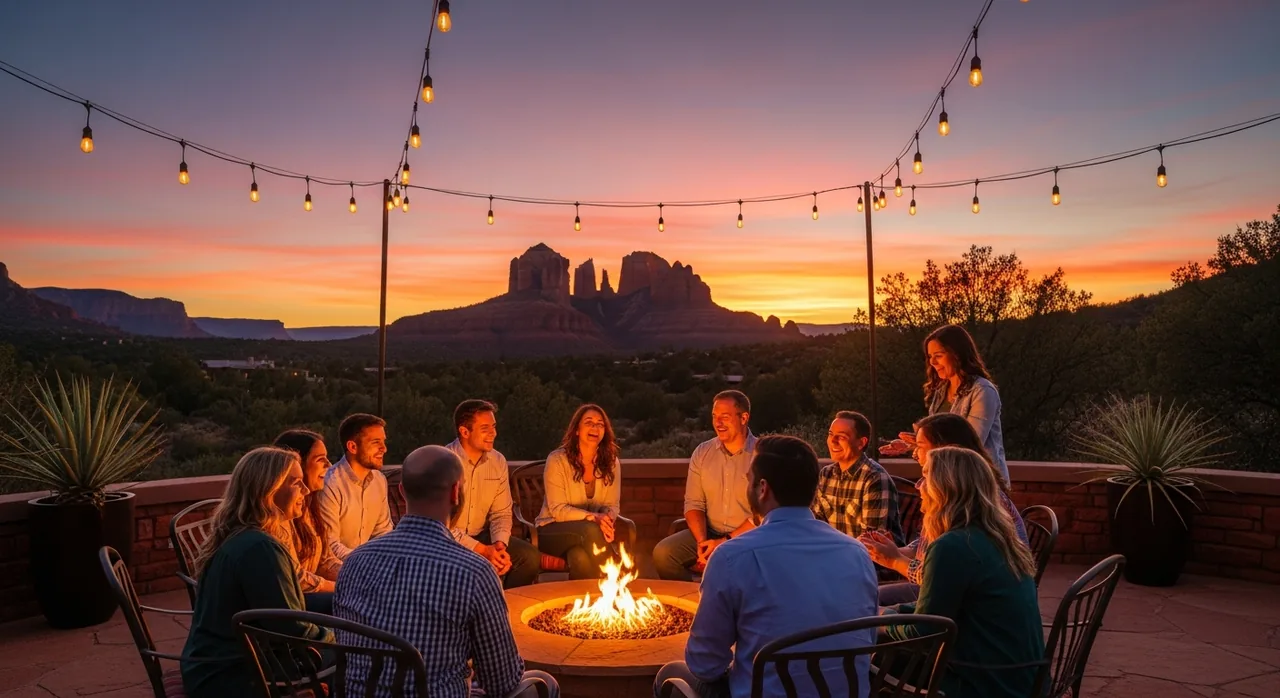
- Build in genuine downtime. The conversations that matter often happen after the games, over dinner or out on the deck, not during the scheduled blocks. Leave room for them.
- Let people opt into intensity. Some will want to play for hours. Some will tap out after a few games and watch. Both are fine. The court is the gravity well; you don’t have to force attendance.
- Sort out meals early. The home has a full kitchen, so groups tend to mix a grocery run and a cook-in night with a dinner out in town. There’s no catering or kitchen staff here — plan whoever’s cooking, or which nights you’re heading out, before you arrive.
For a deeper checklist on logistics, formats, and timing, our pickleball group trip planning guide walks through the details, from how many days to book to how to keep a mixed-skill group all having fun on the same court.
Use Sedona for everything else
The court anchors the trip, but the setting earns the airfare. Sedona’s red rock country is genuinely one of the more striking landscapes in the country, and it’s a short drive to trailheads in almost every direction. A morning hike before work sessions, or an evening one after the games, gives the group shared experiences beyond the home. It also gives the introverts on your team a quieter way to connect that isn’t a competitive game.
You don’t have to plan all of it. A half-day on the court, a hike, a long dinner, and some unstructured time is a fuller, better retreat than a packed itinerary nobody can keep up with. If you want a ready-made shape for the weekend, our Sedona pickleball weekend itinerary lays one out, and the best hikes in Sedona covers trails for every energy level.
For groups that want one shared adventure without the early alarm and the trail logistics, a guided outing is an easy add. A morning on the red rocks by Jeep tour puts the whole team in the landscape with nobody navigating, which pairs naturally with an afternoon back at the house on the court.
The honest case
A retreat works when people come back knowing each other a little better and trusting each other a little more. You can’t lecture your way there. You get there sideways, through a shared activity that’s fun enough that people drop their guard without realizing it. Pickleball is that activity for a lot of teams: easy to learn, impossible to dominate, and over before anyone gets tired of it.
If you’ve got a small team and you want a retreat that people actually enjoy rather than endure, an indoor court a few minutes from the trailheads is a good place to start. When you’re ready to look at dates, https://www.airbnb.com/rooms/1650915758723763330 and tell us the size of your group and what you have in mind.
Frequently asked questions
How many people can stay at the house?
The home sleeps eight, so it’s built for a leadership team, a founding group, or a single department rather than a large all-hands. You book it as a whole-home buyout, so the house and the court are yours for the stay.
Do we need to bring our own paddles and balls?
No. Paddles and balls are provided, so nobody has to pack gear or hunt for equipment after they land. Just bring court shoes and clothes you can move in.
What if the weather turns during our retreat?
It doesn’t change your plans. The court is indoor, heated, air-conditioned, and lit, so summer heat, a monsoon afternoon, or a winter cold snap won’t move your centerpiece activity. That reliability is the main reason an indoor court matters for a scheduled offsite.
Can you run a clinic or cater meals for our group?
No — this is a private home, not a venue with staff. There are no lessons, scored tournaments, or catered meals on offer. What you get is the whole house, a private indoor court with gear provided, a full kitchen, and a firepit and deck, and you run the days however your group likes.
Play year-round in red rock country
Sedona Pickler is a private Sedona home with its own indoor, climate-controlled pickleball court. Rally any season, any hour — heated, cooled and lit, with paddles and balls provided.
Check availability on Airbnb