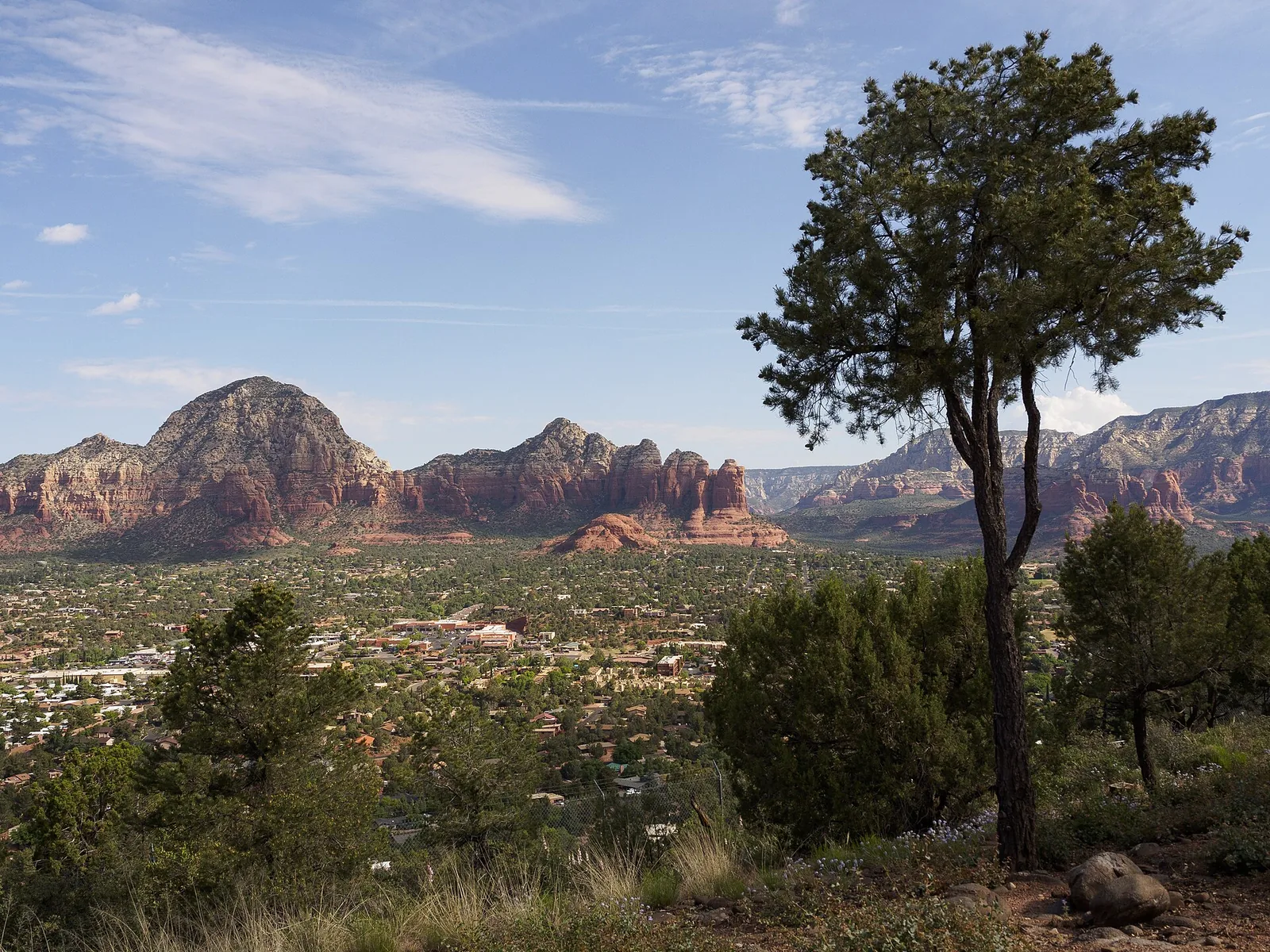
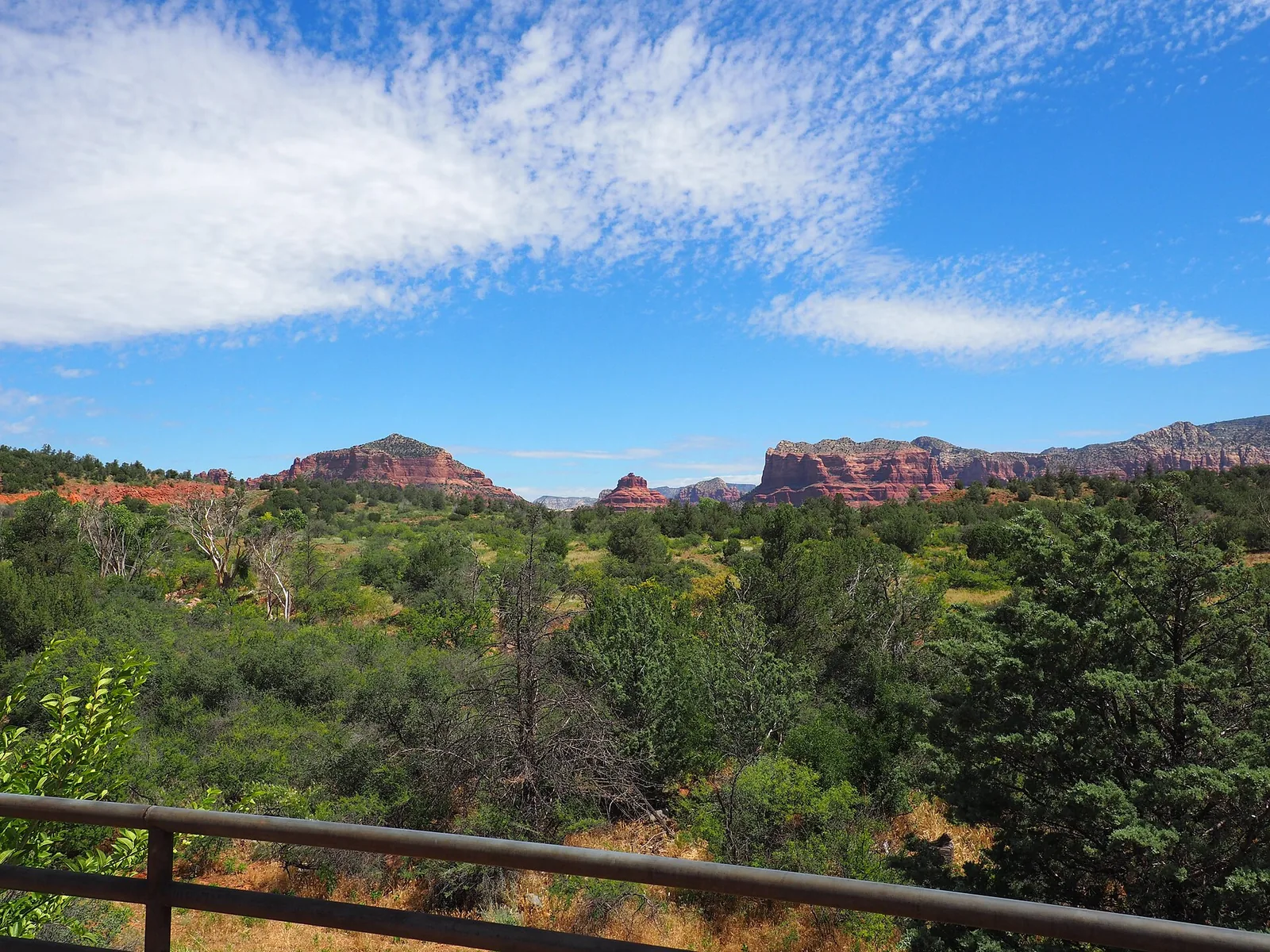
If this is your first trip to Sedona, the town can feel like a lot to take in at once. Red rock is everywhere you look, the road signs all sound like place names from a movie, and half the visitor brochures mention something called a vortex. This guide is meant to give you your bearings: what the rocks are, where the famous formations sit, what the vortex idea is really about, and which drives are worth doing on day one.
The nice thing about Sedona is that it rewards a relaxed pace. You can have an active morning and a slow afternoon without driving far. A few hours on a trail or the court, then an unhurried scenic drive with the windows down. That rhythm works well here, and it’s the one we’d point a first-timer toward.
What you’re actually looking at
The red comes from iron in the sandstone. As the rock weathers, the iron oxidizes, and you get those deep rust and orange tones, especially strong in early morning and late afternoon light. The formations were carved over millions of years by water and wind, which is why so many of them look like recognizable shapes — the famous Schnebly Hill sandstone that gives Sedona its color is the layer doing most of the work.
Most have nicknames you’ll hear over and over:
- Cathedral Rock is probably the most photographed formation in town, with its tall spires rising together.
- Bell Rock sits right alongside SR 179 and is named for its rounded, bell-like shape.
- Coffee Pot Rock is the West Sedona landmark that genuinely looks like a percolator.
- Snoopy Rock, best seen from Uptown, has a profile a lot of people swear looks like the cartoon dog lying on his back.
You don’t have to hike to see most of these. Several are visible right from the road or from a parking lot, which makes the first day easy even if you’re still getting oriented. If you do want to put boots on the ground, our guide to the best hikes in Sedona sorts the trails by how hard they are.
The vortex idea, explained plainly
You’ll see the word vortex everywhere here, so it’s worth a straight explanation. Many people believe Sedona has sites where the earth’s energy is concentrated or swirling, and that being at these spots can support meditation, reflection, or a sense of calm. Visitors describe feeling more centered, more emotional, or simply more present at them. Whether you take that literally, treat it as a nice excuse to sit quietly somewhere beautiful, or just appreciate that these spots tend to be lovely places to be, is up to you. One thing isn’t in dispute: every named vortex site is also a genuinely gorgeous patch of red rock, so the trip out is worth it regardless of what you believe is going on underfoot.
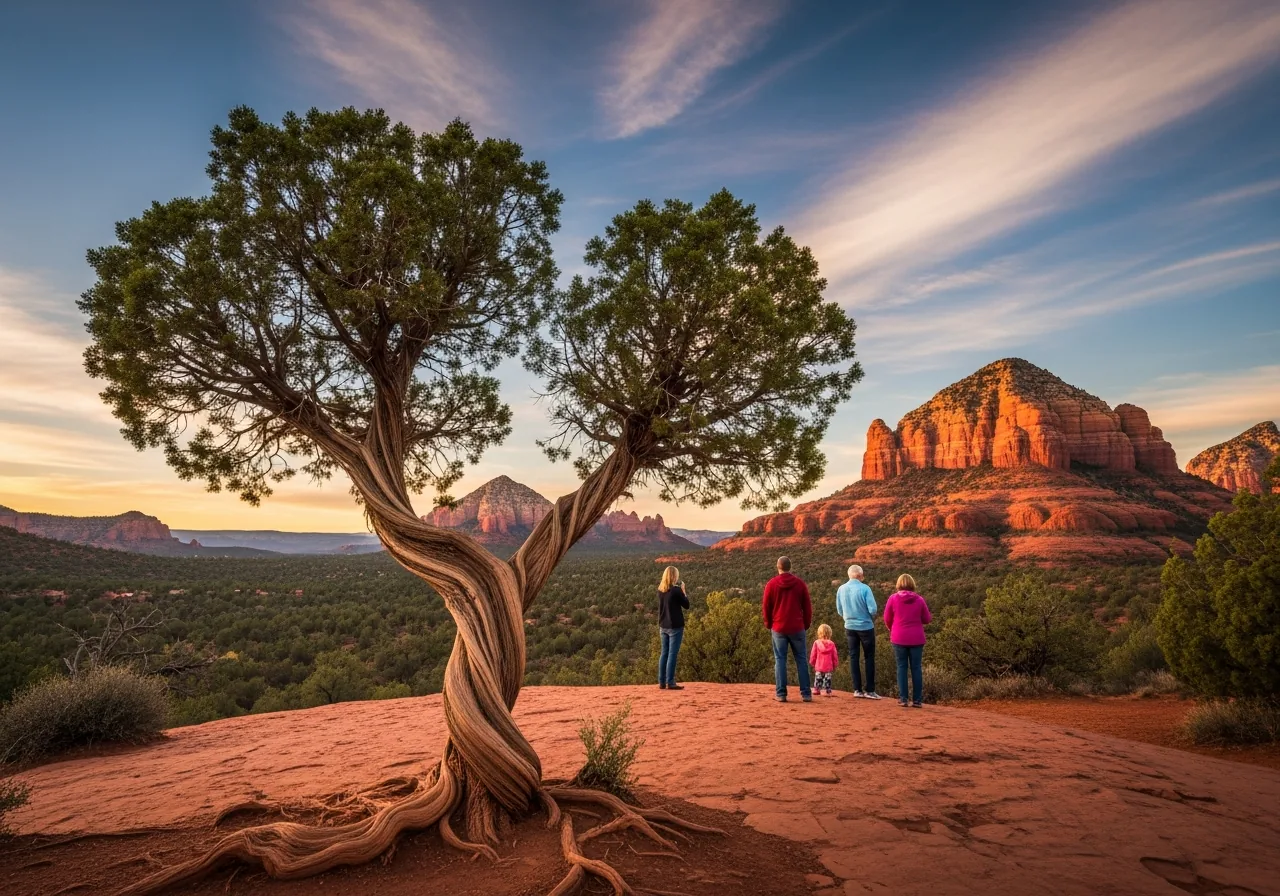
A detail you’ll hear from guides and locals: some sites are described as “upflow” (expansive, good for big-picture thinking and a lift in mood) and others as “inflow” (introspective, calming, better for looking inward). It’s a tidy way to frame how different the spots feel, even if you treat the whole thing as folklore. The juniper trees near these sites are often pointed out as a tell — many have trunks that spiral, and the believers say the twisting marks the energy. Botanists will tell you junipers twist all over the arid Southwest, energy or no. Either way, a gnarled, corkscrewed juniper against red sandstone is a beautiful thing to stand next to.
There are four commonly named vortex sites, and they’re easy to fold into a normal sightseeing day:
| Vortex site | Where it is | Good to know |
|---|---|---|
| Airport Mesa | Just above town | One of the closest and most visited; also a strong sunset spot |
| Bell Rock | Along SR 179, south of town | Easy to reach; gentle trails circle the base |
| Cathedral Rock | Near Oak Creek | Sedona’s most iconic formation; the upper trail is a scramble |
| Boynton Canyon | West Sedona area | Quieter and more remote; a longer canyon trail |
You don’t need a guide or a ticket to visit any of them — they’re public spots on public land. Bring water, wear real shoes, and check whether your trailhead needs a Red Rock Pass for parking, since several do. If you want the deeper background on each one, our Sedona vortexes guide walks through the sites in detail, and there are focused write-ups on the Airport Mesa vortex and Boynton Canyon if you’re choosing between them.
The two drives to do first
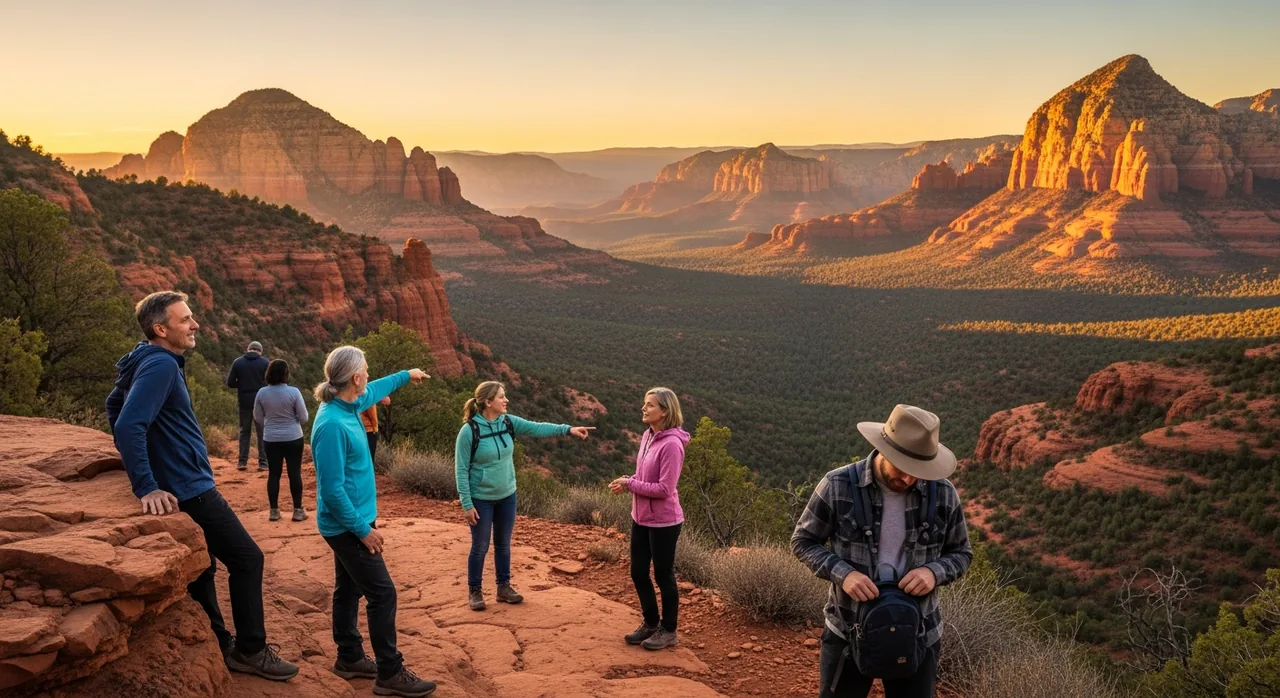
If you only do two scenic drives, make them these. Both are short and start near town.
Red Rock Scenic Byway (SR 179) runs roughly seven and a half miles south from Sedona toward Interstate 17, and it carries the highest federal scenic designation, the All-American Road. You’ll pass Bell Rock and Cathedral Rock, and you can pull off for the Chapel of the Holy Cross, a chapel built right into the rock. It’s an easy out-and-back, and the formations look different on the return trip as the light shifts. There are several signed pullouts and a couple of small picnic areas along the way, so it’s worth stretching it out rather than driving it straight through.
Oak Creek Canyon (SR 89A) heads north out of town toward Flagstaff, climbing the canyon through shade, switchbacks, and creekside pullouts. The Oak Creek Vista at the top is a good turnaround point, and Slide Rock State Park is a popular stop along the way. In October the canyon turns gold and red with fall color, which is a different side of Sedona than the open red rock most people picture. Note that the upper switchbacks slow to a crawl on busy weekends, so it’s a better morning drive than a midday one.
Both drives are paved, family-friendly, and doable in an afternoon. If you have time for only one on your first day, SR 179 packs the most famous formations into the shortest distance, and it puts you right past two of the four vortex sites — Cathedral Rock and Bell Rock — without leaving the car.
Uptown vs. West Sedona
This trips up a lot of first-timers, so here’s the short version.
Uptown is the compact tourist district at the north edge of town, near the mouth of Oak Creek Canyon. It’s where you’ll find the clustered shops, galleries, restaurants, jeep tour outfitters, and the busiest foot traffic. It’s fun to walk for an hour or two, and it has good views of formations like Snoopy Rock, but parking is tight and it gets crowded midday. If you want souvenirs, a gallery stroll, or a jeep tour, this is where you’ll come — just don’t plan to do it at noon and expect to park easily.
West Sedona stretches along SR 89A to the west and is more residential and spread out. It’s quieter, has everyday conveniences like grocery stores and casual restaurants, and sits close to many of the main trailheads. If you want a home base that keeps you near trails and away from the Uptown crush, this is the side of town to be on. It’s also where you’ll get those clean views of Coffee Pot Rock, and it’s the shortest drive to the Boynton Canyon and Airport Mesa vortex sites.
Neither side is the “right” one — they just suit different days. A lot of visitors split the difference: sleep and rally in quieter West Sedona, then drive into Uptown when they actually want the shops and the crowd.
A few reliable viewpoint tips
- Airport Mesa is a classic sunset spot precisely because it sits above town and looks back across the formations. Arrive early; the small lot fills fast.
- Cathedral Rock is stunning at the end of the day, especially viewed from across Oak Creek where the spires catch the last light. You don’t have to climb it to enjoy it.
- Bell Rock is one of the easiest formations to photograph because you can get close to it right off SR 179.
- For an unhurried option, just drive a stretch of SR 179 in the last hour of daylight. The whole corridor glows, and you don’t need to be at any single named spot.
A small note on timing: the light is best early and late, so plan your active hours for the middle of the day and your scenic stops for the edges. That’s the easiest way to see a lot without feeling rushed — and in summer it’s also the kind way to treat your legs, since the exposed rock bakes by mid-morning.
Building your home base around it
Where you sleep shapes how this whole rhythm feels. Stay near the trailheads and the “active morning, slow afternoon” plan happens almost by itself — you’re not burning daylight on logistics. Stay an hour out, and every sunrise viewpoint becomes a negotiation. That’s the case for basing yourself in West Sedona, minutes from the rock rather than across the valley from it.
Getting your footing
You don’t need to see everything on the first trip. Pick a couple of formations, one or two vortex sites, the SR 179 drive, and one good sunset, and you’ll already feel like you know the place. The rest is easy to add as you settle in, and Sedona is a town that rewards coming back.
If you want to go deeper on the trails themselves, our guide to the best hikes in Sedona breaks them down by difficulty, including which ones double as the named vortex sites. For a full weekend plan that mixes court time with sightseeing, see our Sedona pickleball weekend itinerary, and if you’re still picking dates, the best time to visit covers the seasons.
When you’re ready to set up your base in West Sedona, you can https://www.airbnb.com/rooms/1650915758723763330. Questions are welcome at nancy@cavmir.com.
Frequently asked questions
How many vortex sites are there in Sedona, and which are easiest to reach?
There are four commonly named sites — Airport Mesa, Bell Rock, Cathedral Rock, and Boynton Canyon. Airport Mesa and Bell Rock are the easiest to reach: Airport Mesa sits just above town with a short walk to the viewpoint, and Bell Rock is right off SR 179 with gentle trails around its base. Cathedral Rock’s upper trail is a steep scramble, and Boynton Canyon is a longer, quieter canyon walk.
Do I have to believe in the vortex idea to enjoy these spots?
Not at all. Plenty of visitors treat the vortexes as folklore and go anyway, because every one of the named sites is a beautiful patch of red rock with excellent views. Whether you sit and meditate or just take photos and move on, the trip out is worth it either way.
Do I need a Red Rock Pass to visit the vortex sites?
For most of them, yes — several trailheads sit on national-forest land and require a Red Rock Pass for parking ($5/day or $15/week), available online or at the visitor center. A few lots fill early in season, so arriving before mid-morning helps with both parking and the heat.
Which scenic drive should I do first?
SR 179, the Red Rock Scenic Byway. In about seven and a half miles it passes Bell Rock, Cathedral Rock, and the Chapel of the Holy Cross, packing the most famous formations into the shortest distance. SR 89A through Oak Creek Canyon is the other one to do, especially for shade in summer and fall color in October.
Play year-round in red rock country
Sedona Pickler is a private Sedona home with its own indoor, climate-controlled pickleball court. Rally any season, any hour — heated, cooled and lit, with paddles and balls provided.
Check availability on Airbnb