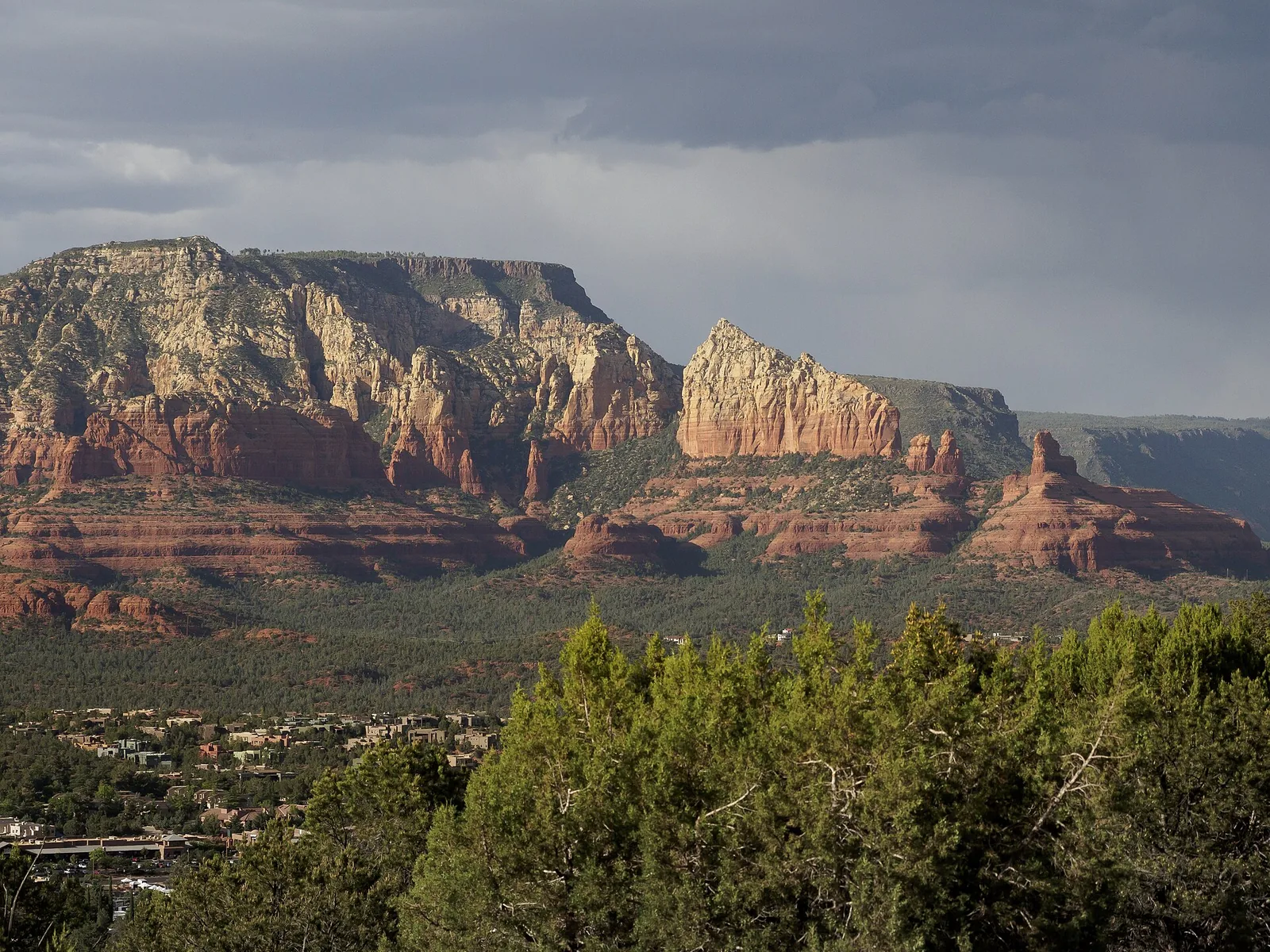
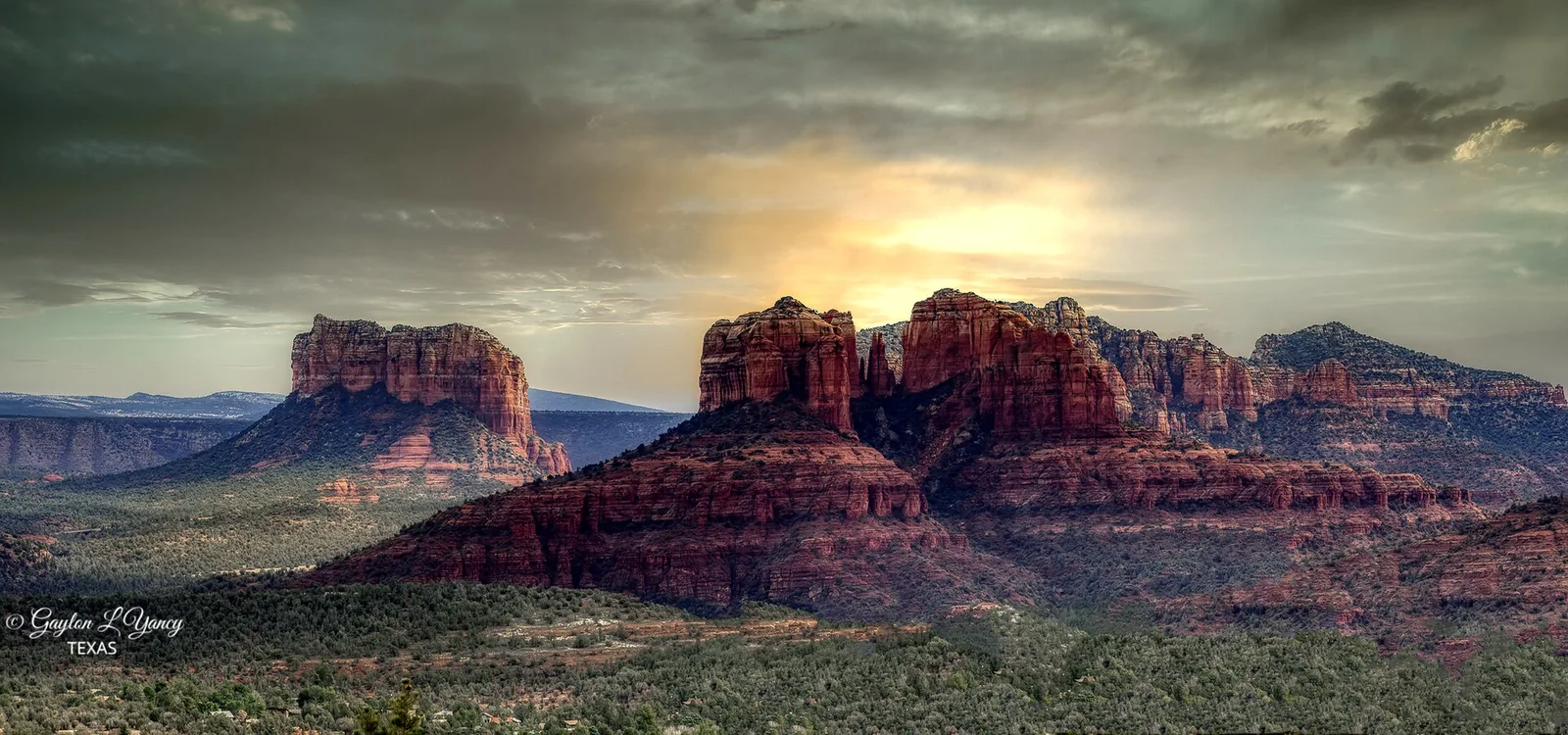
Airport Mesa Vortex: The Easiest One to Reach
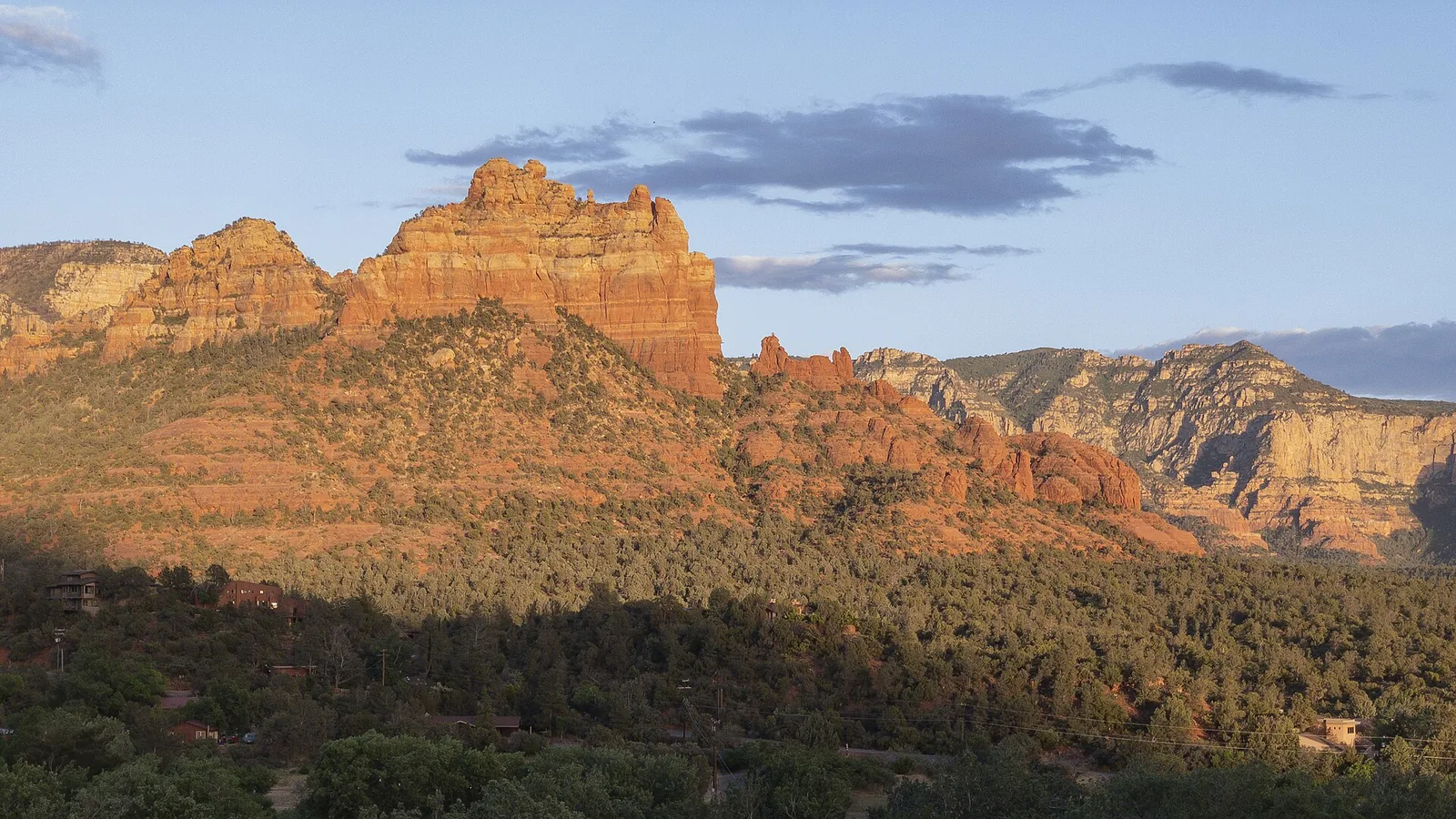
If you only have time for one vortex on your trip and you don’t want to commit to a long hike to find it, this is the one. The Airport Mesa Vortex sits on a low rocky saddle just off Airport Road, a short steep scramble up from a small parking lot, with some of the widest red-rock views in town waiting at the top. It’s the easiest vortex to reach, which is exactly why it gets busy at sunset — so the trick is less about the walking and more about the parking.
What the Airport Mesa Vortex actually is
Let’s clear up the most common mix-up first, because it trips up almost everyone. There are two separate spots on Airport Mesa, and people constantly confuse them:
- The vortex is on a small saddle partway up Airport Road, between two low rocky knolls. You reach it by a short, steep scramble from a tiny parking lot beside the road.
- The Airport Mesa Scenic Overlook is a paved, drive-up viewpoint farther up the same road, near the airport itself. You park, walk a few steps, and look out. No real climbing involved.
Both have great views. But the vortex and the overlook are not the same place, and if your map app drops you at one when you meant the other, you’ll be confused about why there’s no trail (at the overlook) or no big paved lot (at the vortex). I’ll keep them straight for you throughout this guide.
So what’s the vortex part? Sedona’s “vortexes” are spots where many people feel the landscape has a particular energy — places long used for meditation, reflection, and quiet. The Airport Mesa site is usually described as an “upflow” or masculine-energy vortex, the kind said to lift your perspective and help you see the bigger picture. You don’t have to buy into any of that to enjoy it. Plenty of visitors come purely for the 360-degree views and the chance to sit on warm sandstone and watch the light move across the rocks. The twisted, corkscrewed juniper trees up on the saddle are part of the lore — some people read their spiraled trunks as evidence of the swirling energy, though junipers do that all over the high desert. Either way, they’re photogenic and they mark the spot.
If you want the full picture of all four classic vortex sites and how they differ, our vortexes guide lays them out side by side. Airport Mesa is the gateway one — the place most first-timers start.
Why this is the best vortex for first-timers
A few reasons this one earns the “start here” label:
- It’s quick. The scramble from the saddle lot up to the knolls takes most people five to ten minutes. You’re not committing your whole afternoon.
- It’s central. Airport Road climbs right out of the heart of town, off State Route 89A. You can be standing on the saddle minutes after leaving Uptown.
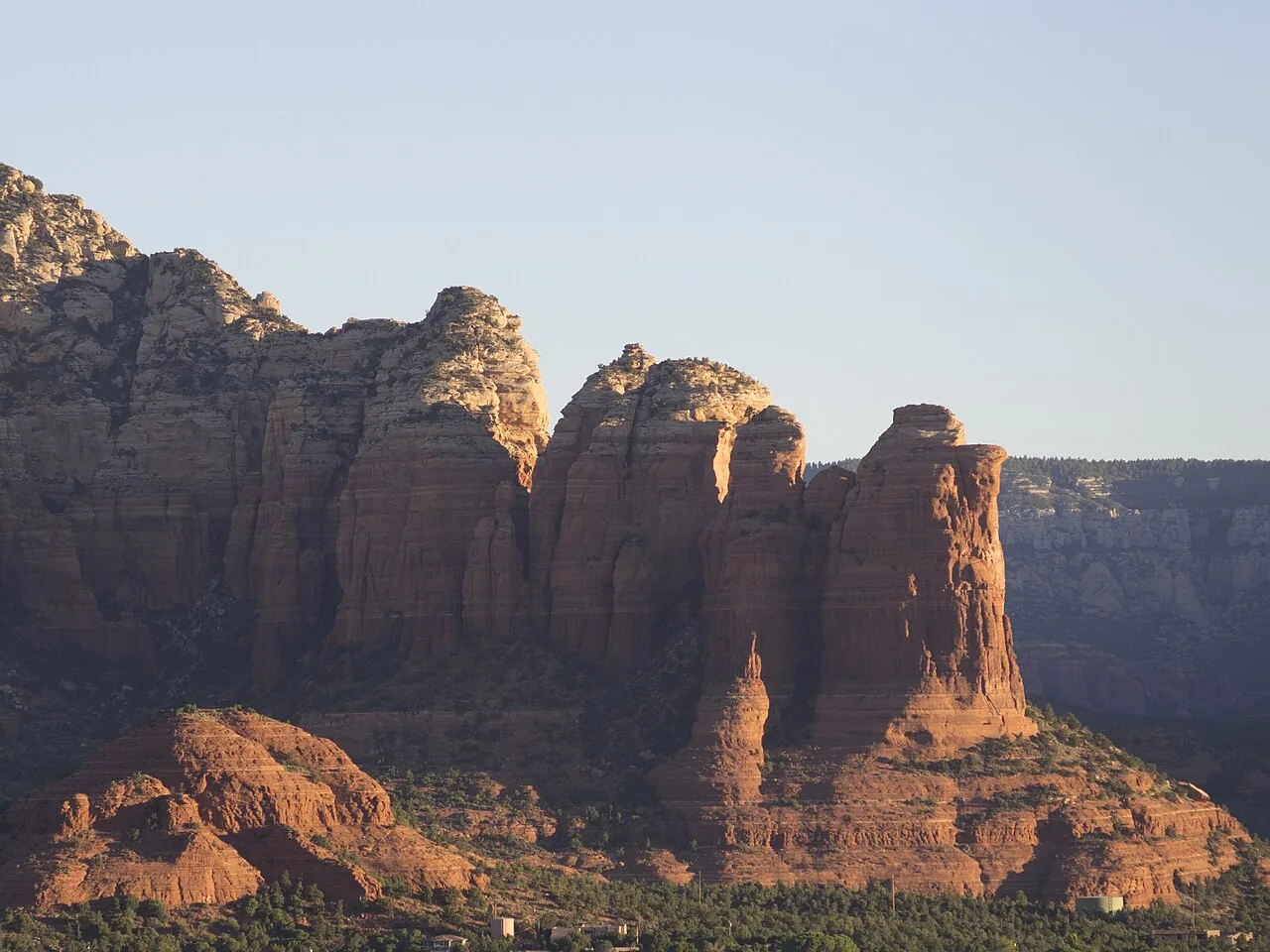
- The payoff is immediate. You don’t earn the view through miles of effort — it opens up almost as soon as you’re up on the rocks. Cathedral Rock, Courthouse Butte, Bell Rock, Chimney Rock, Coffee Pot Rock — a lot of Sedona’s greatest hits are visible from up here.
- You can scale it to your energy. Want more? The full Airport Loop Trail wraps the whole mesa. Want less? Just walk up to the first knoll, sit, and take it in.
The honest trade-off: because it’s so easy and so central, it’s also one of the busiest spots in Sedona, especially at sunset. That’s the whole game here. Manage the crowds and the parking, and it’s a genuinely lovely, low-effort stop.
What you’re actually looking at
Part of the fun up on the knolls is naming the formations, and Airport Mesa’s central, elevated position means you can see an unusual number of Sedona’s landmarks from one spot. Use this as a cheat sheet once you’re up there:
| Formation | Roughly which way to look | What it looks like |
|---|---|---|
| Cathedral Rock | Southwest | Cluster of fluted spires, Sedona’s most photographed rock |
| Bell Rock & Courthouse Butte | South / southeast | Smooth bell-shaped dome beside a broad squared-off butte |
| Chimney Rock | West / northwest | Single stubby chimney-like column on a low ridge |
| Coffee Pot Rock | North / northwest | Squat rounded knob with a “handle,” over West Sedona |
| Thunder Mountain (Capitol Butte) | North | Big rounded massif behind West Sedona |
| Mund’s Mountain & the Mogollon Rim | East | Long forested wall climbing toward the high country |
Don’t treat the compass directions as gospel — they shift depending on which knoll you’re standing on — but they’ll get you oriented fast. Sunrise lights the eastern formations first; sunset throws warm color onto the western and southern ones, which is part of why evening is the marquee slot.
How to get there, parking, and which pass you need
This is the part worth reading slowly, because parking is the single thing that makes or breaks an Airport Mesa visit.
Getting there
From the “Y” — the roundabout where 89A and 179 meet in central Sedona — head southwest on West 89A and turn onto Airport Road, which climbs up the side of the mesa. Coming from the main visitor center, it’s roughly a mile west on 89A to the Airport Road turn, then about half a mile up to the saddle lot, and another half mile to the top. The vortex saddle is partway up; keep going to the top and you reach the scenic overlook and the airport. It’s a short drive from Uptown, but Airport Road is narrow, winding, and often crawling with cars looking for parking, so don’t expect to zip up there. There’s a marked crosswalk near the overlook if you end up walking between the two — use it, because drivers come around the bends faster than they should.
The two parking lots (this is the key part)
There are two very different lots, and they serve two different destinations:
| Saddle lot (the vortex) | Upper overlook lot | |
|---|---|---|
| Location | Roadside, ~0.5 mi up Airport Rd | Top of Airport Rd, near the airport |
| Size | Tiny — roughly 10–12 spaces | Large gravel lot, lots of spaces |
| Cost | Free | About $3/day (confirm on site) |
| Access to vortex | Direct — scramble up the saddle | Indirect — 0.7-mi walk down the Sedona View Trail |
| Drive-up view | No | Yes |
| Fills up | Very fast, especially at sunset | Fills near sunset, but later than the saddle |
The saddle lot is what you want for the vortex itself. It’s small — somewhere around ten to a dozen spaces, including one accessible space — and as of recent reports it’s free, with no fee kiosk. The catch is its size: it fills up early and often, especially in spring, fall, and at sunset. Don’t circle endlessly hoping a spot opens; if it’s full, go with Plan B.
The upper overlook lot is the large gravel lot near the top, typically about $3 a day, paid to an attendant at the booth or a kiosk when the booth is unstaffed. It’s the reliable fallback. If the saddle lot is jammed, park up top, enjoy the drive-up overlook, and then walk down to the vortex on the Sedona View Trail (more on that below). The catch is that this lot also fills near sunset — just not quite as fast as the tiny saddle lot.
Which pass do you need?
Here’s where Sedona gets confusing, so let me be precise.
- The famous Red Rock Pass ($5/day, $15/week, $20/year) and the America the Beautiful federal pass ($80/year) cover the Coconino National Forest day-use trailheads around Sedona — places like the Devil’s Bridge, Cathedral Rock, and Soldier Pass lots.
- The Airport Mesa lots are managed differently. Red Rock Passes are not accepted at either Airport Mesa lot. The saddle lot is free, and the upper overlook charges its own small fee (commonly cited at $3/day) at the on-site booth or kiosk.
My honest advice: bring a card and small bills, and pay whatever the overlook booth asks. Don’t assume your Red Rock Pass or America the Beautiful pass covers parking here — it doesn’t. If you’re doing other Forest Service trailheads on your trip (Devil’s Bridge, Soldier Pass, Bell Rock area), the Red Rock Pass is well worth having regardless, but treat Airport Mesa as its own separate thing. Fees change, so confirm current details on site rather than trusting any number — including mine — that you read online.
Don’t count on the shuttle
Sedona runs a genuinely useful free Sedona Shuttle to several of the busiest trailheads — Cathedral Rock, Soldier Pass, Dry Creek/Mescal, Little Horse — which lets you skip the parking nightmare at those spots. It does not serve Airport Mesa. So unlike Cathedral Rock or Soldier Pass, you can’t shuttle your way out of the parking problem here — it’s drive-and-park or nothing, which is exactly why the timing strategy below matters. (Our getting around guide covers the shuttle, parking, and when to drive yourself.)
The scramble: difficulty and what to expect
Don’t let “easiest vortex” fool you into thinking it’s a sidewalk. The walk is short, but the final bit is a genuine little scramble.
From the saddle lot, you climb up onto the saddle and then up one (or both) of the two knolls. The route is obvious — there’s a clear use-path — but it’s rocky, narrow in places, and the last push involves stepping up an uneven set of natural rock steps, almost like crude, irregular stairs. It’s brief, often little more than a minute or two of actual climbing, but it demands attention to your footing, and those rocks get genuinely slick after rain or snow. People in regular sneakers do it all the time, but trail shoes or anything with grip make it more comfortable and a lot safer.
To orient yourself: from the saddle, the knoll on the left is the one most people climb for the classic vantage. The right-hand knoll is also fair game and a bit quieter — if the left one is shoulder-to-shoulder at sunset, try the right. Either way you’re only gaining a small amount of elevation — the reward-to-effort ratio is excellent.
Once you’re up, there are no railings and real drop-offs, so watch kids closely. There’s no shade to speak of, and it can be windy on the saddle, so hold onto your hat and anything light.
The Sedona View Trail (the back-door route)
If the saddle lot is full and you parked at the overlook, the Sedona View Trail is your link to the vortex. It runs 0.7 miles each way (about 1.4 miles round trip) along the rim, connecting the upper lot to the saddle. It’s a gradual, packed-dirt path with plenty of loose stones — not technical, but not a smooth sidewalk either, so wear real shoes. The upside is that it’s scenic in its own right, with rim-edge views the whole way, so the “detour” is half the reward. Budget 20–30 minutes each way, and remember the return is the slightly uphill direction back to your car.
Want a longer walk?
If the short scramble leaves you wanting more, the vortex sits right on the Airport Loop Trail (Trail No. 210), which circles the entire mesa. It’s roughly a 3.2-to-3.5-mile loop with somewhere between 400 and 535 feet of elevation gain depending on the source, generally rated moderate, and it takes most people one and a half to two hours. It’s mostly level for the first stretch, then climbs over basalt boulders, and it serves up nonstop red-rock views the whole way around, connecting the vortex, the saddle, and the overlook into one outing. Full details are in our dedicated Airport Mesa Loop guide.
Best time of day and season
Time of day
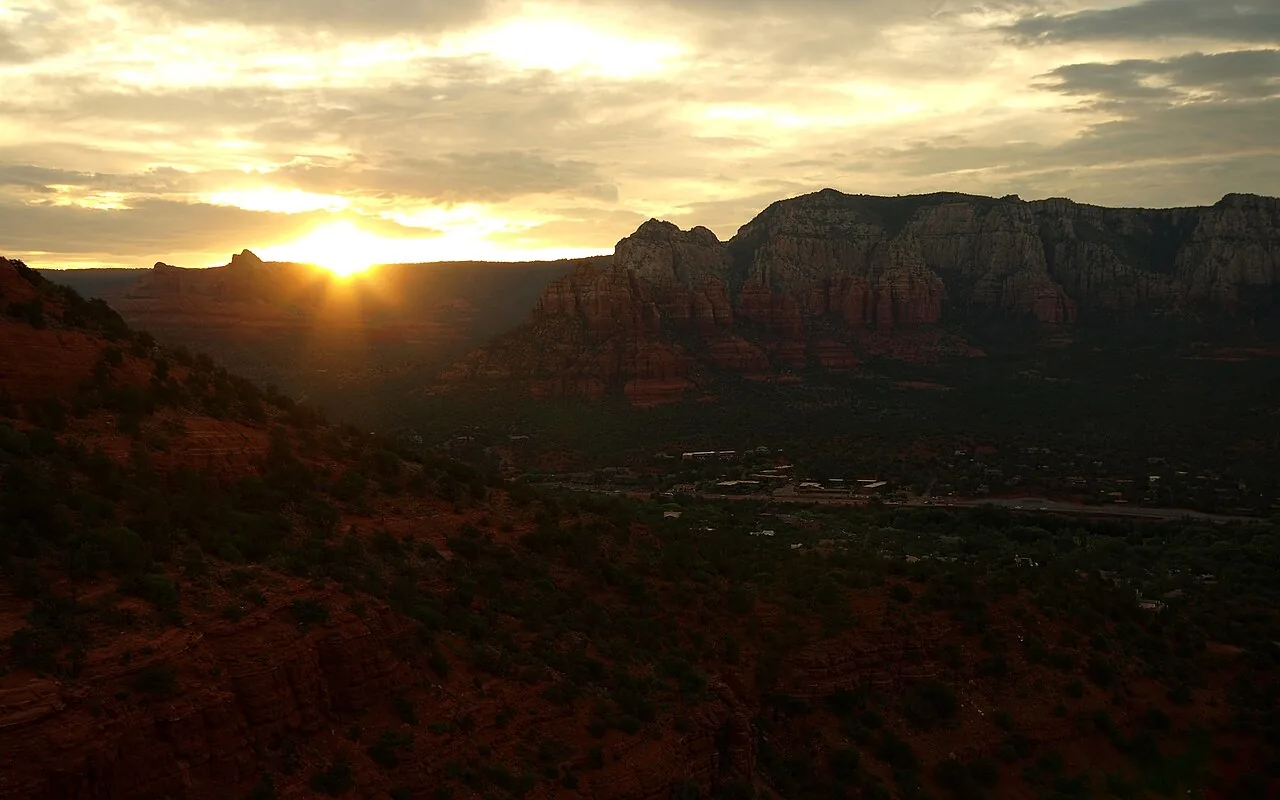
Sunset is the headline event, and for good reason — the red rocks light up gold and crimson as the sun drops, and the open, elevated saddle gives you a front-row seat. It’s genuinely beautiful. It’s also when half of Sedona shows up. If you want sunset here, treat it like getting a good table at a popular restaurant: arrive well before the rush, an hour or more ahead, and be prepared for the saddle lot to be long gone. The light keeps performing for a good 20–30 minutes after the sun is technically down, so don’t bolt the second it dips below the horizon — the afterglow on the rocks is often the best part.
Sunrise is the underrated alternative. Far fewer people, softer light coming up over the eastern formations, and a real shot at having the saddle close to yourself for a quiet sit. If the vortex’s reputation for meditation is what drew you, dawn is when it actually feels like that — and because Airport Mesa is so close to town, you can drive up in minutes and be back for breakfast before most visitors have finished their coffee.
Midday is fine for the views but harsh for photos and brutally hot in summer. The light is flat and the rocks lose some of their drama. If midday is all you’ve got, it’s still worth the stop for the panorama — just keep it short.
Season
- Spring (Mar–May) and fall (Sep–Nov) are ideal — comfortable temperatures, but also the most crowded. Expect the saddle lot to be a battle on any pleasant-weather weekend.
- Summer (Jun–Aug) is hot. Mornings and evenings are the only sane windows; midday on exposed rock with no shade is genuinely punishing, with valley highs routinely topping 95–100°F. Watch for afternoon monsoon storms in July and August — lightning on an open mesa is a real hazard, so get off the high ground if a storm rolls in.
- Winter (Dec–Feb) is quiet and often gorgeous, with the chance of snow dusting the red rocks for one of Sedona’s best photo opportunities. The scramble can be icy, so mind your footing, but the crowds thin out beautifully and a winter weekday morning can feel almost private.
Local tip: If you’re staying nearby and the saddle lot is a circus at sunset, don’t fight it. Catch the overlook view up top instead, then head back to the house — the light show out the window keeps going either way, and you’ll have skipped the parking war entirely.
What to bring
For a short visit, you don’t need much, but the desert punishes the unprepared:
- Water — even for a 20-minute stop in warm months. There’s no water source up at the saddle, though the overlook booth sells bottled water when it’s staffed.
- Sun protection — hat, sunglasses, sunscreen. The saddle is fully exposed with zero shade.
- Grippy footwear — trail shoes or sturdy sneakers for the rocky scramble; skip the flip-flops and smooth-soled sandals.
- A light layer — the saddle can be windy and cools off fast after sunset.
- A headlamp or phone light if you’re staying for sunset; the rock steps are exactly where people slip in the dark.
- Small bills or a card for the overlook booth (the saddle lot is free).
Leave the drone at home — this is near an active airport and within Forest Service land where drone rules apply. Flying here can mean a fine and, worse, a genuine hazard to small aircraft.
Photography notes
A few specifics if photos are why you’re coming:
- Golden hour does the work. The half hour after sunrise and before sunset is when the rocks glow — directional, warm light that gives the formations a depth midday flattens out.
- Shoot away from the sun for color. At sunset the richest reds land on the formations to your south and west, like Cathedral Rock and the Bell Rock cluster, because they’re catching the low light. At sunrise, turn east.
- The twisted junipers make great foreground. Frame a gnarled trunk against the distant rocks for a shot that says “Sedona” without needing a caption.
- Crowds are the enemy of a clean frame. Sunrise solves this; at sunset, the right-hand knoll usually has more elbow room than the popular left one. For more vantage points around town, see our photography spots and sunset spots guides.
Accessibility
Honest assessment: the vortex saddle is not wheelchair accessible. The scramble up rocky, uneven steps rules it out for anyone who can’t handle steep, irregular natural terrain, and there are no railings.
The good news is the scenic overlook up top is the accessible option. It’s a drive-up viewpoint with parking and only a short, relatively level walk — a few steps from the lot — to take in the panorama. The saddle lot also includes one accessible parking space, but the trail beyond it is the hard part. If mobility is a concern, head straight for the overlook — you’ll still get the sweeping red-rock view, just without the climb. For more low-effort options around town, see our easy hikes roundup.
Visiting with kids and dogs
Kids generally love the scramble — it feels like a real adventure without being long. The thing to drill into them is the edges: once you’re up on the knolls there are unfenced drop-offs, and a distracted child near a ledge is the one genuine danger here. Hold small hands on the rock steps and keep everyone away from the rim. The short duration is a gift with antsy kids — they’re up, they’ve seen it, and they’re back in the car before the meltdown.
Dogs are welcome on a leash, and plenty of people bring them up the saddle. Two cautions: the rock steps are awkward for some dogs, so be ready to help a smaller one up and down, and that exposed sandstone gets blistering hot in summer — if you can’t hold your palm on it comfortably, it’s too hot for paws. Carry water for the dog too.
How to avoid the crowds
This is the make-or-break skill for Airport Mesa. A few strategies that actually work:
- Go at sunrise instead of sunset. Same rocks, same quality of light, a tenth of the people. This is the single best move.
- Come on a weekday. Weekends, holidays, and spring break pack the lots; a Tuesday morning is a different world.
- If you must do sunset, arrive an hour-plus early. Get your spot, then wait. Bring a snack and make it part of the plan.
- Use the overlook as Plan B. If the saddle lot is full, park up top and either enjoy the drive-up view or walk down to the vortex on the Sedona View Trail.
- Visit in the off-season. A winter weekday morning can feel almost private.
- Don’t circle. The saddle lot is so small that hunting for a space just wastes time. If it’s full when you arrive, commit to Plan B immediately.
Safety
It’s a short walk, but a few real cautions:
- Footing first. The rocky steps are uneven and slick when wet or icy. Most “incidents” here are simple slips, not dramatic falls — but the drop-offs are real, so move deliberately and use your hands on the steep step if you need to.
- No railings, real edges. Keep kids and dogs close once you’re up on the knolls, and don’t back up toward the rim for a photo.
- Heat is the desert’s deadliest hazard. In summer the exposed saddle bakes. Hydrate before you go up, go early or late, and skip midday on the hottest days.
- Monsoon lightning. July–August afternoon storms build fast, and an open mesa is the worst place to be in a thunderstorm. If you hear thunder, descend immediately.
- Stay on the rock and established paths. The cryptobiotic soil crust off-trail takes decades to recover from a single footprint. Tread on stone, not the dirt, and pack out everything you bring in.
What to pair it with nearby
Airport Mesa is central, which makes it easy to stack with other stops. A few that pair naturally:
- The Airport Loop Trail — if the scramble whetted your appetite, just keep walking. The full loop around the mesa is right there. See the Airport Mesa Loop guide.
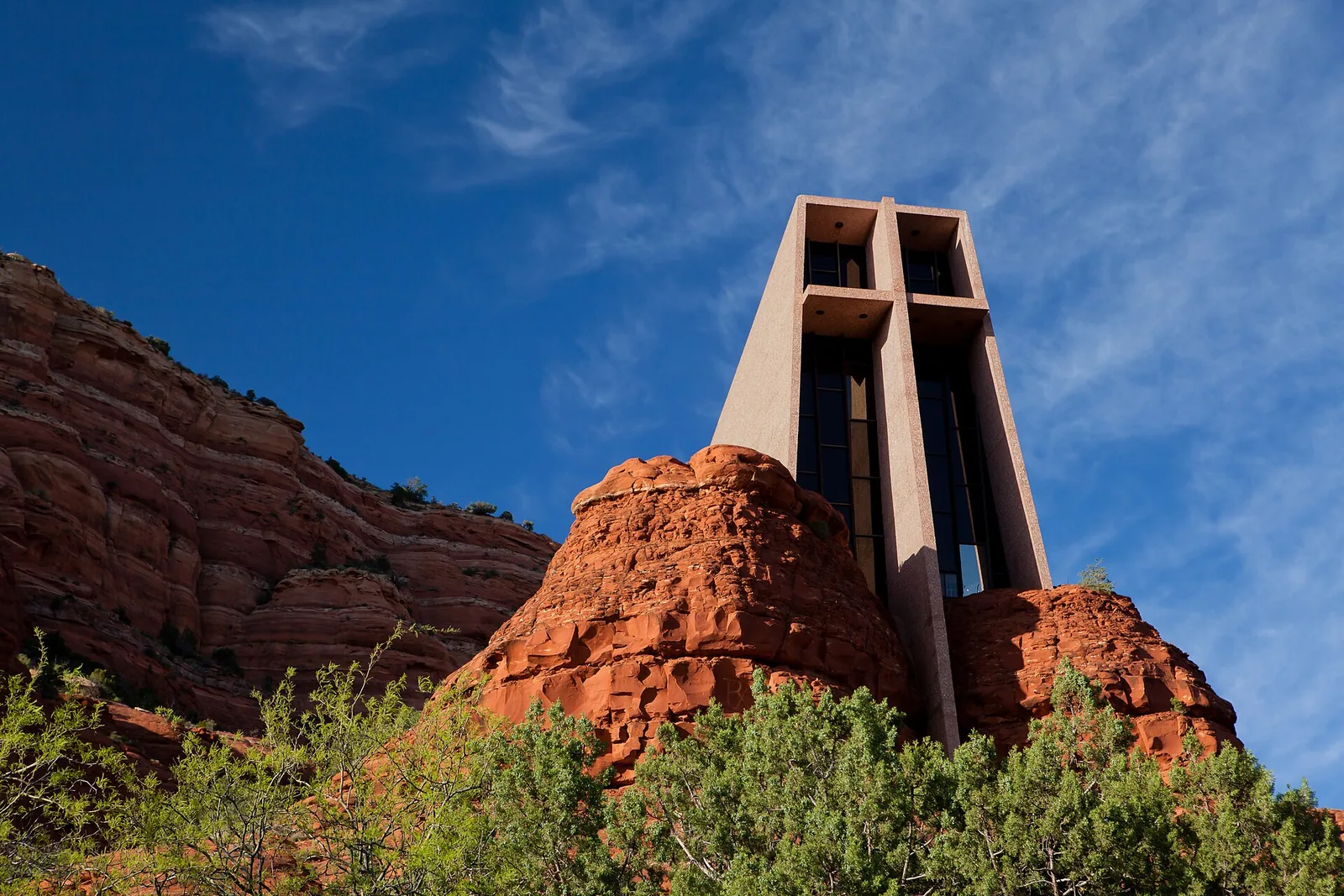
- Chapel of the Holy Cross — the famous chapel built into the red rocks is a short drive across town and makes a natural companion to a vortex stop. Details in our Chapel of the Holy Cross guide.
- Uptown Sedona — Airport Road dumps you right back near the heart of town. Grab a coffee or refuel before or after; our coffee and cafés guide has the good spots, and breakfast and brunch is the obvious move after a sunrise visit.
- Tlaquepaque Arts Village — the shaded, Mexican-style courtyards make a perfect cool-down after a hot, exposed vortex visit. See Tlaquepaque.
- The other vortex sites — if Airport Mesa lights a spark, Bell Rock (clearly visible to the south from the saddle, and an easy add-on down 179), Cathedral Rock, and Boynton Canyon are the other three classic sites. The vortexes guide compares them all.
A simple, low-stress half-day: catch sunrise at the Airport Mesa Vortex, drive down for breakfast in town, then drift over to Tlaquepaque or the Chapel once the day warms up. You’ll have done the iconic vortex before the crowds even woke up.
The bottom line
The Airport Mesa Vortex is the right first vortex for almost everyone: minimal walking, maximum view, dead center in town. The only thing standing between you and a great visit is parking — the saddle lot is tiny and free, the overlook is a paid Plan B, the shuttle doesn’t come here, and sunset is a scrum. Beat that with an early arrival or, better yet, a sunrise visit, and you’ve got one of Sedona’s signature experiences for about twenty minutes of effort.
If you’re building a wider itinerary around the red rocks, our 3-day itinerary slots Airport Mesa in where it belongs — early, easy, and unforgettable. And whenever the trails wear you out, you can always book the house and finish the day with a few games on the climate-controlled court while the sun does its thing outside.
Frequently asked questions
Is the Airport Mesa Vortex the same as the Airport Mesa Overlook?
Do I need a Red Rock Pass to park at Airport Mesa?
Can I take the free Sedona Shuttle to the Airport Mesa Vortex?
How hard is the hike to the vortex?
When is the best time to visit to avoid crowds?
Is the vortex wheelchair accessible?
Stay where you can rally any season
Sedona Pickler is a private West Sedona vacation home with its own indoor, climate-controlled pickleball court — a short drive from the trailheads, viewpoints and restaurants in this Sedona guide. Play at sunrise or after dark, in any weather.
Check availability on Airbnb