If you have a summer trip in mind and you keep stalling on the phrase “is Sedona too hot in summer,” you deserve a straight answer instead of a sales pitch. So here it is: yes, Sedona gets hot in the afternoon. The July average high is 97°F, and a hot day can nudge 100. And no, that does not make it a bad place to spend a summer week. Both of those things are true at the same time, and the gap between them is where most of the worry lives.
Sedona is not Phoenix, and it is not Flagstaff either. It sits in between, at about 4,350 feet. That is high enough to take real heat off the day and a lot more off the night, but not high enough to turn July into sweater weather. This post walks through what “too hot” actually means here, what it costs you, and the specific ways a summer trip works anyway — including the one this house was built around.
The honest answer: warm, not brutal
Start with the numbers, because they settle the argument better than adjectives do. Here is Sedona against Phoenix in July, from NOAA’s 1991–2020 climate normals:
| July normal | Sedona | Phoenix |
|---|---|---|
| Average high | 97°F | ~107°F |
| Average low | 68°F | 85°F |
Two gaps matter there. By day, Sedona runs about ten degrees cooler than Phoenix — the difference between the mid-90s and the high 100s. At night, the gap is bigger: roughly seventeen degrees. Sedona’s elevation and dry air let the heat radiate away after dark, so evenings settle back into the 60s while Phoenix stays in the 80s well past midnight. If you want the month-by-month breakdown, the Sedona-versus-Phoenix temperature page lays out all twelve months side by side.
Now the honest part, because overselling this helps nobody. Ten degrees cooler than Phoenix still leaves you in the low-to-mid 90s at noon. Sedona is a real break from Valley heat, not an escape from summer. If you are picturing a cool mountain town where you hike all day in July, that is Flagstaff at 7,000 feet, an hour north — not Sedona. What Sedona offers is a warm-but-workable day with genuinely comfortable mornings and evenings, plus a specific set of ways to handle the hours in the middle.
What “too hot” actually costs you
Here is the reframe that changes the whole decision. The heat in Sedona is not an all-day condition — it is a window. On a typical July day the uncomfortable stretch runs from about 11 AM to 4 PM. Outside that window, the weather is on your side.
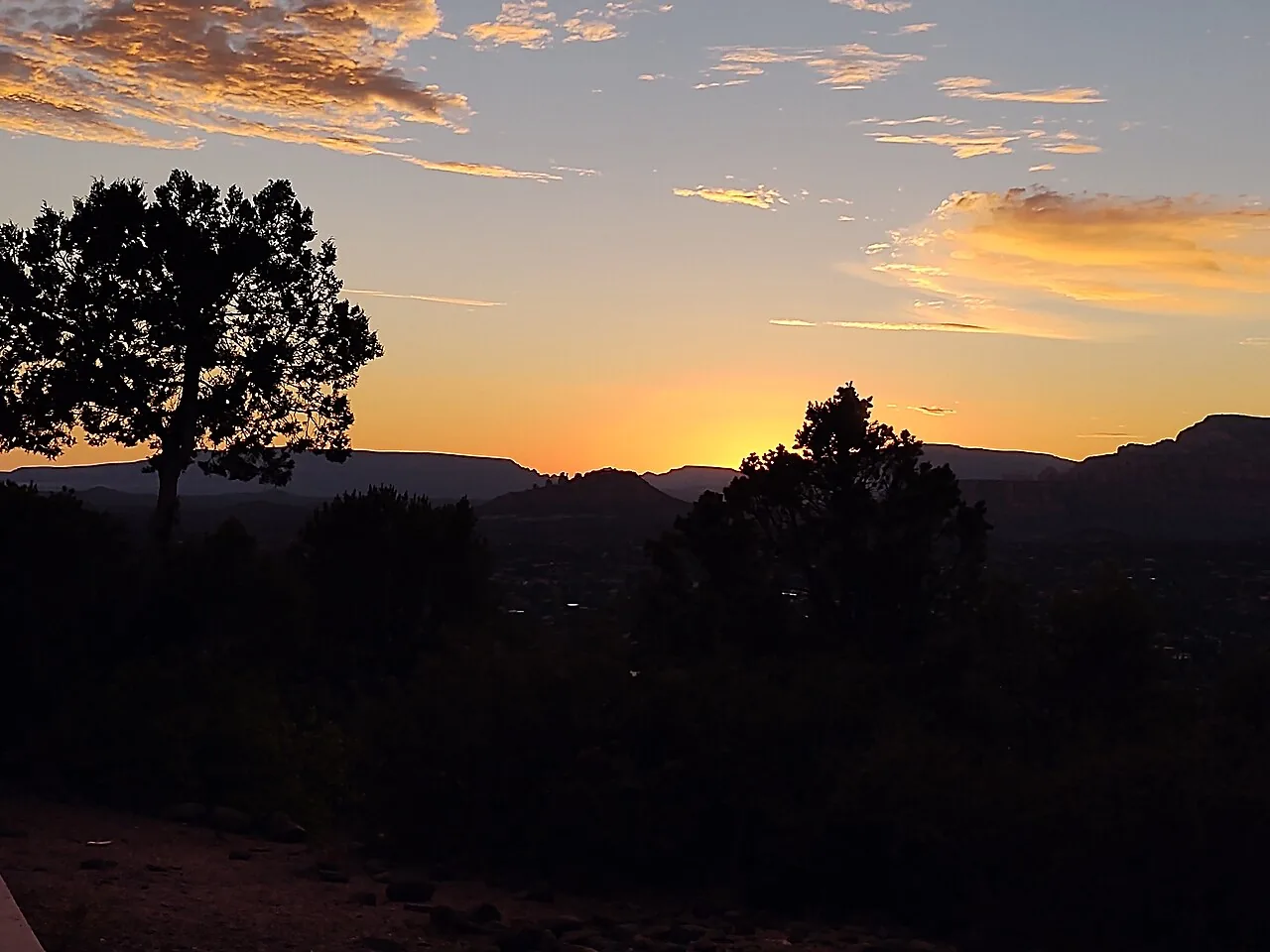
Mornings start in the 60s. The first three or four hours after sunrise are legitimately pleasant, which is prime time for trails, coffee on a shaded patio, or a swim before the crowds. Evenings do the same thing in reverse: by six or seven the sun is off the rocks, the temperature is dropping, and you are back outside for dinner, a sunset, and a night sky worth staying up for.
So when someone asks whether Sedona is “too hot,” what they are really asking about is those four or five midday hours. That is a solvable problem, not a trip-killer. You are not writing off a week — you are planning around one stretch of each day, the same way you would plan around an afternoon rainstorm on a beach vacation. Rearrange the day instead of canceling the trip, and summer here reads very differently.
The midday fixes
There are three honest ways to spend the hot hours in Sedona: get in the water, get in the shade, or get indoors. All three are easy here.
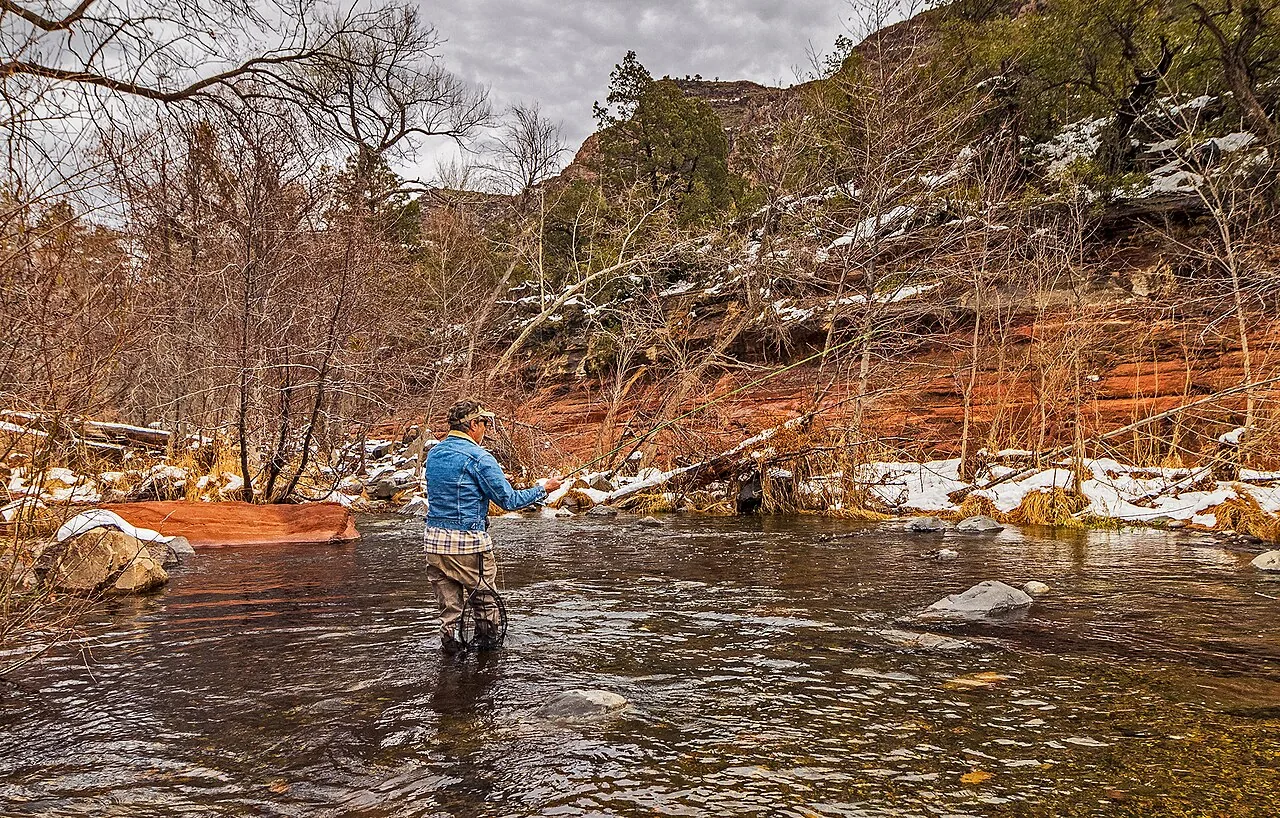
Water. This is the part that surprises people who picture Arizona as uniformly bone-dry. Slide Rock State Park, seven miles north of town in Oak Creek Canyon, is a natural sandstone water chute worn smooth by the creek, with a stretch of Oak Creek open for swimming and wading. In July the rest of the state knows about it too, so the lot fills early on hot weekends — go on a weekday or arrive when the gates open. Entry is charged per vehicle; confirm the current fee and hours on the Arizona State Parks site before you drive up. Beyond Slide Rock, Oak Creek itself has quieter swimming holes and picnic spots along 89A, and the water stays cold all summer. Our summer swimming-holes guide covers the spots that hold up when the parking scramble at Slide Rock gets to be too much.
Shade and air conditioning. Sedona’s gallery scene and its arts village at Tlaquepaque are made for the 12-to-4 stretch — cobblestone courtyards, big sycamores, tile fountains, and plenty of rooms with a roof and a thermostat. Two or three unhurried hours there and the worst of the heat is behind you.
A court that ignores the weather entirely. That is where this house comes in.
Put those three together and the hot part of the day stops being a compromise. You are swimming, browsing, or mid-rally in climate control while the thermometer does its thing outside.
The monsoon question
There is a second worry hiding inside “too hot,” and it is worth naming: summer in Arizona also means monsoon season. Arizona’s monsoon officially runs June 15 through September 30 — the National Weather Service fixed those calendar dates in 2008 — and the storms mostly get going from July into early September.
The pattern is predictable enough to plan around. Mornings are usually clear. Clouds build over the high country by early afternoon, and some days bring a scattered thunderstorm with lightning, gusty wind, and a burst of heavy rain in the late afternoon or evening. Then it clears. This is not a washout that ruins a week; it is a daily rhythm, and locals mostly like it. The storms knock the temperature down, green up the landscape, and produce the kind of dramatic evening skies that photographers plan trips around. August actually averages a touch cooler than July here — 94°F versus 97°F — partly because that cloud cover trims the peak.
A few honest cautions come with it. Do not be on an exposed ridge or summit when storms build; lightning is the real hazard on Sedona’s open slickrock. Stay out of narrow canyons and washes when storms are around, because a flash flood can arrive from rain that fell miles upstream under a clear sky where you are standing. And keep the schedule loose. The reliable move is to do outdoor plans in the morning and treat the afternoon as flexible — which, conveniently, is the same advice the heat gives you. Our July guide goes deeper on monsoon timing and safety if you are traveling in the thick of it.
What you actually gain by coming in summer
Flip the question around. Instead of “what does the heat cost me,” ask “what does summer give me that spring and fall don’t.” The list is longer than most people expect.
Fewer people and softer rates. Spring and fall are Sedona’s high seasons — the trails are busy and lodging is priced accordingly. Because most travelers assume Arizona summer is unlivable, summer is when the town is quietest and rooms are easiest to book, especially on weekdays. Same red rocks, same creek, thinner crowds. If you want to see how the seasons stack up for both sightseeing and court time, the best-time-to-visit breakdown compares them month by month.
Swimming weather. Slide Rock and the Oak Creek swimming holes are only fun when it is hot enough to want them. Show up in April and the water is too cold to enjoy. Summer is the season the creek was made for.
Dark, dark nights. Sedona has been an International Dark Sky Community since 2014 — the eighth in the world at the time — thanks to a citywide lighting ordinance that keeps the sky genuinely dark. On a clear summer night away from Uptown’s lights, the Milky Way is plain to the naked eye. Monsoon clouds can get in the way in July and August, but storms often clear after sunset, and the rinsed air afterward makes for some of the sharpest sky of the year. The stargazing guide covers where to set up and what is overhead by month.
Long, comfortable evenings. This is the payoff for the midday exile. At 68 degrees after dark, the deck, the firepit, and the soaking tubs are all in play, and nobody is rushing back inside to cool off. It is the part of summer here that turns skeptics.
And there is the drive-market reality: when Phoenix is sitting at 107°F, Sedona at about two hours north is the closest real relief that does not involve an airport. The Phoenix getaway guide covers the drive, and our beat-the-heat hub collects the full cool-air comparison across every nearby city.
Who should still wait for spring or fall
Being honest cuts both ways, so here is who summer is genuinely not for.
If your entire reason for coming is to hike long, exposed, strenuous trails all day — the kind of full-day objective where you are on open rock from morning to late afternoon — summer will fight you. Those trails close to a dawn-to-mid-morning window in July, and you will spend the rest of the day indoors. If that is your whole trip, spring or fall serves you better.
If anyone in your group simply cannot tolerate heat, or you are dreaming of cool pine-forest air, Sedona is not going to deliver that at midday. Flagstaff up the hill will. Be honest with yourself about which trip you actually want.
For most people, though — a group that wants some hiking, some water, some good food, real evenings, and a way to stay active through the hot hours — summer works fine. The heat asks you to shift your schedule, not scrap your plans.
So, is it too hot? The verdict
No, with an asterisk. Sedona in summer is warm, not brutal: mid-90s at noon, mid-60s at night, about ten degrees cooler than Phoenix by day and much cooler after dark. The heat is real for a few midday hours and manageable the rest of the time. Add in swimming season, thin crowds, softer rates, and a dark night sky, and the case for a summer trip is stronger than the “too hot” search suggests.
The catch is those middle-of-the-day hours, and that is exactly the gap this house closes. Hike or swim in the morning, play on a private air-conditioned court through the heat, and take the evening outside. Do that, and July in Sedona is a schedule to settle into, not a season to avoid. When your dates line up, you can check availability and plan around the cool hours instead of the hot ones.
Frequently asked questions
Is Sedona too hot to visit in July?
No, though midday is warm. The July average high is 97°F and a hot day can touch 100, but nights fall to about 68°F and mornings start in the 60s. Plan outdoor activities for early and late in the day, and handle the 11 AM to 4 PM stretch with water, shade, or air conditioning.
How much cooler is Sedona than Phoenix in summer?
About ten degrees cooler by day and roughly seventeen degrees cooler at night. Sedona’s July normals are 97°F for the high and 68°F for the low, versus Phoenix at 107°F and 85°F. The nighttime gap is the one you feel most — Sedona evenings are comfortable outside while Phoenix stays hot after dark.
When is monsoon season in Sedona?
Arizona’s monsoon officially runs June 15 through September 30, with the most active storms from July into early September. The usual pattern is clear mornings and scattered afternoon or evening thunderstorms, so hike early and keep afternoon plans flexible. Stay off exposed ridges and out of narrow canyons when storms build.
Can you swim in Sedona in the summer?
Yes. Slide Rock State Park, seven miles north of town, has a natural sandstone water chute and a stretch of Oak Creek open for swimming, and there are quieter swimming holes along Oak Creek Canyon. The water stays cold all summer. Go early or on a weekday, since the parking fills fast on hot weekends.
Is summer a bad time to visit Sedona?
No — it is the value season. Spring and fall draw the biggest crowds and the highest rates, so summer means easier bookings, thinner trails, and the same scenery. The trade-off is planning your day around the midday heat rather than through it.
Can you play pickleball in Sedona in July?
Outdoors, only in the early morning — public courts bake by midday. This house avoids the problem with a private indoor court that is air-conditioned, so games run at any hour in any month, regardless of the heat or an afternoon storm.
Play year-round in red rock country
Sedona Pickler is a private Sedona home with its own indoor, climate-controlled pickleball court. Rally any season, any hour — heated, cooled and lit, with paddles and balls provided.
Check dates & book