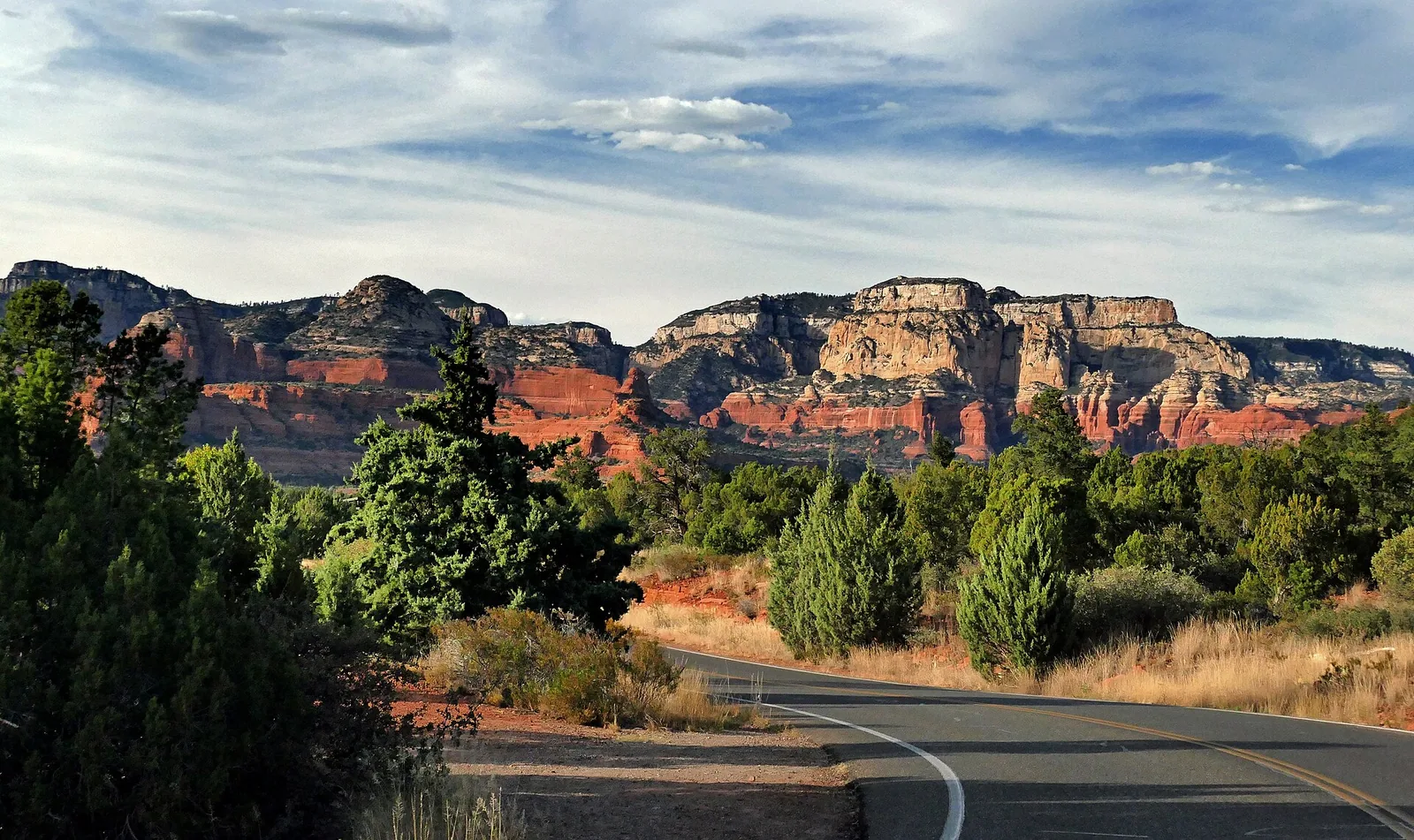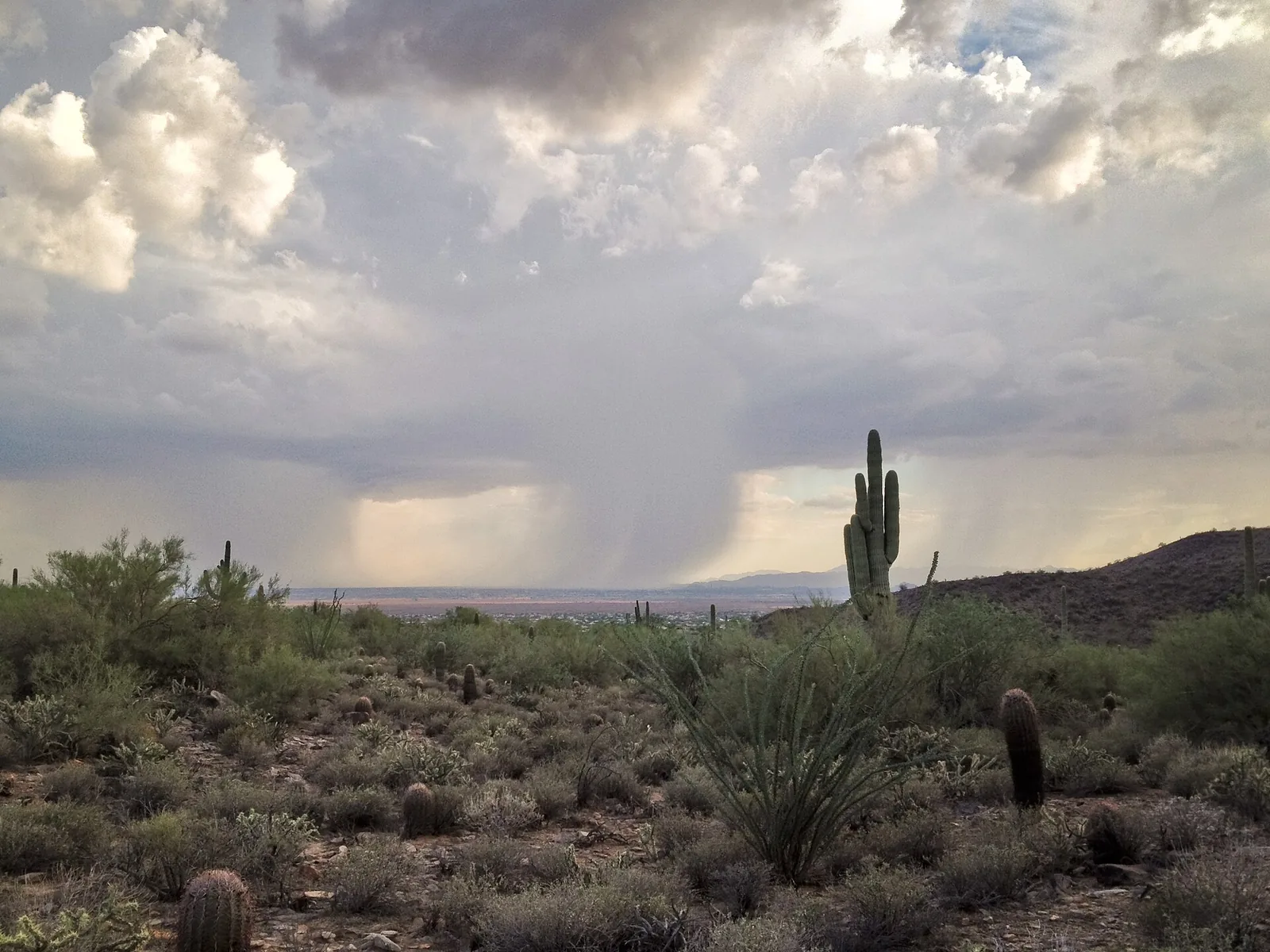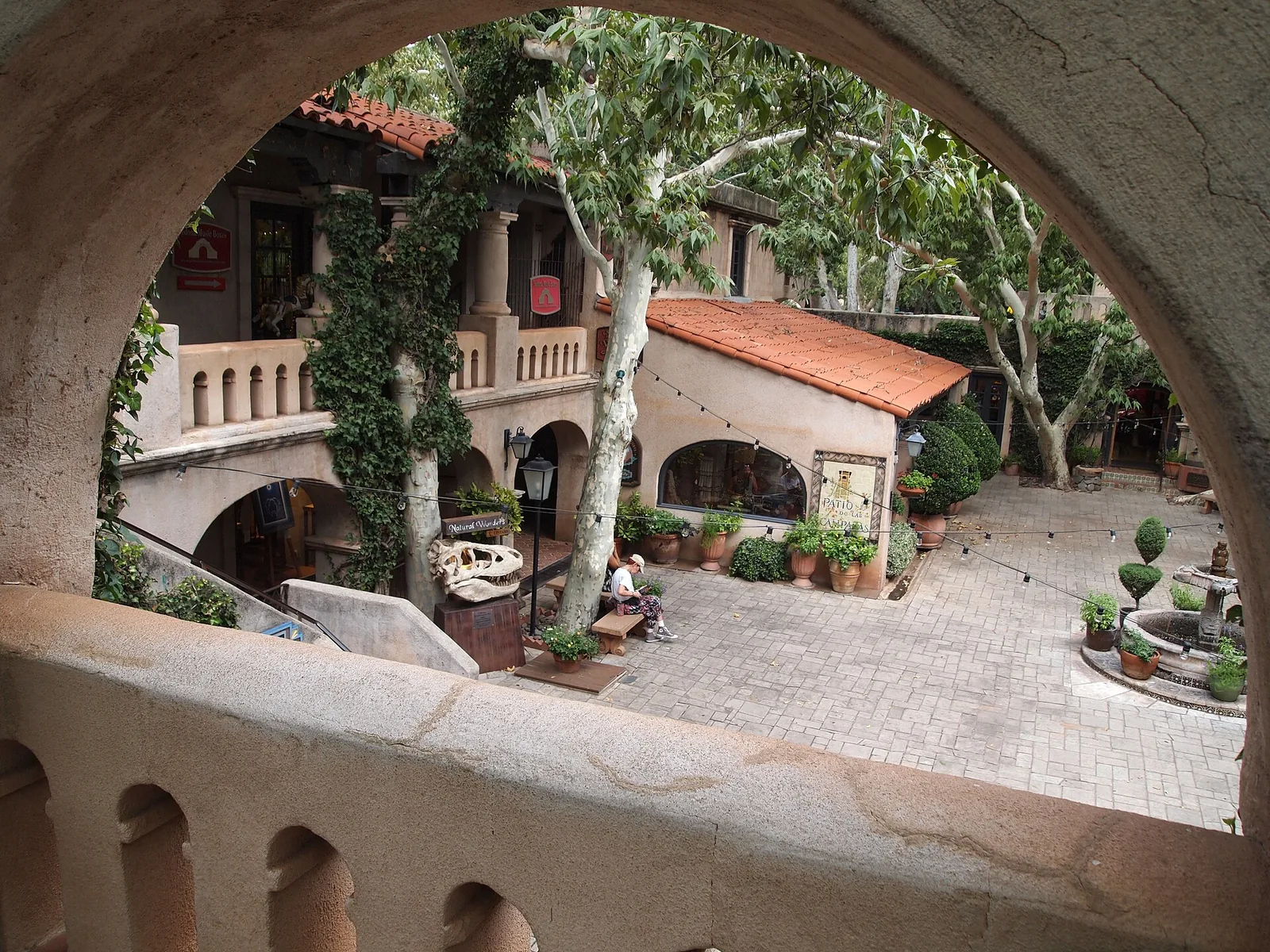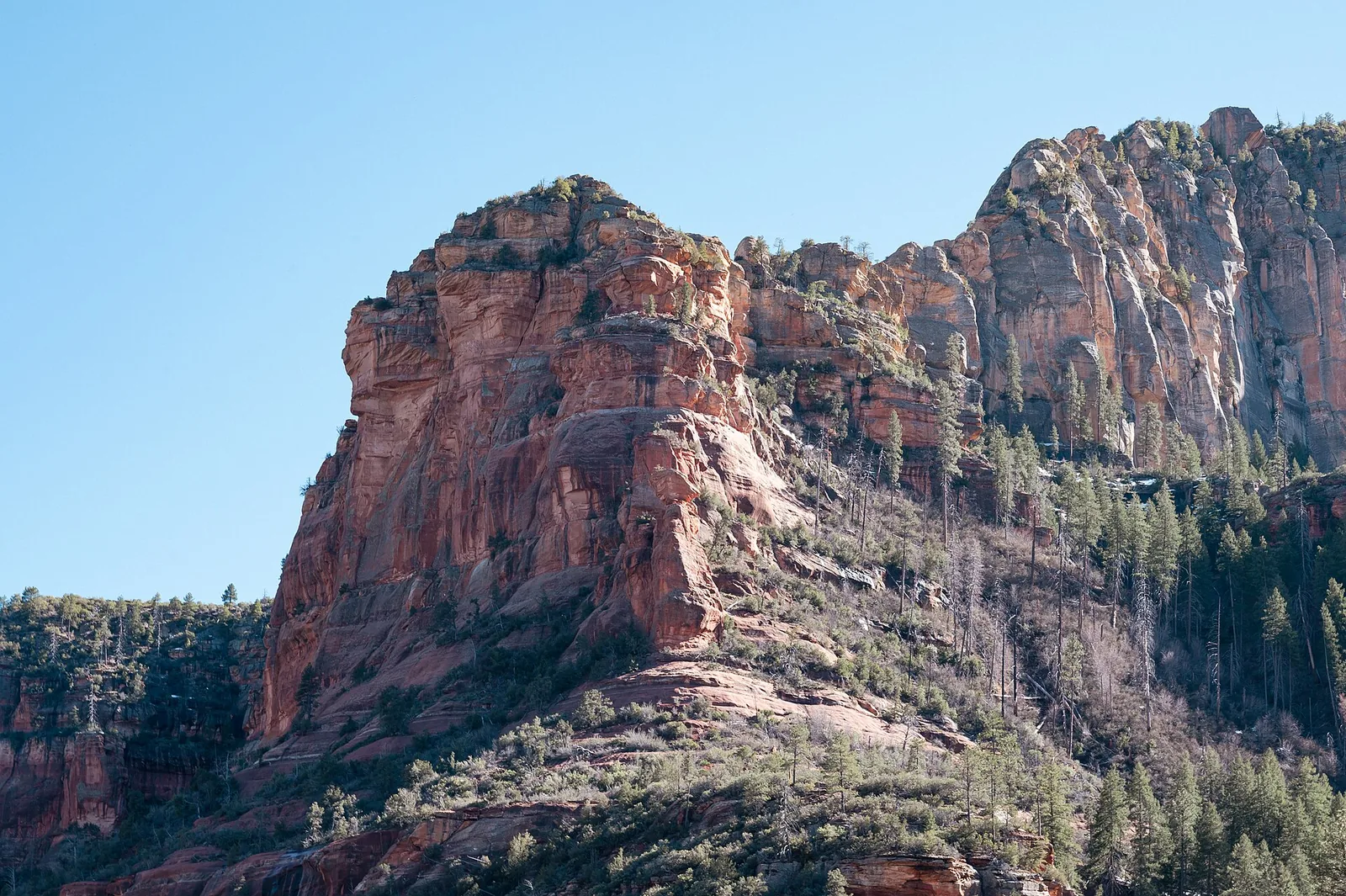
July is Sedona’s hottest and wettest month at the same time, which sounds like a contradiction until you spend a day here. Mornings start clear and warm, thunderheads often stack up in the afternoon, and the whole thing cools off fast once the sun drops. The average high runs about 97°F and the average low about 68°F — hot by day, but a real step down from Phoenix, where July highs sit near 107°F and nights stay in the mid-80s. This is the heart of the monsoon, so plan your outdoor time around the sky, not the clock, and keep a backup for the afternoon.
The weather, honestly
Sedona sits at roughly 4,350 feet, versus about 1,135 feet in Phoenix, and that elevation buys you two things in July. By day, it is worth about 10°F — meaningful, but Sedona midday is still solidly in the 90s, so this is cooler air, not mountain air like Flagstaff up at 7,000 feet. The bigger win comes at night: a July low near 68°F runs about 16 to 17°F below Phoenix, which makes evenings genuinely pleasant for the deck, the firepit, or a late walk.
Humidity is the other July wrinkle. Most of the year Sedona is dry heat, but during the monsoon the afternoon air gets sticky ahead of storms, then dries out again once the system passes. Cloud cover on stormy days can actually shave a few degrees off the peak high, which is part of why August, deeper into the monsoon, averages a touch cooler than July. If you are weighing summer months, the best-time-to-visit guide and the /beat-the-heat/ breakdown lay out the trade-offs, and the Phoenix getaway page covers the roughly two-hour drive up from the Valley.
Monsoon season: what to expect
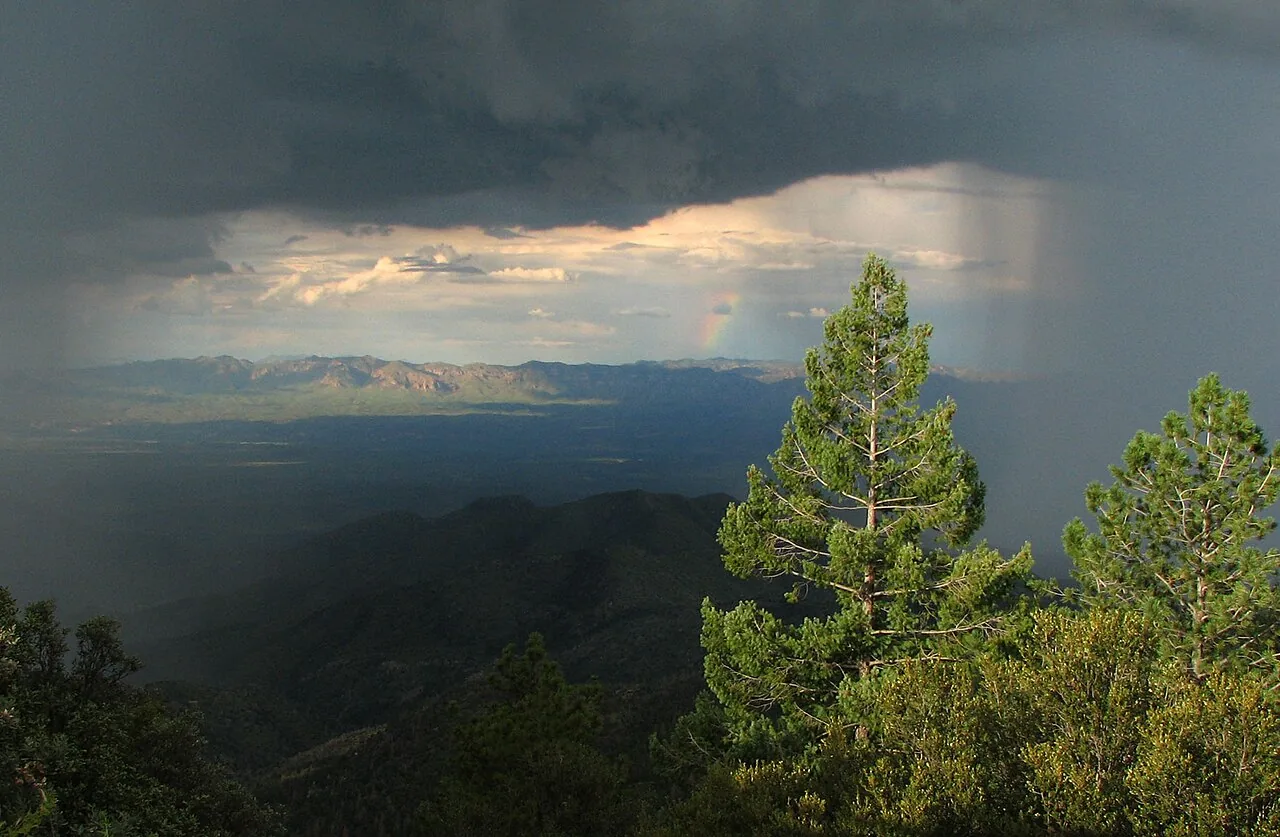
Arizona’s monsoon runs June 15 through September 30 on the National Weather Service’s fixed calendar, and it is most active from mid-July through mid-August. A typical monsoon day looks like this: clear and hot in the morning, clouds building by early afternoon, and storms rolling through roughly between 3 and 5 p.m. with lightning, hard rain, gusty wind and sometimes blowing dust. Most storms move out by evening and leave behind cooler, cleaner air and a greener landscape.
The practical takeaway is simple — do your hiking and driving in the morning. Get to the trailhead early, turn around before the clouds build, and save the late afternoon for storm-watching from a covered deck or a session on the indoor court.
Flash-flood safety
The monsoon’s real hazard is not the heat, it is water. A storm miles away, over ground you cannot even see, can send a wall of water down a dry wash or canyon while the sky above you is still blue. Never enter slot canyons or narrow drainages when storms are anywhere in the forecast, and treat every dry creek bed as something that can fill in minutes. Oak Creek itself can rise quickly, so watch the water level if you are swimming and get out and up if it starts climbing or turning muddy. Check the day’s forecast before you head out, and when in doubt, pick an open, higher route.
Cooling off: Slide Rock and Oak Creek
The classic July move is to head for the water. Slide Rock State Park, about a 20-minute drive up Oak Creek Canyon, is built around an 80-foot natural sandstone chute and roughly half a mile of creek open for swimming, wading and sliding. Summer hours run 8 a.m. to 7 p.m., with last entry an hour before closing, and summer entry is about $30 per car — confirm current pricing at azstateparks.com before you go.
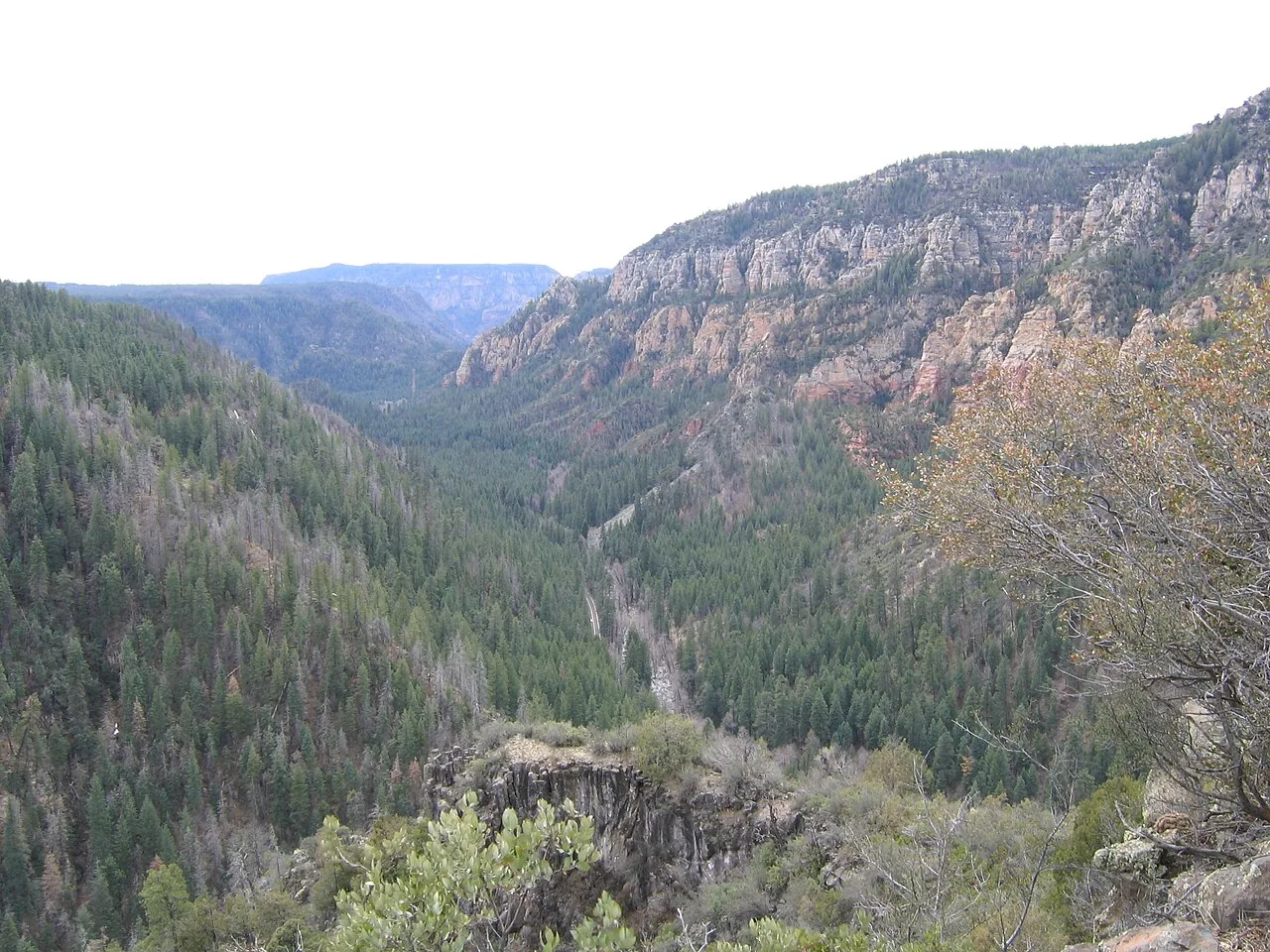
A few things save the day here. The lot holds only about 156 cars and fills by mid-morning in summer; once it is full, the gate closes, so arrive at the 8 a.m. opening. Wear water shoes, because the algae-coated rock is genuinely slippery and there are no lifeguards. And after a monsoon storm, Oak Creek can close to swimming for high bacteria levels, so check the water-quality status before you count on it. If Slide Rock is packed or closed, the shaded canyon hike up West Fork crosses the creek repeatedly and stays cooler than the open desert, and the Oak Creek Canyon scenic drive keeps you under tree cover for most of the route.
Best things to do in July
Work the day around the heat and the storms:
- Hike at dawn. Cathedral Rock and Devil’s Bridge are far more pleasant — and safer — before mid-morning. Start early, carry plenty of water, and be back before the clouds build. See the Cathedral Rock and Devil’s Bridge guides for timing.
- Chase the water midday. Slide Rock, Oak Creek and the shaded reaches of West Fork are where locals and Phoenix families go to beat triple digits.
- Watch the storm roll in. Late afternoon is for a covered deck, not a trail. Monsoon skies over the red rocks put on a show worth sitting still for.
- Use the cool evenings. Nights in the 60s are made for the firepit and for stargazing — Sedona’s Dark Sky status means a real sky once the clouds clear.
- Play indoors at the hot hours. Late morning through the afternoon storm is exactly when the home’s air-conditioned court earns its keep.
July events
July is light on festivals, and the water and the monsoon skies are the real draw. The one fixed date is the 4th of July. Because Sedona is a designated International Dark Sky Community — the eighth in the world — the city does not launch fireworks. Instead it holds the free Sedona Summer Splash at the Sedona Community Pool on Posse Ground Road, a daytime family event with recreation swimming, music and food trucks. If you want a traditional fireworks show, Cottonwood is about 20 minutes south and typically puts on one of the better displays in the Verde Valley in the evening. Confirm current dates and times before you build a plan around them.
Crowds and rates
Summer is Sedona’s quieter, better-value stretch. The spring and fall peaks book out and price up; July, by contrast, tends to be easier to reserve and gentler on the wallet, especially mid-week. The busy spots are the swimming holes, which stay full, and the July 4th weekend, which spikes across the board. If your goal is cooler air and elbow room, aim for a mid-week stay and you will have trails and time to yourself.
What to pack
Pack for a hot, bright day and a wet afternoon:
- Sun protection: hat, sunglasses, high-SPF sunscreen
- At least three liters of water per person for any hike
- Water shoes for Slide Rock and the creek
- A light rain shell for afternoon storms
- Light layers for evenings that cool into the 60s
- Non-marking court shoes if you plan to play; paddles and balls are provided
The pickleball angle for July
Here is where July and this particular home line up. Two things routinely wreck outdoor play in a Sedona summer: the mid-90s midday, and the 4 p.m. monsoon storm. Both empty out the outdoor courts across the region. The home’s private indoor court is heated, air-conditioned and lit, so a group of up to eight can play at 1 p.m. in full sun or through a downpour without missing a session — and without the neighbor and noise issues an outdoor court brings, which is the whole point of the quiet indoor setup.
That flexibility is what makes a July stay work. Hike at dawn, cool off in Oak Creek at midday, come back and play while the storm passes, then take the firepit and the cool night. The whole home sleeps eight, so the group stays together for all of it. For how the surrounding months compare, see Sedona in June and Sedona in August.
Frequently asked questions
Is Sedona cooler than Phoenix in July?
When is monsoon season in Sedona?
Is Slide Rock State Park open in July, and how much does it cost?
Does Sedona have fireworks on the 4th of July?
Is July a good time to visit Sedona, or is it too crowded?
Can you swim in Oak Creek in July?
What should I pack for Sedona in July?
Stay where you can rally any season
Sedona Pickler is a private West Sedona vacation home with its own indoor, climate-controlled pickleball court — a short drive from the trailheads, viewpoints and restaurants in this Sedona guide. Play at sunrise or after dark, in any weather.
Check dates & book