Put Las Vegas and Sedona on a map and they look like cousins: two desert destinations a few hours apart, both hot in summer, both selling a version of the Southwest. Choose between them for a July trip, though, and you are really choosing between two different ideas of what a vacation is. One place is built to keep you comfortable indoors while the sun does its worst. The other is built to get you outside — earlier and later in the day, and up a couple thousand feet where the air behaves differently after dark.
This is an honest comparison, not a takedown. Las Vegas is very good at what it does, and for a certain kind of trip it is the right call. But if you are traveling with a group that would rather move than sit — hike in the morning, swim a creek in the afternoon, play until dinner — the case for driving the extra couple of hours to Sedona is stronger than the temperature difference alone suggests. Here is how the two actually compare.
Both are hot, but not equally and not at the same hours
Numbers first. Using NOAA’s 1991-2020 normals, Las Vegas averages daily highs of 99°F in June, 104°F in July, and 102°F in August. Sedona, up at about 4,350 feet, runs 94, 97, and 94 over the same months. So Sedona is cooler by day — but be honest about the size of it. In July the gap is about 7 degrees, 97 against 104, not the 15 or 20 you might be hoping for. Midday in Sedona in summer is still solidly in the 90s. It is real relief, not a mountain escape. If you want genuine alpine cool you have to climb to Flagstaff’s 7,000 feet, and that is a different trip entirely.
The difference you actually feel shows up after the sun goes down.
| Month | Sedona high / low | Las Vegas high / low |
|---|---|---|
| June | 94°F / 61°F | 99°F / 75°F |
| July | 97°F / 68°F | 104°F / 81°F |
| August | 94°F / 67°F | 102°F / 79°F |
Sedona’s July nights average about 68°F. Las Vegas stays near 81°F. That 13-degree overnight gap is the one your body notices — the difference between an evening on a deck with a light layer and an evening where stepping outside feels like opening an oven door. The reason is elevation and dry air. Sedona sits roughly 2,300 feet higher than the Las Vegas valley floor, which hovers around 2,000 feet, and thin, dry desert air at 4,350 feet sheds its heat fast once the sun drops. Las Vegas, lower and paved wall to wall, holds that warmth deep into the night.
We keep the full temperature chart and the Phoenix side of the story on the beat-the-heat page, and the honest month-by-month data check on is Sedona cooler than Phoenix if you want to see how both cities stack up against the low desert.
Two different ways to beat the heat
Here is the real split, and it has less to do with the thermometer than with what each place does about the heat.
Las Vegas answers summer by moving you indoors. The whole city is engineered for it — casino floors, theaters, air-conditioned malls, buffets, and pools you drift in rather than swim laps in. A July day on the Strip is mostly a sequence of cooled rooms connected by short, hot walks between them. That is not a criticism; it is the design, and it works. You can have a full, comfortable day in Las Vegas in 108-degree heat and barely feel the sun. But it is, by and large, a sit-down, indoor trip.
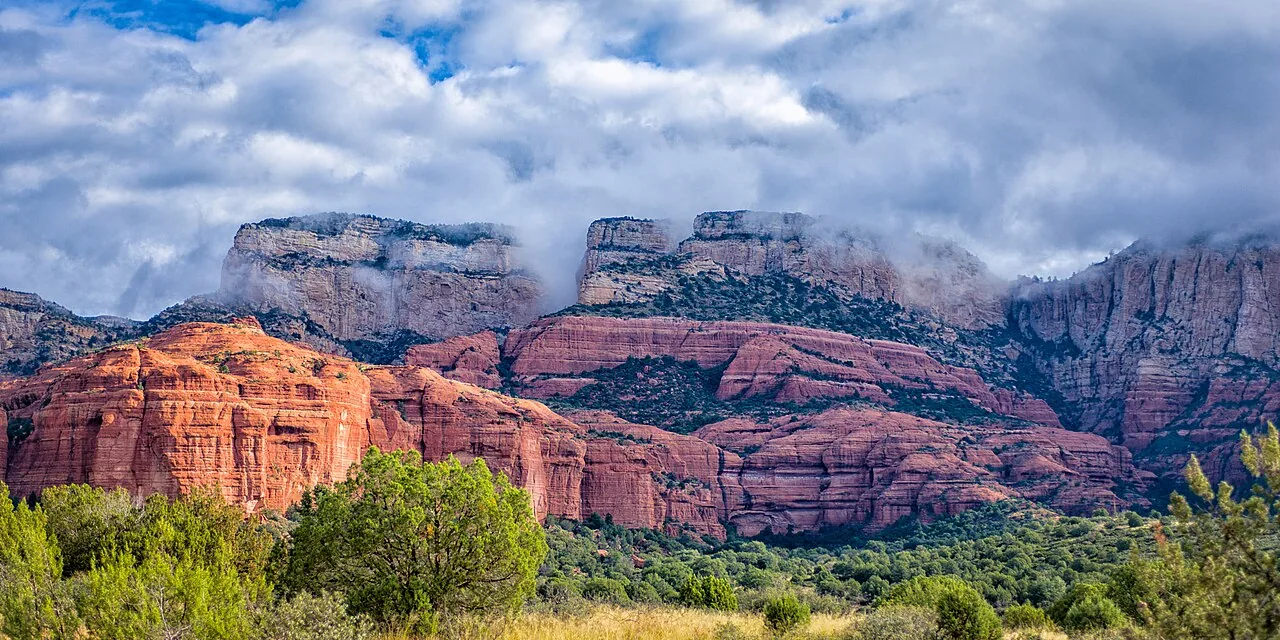
Sedona answers the heat differently. Because the mornings and evenings genuinely cool off, the outdoor day has bookends you can actually use — a red-rock hike before nine, a creek swim in the afternoon, a long comfortable evening on the deck. The middle of the day is still the hot part, the same 90s you would expect. Sedona’s move is not to hide from the heat all day; it is to use the cool hours hard and have a specific plan for the hot ones.
Sedentary versus active
Strip that down and you get the honest version of this comparison: Las Vegas is the sedentary escape, Sedona is the active one. Neither is wrong. They just suit different groups.
If your idea of a great summer trip is shows, restaurants, late nights, and variety without ever leaving the air conditioning, Las Vegas wins outright, and it is not close. Sedona has good food and quiet evenings, but it does not have headliner residencies or a casino floor, and it goes to bed early. Pretending otherwise would be dishonest.
If your group would rather be doing something — a family, a set of friends, a small company trip where people actually want to move — the balance tips the other way. Sedona’s mornings are for the trails: Cathedral Rock, Bell Rock, Devils Bridge and dozens more are a short drive from town, and we round up the best hikes in Sedona for a first visit. Afternoons are for Oak Creek and Slide Rock, where the water runs cold enough to be the day’s air conditioning. Evenings are for the deck and the firepit, in air that has finally cooled off.
What a Sedona group day actually looks like
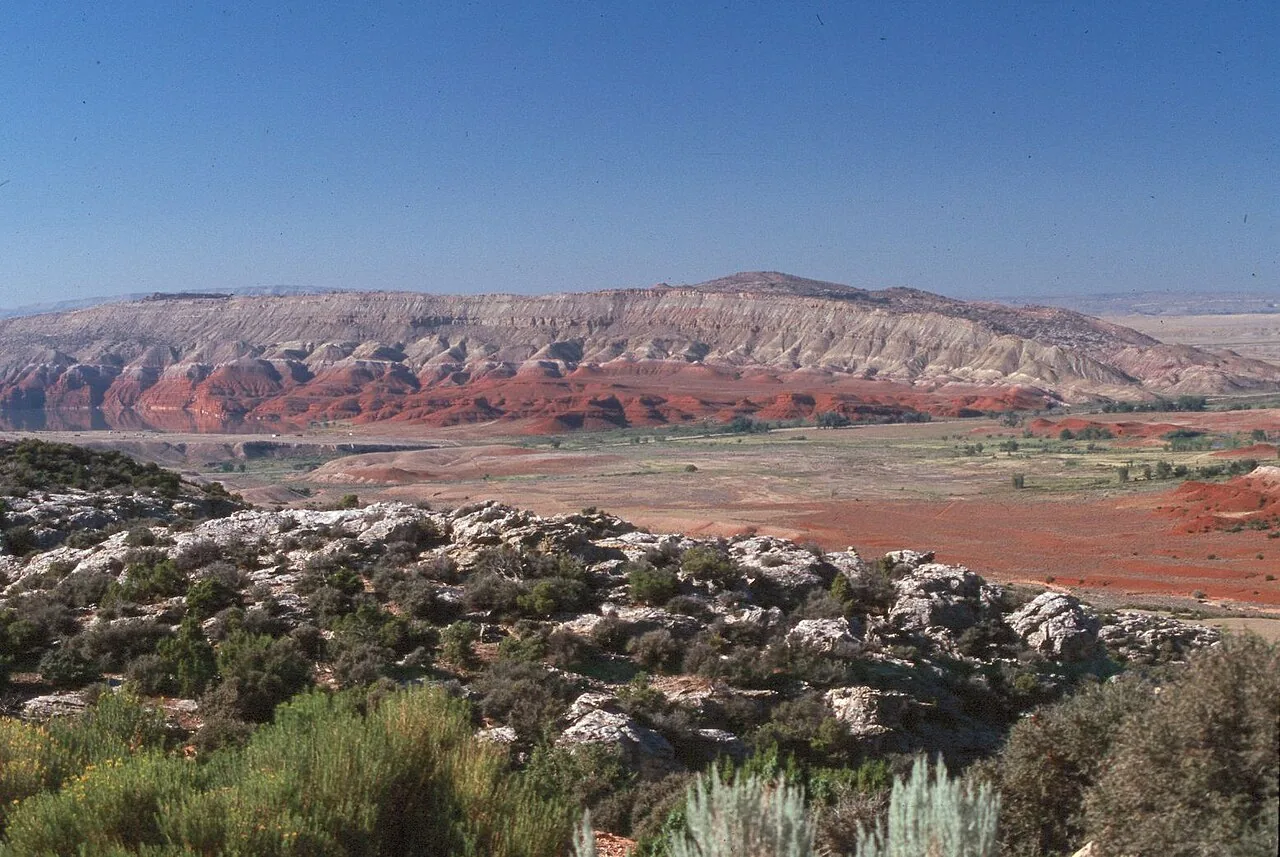
Because the temperature does the scheduling, a summer day here has a natural shape. Hike Bell Rock or Cathedral Rock at first light while it is still in the 70s. Come back, eat, and take the indoor court through the hot middle of the day — the exact stretch a Strip trip would spend on a casino floor. Drive up Oak Creek Canyon or out to Slide Rock in the afternoon to cool off in the water. Then the evening is yours outside: a soak in the deck tubs, dinner on the covered deck, the firepit after dark, and a sky dark enough for real stargazing.
That is a full day that barely touches an air-conditioned room except by choice — the opposite of a Las Vegas day, and part of why a lot of groups find they sleep better and come home less wrung out than they do from a weekend on the Strip. Nobody is losing a morning to a hangover and a dark hotel room, because the trip is pointed the other direction.
The noise point is worth one line, because it matters for a court trip specifically. Pickleball is loud, which is why outdoor courts draw complaints and why plenty of neighborhoods fight them. An enclosed court keeps the sound inside four walls, so you can play early or late without a single neighbor issue — more on that quiet, indoor setup.
Give Las Vegas its due
To keep this fair, here is what a Vegas trip does better, said plainly.
There is no drive if you are flying — a major airport and tens of thousands of hotel rooms make it the easy arrival for a group scattered across the country. The variety is unmatched: you can see a show, eat at a serious restaurant, and stay out past two in the same night without moving your car. And it is weatherproof in a way an outdoor-leaning trip never is. Las Vegas does not care about a monsoon afternoon; Sedona’s outdoor plans do. For a bachelor or bachelorette weekend, a big group that mostly wants to go out, or anyone whose vacation ideal is a lounge chair by a pool and a table later, Las Vegas is the honest pick and Sedona would only frustrate them.
The trade is what you would guess. You are choosing air-conditioned variety over cooler nights and real nature a few minutes from the door. Different trips for different people.
The drive and the group math
Las Vegas is the easier arrival if you are flying. Sedona asks for a drive. From Las Vegas it is roughly 280 miles and about four and a half hours, mostly on US-93 and I-40 through Kingman and Williams before the last stretch on 89A into town. If the Vegas heat is exactly what you are running from, that same drive is the subject of our Las Vegas heat-escape guide, and the practical logistics — where to stop, what to expect — sit on the Las Vegas getaway page.
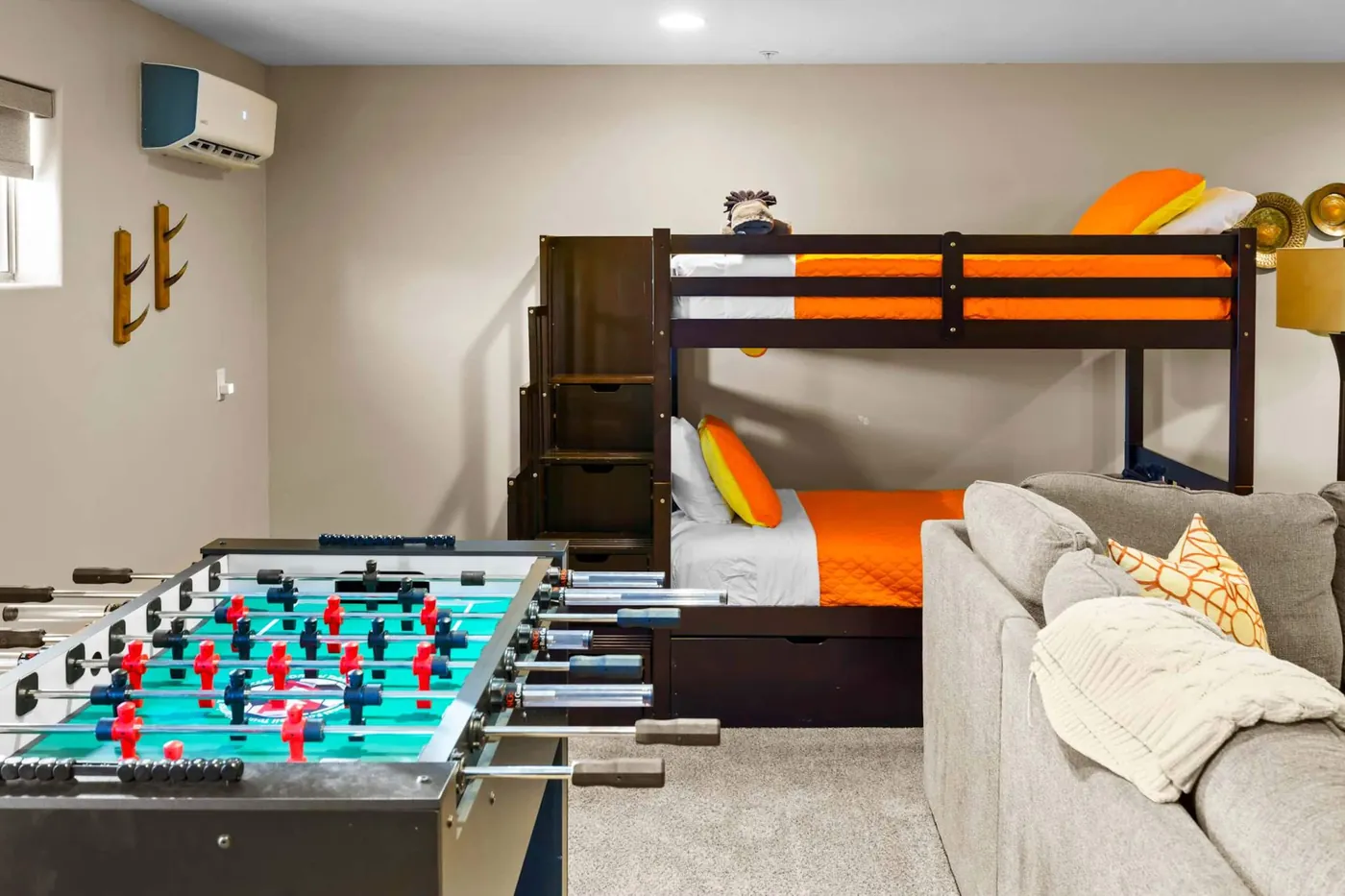
What you get at the other end is a whole house instead of a cluster of hotel rooms. Sedona Pickler sleeps eight across four bedrooms, with a full kitchen, a game room, a media lounge, two soaking tubs and a firepit, and free driveway parking for four cars. For a group, that usually pencils out better than booking four or five rooms on the Strip, and it keeps everyone under one roof instead of texting across three floors of a casino hotel about where to meet for dinner. Guests need to be 25 or older to book, and it is a whole-home stay, not a by-the-hour court.
If you are weighing more than these two cities, the same active-versus-easy logic shows up closer to home in Sedona versus Scottsdale for a summer trip.
So which trip is yours?
Be honest with yourself about the kind of days you want.
Choose Las Vegas if the point is nightlife, shows, big-name dining, and the ability to do all of it in cooled rooms without planning around the sun. It is the best in the world at that, and no red-rock town competes.
Choose Sedona if you would rather be outside for the good hours and active for the trip — if your group hikes, swims, plays, and wants nights cool enough to sit out under the stars. You will trade the Strip’s variety for cooler evenings, real nature a few minutes from the door, and a private court that ignores the forecast entirely.
For a group leaning that second way, it is worth checking dates before the summer weekends fill up.
Frequently asked questions
Is Sedona cooler than Las Vegas in summer?
Yes, but modestly by day and a lot at night. In July, Sedona’s average high is about 97°F against Las Vegas’s 104°F, roughly a 7-degree break. The bigger difference is overnight: Sedona drops to about 68°F while Las Vegas stays near 81°F, thanks to Sedona’s 4,350-foot elevation and dry air. Midday in Sedona is still in the 90s, so it is real relief rather than a mountain escape.
How far is Sedona from Las Vegas?
About 280 miles, or roughly four and a half hours of driving, mainly on US-93 and I-40 through Kingman and Williams before 89A into Sedona. It is a very doable day’s drive and a common road trip.
Is Las Vegas or Sedona better for a group trip in summer?
It depends on the group. Las Vegas is better for nightlife, shows, and indoor variety in the heat. Sedona is better for an active group that wants to hike, swim the creek, and play, with cooler nights and a private indoor pickleball court that works even at midday. Vegas is the sit-down trip; Sedona is the active one.
Does Sedona have anything to do indoors when it's hot at midday?
Yes. Beyond air-conditioned galleries and Tlaquepaque’s shaded arcades, the Sedona Pickler home has its own private indoor, climate-controlled pickleball court, so a group can stay active through the hottest hours instead of waiting for evening.
Can you play pickleball at the Sedona home in July?
Yes. The court is fully enclosed, heated, air-conditioned, and lit, so it plays comfortably at any hour and in any season, including a July afternoon when outdoor courts in both Sedona and Las Vegas are too hot to use. It comes with the whole-home stay, not by the hour, so your group has it to itself for the length of the trip.
Play year-round in red rock country
Sedona Pickler is a private Sedona home with its own indoor, climate-controlled pickleball court. Rally any season, any hour — heated, cooled and lit, with paddles and balls provided.
Check dates & book