Scottsdale and Sedona sit about 125 miles and two hours apart, but on a summer weekend they feel like two different states. One is low-desert resort country where July afternoons push past 105°F and the whole day gets planned around a pool. The other is high-desert red-rock country where that same afternoon tops out in the mid-90s and, more to the point, the nights actually cool off. If you’re choosing one for a July or August trip, this is an honest side-by-side — no pretending Sedona is a mountain escape it isn’t, and no pretending Scottsdale’s heat is a dealbreaker if a lounge chair by the water is all you’re after.
What follows is how the two compare on temperature, using real numbers; what Scottsdale genuinely does better; what Sedona does better; and the one thing that quietly decides a lot of these trips — whether you’d rather compete for a pool cabana in triple-digit heat or have a court entirely to yourselves.
The short answer
If your idea of a summer weekend is a swim-up bar, a spa afternoon, and a long dinner out, Scottsdale is built for exactly that and does it as well as anywhere in the Southwest. Summer is also its quiet, lower-priced season, which is a real point in its favor. If you’d rather hike at first light, cool off in a creek, and sit outside in the evening without the air feeling like a hair dryer, Sedona is the better base — as long as you go in knowing its midday is still hot. Here’s the comparison at a glance, then the detail behind each line.
The heat, honestly
This is where the two split, and it comes down almost entirely to elevation.
Scottsdale is a low-desert town at about 1,257 feet, sharing the same valley floor and the same climate as Phoenix next door. Its average July high sits around 105°F, and depending on the source and the year you’ll see numbers anywhere from 102°F to 107°F. Those are the afternoons that make national news every summer. People still get outside, but they do it early or not at all, and the middle of the day belongs to something air-conditioned or something wet.
Sedona sits much higher, at about 4,350 feet. Using NOAA’s 1991–2020 climate normals, its July high averages 97°F, with June and August a touch milder at 94°F. So the daytime break over Scottsdale is real but modest: about 10 degrees. That’s worth being straight about. Ten degrees is the difference between miserable and manageable, but 97°F is still hot — Sedona in July is not a cool mountain town, and anyone selling it as one is overselling. If you want genuinely cool days you have to climb higher, to Flagstaff at 7,000 feet, and that comes with its own trade-offs, which we get into in our Sedona vs Flagstaff comparison.
The gap that actually changes how a trip feels is the overnight one. Sedona’s July low averages about 68°F. The low desert around Scottsdale rarely drops below the mid-80s at night in July — the pavement and concrete hold the day’s heat and let it back out slowly, so 10 p.m. can still feel like an open oven. That 15-to-17-degree nighttime difference is why an evening on a Sedona deck is comfortable in shorts while the same hour in Scottsdale sends you back inside to the AC. Dry air at elevation cools off fast once the sun is down; the valley floor doesn’t.
If you want the month-by-month breakdown of how much cooler the high desert really runs, we lay it out with the full numbers in is Sedona cooler than Phoenix, and the whole heat-escape case lives on our beat-the-heat hub.
What Scottsdale does better
Credit where it’s due — Scottsdale is very good at being Scottsdale, and for the right weekend it’s the smarter pick.
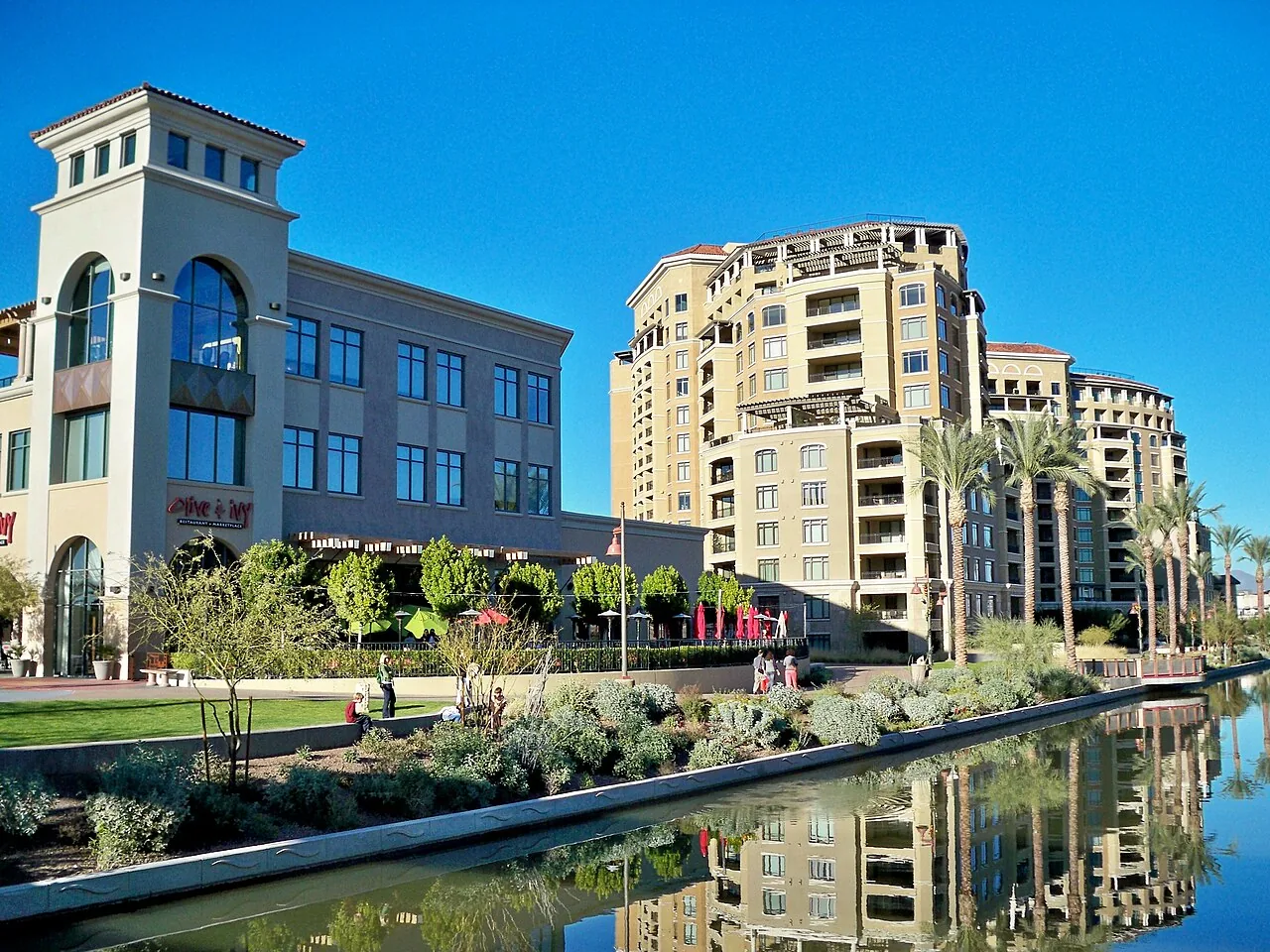
Pools and resorts. Scottsdale is a resort town, and in summer that machine runs at a discount. The big properties build their whole warm-season identity around water: multi-level pools, lazy rivers, swim-up bars, misters, and cabanas. If you want to spend a July Saturday moving between a lounge chair and the water with a drink in hand, few places do it better, and summer is when those rooms are cheapest.
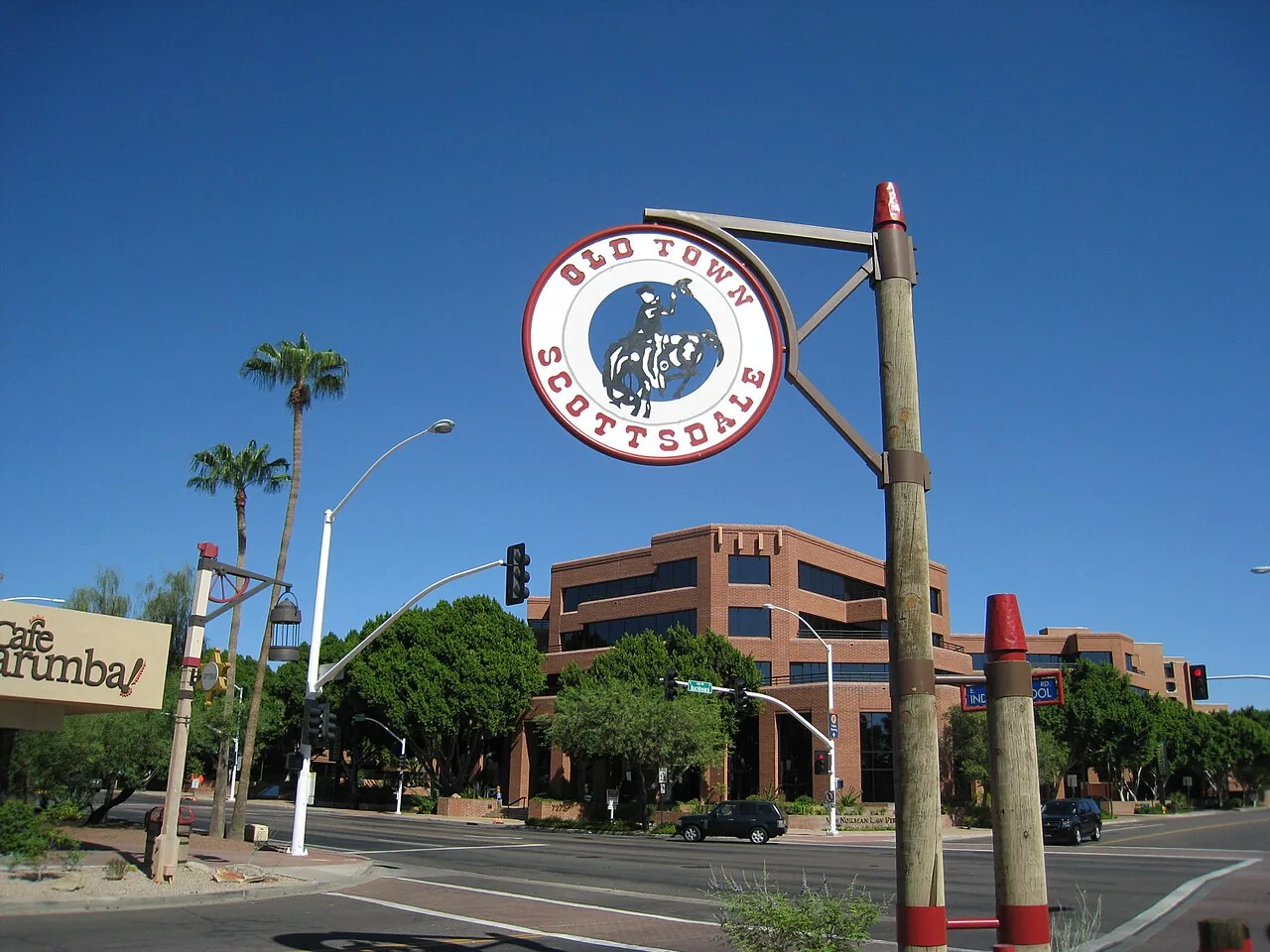
Dining and nightlife. Old Town Scottsdale packs a dense, walkable stretch of restaurants, bars, and lounges — the 5th Avenue, Marshall Way, and Waterfront areas hold a serious concentration of well-regarded kitchens, and the Entertainment District keeps going late. Sedona has good food, but it isn’t a nightlife town and closes early by comparison. If a big group dinner followed by bar-hopping is the point of the trip, Scottsdale wins that outright.
Spas and golf. The resort infrastructure means high-end spas and a wall of golf courses, most of which drop their rates in the heat. For a certain kind of low-effort, high-comfort weekend, that’s the whole appeal.
The honest catch with all of it is that the day is organized around avoiding the sun. That’s a fine trade if lounging is the goal. It’s a worse one if your group is the type that gets restless on a chaise by 2 p.m.
What Sedona does better
Sedona’s advantages are the opposite kind — they reward getting outside and moving, and they lean on scenery Scottsdale can’t match.
Cooler air and cooler nights. That 10-degree daytime break and the much larger nighttime one aren’t just numbers on a chart. They mean a dawn hike is genuinely pleasant, an evening on the patio doesn’t require air conditioning, and you sleep with the windows cracked. Over a weekend, that adds up.
Red rocks and trails. This is the part that isn’t close. Sedona is surrounded by red-rock country, with trailheads minutes from town rather than a drive away. Early mornings before the heat builds are the move — short, high-payoff hikes with the low light raking across the formations. (A quick, honest note: the home sits in West Sedona high desert, so the red rocks are a short drive to the trailheads, not a view from the couch.)
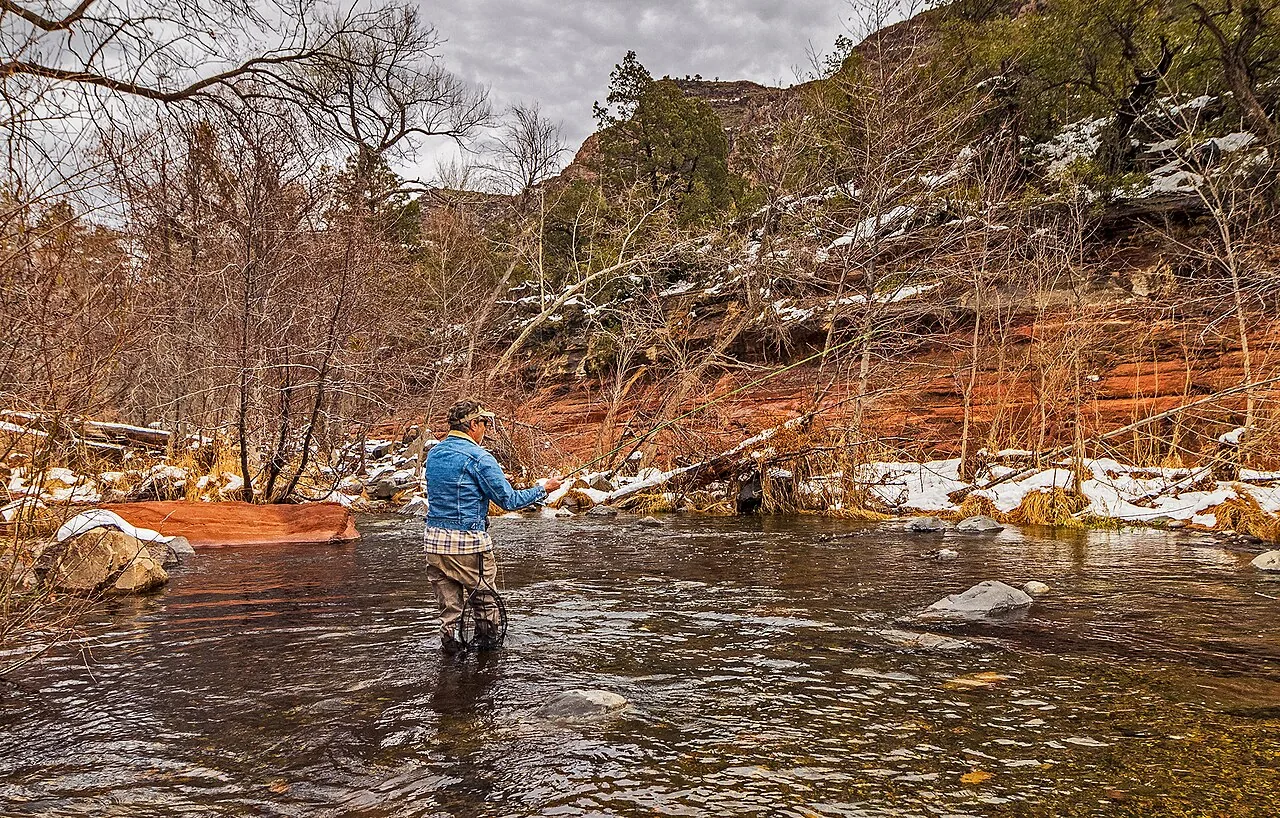
Water that isn’t a pool. When it warms up, Sedona has real creeks. Slide Rock State Park, about seven miles up Oak Creek Canyon, is a natural sandstone water chute with a stretch of creek open for swimming, and it’s exactly where Phoenix and Scottsdale families drive to escape the triple digits. Go early — the lot fills — and check conditions, since summer storms can close the swimming area.
Fewer people than you’d think in summer. Spring and fall are Sedona’s peak. Summer is quieter and better-priced, which is the same value logic that works in Scottsdale, just with milder air attached. If you’re weighing whether the heat rules Sedona out at all, we tackle that head-on in is Sedona too hot in summer.
Pools versus a private court: the real summer difference
Here’s the factor that quietly decides a lot of these weekends, and it’s where the two towns diverge most.
In Scottsdale, beating the heat means going to the water, and the water is shared. On a hot Saturday that can mean staking out chairs early, paying for a cabana, and working around a crowded deck. It’s a pleasant problem, but it’s still a scramble, and a group of eight rarely lands together without planning.
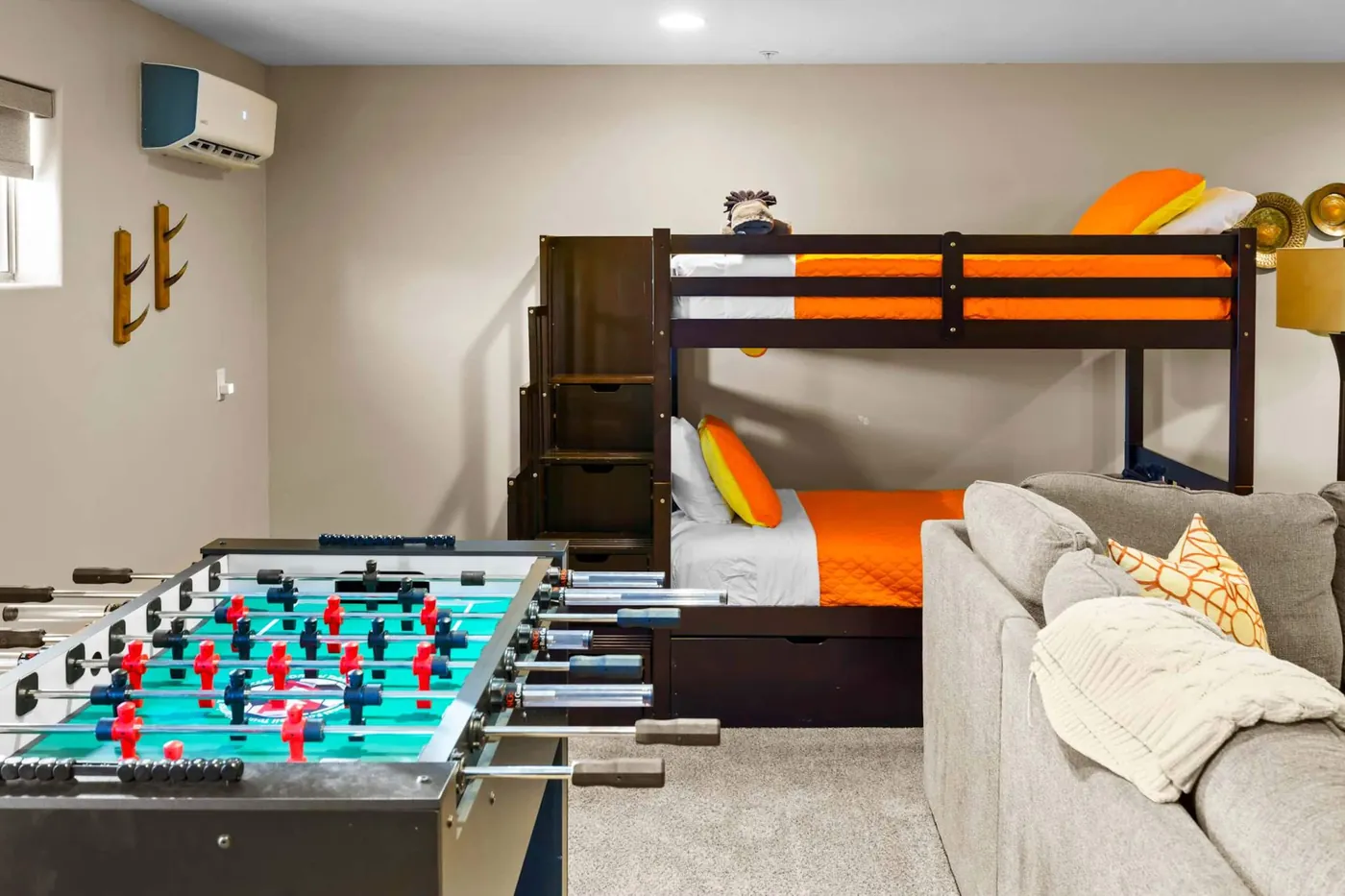
Sedona’s answer, at least at the right rental, is different: instead of retreating to a shared pool, you retreat to a court that’s yours alone. And this is the honest reason the indoor part matters so much. Sedona’s midday is still 97°F in July — an outdoor court would bake just like Scottsdale’s. An indoor, air-conditioned court sidesteps that entirely. You can play a full round-robin at 2 p.m. in comfort while every outdoor court from Phoenix to the Verde Valley sits empty and untouchable. That’s the combination the resort towns can’t really offer for a summer weekend: cooler air outside, and a controlled space inside that the weather never gets a vote on.
If you’re still weighing whether a court you control is worth it over public or club courts, our breakdown of indoor versus outdoor pickleball courts lays out the real trade-offs, and the case for the indoor, no-neighbors setup is covered on our quiet pickleball page.
The drive, and who’s in your group
Practically, these two are close enough that the drive shouldn’t decide anything. Scottsdale to Sedona is about 125 miles, roughly two hours north on I-17. Plenty of people do it as a day trip, though for a summer weekend you’ll want the nights, not just the afternoons, which means staying. If you’re coming up from the wider Phoenix area, our Phoenix getaway guide covers the drive and how to make a short trip count.
Group size tends to tip the scale more than distance. Scottsdale’s resort model is priced per room and per experience — nice for a couple, pricier once you’re feeding and lodging a big group and paying for cabanas and club tabs. A whole-home rental in Sedona folds the lodging, the gathering space, and the court into one nightly rate the group splits, so eight people can play as much as they want without a per-court fee. Which comes out cheaper depends entirely on your headcount and how you like to spend a day.
So which should you pick?
Strip it down to the trip you actually want:
- Pick Scottsdale if the weekend is about the pool, the spa, the restaurants, and a lively night out, and you’re happy to plan the daylight hours around shade and water. Summer is its bargain season, and it delivers that experience better than Sedona ever will.
- Pick Sedona if you want cooler air, red-rock scenery, hiking out the door, and evenings you can spend outside — and if you’d rather be active than lounge. Just go in clear-eyed that midday is still hot, and let the creek, the shade, and an indoor court carry the middle of the day.
For a group that wants to play, hike, and actually be outside in the evening, Sedona’s mix is hard to beat in July. For a group that wants to be waited on beside a pool, Scottsdale is the honest answer. Neither is wrong; they’re just different weekends.
The bottom line
Two hours apart, and the choice really is about temperature and temperament. Scottsdale runs about 10 degrees hotter by day and far hotter at night, and it answers the heat by sending you to a shared pool and a great dinner. Sedona runs cooler on both counts, answers the heat with creeks, shade, red rocks, and — at the right rental — a private indoor court, and asks a little more of you in return: get up early, respect the midday sun, take the evenings outside.
If you want to be pampered, go south. If you want to be cooler and more active, come up the hill. And if this reads like a warmer, sunnier version of a bigger question you’ve been mulling, our three-way Sedona, Scottsdale, and Palm Springs comparison widens the lens beyond a single summer weekend.
Frequently asked questions
Is Sedona cooler than Scottsdale in summer?
Yes, meaningfully. Sedona sits at about 4,350 feet and averages a 97°F high in July, versus roughly 105°F for low-desert Scottsdale at about 1,257 feet — around a 10°F daytime difference. The bigger gap is at night: Sedona cools to about 68°F while Scottsdale stays near 85°F. Sedona is milder, but it’s still hot at midday, not a cool mountain town.
How far is Sedona from Scottsdale?
About 125 miles, or roughly a two-hour drive north on Interstate 17. It’s a common day trip, but for a summer weekend the cooler nights are half the reason to go, so it’s worth staying over rather than driving back the same day.
Which is better for a summer weekend, Sedona or Scottsdale?
It depends on the trip. Scottsdale is better for pools, spas, dining, and nightlife, and summer is its discount season. Sedona is better for cooler air, red-rock hiking, creeks, and evenings outdoors. Active groups tend to prefer Sedona; groups who want to be waited on by a pool tend to prefer Scottsdale.
Is it too hot to play pickleball outdoors in July in either town?
For most of the day, yes. Scottsdale’s 105°F afternoons and Sedona’s 97°F afternoons both make outdoor midday play rough. Early morning is the only comfortable outdoor window in either place. A private indoor, air-conditioned court removes the problem entirely, since the temperature inside never changes with the forecast.
Does Scottsdale or Sedona have better summer value?
Both are cheaper in summer than in their peak seasons, but for different reasons. Scottsdale resorts drop rates because the heat is their off-season. Sedona is quieter than its spring and fall peaks. For a big group, a whole-home Sedona rental that folds lodging and a court into one split rate can pencil out better than per-room resort pricing plus cabanas and club fees.
Play year-round in red rock country
Sedona Pickler is a private Sedona home with its own indoor, climate-controlled pickleball court. Rally any season, any hour — heated, cooled and lit, with paddles and balls provided.
Check dates & book