Antelope Canyon & Horseshoe Bend Day Trip from Sedona

Some of the most photographed scenery in the American Southwest sits about two and a half to three hours north of Sedona, around the town of Page, Arizona: the glowing slot walls of Antelope Canyon and the big sweeping curve of the Colorado River at Horseshoe Bend. It’s a genuinely worthwhile trip, but it’s also a long one, with a hard rule you can’t get around — you cannot walk into Antelope Canyon on your own, so you have to book a Navajo-guided tour ahead of time. This guide walks through how to plan the day honestly: what’s actually there, how far it is, the time-zone trap that makes people miss their tours, what it really costs, and how to keep the heat and the crowds from ruining it.
What’s up there and why it’s worth the drive
Page is a small town near the Arizona–Utah border, perched on Manson Mesa at about 4,300 feet, built in the 1950s to house workers constructing Glen Canyon Dam. Today it’s the jumping-off point for three big draws clustered within a few miles of each other:
- Antelope Canyon — a slot canyon (really two main sections, Upper and Lower) on Navajo Nation land, where wind and flash floods have carved sandstone into smooth, wavy, glowing walls. When midday sun drops into the narrow openings, the rock lights up orange, red, and purple.
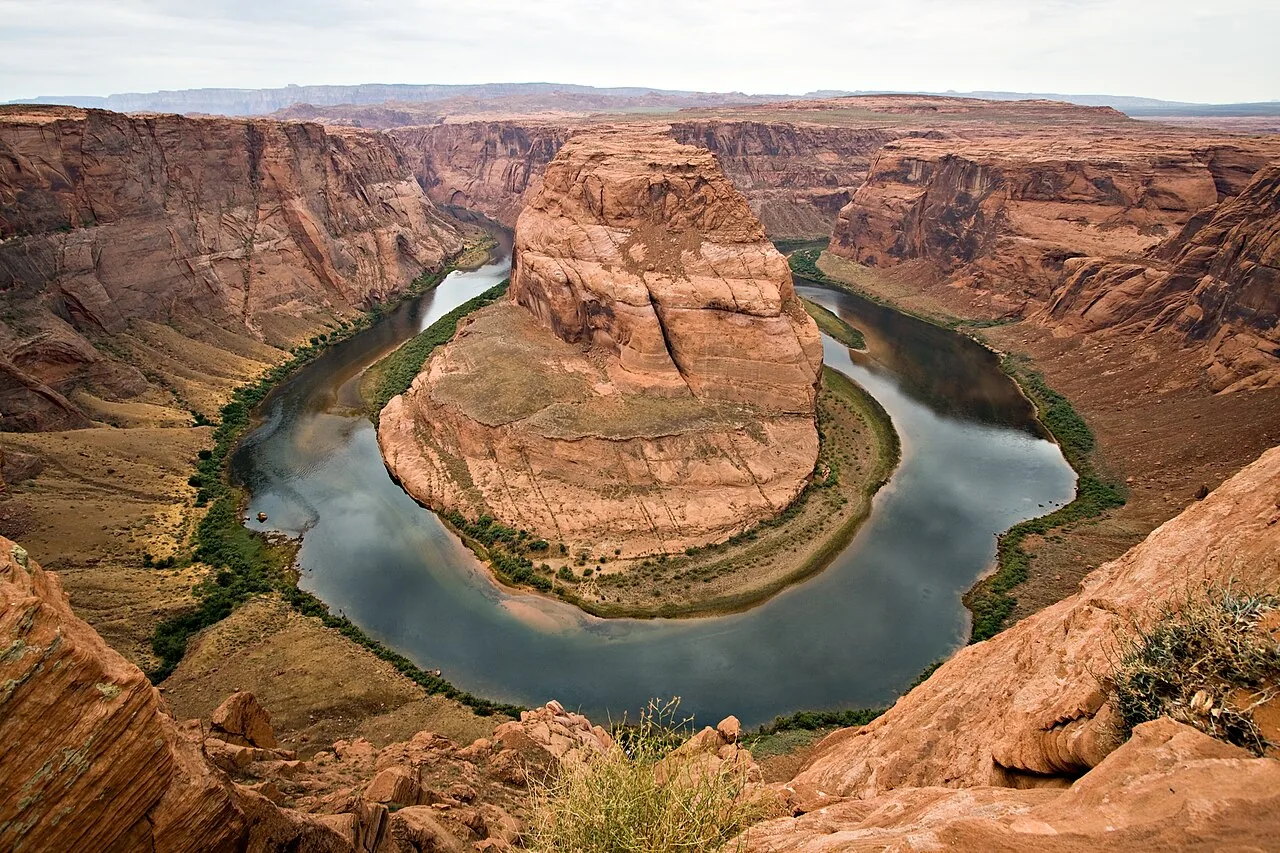
- Horseshoe Bend — a dramatic overlook where the Colorado River wraps a full horseshoe around a sandstone butte, a thousand feet below you (the rim sits near 4,200 feet, the river around 3,200).
- Glen Canyon Dam and Lake Powell — the dam that created Lake Powell, with a free visitor center perched on the canyon rim and big water views.
The honest pitch: the scenery is the real deal and the photos don’t oversell it. The catch is that it’s a popular, tightly managed place. You’re sharing the canyon with other groups, you’re on a guide’s schedule, and in summer it is genuinely hot. Go in with the right expectations and a confirmed tour, and it’s one of the best day trips in the state.
How to get there from Sedona
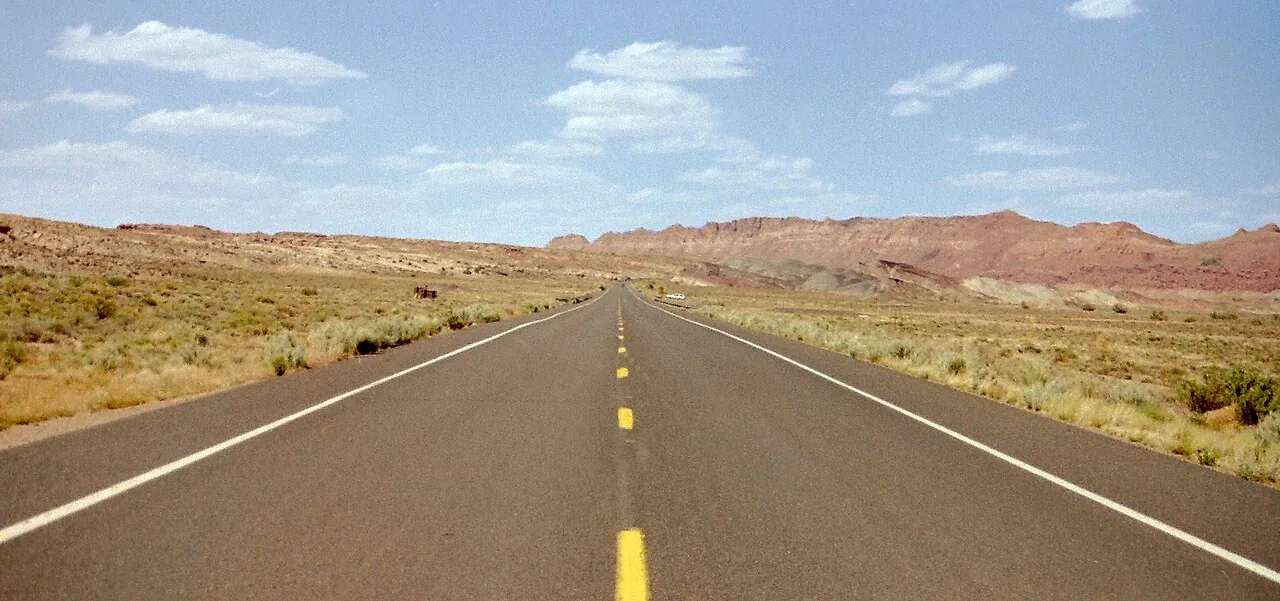
The drive from Sedona to Page runs roughly 160 miles and takes about 2.5 to 3 hours one way, depending on where in Sedona you start and how the traffic moves through Flagstaff.
The usual route:
- Take AZ-89A up through Oak Creek Canyon and into Flagstaff (this stretch alone is one of the prettiest drives in the state — see our Oak Creek Canyon drive guide).
- Pick up US-89 North out of Flagstaff.
- Follow US-89 across wide-open high desert, past the turnoff for the Cameron Trading Post, all the way into Page.
A few practical notes:
- Fuel up in Flagstaff or Cameron. Once you leave Flagstaff, services get sparse. Don’t gamble on finding gas in the open stretches.
- The Cameron Trading Post sits right on US-89 at the Little Colorado River, about 30 miles north of Flagstaff and 83 miles south of Page — so it lands roughly halfway. It’s been operating since 1916, with a restaurant of the same vintage: a real, long-established stop with clean restrooms, a sit-down meal, and Navajo crafts, not a tourist trap that sprang up last year.
- Oak Creek Canyon (AZ-89A) can back up, especially on summer weekends and during fall color. If you’re getting an early start, the canyon will be calm; on the way home in the evening it can crawl.
- Build in slack. Between a possible Cameron stop, restrooms, and the canyon’s strict check-in window, the day eats time faster than the raw mileage suggests. Pad your departure over whatever your map app says.
The time-zone trap — read this twice
This is the single most common way people blow their day, so slow down here.
Most of Arizona does not observe Daylight Saving Time. The Navajo Nation, which surrounds Page and contains Antelope Canyon, does observe Daylight Saving Time to stay in sync with its communities in Utah and New Mexico — its clock always matches Albuquerque. So for roughly half the year, the land around Page is technically an hour different from the rest of Arizona.
Here’s what actually matters for you: the tour companies run on Page, Arizona time (Mountain Standard, no daylight change) and they tell every visitor to book and show up on that clock. The trouble starts when your phone picks up a cell tower on Navajo land, “helpfully” springs your clock forward an hour, and you arrive 60 minutes late to a tour that does not wait.
How to not get burned:
- Confirm your tour time on Page/Arizona time when you book, and write it down.
- Don’t trust your phone’s auto time near Page in spring through fall. Turn off “set automatically” the night before, or keep a second offline reference (a watch you set in Sedona) and ask your guide company what time it is locally.
- Arrive 45 minutes early. The operators ask for this for check-in anyway, and it’s your buffer against any time confusion.
Antelope Canyon: Upper vs. Lower (and a quieter third option)
You cannot enter Antelope Canyon by yourself. It’s on Navajo Nation land and access is only through an authorized Navajo-guided tour, booked in advance. There is no “just park and walk in.” Plan on reserving your spot, ideally weeks ahead in the busy season — and note that some operators only open tour slots about one to two months out, so the prime midday departures sell out fast once they appear.
There are two main sections, plus a lesser-known third:
Upper Antelope Canyon
This is the famous one — the postcard shots with the light beam spearing down through dust. It’s at ground level with an almost flat walk (a gentle, barely-there incline), which makes it the easier choice if stairs are a problem. It’s also the most crowded section in the Southwest, so you’ll be moving with the flow of other groups and you won’t get the place to yourself.
- Best for: the classic light beams, easiest walking.
- Trade-off: the most people, and you’re kept moving.
Lower Antelope Canyon
Lower is a “V” shape that’s narrower at the bottom and more open at the top. Getting in and out means several flights of metal stairs and ladders, so it’s more of a workout and not a fit for everyone. In return, it tends to feel a little less mobbed, runs cheaper than Upper, and many people find it more photogenic in a quiet way. Tours here typically last a touch longer too, which gives you a bit more breathing room between groups.
- Best for: a bit more solitude, people who don’t mind stairs, a lower price.
- Trade-off: not accessible if you can’t manage steep ladders.
Antelope Canyon X
A third, less-traveled entry. It has both bright and shadowed chambers, so it photographs well at a range of times rather than only at high noon, and it’s noticeably less overrun. It tends to be the priciest of the three and the drive to the trailhead is a bit longer, but if the main two are sold out, or you just want fewer elbows, it’s a real option worth asking about.
| Upper Antelope Canyon | Lower Antelope Canyon | Antelope Canyon X | |
|---|---|---|---|
| Walking | Flat, ground level | Stairs & ladders | Moderate, some stairs |
| Crowds | Heaviest | Moderate | Lightest of the three |
| Light beams | Yes, midday in summer | Diffused, softer | Varies; good range |
| Relative price | Higher | Lowest | Highest |
| Best for | Beam photos, easy access | A little more quiet, value | Avoiding crowds |
Local tip: Book directly with a Navajo-authorized tour operator out of Page, and book it before you book anything else for the day — the rest of the trip can flex around it, but the canyon tour can’t. The official Navajo Nation Parks site lists the authorized operators if you want to confirm a company is legit, and booking direct usually beats third-party resellers on price.
What a tour actually costs
Plan for the canyon to be the priciest single item of the day. As a 2026 ballpark per adult, Lower Antelope runs roughly $70–95, standard Upper around $105–135, the light-beam Upper slot about $130–155, and Canyon X roughly $120–175 — and those figures already fold in the customary guide tip. On top of the tour, the Navajo Nation charges a separate entry fee of about $15 per person, per location, per day, which some operators bundle into the ticket and some collect on arrival, so ask which it is. Kids’ rates are lower. Treat these as ranges and confirm the current number when you book, since prices drift and prime departures cost more than early-morning ones.
Best time of day and best season
For Upper Antelope Canyon light beams, you want the sun high overhead. That means midday, roughly 11 a.m. to 1:30 p.m., on a sunny day, during the high-sun months — generally late spring through early fall (May through September), with the strongest beams within about a month of the summer solstice in late June. Outside that window the canyon is still beautiful; you just won’t get those dramatic shafts of light.
Lower Antelope actually lets in more ambient light, so it can look great in the morning. Canyon X is forgiving across the day.
Season-wise:
- Spring (Mar–May): mild temperatures, light beams ramping up by late spring. Strong choice.
- Summer (Jun–Aug): peak light beams, peak crowds, peak heat, and monsoon flash-flood season (more on safety below). The midday slots book out furthest in advance now.
- Fall (Sep–Oct): beams fading but weather pleasant and crowds easing. A sweet spot for comfort.
- Winter (Nov–Feb): no beams, fewest people, lowest prices, cold mornings. Fine if you mainly want the canyon’s shapes and colors without the mob.
A weekday will always beat a weekend for crowds, and the first or last departure of the day tends to be calmer than the prime midday slots. If your goal is the canyon’s color and texture rather than a beam, an early-morning Lower tour midweek is about as peaceful as Antelope Canyon gets.
Horseshoe Bend
Horseshoe Bend sits about 5 miles south of Page, just off US-89. It’s quick and it does not require a tour — but it’s not quite the drive-up-and-glance stop some people expect.
- The walk: about 1.5 miles round trip from the parking lot to the overlook and back, on a hardened sand path. It’s mostly flat with a gentle rise; budget about 20 minutes each way.
- Parking fee: the City of Page runs the lot and charges a per-vehicle fee (commonly around $10 per car, $5 per motorcycle; confirm the current rate). Cash and card are usually accepted. Note that National Park Service passes do not cover this lot — it’s the city’s, not the Park Service’s.
- Facilities: the lot is large and paved with restrooms and shade ramadas, but there’s no shuttle and no shade at the overlook itself. There are a couple of covered rest spots along the trail and that’s it; the path is exposed, so in summer this short walk can be brutal at midday.
The no-guardrail reality
The viewing platform at the very end has railings. The rest of the rim does not. Beyond the developed overlook, you’re standing on open sandstone with a thousand-foot drop and nothing between you and the edge. People take this too casually every year, and there have been fatal falls.
- Keep well back from the unprotected rim, especially in wind.
- Hold onto kids the entire time. This is not the place to let them wander toward the edge for a photo.
- Don’t back up while looking through a camera or phone. Look where your feet are.
- Skip the rim entirely in rain or lightning — wet, sloped sandstone near a thousand-foot drop is no place to be.
The light is best at sunset, when the canyon walls warm up and the river catches color — but that’s also the most crowded time, and parking can fill. Mid-morning is a good compromise for fewer people and decent light, and you’ll be done before the worst of the afternoon heat. If you’re chasing sunset, get to the lot well before golden hour to claim a spot.
Glen Canyon Dam and Lake Powell
Two miles north of Page, the Carl Hayden Visitor Center sits right on the rim above Glen Canyon Dam. The exhibits and the overlook are free, and there’s a glass wall and outdoor terrace looking straight down the canyon to the Colorado River and out over Lake Powell. It’s an easy, low-effort stop, and a good place for restrooms and air conditioning in the middle of a hot day.
- Guided dam tours descend by elevator to the powerplant floor and run about 45 minutes. Groups are capped (around 20 people including kids), and as of our last check reservations can be made up to 24 hours in advance — by phone or in person — rather than booked far ahead. Spots are limited, so call ahead (the visitor center line, around 928-608-6072) or ask the moment you arrive rather than counting on a walk-up slot.
- Hours shift by season: roughly 8 a.m.–6 p.m. in summer, shorter (about 8:30 a.m.–4:30 p.m.) in winter, and closed on major holidays. Check current hours before you build your plan around it.
- A short walk from the visitor center delivers a railed overlook with sweeping views of the dam, the lake, and the first bends of Glen Canyon.
If you have extra time and it’s warm, Lake Powell is worth a look — Wahweap, just north of the dam, is the main marina area, with boat rentals and beaches. That’s easily its own half-day, though, so most Sedona day-trippers just take in the views from the rim.
What to bring
The desert around Page is high, dry, and exposed. Pack like you mean it:
- Water — more than you think. There’s little to no shade at Horseshoe Bend and you’ll be on your feet in the sun. A liter or two per person in summer is not overkill.
- Sun protection: hat, sunglasses, sunscreen, and ideally a light long-sleeve layer. The sun up here is no joke.
- Closed, sturdy shoes with grip. Antelope Canyon is sandy and, in Lower, involves ladders; Horseshoe Bend is a packed trail. Sand gets into everything, so skip the open sandals.
- A small daypack so your hands are free on stairs and near the rim. Many tours restrict large bags and backpacks anyway.
- Cash or card for fees — the Horseshoe Bend parking fee, the Navajo entry fee, your tour cost, and a guide tip.
- Snacks, since the day is long and food options between sights are limited. Don’t plan to find a quick lunch between every stop.
- A light layer for shoulder-season mornings. Page sits high enough that spring and fall mornings can start near freezing before warming up fast.
- Camera or phone, plus the right expectations (see below). Tripods, selfie sticks, and large bags are often not allowed inside Antelope Canyon tours — check your operator’s rules first.
Photography tips
Antelope Canyon is one of those places that rewards a few minutes of prep:
- Listen to your guide. Many Navajo guides know exactly where to stand and will help frame shots and even suggest phone camera settings — they do this all day.
- Bump up exposure slightly. Phones and cameras tend to underexpose the dark canyon, leaving photos muddy. A touch more brightness brings out the color.
- Shoot in HDR or RAW if your phone offers it. The contrast between glowing walls and deep shadow is extreme, and a wider dynamic range saves the highlights.
- Skip the flash. It flattens the natural glow.
- For light beams, you need the midday-summer combination described above, and the beams come and go in minutes — be ready, and don’t spend them fumbling with settings.
- Tripods are usually restricted on standard sightseeing tours. If serious photography is your goal, ask whether a dedicated photography tour still exists for the section you want; availability has changed over the years and several operators have dropped them, so confirm directly.
At Horseshoe Bend, the curve is so large that many phones can’t fit it in one frame even on the wide setting, so a panorama helps. Mornings give you softer light and fewer silhouettes than harsh midday.
Accessibility
- Upper Antelope Canyon is the most accessible section: ground-level and nearly flat, though it’s still sand underfoot and you’ll be in a moving group, which can be tight.
- Lower Antelope Canyon involves steep stairs and ladders and is not suitable if you can’t manage them.
- Horseshoe Bend’s trail is built to be barrier-free — a hardened, stroller- and wheelchair-friendly path roughly 1.5 miles round trip — but it has little shade and an open, unprotected rim at the end. Manual wheelchair users may want a push on the slight rise back from the overlook.
- Carl Hayden Visitor Center is the easiest stop of the day, with accessible parking, restrooms, and railed overlooks.
If mobility or stairs are a concern, build the day around Upper Antelope plus Horseshoe Bend’s overlook plus the dam visitor center, and skip Lower. That combination still delivers the headline scenery without the ladders.
Making it a full day (or an overnight)
This is a long day from Sedona. Round-trip driving alone is roughly 5 to 6 hours, on top of a timed canyon tour, the Horseshoe Bend walk, and the dam. It’s doable as a single day if you start early and accept a late return — but it’s a lot.
A reasonable one-day flow:
- Leave Sedona early (think dawn) and drive up via Flagstaff, with a quick stop at Cameron if you need fuel or breakfast.
- Mid-to-late morning: Horseshoe Bend, before the heat and the worst crowds.
- Midday: your booked Antelope Canyon tour (timed for light beams if it’s beam season).
- Early afternoon: Carl Hayden Visitor Center for the dam and lake views, plus restrooms and shade.
- Drive home, ideally finishing the Oak Creek Canyon stretch before full dark, since that winding road is no fun to drive tired in the dark.
Honestly, though, consider staying a night in Page. It turns a rushed marathon into a relaxed two-day trip, lets you catch Horseshoe Bend at sunset and the canyon in the best light without watching the clock, and saves you a tired night drive back through the mountains. Page has a cluster of mid-range hotels and chain restaurants, so it’s an easy overnight to arrange. If you’d rather not give up a night, that’s fine — just go in knowing it’s a full, early-to-late day.
And if you do drive home the same evening: there’s a real comfort in pulling back in and shaking off the road. For us, that’s a few easy rallies on the indoor court before dinner — a nice way to loosen up after hours in the car. (Stay at Pickler House if you haven’t booked yet.)
Safety notes
- Flash floods are the serious risk in slot canyons, mainly during summer monsoon season — Arizona’s monsoon officially runs June 15 through September 30, with the most intense storms typically mid-July through mid-August. Rain miles away can send water surging through Antelope Canyon: the 1997 disaster that killed eleven people in Lower Antelope came from a storm about seven miles upstream, with very little rain falling at the canyon itself. Your Navajo guide service monitors conditions and will cancel or reroute tours when there’s danger — respect that completely. Don’t argue with a closure, and don’t try to talk your way in.
- Heat is the everyday risk. Summer afternoons regularly top 100°F. Hydrate constantly, take the shade where you find it, watch for dizziness or headache, and don’t push the Horseshoe Bend walk at high noon if you’re struggling.
- The unguarded rim at Horseshoe Bend is exactly as dangerous as it looks. Treat the edge with respect; mind children and your own footing.
- Cell service is patchy out on US-89. Download offline directions and your tour confirmation ahead of time, and tell someone your plan.
- Fuel and water before the empty stretches. It’s a long way between services once you’re out of Flagstaff, and the gap between Cameron and Page has almost nothing.
- Watch for open range at dusk on the drive home; cattle and deer near the highway are a real hazard after dark.
What to pair it with nearby
Because Page is so far north, it pairs naturally with other far-north destinations rather than with Sedona’s in-town sights:
- The Grand Canyon’s east entrance (Desert View) is on the way back toward Flagstaff via US-89 and AZ-64, making a combined trip possible if you have the stamina — see our Grand Canyon day trip guide.
- Cameron Trading Post for food, Navajo crafts, and a bathroom break, right on the route.
- Lake Powell / Wahweap if you want to add water time near Page itself.
Closer to home, save the relaxed stuff for the day after a big drive: a slower morning, an easy walk, or one of Sedona’s easy hikes is a much better fit than another marathon. If you’d rather see big scenery without the three-hour haul north, our scenic byway guide covers the red-rock drives right on Sedona’s doorstep. And when you’re back in town and want the day’s best light without leaving the red rocks, our sunset spots guide has the local payoff that doesn’t require a long drive at all.
A final word on planning: prices, hours, fees, and tour schedules up here change — sometimes seasonally, sometimes year to year. Treat every number in this guide as a ballpark and confirm the current details directly with the tour operator, the City of Page (for Horseshoe Bend parking), and the National Park Service (for Glen Canyon) before you go. Book your canyon tour first, set your clock to Page time, bring more water than feels necessary, and you’ll have a great day up north.
Frequently asked questions
Do I need to book an Antelope Canyon tour in advance?
How long is the drive from Sedona to Page?
What's the deal with the time zone in Page?
Should I do Upper or Lower Antelope Canyon?
Is there a fee at Horseshoe Bend?
Is Horseshoe Bend safe for kids?
Stay where you can rally any season
Sedona Pickler is a private West Sedona vacation home with its own indoor, climate-controlled pickleball court — a short drive from the trailheads, viewpoints and restaurants in this Sedona guide. Play at sunrise or after dark, in any weather.
Check availability on Airbnb