Grand Canyon Day Trip from Sedona
The Grand Canyon is close enough to Sedona that you can leave after coffee and be standing on the South Rim before lunch. It is also a long, full day — figure twelve hours door to door once you factor in the drive, the entrance line, the walking, and the inevitable “one more viewpoint” before you head home. Done right it is one of the best days you can have in northern Arizona; done in a rush it is a lot of driving for a few crowded photos. Here is how to do it right.
What it is, and why it’s worth a day from Sedona
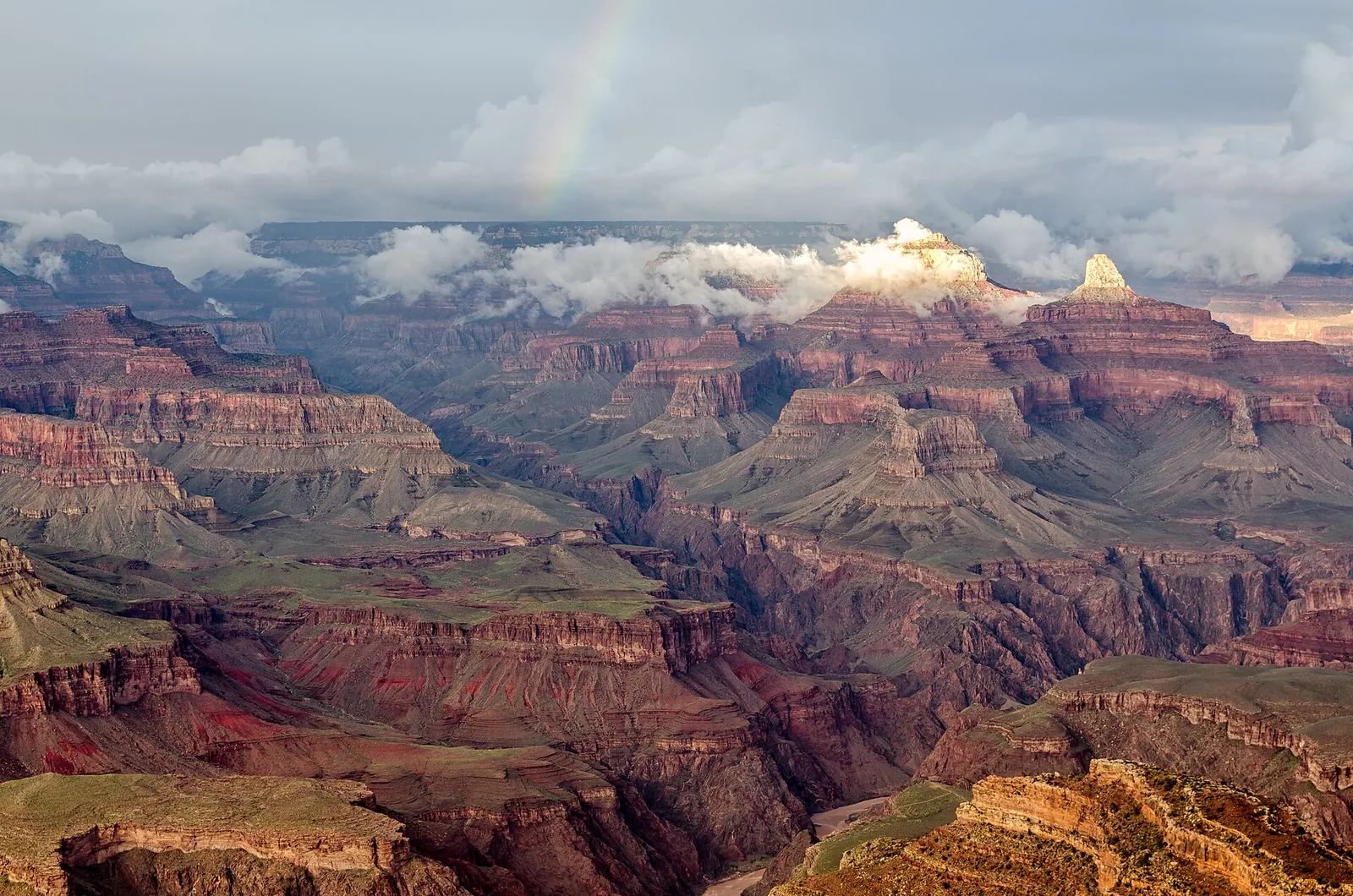
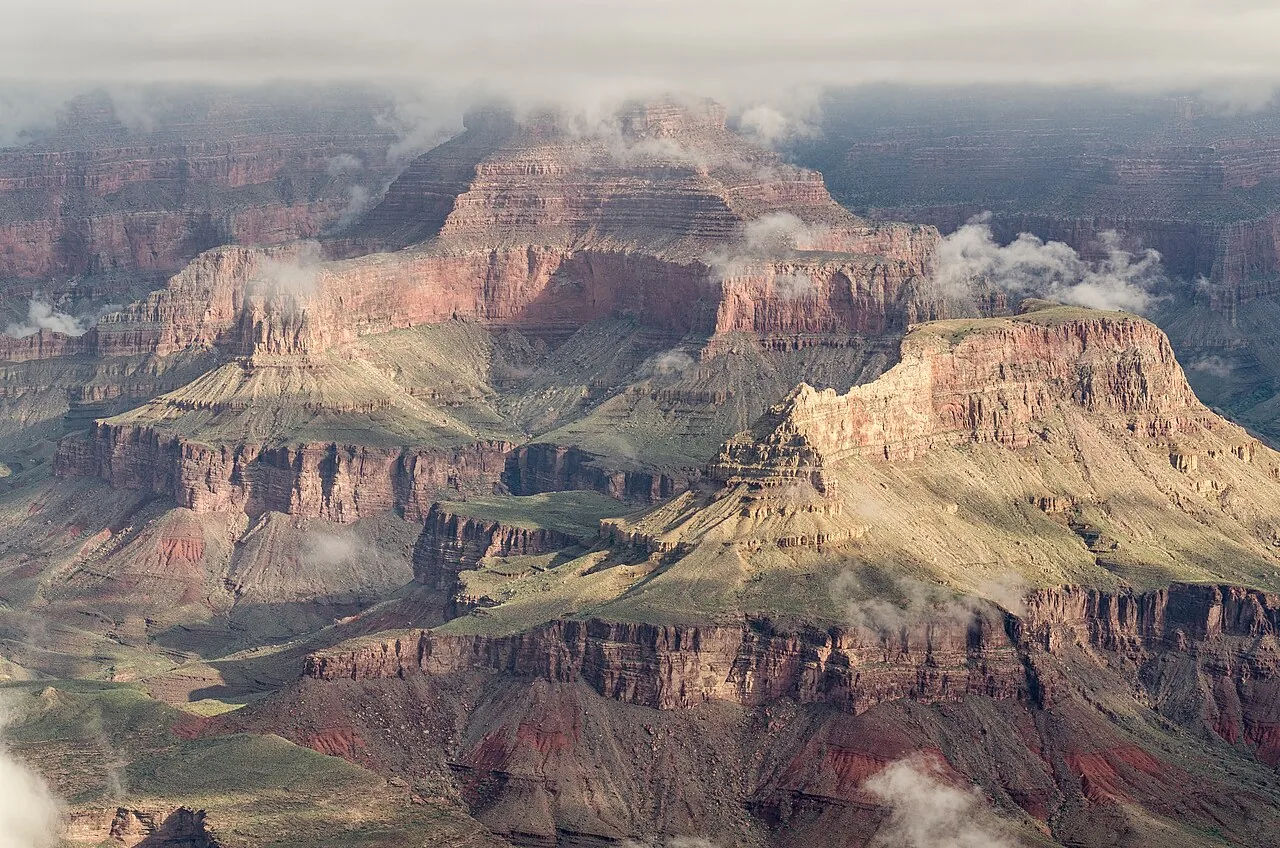
The Grand Canyon needs little introduction: a mile-deep, 277-mile-long gorge carved by the Colorado River, exposing close to two billion years of rock in bands of red, ochre, and slate. From Sedona you’re aiming for the South Rim, the developed, year-round side with the famous viewpoints, the visitor center, the free shuttle system, and Grand Canyon Village. It sits at about 7,000 feet of elevation, which is roughly 2,500 feet higher than Sedona — so it’s cooler up there, often by 15 to 20 degrees, and that matters for what you pack.
A few honest notes before you commit the day:
- It is genuinely far enough that this is a dedicated day trip, not a “swing by on the way to something else” stop. Once you’re at the rim you’ll want at least three or four hours, and you’ve already burned four-plus hours round-trip just driving.
- The South Rim is busy, especially from late spring through early fall and on weekends. Mather Point — the first overlook most people hit — can feel like a theme park at midday.
- The North Rim is a completely different story. It’s roughly four to five hours away by road (the rim-to-rim drive loops all the way around through Marble Canyon), and it’s only open seasonally. For a day trip from Sedona, skip the North Rim entirely. Everything below is about the South Rim.
If the canyon is the headline of your Sedona trip, give it its own day and don’t try to tack on a sunrise hike beforehand. You’ll want the energy.
How to get there: routes, drive time, and parking
The South Rim is about 110 miles from Sedona, roughly 2 to 2.5 hours of driving without stops. There are two sensible ways to go, and most people do one on the way up and the other on the way back.
Route 1 — The fast, scenic way via Oak Creek Canyon and Flagstaff
This is the route most Sedona visitors take, and it’s also the prettier one:
- Head north out of Sedona on AZ-89A up through Oak Creek Canyon — a twisting, switchbacking climb past the Mogollon Rim into the pines. It’s slow (and the switchbacks near the top of the canyon are tight), but it’s gorgeous.
- Through Flagstaff, where you pick up I-40 west briefly, then AZ-64 north from Williams up to the South Entrance.
If you’d rather not do the Oak Creek switchbacks, you can take AZ-179 south to I-17 north to Flagstaff instead — it’s a smoother, faster freeway climb and adds only a little time. Either way you converge on Flagstaff.
Route 2 — The longer Desert View (east) approach
Instead of entering at the busy South Entrance near the village, you can stay on I-40 east past Flagstaff and come up to the canyon’s East Entrance via AZ-64 / Desert View Drive. You enter near the Desert View Watchtower and drive the 23-mile Desert View Drive west into the village, hitting overlooks along the way. It adds time and miles, but it lets you arrive at the watchtower end first (often quieter early) and work your way to the village — a nice loop if you have a guide or you’re an early starter.
Local tip: Do the loop. Drive up the Oak Creek Canyon / Flagstaff way in the morning, enter at the South Entrance, then leave the park via the East Entrance and Desert View on the way home. You see Desert View and the eastern overlooks without backtracking, and you split the crowds.
Parking once you’re there
Parking is the single biggest headache by late morning. The lots at the Grand Canyon Visitor Center (near Mather Point) fill first. Your best move:
- Arrive before 9–9:30 a.m. to get a real shot at the visitor center lots.
- If those are full, park in Grand Canyon Village (Lots A, B, C, D near the lodges and Market Plaza) and ride the free Village (Blue) Route shuttle over.
- Once your car is parked, leave it. The free shuttles cover everything you’d want to see, and the village area is awful to drive around at peak.
Fees, passes, and what you’ll pay to get in
Grand Canyon National Park charges an entrance fee, and it’s good for seven consecutive days — so you only pay once even though you’re only there for one.
| Pass type | Cost | Notes |
|---|---|---|
| Private vehicle (1 car, all occupants) | ~$35 | Best value for a family or group; valid 7 days |
| Motorcycle | ~$30 | Per motorcycle |
| Individual (on foot or bike) | ~$20 | Per person, not relevant if you’re driving |
| America the Beautiful annual pass | ~$80 | Covers all U.S. national parks/federal sites for a year |
A couple of important things:
- The park is cashless. You cannot pay the entrance fee in cash at the gate — bring a credit or debit card, or pay/reserve your pass ahead of time online.
- Non-U.S. residents now face an additional per-person fee (introduced in 2026) on top of the standard entrance fee unless they hold an annual or America the Beautiful pass. If you’re visiting from abroad, check the current rules before you go.
- Note that the Red Rock Pass you may have bought for parking at Sedona-area trailheads in the Coconino National Forest does not work here. The Grand Canyon is a national park with its own fee — different agency, different pass.
Prices and the exact non-resident rules can change, so confirm current fees on the National Park Service site (nps.gov/grca) before you leave.
What to actually do in one day
You can’t see the whole South Rim in a day, and trying to will just stress you out. Here’s a realistic, satisfying plan that hits the highlights.
1. Mather Point and the visitor center
Mather Point, right by the main visitor center, is most people’s first look — and it’s a stunner, a railed overlook that drops straight into the canyon. It’s also the most crowded spot in the park. Take it in, snap your photos, then move on; the views get better and quieter as you walk away from here.
2. The Rim Trail
The Rim Trail is the best easy walking at the South Rim — a mostly paved path that runs roughly 13 miles along the edge from the South Kaibab Trailhead in the east out to Hermits Rest in the west. You don’t walk the whole thing. The gem is the section from Mather Point to Yavapai Point, a little over half a mile of paved, nearly flat trail past the excellent Yavapai Geology Museum, with constant canyon views and a glimpse of the Colorado River far below.
Because the Rim Trail parallels the shuttle routes with frequent stops, you can walk a stretch in one direction and catch a bus back — no backtracking required. Walk until you’ve had enough, then hop on.
3. The free shuttles, especially Hermit Road
The park’s free shuttle system (included with entry) is the smart way to get around, and Hermit Road / the Hermits Rest (Red) Route is the one you don’t want to miss:
- Village (Blue) Route — loops through Grand Canyon Village: lodges, Market Plaza, visitor center. Runs year-round.
- Kaibab Rim (Orange) Route — serves Yavapai Geology Museum, the South Kaibab Trailhead, and Yaki Point (which is closed to private cars, so the shuttle is the only way in). Runs year-round.
- Hermits Rest (Red) Route — the scenic showpiece. It runs the 7-mile Hermit Road west from the village past a string of the rim’s best overlooks — Hopi Point and Pima Point among them — out to historic Hermits Rest.
Here’s the key thing about Hermit Road: from roughly March through November it’s closed to private vehicles and shuttle-only. You ride the Red Route. In the deep off-season (about December through February) you can drive it yourself. For most visitors, that means budgeting an hour or two to ride the Red Route out and back, hopping off at a couple of overlooks. Hopi and Pima Points are among the finest viewpoints in the whole park, and many people skip them — don’t.
4. Desert View Watchtower
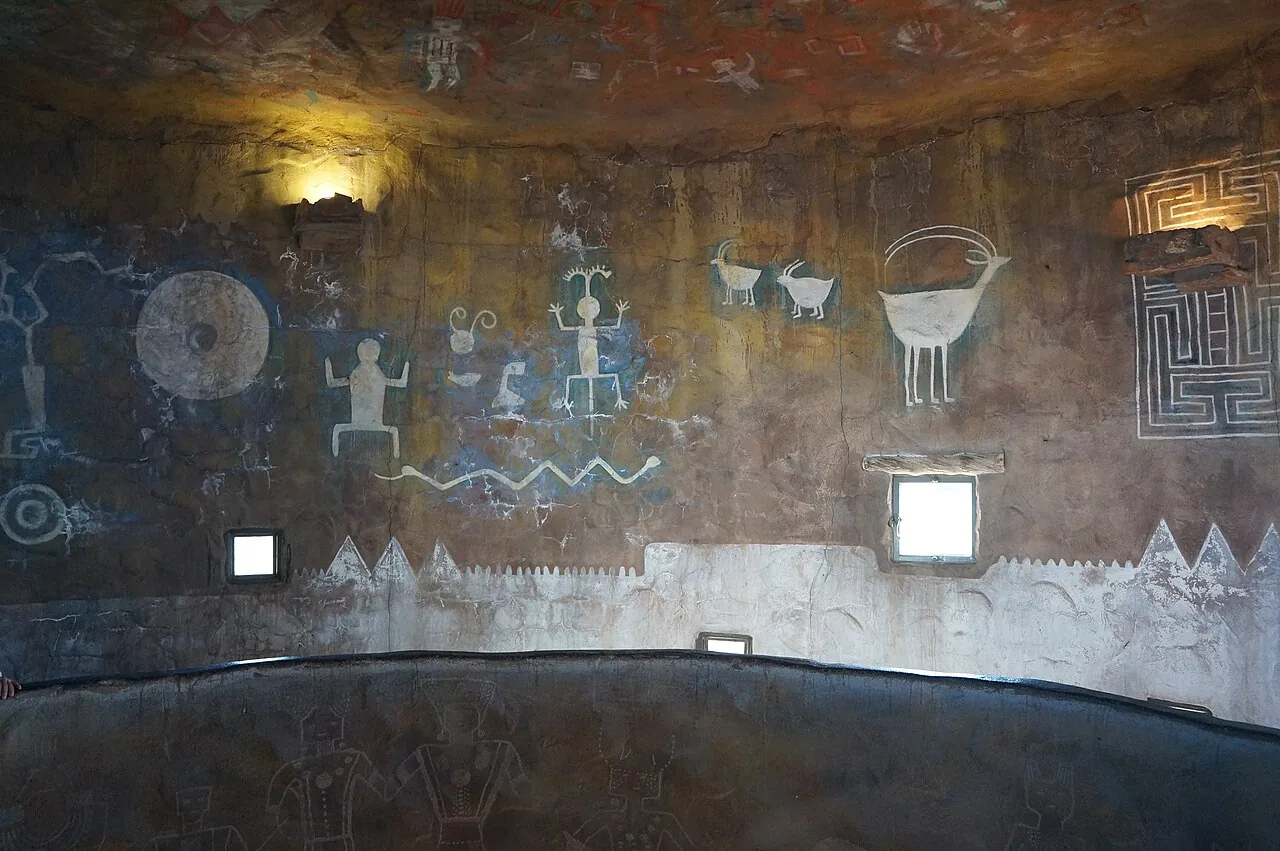
If you take the eastern route home (or you have the time), drive Desert View Drive (AZ-64) 23 miles east of the village to the Desert View Watchtower. Designed by architect Mary Colter and completed in 1932, this 70-foot stone tower draws on Ancestral Puebloan architecture, and the interior is painted with murals by Hopi artist Fred Kabotie. Climbing the tower is free, but it works on a first-come timed-ticket system with limited capacity, so there can be a short wait at busy times. The store and view room are open longer than the tower’s upper floors, so check posted hours when you arrive.
5. Sunset
If you can swing staying late, sunset at the South Rim is the payoff — the canyon walls light up and the crowds thin as the day-trippers leave. Hopi Point (on Hermit Road) and Yaki Point (Kaibab Route) are classic sunset spots. Just remember: a sunset finish means a dark two-plus-hour drive home, including the Oak Creek Canyon switchbacks if you go that way. Watch for elk and deer on the roads after dark; they’re a real hazard between Flagstaff and the canyon.
Best time of day and season
Time of day: Get there early. An arrival by 9 a.m. means easier parking, cooler air, softer light, and a couple of hours before the tour buses and midday crush land. The middle of the day (roughly 11 a.m. to 3 p.m.) is the busiest and, in summer, the hottest and haziest. Early morning and late afternoon are both better for photos and crowds.
Season:
- Spring (Apr–May) and fall (Sep–Oct) are the sweet spot — mild rim temperatures, smaller-than-summer crowds, comfortable hiking.
- Summer (Jun–Aug) is peak everything: longest days, biggest crowds, fullest parking lots, and afternoon monsoon thunderstorms in July and August (which can actually make for dramatic skies, but get off exposed points if lightning rolls in).
- Winter (Dec–Feb) is quiet and often spectacular with snow on the red rock, but the rim gets genuinely cold, and snow and ice are real concerns — both on the canyon’s paved paths and on the drive up. Roads can close or require chains; check conditions before you go and don’t underestimate the Oak Creek Canyon climb in winter.
What to bring
The rim is high, dry, sunny, and cooler than Sedona, so pack for all of it:
- Water — lots of it. The air is dry and the elevation sneaks up on you. There are free water-refill stations at the village and visitor center; bring a refillable bottle.
- Layers. Mornings and evenings are cold even in summer; a packable jacket earns its place.
- Sun protection — hat, sunglasses, sunscreen. The high-altitude sun is no joke.
- Real walking shoes. Even rim walking adds up to a few miles.
- Snacks and/or a packed lunch. Food is available in the village (cafeteria, market deli, the El Tovar dining room) but it’s limited, can be busy, and isn’t cheap. Packing a lunch saves time and money.
- A full tank of gas. Fill up in Flagstaff or Williams. There’s gas at the canyon (Desert View and near the village), but it’s pricier and not always where you need it. Don’t let the tank run low.
- A paper map or downloaded offline map. Cell service is spotty to nonexistent in much of the park.
Accessibility
The South Rim is one of the more accessible national park experiences:
- The paved Rim Trail between Mather and Yavapai Points is largely flat with only short graded sections, and most of the main overlooks (Mather, Yavapai, Hopi, and others) have paved access and railings.
- The shuttles are wheelchair-accessible, and the park offers an accessibility permit that allows vehicles with the proper placard onto some roads otherwise closed to private cars (such as portions of Hermit Road and Yaki Point) — inquire at the entrance station or visitor center.
- Wheelchairs are available for free loan at the visitor center on a first-come basis.
- An Access Pass (free lifetime national-park pass for U.S. citizens/residents with a permanent disability) covers the entrance fee.
The Desert View Watchtower’s upper floors are reached by stairs and are not accessible, but the base, the view room, and the surrounding overlook are.
How to avoid the crowds
The South Rim gets millions of visitors a year, concentrated at a handful of spots and times. To dodge the worst of it:
- Arrive early — before 9 a.m. beats the tour buses and the parking crunch.
- Walk away from Mather Point. Crowds thin dramatically just a few minutes’ walk along the Rim Trail in either direction.
- Ride Hermit Road / the Red Route to Hopi and Pima Points. Many day visitors never leave the village core, so the western overlooks feel calmer.
- Go to Desert View. The eastern end of the park is far less mobbed than the village.
- Stay for late afternoon and sunset. As the day-trippers stream out, the rim quiets down and the light gets golden.
- Visit in spring or fall rather than mid-summer if your dates are flexible.
Safety: heat, edges, and the long drive
The Grand Canyon is overwhelmingly safe to visit, but a few real hazards deserve respect:
- The edge. Much of the rim is unfenced. Stay back from the lip, watch your footing on loose gravel, and keep a close eye on kids. Most serious accidents here involve people getting too close to the edge for a photo. No picture is worth it.
- Don’t try to hike to the river and back in a day. It is tempting to start down the Bright Angel or South Kaibab trails — and a short out-and-back partway down is great. But hiking all the way to the Colorado River and back in one day is dangerous and strongly discouraged by the Park Service; the climb out in the heat is what gets people. If you go below the rim, turn around with energy to spare, and carry water.
- Heat and altitude. Summer rim temps are pleasant, but the inner canyon can hit triple digits; the elevation also tires you faster than you expect. Drink more water than feels necessary.
- The drive home. A full canyon day plus a 2.5-hour drive in the dark is a lot. Watch for elk and deer on AZ-64, around Flagstaff, and in Oak Creek Canyon after dusk — they’re large, common, and deadly in a collision. If you’re tired, stop for coffee in Flagstaff before tackling the dark switchbacks.
- Winter ice on the paved rim paths and on the highway. Microspikes for your shoes and patience behind the wheel both help.
Guided tours from Sedona (if you’d rather not drive)
If a long day of driving doesn’t appeal — or you’d rather have someone else handle the wheel, the parking, and the geology lesson — several operators run full-day guided Grand Canyon tours out of Sedona. The best-known is Pink Jeep Tours (also branded as Pink Adventure Tours), based at 204 N. Highway 89A in Sedona, which runs a full-day Grand Canyon trip that typically includes hotel pickup and drop-off, park entrance fees, a boxed lunch, and a guide who narrates the drive up through Oak Creek Canyon, Flagstaff, and Route 66. Plan on roughly a 10-hour day with several hours inside the park, usually covering both the village overlooks and Desert View.
A guided tour costs more than driving yourself, of course, and you trade some flexibility for the convenience. But for travelers who don’t want to drive mountain roads, who are visiting in winter, or who simply want to relax and learn, it’s a solid option. Confirm current pricing, departure times, and what’s included directly with the operator before booking, since these change seasonally.
What to pair it with — and a word on pacing
The honest truth about a Grand Canyon day from Sedona is that it’s a full day on its own. Don’t try to bolt a sunrise vortex hike onto the front of it or a winery crawl onto the back. The drive is the limiting factor.
That said, the route itself offers natural add-ons if you build in time:
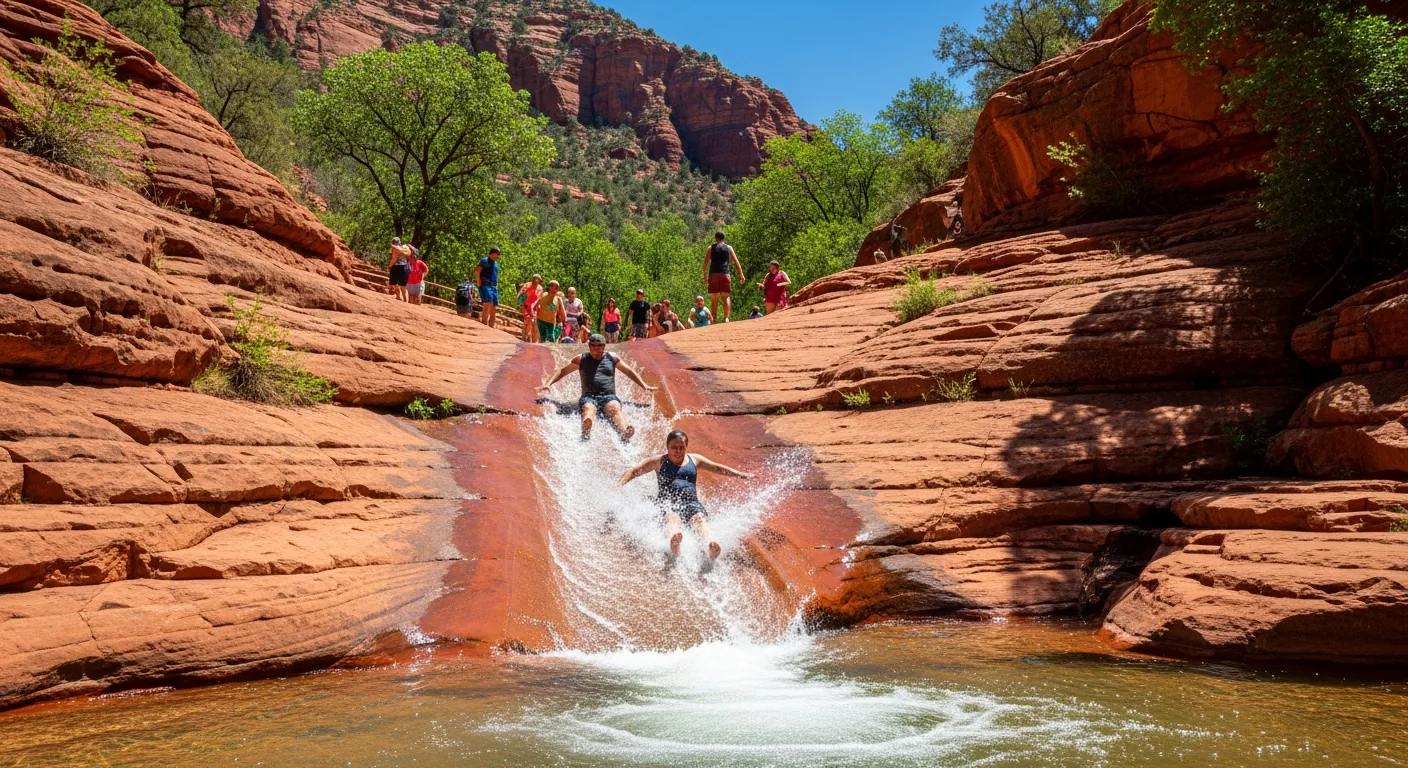
- Oak Creek Canyon is part of the drive — you can stop at the Oak Creek Canyon scenic drive overlooks or, in the warm months, cool off at Slide Rock State Park on the way up or back.
- Flagstaff makes an easy coffee or dinner stop and is worth its own day if you have one — see our Flagstaff day trip guide.
- The historic mining town of Jerome is a great pairing on a different day; check the Jerome day trip guide.
When you get back to Sedona, you’ll be tired in the good way — sun on your face, a thousand photos, legs a little sore from the rim. If you’re staying with us, the nice part of a long day out is what’s waiting at home: a quiet evening, a real bed, and — if you’ve somehow got energy left — a few rallies on the indoor pickleball court before you call it a night. You can book the house and make the canyon one chapter of a bigger Sedona week.
A day at the Grand Canyon rewards a little planning: leave early, pay your entrance fee, ride the shuttles, walk a stretch of the Rim Trail, catch Hopi or Pima Point, and don’t rush the drive home. Do that and you’ll come back with the day everyone hopes for — not just the photo, but the feeling of standing at the edge of something genuinely enormous.
Frequently asked questions
Can you do the Grand Canyon as a day trip from Sedona?
How much does it cost to enter Grand Canyon National Park?
What's the best route from Sedona to the Grand Canyon?
Do I need to use the shuttles at the South Rim?
Should I visit the North Rim instead?
Are there guided Grand Canyon tours from Sedona?
Stay where you can rally any season
Sedona Pickler is a private West Sedona vacation home with its own indoor, climate-controlled pickleball court — a short drive from the trailheads, viewpoints and restaurants in this Sedona guide. Play at sunrise or after dark, in any weather.
Check availability on Airbnb