Flagstaff Day Trip from Sedona
Flagstaff sits about 45 minutes north of Sedona and roughly 2,000 feet higher, and that altitude difference is the whole point. When Sedona’s red rocks are baking at 95 degrees in July, Flagstaff is sitting in ponderosa pine forest at nearly 7,000 feet, ten to fifteen degrees cooler, with afternoon thunderstorms that smell like rain on hot bark. It’s a real city, not a resort town, so don’t expect the polished-up tourism gloss of Uptown Sedona — what you get instead is a historic Route 66 downtown, the observatory where Pluto was discovered, a mountain you can ride a chairlift up, and a cluster of ancient sites and cinder cones just outside town. It’s the single best hot-summer-day escape from Sedona, and it’s close enough that you can leave after breakfast and be back for dinner.
Why Flagstaff makes a good day trip
The short version: Flagstaff is cooler, greener, and built for a different kind of day than Sedona. Sedona is about red rock and trails. Flagstaff is about pine forest, history, science, and (in the right season) snow.
A few things worth knowing before you decide:
- It’s genuinely cooler. Flagstaff sits at about 6,900 feet — the city itself is one of the highest in the country its size. The standard rule of thumb is roughly 3 to 4 degrees of cooling for every thousand feet of elevation, and Flagstaff is around 2,000 feet above Sedona and a full 7,000 feet above Phoenix. On a brutal summer afternoon that difference is the whole reason to go.
- It’s a college town. Northern Arizona University (NAU) is right downtown, which means good coffee, decent cheap food, breweries, and a younger, more casual feel than Sedona.
- It’s a dark-sky city. Flagstaff was the world’s first International Dark Sky City, designated in 2001, and it passed the first outdoor lighting ordinance anywhere back in 1958. That history is why Lowell Observatory is here and why evening stargazing is the marquee thing to do.
- It rains in the afternoons in summer. July and August bring monsoon thunderstorms — short, dramatic, often with lightning. They’re part of the charm but they shape your timing (more on that below).
If you want red rock and hiking, stay closer to home — try Cathedral Rock or one of the easy hikes instead. If you want a change of scenery and a break from the heat, Flagstaff is the move.
Getting there: two roads, two very different drives
There are two ways to drive from Sedona to Flagstaff, and they are not the same experience.
The scenic way: Highway 89A through Oak Creek Canyon
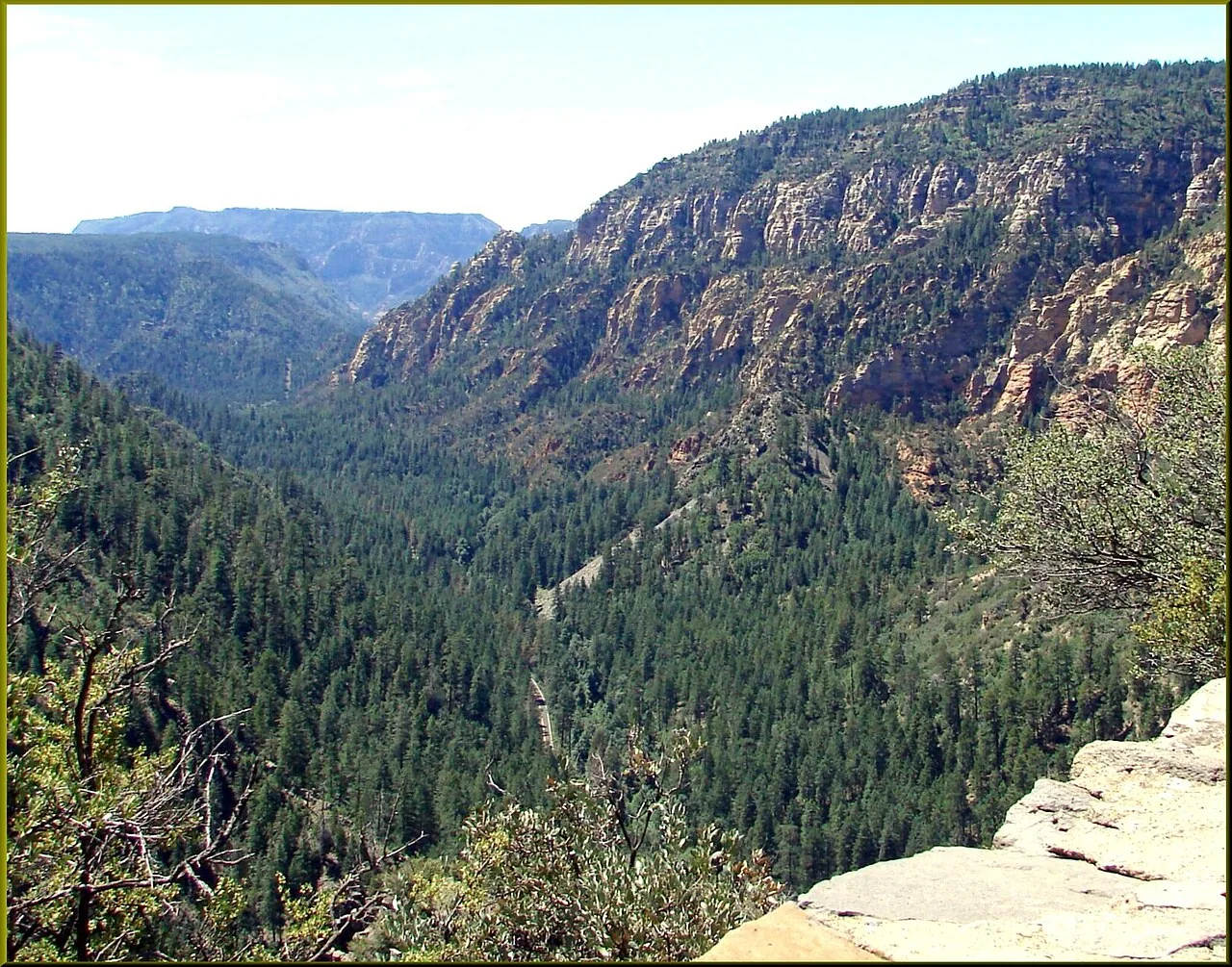
This is the one people remember. Highway 89A runs about 25 miles from Sedona up through Oak Creek Canyon, and it’s a designated National Scenic Byway for good reason. You start at around 4,500 feet on the canyon floor, follow Oak Creek under a canopy of trees, then climb a set of tight switchbacks at the north end that lift you up the canyon wall to the rim near 6,900 feet. There’s a scenic overlook at the top of the switchbacks where almost everyone stops.
It’s beautiful, and it’s slow. The road is two lanes, winding, with steep drop-offs and very little shoulder, so plan on a full hour even though it’s only about 25 miles. If anyone in the car gets carsick, the switchbacks are the rough part — they’re at the very northern end, so warn your passengers before you hit them.
If you have time for one slow stretch, this is the way to go up. We cover the drive itself in more detail in our Oak Creek Canyon drive guide.
The fast way: I-17
If you’re short on time, or if it’s winter and 89A might be snowed in, take I-17. From Sedona you’d typically run down SR 179 to the interstate and take I-17 north into Flagstaff. It’s a wider, faster highway — about an hour all in — and it’s far less scenic, mostly high-desert and pine. The common move is to drive up the scenic 89A in the morning when you’re fresh and come back down I-17 in the evening when you’re tired (and when the light on Oak Creek’s switchbacks isn’t worth fighting the glare for anyway).
Local tip: In winter, check the road before you commit to 89A. Oak Creek Canyon can close for snow and ice, and the switchbacks are no place to discover you don’t have traction. The Arizona Department of Transportation runs a live conditions site (az511.gov) — check it the morning you go. If 89A is closed or sketchy, I-17 is plowed and reliable.
A walk through historic downtown and Route 66
Start your day downtown. It’s compact, walkable, and gives you the feel of the place fast.
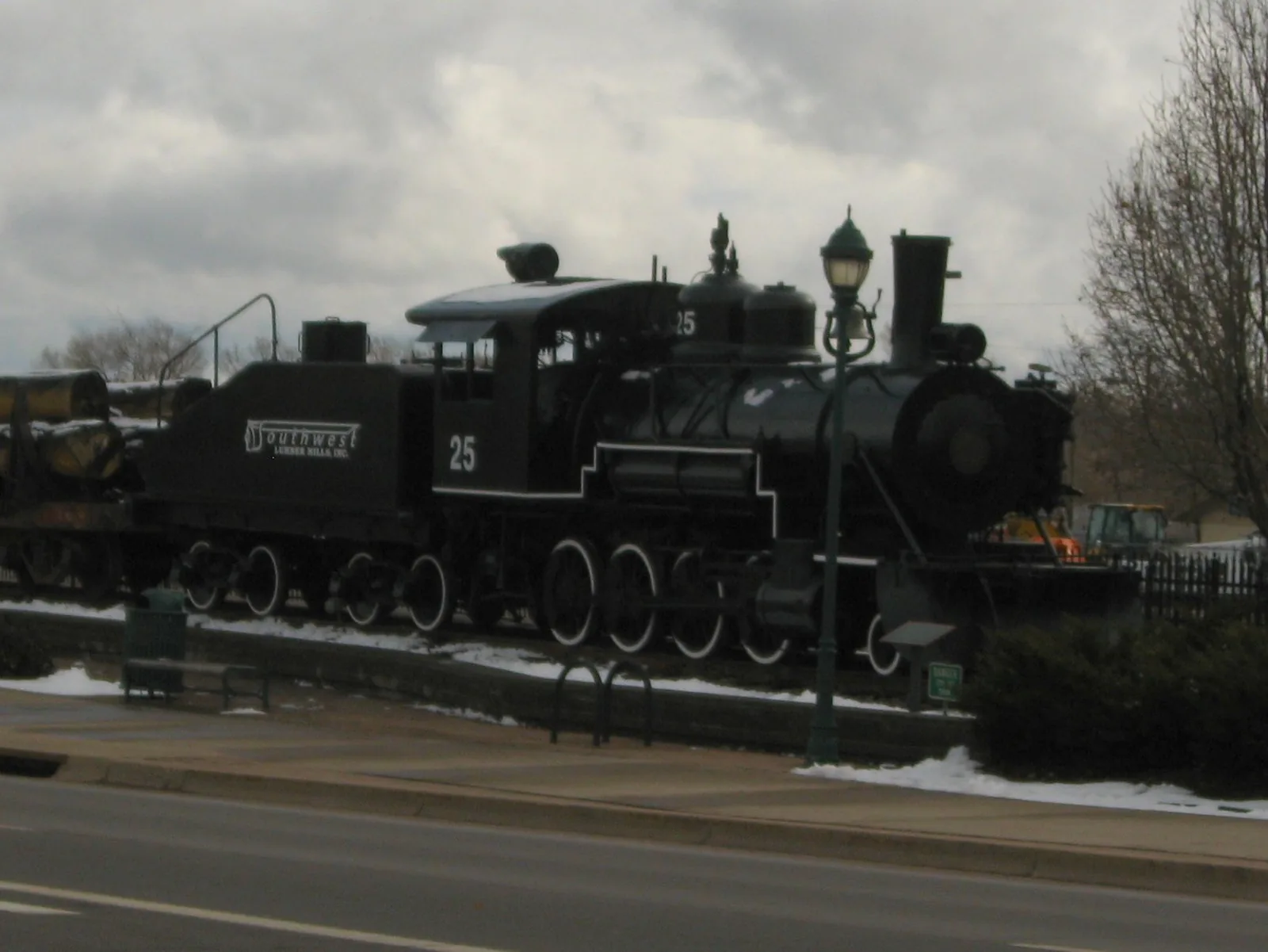
Downtown Flagstaff grew up around the railroad and Route 66, and both are still front and center. The historic Santa Fe depot sits right at the edge of downtown, freight trains still rumble through regularly (you’ll hear the horns), and Route 66 runs straight through the old commercial blocks. The buildings are early-1900s brick — saloons turned into restaurants, old hotels, independent shops and galleries. Heritage Square, an open-air plaza established in 1998 as part of the downtown revitalization, is the social heart of it; on summer weekend evenings they show free family movies there.
Park once and walk. A practical loop for a couple of hours:
- Park near Heritage Square or in one of the downtown lots (paid parking is the norm — bring a card).
- Wander the few blocks of San Francisco Street and Aspen Avenue for the shops, galleries, and old storefronts.
- Grab coffee or an early lunch (the breweries below double as food stops).
- If you’re a Route 66 completist, look for the old neon and the historic markers — this is one of the better-preserved stretches of the Mother Road in Arizona.
NAU’s campus sits just south and west of downtown and is within walking distance if you want to stretch the legs — it’s leafy and pleasant, though there’s no single must-see attraction there for a day-tripper.
Lowell Observatory: where Pluto was discovered
If you do one “marquee” thing in Flagstaff, make it Lowell Observatory. It’s perched on Mars Hill just west of downtown (1400 W Mars Hill Rd), and it’s where Clyde Tombaugh discovered Pluto in 1930. You can walk the Pluto Walk out to the actual telescope that was used in the search.
Lowell is two experiences in one:
- Daytime: exhibits, the historic Clark Telescope, the original Pluto-discovery telescope, guided talks, and the newer Astronomy Discovery Center with interactive science exhibits. Good for kids and for a hot afternoon under a roof.
- Evening: this is the real draw. Once it gets dark, the open-deck observatory and the outdoor amphitheater open up for guided stargazing through telescopes, with educators on hand to tell you what you’re looking at. Flagstaff’s dark-sky protections mean the views are genuinely good.
A few honest notes. Admission is not cheap for a family — adult tickets have run in the mid-$30s in recent seasons, with discounts for kids and students — so check the current pricing on lowell.edu before you go. Hours shift by season and the observatory has historically been closed on certain weekdays (Tuesdays, and Mondays in the off-season), so confirm the day you’re planning. And the headline experience happens after dark, which means a late drive home — fine on I-17, less fun on 89A’s switchbacks in the dark.
Local tip: If you want the evening stargazing but don’t want to white-knuckle Oak Creek Canyon after sunset, drive home on I-17. It’s straighter, wider, and a lot more forgiving in the dark. Alternatively, bring layers — even summer nights at 7,000 feet get cold once the sun’s down, and you’ll be standing still at a telescope.
If you’d rather stargaze closer to the house on a different night, Sedona has its own dark skies — see our stargazing guide.
Arizona Snowbowl: skiing in winter, a chairlift in summer
Fifteen miles north of downtown, up the flank of the San Francisco Peaks, sits Arizona Snowbowl. It’s a year-round mountain with two completely different personalities.
In winter, it’s a real ski resort — base around 9,200 feet, lift-served terrain up to about 11,500 feet, the biggest vertical drop in Arizona, and a long season fueled by an average of around 260 inches of snow. If you’re visiting Sedona in winter and the idea of skiing 45 minutes from the red rocks appeals to you, this is how you do it. It does get busy on weekends and after fresh snow, and the access road can require chains, so check conditions.
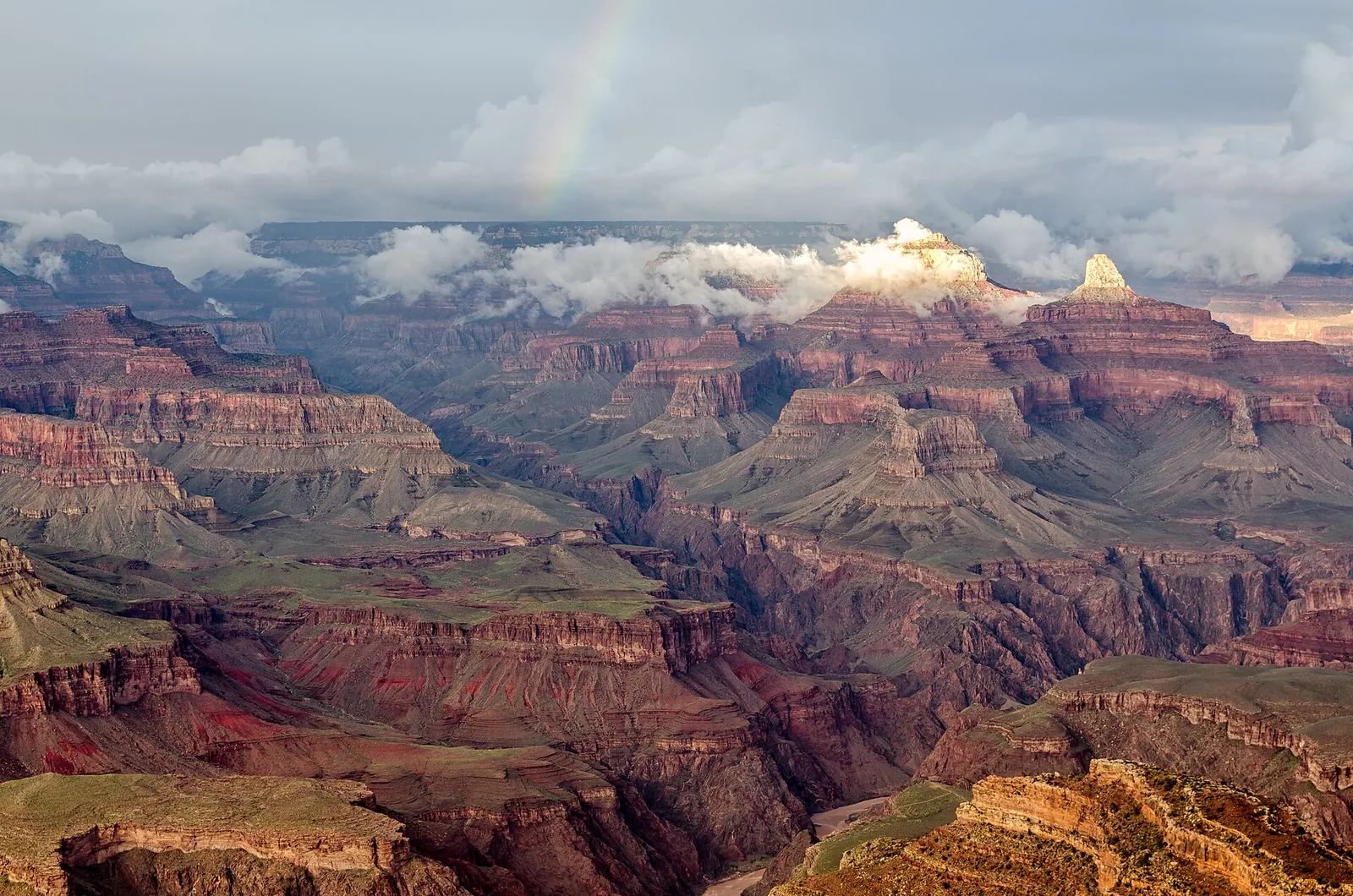
In summer, the Agassiz scenic chairlift (the Scenic Skyride) runs and carries you up to about 11,500 feet — Arizona’s highest lift-served point — with views that on a clear day reach the Grand Canyon some 70 miles north. It typically operates from around Memorial Day to Labor Day. There are also family activities at the base lodge like tubing and a climbing wall in the warm months.
Two real cautions:
- It’s high, and you’ll feel it. Going from Sedona’s 4,500 feet to 11,500 feet at the top of the lift is a big jump. Take it easy, drink water, and don’t be surprised if you’re winded.
- It’s cold and exposed up top, year-round. Bring a jacket even in July. Weather on the peaks changes fast, and afternoon storms are common — they’ll shut the lift down for lightning.
The ancient sites: Walnut Canyon, Sunset Crater, and Wupatki
Flagstaff is ringed by national monuments, and you can fold one or two into a day trip easily. These are administered by the National Park Service, so a standard entrance fee applies at each — and an America the Beautiful annual pass covers all of them if you have one.
Walnut Canyon National Monument
About 10 miles southeast of downtown, just off I-40, Walnut Canyon protects cliff dwellings built into the canyon walls by the Sinagua people around 800 years ago. The signature hike is the Island Trail: a paved loop of roughly a mile that drops about 185 feet into the canyon on a long series of stairs — around 700-plus steps down and back up — and takes you right past the old cliff-dwelling rooms. Plan 45 to 60 minutes.
It’s the most atmospheric of the three monuments, but be honest with yourself about those stairs: it’s the climb back out at nearly 7,000 feet that gets people. If the Island Trail is too much, the shorter, flatter Rim Trail along the top gives you canyon views without the descent.
Sunset Crater Volcano and Wupatki
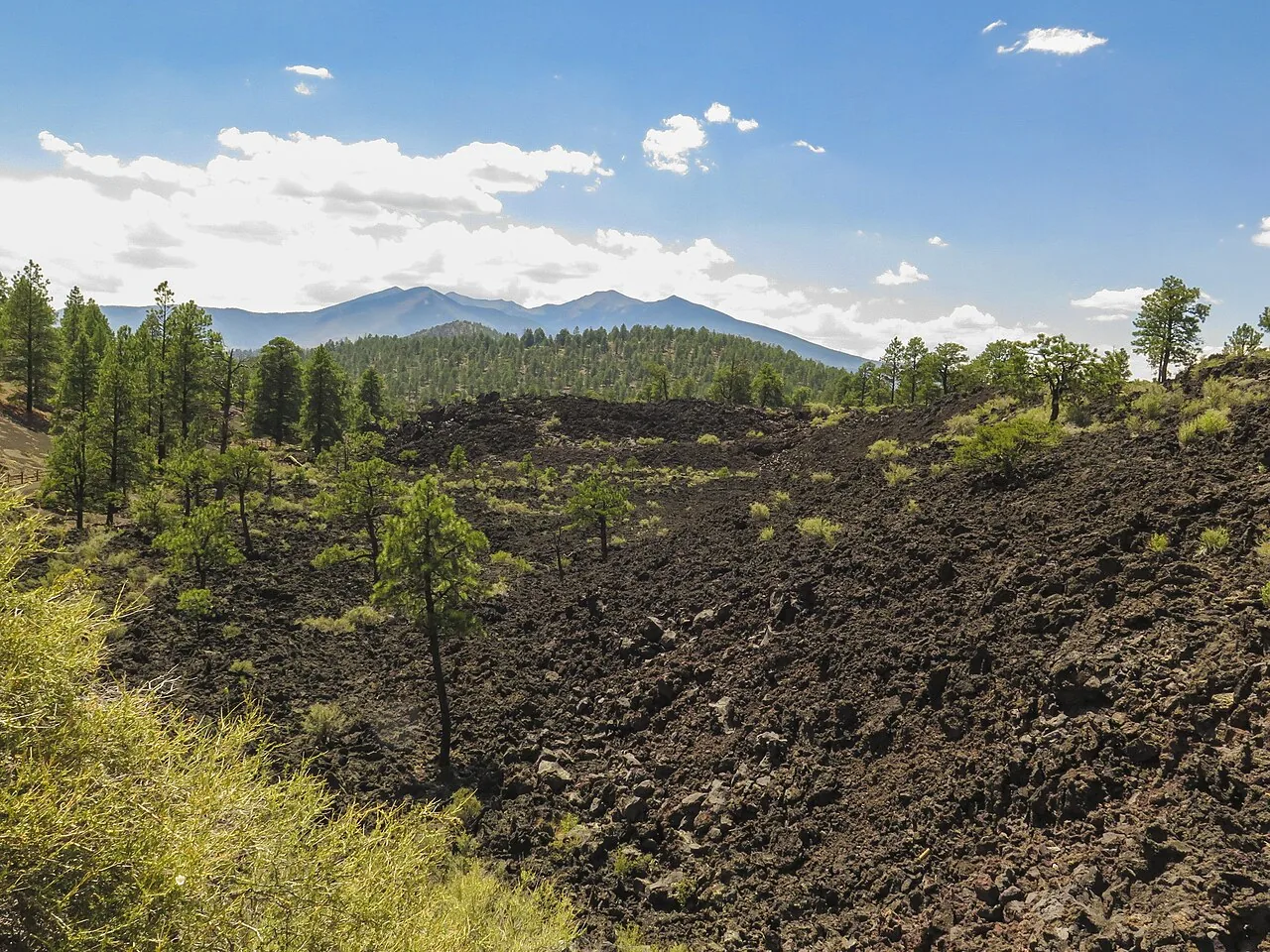
North of town, a single 35-mile scenic loop road links two monuments under one shared vehicle permit (good for seven days at both):
- Sunset Crater Volcano is a cinder cone that erupted around 900 years ago. You can’t climb the cone itself, but the Lava Flow Trail at its base walks you across a genuinely strange black lava landscape.
- Wupatki preserves red-stone pueblos out in open grassland with long views toward the Painted Desert. It’s hotter and more exposed than Sunset Crater because it’s lower in elevation, so bring water and a hat.
Doing the full loop and both monuments is closer to a half-day than a quick stop, so pick this if ancient sites and volcanic landscape are what you’re after, and skip Snowbowl that day.
The Museum of Northern Arizona
About 3 miles north of downtown on the road toward Snowbowl, the Museum of Northern Arizona (3101 N Fort Valley Rd) is a quiet, well-done museum about the natural and cultural history of the Colorado Plateau — geology, paleontology, and the Native peoples of the region, plus a strong collection of Native art and ceramics. It’s a good rainy-afternoon or too-hot-to-hike backup, and it’s affordable (adult admission has run around $18). It’s modest in size — budget an hour or two, not a half-day. Hours are roughly mid-morning to late afternoon; confirm before you go.
Breweries and where to eat
Flagstaff has a real craft-beer scene, and the two anchors are both downtown and both easy to fold into your day.
- Mother Road Brewing Company (7 S Mikes Pike) sits on a stretch of the original Route 66 alignment. Taproom, well-regarded beer, food trucks often parked outside.
- Beaver Street Brewery (11 S Beaver St) opened in 1994 as Flagstaff’s first brewpub. It’s more of a sit-down restaurant — burgers, pizza, salads — so it’s the better pick if you want a proper meal with the family rather than just a pint.
Beyond beer, downtown is full of independent cafes and restaurants — coffee in the morning, a casual lunch midday. It’s a college town, so you’ll eat well without spending Sedona prices. If you’d rather do your big meal back near the house, see our best restaurants guide for Sedona.
What to bring, and how to plan the day
Quick reference: the main stops
| Stop | Distance from downtown Flagstaff | Time needed | Fee / pass |
|---|---|---|---|
| Historic downtown & Route 66 | — | 1-2 hrs | Free (paid parking) |
| Lowell Observatory | ~2 miles (Mars Hill) | 2-3 hrs (best at night) | Paid admission |
| Arizona Snowbowl | ~15 miles | 2-4 hrs | Lift ticket / skiing |
| Walnut Canyon NM | ~10 miles SE | 1-2 hrs | NPS entrance fee |
| Sunset Crater & Wupatki loop | ~12-35 miles N | half day | NPS vehicle permit (covers both) |
| Museum of Northern Arizona | ~3 miles N | 1-2 hrs | Paid admission |
Prices and hours change constantly — treat the table as a planning sketch, not a guarantee, and confirm current details on each place’s own website before you go.
What to pack
- A jacket or layers, even in summer. At 7,000 feet, mornings and evenings are cool and the top of Snowbowl is cold year-round.
- Rain protection in July and August. Monsoon storms roll in most afternoons.
- Water and a hat, especially for Wupatki and the Island Trail stairs.
- A card for parking and fees. Downtown parking is paid; the monuments take cards.
- An America the Beautiful pass if you have one — it covers Walnut Canyon, Sunset Crater, and Wupatki.
- Sturdy shoes if Walnut Canyon’s Island Trail is on your list.
Timing your day
A simple, low-stress plan that works most of the year:
- Leave Sedona after breakfast and drive up 89A through Oak Creek Canyon while you’re fresh and the light is good.
- Mid-morning: walk historic downtown, grab coffee.
- Lunch: a brewery or a downtown cafe.
- Early afternoon: pick one main attraction — Walnut Canyon, the Snowbowl chairlift, or a monument loop. Try to be off any exposed trail or mountain before the afternoon storms (typically 2-4 p.m. in monsoon season).
- Late afternoon / evening: the Museum of Northern Arizona if it’s wet, or head to Lowell Observatory for sunset and stargazing.
- Drive home on I-17 if you stayed for the stars — it’s far safer in the dark than the canyon switchbacks.
Best time to go
Summer (June-August) is the prime reason most Sedona visitors make this trip — it’s the cool escape. Just plan around the afternoon monsoon storms.
Winter (December-March) is for skiers and snow-lovers. Snowbowl is in full swing, downtown is pretty in the snow, and the whole place has a mountain-town feel. The catch is the drive: 89A through Oak Creek Canyon can close for snow, so be ready to use I-17 and check road conditions.
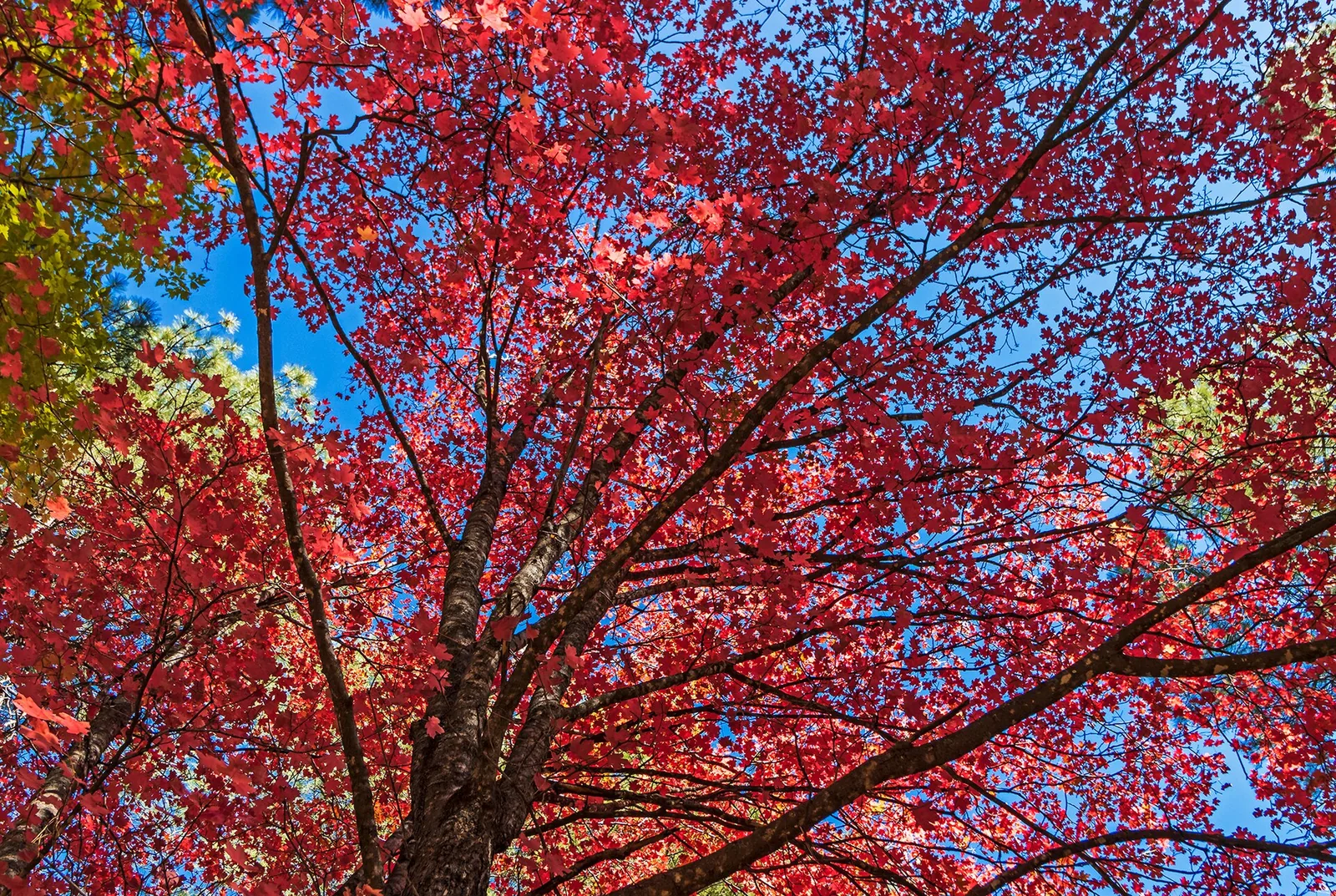
Spring and fall are the quiet sweet spots — mild, fewer crowds, no monsoon. Fall brings real autumn color to Oak Creek Canyon on the drive up, which is worth timing if you can.
Avoiding the crowds and staying safe
- Go on a weekday if you can. Weekends bring locals up the mountain and tourists into downtown.
- Get an early start. The drive up and the downtown stroll are most pleasant before midday, and you’ll beat both the crowds and the afternoon storms.
- Respect the altitude. Sedona to the top of Snowbowl is a 7,000-foot gain. Hydrate, slow down, and skip the strenuous stuff if you’re not acclimated.
- Take lightning seriously. If a storm builds, get off exposed mountains and trails. Lifts close for it, and so should you.
- Mind the drive home. Tired, in the dark, after a long day — that’s when 89A’s switchbacks bite. I-17 is the smart call after an evening at the observatory.
Pairing it with the rest of your trip
Flagstaff is the gateway to a couple of bigger day trips, if you want to chain them:
- The Grand Canyon is about 80 miles north of Flagstaff, so an ambitious traveler can combine the two — though that’s a long day and we’d usually suggest doing the Grand Canyon day trip on its own.
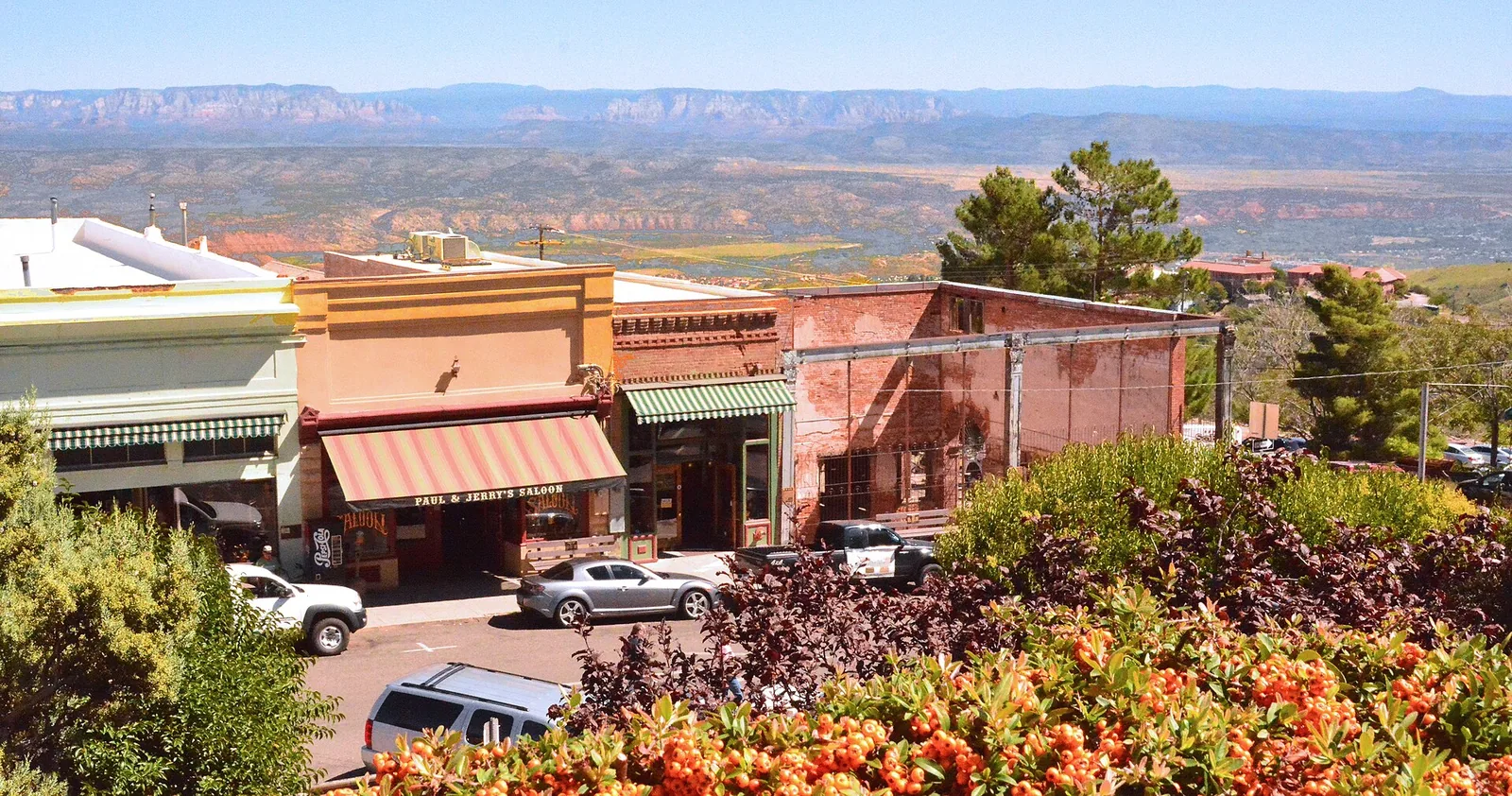
- The old mining town of Jerome makes a great contrasting day in the other direction — see the Jerome day trip guide.
- On the drive up 89A, you’ll pass Slide Rock State Park, which is worth its own stop on a hot day — details in our Slide Rock guide.
However you split it, Flagstaff pairs naturally with the scenic drive up and a relaxed evening back home. And if the day wears you out and a storm chases you back down the canyon, there’s something to be said for arriving back at the house, changing into dry shoes, and getting in a few rallies on the indoor court while it pours outside. Whenever you’re ready to plan the trip, book the house and build the rest of your days around it.
Frequently asked questions
How far is Flagstaff from Sedona, and how long does it take?
Should I drive Highway 89A or I-17 to Flagstaff?
Why is Flagstaff cooler than Sedona?
Is Lowell Observatory worth it, and what's the best time to go?
Do I need a pass for the national monuments near Flagstaff?
Can I ski near Sedona in winter?
Stay where you can rally any season
Sedona Pickler is a private West Sedona vacation home with its own indoor, climate-controlled pickleball court — a short drive from the trailheads, viewpoints and restaurants in this Sedona guide. Play at sunrise or after dark, in any weather.
Check availability on Airbnb