Horseback Riding in Sedona's Red Rock Country

There’s a particular kind of quiet you only get from a saddle. No engine, no trail crowd jostling for the same photo, just hooves on dirt, the creak of leather, and red rock walls sliding by at a walking pace. Horseback riding is one of the older ways to see this country, and honestly one of the most relaxed, but the good rides are out near the Verde Valley rather than in town, so it takes a little planning. Here’s how to do it without getting saddle-sore on the wrong tour.
Why ride a horse in Sedona
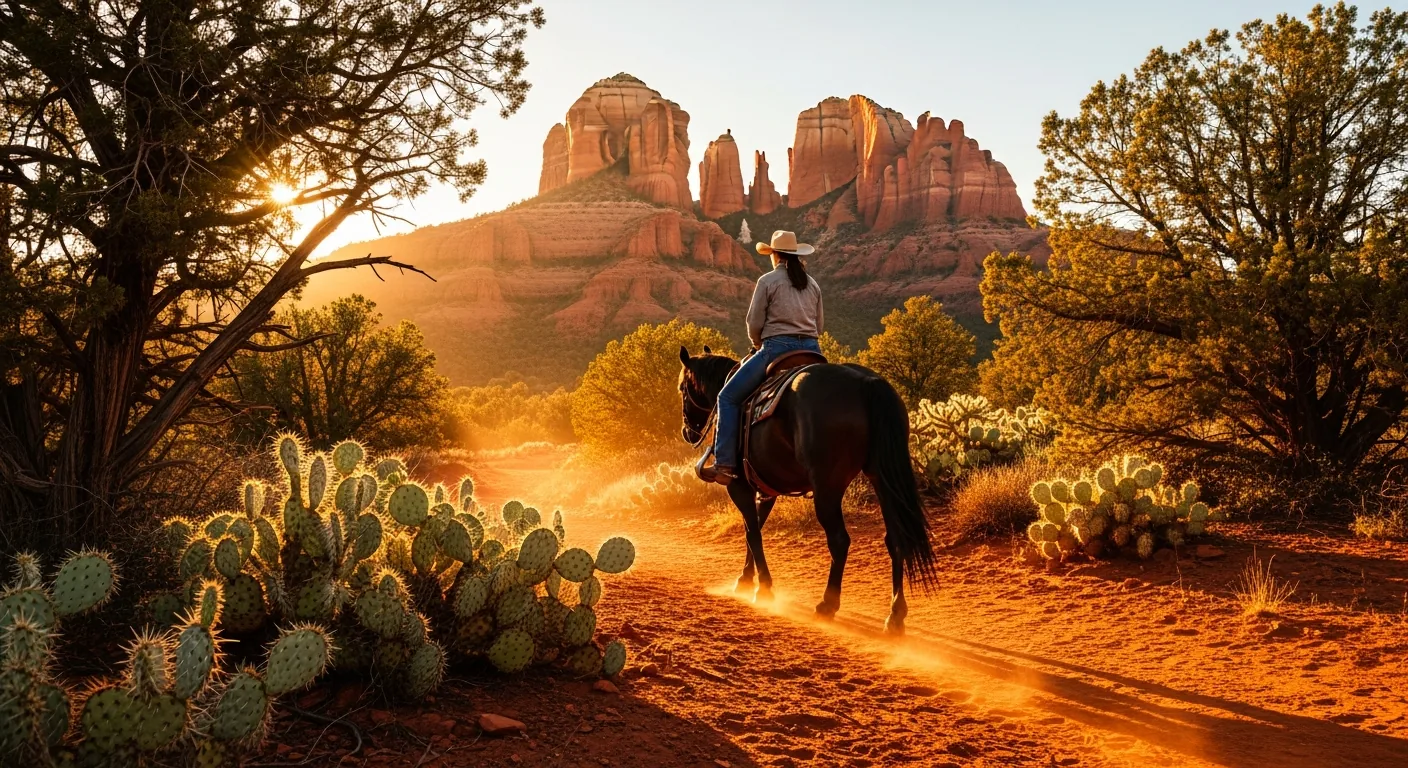
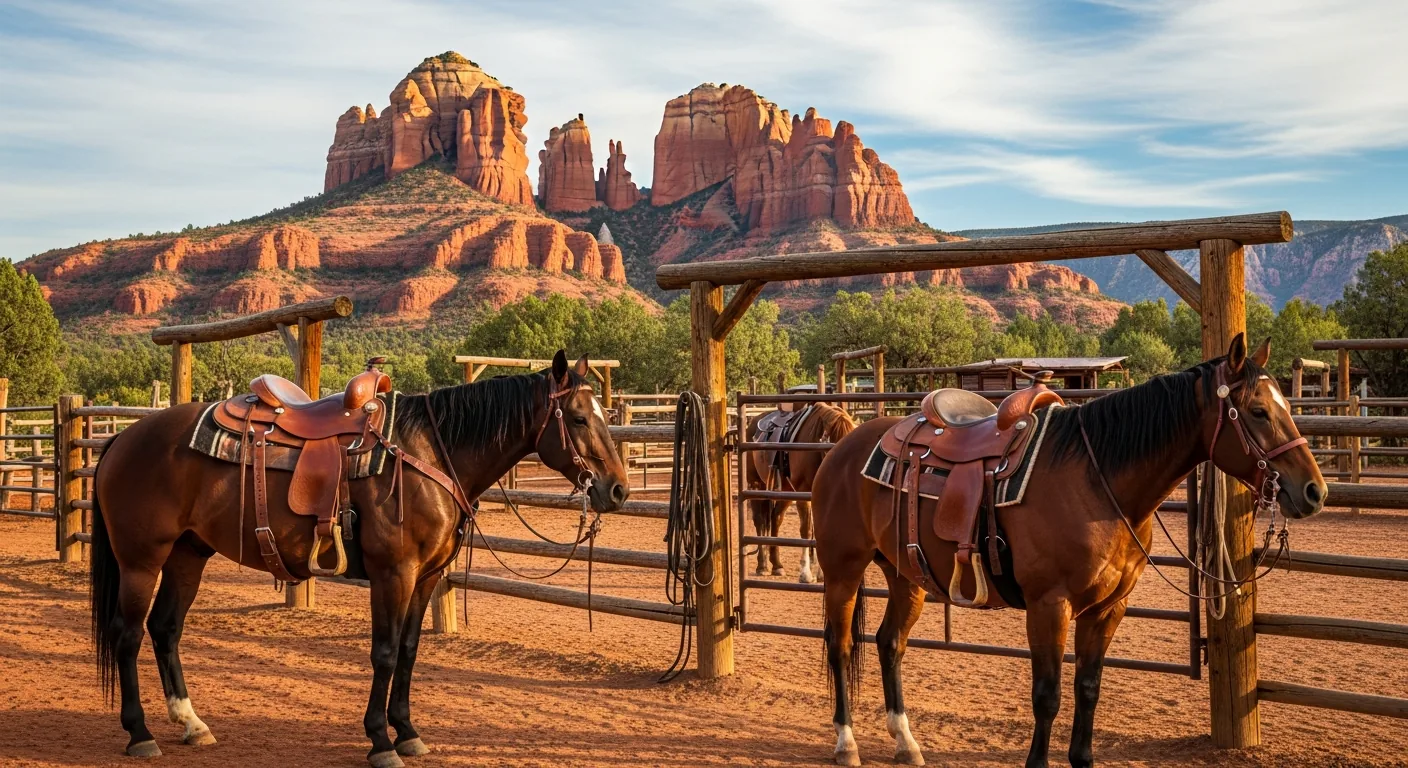
People picture themselves loping across the desert with red buttes glowing in the background, and that picture isn’t wrong, it’s just a little romanticized. Most guided rides are gentle, nose-to-tail walks through high-desert scrub, cottonwood bottoms, and vineyard country, with the dramatic rock formations as a backdrop rather than something you ride right up against. That’s not a knock. It’s genuinely lovely, it’s accessible to people who’ve never sat on a horse, and it gets you into terrain you’d never see from a paved overlook.
A few honest things to set expectations:
- The big-name rides aren’t in Sedona proper. The closest, most established operations run out of the Verde Valley, places like Cottonwood, Cornville, and Rimrock, which are roughly 20 to 35 minutes from Uptown Sedona. You’ll be driving to your ride.
- It’s mostly walking. Insurance, mixed-ability groups, and rocky footing mean most public trail rides stay at a walk, with maybe a short trot if the whole group is comfortable. If you want to gallop, this isn’t that.
- The scenery leans Verde Valley, not iconic Sedona. You’ll see red rock in the distance, but the up-close views are river, vineyard, ranch land, and canyon. Think working-cowboy West more than postcard Sedona.
If that sounds good to you, it’s one of the better low-effort, high-payoff half-days in the area, especially for families, nervous first-timers, or anyone who wants to be outside without grinding up a 1,200-foot hiking trail.
Where to ride: the established operators
These are the real, long-running outfits in the Sedona/Verde Valley area. Hours, prices, and even which days they run change with the season, so treat everything here as a starting point and confirm directly with the operator before you drive out. Book ahead either way, weekends and holiday weeks fill up.
Trail Horse Adventures (Dead Horse Ranch State Park, Cottonwood)
This is the one with the river crossing, and it’s a genuine draw. Trail Horse Adventures runs out of Dead Horse Ranch State Park in Cottonwood, about 20 minutes from Sedona, and theirs is one of the few rides in the area that actually fords the Verde River. Their main options are a one-hour ride (the “Outlaw Trail”) and a longer ride around an hour and a half (the “Cowboy Ride”) through the cottonwood-and-willow river bottom inside the park.
- Minimum age: 6 and up
- What to bring: closed-toe shoes, long pants or leggings, and water
- Heads up on fees: because you’re riding inside a state park, there’s a separate per-vehicle park entrance fee on top of your ride (the operator quotes roughly $20 per car for up to four people, but state-park fees change, so confirm). Arrive about 30 minutes early.
The river-bottom setting is shadier and cooler than the open desert, which makes this a smart pick in warmer months. Because the trails wind through the park’s cottonwood gallery forest along the water, you also get more birdlife and shade than you’d expect from “Arizona desert,” and the river crossing itself is the kind of small thrill that wins over kids and first-timers without ever feeling dangerous. The trade-off is that the views here are intimate and green rather than the wide red-rock panoramas some visitors are chasing, so come for the setting and the novelty of the ford, not for sweeping vistas.
M Diamond Ranch (working cattle ranch, Rimrock)
M Diamond is the real-deal working ranch experience, a roughly 35,000-acre cattle operation homesteaded back in 1908 and still run as an actual ranch. Rides run from about one to three hours, and the big appeal is the add-ons: a lunch-on-the-trail option and the Ranch Rendezvous, a cowboy cookout with a steak dinner and live music under the stars. They’ve also offered a sunset ride aimed at couples.
A word of caution: the ranch’s operating status has looked inconsistent online recently (one listing showed it as closed while others still listed active booking), so this is the one to phone ahead and confirm before you count on it. If it’s running when you visit, the cookout-plus-ride combo is the most “Western” thing on this list.
A Day in the West (jeep + horseback combos)
A Day in the West is best known as Sedona’s oldest family-owned jeep tour company, with roots going back to founder Bob Bradshaw’s 1949 horseback tours. Today their horseback piece usually comes packaged as a combo: a jeep tour, then a stretch on horseback, often finishing with a picnic lunch and a stop at a Verde Valley winery like Alcantara Vineyards. The horseback portion in these combos is on the shorter side (think under an hour in the saddle), so book this for the variety, not for a long ride. Their minimum age for horseback is typically a bit higher than the trail-only outfits, so ask when you book.
Horsin’ Around Adventures (Cornville)
Horsin’ Around runs from a century-old ranch in Cornville, about nine miles from Sedona, through canyon and wine-country terrain near Oak Creek. They do group rides (their “Cowpoke” ride runs around an hour and a half with a wrangler), private rides where you set your own pace, and a “Vino Vaquero” ride-plus-winery combo. Useful detail for larger riders: rather than a hard pound cutoff, they say there’s no fixed weight limit but they do assess riders individually for safety, so call ahead and have an honest conversation if weight might be a factor.
At-a-glance: comparing the operators
| Operator | Where | Typical ride length | Min. age | Standout feature |
|---|---|---|---|---|
| Trail Horse Adventures | Dead Horse Ranch SP, Cottonwood (~20 min) | 1 to 1.5 hrs | 6+ | Verde River crossing; shady river bottom |
| M Diamond Ranch | Rimrock (~30 min) | 1 to 3 hrs | Ask | Working cattle ranch; cookout + sunset rides |
| A Day in the West | Departs Sedona | Shorter horseback leg | Higher (ask) | Jeep + horseback + winery combo |
| Horsin’ Around Adventures | Cornville (~9 miles) | ~1.5 hrs (group) | 6 to 7 | No fixed weight limit; private rides; wine combo |
Everything in this table can shift by season. Always confirm length, age, and price with the operator when you book.
Local tip: Almost none of these rides leave from Uptown Sedona itself. Plug the actual ranch or state-park address into your maps app, not “Sedona,” and pad your drive by 10 minutes for the two-lane roads through the Verde Valley. Showing up late often means losing your slot entirely, because the next group is already tacking up.
How to get there, and the fees you’ll actually pay
This trips up a lot of visitors: there is no single “horseback riding place” in town. Each operator has its own ranch or trailhead out in the Verde Valley, so your route depends entirely on who you booked.
A few practical notes on getting there and paying:
- Drive yourself. These are rural ranch locations not served by the Sedona Shuttle, so you’ll need a car. Roads are paved but narrow and winding in spots; the last stretch into a ranch can be gravel.
- A Red Rock Pass does not cover this. The Red Rock Pass is for parking at Coconino National Forest trailheads around Sedona. It has nothing to do with horseback ranches or state parks. Don’t buy one expecting it to help here.
- State park rides have a separate entrance fee. If you ride at Dead Horse Ranch State Park (Trail Horse Adventures), you’ll pay an Arizona State Parks per-vehicle day-use fee at the gate on top of your ride cost. It’s modest and charged per car, but it’s real, so bring a little extra. Park day-use hours run roughly 7 a.m. to 7 p.m.
- Tips are customary. Wranglers work hard and the work is seasonal. A tip in the 10 to 20 percent range is standard and appreciated.
On pricing in general: a basic one-to-1.5-hour group ride tends to land in the rough neighborhood of around $90 to $130 per person, with private rides, combos, and cookout add-ons costing more. I’m deliberately giving a range, because these prices move, and the only number that matters is the one on the operator’s current booking page. Confirm before you go.
Difficulty and what to expect in the saddle
Good news for the nervous: these are beginner-friendly rides. You don’t need any experience, and the horses on a commercial string are chosen specifically for being calm and forgiving with strangers on their backs.
Here’s roughly how a ride goes:
- Check-in and a safety briefing. You’ll get a short rundown on steering, stopping, and staying in line, plus a helmet if you want one (ask, some places offer them).
- Mounting up. A wrangler matches you to a horse and helps you on. You do need to be able to get on and off and hold your own balance, which is why some operators ask about height-to-weight proportion rather than posting a flat number.
- Nose-to-tail walking. Most public rides stay in single file at a walk. The horses know the trail cold and basically follow the one in front. Your “job” is mostly to relax, sit up, and enjoy it.
- Terrain. Expect uneven, rocky, sometimes sandy footing, with mild ups and downs. Horses handle it fine; just go with their motion rather than fighting it.
If you want more, ask about a private ride. Going private (Horsin’ Around offers this, among others) means you’re not held to the slowest rider in a group of strangers, the pace can pick up, and the guide can tailor the route. It costs more but it’s a noticeably better experience for confident riders or couples.
Weight, age, and other limits
This is the stuff worth nailing down before you book, because nothing ruins a morning like being turned away at the ranch.
- Age: Minimums run from about 6 to 8 years old depending on the operator. Trail Horse Adventures and several others start at 6; A Day in the West tends to require kids to be a bit older for the horseback leg. Confirm for your specific ride.
- Weight: Many Sedona-area outfits cap riders somewhere around 250 to 260 pounds, though it varies. At least one (Horsin’ Around) says it has no fixed pound limit but evaluates riders individually for safety and proportion. The honest move is to call ahead and ask directly, they deal with this question constantly and would much rather sort it out by phone than turn you away in person.
- Pregnancy and mobility: Most operators won’t take pregnant riders, and you do need to be able to mount, dismount, and balance on your own. If you have back, hip, or knee issues, mention them when booking.
Best time of day and season
Time of day
Mornings and late afternoons are the move. Midday in spring and summer the desert sun is brutal on an exposed trail, and the horses feel it too. An early ride is cooler and the light is soft and gold on the rock.
Sunset rides are the showpiece, and worth it if your operator runs them (M Diamond has offered one). The low light makes the red rock genuinely glow, the temperature drops to comfortable, and it’s about as peaceful as the activity gets. They book out fast, so reserve early, and bring a light layer because it cools off quickly once the sun’s down.
Season
- Spring (Mar to May) and fall (Sep to Nov): the sweet spot. Mild days, comfortable riding, beautiful light. Also the busiest, so book ahead.
- Summer (Jun to Aug): doable but hot. Ride at dawn or dusk, hydrate hard, and consider the shadier river-bottom ride at Dead Horse Ranch over an open-desert route. Afternoon monsoon storms (July to September) can cancel rides on short notice.
- Winter (Dec to Feb): the Verde Valley is milder than Flagstaff up the hill, and crisp winter mornings can be gorgeous, but rides may run a reduced schedule or close on cold or wet days. Call first.
What to bring
Keep it simple. The two non-negotiables are closed-toe shoes and long pants.
- Closed-toe shoes or boots with a small heel if you have them. No sandals, no flip-flops, period, you’ll be turned away.
- Long pants or leggings. Jeans are classic for a reason; they protect your legs from the saddle, brush, and sun. Bare legs against leather for an hour is no fun.
- A hat and sunglasses. A brimmed hat that won’t blow off is ideal. Sun protection out here is not optional.
- Sunscreen, applied before you mount up.
- Water. Most operators want you to bring your own bottle.
- A light layer for early morning or sunset rides.
- Cash for the wrangler’s tip and any state-park entrance fee.
Leave the selfie stick and anything you can’t afford to drop. You’ll have one hand on the reins, and things bounce out of pockets.
A couple of small things that make a big difference: zip your phone into a buttoned or zippered pocket rather than a loose one, and if you wear a hat, bring one with a chin cord or stampede string, because the one time the wind gusts on an open stretch is the one time your favorite hat goes tumbling into the brush. If you burn easily, a long-sleeve sun shirt beats reapplying sunscreen with horse-dusty hands. And skip the heavy perfume or cologne; out on a quiet trail it can bother the horses and it draws bugs near the water.
Accessibility
Horseback riding is inherently a moderate-mobility activity, but it’s more accessible than a hike. You don’t have to walk far, and the horse does the work. That said, you do need to be able to mount and dismount (often with a step or a boost from a wrangler) and hold yourself upright and balanced in the saddle for the length of the ride.
If you have limited mobility, call the operator and explain your situation honestly. Some have mounting blocks and patient staff who can make it work; others can’t accommodate certain limitations for safety reasons. It’s a real conversation worth having before you book. For travelers who can’t ride but want the Western ranch experience, M Diamond’s wagon rides (when running) are a gentler alternative, and A Day in the West’s jeep tours are fully seated and cover similar country.
How to avoid the crowds
Horseback riding is naturally less crowded than Sedona’s marquee hikes, you’re in a small guided group rather than a packed trail, so you’re already ahead. To make it even better:
- Book the first ride of the day. Cooler, quieter, and you’re not waiting on a backed-up schedule.
- Go midweek if you can. Weekends and holiday weeks are when the ranches fill.
- Choose a private ride. It’s the surest way to have the trail and the guide’s attention to yourself.
- Visit shoulder season. Late fall and winter weekdays are blissfully quiet out in the Verde Valley.
And because the rides are out of town, you sidestep the worst of Sedona’s trailhead-parking circus entirely, which is reason enough on a busy weekend.
Safety
Commercial trail rides are about as safe as it gets, but you’re still on a 1,000-pound animal with its own opinions. Common sense covers most of it:
- Listen to the safety briefing and actually follow it. The wranglers do this every day and know these horses.
- Stay in line and keep space from the horse in front, horses kick when crowded.
- Don’t make sudden moves or loud noises. Calm rider, calm horse.
- Wear a helmet if offered, especially for kids. Ask, some operators have them.
- Speak up early if something feels wrong, your stirrups are off, the horse is acting up, you’re uncomfortable. Don’t tough it out.
- Mind the heat. Hydrate before and after, and don’t book a midday summer ride if you wilt in the sun.
- Watch the monsoon. In late summer, an afternoon storm can roll in fast. If the operator cancels for weather, they’re doing it for good reason.
What to pair it with nearby
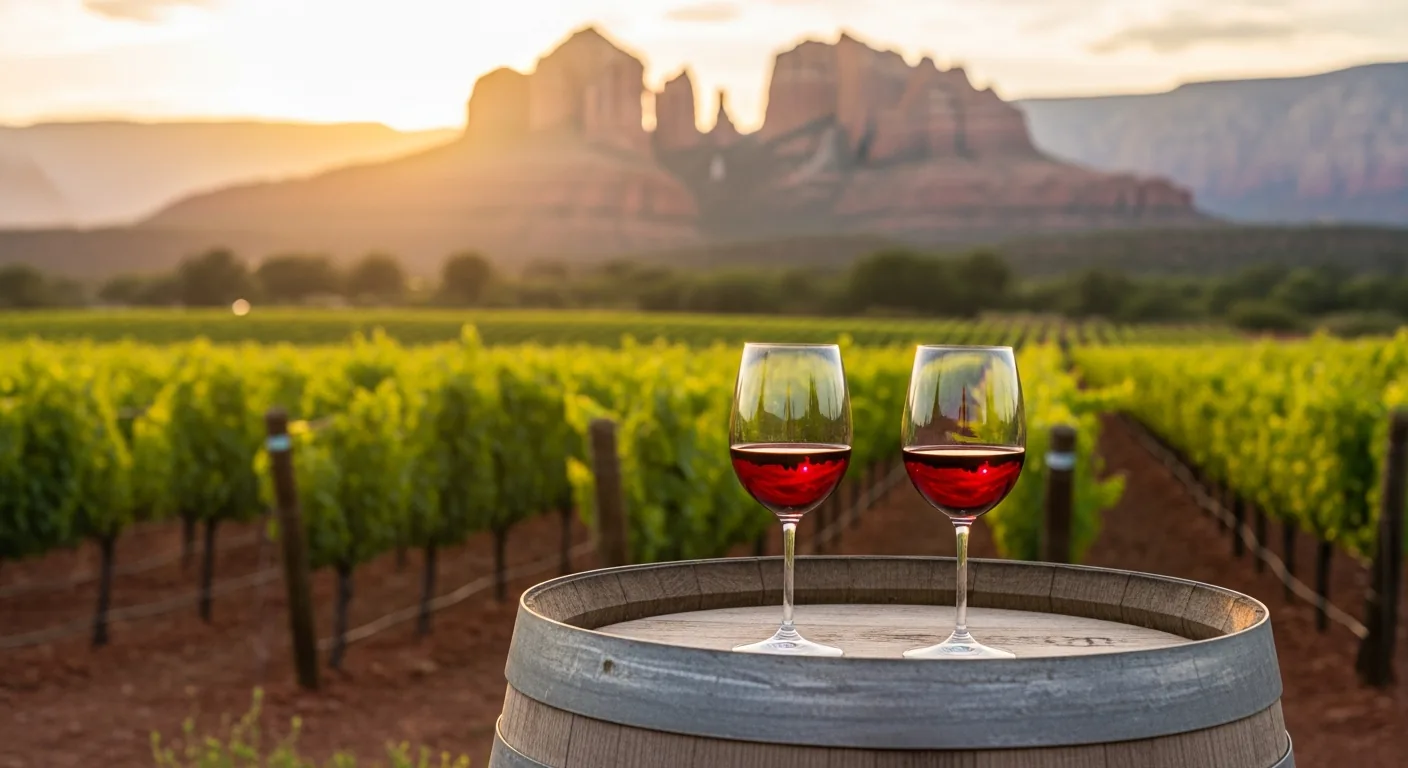
The ranches sit out in the Verde Valley, which is one of the best parts, you’re already in wine country, so a ride pairs naturally with a tasting. Several operators literally finish at a vineyard.
- Wineries. Cornville and the Verde Valley are dotted with tasting rooms, so a morning ride and an afternoon flight is an easy, classic day. See the wineries guide.
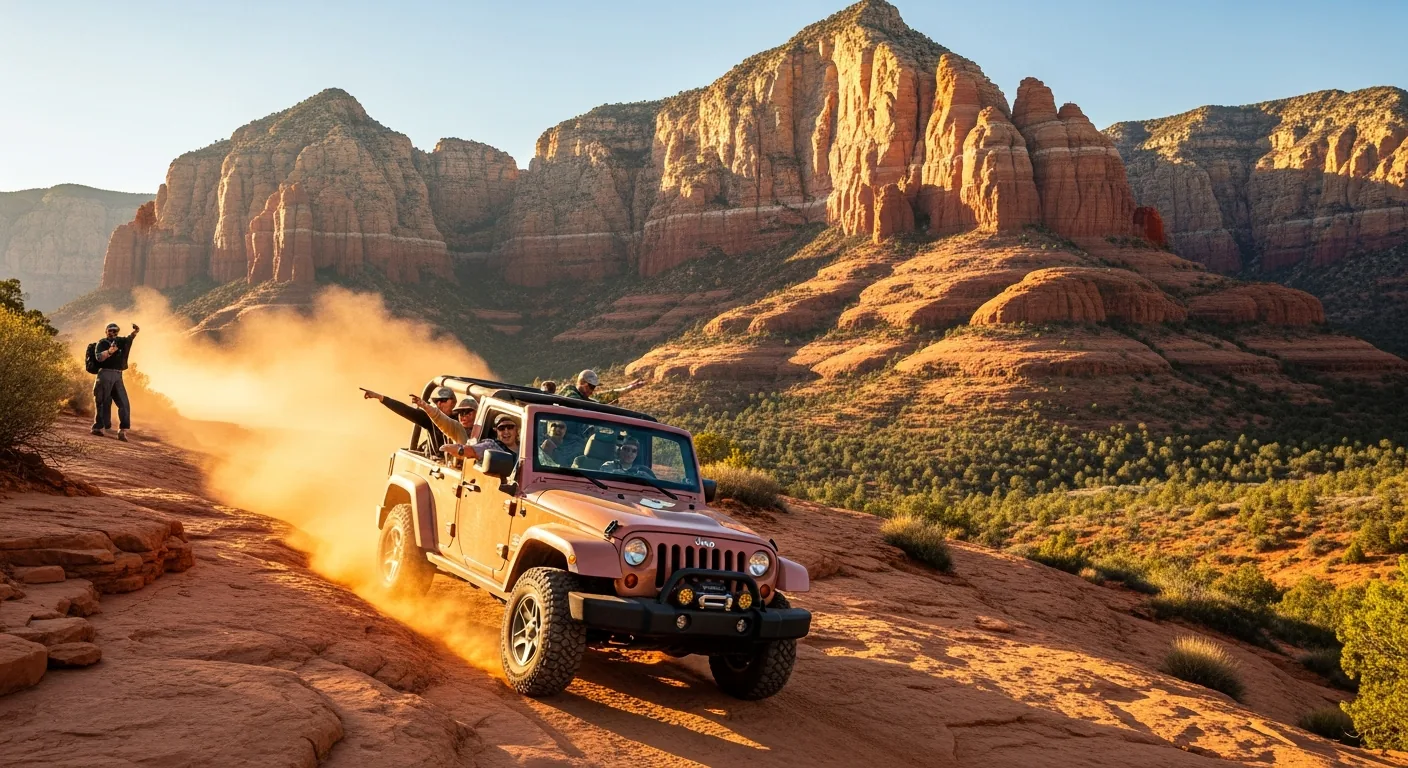
- Jeep tours. If you liked the Western theme, a jeep tour gets you onto rough backcountry roads no horse (or sedan) can reach. A Day in the West does both.
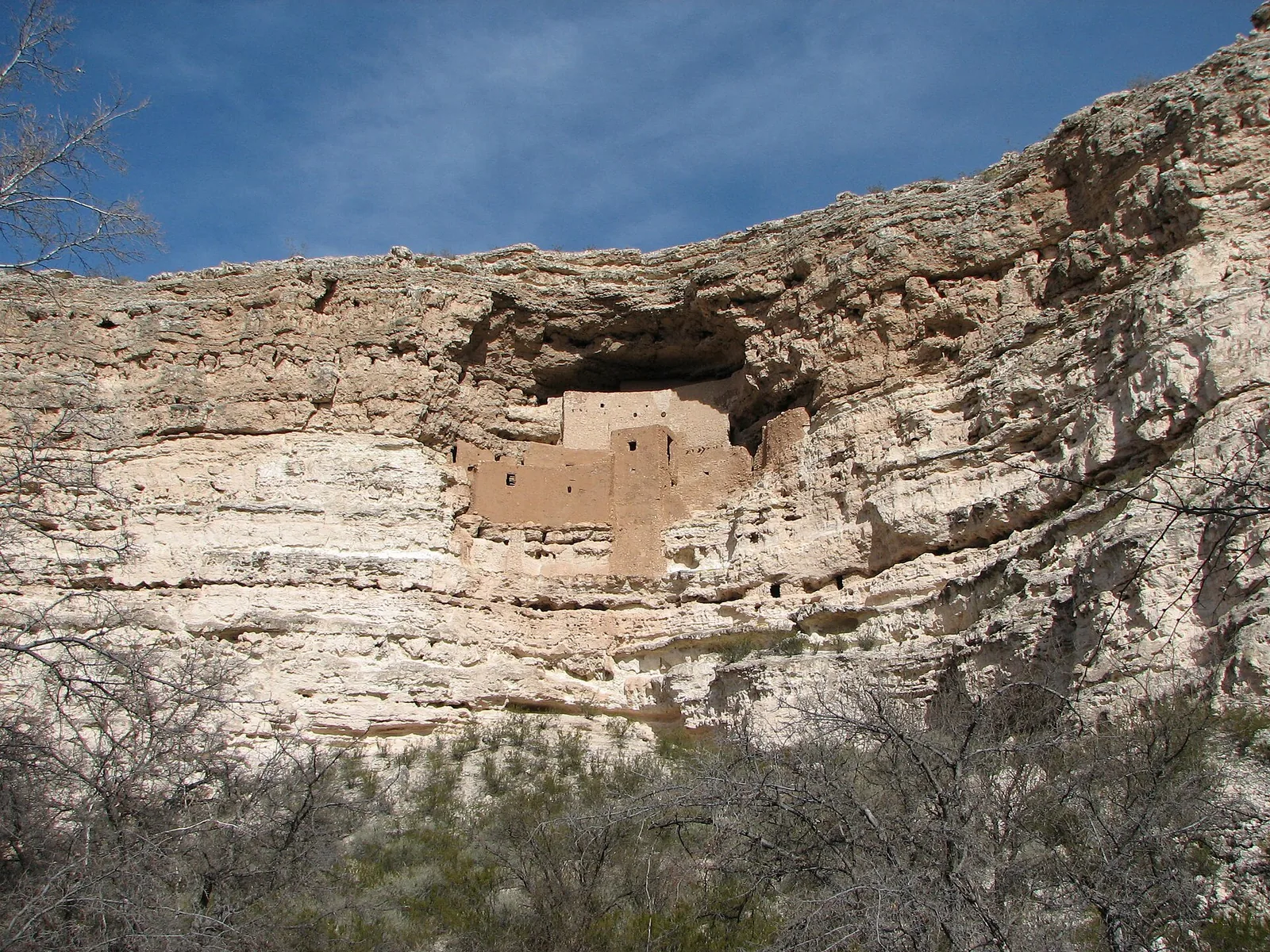
- Montezuma Castle. On your way to or from the Rimrock-area ranches, the cliff dwelling at Montezuma Castle is a quick, worthwhile stop.
- An easy hike. Pair a morning ride with a low-key walk later, the easy hikes roundup has gentle options that won’t fry your legs after time in the saddle.
And after a day in the sun smelling faintly of horse, there’s a lot to be said for heading back, rinsing off, and settling in for a low-stakes rally on Pickler House’s indoor court before dinner, where the only thing you have to steer is a pickleball. If that sounds like a good close to the day, book the house and build your ride into the trip.
A guided ride won’t be the most heart-pounding thing you do in Sedona, and it shouldn’t be. It’s the slow, scenic, genuinely pleasant one, the morning you look back on as the time you actually relaxed. Just book ahead, drive to the right ranch, wear the closed-toe shoes, and let the horse do the rest.
Frequently asked questions
Can total beginners go horseback riding in Sedona?
Where do the horseback rides actually depart from?
Do I need a Red Rock Pass for horseback riding?
What are the age and weight limits?
What should I wear and bring?
Are sunset rides worth it?
Stay where you can rally any season
Sedona Pickler is a private West Sedona vacation home with its own indoor, climate-controlled pickleball court — a short drive from the trailheads, viewpoints and restaurants in this Sedona guide. Play at sunrise or after dark, in any weather.
Check availability on Airbnb