Sedona Jeep Tours: Which One Should You Book?
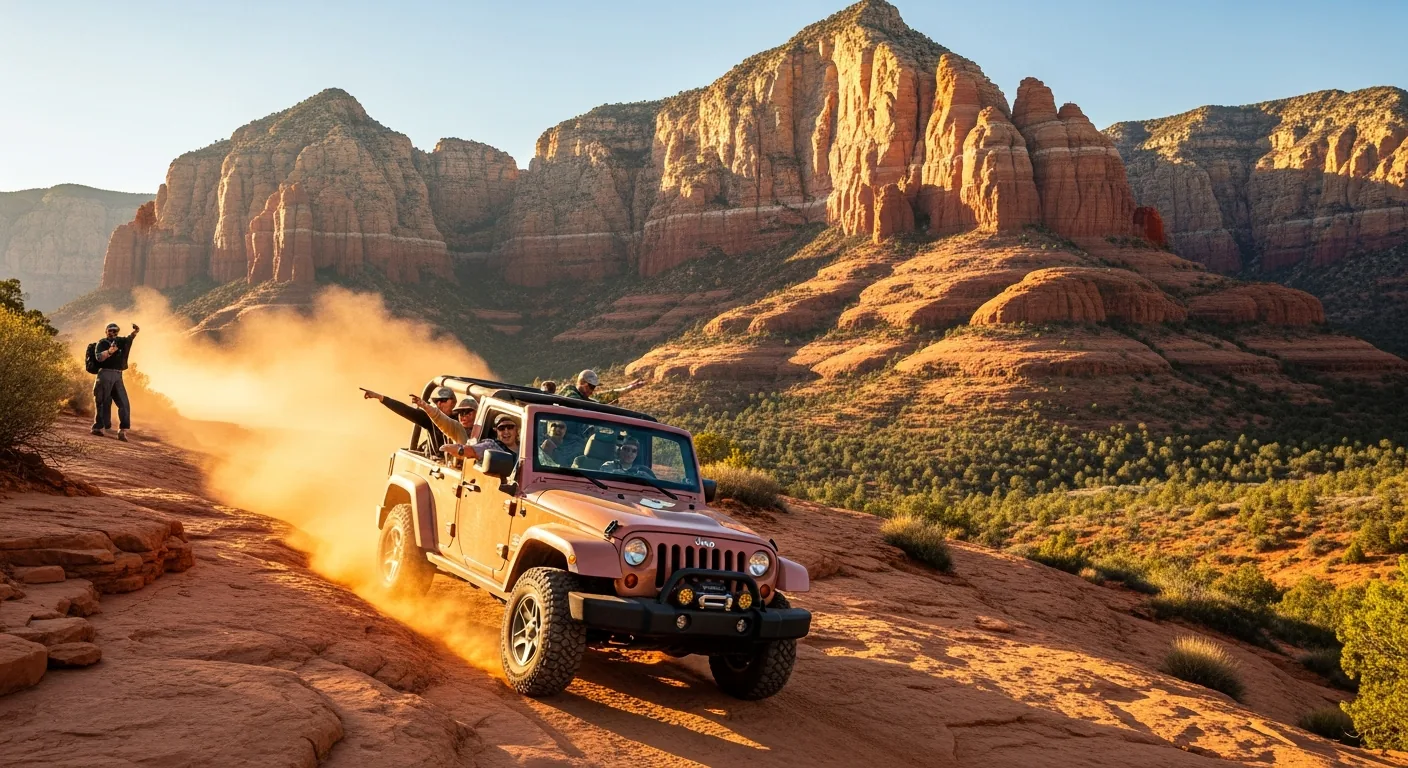
A guided jeep tour is the one Sedona activity almost everyone tries at least once, and for good reason: it gets you onto slickrock you couldn’t legally or sanely drive in your rental car, with a guide doing the white-knuckle steering while you hang on and take pictures. It’s bumpy, it’s a little touristy, and the most famous trail sells out days ahead in spring and fall. But done right it’s genuinely fun, and it’s the easiest way to see the red rocks up close without breaking a sweat on a hike.
This guide walks through the main operators, the trails they run, what each tour actually feels like, and how to decide between a guided tour and renting your own rig. I’ve verified what I can against the operators’ own pages and the Forest Service, but prices and start times shift constantly, so treat any dollar figure here as a ballpark and confirm before you book.
What a Sedona jeep tour actually is
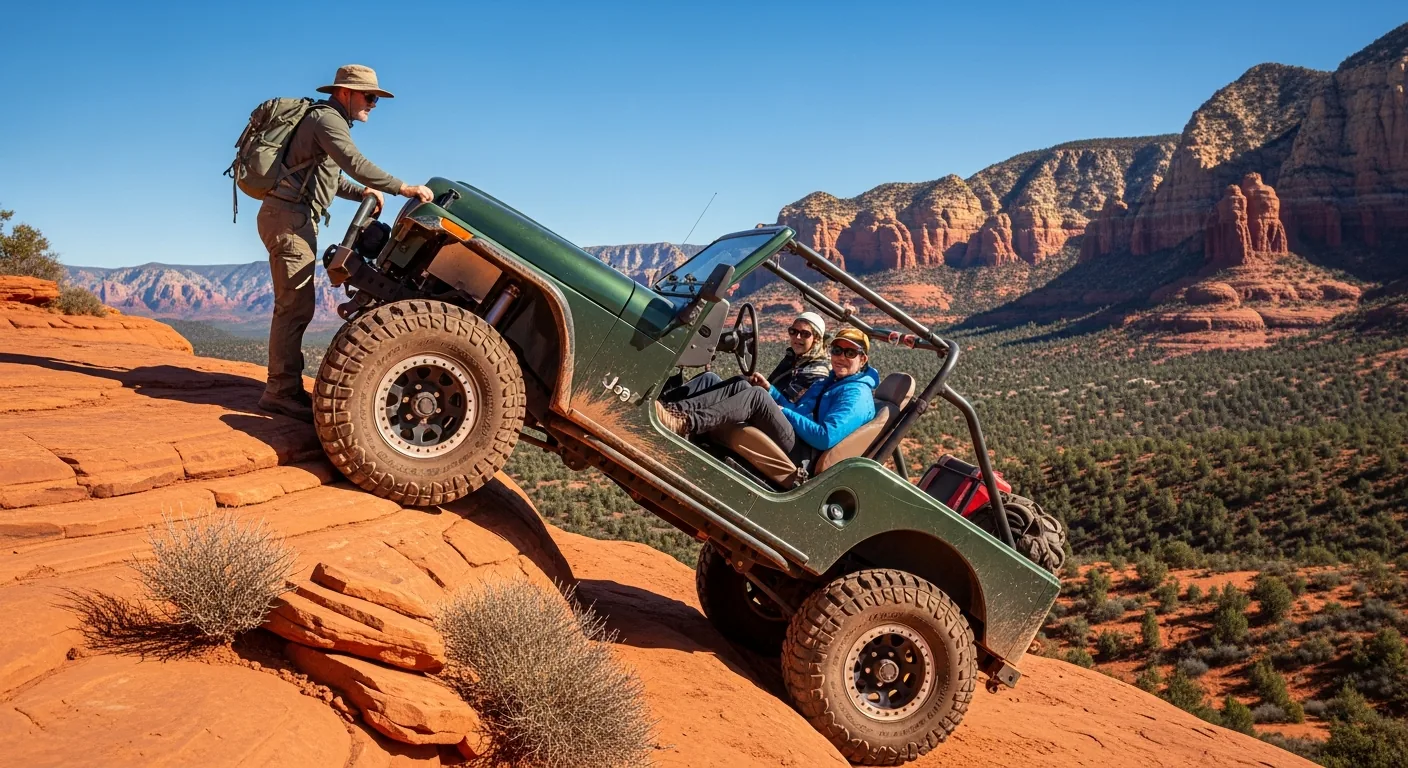
Picture a stretched, open-air Jeep Wrangler (or a Hummer with some companies) crawling at walking pace over bare red sandstone, tilting at angles that feel wrong, dropping down rock ledges, and then stopping at an overlook so your guide can talk geology and Old West history while everyone catches their breath. That’s the core experience. These are not fast desert dune-bashing runs. The signature Sedona trails are slow, technical rock-crawling routes where the thrill comes from the terrain, not the speed.
Most tours run about 1.5 to 3 hours, seat anywhere from 4 to 14 people depending on the vehicle, and include narration from a licensed guide. The guides are the real value: they know which formations are which, where the cliff dwellings and pioneer cabins are, and how to read the 300-million-year layers of rock you’re climbing over. You’ll come away actually understanding what you’re looking at, which is hard to get from a guidebook.
Two things to set expectations on. First, it’s rough by design — you will get jostled, and the famous descents are steep enough that some people genuinely gasp. Second, it’s popular, so the open-air Jeeps are a common sight around town and the best trails get busy. Neither is a dealbreaker; just know what you’re signing up for.
The main operators
There are several established companies, and they don’t all run the same trails. The single most important thing to understand is that the Broken Arrow trail — the most famous tour in Sedona — is run exclusively by Pink Jeep Tours. No other company is permitted on it. So if Broken Arrow is your priority, your operator choice is made for you.
Here’s how the established players break down.
Pink Adventure Tours (Pink Jeep)
The pink ones you’ll see everywhere. The company was founded in Sedona in 1960 by Don Pratt and bills itself as America’s first jeep tour. They’re the only outfitter the Forest Service permits on the Broken Arrow trail, which is their flagship and the reason most people book with them. They also run the Scenic Rim tour and combination tours. Their Jeeps are the larger open-air style and tours tend to be shared rather than private. Because they’re the only ones on Broken Arrow and the brand is the best known, their popular tours sell out earliest — book well ahead in March, April, October, and November.
Red Rock Western Jeep Tours
In business in Sedona for over 27 years, this is a private-tour-only operation, meaning your group gets its own Jeep and guide rather than sharing with strangers. Their most popular run is the Red Rock West tour, which visits a series of canyons, the historic Dry Creek basin, and the old Van Deren cabin. They also hold an exclusive permit for the Soldier Pass trail, which is one of the quieter, prettier routes (it passes the Seven Sacred Pools and the Devil’s Kitchen sinkhole). They run nighttime stargazing and full-moon tours too.
A Day in the West
A long-established, family-run, private-tour company. Their signature route is Diamondback Gulch, which rolls past formations like Capitol Butte (a.k.a. Thunder Mountain), Chimney Rock, and Doe Mesa. They offer a good spread of options at different lengths and difficulty levels — from the in-town Red Rock Highlights ride up to rockier runs like “Lil’ Rattler” and “Lil’ Outlaw” — plus a guided hike up Doe Mountain. Because tours are private, they’re a solid pick for a family or a group that wants the guide to themselves.
Outlaw Trail and Hummer options
A few other established outfitters run the Outlaw Trail, a roughly 3-hour route through Sedona’s western canyons and old ranch lands with views toward Bear Mountain and Doe Mesa. Arizona Safari Jeep Tours is one operator on it. For something different, Sedona Offroad Adventures runs the area’s authorized Hummer tours, which seat more people and ride a bit differently than the open Jeeps. These are good alternatives if Broken Arrow is sold out or you want a longer, less rock-crawly ride.
Local tip: If your heart is set on Broken Arrow, book Pink Jeep first and build the rest of your trip around that time slot. If you don’t care about that specific trail, a private tour with Red Rock Western or A Day in the West often feels more personal — you can ask questions the whole time and they’ll stop where you want.
The trails, route by route
The trail matters as much as the company. Here’s what the popular routes are actually like.
Broken Arrow
The big one. Broken Arrow is a roughly 4-mile out-and-back over hard-packed slickrock that climbs through some of Sedona’s most photogenic terrain. Highlights include Submarine Rock (a long, smooth whaleback of stone), Chicken Point (a red-rock plateau with big views), and the finale, the Devil’s Staircase — a steep, ledgy descent that’s the most technical and most talked-about part of the ride. On a guided tour this is exciting but safe; the guides do it daily. It’s the most thrilling of the standard tours and the most likely to sell out.
Soldier Pass
Quieter and more scenic than thrilling. The Soldier Pass route (run as a tour exclusively by Red Rock Western) passes the Seven Sacred Pools and the Devil’s Kitchen sinkhole, with fewer vehicles around than Broken Arrow. A good choice if you want red-rock beauty and history over rock-crawling adrenaline. Note that the Soldier Pass hiking trailhead is a separate, very busy spot with limited parking — that’s the foot-traffic version, covered in our Soldier Pass guide.
Diamondback Gulch
A Day in the West’s signature. Rockier and more rolling, with washes and boulder sections, set against formations like Capitol Butte and Chimney Rock. A nice middle ground — some technical fun without the full Devil’s Staircase drama.
Outlaw Trail
A longer, roughly 3-hour run through the western canyons and old ranch country, with a mix of moderate and wilder terrain. Good for people who’d rather spend more time out and cover more ground than do one short, intense rock crawl.
Here’s a quick comparison to help you choose. Durations and prices are approximate and shift with season and operator — always confirm current rates when you book.
| Trail / Tour | Typical operator | Approx. length | Vibe | Approx. price/adult |
|---|---|---|---|---|
| Broken Arrow | Pink Jeep (exclusive) | ~2 hr | Most thrilling; steep descents | ~$100–130 |
| Scenic Rim | Pink Jeep | ~1.5–2 hr | Big overlooks, less rock-crawl | ~$90–120 |
| Red Rock West | Red Rock Western / A Day in the West | ~2 hr | Canyons + Old West history | ~$105+ |
| Soldier Pass | Red Rock Western (exclusive) | ~1.5 hr | Scenic, serene, fewer vehicles | ~$105+ |
| Diamondback Gulch | A Day in the West | ~2 hr | Rolling, rocky, scenic | ~$105+ |
| Outlaw Trail | Arizona Safari & others | ~3 hr | Longer, varied western canyons | ~$120–160 |
Guided tour vs. driving it yourself
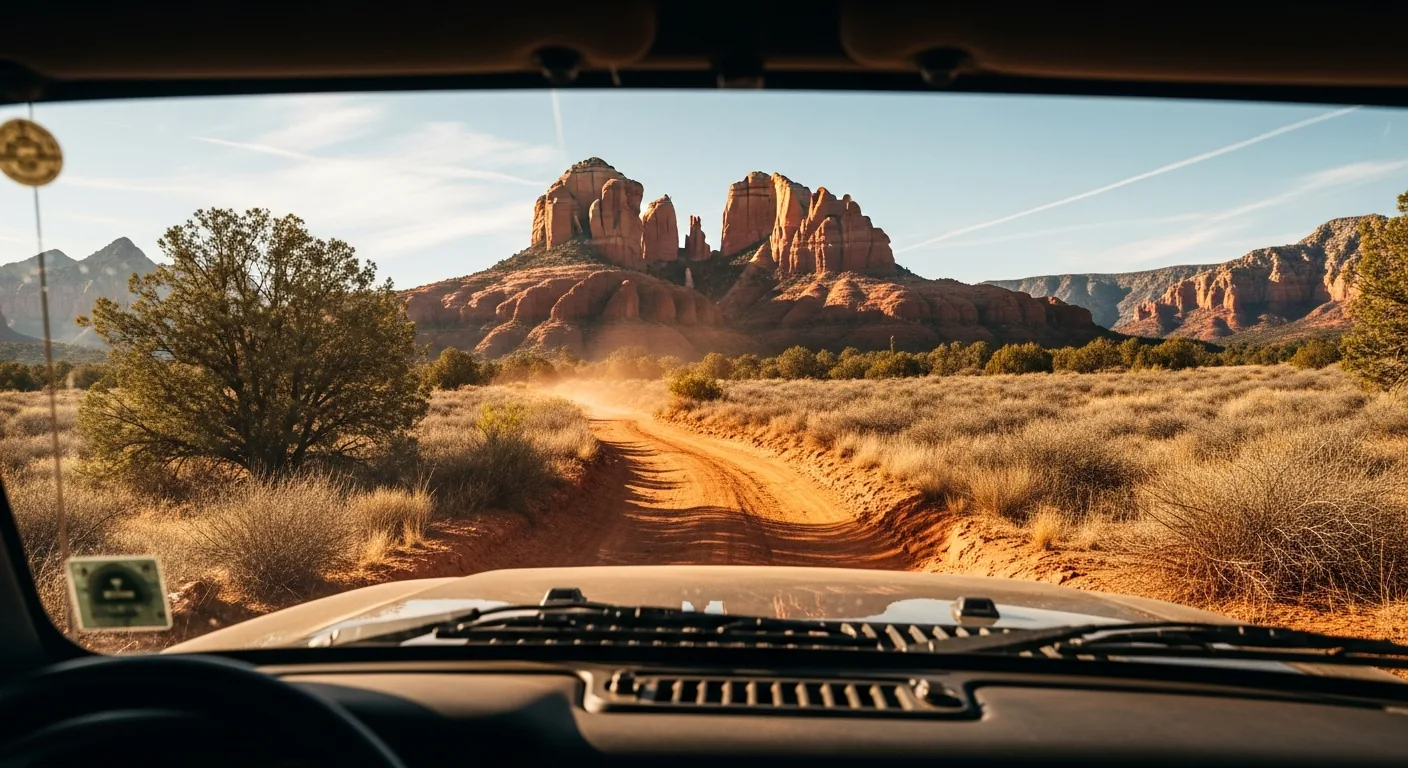
This is the real decision for a lot of visitors. Several of these trails — Broken Arrow, Soldier Pass road, the Outlaw/western routes — are public OHV (off-highway-vehicle) roads, so in theory you could drive them yourself in the right vehicle. Whether you should is another question.
Reasons to take a guided tour:
- You don’t have to drive, so you can actually look at the scenery and take photos.
- The guide handles the genuinely hairy parts (the Devil’s Staircase is no joke for a first-timer).
- You get the geology and history narration, which is most of the point.
- No risk of damaging a rental car — most rental agreements forbid off-road driving, and Broken Arrow will scrape an unprepared vehicle.
- Great for families, nervous drivers, or anyone who just wants to be a passenger.
Reasons to self-drive (if you’re equipped and experienced):
- It’s cheaper if you already have or rent a capable rig.
- You go at your own pace and stop where you like.
- More freedom for confident off-roaders.
If you do self-drive, you need a high-clearance 4WD vehicle — emphasis on both high-clearance and 4WD. A standard SUV or crossover will not make it through Broken Arrow without damage, and there are large rock ledges you have to climb and descend. Skid plates are smart. This is rated as a very difficult trail and is not the place to learn off-roading. There’s also a middle path: companies like Sedona Off-Road Center rent self-drive side-by-sides (UTVs like the Honda Talon) by the hour or day with direct access to trails such as the Outlaw Trail — more capable than a rental SUV, more freedom than a guided tour. See our jeep & ATV rentals guide for that route.
Local tip: If you want the off-road thrill without the guide or the risk of trashing a rental, a self-drive UTV rental is the sweet spot for many groups. Just respect the difficulty ratings — start on an easier trail before you point a rented machine down the Devil’s Staircase.
Getting there, parking, and the Red Rock Pass
For guided tours, this part is easy: nearly every operator has a downtown or roadside office (most are in or near Uptown Sedona along SR-89A or on the west side off SR-89A near the trails), and the tour departs from there. You don’t need a Red Rock Pass for a guided tour — that’s the operator’s problem, not yours. Just show up at the office at your start time. Parking at the tour offices is generally fine; Uptown parking in general can be tight at midday, so leave a little buffer.
If you’re self-driving, you do need to think about the Red Rock Pass, which is required to park at the 19 most-visited day-use sites on the surrounding Coconino National Forest land — and the popular trailheads (Broken Arrow off Morgan Road, the Soldier Pass area, and others) are among them.
Red Rock Pass rates (verify current pricing):
- Daily: about $5
- Weekly: about $15
- Annual: about $20
You can buy one at trailhead kiosk machines, the Sedona Visitor Center, the Chamber of Commerce, many local shops, or online at Recreation.gov (online purchase asks for your license plate). The pass must be displayed in your windshield. Note: if you already hold an America the Beautiful interagency pass, that covers Red Rock Pass day-use sites too. The Broken Arrow self-drive trailhead is reached by taking Morgan Road east off SR-179, which dead-ends at the trail and a parking lot.
Difficulty and what to expect on the ride
For a guided tour, you don’t need to be fit or experienced — you’re a passenger. But the ride itself is physically rough:
- Expect to be jostled. The slow rock-crawling means constant tilting, bouncing, and the occasional stomach-drop on descents. Hold the grab bars.
- The famous descents are steep. On Broken Arrow’s Devil’s Staircase, the vehicle tips down at an angle that genuinely surprises people. It’s safe but it’s a thrill.
- It’s dusty and exposed. Open-air Jeeps mean sun and dust. Wear sunglasses; a buff or bandana helps on dry days.
- Some tours include short walking stops at spots like Submarine Rock or Chicken Point, but the walking is optional and minimal.
A few honest caveats. If you have a bad back, neck, or are pregnant, the rougher trails (Broken Arrow especially) may be too jarring — call the operator and ask about a smoother scenic option instead. Most companies take kids (often age 3 and up), but confirm minimums, as some have weight or age limits on the technical trails.
Best time of day and season
Season. Spring (March–May) and fall (September–November) are the prime months — comfortable temperatures and clear skies — which is exactly why they’re the busiest and why tours sell out. Summer (June–August) is hot, often 95–100°F-plus, and the open Jeeps offer no shade; if you go in summer, take the earliest morning slot. Winter is quieter and can be beautiful with snow on the red rocks, though some routes may be muddy or closed after storms — and a fresh dusting of snow on the slickrock is a genuinely special sight.
Time of day. Early morning and late afternoon both win. Morning gives you cooler temperatures, softer light, and fewer vehicles on the trail. Late afternoon and the sunset/twilight tours that several operators run catch the red rocks at their most saturated — the rock practically glows in golden hour. Midday is the hottest and harshest light, so it’s the slot to avoid in warm months if you can. If you’re after the absolute best light for photos, pair this with our sunset spots guide.
What to bring
- Sun protection: hat (a strap helps in the open Jeep), sunglasses, sunscreen.
- Water: at least a bottle per person; more in summer. Some operators provide it — check.
- Closed-toe shoes if you plan to do the optional walking stops on slickrock.
- A secured camera or phone strap. It’s bouncy; a wrist strap saves your phone.
- A light layer for morning or twilight tours — it cools off fast once the sun drops.
- Cash for tipping your guide if they did a good job (they typically work for tips).
- A bandana or buff for dust on dry days.
Leave the loose hats, dangly bags, and anything you’d hate to drop. The ride is rough enough that unsecured items go flying.
Accessibility
Be realistic here: the signature rock-crawling tours are physically demanding rides and are not well suited to wheelchair users or people with serious mobility, back, or neck issues. The open-air Jeeps require climbing up into a high vehicle, and the terrain is jarring. That said, the gentler scenic and in-town tours (Pink Jeep’s Scenic Rim, A Day in the West’s Red Rock Highlights) are far smoother and may work for those who can’t handle Broken Arrow. The single best move is to call the operator directly, describe your needs, and ask which tour they recommend — they do this conversation daily and will tell you honestly what works.
How to avoid the crowds and book smart
The famous tours fill up. Here’s how to play it:
- Book ahead — really ahead — in spring and fall. Pink Jeep’s Broken Arrow can sell out days in advance during peak season. If your dates are fixed, reserve as soon as you’ve booked your trip.
- Take the first or last slot of the day. Early morning means fewer Jeeps on the trail and better light; twilight tours are gorgeous and less crowded than midday.
- Consider a less-famous trail. Soldier Pass and the western/Outlaw routes are quieter than Broken Arrow but still beautiful.
- Go private if you can swing it. Red Rock Western and A Day in the West run private tours, so you’re not sharing a Jeep with strangers and the guide tailors the route to you.
- Avoid weekends and holidays if you have flexibility — midweek is calmer everywhere in Sedona.
Safety
Guided tours are well run and the guides are professionals who do these trails every day, so the main job is just to follow their lead:
- Stay seated and hold the grab bars during descents and rock sections.
- Keep arms and legs inside the vehicle on the narrow, rocky stretches.
- Listen to the guide about when it’s safe to get out at stops.
- Hydrate, especially in the heat — the open Jeep and dry air dehydrate you faster than you’d think.
If you’re self-driving, the stakes are higher: tell someone your plans, carry plenty of water, don’t attempt Broken Arrow or similar trails without real high-clearance 4WD and off-road experience, and turn around if conditions or your nerves say so. Flash floods can hit washes during monsoon season (July–September), so check the forecast and never drive through running water.
What to pair it with nearby
A jeep tour is only 1.5–3 hours, so it pairs easily with the rest of a Sedona day. A few natural combinations:
- A short hike afterward. If the tour whetted your appetite for red rock up close, follow it with an easy walk — see our easy hikes roundup, or tackle the iconic Cathedral Rock climb if you’ve got energy left.
- The scenic drives. Cap the day on the Red Rock Scenic Byway (SR-179) or the Oak Creek Canyon drive north of town — no off-road required, all paved, all gorgeous.
- The Chapel of the Holy Cross is close to the Broken Arrow area and worth a quick stop.
- A good meal. Uptown is full of options for after a dusty ride; our best restaurants guide has the rundown.
And honestly, one of the better ways to end a jeep-tour day is to head back, rinse off the trail dust, and settle a little friendly competition on the home court — a couple of games of pickleball in the climate-controlled court at Pickler House is a pretty good way to cap off a day of getting bounced around the red rocks. Whatever you do, a guided tour is a low-effort, high-payoff way to get your bearings on Sedona’s landscape early in a trip — it makes everything you do afterward make more sense.
Frequently asked questions
Which company runs the Broken Arrow tour?
How much does a Sedona jeep tour cost?
Should I take a guided tour or drive myself?
Do I need a Red Rock Pass for a jeep tour?
Are jeep tours okay for kids and older travelers?
How far ahead should I book?
Stay where you can rally any season
Sedona Pickler is a private West Sedona vacation home with its own indoor, climate-controlled pickleball court — a short drive from the trailheads, viewpoints and restaurants in this Sedona guide. Play at sunrise or after dark, in any weather.
Check availability on Airbnb