Montezuma Castle & Montezuma Well National Monument
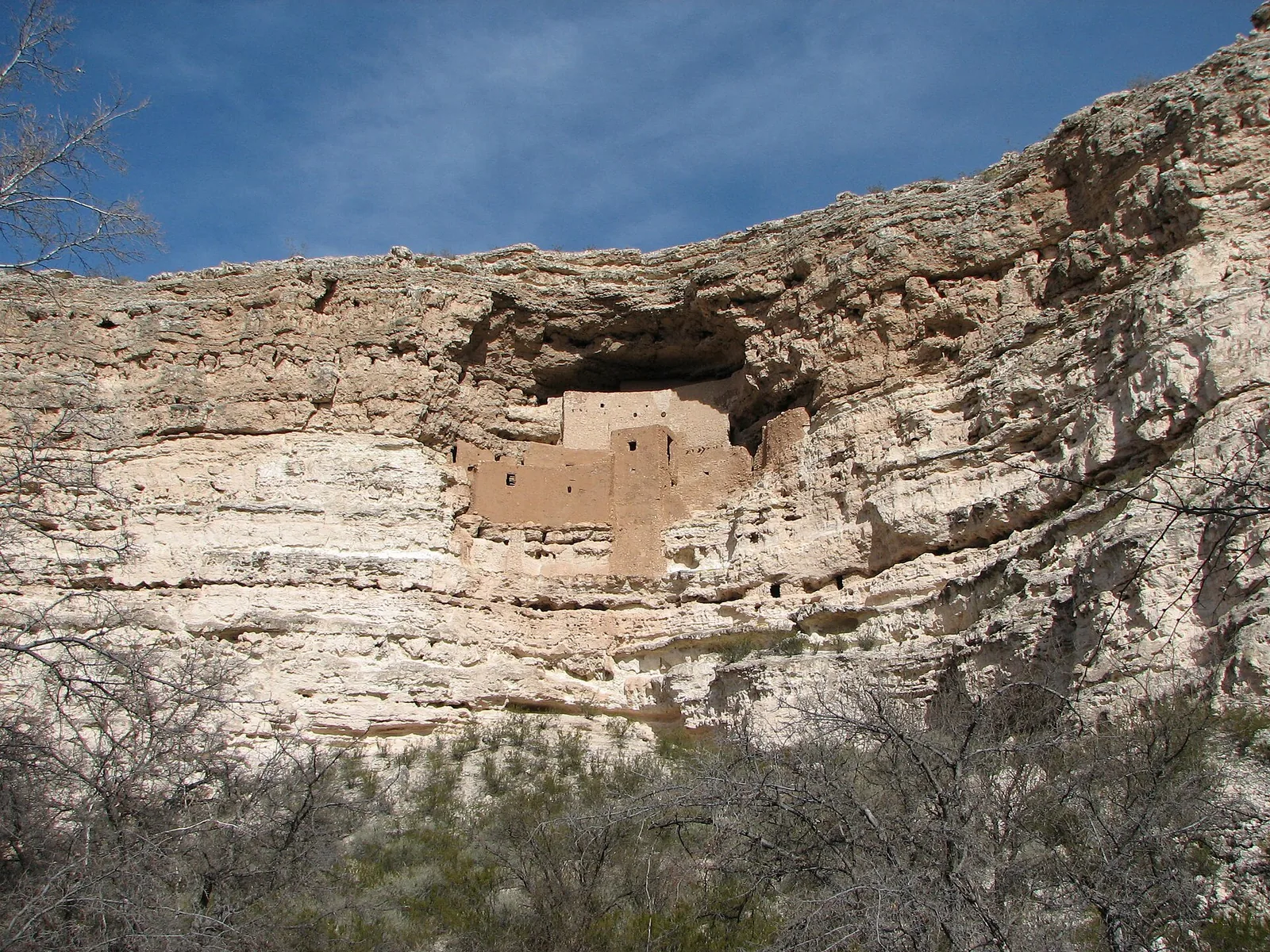
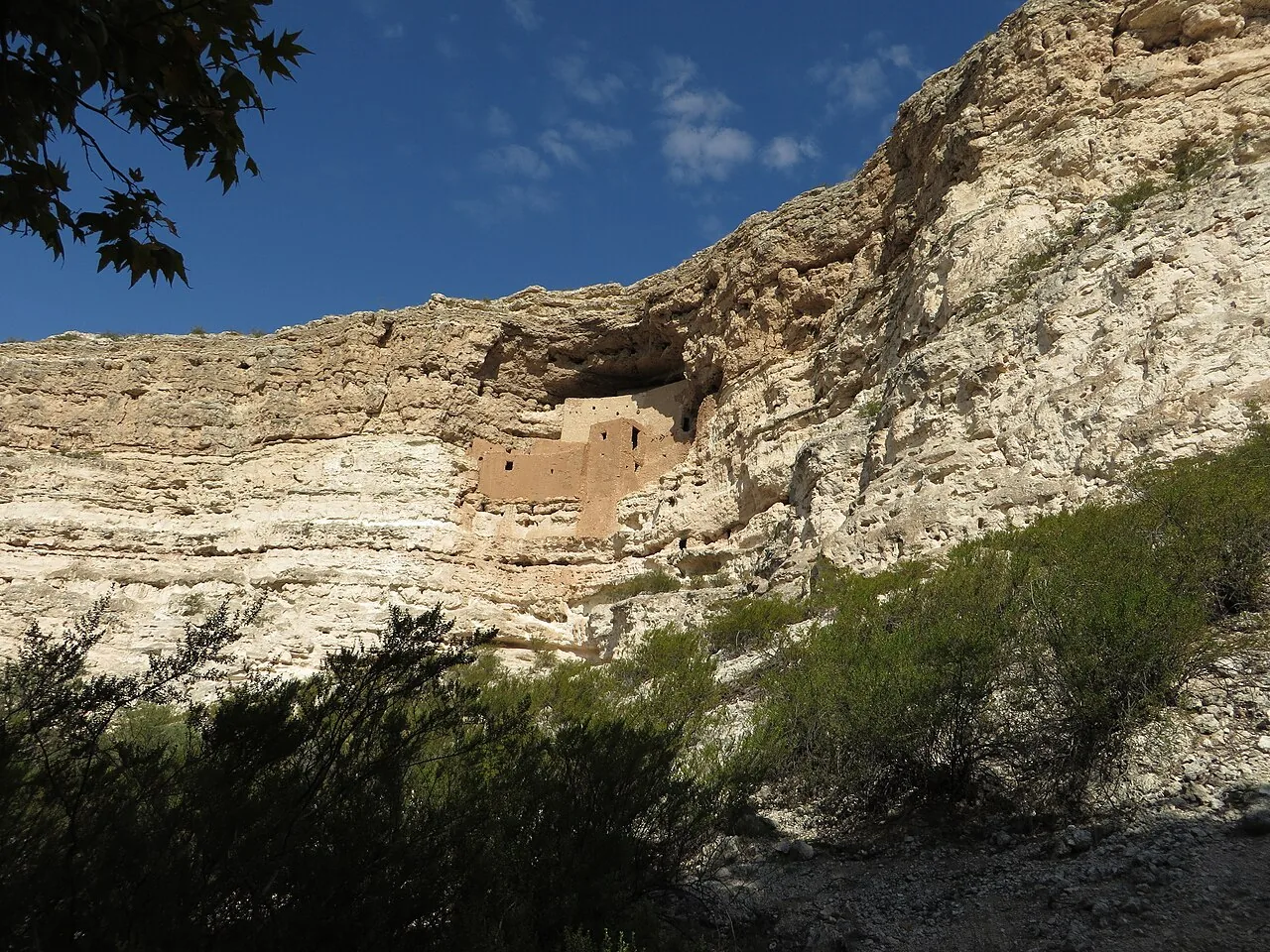
Montezuma Castle is one of those rare archaeological sites where the thing you came to see actually lives up to the photos: a five-story cliff dwelling tucked into a limestone alcove a hundred feet up a sheer wall, built by hand around 700 to 900 years ago and still standing. It’s about 30 minutes south of Sedona, the walk to see it is short and paved, and you can do the whole thing in an hour. The one thing to know going in is that you view it from below — you don’t climb up into the rooms — so manage your expectations and you’ll have a great time.
This guide covers Montezuma Castle itself, its quieter sister unit Montezuma Well, how to get to both, what they cost, and a few other Verde Valley stops worth folding into the same trip.
What it is, and why the name is wrong
Montezuma Castle is a cliff dwelling built by the Sinagua people, an agricultural culture that farmed the Verde Valley from roughly the 1100s into the 1400s before moving on. The main structure is a 20-room, five-story dwelling set into a natural recess in the limestone cliff, perched about 90 to 100 feet above the floor of Beaver Creek. The position wasn’t for the view — it kept the rooms defensible, shaded from the worst of the sun, and safe above seasonal flooding. It’s one of the best-preserved cliff dwellings in North America, which is the real reason to come.
Now, the name. There is no connection to the Aztec emperor Montezuma, and nothing Aztec about it at all. Early Euro-American settlers in the 1800s assumed the dwelling was so sophisticated it must have been built by the Aztecs, and the wrong name stuck. The people who actually built it were the Sinagua — a Spanish-derived word meaning “without water,” a nod to how they farmed this semi-arid valley. It’s worth keeping the real story straight, both out of respect and because it’s genuinely more interesting than the myth.
There’s a second, smaller structure to notice while you’re there. Just to the left of the main Castle, lower on the cliff, are the remains of what’s known as “Castle A” — a larger complex of around 45 rooms that has mostly collapsed over the centuries. It’s easy to miss if you’re fixed on the famous five-story dwelling, but the interpretive signs point it out, and it’s a reminder that this alcove housed a real community, not a single building.
President Theodore Roosevelt declared it a national monument in 1906, making it one of the first four monuments ever created in the United States. So when you’re standing on the path, you’re looking at something people decided was worth protecting more than a century ago.
How to get there and what it costs
Montezuma Castle sits near Camp Verde, about 25 miles and a 30-minute drive south of Sedona. Getting there is easy — it’s right off Interstate 17.
From Sedona, the simplest route is to take SR 179 south to I-17, then head south on I-17 to Exit 289 (Middle Verde Road). From the exit it’s about half a mile: drive east through a couple of roundabouts to a blinking red light, turn left onto Montezuma Castle Road, and it takes you straight to the entrance. The monument has a paved parking lot and a visitor center.
The drive is mostly interstate and uneventful, which makes the Castle one of the lowest-effort stops near Sedona — no white-knuckle mountain road, no high-clearance requirement, and no trailhead scramble for parking the way you’d face at Devil’s Bridge or Cathedral Rock. If you’re coming up from Phoenix instead, it’s roughly 90 minutes north on I-17 and the same Exit 289.
Fees and passes
Here’s where people get tripped up, so let’s be specific. This is a per-person fee, not per vehicle — different from how a lot of parks charge.
- The standard entrance fee is $10 per adult (age 16 and up) for a 7-day pass.
- Children 15 and under are free.
- Your fee also covers entry to Tuzigoot National Monument (another Sinagua site near Cottonwood) within those 7 days.
- An America the Beautiful interagency pass — the federal annual pass, around $80 — gets you in free, and it covers a whole carload. So do the Senior, Access (disability), Military, and 4th-grade versions. If you already own one, bring it.
- There’s also a Montezuma Castle–and–Tuzigoot annual pass for around $35 if you’re a repeat visitor to just these two sites.
The site takes cash and card in person during operating hours, and you can also buy passes ahead of time online if you’d rather skip the window. Prices change, so confirm the current rate before you go. Here’s how the main options stack up:
| Pass | Approx. price | Good for |
|---|---|---|
| Standard adult (7-day) | $10/adult | Castle + Tuzigoot, 7 days |
| Kids 15 & under | Free | — |
| Castle/Tuzigoot annual | ~$35 | These two sites, 1 year |
| America the Beautiful (Interagency) | ~$80 | Most federal land nationwide, 1 year, full vehicle |
| Senior annual / lifetime (62+) | ~$20 / ~$80 | Interagency coverage |
| Access (disability) / Military | Free | Interagency coverage |
Local tip: If your Sedona trip also includes the Grand Canyon, buy the America the Beautiful annual pass on day one. It pays for itself fast — Montezuma Castle, the Grand Canyon, and the Red Rock Pass areas of Sedona’s national forest are all federal land, and one ~$80 pass covers a carload of grown-ups across all of them for a year. Prices change, so check the current rate before you go.
A note on the Red Rock Pass: that’s the parking pass for U.S. Forest Service trailheads in Sedona (Cathedral Rock, Devil’s Bridge, and so on). It does not work at Montezuma Castle, which is National Park Service land — different agency, different pass. Confusingly, the reverse is also true: your Montezuma Castle entry fee won’t park you at a Sedona forest trailhead. If you’ve been confused by which pass goes where, you’re not alone, and this is exactly the kind of thing worth sorting out before you leave the house. (Our getting around guide breaks down the various passes.)
Hours
The visitor center, monument, and trails are generally open daily from 8:00 a.m. to 5:00 p.m., with the last entry shortly before closing. It’s closed on Thanksgiving, Christmas, and New Year’s Day. Hours shift seasonally and occasionally for staffing or weather, so confirm current hours on the National Park Service site before you drive down. There’s no need to reserve a time slot — you just show up, pay, and walk in.
What the visit is actually like
This is an easy one, and that’s part of the appeal. From the visitor center, a paved loop trail of about one-third of a mile winds through a streamside grove of Arizona sycamores along Beaver Creek and brings you to the viewing area below the dwelling. It’s flat, well-shaded in places, and lined with benches. Most people spend about an hour here total, including time in the visitor center.
A few things to set expectations:
- You view the dwelling from the ground. There is no climbing into or entering the rooms — that access was closed to the public back in 1951 to protect the fragile structure. There are interpretive signs and, often, a viewing scope, but you’re looking up at it from the trail, not walking through it.
- Bring or use the binoculars. Because you’re 90-plus feet below, a pair of binoculars or a zoom lens transforms the visit. You’ll pick out the individual rooms, the original wooden beams (some of the timber is original sycamore and juniper, centuries old), and the smoke-darkened ceilings.
- The visitor center is small but good. There’s a museum area with Sinagua artifacts and pottery, restrooms, a water bottle refill station, and a bookstore. Worth the 10 to 15 minutes.
- Beaver Creek is part of the appeal. The trail follows the creek the Sinagua farmed, and the shade and birdsong are a genuine change of pace from the open red rock. Kids near the railings often spot fish, turtles, and herons.
The trail surface is smooth and the grade is gentle. It’s the kind of stop where a tired family, grandparents, or anyone who’s hiked themselves out on Sedona’s harder trails can still see something remarkable without much effort. If you’re building a slower-paced day, it slots neatly alongside the rest of Sedona’s easy walks.
Montezuma Well — the free, quieter half
Most people stop at the Castle and head home. If you have another hour, drive the extra 11 miles to Montezuma Well, a separate unit of the same monument near Rimrock. It’s completely free — the Well doesn’t charge an entrance fee at all — it’s far less crowded, and a lot of locals quietly think it’s the more interesting of the two.
The Well is a limestone sinkhole about 368 feet across, formed when an underground cavern collapsed. It’s fed by an underground spring that pushes out roughly 1.5 million gallons of warm water every day, year-round, even in drought — which made it a precious resource in this dry country. There are Sinagua and earlier Hohokam dwellings built right into the rim and the walls, and you can still see remnants of the prehistoric irrigation canals the Sinagua dug to carry the spring water out to their fields. Some of those canals are over 1,000 years old, and one stretch is still lined with the mineral crust the flowing water left behind.
What to expect at the Well
- A rim loop trail of roughly half a mile rings the sinkhole with overlooks down into the green water and across to the cliff dwellings.
- A short side trail descends toward the water and the cliff dwellings — this part has stone steps and is steeper, so it’s less accessible than the Castle, but the payoff is being right down near the water’s edge looking up at the rooms.
- Another short trail leads to the outlet (the “swallet”), a cave on the southeast rim where the water exits. It’s shaded and noticeably cooler down there — often 10 to 20 degrees cooler than the rim — and a nice place to sit on a hot day. This is also where you’ll see the old irrigation channel.
- There’s a small picnic area, a restroom, and not much else — no visitor center or bookstore here, so it’s a quieter, more self-guided experience.
A genuinely one-of-a-kind ecosystem
The Well’s water is the strange heart of the place. The spring water carries unusually high carbon dioxide and dissolved arsenic, which is why no fish can live here — and that quirk has let a tiny, isolated cast of creatures evolve in the water and nowhere else on Earth. Scientists count at least five endemic species here, the most of any spring in the American Southwest: a microscopic diatom, the Montezuma Well springsnail, a water scorpion, the Hyalella montezuma amphipod, and the Motobdella montezuma leech — a nocturnal hunter that uses passive sonar to find and swallow the amphipods whole. You won’t see most of this from the rim, but knowing it’s down there changes how the place feels. Treat the water with care; it’s a closed world.
Getting to the Well
From Montezuma Castle, head back to I-17 and go north about four miles to Exit 293, then follow the signs through McGuireville and Rimrock for roughly another four miles. Most of the road is paved, with a short dirt stretch near the end that’s passable for a regular car in normal conditions. Allow about 20 minutes between the two units. If you only have time for one and you’ve already seen plenty of ruins, the Well is the more unusual stop; for the iconic photo, stick with the Castle.
A quick comparison
If you’re deciding how much time to give each, here’s the short version:
| Montezuma Castle | Montezuma Well | |
|---|---|---|
| What it is | 5-story cliff dwelling in a cliff alcove | Spring-fed limestone sinkhole with rim & wall dwellings |
| Cost | ~$10/adult, kids free (covers Tuzigoot too) | Free |
| Trail | Paved 1/3-mi loop, flat, accessible | ~1/2-mi rim loop + steeper side trails with steps |
| View access | From below only | Overlooks plus a path down toward the water |
| Crowds | Busier (the famous one) | Much quieter |
| Time needed | ~1 hour | ~1 hour |
| Facilities | Visitor center, museum, restrooms, water | Restroom, picnic area; no visitor center |
Do both and you’re looking at a relaxed half-day, including the drive from Sedona.
Best time of day and season
The Verde Valley sits lower and hotter than Sedona — usually several degrees warmer — and the Camp Verde area can push past 100°F on summer afternoons. Plan around that.
- Best season: Spring (March–May) and fall (October–November) are ideal — comfortable temperatures and the creekside sycamores looking their best. Fall color along Beaver Creek can be lovely in late October and early November.
- Best time of day: Go in the morning, both to beat the heat and to catch better light on the dwelling. The Castle’s alcove faces roughly east, so it’s nicely lit earlier in the day and slips into flatter shade later — another reason mornings win for photos.
- Summer: If you’re visiting June through August, get there at opening (8 a.m.) and you’ll be back in the car before the worst of it. The Well’s shaded outlet trail is your friend on a hot day.
- Winter: Perfectly pleasant and quiet. Cold mornings, mild afternoons, smaller crowds. Just check the holiday closures.
If you’re still mapping out when to come to the region at all, our best time to visit guide covers the wider seasonal picture.
What to bring
It’s a short, easy outing, but a few things make it better:
- Water. It’s the desert, the valley runs hot, and there’s a refill station at the Castle — use it. The Well has fewer services, so fill up before you leave the Castle.
- Sun protection. Hat, sunscreen, sunglasses. Shade exists but isn’t guaranteed where you’re standing.
- Binoculars or a zoom lens. Genuinely the single best thing you can bring here, given you’re viewing from below.
- Cash or card for the fee, or your America the Beautiful pass.
- Comfortable walking shoes. The Castle path is paved, but the Well’s side trails have uneven stone steps.
- Layers in winter, and patience with afternoon heat in summer.
- Snacks if you want them — there’s no café or food service at either site, but the Well has a shaded picnic area.
You won’t need hiking boots or poles for the Castle. The Well’s steeper bits warrant decent shoes but nothing technical.
Accessibility
Montezuma Castle is one of the more accessible archaeological sites in the region. The visitor center is wheelchair accessible, and the paved 1/3-mile loop is relatively level and navigable by wheelchairs and strollers. There’s designated accessible parking, restrooms, benches, shade, and a water refill station. For travelers with mobility needs who still want to see something genuinely impressive, this is a strong pick.
Montezuma Well is a different story. The rim loop has some accessible viewpoints, but the trails down toward the water and the outlet involve stone steps and steeper grades and are not wheelchair accessible. If accessibility is a priority, do the Castle for sure, and at the Well stick to the rim overlooks, where you still get the full view down into the sinkhole and across to the dwellings.
Bringing dogs
Good news for travelers with a dog along: leashed pets are welcome on the trails at both units. Dogs on a leash no longer than six feet are allowed on the paved trails at Montezuma Castle and Montezuma Well, in the picnic areas, and in the parking lots. They’re not allowed inside the visitor center or restrooms unless carried, so plan to have someone wait outside with the dog while the rest of the group browses the museum. As always, clean up after your dog and don’t let it disturb plants or wildlife.
There’s even a BARK Ranger program here — pick up a checklist at the park office, follow the responsible-pet basics, and your dog earns an official tag. It’s a small, free thing dog-owners get a kick out of. Service animals are, of course, permitted everywhere people can go.
How to avoid the crowds
Montezuma Castle is popular and easy to reach from the interstate, which means tour buses and road-trippers passing between Phoenix and Flagstaff both stop here. It rarely feels packed the way a Sedona trailhead does, but the parking lot and viewing area can get busy midday.
- Arrive early — right at the 8 a.m. opening is best. The first hour is the calmest and coolest.
- Skip spring break and holiday weekends if you can, or at least go early on those days.
- Save the Well for crowd relief. It draws a fraction of the visitors, so if the Castle feels busy, the Well will feel like you have it to yourself.
- Weekdays beat weekends, as everywhere.
- Late afternoon is the second-best window. Once the tour buses roll on toward Flagstaff, the parking lot thins out. The light goes flatter on the dwelling, but the trail empties.
Safety and respecting the site
There’s nothing dangerous about this outing if you use basic sense, but two things matter.
Heat is the real hazard. The Verde Valley gets hot, and people underestimate it because the walk is short. Carry water, wear a hat, and don’t dawdle in the open at midday in summer. The shaded sections of the Castle trail and the Well’s outlet cave are where you’ll want to linger if it’s warm.
This is an ancestral site, and people still hold it sacred. The Sinagua are ancestors of present-day Hopi, Yavapai, Apache, and other tribes, and these places are living parts of their history. A few simple things:
- Stay on the marked trails — straying damages fragile, irreplaceable structures and habitat.
- Don’t touch, climb on, or remove anything. Pottery shards, rocks, plants — all of it stays. Taking artifacts from federal land is also a crime.
- At Montezuma Well especially, treat the water and the dwellings with care; the ecosystem is genuinely one of a kind, and a single careless act can’t be undone.
- Keep noise down and be considerate. People come here to take it in quietly.
This is the kind of place that rewards slowing down. If you find that you connect with the deeper history and the sense of place, Sedona’s spiritual and energy tours explore similar ground closer to town.
What to pair it with nearby
The whole appeal of Montezuma Castle is how easily it folds into a bigger Verde Valley day. A few worthwhile add-ons, all close by:
- Montezuma Well — covered above; the obvious free companion 11 miles away.
- The Crane Petroglyph Heritage Site (formerly V Bar V). The largest known petroglyph site in the Verde Valley — over 1,000 carvings on the banks of Beaver Creek — about a 10-minute walk from its small visitor center. It sits off SR 179 / FR 618 between Sedona and the Castle. Note two things: it requires a Red Rock Pass or America the Beautiful pass (it’s Forest Service land), and it keeps limited, seasonal hours and is closed several days a week — often only open a Friday-through-Monday window, with shorter summer hours, and it shuts when the temperature tops 100°F. Check the Coconino National Forest site before counting on it. If you want more ancient rock art, the cliff dwellings and pictographs at Palatki and Honanki on Sedona’s west side are the other great option.
- Tuzigoot National Monument, near Cottonwood — a hilltop Sinagua pueblo with a short loop trail, and your Montezuma Castle fee already covers it. Pairing the two is the classic “two ruins in a day” Verde Valley plan.
- The Verde Valley wine country around Cottonwood and Page Springs, if you want to turn the afternoon into something looser. See our wineries guide.
- Jerome, the old copper-mining town turned artist colony clinging to a mountainside, is a natural extension if you keep going. We cover it in the Jerome day trip guide.
A realistic plan: leave Sedona mid-morning, do the Castle, drive over to the Well, and either head back or push on to Jerome and the wineries for the afternoon. If you’d rather keep it tight and historic, do the Castle and Tuzigoot back to back for the two headline Sinagua sites in one easy half-day. By the time you roll back into town you’ll have earned a slow evening — and if you’ve still got energy, there’s always a rally on the indoor court back at the house to cap the day.
However you sequence it, Montezuma Castle is one of the easiest “wow” stops near Sedona: short walk, real history, and a piece of the human story of this valley that’s been standing for the better part of a millennium.
Frequently asked questions
Can you go inside Montezuma Castle?
How much does it cost to visit Montezuma Castle?
Is Montezuma Well worth visiting too?
Why is it called Montezuma Castle if it has nothing to do with the Aztecs?
Is Montezuma Castle wheelchair accessible?
How far is Montezuma Castle from Sedona?
Stay where you can rally any season
Sedona Pickler is a private West Sedona vacation home with its own indoor, climate-controlled pickleball court — a short drive from the trailheads, viewpoints and restaurants in this Sedona guide. Play at sunrise or after dark, in any weather.
Check availability on Airbnb