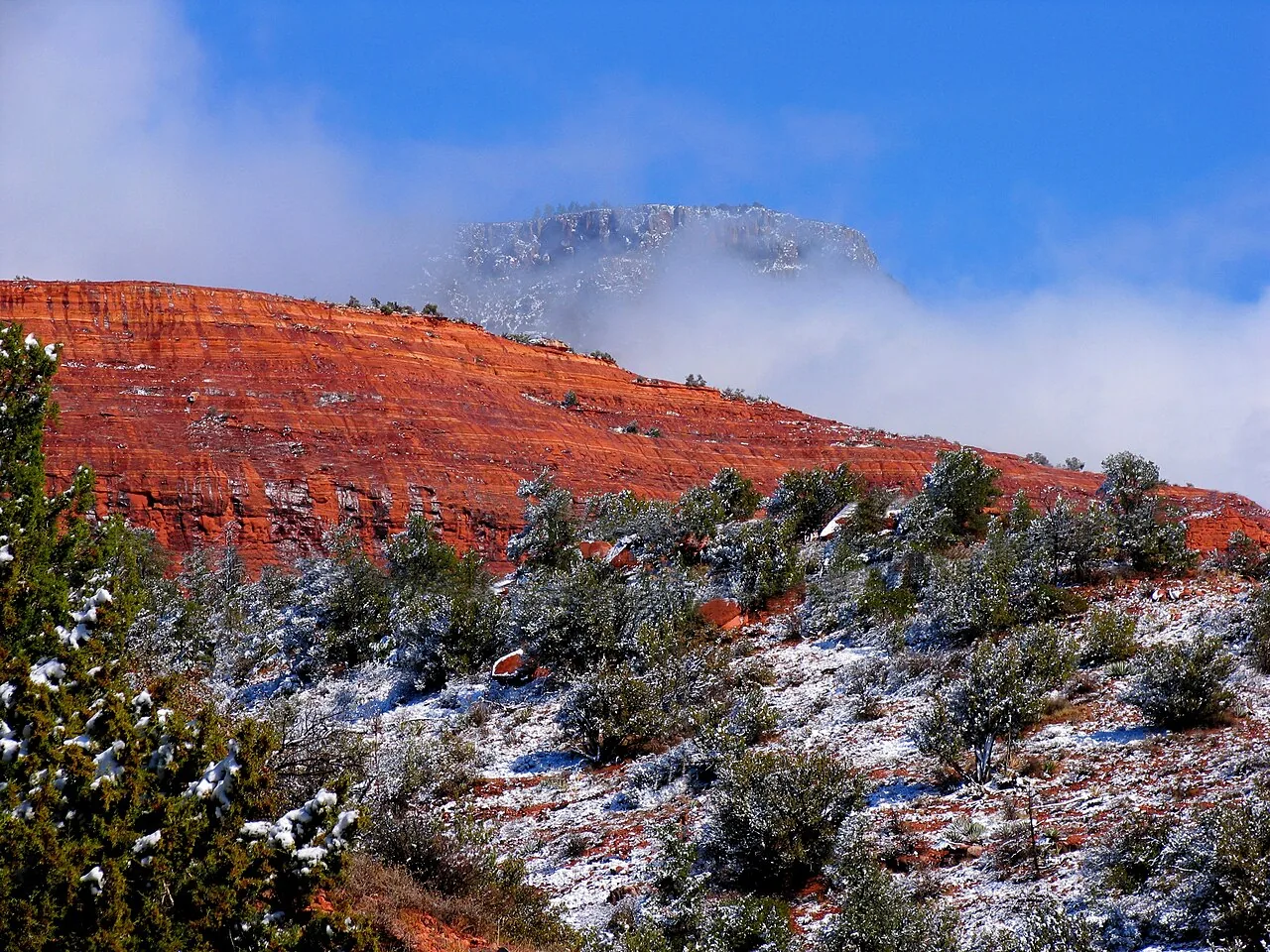
Yes, it snows in Sedona, a little and not for long. Sitting roughly 4,350 feet up, the town gets a little over 4 inches in an average year, nearly all of it between December and March, and most of it comes as a light coat that leaves sunny ground within a day.
That short window is why people set an alarm for it. Fresh white on the red rock is worth an early alarm, and on the many other winter days, deep snow is a drive away. This page covers when snow is most likely, how much to expect, where to stand when it comes, and where to find a full snow day any time in winter.
How much snow falls each month
| Month | Sedona snowfall | Flagstaff airport snowfall | Sedona high and low |
|---|---|---|---|
| October | 0 in | 1.5 in | 79° / 51° |
| November | 0.1 in | 8.2 in | 67° / 41° |
| December | 1.1 in | 18.5 in | 58° / 33° |
| January | 1.4 in | 20.9 in | 58° / 34° |
| February | 0.8 in | 19.3 in | 61° / 36° |
| March | 0.6 in | 15.6 in | 68° / 40° |
| April | 0.2 in | 5.0 in | 75° / 44° |
| May | 0 in | 1.1 in | 84° / 53° |
| Full year | 4.2 in | 90.1 in |
Sedona’s snowfall column is the long-term record for its weather station, 1943 to 2010, from the Western Regional Climate Center, one of NOAA’s regional climate centers. The Flagstaff figures and the highs and lows come from NOAA’s current climate normals, which cover 1991 to 2020.
The same long-term summary lists an average snow depth of zero in every month, which tells you how quickly it goes. January afternoons average 58 degrees, and most winter days are bright, so snow on south-facing rock goes quickly. Shaded corners and the higher ledges keep theirs longer.
When it is most likely to snow
January is the snowiest month on average, with December just behind it and February next. Those three months carry more than three quarters of the year’s total, so aim for this stretch if you are hoping to see snow on the rocks.
March and April can bring a surprise. NOAA’s daily logs for the Sedona station show 3 inches on March 7, 2025, and 3.5 inches about a week later. In 1997, it logged 5 inches as late as April 2.
November is rare. The long-term average for the month is a tenth of an inch, so a November visitor would do better to plan on fall color and a drive up to the snow.
What a big Sedona snow looks like
Every so often a real storm comes through. On February 21, 2019, the National Weather Service reported 8.5 inches in West Sedona by 5:30 in the evening, and the Sedona Red Rock News put the total at 11 inches by the next morning. The same storm dropped 35.9 inches on Flagstaff airport in a single day, according to NOAA’s records.
Smaller storms are more common. One on New Year’s Eve of 2018 left about 1.8 inches in town by early afternoon, and the Sedona station logged 4 inches on February 10, 2009, and 6.5 inches on February 28, 1997. The station’s records have gaps, so take these as examples.
Snow in town comes on its own schedule, so we treat it as a bonus and plan on Flagstaff for a sure snow day in the heart of winter. A few days out, read the forecast from the National Weather Service office in Flagstaff.
Where to see snow on the red rocks
Snow looks best in the first hours of daylight, when the sun comes in low across the white ledges. In late December and January the sun rises around 7:30. These are our picks, starting with the easiest.
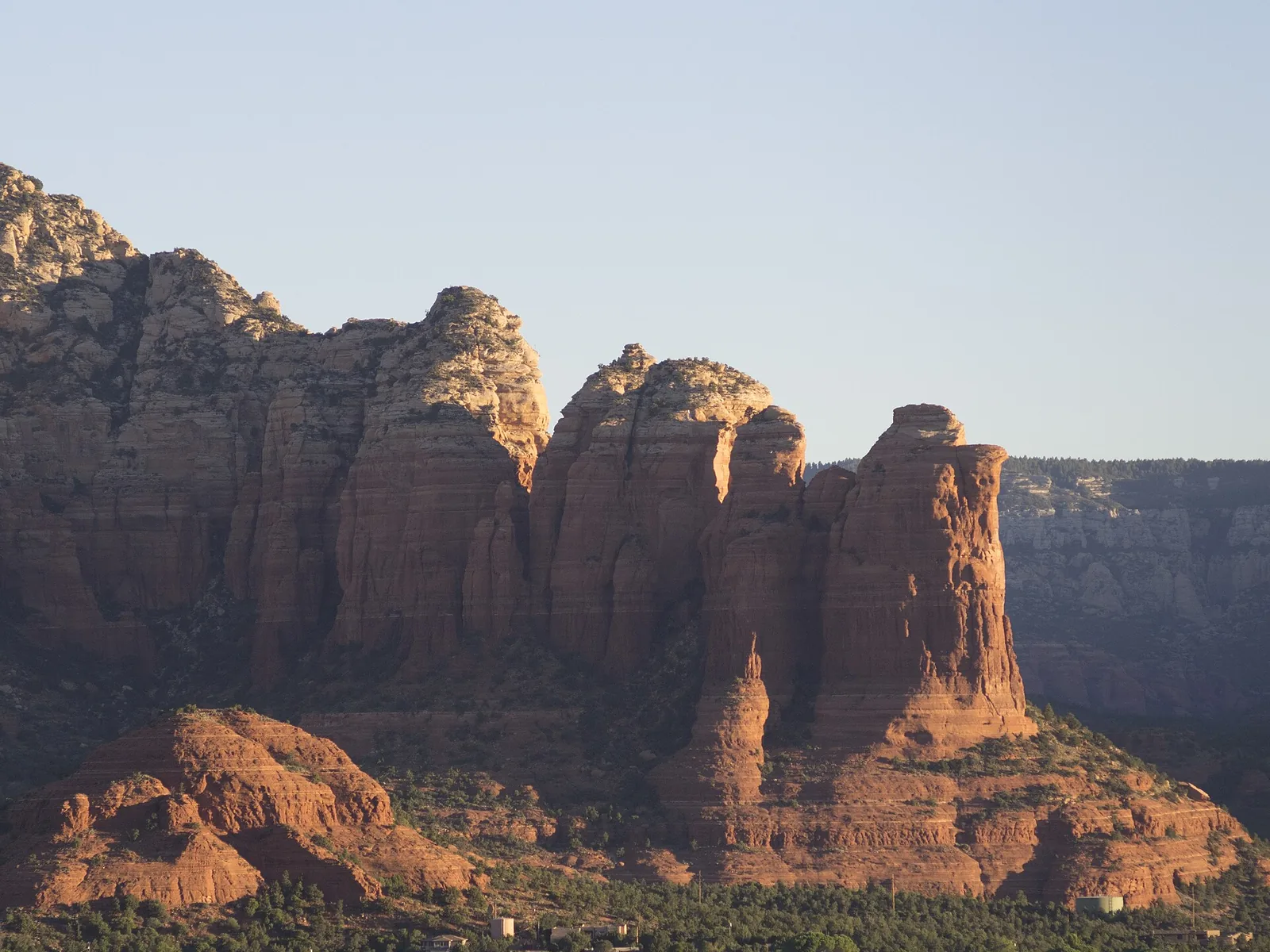
- Airport Mesa overlook. The paved viewpoint near the end of Airport Road looks over West Sedona toward Capitol Butte, Coffee Pot Rock and their neighbors, and on clear winter days you can see snow on far-off peaks too. You park and walk a few steps, and there is a small parking fee. The road climbs, so give it time to be cleared.
- Bell Rock Pathway. A wide, gentle path off Highway 179, with Bell Rock beside you and Courthouse Butte behind it. It is one of the easiest walks in the area after a snowfall. The Courthouse Vista lot needs a Red Rock Pass.
- Mescal Trail. Sedona Monthly recommends this West Sedona path after a dusting of snow. It runs about 2.5 miles and climbs only about 200 feet, with red rock and green trees close on both sides. The trailhead is on Long Canyon Road, reached from Dry Creek Road.
- Sugarloaf Loop Trail. From the Teacup Trailhead off Buena Vista Drive, this short loop puts Coffee Pot Rock straight ahead, with Capitol Butte beside it. It is a few minutes from most of West Sedona, which helps on a morning when you want to go early and stay close.
- Highway 179 in the car. Pullouts line the Red Rock Scenic Byway. Once the road is clear, a slow drive is a fine way to see the snow without getting your boots wet.
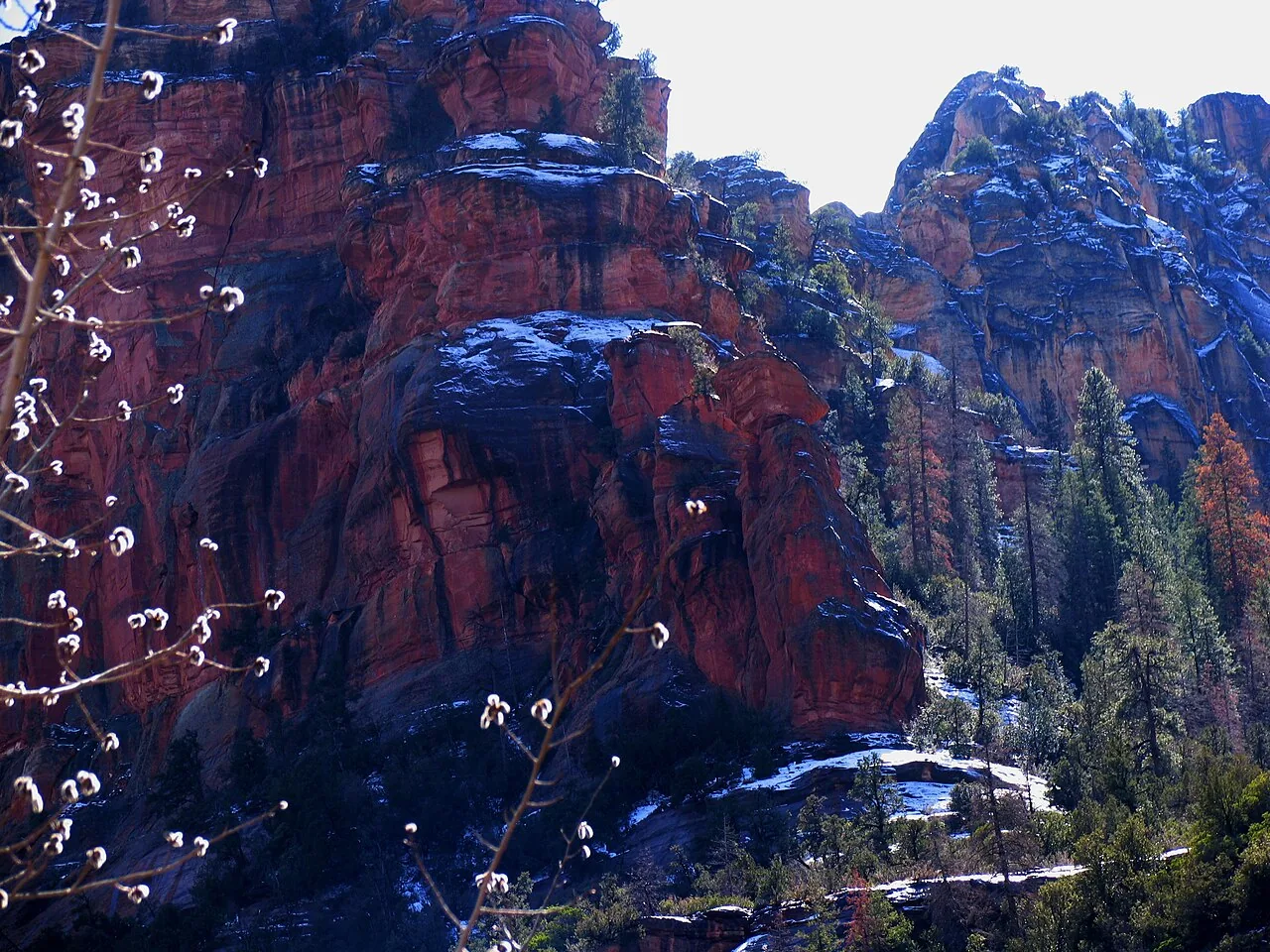
Our photography guide has more viewpoints, including which rocks face the morning sun. Keep the low morning sun behind you when you shoot, and take a second round of pictures when the clouds start to break.
Tips for a snowy morning
Even a thin coat makes rock and clay slippery, so shoes with a good grip matter, and slip-on cleats in your bag will help in the shady spots. Stick to flatter trails on these days and keep the scrambles for later in the week. Canyon trails such as Boynton Canyon stay icy well after the open trails have dried. If the footing feels wrong, turn around and try it again later in the week.
Give the plows a head start before you drive. Sedona’s crews clear the main routes first and the neighborhood streets after, so an hour or two of patience makes for an easier trip. If it’s still snowing, stay in and enjoy the house, and we have some ideas for that below. Before you head anywhere farther, look at az511.gov, Arizona’s road map.
Where to go for deep snow
Flagstaff is where we send people who want to play in the snow. The city is about 7,000 feet up, and NOAA’s normals put the airport’s yearly snowfall at about 90 inches. Arizona Snowbowl, high on the San Francisco Peaks, gets about 260 inches in an average season and lists November 20, 2026, as its scheduled opening day.
Winters there vary a lot. Among the 27 winters since 1991 with complete daily records, Flagstaff airport ranges from about 27 inches in the winter of 2025 to 2026 up to about 163 inches in 2022 to 2023. So check the snow report before you go. Discover Flagstaff keeps a running count of current snowfall on its site, and Snowbowl posts its own.
While State Route 89A is closed through Oak Creek Canyon, take Highway 179 to Interstate 17, about 90 minutes from the house to Flagstaff. A few good places to play once you get there:
- Flagstaff Snow Park, inside Fort Tuthill County Park, runs six tubing lanes plus a kiddie hill. Tickets are sold online only, starting two to five days before, and often sell out. The park supplies the tubes, and sleds aren’t allowed on its runs.
- The rest of Fort Tuthill County Park is open for snow play from dawn until dusk, so bring a sled there.
- Arizona Snowbowl has the lifts, with rentals and lessons on site.
- Arizona Nordic Village, north of Flagstaff off Highway 180, grooms cross-country ski trails and has room for snowshoeing.
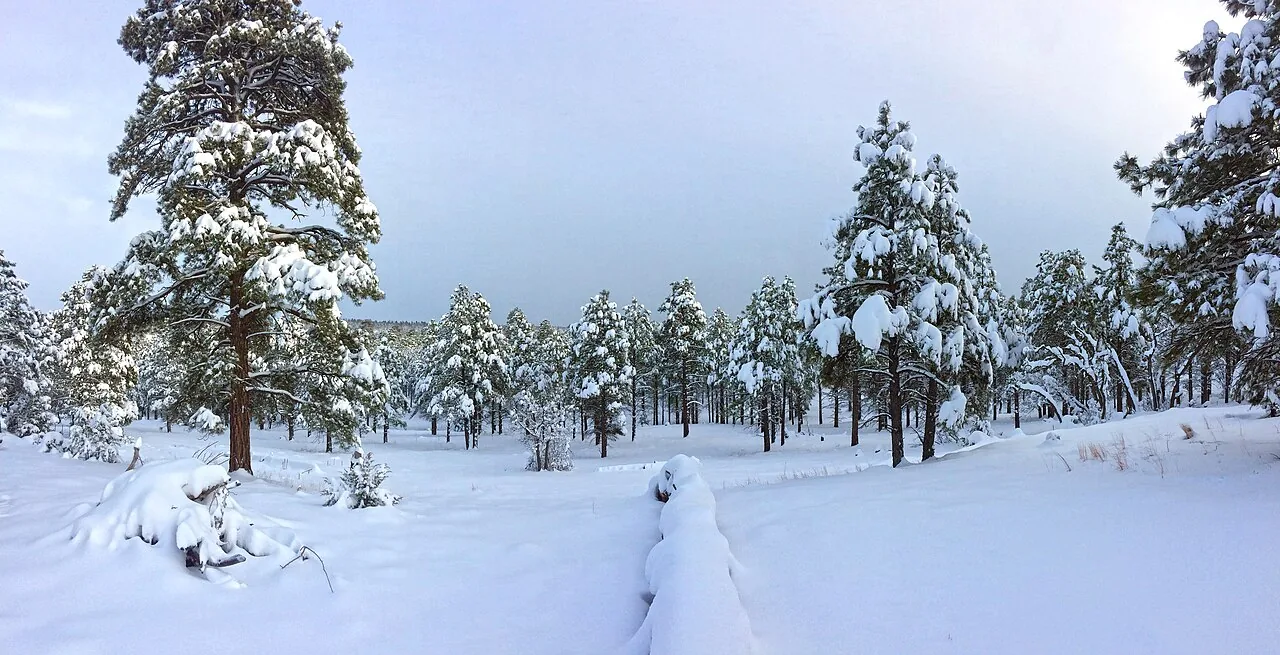
Our winter trip plan has the tickets, hours and a packing list for all of these, while our Flagstaff day trip guide has lunch spots and the town.
A snow day from Sedona Pickler
The house has four bedrooms, and Brian and Joanna Stoll added an indoor court, housed in a separate steel building beside it. That court is heated, so a snowy morning is a good one for a game. If you wake up to white on the hills, this is how we would spend the day.
- Go out early. Once the plows have been through, head for the Airport Mesa overlook or the nearest trailhead, take your pictures and walk a little.
- Come back for breakfast. Cook something big in the full kitchen.
- Play at midday. A game warms everyone up after a cold morning.
- Have a slow afternoon. Put a film on in the TV lounge, or start a foosball match in the bunk room.
- Finish on the deck. A cold evening suits the fire table, and the tubs even more.
For the rest of a winter trip, read our January guide and our December guide.
Frequently asked questions
Does it snow in Sedona?
What month does it snow in Sedona?
Is there snow in Sedona in November?
How long does snow stay on the ground in Sedona?
Where can you see snow on the red rocks?
How much snow does Flagstaff get compared with Sedona?
Can you ski or go sledding near Sedona?
Are the roads safe when it snows in Sedona?
Warm up after the snow
Our house in West Sedona keeps a heated court indoors, plus a pair of soaking tubs outside, ready for after a cold morning out.
Check dates & book