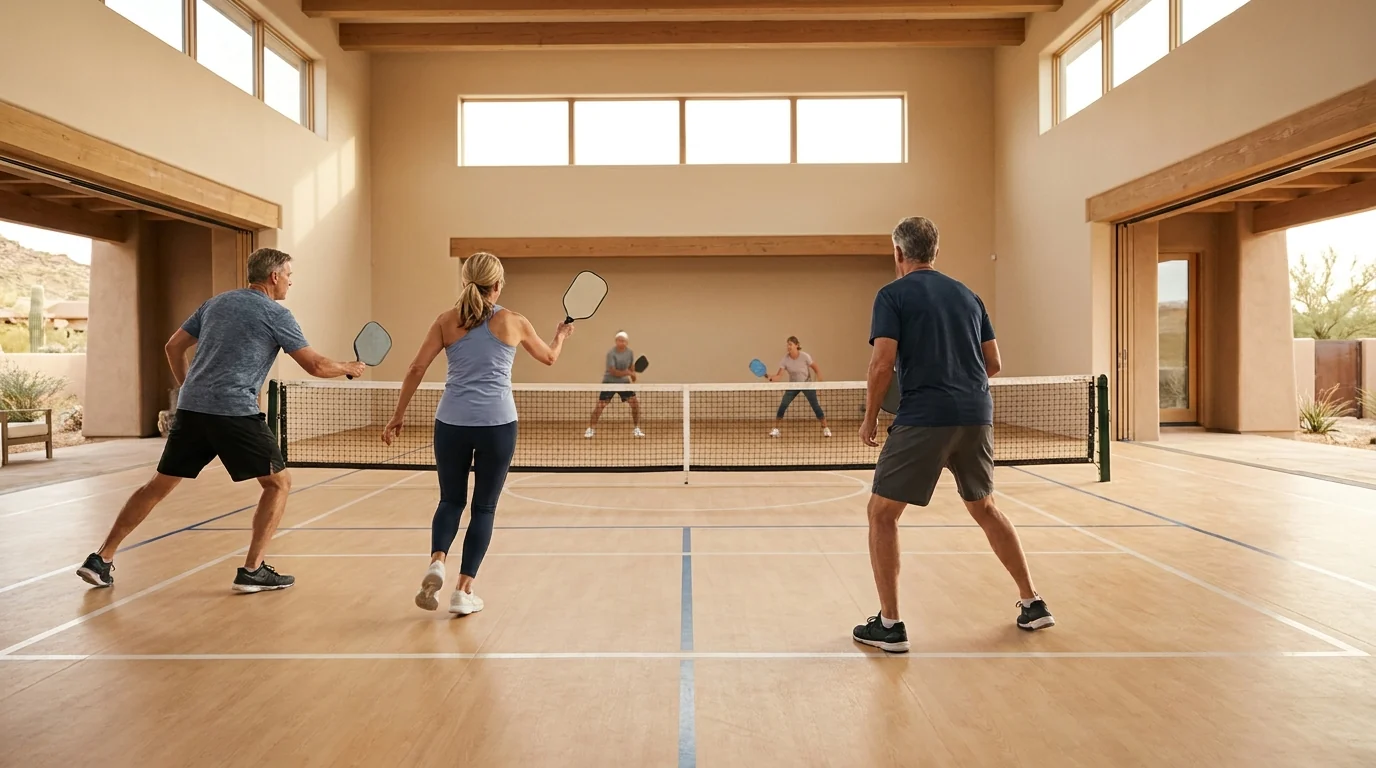
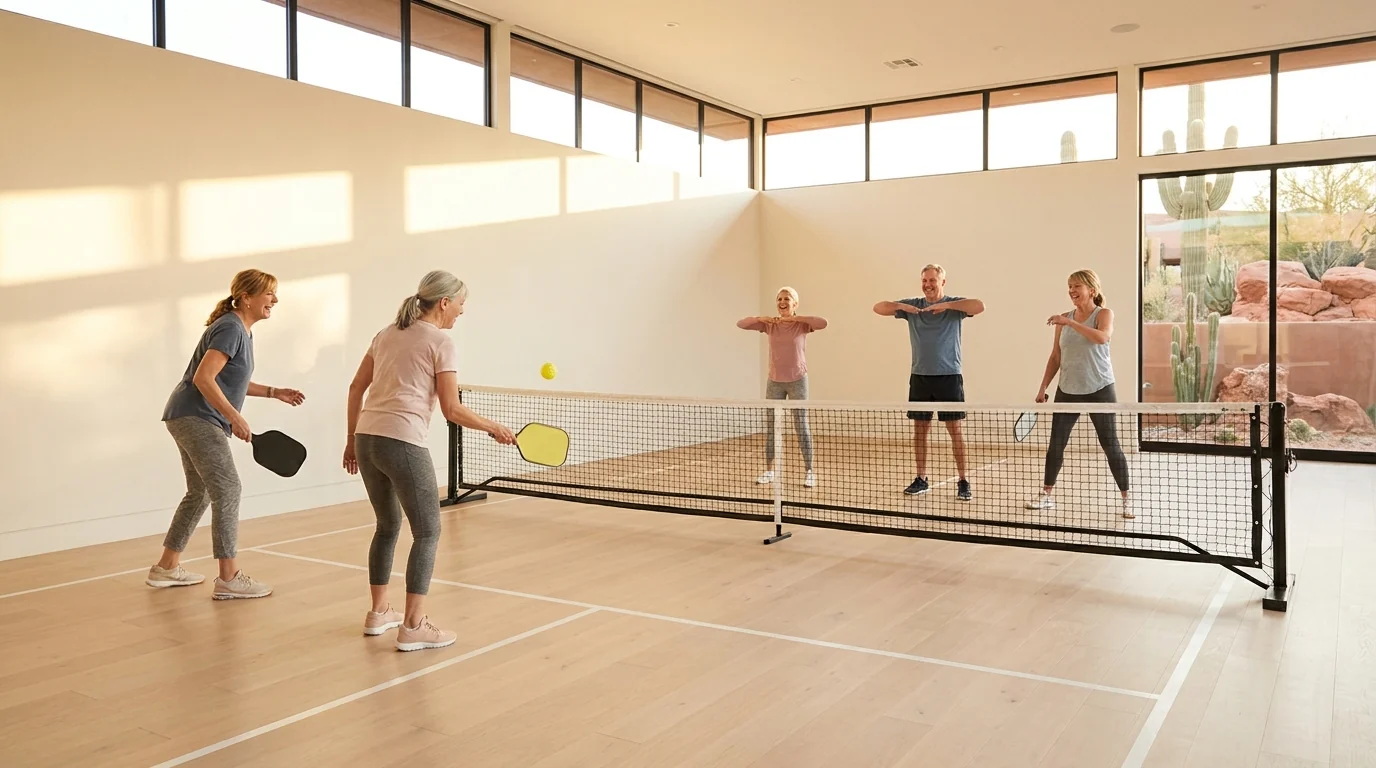
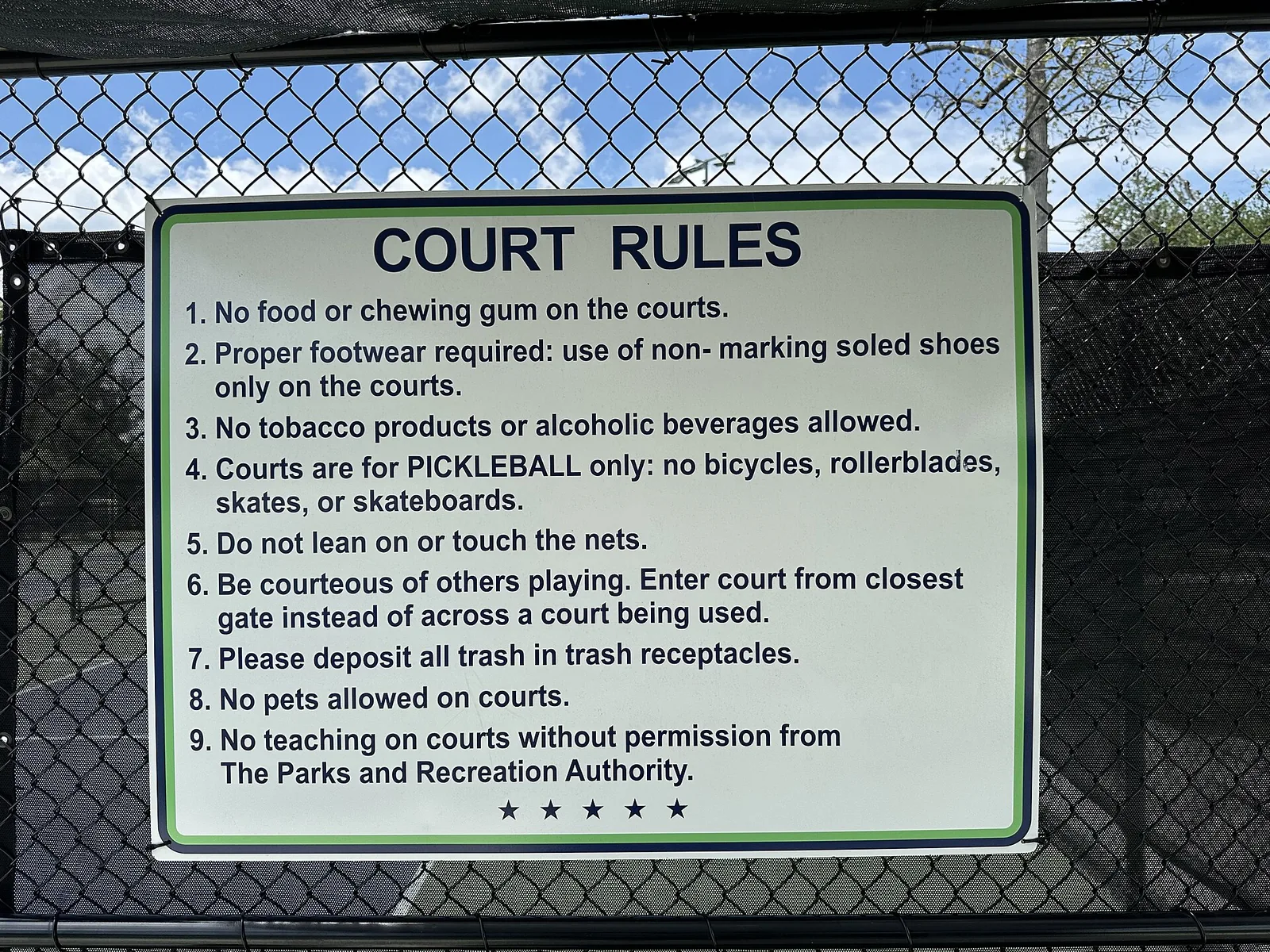
Arizona summers come with an asterisk. From the middle of June through the end of September, the calm, dry heat of late spring gives way to the monsoon: afternoons that start clear and hot, then stack up thunderheads by mid-afternoon and let loose. For most of the year, an outdoor pickleball court in Arizona is a fine place to be. During monsoon, it’s a gamble. You can warm up under blue sky at four o’clock and be running for the car by four-thirty.
This is the case for playing indoors from July through September — not on a covered court, not a shaded one, but on a fully enclosed, climate-controlled court. Below is what the monsoon actually does to outdoor play, why a roof alone doesn’t fix it, and how to plan a trip so the weather stops deciding whether you get to play.
When Arizona’s monsoon actually hits
The National Weather Service sets the monsoon season on the calendar: June 15 through September 30, every year. That fixed window has been the official definition since 2008. The storms don’t spread evenly across it, though. The most active stretch runs from about mid-July into mid-August, when the air holds the most moisture and storms fire on most afternoons.
The mechanism behind it is a seasonal shift in wind. For most of the year Arizona’s winds come out of the west, dry off the Pacific. In summer, a ridge of high pressure parks over the Four Corners region and the flow swings around to the south, pulling humid air up from the Gulf of California and northwest Mexico. That moisture, combined with the desert’s intense daytime heating, is the fuel for thunderstorms. The storms usually build in the afternoon and evening — which is exactly when a lot of people want to play, once the worst of the midday heat has eased.
So the honest picture of a July or August day in Arizona is this: a clear, hot morning; towering clouds by early afternoon; and a decent chance of a storm rolling through somewhere between about two and eight in the evening. Some days it misses you. Plenty of days it doesn’t.
What a monsoon storm does to an outdoor court
A single monsoon cell can bring four different problems, and any one of them ends outdoor play.
Lightning is the first and most serious. If you can hear thunder, you are close enough to be struck. The National Weather Service message is blunt: when thunder roars, go indoors, and stay there until 30 minutes after the last rumble. By the older 30-30 rule, if you count 30 seconds or fewer between a flash and its thunder, the storm is within about six miles — time to clear the court. On a public court, one distant boom can shut everyone down for half an hour, and monsoon storms rarely pass in a single clean wave. Two or three cells in an evening can wipe out the whole session.
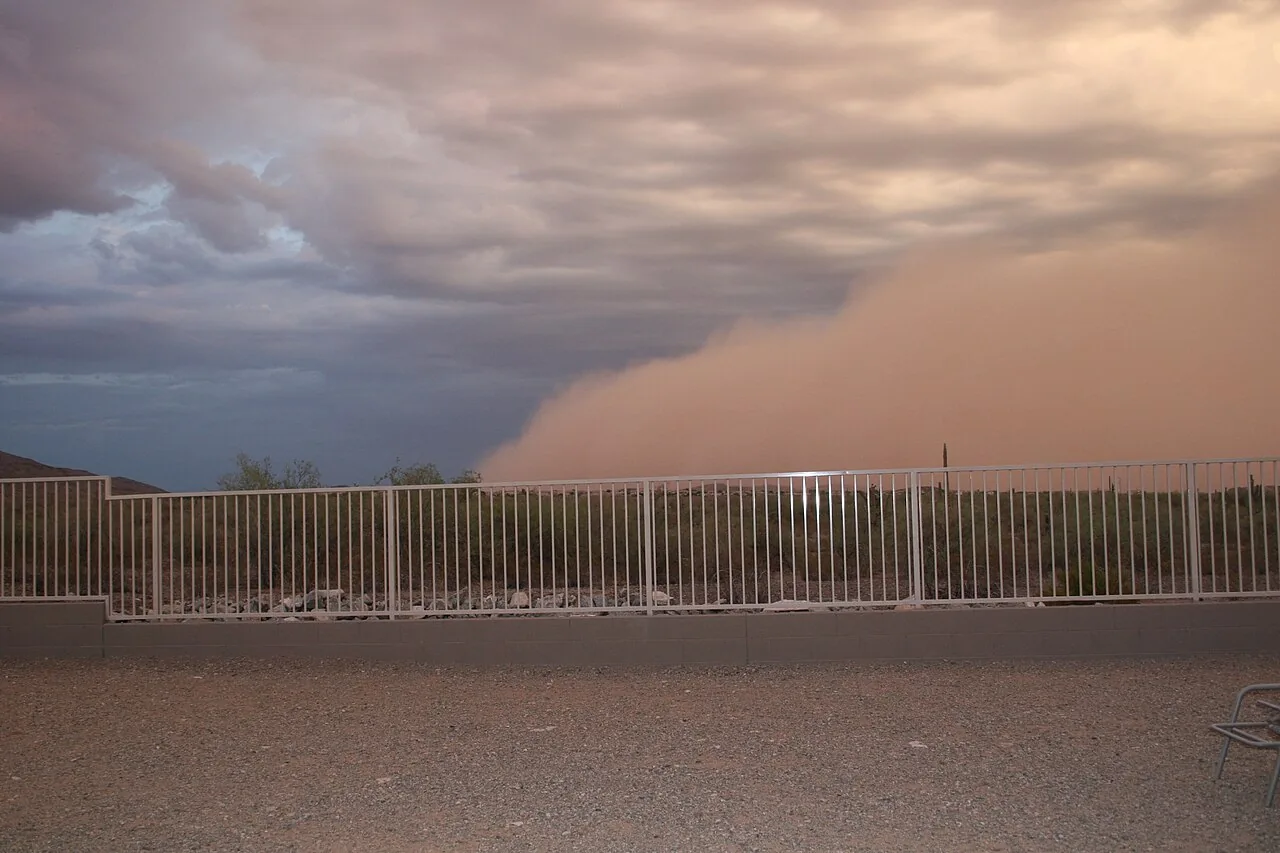
Blowing dust is the second. When a storm collapses, the rain-cooled air rushes out ahead of it along the ground. Over Arizona’s dry soil, that outflow can lift a wall of dust — a haboob — that drops visibility to near zero and coats everything in fine grit. You can’t play through it; you can barely see through it. And the sand it leaves behind turns a court surface gritty and slick.
Flash flooding is the third, and the one that catches visitors off guard. A storm dropping an inch or two of rain miles upstream can send water racing down a normally dry wash while the sky directly overhead stays clear. The Weather Service’s line — turn around, don’t drown — exists because most flood deaths happen in vehicles, and it takes only about a foot of moving water to float a car. Low spots, washes, and the roads between trailheads and town can go from dry to dangerous quickly.
Wind is the fourth. The same downdraft that kicks up a haboob can arrive as a microburst — a small, violent burst of wind that can reach 100 miles per hour for a few minutes before it fades. Even a milder gust front knocks the temperature down noticeably within minutes and sends balls and paddles skittering across the court.
Why “covered” isn’t the same as “indoor”
People sometimes assume a shade structure or a roofed court solves the monsoon problem. It doesn’t. A covered court is still an outdoor court, and the monsoon’s worst hazards don’t care about a roof.
Lightning doesn’t. A canopy gives you shade and keeps direct rain off the surface, but it does nothing to make an exposed, open-sided court safe when a storm is within a few miles. The safety guidance is the same whether you’re standing on bare asphalt or under a shade sail: get inside a substantial, fully enclosed building.
Dust doesn’t either. Wind-driven grit blows in from the open sides, films the surface, and makes footing unreliable. Wind-driven rain does the same, leaving standing water and a slick court long after the shower itself has moved on. And a covered court still sits in the same air the storm is churning up — humid, buggy, and still in the 90s at midday before the rain arrives.
A fully enclosed, climate-controlled court is a different thing altogether. Four walls and a solid roof take lightning, dust, wind, and rain off the table completely. The surface stays dry and clean. That’s the distinction that matters during monsoon: not shade versus sun, but inside versus out.
What climate control actually solves
An indoor court with heating and air conditioning removes the two things that shrink Arizona’s outdoor playing calendar: the monsoon and the heat.
Weather stops being a factor. Rain, dust, lightning, and wind are all on the far side of the walls. A storm becomes something you watch through a window between games instead of a reason to pack up and try again tomorrow. You can start a round-robin at two in the afternoon in the middle of July and actually finish it, whatever the sky decides to do.
Temperature stops being a factor too. Even in Sedona, which runs about 10 degrees cooler by day than Phoenix, a July afternoon still sits in the low-to-mid 90s outside. Air conditioning means the court plays the same at 2 p.m. as it does at 8 a.m. And because the same room is heated, it works in reverse come winter, when overnight lows in the high desert dip below freezing. That’s the whole appeal of a climate-controlled court: it takes the season off the table. If you want the numbers behind the summer temperature gap, the beat-the-heat guide lays them out.
Planning a monsoon-season pickleball trip
Monsoon doesn’t mean you stay inside all day. It means you plan around the afternoon, and the pattern is predictable enough to work with.
Mornings are usually clear. Get the outdoor things done early: a red-rock hike, a creek swim, a scenic drive. By late morning the heat builds, and by early-to-mid afternoon the clouds start stacking up. That’s the window to be on an indoor court — the hours when outdoor play is least reliable are exactly the hours a climate-controlled court covers. Evenings often clear again once a storm has passed, with cooler, rinsed air that’s good for a walk, the deck, or a firepit.
For a group, the math gets a lot easier when the court comes with the house. Everyone is on the same schedule, nobody is reserving a public lane an hour ahead or refreshing a radar app to see whether the session is still on. The difference between a private court and a shared one shows up most on the days the weather is marginal — the days you’d cancel a public booking but can still play at home. For a fuller side-by-side on surfaces and setups, the indoor-versus-outdoor court breakdown is worth a read, and the Sedona monsoon guide covers storm timing and flash-flood safety in more detail.
A private court, as an example
The cleanest way to take the weather out of the equation is a court you don’t share. The Sedona Pickler home in West Sedona is one example: a whole-home rental that sleeps eight, built around a private, regulation indoor court that’s heated, cooled, and lit. There’s no membership, no hourly booking, and no waiting on strangers to wrap up — the court is part of the house for the length of your stay.
Sedona sits at about 4,350 feet, high enough that summer days run cooler than Phoenix or Tucson and summer nights run a good deal cooler still. It’s a drive-to destination — roughly two hours north of Phoenix — which makes it a realistic weekend for players across the valley who want out of the worst of the heat without giving up their game. Coming up from the valley, the Phoenix-to-Sedona getaway page covers the drive. For a work crew, the same setup doubles as a corporate-retreat base, where the team-building session doesn’t get rained out. And if you’d rather compare public options around the state first, the indoor pickleball in Arizona guide runs through the air-conditioned clubs.
None of this is a knock on outdoor play. When the weather cooperates, an outdoor court under Arizona sky is hard to beat. The point is narrower: for three months a year, the weather often doesn’t cooperate, and an enclosed court is the difference between a game and a rain check.
Why this matters more every year
Pickleball isn’t a niche anymore. By the Sports & Fitness Industry Association’s count, 19.8 million Americans played in 2024 — up 311 percent in three years, and the fastest-growing sport in the country for the fourth year running. More players means more competition for court time, and in Arizona that competition gets sharper exactly when the weather is worst and everyone is chasing the same handful of indoor slots.
A private, enclosed court sidesteps both problems at once: no fight for a lane, and no monsoon delay. If you’ve spent a summer watching radar to figure out whether your evening game is happening, the appeal is obvious. The honest pitch for playing indoors during monsoon isn’t that Sedona has no weather — it’s that four walls and climate control mean the weather stops being your problem. Check dates and plan the trip around the game instead of the forecast.
Frequently asked questions
When is monsoon season in Arizona?
The National Weather Service defines it as June 15 through September 30 every year, a fixed window in place since 2008. Storms are most frequent from about mid-July into mid-August, when the atmosphere holds the most moisture.
Can you play pickleball outdoors during monsoon season?
Sometimes, but it’s unreliable. Mornings are usually clear; afternoons and evenings often bring thunderstorms, blowing dust, and flash-flood risk. Because lightning safety means clearing the court for at least 30 minutes after the last thunder, a single storm can end an evening of outdoor play.
Does a covered or shaded court solve the monsoon problem?
Not really. A roof keeps direct rain and sun off, but an open-sided court is still outdoors — lightning safety rules still apply, and wind-driven dust and rain still reach the surface and make footing unreliable. Only a fully enclosed, climate-controlled court removes all of it.
Is it too hot to play pickleball in Sedona in summer?
Outdoors at midday, often yes — Sedona still reaches the low-to-mid 90s in July, even though it runs about 10 degrees cooler by day than Phoenix. An indoor, air-conditioned court plays comfortably at any hour, which is the whole point of a climate-controlled setup.
Where can I find a private indoor pickleball court in Sedona?
The Sedona Pickler home in West Sedona is a whole-home rental with its own indoor, climate-controlled court — heated, cooled, and lit, with paddles and balls provided. It sleeps eight and books through Airbnb, with no membership or hourly reservation.
How far is Sedona from Phoenix for a pickleball weekend?
Sedona is roughly a two-hour drive north of Phoenix, sitting at about 4,350 feet. That elevation makes summer days a bit cooler and nights noticeably cooler than the valley, which is why it’s a common warm-season escape for Phoenix-area players.
Play year-round in red rock country
Sedona Pickler is a private Sedona home with its own indoor, climate-controlled pickleball court. Rally any season, any hour — heated, cooled and lit, with paddles and balls provided.
Check dates & book