The monsoon is the most misunderstood part of a Sedona summer. People hear “rainy season” and picture washed-out days, then get surprised when most of the day is blue sky and the storm doesn’t show up until late afternoon. Others underestimate it and wade into a narrow canyon while a thunderstorm builds twenty miles away, out of sight. Both readings miss what the monsoon actually is: a fairly predictable afternoon rhythm that greens the landscape, cools the air, and, handled with a little respect, makes for some of the best summer travel in the state. Here’s how it works around Sedona, what to watch for, and how to plan a trip so the storms work in your favor instead of against you.
What the Arizona monsoon actually is
The National Weather Service fixed the monsoon calendar back in 2008: it officially runs June 15 through September 30 every year. Before that, forecasters didn’t start the clock until they’d logged three straight days with a dew point of 55°F or higher, which made the start date jump around from year to year and the records hard to compare. The fixed window is tidier, but the actual weather still follows the moisture, not the calendar. In northern Arizona, that moisture usually doesn’t reach the Sedona area until the first week of July, and the most active stretch runs from mid-July into August. Phoenix picks up roughly half of its entire year’s rain during these months, and the higher country around Sedona gets a good share of it too.
The mechanism is simple enough. Through late spring the desert bakes under dry heat. By early summer the wind pattern shifts and starts pulling humid air up from the south. That moisture, plus the heat rising off the red rock and Sedona’s 4,350-foot elevation, is the fuel for afternoon thunderstorms. June is the dry, dusty run-up: hot, cloudless, and often under fire restrictions. July is when the switch flips and the sky starts doing something every afternoon.
The afternoon rhythm, and why mornings matter
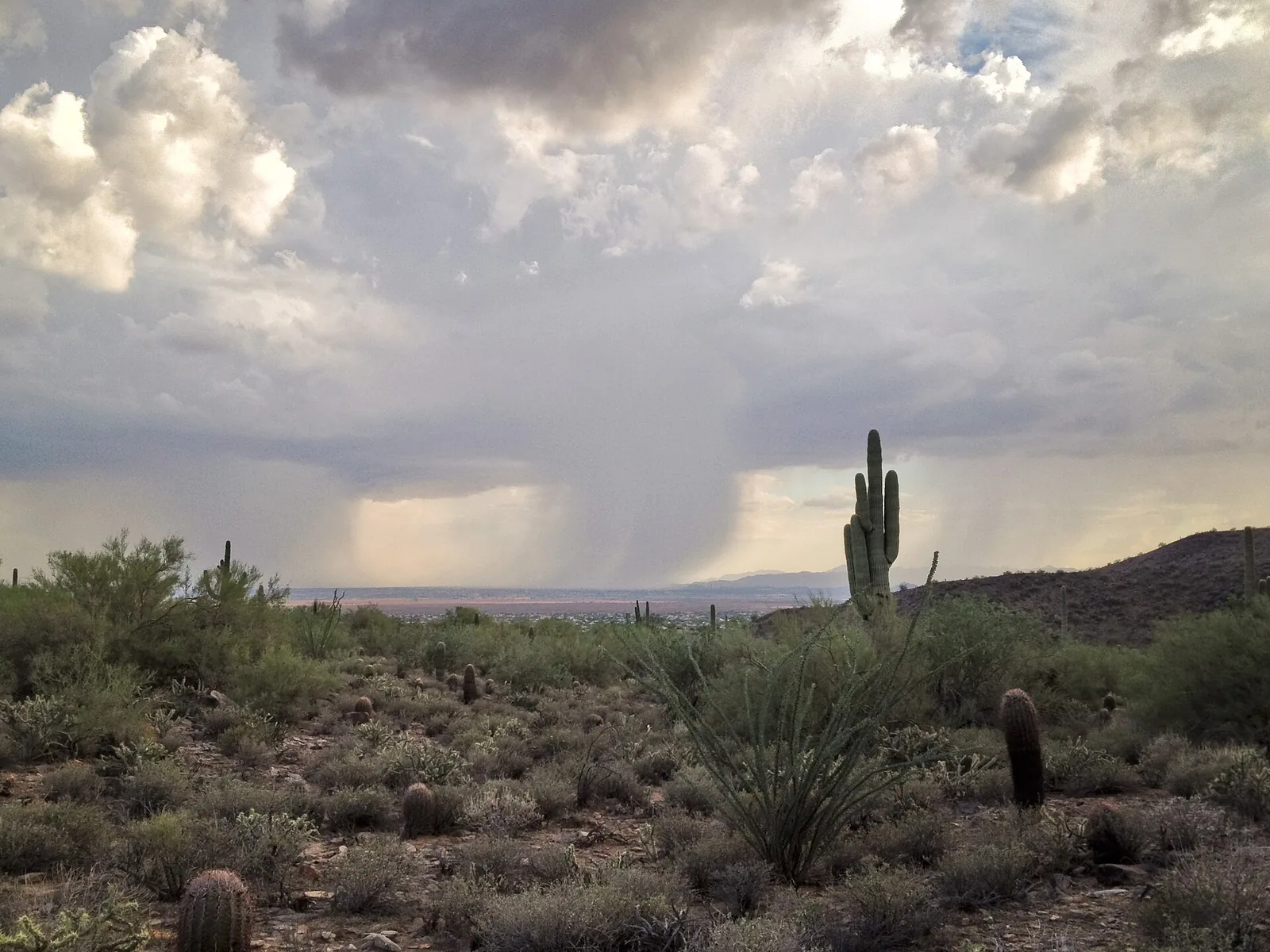
Monsoon storms are an afternoon-and-evening habit, not an all-day event. A typical July day in Sedona opens clear and warm, clouds start stacking up over the rims by late morning, and the storms tend to fire between roughly 3 and 5 p.m. The Weather Service office in Flagstaff, which forecasts for Sedona, puts it about as plainly as it can: a clear sky at 3 p.m. can be a full thunderstorm by 5. Then it often clears again by evening, leaving cooler, rain-washed air behind.
That rhythm is the single most useful thing to know for planning a trip. Do the outdoor stuff early: hikes, the swimming holes, the scenic drives. Mornings are clear and a few degrees cooler, and you’ll usually have the trails to yourself before the crowds and the clouds show up. Then keep the late afternoon loose, because that’s the window when the sky can turn in a hurry. If you build the day around that pattern instead of fighting it, the monsoon stops being a nuisance and becomes the best light and the most comfortable temperatures you’ll get. Our best-time-to-visit guide leans on the same logic season to season.
Flash floods: the hazard that actually hurts people
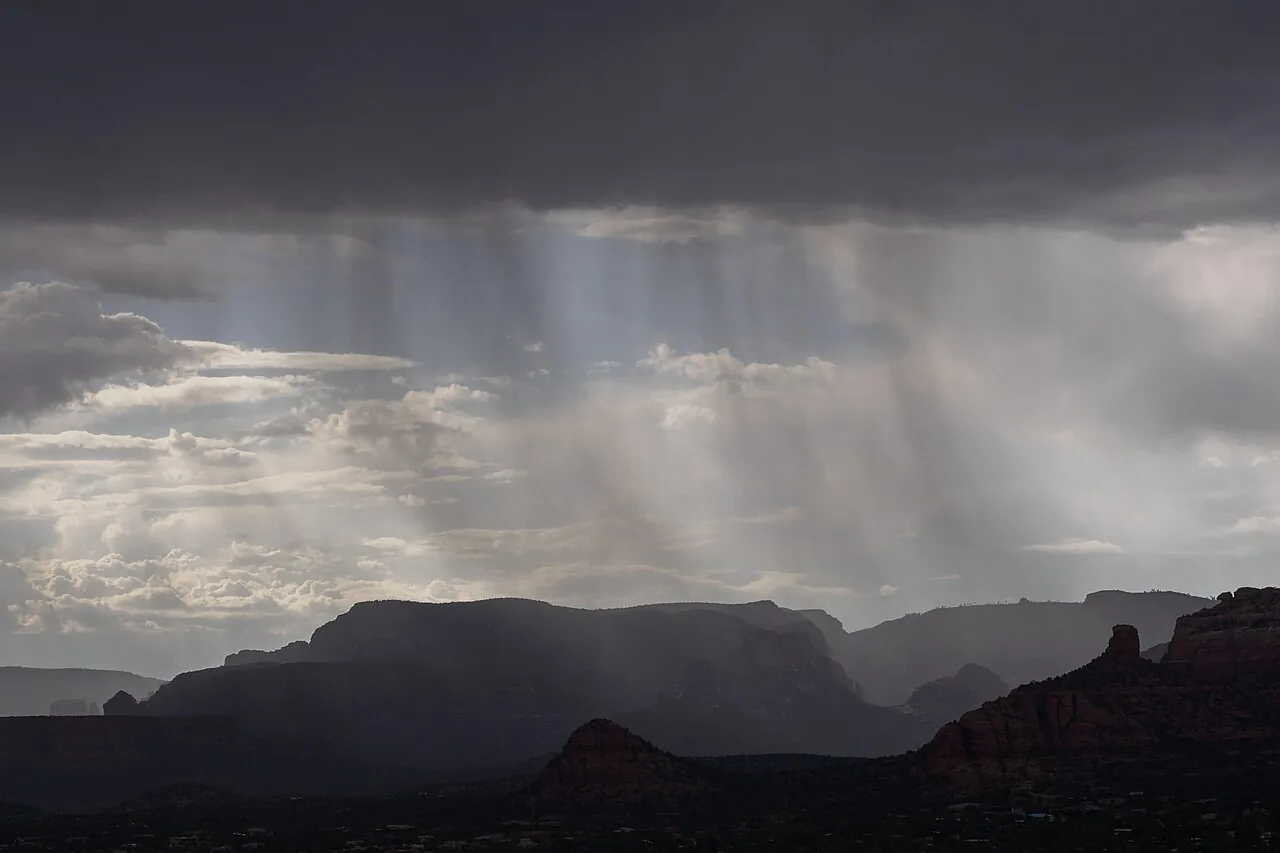
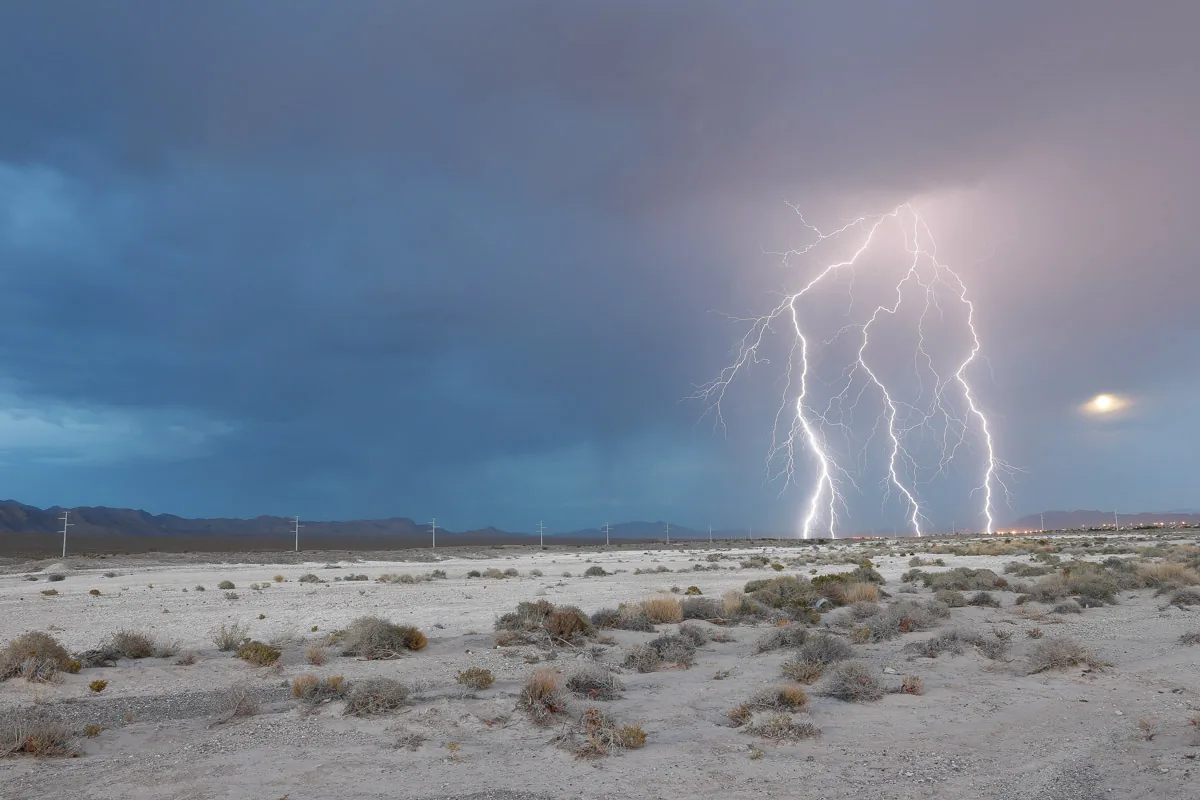
Lightning gets the photographs, but flash flooding is the danger that matters most in monsoon country, and the Flagstaff forecast office calls it the biggest threat of the season. The thing that catches people off guard is distance. A storm can be dumping rain on a plateau miles away, over ground you can’t even see, while the sky directly overhead stays blue. That water funnels into dry washes and narrow canyons and shows up as a wall, fast and brown and full of debris, with very little warning.
Sedona is stitched with exactly the kind of terrain that does this. Oak Creek Canyon pinches down hard in places, side drainages feed straight into it, and the West Fork trail runs up a slot-like canyon that has to be closed when the water comes up. The rock and thin soil don’t absorb much, so runoff moves fast and mean. A few rules keep you out of trouble:
- Check the forecast before any canyon or creek hike. The National Weather Service Flagstaff office posts flash-flood watches and warnings for the Sedona area, and it’s worth a look every morning.
- Never enter a slot canyon or narrow creek bed if storms are anywhere in the forecast, including upstream, where you can’t see them from the trailhead.
- If the water starts rising or turning muddy, get to higher ground immediately. Don’t try to wait it out on a sandbar or a rock in the middle.
- Turn around, don’t drown on the roads. The Weather Service notes that a foot of water can float a car and just six inches of moving water can knock an adult off their feet. Don’t drive through a flooded dip, no matter how shallow it looks.
None of this should scare you off a summer trip. It just means you handle the afternoon the way a local does: hike early, keep an eye on the sky, and stay out of the narrow places when there are storms around. The creeks that feed the area’s swimming holes are wonderful on a hot clear morning and no place to be when a warning is up.
Lightning, wind, and blowing dust
Lightning is the other serious one, and the exposed spots people love around here, like mesa tops, the airport overlook, and open red-rock benches, are the worst possible places to be when a cell moves in. The rule of thumb holds: if you can hear thunder, you’re close enough to be struck. Head for the car or a real building, not a lone tree or a shallow rock overhang.
When a storm collapses, the rain-cooled air inside it drops to the ground and races outward ahead of the rain as a gust front. That outflow can kick up blowing dust and push strong, sudden winds well before a drop falls where you’re standing. The big rolling dust walls people call haboobs are mostly a low-desert show around Phoenix and Tucson, where there’s loose farm and desert soil to lift; up in Sedona’s rock country you’re more likely to get the gusty outflow, a curtain of dust down a road, and then the rain. Either way the tell is the same: when the wind comes up hard and the temperature drops off fast, the storm is close and it’s time to be somewhere solid.
Month by month through the monsoon
The season doesn’t feel the same in June as it does in August. Here’s how the summer months actually run in Sedona, using NOAA’s 1991–2020 normals for the averages.
| Month | Avg high | Avg low | What the monsoon is doing |
|---|---|---|---|
| June | 94°F | 61°F | Dry, hot run-up; storms haven’t started |
| July | 97°F | 68°F | Onset in the first week; storms begin, heat peaks |
| August | 94°F | 67°F | Peak activity, greenest, best value |
| September | 89°F | 61°F | Tapering off; crisp air returns |
June is the pre-monsoon stretch. It’s the hottest, driest run-up of the year, with cloudless skies and no storm relief yet, so early starts matter most this month. July flips the switch: the moisture arrives, the storms begin, and it’s the hottest month on the calendar at a 97°F average high, cut by afternoon downpours. August is the heart of it. Storms are most frequent, the landscape is at its greenest, and, because all that cloud cover trims the peak heat, the average high actually eases back to 94°F, a touch below July. It’s also the quieter, better-priced end of the summer. By September the storms are winding down, usually fading out through the first couple of weeks, and the air turns crisp and clear again. If you want the full month-level picture, the Sedona in July guide digs into that peak-monsoon window in detail.
What the monsoon gives back
For all the cautions, this is a genuinely good time to be here, and plenty of Arizonans plan a trip north around it on purpose.
The heat eases. All those afternoon clouds and storms trim the peak temperatures, which is why Sedona’s August average high runs a hair below July’s. The nights stay comfortable the way they do all summer at this elevation, down in the 60s, which is a different world from the mid-80s overnight lows two hours south in Phoenix. If the cooler-air angle is what’s pulling you up here in the first place, the beat-the-heat hub lays out the full Sedona-versus-Phoenix picture with the numbers.
The landscape changes. Dry washes run, the junipers and scrub brush go green, wildflowers come up, and the light after a storm, low sun breaking under a torn-up sky over red rock, is the kind of thing photographers plan whole trips around. Storm-watching from a covered deck with the smell of wet creosote in the air is one of the quiet pleasures of a desert summer, and it costs nothing.
And it’s good value. Summer is the quieter, better-priced end of Sedona’s calendar compared with the spring and fall peaks, so a monsoon-season trip usually means smaller crowds on the trails and better availability on the places you’d actually want to stay.
How a monsoon day works at the house
Here’s where an indoor court earns its keep. The monsoon’s one real inconvenience for an active group is that it can wipe out the late-afternoon hours: outdoor courts sit wet, hikes get cut short, and the creek can close on a flash-flood warning with no notice. That’s precisely the window a private indoor court covers.
At the home the court is fully enclosed, heated, air-conditioned, and lit, so the weather outside doesn’t get a vote. The plan more or less writes itself. Hike or hit the creek in the clear morning, come back for lunch, and when the sky starts to darken around three, move the game inside and play through the storm in air conditioning while it hammers the roof. A group of up to eight can run a round-robin without anyone standing at the window checking the radar. Because the court is indoors, there’s also no HOA or neighbor in the loop, which is the same reason it sidesteps the noise complaints that get so many outdoor and garage courts shut down.
It’s the honest version of a rain-or-shine trip. You still get the red-rock mornings and the cool evenings out by the firepit; you just have a real backup for the two or three hours a day the monsoon might otherwise take away. For the pickleball-specific side of playing through storm season, the monsoon-proof pickleball write-up goes deeper.
A short monsoon-season checklist
- Plan hikes, creek time, and scenic drives for the morning; keep late afternoons flexible.
- Check the National Weather Service Flagstaff forecast each morning for flash-flood watches and warnings.
- Stay out of narrow canyons and creek beds when storms are anywhere in the forecast, upstream included.
- Never drive through flowing water on a road, and give flooded dips a wide berth.
- Pack a light rain layer, court shoes for the indoor court, and a swimsuit for the creek before the storms build.
- Build at least one indoor block into each day; it’s the difference between a washed-out afternoon and a good one.
Summer, monsoon and all, is one of the better-kept secrets of a Sedona trip: cooler than the low desert, greener than most people expect, and quieter on the trails. Handle the storms with a little respect and you get the best of it. If a rain-or-shine base with a private indoor court sounds like the right way to do a monsoon-season trip, check the dates on Airbnb and see what’s open.
Frequently asked questions
When is monsoon season in Sedona?
Is it a bad idea to visit Sedona during monsoon season?
What time do monsoon storms usually hit?
Are flash floods really a danger in Sedona?
What can we do if an afternoon storm rolls in?
Does the monsoon make Sedona cooler?
Trade the heat for a cool indoor court
Sedona Pickler is a private West Sedona vacation home with its own indoor, air-conditioned pickleball court — comfortable play at noon in July or after dark in January, while outdoor courts across the valley sit empty. See the whole heat-escape guide.
Check dates & book