Palatki & Honanki Heritage Sites: Cliff Dwellings & Rock Art
Most people come to Sedona for the rock formations and the hikes, and then they stumble onto something that catches them off guard: people lived in these cliffs for centuries, and they left paint and carvings on the stone that are still here. Palatki and Honanki are the two best places near Sedona to stand in front of that history up close. They’re not on the main tourist drag, the roads to reach them are rough, and one of them you can’t even visit without a reservation, but they’re some of the most rewarding hours you can spend in the red rocks.
This guide covers both sites, plus the petroglyph site nearby that rounds out a good “ancient places” day. I’ll be straight with you about the dirt roads, the permits, the steps, and the heat, because all four of those things trip people up. Get them sorted ahead of time and the rest is easy.
What Palatki and Honanki actually are
Both sites are tucked into the red rock canyons of the Coconino National Forest northwest of Sedona, and both were built by the Sinagua, a farming people who lived across the Verde Valley for centuries before moving on. “Sinagua” is Spanish for “without water,” a name early Spanish explorers gave the dry country, not what the people called themselves. The Hopi and other Pueblo tribes today consider the Sinagua among their ancestors.
The structures you see at both places are masonry rooms built into south-facing sandstone alcoves. South-facing was deliberate: the overhangs caught the low winter sun for warmth and shaded the rooms in summer. The Sinagua occupied these particular dwellings roughly between 1100 and 1400 CE, then left the area around 1400 for reasons that are still debated.
But the buildings are only half the story. Both sites also hold rock art, and the rock art is much older than the dwellings. There are two kinds, and it’s worth knowing the difference before you go:
- Pictographs are painted on the rock, usually with mineral pigments: red from hematite, white from kaolin clay, black from charcoal.
- Petroglyphs are pecked, carved, or scratched into the rock surface.
At Palatki especially, the painted “grotto” gallery is a palimpsest, meaning layers of images made by different peoples over thousands of years, one on top of another. Some of the marks date to the Archaic period and are estimated at 3,000 to 6,000 years old, made by hunter-gatherers long before the Sinagua. The Sinagua added their own between roughly 900 and 1300 CE, and the Yavapai and Apache, who moved into the region after the Sinagua left, added images as recently as the 1800s. You are looking at thousands of years of human presence on a single rock face.
The colors aren’t random, either. The white in the pictographs typically comes from kaolin clay, the reds from hematite (iron oxide), and the blacks from charcoal. That those pigments are still legible after millennia, in an open alcove exposed to weather, is part of what makes the grotto remarkable, and it’s also exactly why touching them does irreversible harm. There’s no FAQ-style lecture coming here, but it’s worth sitting with: the figures on that wall outlasted empires, and they survive only because most visitors keep their hands off.
One more thing worth understanding before you go is just how much has already been lost. Photographs from the early 1900s show far more standing masonry at Palatki than survives today; by some estimates the majority of the original structures have crumbled or been damaged over the last century of visitation. That’s the reason for the reservation system, the small group sizes, and the volunteer guides. You’re not being managed for the sake of bureaucracy; you’re being managed because the place is genuinely fragile and people of the past hundred years did real damage before anyone thought to protect it.
Palatki vs. Honanki: which is which
The names came from a Smithsonian archaeologist named Jesse Walter Fewkes, who surveyed the sites in 1895 and gave them Hopi-language names. Palatki means “Red House” and Honanki means “Bear House.” Here’s the short version of how they differ in practice:
| Palatki Heritage Site | Honanki Heritage Site | |
|---|---|---|
| Meaning | “Red House” (Hopi) | “Bear House” (Hopi) |
| Size | Two smaller pueblos | Larger; one of the biggest pueblos in the Verde Valley |
| Highlight | The painted grotto rock-art gallery | Long cliff dwelling, big rock-art panels |
| How you visit | Free timed reservation, volunteer-guided | Self-guided OR by guided jeep tour |
| Reservation needed | Yes, in advance | No |
| Walk | ~1 mile total, ~60 uneven steps | Short walk from parking, then along the cliff base |
| Both require | Red Rock Pass or Interagency Pass on the vehicle | Same |
Most visitors find Palatki’s rock art the more memorable of the two, and Honanki the more impressive structure. If you only have time for one and you can get a reservation, I’d point you to Palatki for the grotto. If you can’t get a reservation, or you want to ride out on a jeep and let someone else handle the road, Honanki is the better bet.
How to get there, and the roads (read this part)
Both sites sit off the same forest road, so the drive is similar. From Sedona, take State Route 89A west through West Sedona, past the last traffic light, and continue about 5 miles. Just past mile marker 365, turn right onto Forest Road 525. This is where the pavement ends and the dirt begins.
- For Palatki, follow FR 525 north about 5 miles, then where it bears left, continue straight onto Forest Road 795 for about 2 miles to the site.
- For Honanki, you stay on FR 525 and follow the signs; it’s farther out, roughly 15 miles west of Sedona all told.
FR 525 and 795 are graded dirt roads. When dry, they’re generally passable to a normal passenger car if you go slow, but they are washboarded, rocky in stretches, and not regularly maintained. A high-clearance vehicle is genuinely more comfortable here, and after rain or snow these roads turn to mud and can become impassable. Palatki is sometimes closed outright after substantial weather.
Local tip: Before you drive all the way out, call the Palatki site at 928-282-3849 to check for weather closures. It’s a 30- to 45-minute drive on rough dirt with no services, and there are few things more deflating than bouncing out there to find a “closed” sign at the gate. Also leave with more time than you think you need: Visit Sedona recommends allowing at least an hour and a quarter from town just to reach Palatki for your reservation.
Permits: what you actually need
This part confuses people because there are two separate things, and at Palatki you need both.
- A Red Rock Pass (or an Interagency / America the Beautiful pass) on your parked vehicle. This is required at all the cultural sites in the Coconino National Forest. A daily pass runs around $5, a weekly around $15, and an annual around $20, but confirm current prices before you go. You can buy daily and weekly passes from self-serve machines at the sites, and if you already hold an America the Beautiful Interagency Pass, that covers it, so you don’t need to buy a Red Rock Pass on top of it.
- A timed reservation for Palatki specifically. This is separate from the pass. Palatki limits how many people are on site at once to protect it, so you reserve a tour time in advance through Recreation.gov (or by calling 1-877-444-6777). The reservation itself is low-cost or free depending on the system, but it’s mandatory; you can’t just show up. Honanki does not require a reservation.
So for Palatki: book the timed tour, and bring a pass for the car. For Honanki: just bring the pass.
What to expect when you’re there
At Palatki
Palatki runs as a volunteer-guided experience. You check in at your reserved time, and there are essentially two short trails, totaling about a mile: one out to the cliff dwellings and one to the grotto rock-art gallery. Volunteers are stationed along the way to talk you through what you’re seeing, and they’re often retired folks who know the place inside out, so ask questions.
Be ready for the steps. Reaching the dwellings involves roughly 60 uneven, fairly strenuous stone steps. They’re not a marathon, but they’re irregular and there’s no smooth handrail-and-ramp setup. The whole visit usually runs about an hour to an hour and fifteen minutes. Group sizes are kept small, somewhere in the low-to-mid teens per tour window, which is part of why it feels calm rather than like a tourist crush.
The grotto is the payoff. You stand in a sheltered alcove looking at painted figures, handprints, animals, and abstract symbols layered over each other across thousands of years. Take your time; it rewards slow looking. The volunteers will often point out things you’d walk right past on your own: faded clan-style shields, animal forms, and the way one culture’s marks were painted directly over another’s. If the light is right and you let your eyes adjust, images keep emerging from the rock the longer you look.
A few practical notes for the Palatki visit itself. Cell signal out there is unreliable, so download or screenshot anything you need (your reservation, directions) before you lose service in West Sedona. There are vault toilets at the site but no water, no food, and no gift shop to speak of, so come self-sufficient. And budget a little extra time at the start: the check-in is informal, but you want to arrive a few minutes early rather than screeching in late, partly out of courtesy to the volunteers and partly because the small tour windows run on a schedule.
At Honanki
Honanki is more open-ended. You can visit self-guided during open hours, walking from the parking area to the base of the cliff and then along it to see the long run of masonry rooms and the rock-art panels. Honanki is one of the largest cliff dwellings in the area, with on the order of several dozen rooms, and it housed a sizable community in its day.
Archaeologists believe Honanki was occupied by the Sinagua roughly between 1130 and 1280 CE, and there’s evidence of several construction phases over time, including rebuilding after a fire damaged rooms at one end. As at Palatki, the rock art predates the dwellings: some marks are thousands of years old, the Sinagua added theirs during their occupation, and Yavapai and Apache peoples added images later. The scale is the thing that strikes most visitors here. Where Palatki is two compact pueblos, Honanki is a long, continuous run of rooms strung along the cliff base, and it’s easier to picture a couple hundred people living and working in front of you.
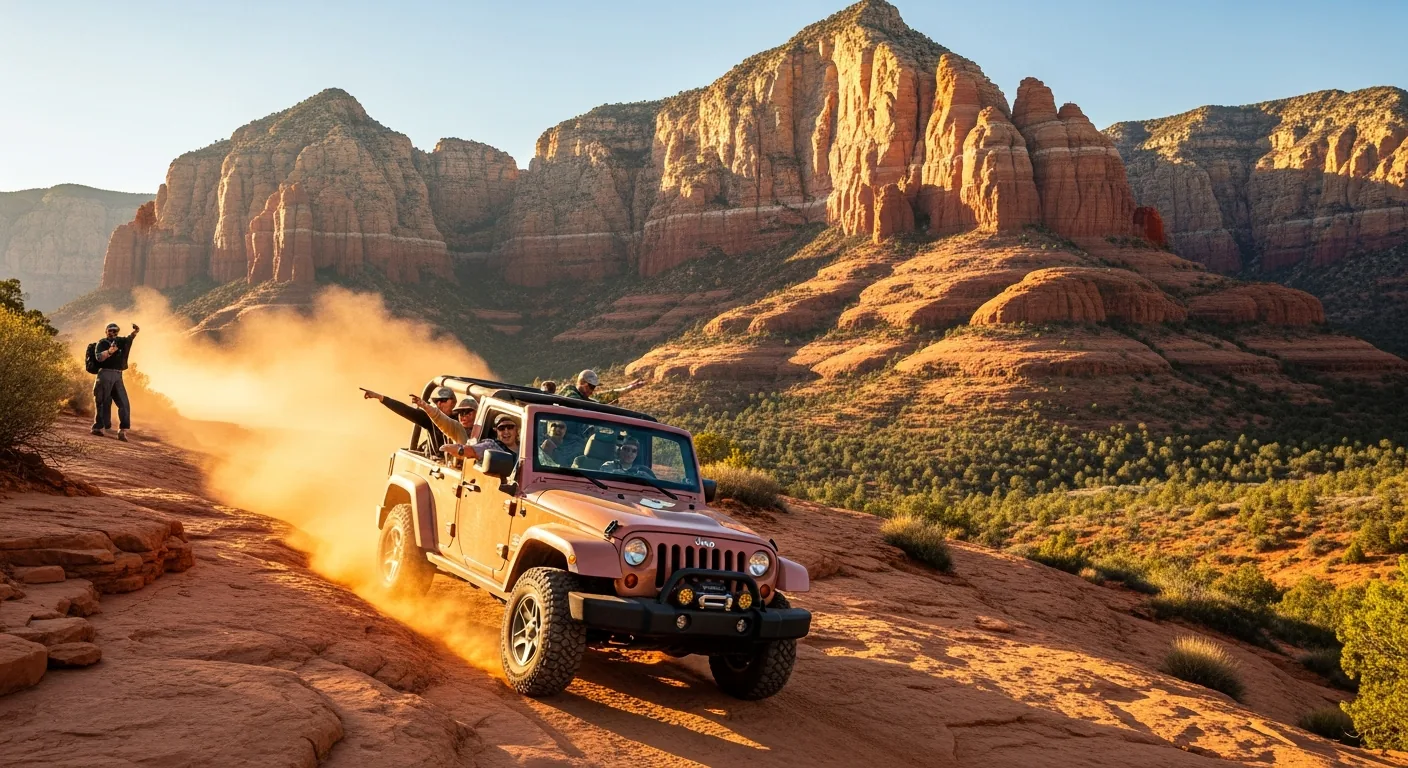
The other way to do Honanki is by jeep. Pink Jeep Tours is the official site steward and the only commercial outfitter permitted to bring tours in, so if you book a guided ancient-dwelling jeep tour out of Sedona, it goes to Honanki. The advantage is obvious: you skip driving the rough road in your own car, and you get a guide for the dwellings and rock art. The trade-off is cost and a fixed schedule. Either approach is valid; it comes down to whether you’d rather self-drive and explore at your own pace or hand off the logistics. If you do drive yourself to Honanki, keep in mind it’s farther out FR 525 than Palatki, so it’s the rougher and longer of the two self-drives.
Best time of day and season
The single biggest comfort factor out here is heat. There is little to no shade on the approaches, the sites sit around 4,700 feet, and summer afternoons in the high desert are punishing. The Forest Service actually shortens or shifts hours in the hot months and will close sites when it’s too hot.
- Spring (March–May) and fall (October–November) are ideal: mild temperatures, comfortable walking, and clear light on the rock art.
- Summer (June–August) means early mornings only. In the hot season Palatki typically opens earlier and closes by around noon, so plan a morning visit and bring more water than you think you need. Sites can close entirely above 100°F.
- Winter (December–February) can be lovely and quiet, but it’s when the dirt roads are most likely to be muddy or closed after storms. Check before you drive.
For the rock art specifically, morning light tends to be kinder for both seeing and photographing the pigments, and it keeps you off the trail before the day heats up. Hours shift by season at all of these sites, so always confirm current hours and tour times on Recreation.gov or with the Forest Service before you go.
What to bring
Pack like you’re heading somewhere remote, because you are:
- Water, and then more water. There are no shops or reliable services out there. Bring at least a liter or two per person even for a short visit.
- Sun protection: hat, sunscreen, sunglasses. Shade is scarce.
- Sturdy closed-toe shoes with decent grip for the uneven steps and rocky ground.
- Cash or card for the Red Rock Pass machine, plus your reservation confirmation for Palatki (a screenshot is fine; cell signal is unreliable out there, so don’t count on pulling it up live).
- A camera or phone, but plan to photograph without flash near the rock art.
- Layers in the cooler months; mornings can be cold even when the afternoon warms up.
- A full tank of gas before you leave town. No fuel out there.
Accessibility
Be honest with yourself about mobility here. Palatki’s route to the cliff dwellings involves about 60 uneven stone steps with no smooth ramp, which puts the dwellings out of reach for many wheelchair users and anyone with significant difficulty on irregular stairs. That said, the grotto rock-art trail is the shorter and gentler of the two paths, so some visitors who can’t manage the dwelling steps still get to see the painted gallery. If accessibility is a concern, call the site ahead and ask the volunteers what’s feasible the day you’re coming.
Honanki’s main walk is shorter and along the cliff base rather than up steep steps, which some find more manageable, though it’s still natural unpaved ground, not a paved path. If easier access matters most to you, the nearby Crane Petroglyph site (covered below) is the gentlest of the three: a mostly flat, roughly one-mile round-trip walk on a fine gravel path.
How to avoid the crowds
These sites never get the volume of Devils Bridge or Cathedral Rock, which is part of their appeal, but a few habits make for a better visit:
- Go early. First reservation slots and opening hours are quietest, coolest, and best for light. They also beat the chance that afternoon heat shortens or closes the day.
- Go midweek if you can. Weekends draw the most people, and Palatki’s small group sizes mean popular weekend slots book up first.
- Book Palatki ahead. Because capacity is capped, your reservation is your guarantee of getting in at all. Don’t leave it to the day-of.
- Consider the shoulder seasons. Late fall and early spring weekdays can feel like you have the canyon to yourself.
Because the group sizes are limited by design, even a “busy” day at Palatki feels nothing like the parking-lot scrum at the famous trailheads.
Safety and etiquette
The most important rule is also the simplest: never touch the rock art. The oils on your skin break down pigments that have survived for thousands of years, and a single touch contributes to damage that can’t be undone. Don’t lean on the walls of the dwellings either; they’re fragile masonry, and a startling amount of the original structure has already been lost to a century of visitation. Stay on the trails, don’t climb on anything, and don’t move or take so much as a pottery shard. It’s a federal heritage site, and these are sacred places to living tribes.
Beyond the artifacts, treat it like the remote desert it is:
- Watch your footing on the uneven steps and rocky ground.
- Carry and drink water; dehydration sneaks up fast at altitude in dry heat.
- Mind the weather both for your comfort and for the roads back to town.
- This is rattlesnake country in the warm months, so watch where you put your hands and feet, especially around rocks and brush.
- Leave no trace: pack out everything you bring in.
Treat the place with the respect you’d want for something irreplaceable, because that’s exactly what it is.
What to pair it with nearby
Because you’ve already committed to the drive and a Red Rock Pass, it’s worth building a half- or full-day around these sites. A few natural pairings:
Crane Petroglyph Heritage Site (formerly V Bar V)
This is the obvious companion. Located on the other side of the Verde Valley near Beaver Creek (off I-17 south of Sedona), the Crane Petroglyph Heritage Site, renamed from V Bar V in 2024, holds the largest known petroglyph site in the Verde Valley: more than a thousand carved images across a long rock face, made by the Southern Sinagua roughly between 1150 and 1400 CE. The walk in is easy, about a mile round trip on a mostly flat gravel path, which makes it the most accessible of the ancient sites. It needs the same Red Rock Pass, has its own seasonal hours (shorter in summer), and closes above 100°F, so confirm before you go. Doing Crane plus either Palatki or Honanki makes for a strong “rock art and ruins” day.
Boynton Canyon and the western trailheads
Forest Road 525 sits near Sedona’s western trail cluster, so it pairs neatly with a hike. Boynton Canyon and Fay Canyon are both in this corner of the red rocks. If you want one of Sedona’s well-known vortex spots in the same outing, Boynton is right there.
Jeep tours and the bigger picture
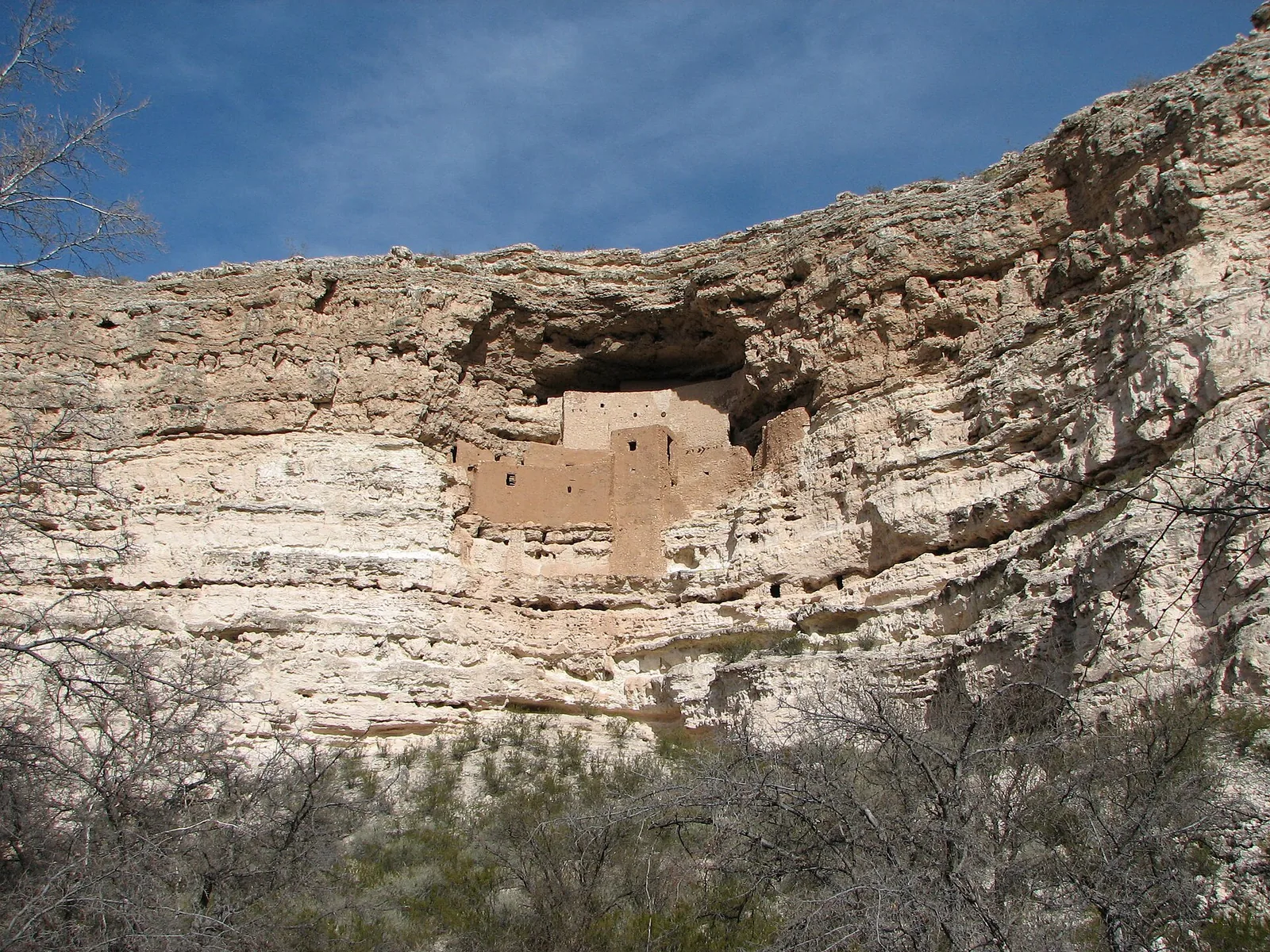
If you’d rather not drive the dirt yourself, the same jeep tour operators who run Sedona’s off-road trips include the Honanki ancient-dwelling tour, so you can knock out the heritage site and an off-road ride in one booking. And if you get hooked on the deeper history of the region, the Sinagua story continues down at Montezuma Castle, a strikingly well-preserved cliff dwelling about an hour south that’s far easier to reach than Palatki or Honanki.
After a morning out among the dwellings and a dusty drive back, there’s a lot to be said for a quiet afternoon close to home. If you’re staying at Pickler House, the indoor court is climate-controlled, so you can shake off the desert heat with a few rallies regardless of what the thermometer’s doing outside.
A realistic plan
If you want a simple template, here’s a comfortable morning:
- The night before, book your Palatki reservation on Recreation.gov and screenshot the confirmation.
- Fill the gas tank and pack water, sun protection, and a card for the pass machine.
- Leave Sedona early, allowing at least 75 minutes to reach Palatki on the dirt roads.
- Buy or display your Red Rock Pass at the lot; do the volunteer-guided tour, dwellings then grotto.
- If you have energy and time, drive over to Honanki or down to Crane Petroglyph for a second site, or stretch your legs in nearby Fay or Boynton Canyon.
- Head back to town before the afternoon heat, with a few thousand years of human history under your belt.
It’s not the flashiest item on a Sedona list, and it asks a little more of you than parking at a viewpoint. But standing in a quiet alcove looking at paintings older than almost anything else you’ll see in your life, with a volunteer telling you who made them and why, is the kind of thing people remember long after the famous photo spots blur together. Confirm the hours, respect the place, and don’t touch the art. That’s all it asks.
Frequently asked questions
Do I need a reservation to visit Palatki or Honanki?
What pass do I need, and how much does it cost?
Can a regular car make it on the road to Palatki and Honanki?
How difficult is the walk, and is it accessible?
When is the best time to visit?
Can I touch or photograph the rock art?
Stay where you can rally any season
Sedona Pickler is a private West Sedona vacation home with its own indoor, climate-controlled pickleball court — a short drive from the trailheads, viewpoints and restaurants in this Sedona guide. Play at sunrise or after dark, in any weather.
Check availability on Airbnb