Bell Rock & Courthouse Butte Loop: An Easy Sedona Classic
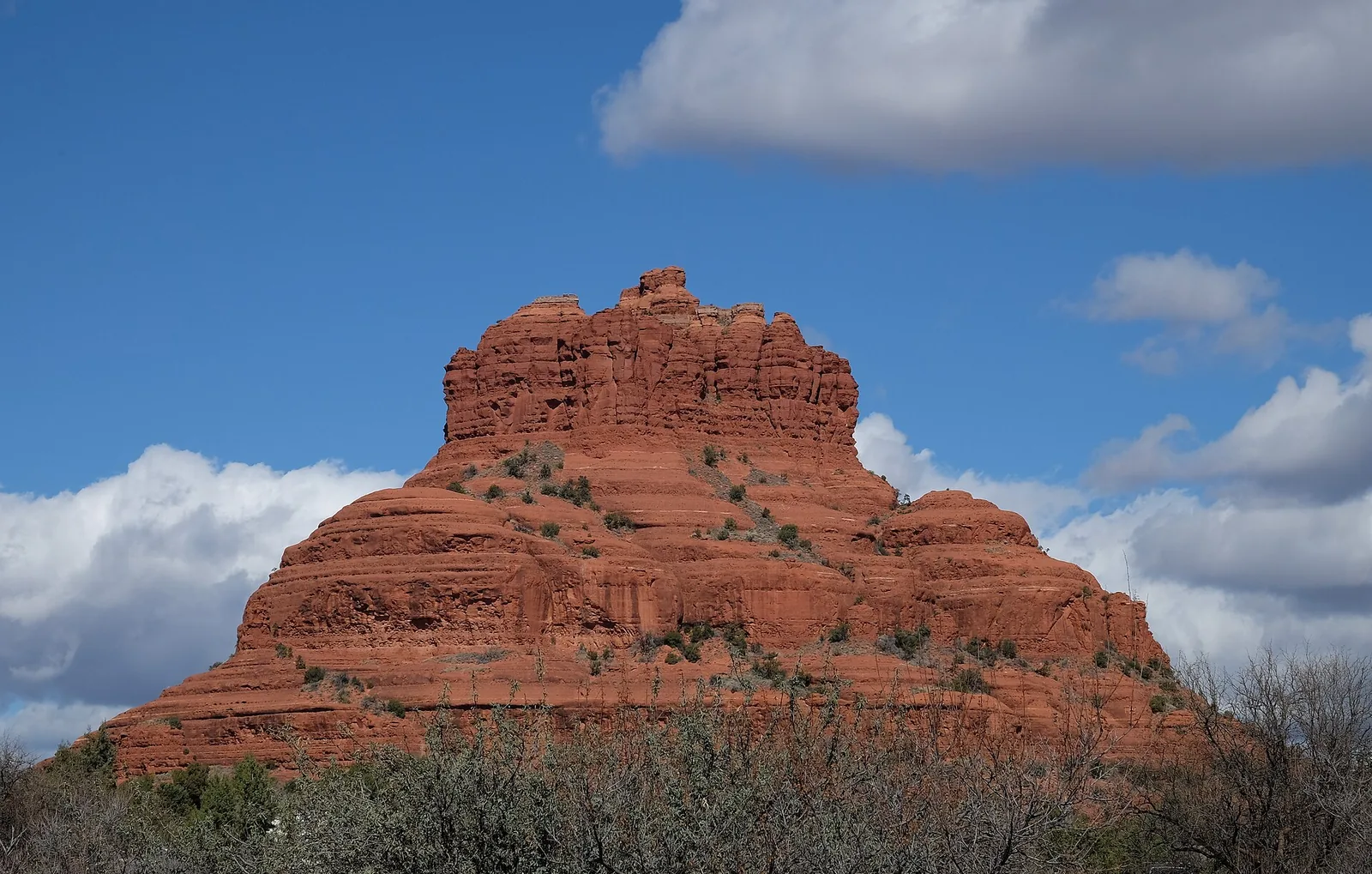
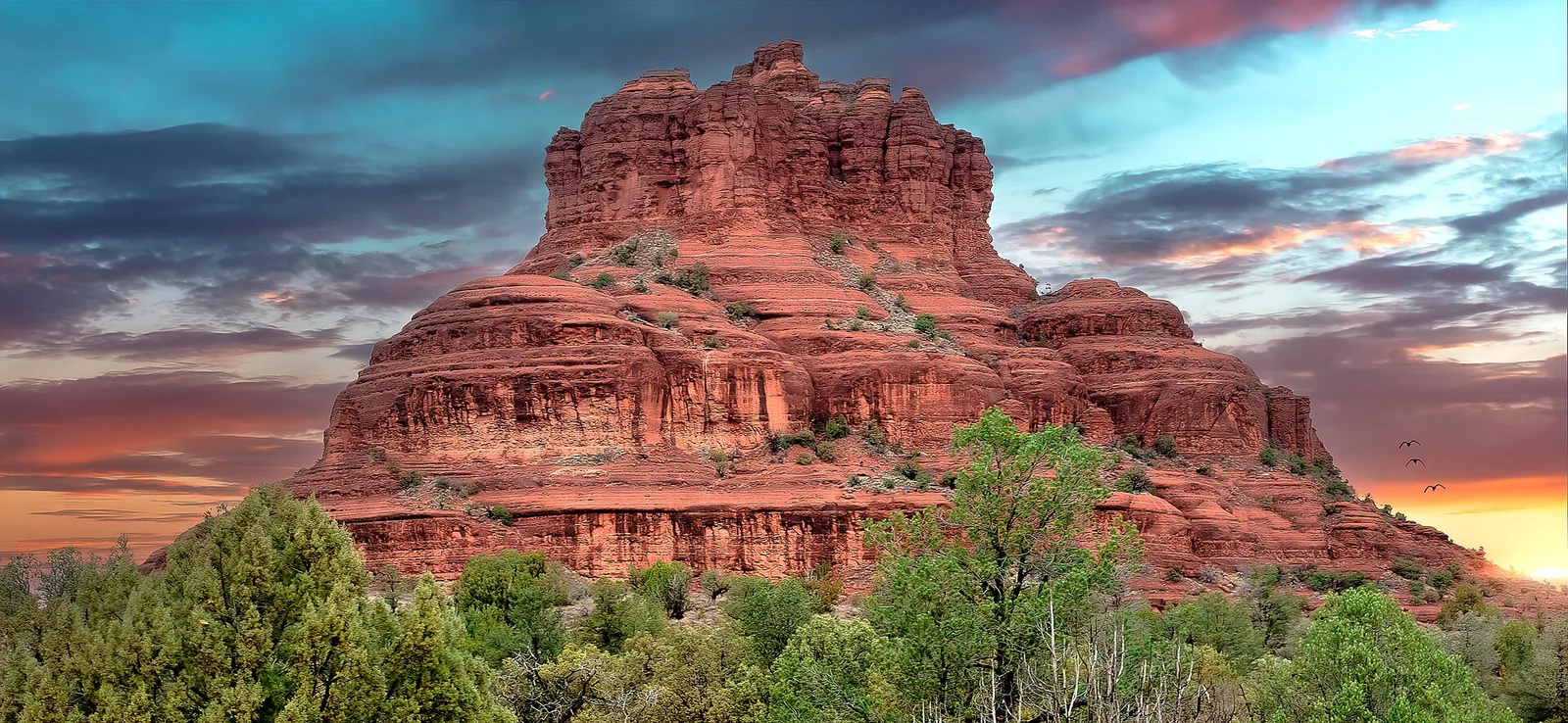
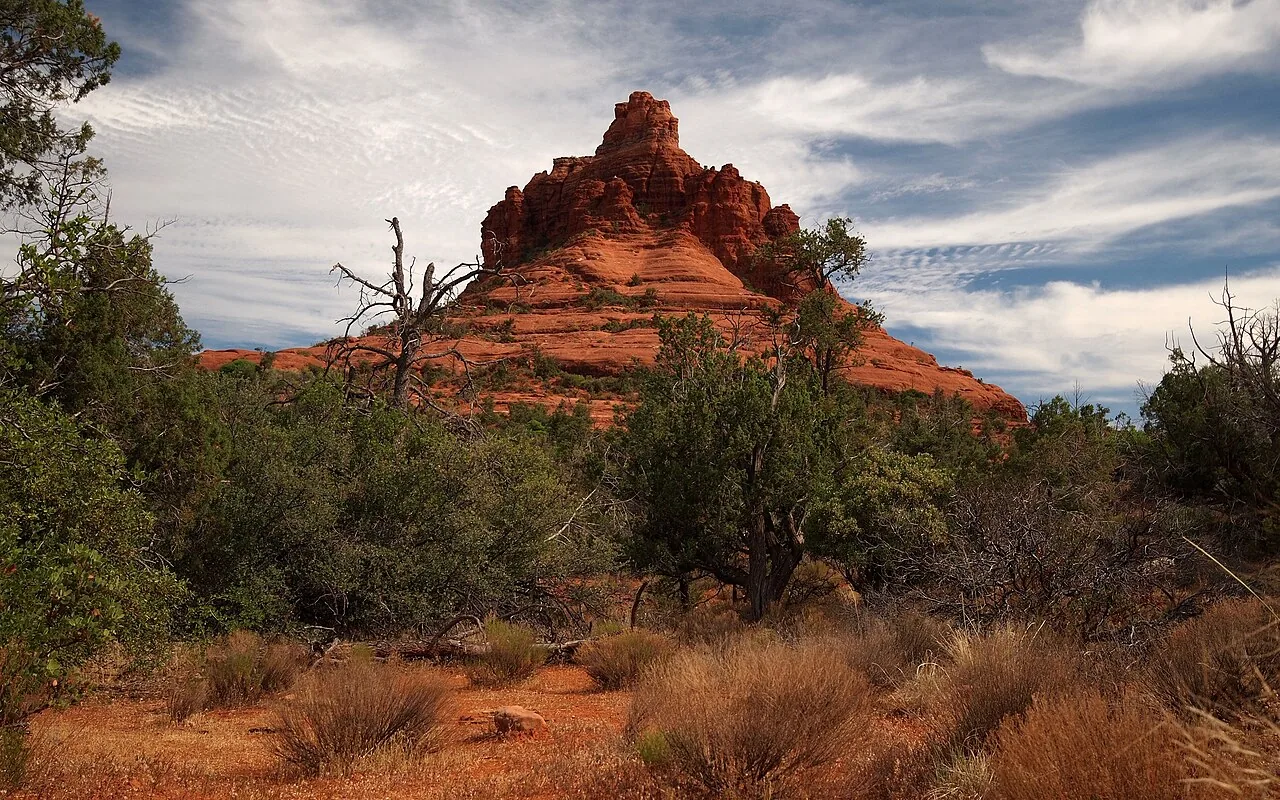
Bell Rock is the cone-shaped formation you see rising out of the desert as you drive into Sedona from the south, and it’s hard to miss — it really does look like a bell. The loop around it and its bigger neighbor, Courthouse Butte, is about as good as an easy Sedona hike gets: mostly flat, hard to get lost on, and constantly handing you those big red-rock views people come here for. It’s the trail I’d point a first-timer toward, especially on day one when your lungs are still getting used to the altitude.
What it is and why go
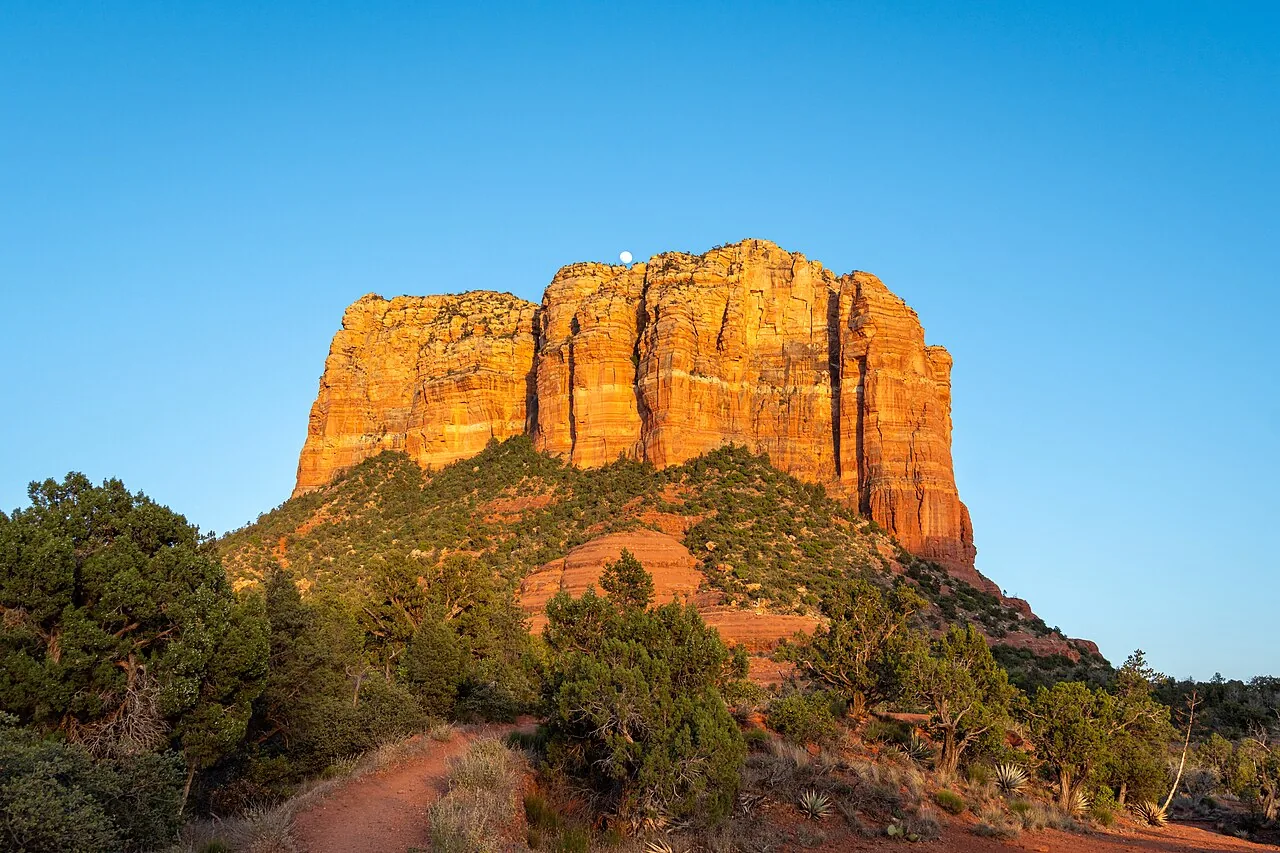
Bell Rock and Courthouse Butte sit side by side just off State Route 179, a few miles north of the Village of Oak Creek. Bell Rock is the smaller, pointier one; Courthouse Butte is the broad, blocky mass right behind it. A network of well-worn trails wraps around both, and the classic outing is the Bell Rock and Courthouse Butte Loop — you circle both formations on a single, mostly level path and get to see them from every angle.
A few reasons this one earns its popularity:
- It’s genuinely easy. Most of the loop is flat, smooth red dirt and slickrock. There’s no big climb, no exposure, no sketchy footing if you stay on the main loop. Families with kids do it all the time.
- The views never quit. Unlike canyon hikes where you’re walled in, you’re out in the open the whole way, with Bell Rock, Courthouse Butte, and the surrounding red rock country in full view.
- It’s a vortex. Bell Rock is one of Sedona’s four well-known energy vortex sites (along with Airport Mesa, Cathedral Rock, and Boynton Canyon). Whether or not you feel anything, it’s a pleasant, quiet place to sit for a few minutes. More on the vortex below.
- You can dial the effort up or down. Want a gentle walk? Stick to the Bell Rock Pathway near the road. Want more? Do the full loop. Feeling spry? Scramble partway up Bell Rock itself. Same trailhead, three very different days.
The honest downside: there’s almost no shade. This is open high desert, and the loop bakes in summer. Plan around the heat and you’ll be fine — I’ll get to timing.
How to get there, parking, and the Red Rock Pass
The trailheads are along State Route 179 (also called the Red Rock Scenic Byway), the road that connects the Village of Oak Creek to the I-17 interchange and runs up toward Sedona proper. From uptown Sedona it’s roughly a 15-minute drive south; from the Village of Oak Creek it’s a couple of minutes north.
There are two main parking areas, and they sit close together:
- Courthouse Vista — the larger, more developed lot, on the east side of SR 179. It’s the trailhead for the Courthouse Butte Loop, Bell Rock, and the Bell Rock Pathway. Paved parking, an information kiosk, accessible vault toilets, and a pass machine.
- Bell Rock Vista (Bell Rock Pathway Trailhead) — a bit farther south toward the Village of Oak Creek, also with a vault toilet and pass machine. From here you walk the Bell Rock Pathway north to reach the loop.
Either one gets you onto the loop; Courthouse Vista is the more popular jumping-off point because you’re closest to the formations from the start.
You need a Red Rock Pass
This is a fee area managed by the Coconino National Forest, so to park at either trailhead you need a Red Rock Pass displayed on your dashboard. As of this writing the prices are:
| Pass | Approx. price | Good for |
|---|---|---|
| Daily | $5 | One calendar day |
| Weekly | $15 | Seven consecutive days |
| Annual (Red Rock) | $20 | One year |
Prices and programs change, so confirm the current rate before you go. A few things worth knowing:
- You can buy a pass from the machine at the trailhead (bring a card; cash isn’t always reliable), at the Red Rock Visitor Center (daily and weekly only), or online through recreation.gov ahead of time — if you buy online you’ll need to enter your vehicle’s license plate.
- An America the Beautiful interagency pass works instead of a Red Rock Pass. If you’ve got the federal annual pass (or a Senior/Access pass), just display it and you’re set — no need to buy a Red Rock Pass on top of it.
- If you’ve already got a Red Rock or interagency pass from another Sedona trailhead that day, you don’t need to pay again.
Local tip: Buy a weekly Red Rock Pass on your first day even if you’re only here a few days. At $15 it pays for itself by your third trailhead, and Sedona’s most popular hikes — Cathedral Rock, Soldier Pass, and others — all sit in the same fee program. One pass on the dash, no fumbling at the machine every morning.
A note on the free shuttle
Sedona runs a free trailhead shuttle on busy days, but it does not serve Bell Rock or Courthouse Vista directly. The shuttle routes go to Cathedral Rock, Little Horse, Soldier Pass, Mescal, and Dry Creek Vista (and a couple of those rotate in and out of service). The Little Horse Trailhead does connect to the Bell Rock Pathway, but it’s a longer walk in. For Bell Rock itself, plan to drive and park — and arrive early, because these lots fill.
Difficulty and what to expect
The full Bell Rock and Courthouse Butte Loop runs roughly 3.6 to 4 miles depending on exactly where you start and which connectors you use, with only about 300 to 400 feet of elevation gain spread out over the whole thing. The Forest Service rates the Courthouse Butte Loop as moderate, but in practice, if you can comfortably walk four flat-ish miles, you can do this. Most people finish in 1.5 to 2.5 hours at an unhurried pace with photo stops.
Here’s the quick version:
| Distance | ~3.6–4 mi loop |
| Elevation gain | ~300–400 ft |
| Difficulty | Easy to moderate |
| Time | 1.5–2.5 hours |
| Surface | Packed red dirt and slickrock |
| Shade | Very little |
| Dogs | Yes, on leash |
The footing is a mix of smooth, packed dirt and sections of slickrock. It’s well signed and heavily traveled, so route-finding is easy — but the slickrock can be slippery if you’re in worn-out sneakers, so wear something with grip. Trail junctions are marked; if you ever feel unsure, the rule of thumb is to keep the two formations between you and the road and you’ll stay on the loop.
Which direction to hike it
You can go either way, but many regulars hike it clockwise — heading out along the Bell Rock side first and circling Courthouse Butte on the far side, so you save some of the best Bell Rock views for the back half and tend to keep the sun more at your back during the prettiest stretches. Honestly, both directions are lovely. Don’t overthink it.
What the loop actually feels like
If you’ve never done it, here’s the shape of the day. You start near the base of Bell Rock with the formation looming right in front of you — this is where most people stop, take photos, and either scramble up a bit or carry on. As you move around the back side, the trail mellows into a quiet, rolling walk through juniper, prickly pear, and the occasional agave, with Courthouse Butte’s big sandstone walls towering over you. This far section is the calmest part of the loop and where the crowds finally fall away. Coming back around, the two formations reframe themselves against each other, and you finish where you started. There are a handful of marked junctions where side trails (like the Llama Trail and various connectors) branch off; you can ignore them and stick to the main loop, or use them to shorten or lengthen the day. None of it is steep enough to wear you out — the effort is in the distance and the sun, not the climb.
Scrambling up Bell Rock (the fun part)
A lot of people don’t just circle Bell Rock — they climb partway up it, and that’s where the loop turns into a small adventure. From the base, a marked route heads up the lower slopes; you’ll see rock cairns and wire baskets full of stones marking the way up the slickrock benches and ramps. The lower ledges are a fun, gentle scramble with great views, and plenty of people picnic on the first big shelf.
Here’s the part to take seriously: you cannot, and should not, try to reach the actual summit. As you go higher, the marked route fades and the rock gets steep, exposed, and genuinely technical — the kind of terrain where a slip has real consequences and where Sedona search-and-rescue gets called every season. The lower benches are for everyone. The upper spire is for technical climbers with ropes, and not part of any maintained trail.
The honest turn-back rule: when the route stops feeling like walking-up-a-ramp and starts feeling like you need your hands to commit to a move you’re not sure you can reverse — stop. Climbing up is always easier than getting down. The view from the lower shelves is already the photo you came for.
The vortex
Bell Rock is one of Sedona’s four classic vortex sites — places long believed to have a concentration of “energy” that some visitors find calming, grounding, or invigorating. You don’t have to buy into any of it to enjoy it. The lower slopes are a great spot to sit, breathe, and take in the quiet, and a lot of people make a point of finding a flat shelf to rest on for a while.
If you’re curious about the whole phenomenon — what a vortex supposedly is, which feeling goes with which site, and how to actually experience one — see our vortexes guide. And if you’d rather have someone explain it on-site, plenty of spiritual and vortex tour operators in town include Bell Rock on their routes.
Best time of day and season
This is an open, sun-exposed trail, so timing matters more here than it does on a shady canyon hike.
Time of day: - Early morning is the move. Get there by 7–8 a.m. and you’ll have cool air, soft light, fewer people, and an actual parking spot. The lots fill by mid-morning in high season. - Late afternoon / golden hour is the other sweet spot. The red rock glows as the sun drops, and Bell Rock catches beautiful warm light. Just give yourself enough daylight to finish and get off the slickrock before dark. - Midday in summer is the one to avoid. Full sun, no shade, and triple-digit heat is how people get into trouble out here.
Season: - Spring (March–May) and fall (October–November) are ideal — mild temperatures and clear skies. Spring is also peak crowd season, so trade off accordingly. - Winter (December–February) is underrated: cool, often sunny, far fewer people, and the rare dusting of snow on red rock is stunning. Bring a layer for the morning. - Summer (June–August) is hot but doable if you go at dawn, carry serious water, and turn around if you’re flagging. Afternoon monsoon storms (roughly July–September) can roll in fast — slickrock gets slick when wet and lightning on exposed rock is no joke.
What to bring
Nothing exotic, but a few things make a real difference out here:
- Water — more than you think. Even on the easy loop, the dry desert air pulls moisture out of you fast. Carry at least a liter per person for the loop, more in heat.
- Sun protection. Hat, sunglasses, sunscreen. There’s no shade to duck into.
- Shoes with grip. Trail runners or hiking shoes. The slickrock is unforgiving on slick-soled sneakers, especially if you scramble.
- A snack. The lower shelves of Bell Rock are a perfect picnic perch.
- A layer in the cooler months. Mornings can be genuinely cold even when the afternoon is warm.
- Your camera or phone. Obviously — but also a small bag, because you’ll want both hands free if you scramble.
Skip the trekking poles unless you like them; the terrain doesn’t really call for them on the main loop.
Hiking with a dog
Bell Rock is one of the better dog hikes in Sedona, and you’ll see plenty of pups on the loop. A few practical notes:
- Leashes are required. This is national forest land, and the leash rule is enforced — it also keeps your dog away from cactus, snakes, and the occasional steep drop.
- Mind the ground temperature. That open slickrock and sand soaks up heat. If it’s too hot for your bare hand held to the rock for a few seconds, it’s too hot for paws. In summer, that alone is a reason to go at dawn.
- Carry water for the dog too. There’s no reliable water source on the loop, and dogs dehydrate fast in dry desert air.
- Skip the upper scramble with dogs. The lower benches of Bell Rock are fine for a sure-footed dog, but the steeper slickrock above is rough on paws and risky near the exposed sections. Keep four-legged hikers on the loop and lower slopes.
Accessibility
Bell Rock is one of the more accessible red-rock experiences in Sedona, which is part of why it’s such a good family trail. The Bell Rock Pathway and the area right around Courthouse Vista are wide, firm, and relatively flat, with only a slight grade near the start. The first stretch from the trailhead toward the base of Bell Rock is smooth enough that strollers and many wheelchairs can manage at least the opening portion, and there are accessible picnic tables and accessible vault toilets at the trailhead.
To be clear about what’s realistic: the full loop is not a paved, fully accessible path — farther out it narrows and crosses slickrock and uneven dirt. But you can get a real eyeful of both formations without committing to the whole circuit, simply by walking out and back on the easier opening section. For visitors with limited mobility, that out-and-back from Courthouse Vista is a genuinely rewarding short outing. If you want more low-effort options, our roundup of easy Sedona hikes covers the gentlest trails in the area.
How to avoid the crowds
Bell Rock is popular, and during spring break and peak fall it can feel busy near the trailhead. The good news: the crowds thin out fast once you’re on the loop.
- Go early or late. A 7 a.m. start or a pre-sunset walk both dodge the worst of it. Midday is the crunch.
- Do the full loop instead of just the base. Most casual visitors stay near Bell Rock and the parking area. Once you commit to circling Courthouse Butte, you’ll often have long stretches nearly to yourself.
- Visit on a weekday if you can, and in shoulder season rather than spring break.
- Start from Bell Rock Vista (the southern lot) if Courthouse Vista is jammed — it’s a slightly longer approach but often has space when the main lot doesn’t.
If the lots are completely full when you arrive, don’t circle endlessly or park illegally on the highway shoulder — it’s ticketed, and it’s genuinely unsafe. Come back at a better hour or pivot to another trail.
Safety
This is an easy hike, but it’s still the desert, and the things that get people are predictable:
- Heat and dehydration are the number-one issue. Carry water, drink it, and don’t attempt the loop midday in summer. If you start feeling dizzy, headachy, or weirdly tired, get to shade and rehydrate.
- The upper scramble on Bell Rock is where injuries happen. Stay on the lower benches, respect the turn-back rule above, and remember that downclimbing is the hard part.
- Slickrock when wet. During monsoon season the smooth rock gets slippery and lightning is a real hazard on exposed formations. If storms are building, get down and off the rock.
- Wildlife. You probably won’t see a rattlesnake, but they’re around in warm months — watch where you put your hands and feet, especially when scrambling, and give any snake a wide berth.
- Tell someone your plan and don’t rely on cell signal, which is spotty in places.
None of this should scare you off. Thousands of people, including kids and grandparents, enjoy this trail safely every week. A little water and a little common sense go a long way.
What to pair it with nearby
Bell Rock sits right on State Route 179, which is itself one of Sedona’s best drives and is lined with things worth stopping for. Because the loop is short and easy, it pairs perfectly with a half-day of other stops.
- Chapel of the Holy Cross — the striking modern chapel built right into the red rocks, just a few minutes north on 179. Free to visit, with knockout views. See our guide to the Chapel of the Holy Cross.
- Cathedral Rock — the iconic spire down a short, steep trail off 179. It’s a tougher, shorter hike than Bell Rock and a perfect second outing once you’ve acclimatized. Details in our Cathedral Rock guide.
- Tlaquepaque Arts & Shopping Village — a shaded, Spanish-style courtyard complex of galleries, shops, and restaurants up toward town. A great place to cool off and eat after a morning hike; see Tlaquepaque.
- The Red Rock Scenic Byway itself — even if you do nothing else, drive 179 slowly and pull off at the viewpoints. Our Red Rock Scenic Byway guide maps out the best stops.
- Village of Oak Creek dining — just south of the trailheads, an easy spot for a post-hike breakfast or lunch.
Because Bell Rock is so flat and forgiving, it’s also a smart “day one” hike that gets your legs and lungs used to Sedona’s 4,000-plus-foot elevation before you tackle anything steep. Knock it out in the morning, see the chapel, grab lunch, and you’ve got a full, low-stress first day.
And if your legs still have something left when you’re done? This is the rare Sedona day where the best court isn’t a slickrock ledge — it’s the climate-controlled indoor one waiting back at the house. A morning around Bell Rock and an afternoon rally is a pretty good way to spend a day here. When you’re ready to plan the trip, you can book the house and build the rest of your Sedona days around it.
Frequently asked questions
Do I need a permit or pass to hike Bell Rock?
How long is the Bell Rock and Courthouse Butte Loop?
Can you climb to the top of Bell Rock?
Is Bell Rock good for kids and families?
When is the best time to hike Bell Rock?
Does the free Sedona Shuttle go to Bell Rock?
Stay where you can rally any season
Sedona Pickler is a private West Sedona vacation home with its own indoor, climate-controlled pickleball court — a short drive from the trailheads, viewpoints and restaurants in this Sedona guide. Play at sunrise or after dark, in any weather.
Check availability on Airbnb