The Chapel of the Holy Cross
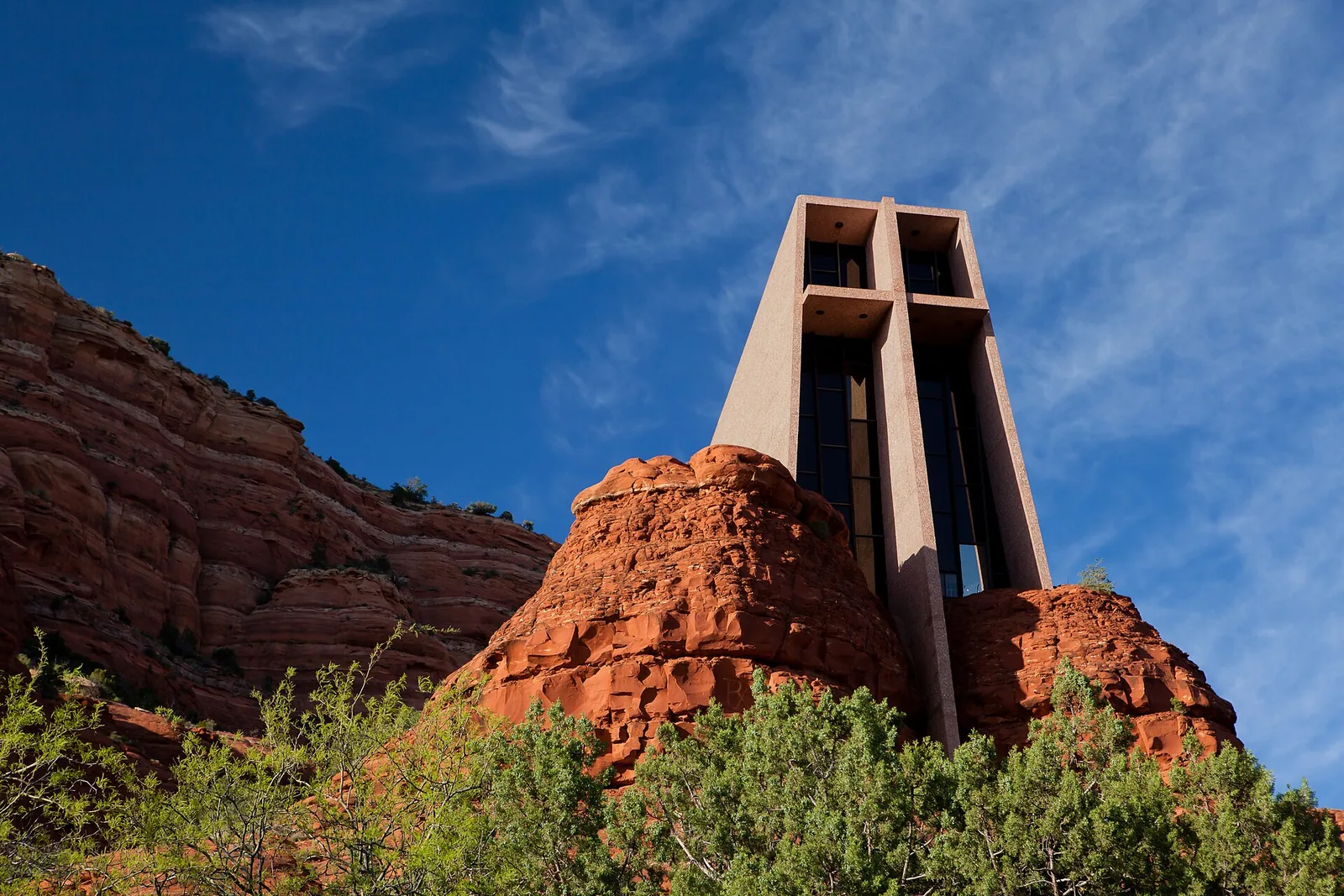
The Chapel of the Holy Cross is one of those Sedona places that lives up to the photos and then surprises you anyway. From the road it reads as a clean concrete wedge with a 90-foot cross rising out of the red rock; up close, standing inside the quiet, glass-walled nave with the buttes filling the window, it’s genuinely moving even if you didn’t come for the religion. It’s free, it’s open most days, and it takes maybe an hour of your time — but it sits on a steep little hill with a tiny parking lot, so a few minutes of planning saves you a lot of frustration.
What it is and why it’s worth your time
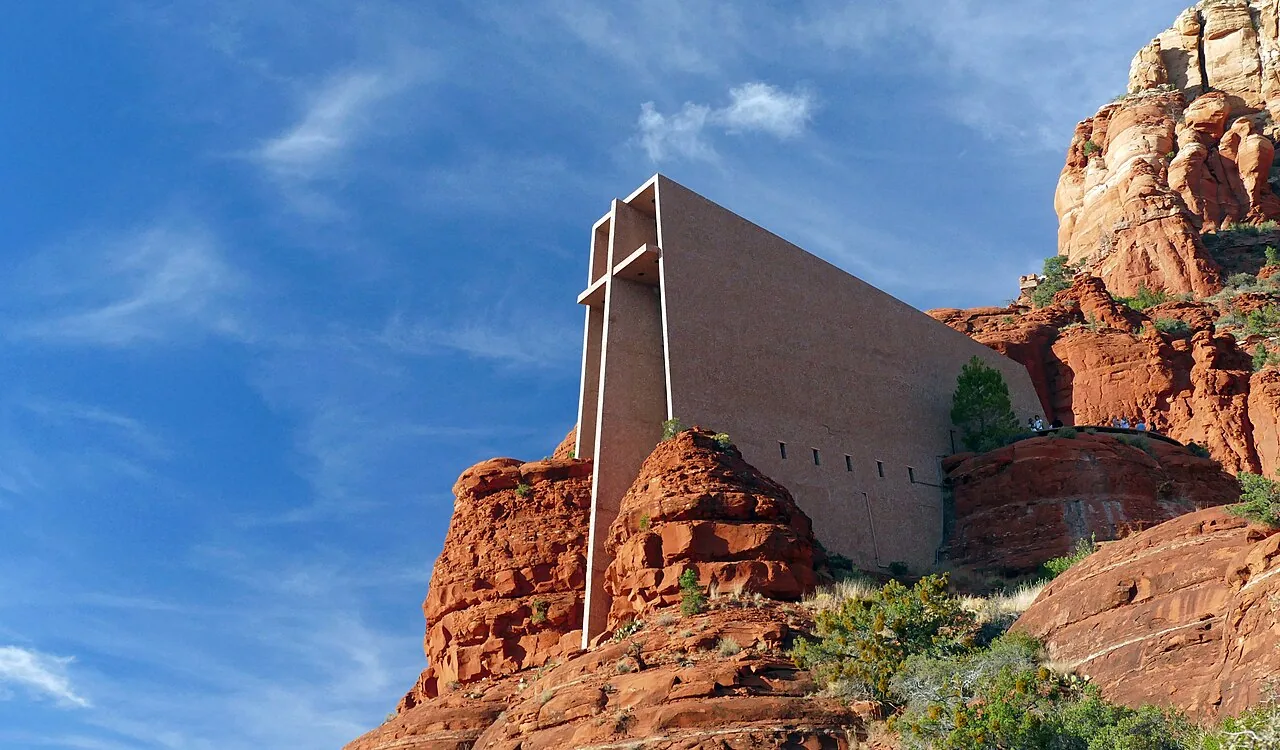
The Chapel of the Holy Cross is a working Roman Catholic chapel built directly into a red rock spur off State Route 179, south of central Sedona. It was completed in 1956 and is one of the most recognizable pieces of mid-century modern architecture in the American Southwest. The building is essentially two soaring concrete walls anchored by a 90-foot iron cross, with a wall of glass facing out over the Verde Valley and the surrounding formations.
The whole thing was the vision of Marguerite Brunswig Staude, a rancher, sculptor, and heiress to the Brunswig pharmaceutical fortune. The story is that in 1932 she looked at the newly finished Empire State Building from a certain angle and saw a cross in its lines — and decided she wanted to build a church that expressed that idea. She first tried to build it in Budapest with Lloyd Wright (Frank Lloyd Wright’s son), but World War II ended that plan. Decades later she brought the idea home to Arizona. The San Francisco firm Anshen & Allen designed it, with August K. Strotz as the designing architect and Richard Hein as project architect. Construction ran from 1954 to 1956 — roughly 18 months of work under supervisor Fred Coukos of the William Simpson Construction Company — at a cost of about $300,000, on land within the Coconino National Forest. Senator Barry Goldwater reportedly helped Staude secure the special-use permit needed to build on Forest Service land. It won an American Institute of Architects honor award in 1957 and was added to the National Register of Historic Places in 2011.
A few practical things to know up front:
- It’s a real place of worship, ministered today by St. John Vianney Parish under the Roman Catholic Diocese of Phoenix. People come to pray, not just to sightsee.
- Admission is free. Donations are welcome and go toward upkeep, but nobody will pressure you.
- It is not a hike in the usual Sedona sense — it’s a short, steep walk up a paved path or ramp from the parking lot to the chapel doors.
- You’ll want roughly 45 minutes to an hour here, more if you linger over the views or browse the gift shop.
Why go? Because it’s one of the few Sedona attractions that’s both architecturally serious and genuinely accessible to almost everyone, and because the views from the terrace are some of the best you’ll get without earning them on a trail. If your group includes someone who can’t do a long red-rock hike, this is the place where everyone gets the payoff.
A quick note on the architecture, because it rewards attention
It’s easy to snap a photo and move on, but the building repays a few minutes of looking. The two leaning concrete piers are the structure — the whole chapel essentially hangs off the cross between them — and the form was kept deliberately stark so the red rock would do the talking. Staude described her goal as “a chapel dedicated to finding God through art,” and the design leans on one big idea: a single uninterrupted wall of glass that frames the landscape instead of a painted altarpiece. Notice the bare concrete inside, the cross as the only strong vertical, and the floor sloping gently toward the window so your eye is pulled outward. The spur it’s wedged into is part of the Twin Buttes formation, and the two slender spires immediately to the south are known locally as the Two Nuns. Knowing that turns a pretty backdrop into something you can actually read.
How to get there, parking, and permits
The chapel is at 780 Chapel Road, just off State Route 179 — the same stretch known as the Red Rock Scenic Byway. From central Sedona, head south on 179 toward the Village of Oak Creek for roughly three miles, then turn onto Chapel Road at the roundabout (locals call it the Chapel Road traffic circle) and follow it to the end. The road climbs and curves, and the parking lot is at the top. If you’re using a navigation app, search “Chapel of the Holy Cross” rather than just the street number — a couple of map apps drop the pin slightly off, and you want the lot, not a neighbor’s driveway.
The parking situation (read this part)
This is the single thing most likely to trip you up. The chapel has only about 45 spaces total, and they’re split across three small tiers: a lot near the base of the hill, a few midway up, and a handful at the top closest to the chapel. On a nice-weather weekend the whole thing fills early and stays full, with cars circling and a line forming at the entrance. There is no overflow lot of any size, and parking along Chapel Road is restricted, so don’t count on a roadside spot.
A few rules and realities worth knowing:
- No large vehicles. The lot can’t accommodate RVs, vans longer than about 20 feet, or anything towing a trailer — the tiers are tight and the turning radius at the top is small. If you’re in a big rig, leave it elsewhere.
- No Red Rock Pass needed here. The chapel’s own lot is free and does not require a Red Rock Pass or any America the Beautiful pass. (That changes at nearby Forest Service trailheads — more below.)
- Don’t aim for the top tier. Many first-timers crawl to the highest spaces hoping to shorten the walk, which is exactly where the jam forms. The base lot moves faster, and the walk is only a couple of minutes longer.
- Patience over circling. If the lot is full, your best move is usually to drive back down, do something else nearby for 30–45 minutes, and come back. Turnover happens constantly because most visits are short.
Local tip: Go right at opening or in the last hour before close. The lot is calmest at 9 a.m. and again after about 4 p.m. The light is also far better at those hours, and you’ll share the chapel with a handful of quiet visitors instead of a tour-bus crowd. Midweek, those same early and late windows are nearly empty.
Parking at nearby trailheads (if the lot is full)
If you’d rather walk in or the lot is hopeless, you can park at a Forest Service trailhead and approach on foot. The Little Horse Trailhead, just off 179, is the main option, and from there the Chapel Trail runs along the base of Twin Buttes and comes out on Chapel Road a short distance below the chapel — roughly 0.6 miles one way, mostly gentle, with views of Bell Rock and the Two Nuns along the way. It’s a smart play on a packed day because you sidestep the parking circus entirely. The catch: Forest Service trailheads do require a Red Rock Pass (or a federal interagency pass) displayed on your dashboard. Day passes are inexpensive — figure a few dollars, but confirm the current price — and are sold at the Sedona visitor center, many trailhead machines, and local shops. It’s a longer, hotter option than the chapel lot, so most people only do it on the busiest days, but it doubles as a nice short hike. For more low-effort routes nearby, see our roundup of easy hikes.
The walk up: what to expect
Here’s the part the brochures gloss over. From the parking lot, you don’t just step into the chapel — there’s a short but genuinely steep climb to the entrance. You have two ways up:
- Walk it. The paved path from the lot to the chapel is roughly a tenth of a mile and noticeably uphill, followed by a curving concrete ramp to the doors. Most able-bodied people do it in a few minutes, but it’s steep enough that you’ll feel it in summer heat. There are spots to pause along the ramp where the view opens up, so there’s no shame in catching your breath and calling it a photo stop.
- Take the golf cart. The chapel typically runs a free golf-cart shuttle, staffed by volunteers, between the lot and the top for anyone who’d rather not climb — a real help for older visitors or anyone with limited mobility. It runs when volunteers are available rather than on a fixed timetable, so flag someone if you need it; tips are appreciated but never required.
Wear real shoes — not flip-flops. The surface is smooth concrete, but the grade and the desert sun make decent footwear and a little water worth it. There are restrooms near the base of the lot, which is the practical place to stop before you head up, since there are no facilities at the chapel itself. Inside, the chapel is a single quiet space: a few rows of seats, candles, the great glass wall, and the cross. There’s no guided tour and no required loop; you walk in, take it in, and walk out whenever you’re ready.
Hours, services, and the gift shop
Hours can shift with the season and with church services, so always confirm current hours on the chapel’s official site or by phone (around 928-282-7545) before you go. As a general guide:
| What | Typical schedule | Notes |
|---|---|---|
| Chapel open to visitors | Daily, roughly 9 a.m.–5 p.m. | Last entry around 4:45 p.m.; closed Christmas and Easter |
| Gift shop | Daily, roughly 9:30 a.m.–4:30 p.m. | On the lower level, run by the parish |
| Taizé prayer service | Mondays, late afternoon (around 5 p.m.) | Quiet, candlelit, open to all |
| Adoration | Wednesdays & Fridays, midday | Confirm exact hours before relying on them |
| Confession | Wednesdays & Fridays, early afternoon | Times change; check the official schedule |
| Mass | Wednesdays & Fridays, mid-afternoon | Limited weekday Masses, not a full Sunday schedule |
| Admission | Free | Donations welcomed, never required |
The chapel holds limited services — adoration, confession, the occasional weekday Mass, and a Monday Taizé prayer service — rather than a full Sunday parish schedule, because the main parish life happens at St. John Vianney elsewhere in Sedona. If you want to attend a service rather than just visit, look up the current times in advance; they’re the part of the schedule most likely to have changed, and a service in progress closes the nave to casual browsing. The Monday Taizé service in particular is worth staying for — short, sung, candlelit, and peaceful, and you don’t need to be Catholic to sit in on it.
The gift shop is downstairs, tucked into the lower level of the structure. It’s small and leans toward religious items, rosaries, candles, books, and Sedona keepsakes, with proceeds supporting the chapel. There’s a donation box inside the chapel as well if you’d rather give directly to upkeep. Even if you’re not shopping, the lower terrace is worth a few minutes — the views open up differently from down there.
The views (and where to stand)
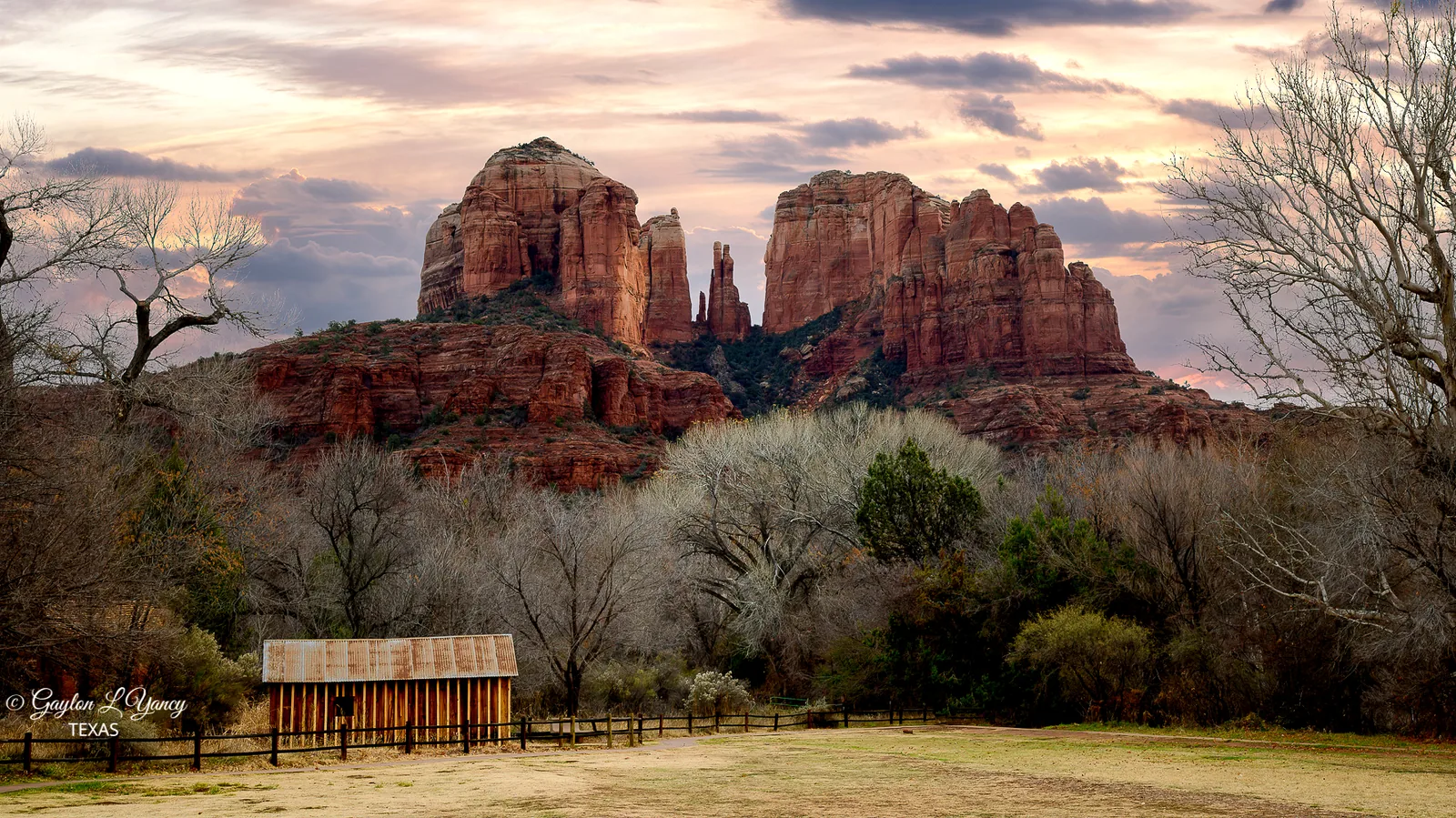
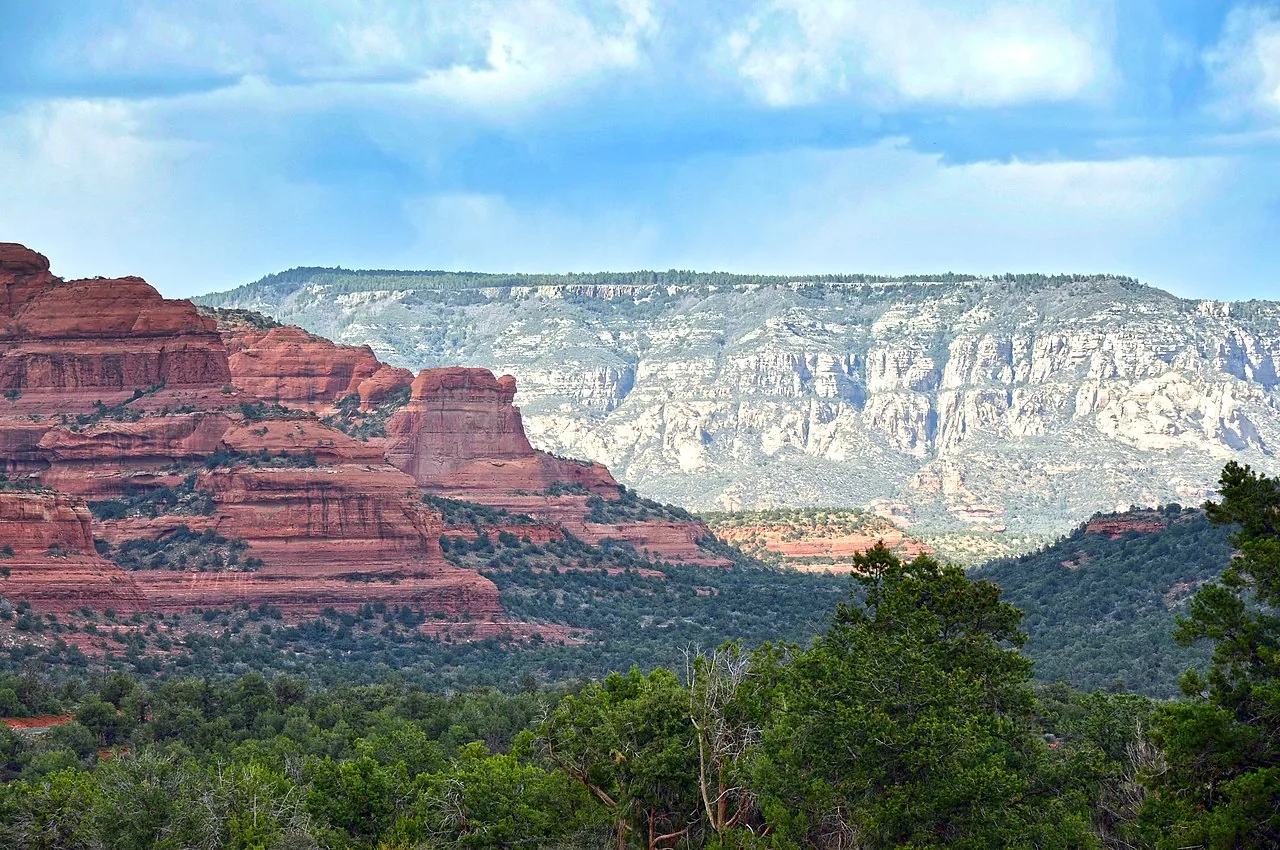
People come for the building and stay for the view. The chapel sits partway up a red rock spur, so from the terrace and the ramp you look straight out over the Verde Valley with formations stacking up around you. On a clear day you can pick out Courthouse Butte and the round shoulder of Bell Rock to the south, the Two Nuns spires close at hand, and — off in another direction — the distant silhouette of Cathedral Rock, the formation that gave this area much of its reputation.
- The front terrace outside the doors is the classic spot — wide open valley view, great for a quiet sit.
- The lower terrace by the gift shop gives you a different angle and is usually less crowded.
- Looking back at the chapel itself from the top of the ramp, with the cross and the red rock behind it, is the photo everyone wants.
It’s worth saying plainly: this is not a sweeping summit panorama you hiked four miles to earn. It’s a generous, easy view that almost anyone in your group can reach, which is exactly what makes it special. If you want the big earned vistas, pair this with a real hike — see the pairing suggestions below.
For photographers
A few specifics if you care about the shot. The exterior faces roughly south-southwest, so late afternoon light rakes across the concrete and warms the red rock behind it — that’s the golden-hour shot, and the low sun catches the cross cleanly. Morning gives softer, flatter light and far fewer people. The classic “chapel against the rock” composition is from the top of the ramp looking back; for the interior, frame wide so the glass wall and the valley land in the same shot, ideally with the cross silhouetted. Tripods inside are discouraged and block the narrow space, so shoot handheld and keep it brief. For the reverse angle — the chapel small against the whole spur — drive a short way down Chapel Road and pull over safely. More ideas in our photography spots guide.
Best time of day and season
Time of day. Early morning (right at opening) and the last hour before closing are the sweet spot for two reasons: fewer people and better light. Midday is the worst of both worlds — fullest lot, harshest sun, most crowded chapel. If you’re a photographer, late afternoon light on the red rock is hard to beat, and the cross catches the low sun nicely. Because the chapel closes by late afternoon, it does not work as a sunset stop — for that, drive on to one of our sunset spots instead.
Season. Sedona is a year-round destination, but each season has trade-offs:
- Spring (March–May) and fall (September–November) are the most pleasant — mild temperatures, comfortable for the walk up — and also the busiest. Expect the lot to fill fast on weekends.
- Summer (June–August) is hot. The walk and ramp are fully exposed, and afternoons can be brutal; go early, bring water, and watch for monsoon storms in July and August.
- Winter (December–February) is quiet and often beautiful, with cool, clear days and far smaller crowds. Mornings can be cold, and the occasional dusting of snow on the red rock is stunning. Double-check holiday closures, since Christmas is one of only two days the chapel closes entirely.
What to bring and accessibility
You don’t need much for a chapel visit, but a few things make it smoother:
- Water — even for a short walk, the desert sun is no joke.
- Comfortable walking shoes — the path and ramp are steep.
- Sun protection — hat, sunglasses, sunscreen; there’s almost no shade on the way up.
- A small donation if you’re inclined — cash works, or use the donation box and the gift shop, both of which support upkeep.
- Layers in winter — mornings are cold even when afternoons warm up.
Accessibility
This is one of the more accessible Sedona attractions, with caveats. The free golf-cart shuttle solves the steep climb for visitors who can’t walk it, and the ramp inside is paved and continuous. That said, the grade is real, the surfaces are firm but inclined, and there is no elevator between levels — the lower-floor gift shop involves additional steps or a separate path. Designated accessible parking sits closest to the top, but those few spaces go quickly, another reason to arrive early. If anyone in your party uses a wheelchair or has limited mobility, the shuttle is your friend; call ahead at the number above with specific questions, since shuttle availability depends on volunteers.
How to avoid the crowds
The chapel is small and popular, which is a tough combination. Your best tools:
- Go at the edges of the day. First thing in the morning or the final hour before close beats midday on every metric.
- Go on a weekday if your schedule allows. Weekends and holidays are by far the busiest.
- Avoid peak season weekends specifically — spring and fall Saturdays around lunchtime are the crunch.
- Don’t fight the lot. If it’s full, leave and circle back later rather than idling at the entrance. Turnover is quick.
- Walk in from Little Horse Trailhead on the worst days — you trade a half-mile stroll for skipping the parking line entirely.
Even on a busy day, the inside of the chapel tends to stay calmer than the parking lot, because it’s a place of prayer and people generally lower their voices when they step in.
Etiquette: it’s a place of worship
This matters, and it’s easy to get right. The chapel is an active Catholic chapel, and people are often there to pray, not pose. A few simple courtesies:
- Keep your voice low inside. Treat it like any quiet sacred space.
- No food or drink inside the chapel building.
- Leave pets outside — service animals excepted.
- Be mindful with photos. Photography is generally allowed, but don’t use flash, don’t block the aisle or the glass wall for a long photo shoot, and don’t photograph people who are clearly praying. If a service is underway, put the camera away.
- Dress reasonably. There’s no formal dress code, but this isn’t the spot for anything you’d hesitate to wear into a church.
None of this is heavy-handed — the staff are welcoming and used to visitors of every faith and none. The point is just that the building is a chapel first and a landmark second, and a little respect goes a long way.
Safety and practical notes
There’s not much that’s risky about a chapel visit, but a couple of things are worth a mention:
- Heat and sun. The walk and the terraces are exposed. In summer, the real hazard here is the same as everywhere in Sedona — heat. Hydrate and don’t linger in the midday sun if it’s brutal.
- The grade. The path up is steep enough that people occasionally lose their footing in slick-soled shoes. Take your time, use handrails on the ramp, and use the shuttle if the climb is too much.
- Driving Chapel Road. It’s narrow and curving with foot traffic near the lot. Go slow, especially when the lot is busy and people are walking back to their cars, and watch for cars backing out of the tight upper tiers.
- Monsoon season. July and August bring sudden afternoon thunderstorms. Lightning on an exposed terrace is no joke — if a storm rolls in, head inside or back to your car. Those same storms can also briefly close or wash debris onto the approach road.
What to pair it with nearby
The chapel is short, so it pairs beautifully with other stops along the same corridor. Everything below is within a few minutes’ drive on or near Highway 179:
| Pair it with | Drive time | Effort | Good for |
|---|---|---|---|
| Bell Rock | ~5 min south | Easy to moderate | A famous formation and vortex with flat base trails |
| Cathedral Rock | ~10 min | Short but very steep | The iconic Sedona silhouette and a classic photo |
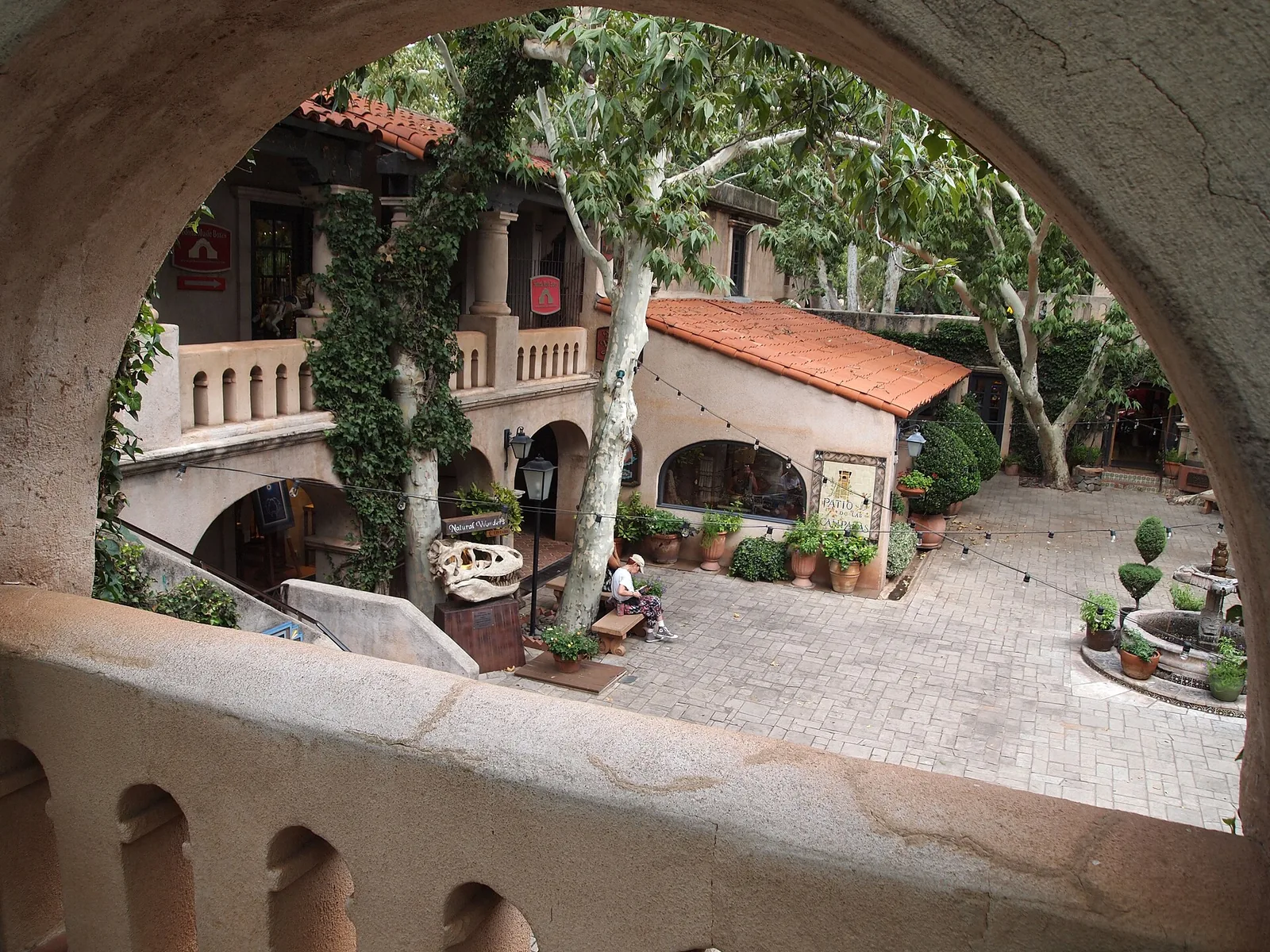
| Tlaquepaque | ~10 min north | None | Shaded galleries, shops, and lunch out of the sun |
| Red Rock Scenic Byway | The drive itself | None | Taking the whole 179 corridor slowly |
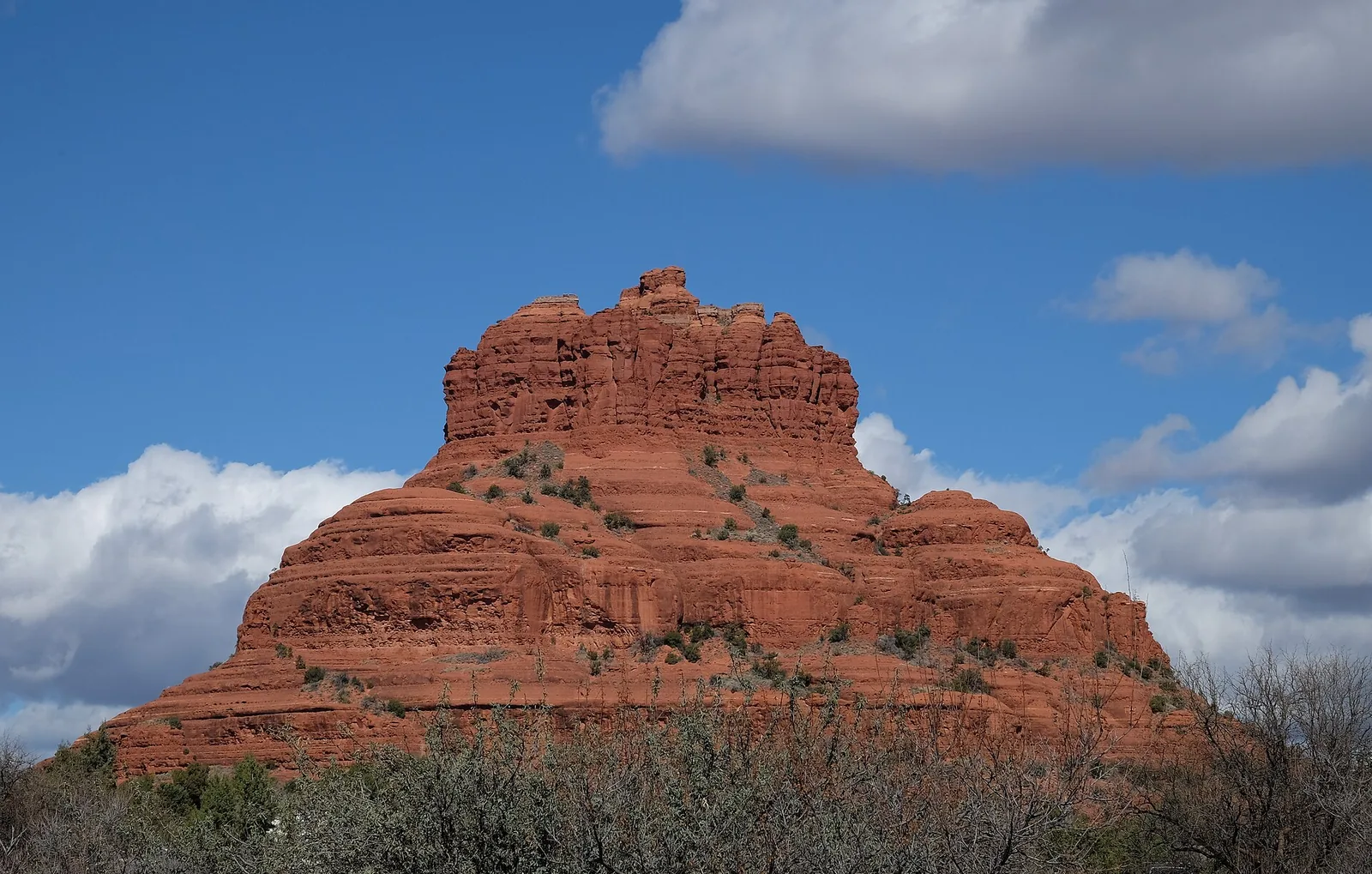
A couple of notes on those: Bell Rock and the chapel are both visible from the Chapel Trail, so they’re a natural combo; Cathedral Rock’s hike to the saddle is short but seriously steep; and Tlaquepaque, the shaded Mexican-village-style arts village a few minutes north, is the easy, out-of-the-sun counterpoint when you’ve had enough red rock.
A simple half-day plan: hit the chapel right at opening, drive five minutes to Bell Rock for an easy walk, then head to Tlaquepaque for lunch in the shade. You’ll have seen three Sedona icons before the midday crowds peak, and saved the steep hikes for cooler hours. For a longer route, our three-day itinerary slots the chapel into a morning that flows into the rest of the 179 corridor.
And if you’re staying at the house with us, the chapel makes an easy morning: you can be back well before noon to escape the heat and settle a rivalry on the indoor pickleball court while everyone else is stuck circling a full parking lot in the sun.
The Chapel of the Holy Cross earns its place on every Sedona list — not because it’s flashy, but because it’s a quiet, well-made building in an extraordinary spot, open to anyone, free of charge. Go early, walk softly, and let the views do the rest. When you’re ready to plan the trip around it, check our dates.
Frequently asked questions
Is there an entrance fee for the Chapel of the Holy Cross?
How hard is the walk up to the chapel?
Can I bring an RV or large vehicle to the chapel?
What are the chapel's hours?
Can I take photos inside the chapel?
When is the best time to visit to avoid crowds?
Stay where you can rally any season
Sedona Pickler is a private West Sedona vacation home with its own indoor, climate-controlled pickleball court — a short drive from the trailheads, viewpoints and restaurants in this Sedona guide. Play at sunrise or after dark, in any weather.
Check availability on Airbnb