Spiritual, Aura & Meditation Tours in Sedona
Sedona has been a magnet for the metaphysical crowd since the 1980s, and it shows. Walk through Uptown or down State Route 179 and you’ll pass crystal shops, aura cameras, sound-healing studios, and a steady parade of signs offering vortex tours and psychic readings. Some of it is genuinely calming and well run; some of it is tourist theater with a steep markup. This guide sorts through Sedona’s spiritual scene honestly, points you to the established, reputable places, and is straight with you about prices, crowds, and a few things worth being careful about.
What “spiritual Sedona” actually is
There’s no single experience called a “spiritual tour” in Sedona. The metaphysical scene here is a loose cluster of offerings, and it helps to know what each one means before you book anything:
- Vortex tours — guided walks (on foot or by Jeep) to the energy sites around town, usually combined with a bit of geology, local history, and a meditation or breathing exercise.
- Aura photography — a biofeedback camera reads the electrical activity from sensors you hold, then maps it onto a colored “aura” portrait. Treat it as a fun keepsake, not science.
- Sound healing — group sessions using crystal and Tibetan singing bowls, gongs, and other instruments, often paired with breathwork. These are genuinely relaxing whether or not you buy into the energy language.
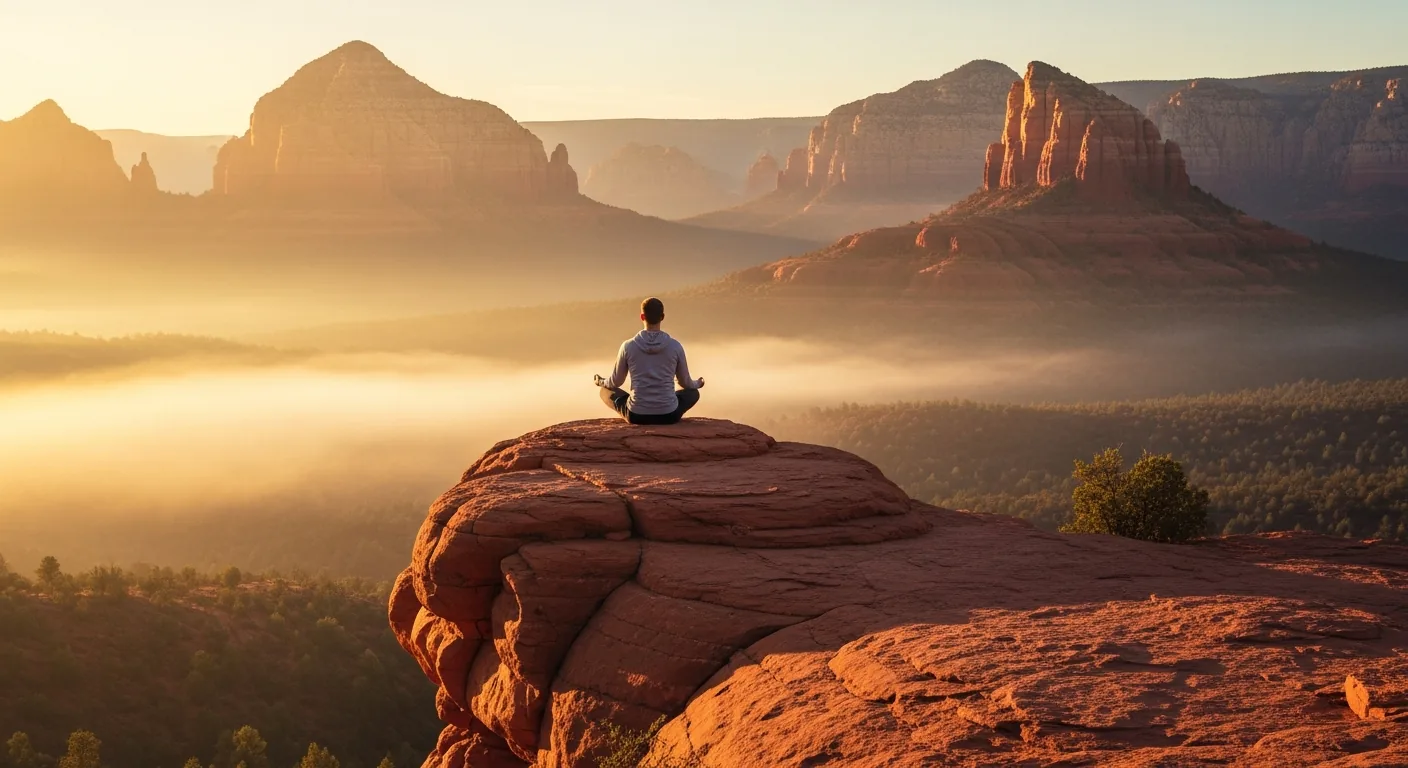
- Meditation — from free, drop-in spots like the Amitabha Stupa to guided sessions out at a vortex.
- Psychic, intuitive, and mediumship readings — one-on-one sessions, widely available and wildly variable in quality.
- Crystal shops — part retail, part rabbit hole, and a good low-commitment way to dip a toe in.
The honest framing: you don’t have to believe in any of this to enjoy it. Plenty of skeptics come away saying the meditation was the best part of their trip, simply because they slowed down and sat still in a beautiful place for an hour. Come curious, keep your wallet in check, and you’ll have a good time.
A note on respect, before you book anything
This part matters, so I’m putting it near the top rather than burying it. The red rocks around Sedona are sacred to the Yavapai-Apache and other Indigenous peoples, and Boynton Canyon in particular remains a living spiritual center for the Yavapai-Apache, who know it as Che Ah Chi. Much of Sedona’s “Native-inspired” tourism is not run by Native people and borrows the imagery loosely.
Two specific cautions:
- Be skeptical of “shaman” and “sweat lodge” offerings. The word “shaman” gets used as marketing here, and most people selling “Native ceremonies” to tourists have no tribal affiliation. Sedona also carries a hard lesson on this: in 2009, three people died and many more were hospitalized in a sweat-lodge event run by a non-Native self-help promoter near Sedona, who was later convicted of negligent homicide. A traditional sweat lodge is a serious ceremony with real physical risk; a commercialized, crowded “rebirthing” version is neither authentic nor safe.
- If you want a genuine connection to Indigenous history, visit the heritage sites properly. The Palatki and Honanki cliff dwellings, managed by the U.S. Forest Service, are the real thing — ancestral Sinagua dwellings and rock art going back centuries. You’ll learn far more there, from interpretive guides, than from any “ancient ceremony” sold off a sandwich board. (More on visiting Palatki below, and see the dedicated Palatki & Honanki guide.)
None of this is meant to scold. Enjoy the crystals and the sound baths guilt-free — those aren’t anyone’s sacred tradition. Just don’t pay a stranger to perform someone else’s religion for you.
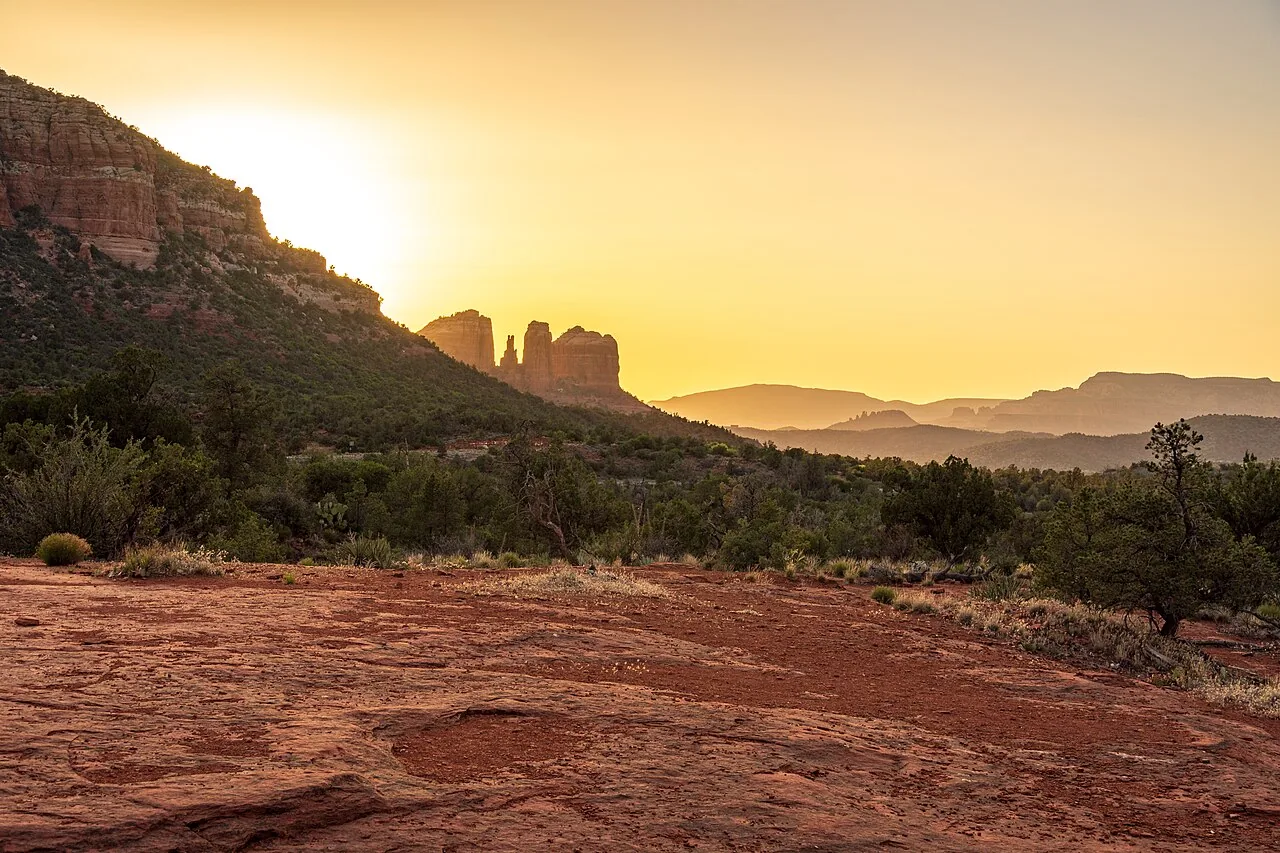
Local tip: The most respectful “spiritual” thing you can do in Sedona costs nothing — sit quietly at a vortex or the Stupa at sunrise, before the crowds, and just be there. The land does most of the work. You can save the guided extras for when you actually want a teacher.
The vortexes: what they are and how to visit
Vortexes are the heart of metaphysical Sedona. Believers describe them as swirling centers of earth energy said to aid meditation, healing, and reflection. Geologically, they’re simply striking spots on the landscape — and whatever you make of the energy talk, they’re excellent places to hike and sit. The four classic sites are:
| Vortex site | Energy type (per tradition) | Effort to reach | Red Rock Pass needed? |
|---|---|---|---|
| Airport Mesa | “Masculine” / uplifting | Short, steep scramble to the saddle | Yes (parking lots fill fast) |
| Bell Rock | “Masculine” / focus | Easy walk from the lot, optional scramble | Yes |
| Cathedral Rock | “Feminine” / strongest of the four | Short but very steep, hands-on climbing | Yes |
| Boynton Canyon | Balanced; sacred to the Yavapai-Apache | Moderate trail; the knoll is a short side climb | Yes |
A few practical notes that the tour pitches often skip:
- You do not need a guide to visit a vortex. All four are on public Forest Service land, and the “energy” doesn’t come with a velvet rope. A guide can add geology, history, and a structured meditation, which some people love — but if you’re on a budget, you can walk up yourself for the cost of a parking pass.
- You almost always need a Red Rock Pass to park at these trailheads. As of 2026 it’s $5 for a day, $15 for a week, or $20 for the year, payable at the trailhead kiosks or online via Recreation.gov. An America the Beautiful interagency pass works too. A genuinely quick photo stop under 15 minutes doesn’t require one, but you won’t meditate at a vortex in 15 minutes.
- For the full breakdown of each site and how to feel your way around it, see the vortexes guide and the dedicated Airport Mesa vortex page.
What a guided vortex tour is actually like
Guided vortex experiences in Sedona range from gentle hour-long meditations to half-day Jeep outings. A reputable guide will:
- Explain the geology and the local lore without overselling either.
- Lead a simple breathing or meditation exercise, often at a quieter spot than the famous overlook.
- Tailor the pace to your group rather than marching you to a photo op.
Prices vary a lot and change often, so confirm directly with the operator before booking. Expect to pay more for private, by-Jeep, or sunrise/sunset slots. Two well-known booking hubs are the Center for the New Age and a number of established Jeep-tour companies in town (see the Jeep tours guide if you’d rather ride than walk).
Crystal shops worth your time
Even if you buy nothing, Sedona’s crystal shops are a pleasant, low-pressure way to spend an hour. Three established, long-running stores anchor the scene:
- Crystal Magic — 2978 W State Route 89A, in West Sedona. Open since 1986, it has a solid reputation for fair pricing and honest sourcing, plus a good books-and-incense section. Typically open daily, roughly mid-morning to early evening — confirm current hours before you go.
- Sedona Crystal Vortex — three locations in Uptown Sedona, the main one near 300 N State Route 89A, a short walk up from Tlaquepaque. Crystals identified by mineral species and locality, plus aura photos and readings. Generally open daily into the evening.
- Center for the New Age — 341 State Route 179, just across from the Tlaquepaque area. More of a one-stop metaphysical hub than a pure crystal shop: bookstore, crystals, jewelry, aura camera, and a roster of independent readers and practitioners. Generally open daily, late morning into early evening.
A buyer’s reality check: crystal prices swing enormously based on size, rarity, and finish, and “energetic properties” are marketing, not mineralogy. Buy a stone because you like how it looks and feels in your hand, set your own budget, and don’t let anyone upsell you on what a crystal will “do” for you. The reputable shops above won’t pressure you — the pop-up stands sometimes will.
Aura photography and readings
Aura photography
The aura camera is a Sedona staple. You hold two sensors, the device reads your skin’s electrical activity, and software renders it as a colorful portrait that a staff member interprets. It’s a fun, harmless souvenir and a popular thing to do as a couple or group. The Center for the New Age and Sedona Crystal Vortex both offer it. Expect a modest per-photo fee; confirm the current price on the spot, since these creep up over time. Just go in knowing it’s entertainment, not a medical or scientific reading.
Psychic, intuitive, and mediumship readings
Readings are everywhere in Sedona, and quality is all over the map. A few tips to spend well:
- Book through an established venue like the Center for the New Age, which vets a roster of practitioners, rather than walking into the first sign you see.
- Read recent reviews and look for a specific reader’s name people mention by name.
- Set a time and price up front. A reputable reader gives you a flat rate for a set length; be wary of anyone who finds “additional work” your aura urgently needs.
- Walk away from fear-based sales. Anyone telling you there’s a curse, a block, or a dark energy that only their (paid) ritual can remove is running a script, not a reading. This is the single biggest red flag in the whole scene.
Sound healing, meditation, and breathwork
This is the part of spiritual Sedona that even committed skeptics tend to enjoy, because lying still while crystal bowls and a gong wash over you is simply relaxing.
- Sound baths and gong meditation — Aumbase Sedona (around 431 State Route 179) runs group sound-healing, gong meditation, and breathwork sessions; group sessions have started in the very affordable range, with pre-registration required. Prices and schedules change, so check their current calendar.
- Breathwork — often paired with sound healing; expect a guided session focused on deep, deliberate breathing and emotional release. Go easy if you’re prone to lightheadedness, and tell the facilitator about any heart or respiratory conditions beforehand.
- Free meditation at the Amitabha Stupa — see the next section; it’s the best no-cost option in town.
A practical caution: breathwork and intense sound sessions can be physically activating. If you’re pregnant, have cardiovascular issues, or are sensitive to overstimulation, ask the facilitator what to expect and feel free to stop at any point.
Free and quiet: the Amitabha Stupa & Peace Park
If you want a contemplative experience without spending a dime, this is the spot. The Amitabha Stupa and Peace Park sits at 2650 Pueblo Drive in West Sedona — 14 acres of red-rock quiet with two Buddhist stupas, a Shakyamuni Buddha statue, walking trails, and plenty of benches and corners for sitting still.
- Cost: Free; the park runs on donations.
- Hours: Open during daylight hours; the on-site parking lot has more limited hours (roughly 8:30 a.m. to early evening, shorter in winter), so confirm before a sunset visit.
- Vibe: Genuinely peaceful, non-pushy, and welcoming to all faiths or none. It’s a working Buddhist site, so keep your voice down and your pace slow.
It’s an easy add-on to a West Sedona morning and pairs well with a stop at one of the crystal shops or a coffee on the way.
Visiting Indigenous heritage the right way: Palatki & Honanki
For the real historical depth that no “ceremony” can match, head out to the cliff dwellings northwest of town. Palatki and Honanki were the largest cliff dwellings in the Red Rock Country roughly from A.D. 1150 to 1350, built by the Sinagua people, with rock art panels spanning thousands of years of use.
A few must-knows for Palatki specifically:
- Reservations are required. You book a timed slot through Recreation.gov (a small non-refundable reservation fee applies), and you also need a Red Rock Pass or interagency pass to park. The tour itself is free.
- Hours are limited and the access road is unpaved and rough — a high-clearance vehicle is wise, and times shift seasonally, so check current details on the Forest Service or Recreation.gov pages.
- Go with the guides. Volunteer interpreters share the history and help protect the fragile rock art. Don’t touch the panels; skin oils damage them.
This is, in my opinion, the most rewarding “spiritual” half-day you can spend near Sedona if your interest is genuine connection to the land’s human history. See the full Palatki & Honanki guide for directions and what to expect.
Best time of day and season
Timing makes a real difference to both the experience and the crowds:
- Early morning is king. The vortexes, the Stupa, and the heritage sites are all calmer, cooler, and more atmospheric at sunrise. Tour groups and the midday rush haven’t arrived yet.
- Sunset is the runner-up — gorgeous light, but the popular vortex overlooks (especially Airport Mesa) get packed, and parking is brutal. See the sunset spots guide to plan around the crowd.
- Spring and fall are the sweet spot. Mild temperatures make the short vortex hikes pleasant.
- Summer is hot — often into the high 90s or beyond. If you’re hiking to a vortex in July, go at first light and carry far more water than you think you need.
- Winter is quiet and beautiful, with occasional snow dusting the red rock. Indoor sessions (sound baths, readings, shops) are a perfect fit on a cold day.
What to bring
For the outdoor vortex and heritage visits:
- A Red Rock Pass (or interagency pass) displayed in your windshield.
- More water than feels necessary, plus sun protection — hat, sunscreen, sunglasses.
- Real shoes with grip. The “easy” vortex walks still involve slickrock and loose footing; Cathedral Rock is a genuine scramble.
- A small mat, towel, or cushion if you plan to sit and meditate on the rock.
- Cash for parking machines and small purchases, and patience for spotty cell signal at the trailheads.
For indoor sessions (sound healing, readings, shops):
- Comfortable, loose clothing for sound baths and breathwork, and a layer — studios can run cool.
- An open but grounded mindset, and a firm personal budget before you walk into the crystal shop.
Accessibility
Honesty here: the metaphysical scene is a mix of very accessible and not at all.
- Shops, the Center for the New Age, sound-healing studios, and aura photography are generally indoor, low-effort experiences suitable for most mobility levels — though always call ahead about specific entrances and parking.
- The Amitabha Stupa has walking trails over natural terrain; the organization asks that you call in advance to arrange accessible access, so reach out before visiting if you have mobility needs.
- The vortex sites are real hikes. Bell Rock’s lower area is the gentlest; Airport Mesa and Cathedral Rock involve steep, uneven terrain. If hiking is hard for you, a Jeep-based vortex tour can get you close to the energy without the climb.
How to avoid the crowds and the hard sell
- Beat the clock. Sunrise at any vortex or the Stupa is a different, quieter world than midday.
- Skip the famous overlook. A guide or even a quiet bench just off the main trail gives you the same setting without the selfie line.
- Book direct and book reputable. The established venues named above are far less pushy than the curbside stands and “free reading” hooks.
- Decide your budget before you arrive. It’s easy to walk into a crystal shop for a $10 souvenir and out with a $200 cluster. That’s fine if you meant to — set the number first.
- Trust your gut on practitioners. Warmth, clarity, and a flat price are good signs. Urgency, fear, and “you need more sessions” are not.
Safety
- Heat and dehydration are the real dangers on the outdoor visits, not anything mystical. Carry water, start early, and turn back if you’re overheating.
- Footing. The vortex scrambles are where people get hurt — slow down on slickrock, especially after rain.
- Vet any “ceremony” hard. Per the cautions above, steer clear of commercialized sweat lodges and any high-intensity heat or fasting “rebirthing” event. Authentic Indigenous ceremony isn’t sold to tourists; what’s marketed that way can be both inappropriate and genuinely dangerous.
- Breathwork can cause dizziness or tingling — that’s normal, but stop if it’s uncomfortable and disclose health conditions to the facilitator first.
What to pair it with nearby
The metaphysical stops slot neatly into a wider Sedona day:
- Chapel of the Holy Cross — a striking, non-denominational church built into the rock, just a few minutes from the State Route 179 shops. Free, quiet, and a natural companion to a “spiritual Sedona” theme. See the Chapel of the Holy Cross guide.
- Tlaquepaque Arts & Shopping Village — galleries and courtyards right by the Center for the New Age; an easy stroll to combine with crystal shopping. See Tlaquepaque.
- A vortex hike — turn the energy talk into an actual walk; the vortexes guide maps them all.
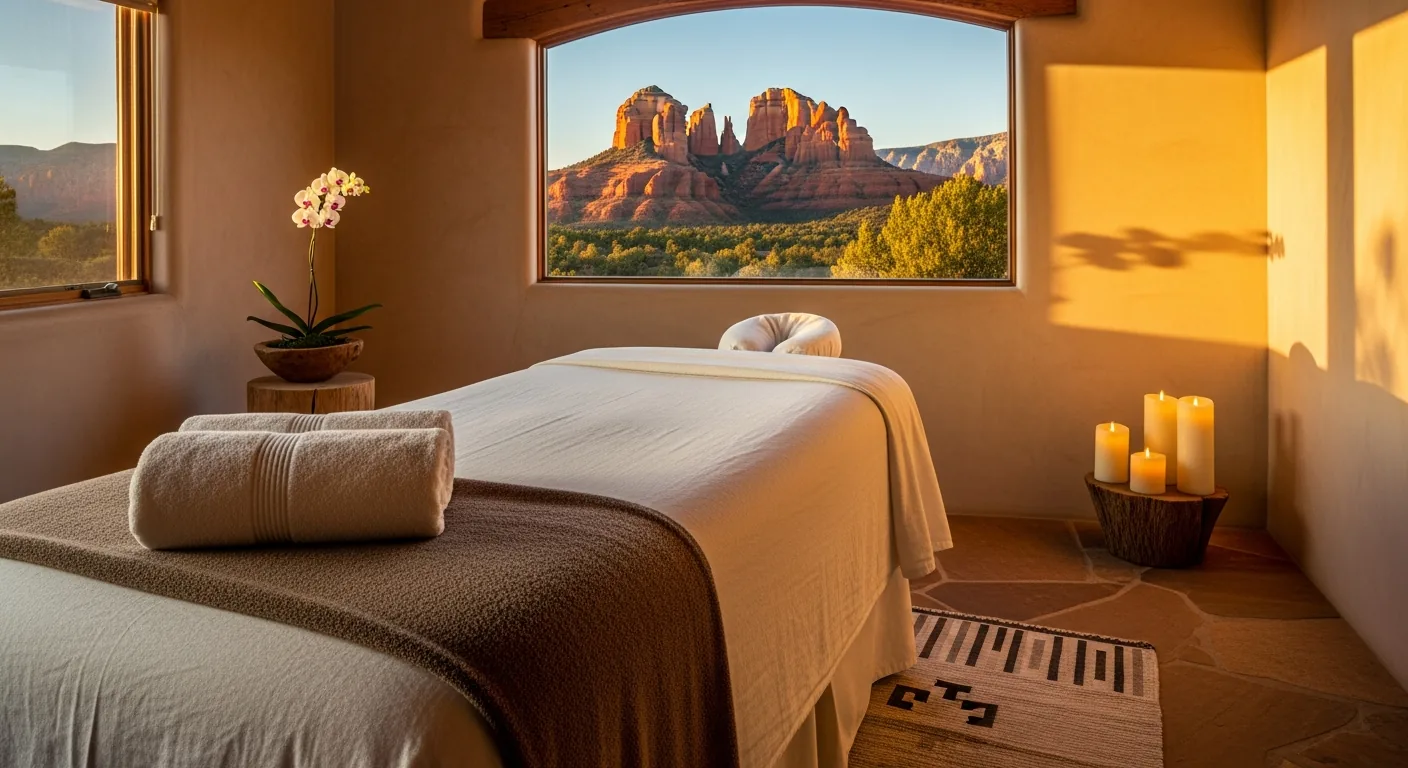
- A spa afternoon — if your goal is simply to relax and reset, a Sedona spa may give you more for your money than a reading. See spas & wellness.
And when you’ve had your fill of bowls, crystals, and quiet contemplation, there’s a low-key spiritual practice of its own waiting back at the house: a few rallies on the indoor, climate-controlled court at Pickler House, no sunscreen required. If you haven’t yet, you can stay at Pickler House as your basecamp for all of the above — quiet mornings at the vortexes, and air-conditioned pickleball when the afternoon heat rolls in.
Whatever you believe walking in, Sedona’s spiritual scene is at its best when you keep it simple: sit somewhere beautiful, breathe, be kind to the land and the people whose home it is, and don’t pay anyone to scare you. Do that and you’ll leave a little calmer than you came — which, in the end, is the whole point.
Frequently asked questions
Do I need a guide to visit a Sedona vortex?
What does a Red Rock Pass cost and where do I get one?
Is aura photography real or scientific?
Are the 'shaman' and sweat lodge ceremonies in Sedona authentic?
What's the best free spiritual experience in Sedona?
How do I avoid getting overcharged by a reader or crystal shop?
Stay where you can rally any season
Sedona Pickler is a private West Sedona vacation home with its own indoor, climate-controlled pickleball court — a short drive from the trailheads, viewpoints and restaurants in this Sedona guide. Play at sunrise or after dark, in any weather.
Check availability on Airbnb