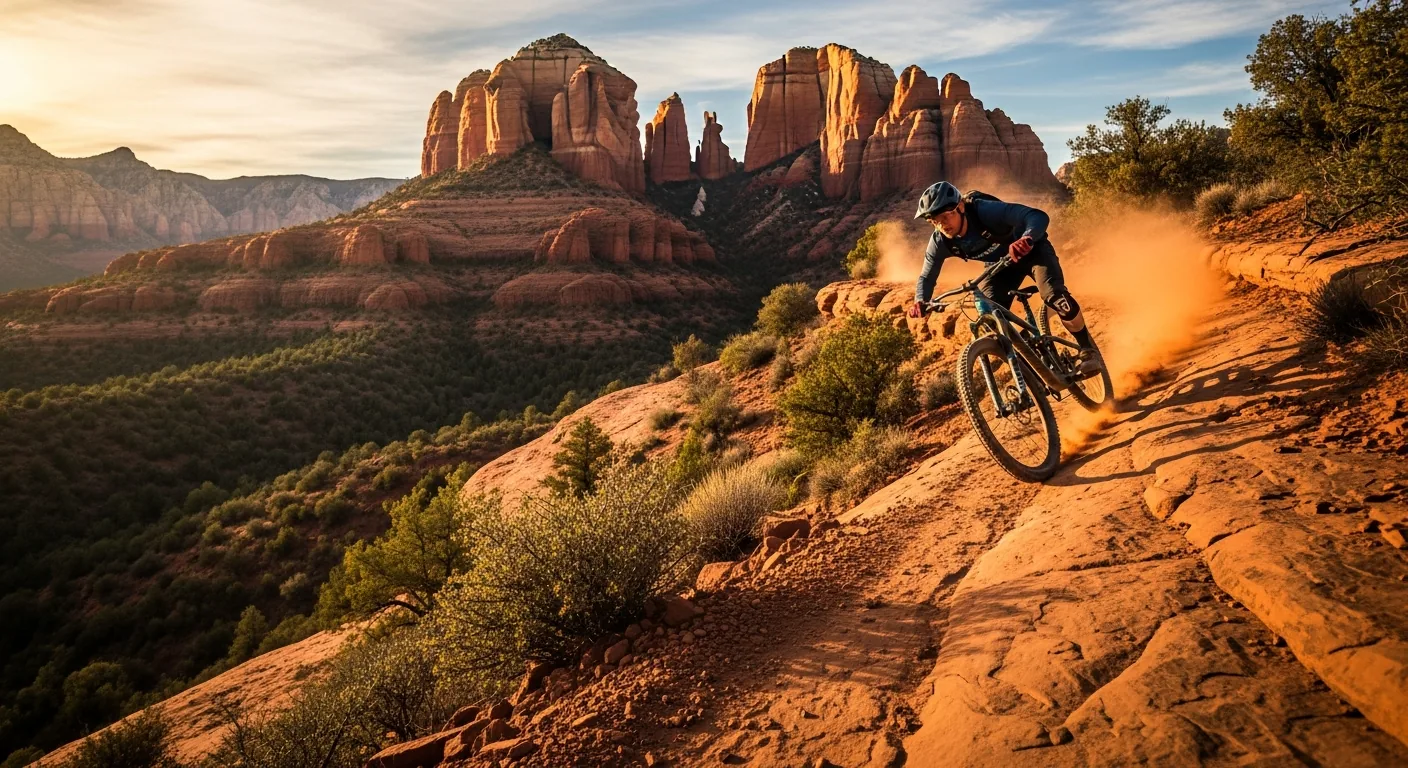
Bike & E-Bike Rentals in Sedona
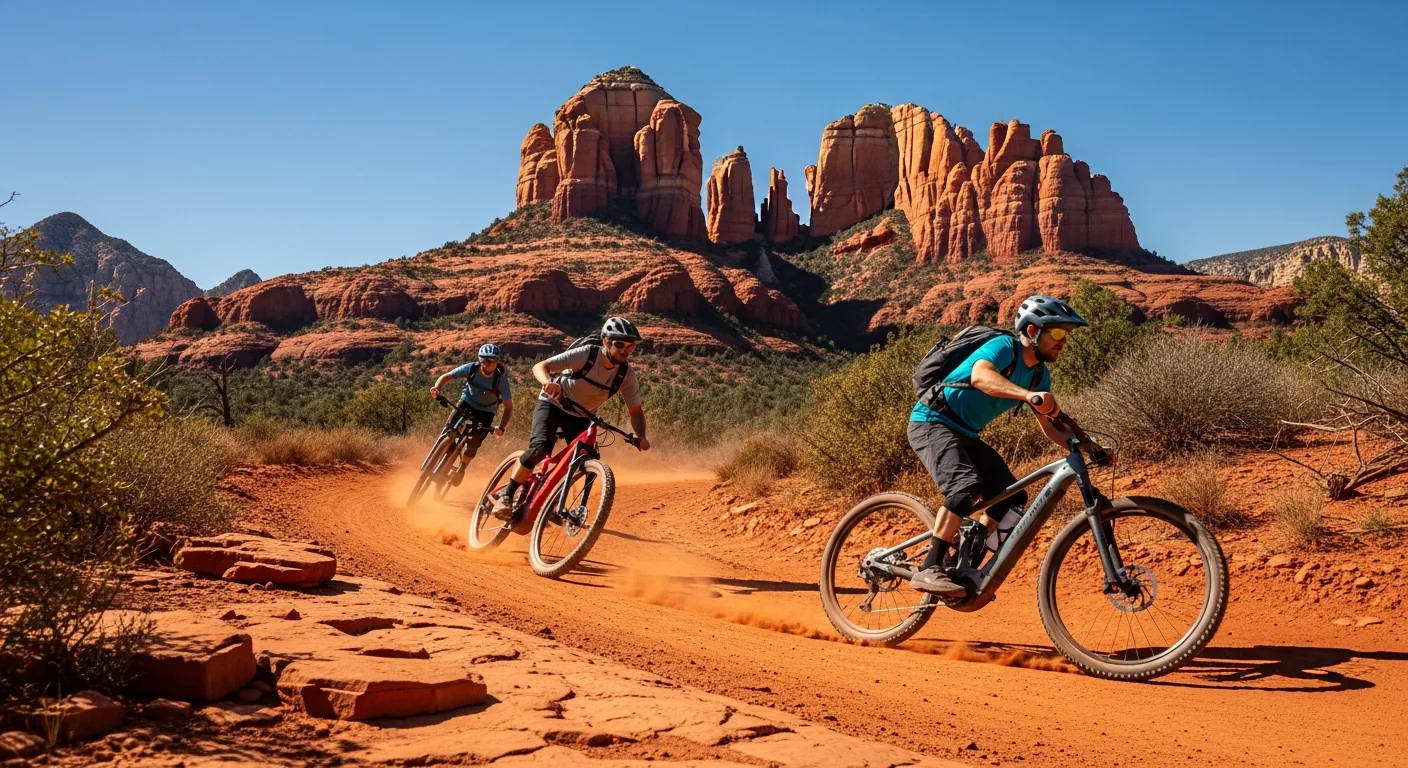
Sedona is one of the best places in the country to ride a bike, but it’s also one of the easiest places to get the rules wrong — especially with e-bikes, which are welcome on some surfaces and flatly banned on others. The good news is that renting is simple, the shops know the trails cold, and you don’t need to own a thing to have a great ride. The trickier part is matching the right bike to where you actually want to go, because a bike that’s perfect for the paved pathway along the highway is the wrong tool for the slickrock, and vice versa.
This guide walks through where to rent, what each type of bike is good for, what it roughly costs, and — this is the part most rental pages gloss over — exactly where you can and can’t ride an electric bike around here. Get that last part right and you’ll have a smooth, low-stress day. Get it wrong and you can earn a ticket or, worse, a confrontation on a busy trail.
Why rent a bike in Sedona at all
A bike changes the scale of a Sedona visit. Distances that feel like a hassle by car — uptown to the Village of Oak Creek, the trailheads strung along Highway 179, the loops out past the airport — collapse into a pleasant ride. You skip the worst of the parking crunch at popular trailheads, you cover more red rock in a morning than you could on foot, and you get the desert air moving past you instead of through a windshield.
There are really three kinds of riding here, and they barely overlap:
- Mountain biking on the famous singletrack — slickrock, technical drops, world-class trails that draw riders from everywhere.
- Easy path and road riding — paved multi-use pathways and quiet stretches of road, perfect for families and casual cruisers.
- Dirt-road and jeep-trail riding — the wide, rough roads where e-bikes are actually allowed.
Knowing which of these you’re after tells you which bike to rent and which shop to call. Most visitors think they want “a bike,” but what they really want is one of these three very different experiences. Renting also spares you the hassle of flying a bike out and storing it — they hand you a tuned machine sized to you, and you hand it back dusty.
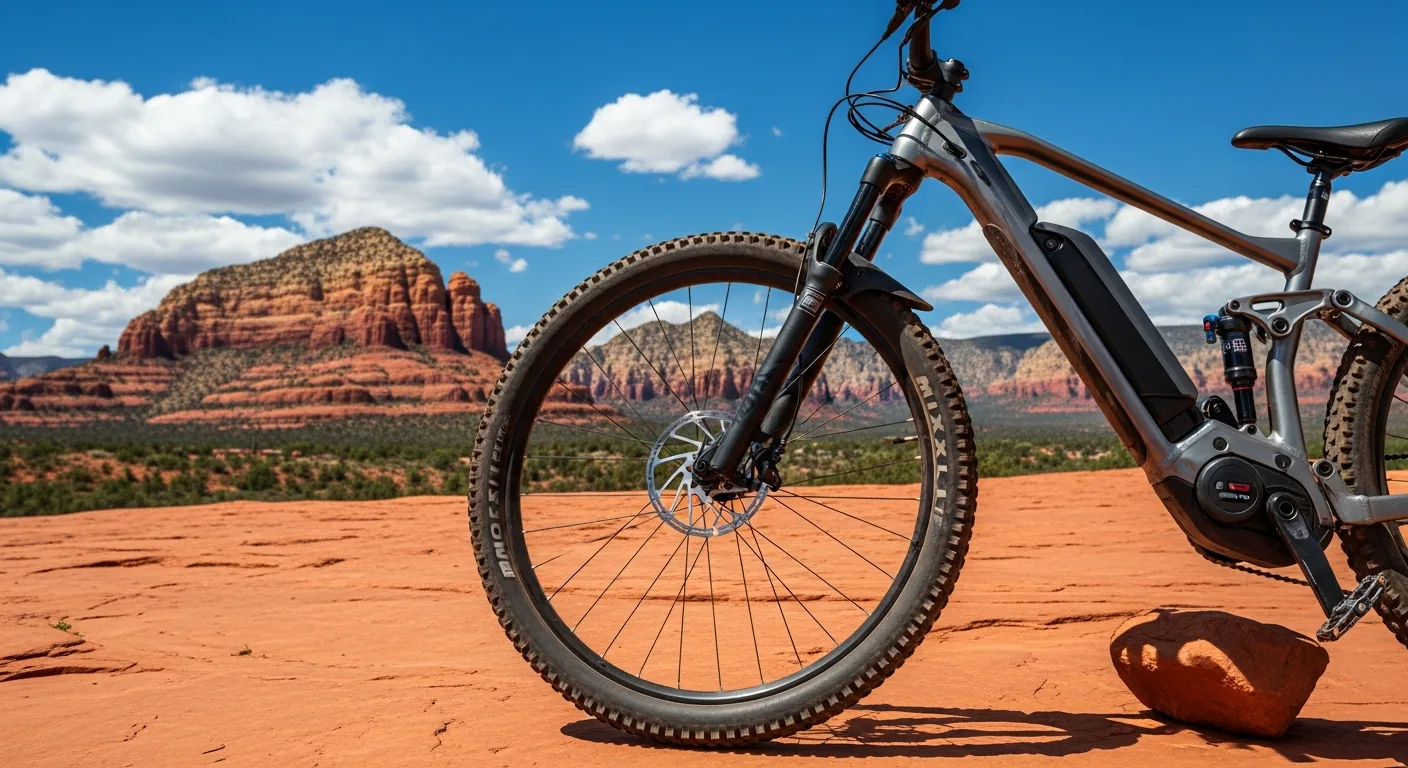
Where to rent: the established shops
These are real, long-running Sedona-area shops. Hours and prices change with the season, so call or check the website before you go — treat every number below as a ballpark, not a quote.
Thunder Mountain Bikes (West Sedona)
The building at 1695 W. State Route 89A has been a bike shop for over 25 years, and Thunder Mountain runs it now. This is the spot if you want a serious mountain bike — they carry a deep demo fleet of high-end full-suspension “Dream” bikes alongside more economical hardtails, plus maps, trail advice, and repairs. Centrally located in West Sedona, open seven days a week (roughly 9am–6pm). Phone (928) 282-1106. They also run a mountain-bike academy, so if you’ve never touched slickrock, ask about a skills session before you point yourself down Hangover.
Over the Edge Sedona (West Sedona)
Over the Edge is a well-known mountain-bike brand with a Sedona location in the same West Sedona stretch of 89A. They focus on mountain rentals, demos, sales, repairs, and trail maps, and they’re a good second call if you’re comparing fleets. As with Thunder Mountain, confirm current hours and availability before driving over — Sedona’s good weekends book up.
Sedona Bike & Bean (Village of Oak Creek)
This is my favorite all-rounder for casual and intermediate riders. Bike & Bean has been around since 1995 at 30 Bell Rock Plaza in the Village of Oak Creek, and it’s part bike shop, part coffee bar. You can sort out your rental, grab a cappuccino, and roll almost straight onto the Bell Rock and Slim Shady trailheads from the parking lot. Their fleet runs from cruiser-friendly bikes up to high-end full-suspension rigs, plus kids’ bikes and e-bikes. Phone (928) 284-0210. The combination of free parking, on-site coffee, and direct trail access makes this an easy base camp for a half-day.
Absolute Bikes (Village of Oak Creek and Flagstaff)
Absolute Bikes has two locations worth knowing. The Sedona-area shop is in the Village of Oak Creek at 6101 AZ-179, (928) 284-1242, a block from the Bell Rock Pathway. Their rentals come fully kitted: helmet, pump, repair kit, spare tube, your choice of pedals, and proper sizing. They also run a larger store up in Flagstaff at 202 E. Route 66, (928) 779-5969 — handy if you’re staying north or doing a Flagstaff day and want a rental closer to the cooler high-country trails.
E-bike specialists
E-bike shops in Sedona come and go — the longtime Pedego storefront on 89A has closed, so don’t count on it. Two reliable approaches remain. Sedona EZ Rider, near Tlaquepaque, rents e-bikes and sends you out with an orientation, a test ride, and a custom map for the bike-legal pathway south of town. Other operators offer delivery and pickup of e-bikes right to where you’re staying, typically seven days a week within Sedona (often free inside the main 86336 zone, with a small fee out to the Village of Oak Creek). If you’d rather not haul a bike, delivery is the path of least resistance — and it means you can ride straight from the door instead of driving into a packed trailhead lot.
Reserving ahead
In spring and fall, the good bikes — especially full-suspension and e-bikes — go first, so reserve a day or two out for a weekend ride. The shop will want your height, your riding ability stated honestly, and the area you’re aiming for, so they can match the bike, and most ask for a card on file and a signed waiver. Tell them up front if anyone needs a kids’ bike, trailer, or child seat — those are limited and worth calling ahead for.
The three bike types, and which one you actually want
| Bike type | Best for | Where it shines | Rough day rate |
|---|---|---|---|
| Hardtail mountain bike | Budget riders, smoother trails | Mellow singletrack, dirt roads | ~$30–60 |
| Full-suspension mountain bike | Sedona’s technical trails | Slickrock, rocky descents, drops | ~$60–115+ |
| Cruiser / hybrid | Casual riders, families | Paved pathways, easy dirt | ~$30–50 |
| E-bike (Class 1 pedal-assist) | Covering distance, climbs, paved paths | Bike-legal pathways, paved roads, designated dirt roads | ~$45 (2 hr) to ~$99+ (full day) |
A few honest notes on choosing:
- Full-suspension is worth it on the real trails. Sedona’s signature singletrack is rocky and technical. A cheap hardtail will rattle your fillings loose on Hangover or Hiline. If you’re riding the famous stuff, spend up.
- Hardtails are fine for mellow rides and dirt roads. If your plan is the Bell Rock Pathway, the Big Park Loop, or easy connector trails, a hardtail does the job for less money.
- A cruiser or hybrid is right for families and pavement. Don’t overthink it if you just want a relaxed roll on the paved pathway.
- E-bikes are about distance and hills, not technical riding. They make long, gradual climbs almost effortless. But — and this is the whole point of the next section — they’re banned from the trails most people picture when they imagine Sedona mountain biking.
It’s worth knowing the three e-bike classes, because they’re not all treated the same: Class 1 is pedal-assist up to 20 mph, Class 2 adds a throttle up to 20 mph, and Class 3 is pedal-assist up to 28 mph. Rental shops here lean toward Class 1 — it’s the most broadly accepted on shared paths, and the gentle assist is plenty for Sedona’s grades. Arizona has no statewide e-bike helmet law for adults, but riders under 18 must wear one, and every shop I’d send you to puts a helmet on your head regardless. Wear it.
E-bikes: where you can and can’t ride (read this twice)
This is the single most misunderstood thing about cycling in Sedona, and the shops will tell you the same thing. E-bikes of any class are not allowed on the singletrack trails in the Coconino National Forest’s Red Rock District — that’s the entire famous trail network around Sedona. On Forest Service land, an e-bike is legally treated like a motor vehicle, so it’s restricted to routes designated for motorized use. The Class 1 (pedal-assist, 20 mph cutoff) label doesn’t get you an exemption out here.
And in any designated Wilderness — including the Munds Mountain and Red Rock–Secret Mountain Wilderness areas that wrap around Sedona — no bikes of any kind are allowed, electric or not. Wilderness rules prohibit all mechanized travel, so even a regular mountain bike has to stay out.
So where can you ride an e-bike?
- Paved public roads — legal, like any bike, where it’s safe to do so.
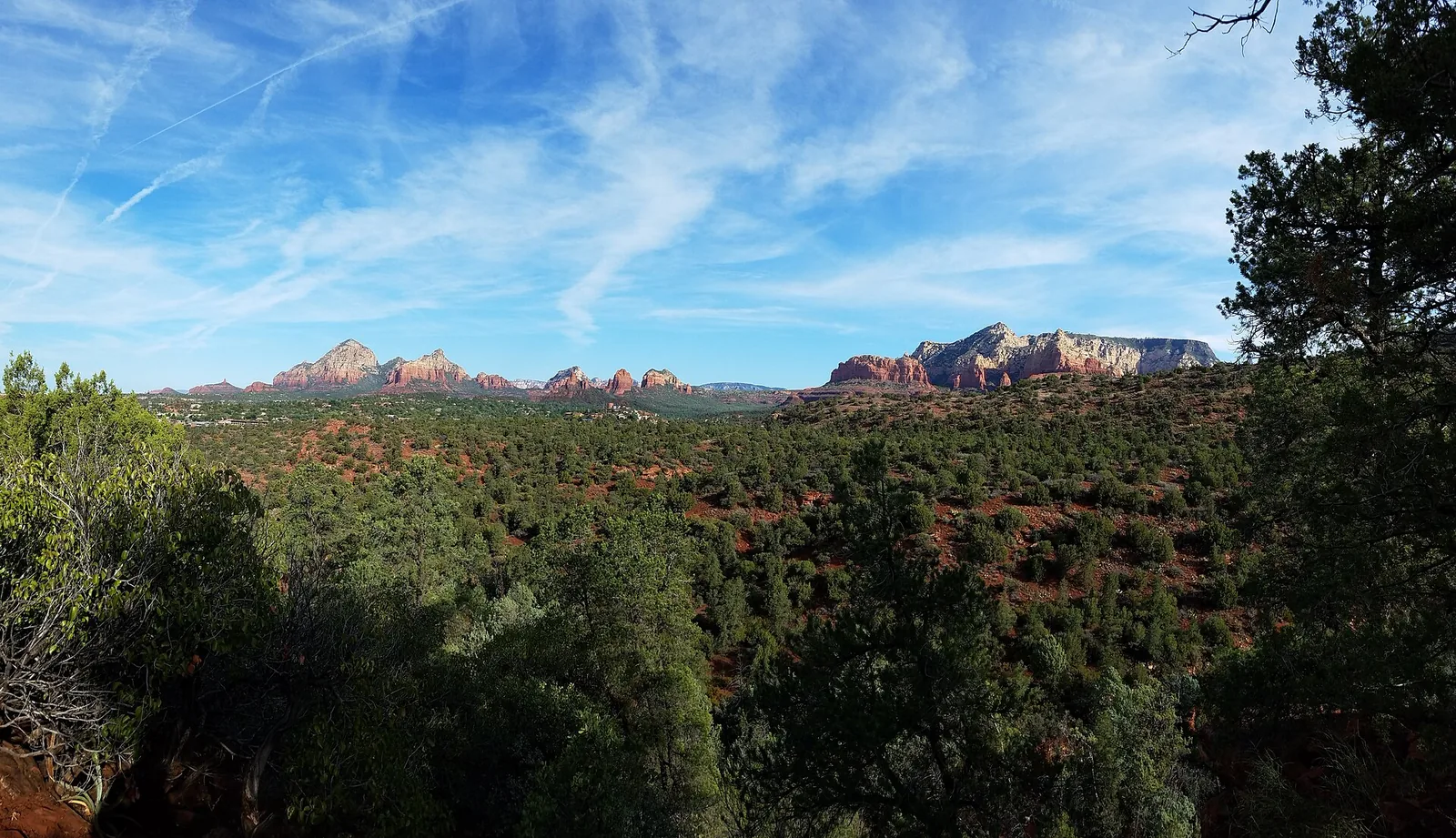
- The state-built multi-use pathway along Highway 179 (the Red Rock Scenic Byway corridor south of town) — a paved, separated, bike-legal path with views of Bell Rock, Courthouse Butte, and Cathedral Rock in the distance. This is the e-bike route the local rental shops actually recommend, and for good reason: no cars, gentle grades, and the assist makes the rolling sections effortless.
- Designated motorized dirt roads and jeep trails — wide routes like the Schnebly Hill Road climb, the Broken Arrow / Chicken Point road, and the Soldier Pass road. These are dirt, shared with jeeps, and rough, but they’re legal for e-bikes and they reach some spectacular country.
The boundary lines are invisible on the ground: a paved path can feed straight into a non-motorized Forest Service trail with nothing but a small sign, and that trail can cross into Wilderness, where even regular bikes have to turn back. On an e-bike, the safe mental model is pavement and signed motorized dirt roads, yes; brown-sign singletrack, no. When in doubt, stop and check the map.
Local tip: Don’t picture an e-bike as your ticket to the famous slickrock — it isn’t, and rangers do check. Picture it as the perfect tool for two things: covering the paved pathway between the highway trailheads without fighting traffic, and grinding up the long dirt-road climbs (like Schnebly Hill) that would cook you on a regular bike. Match the bike to the legal surface and you’ll love it. Fight the rules and you’ll have a bad day.
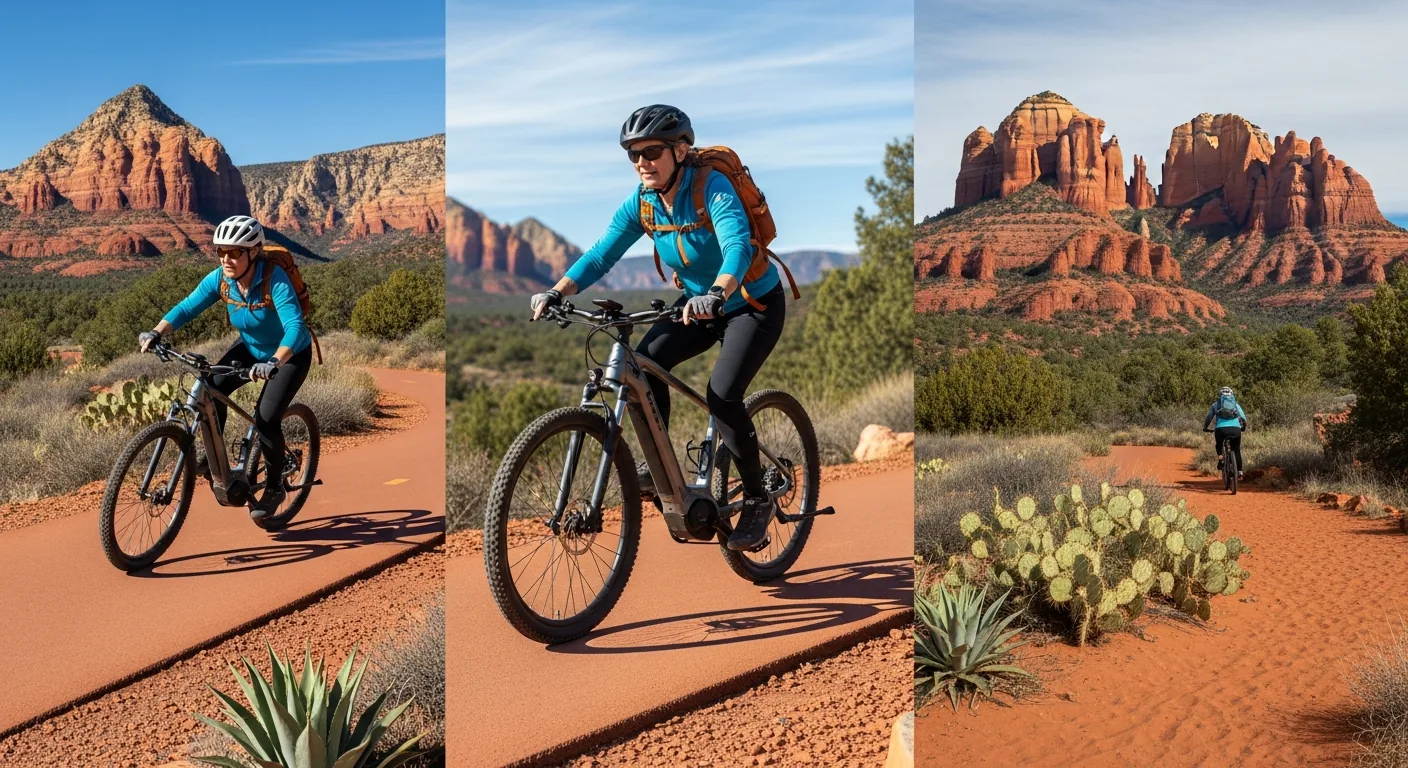
A worthy e-bike objective: the Schnebly Hill climb
If you want one dirt-road ride that justifies the assist, Schnebly Hill Road is it — a legal-for-e-bikes motorized route that climbs toward the Schnebly Hill Vista and the rim above town, roughly 5 miles and about 1,800 feet of climbing to the vista (and 11–12 miles all the way to the I-17 junction). It’s genuinely rough: rocky, rutted, slow, the kind of road where high-clearance Jeeps crawl in low gear. That roughness is exactly why a Class 1 e-bike shines here — the motor eats the grade while you pick a line through the rocks, and the payoff is one of the best wide-open red-rock views near Sedona. Go early, carry serious water, and expect tour Jeeps and dust. This is an effort ride, not a cruise, even with the assist.
A note on the Bell Rock Pathway
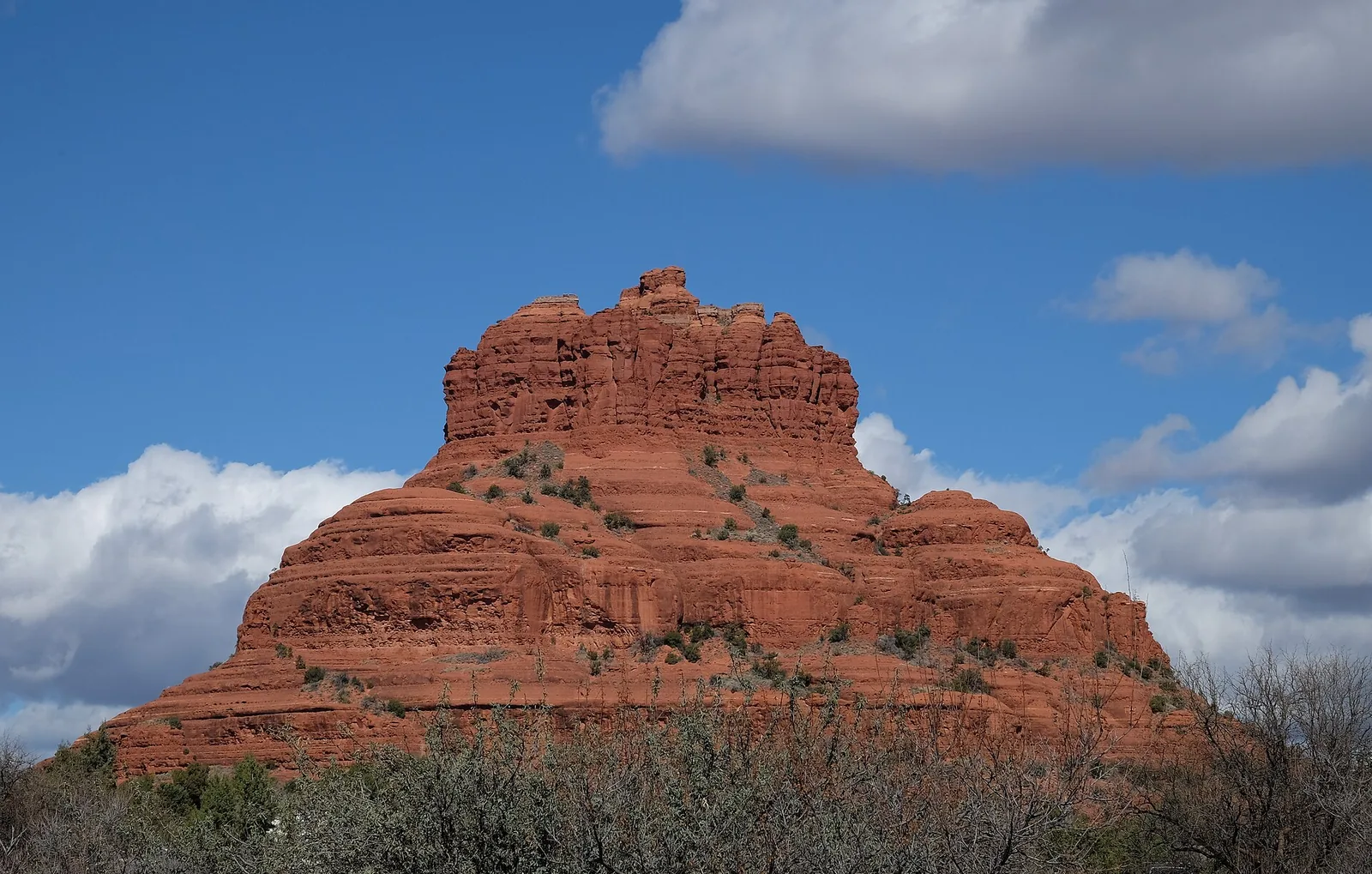
The Bell Rock Pathway (Forest Trail No. 96) is the wide, mostly smooth path that parallels Highway 179 and links the Courthouse Vista, Bell Rock Vista, and Little Horse trailheads. It’s a fantastic, beginner-friendly ride on a regular bike — easy grades, hard-packed surface, and constant red-rock views, running about 3.5 miles one-way of main pathway plus connectors, with only a couple hundred feet of total elevation change. Just remember two things: it’s a Forest Service non-motorized trail, so leave the e-bike on the adjacent paved highway pathway instead; and the moment a trail crosses into the Munds Mountain Wilderness around Bell Rock and Courthouse Butte, bikes have to stop. Walk it from there if you want to keep going. For the full hike-and-scramble version, see the Bell Rock guide.
What it costs, passes, and parking
Rental prices swing with the bike quality and season, so confirm before you book. As a rough guide: hybrids and hardtails tend to land in the $30–60/day range, full-suspension mountain bikes from around $60 up past $115/day for premium carbon rigs, and e-bikes commonly run roughly $45 for a couple of hours up to $99 or so for a full day. Multi-day discounts are common — a three- or four-day rental often costs little more than two single days.
The bigger gotcha for visitors isn’t the rental — it’s parking at the trailheads. Most Forest Service trailhead lots around Sedona require a Red Rock Pass:
| Pass | Cost | Where to buy |
|---|---|---|
| Daily | ~$5 | Trailhead kiosks, Red Rock Visitor Center, Chamber, recreation.gov |
| Weekly | ~$15 | Trailhead kiosks, Red Rock Visitor Center, Chamber, online |
| Annual | ~$20 | Chamber of Commerce, online (not sold at the visitor center) |
An America the Beautiful interagency pass works in place of the Red Rock Pass at most of these sites (a few concessionaire-run fee areas are the exception). If you rent from a shop with its own free parking and trail access — Bike & Bean is the obvious example — you can sometimes skip the pass entirely by starting from there. Always confirm current pass requirements and prices with the Forest Service, since fee programs change.
One more parking note that catches people out: on the days the Sedona Shuttle runs its free trailhead routes (year-round Thursday–Sunday, plus seven days a week during the extended spring-break window), the lots at Cathedral Rock and Soldier Pass are closed to cars and everyone is funneled onto the shuttle. If your plan was to drive to one of those lots and start from there, you’ll need a different plan — one more argument for renting from a shop you can ride straight out of, or having an e-bike delivered to the door.
Best time of day and season to ride
Sedona’s weather is the real boss of your ride plan.
- Spring (March–May) and fall (September–November) are ideal — warm days, cool mornings, and the trails at their best. These are also the busiest seasons, so ride early.
- Summer (June–August) is genuinely hot, regularly over 100°F. Ride at first light, be off the exposed trails by mid-morning, and carry far more water than you think you need. Afternoons are for shade and a swim.
- Winter (December–February) is underrated for riding — cool, quiet, and often sunny — but mornings can be cold and shaded north-facing trails may hold ice or mud after storms.
Whatever the season, early morning is the move. You get cooler temperatures, softer light for photos, fewer people on the trail, and easier trailhead parking. By mid-morning on a nice weekend, the popular lots are full and the singletrack is busy. Temperature swings here are huge — a January morning can start near freezing and reach the 60s by afternoon — so stash a layer you can shed.
Watch the monsoon, too. From roughly July into September, afternoon thunderstorms build fast. Slickrock that’s grippy when dry turns slick when wet, washes flood in minutes, and an open ridgeline is the last place you want to be when lightning starts. In monsoon season, finish before noon.
What to bring
Most rental shops include a helmet and basic trail info, and good ones will set up the bike and pedals for you. Bring or rent the rest:
- Water — a lot of it. The desert pulls moisture out of you fast. A hydration pack beats a single bottle; in the heat, carry two to three liters and add electrolytes.
- Sun protection. High elevation plus thin desert air means strong sun. Sunscreen, sunglasses, and a brimmed buff or cap under the helmet.
- Grippy shoes. Even casual riders end up walking sections; flip-flops are a bad idea.
- A small snack for anything longer than an hour.
- A phone with offline maps. Cell coverage drops on the trails. Trailforks or a saved map saves a lot of guessing, and it’s how you’ll keep yourself on the right side of those Wilderness and motorized-route boundaries.
- Layers in the cooler months. Mornings start cold and warm up quickly.
- Your Red Rock Pass or America the Beautiful pass if you’re parking at a Forest Service trailhead.
Ask the shop for a flat-repair kit and a quick how-to — Sedona’s rocks are hard on tires, and a pinch flat two miles from the trailhead is a long, hot walk if you can’t fix it. On an e-bike, learn the assist levels and battery readout before you leave; running the battery flat at the far end of a climb is a rookie mistake, easily avoided by riding low assist and saving the juice for the climb home.
Accessibility and easier options
You don’t have to be a hardcore rider to enjoy biking here. The paved multi-use pathway along Highway 179 is the friendliest option: smooth surface, gentle grades, separated from car traffic, and big views without any technical riding. An e-bike with pedal assist flattens the rolling sections, which makes it a realistic choice for riders who’d find a regular bike tiring or who are getting back into cycling.
Cruiser and hybrid rentals, plus e-bikes from delivery services, mean you can ride from where you’re staying without loading a car or wrestling a bike rack. If anyone in your group has limited mobility or stamina, tell the shop — they’re good at matching the bike and the route, and they’ll steer you toward the smooth, flat, legal pavement. Because the paved pathway has frequent pull-outs, it’s easy to ride out as far as comfortable and turn around, so nobody is committed to a full loop — stronger riders can push to the far trailheads while others do a shorter out-and-back and meet back up.
How to avoid the crowds
Sedona’s popularity is real, and the trails and trailheads feel it. A few ways to keep your ride mellow:
- Go at first light. It’s the single biggest difference-maker for both crowds and heat.
- Ride midweek if you can. Weekends, especially in spring and fall, pack the popular trails and lots.
- Start from the Village of Oak Creek. The southern trail network and the Bell Rock area access tend to be a touch less frantic than the uptown side, and shops like Bike & Bean and Absolute Bikes put you right on the trails.
- Skip the marquee names at peak times. Sedona has dozens of excellent trails. Ask the shop for a quieter loop that suits your level instead of joining the conga line on the most-Instagrammed routes.
- Use delivery. Having an e-bike dropped at the door lets you start early without a drive into a packed parking lot.
- Let the shop pick the day’s quiet line. Staff know which trails just got featured in a video and which equally good ones nobody’s talking about — a two-minute conversation at the counter beats an hour of route research.
Safety and trail etiquette
A handful of things keep riders out of trouble here:
- Heat is the top danger. Far more visitors get into trouble from dehydration and overheating than from crashes. Carry too much water, ride early, and turn around before you’re cooked.
- The rock is unforgiving. Sedona’s slickrock and ledges are technical and consequential. Ride within your skill, walk what you’re unsure of, and there’s no shame in dismounting.
- Yield correctly. Bikes yield to hikers and horses. Slow down, call out a friendly hello, and give people room. Behind a horse, stop, speak so the animal hears a human voice, and let the rider tell you how to pass.
- Stay on designated trails. The desert soil and cryptobiotic crust take decades to recover. Don’t cut switchbacks or ride off-trail.
- Know the wilderness boundaries. Bikes — electric or not — are illegal in designated Wilderness. The boundary often isn’t obvious on the ground, so check your map before you commit to a route around Bell Rock, Boynton, or the Secret Mountain area.
- Watch the dirt roads. On the motorized routes where e-bikes are legal, you’re sharing with jeeps and ATVs. Keep right, stay visible, and expect dust.
- Tell someone your plan. With patchy cell coverage, a simple “I’m riding the Bell Rock area and back by 11” to someone at the house is cheap insurance.
What to pair it with nearby
A bike ride slots neatly into a bigger Sedona day. From the Village of Oak Creek and the Bell Rock area, the Bell Rock hike and the Courthouse Butte loop are right there, and the easy airport mesa loop is a short drive if you want a sunset spin to cap the day. If you want to trade pedals for a guided motor, the jeep tours take you up the same rugged country (like Broken Arrow) that’s too technical for most rentals. Riders who want a deeper dive into the trail network should read the dedicated mountain biking guide, and anyone curious about the gentlest paved-path option will find more in the getting around guide.
When you’re done, the appeal of staying at Pickler House is that the day doesn’t have to end when the heat or your legs give out. You can ride the cool morning, cool off in the afternoon, and still get a competitive game in on the climate-controlled indoor court without ever checking the forecast.
A last word: Sedona rewards riders who plan around two simple truths — it gets hot, and the e-bike rules are stricter than you’d expect. Sort out the right bike for the right surface, grab your pass, head out early, and you’ll have one of the best rides of your life.
Frequently asked questions
Can I ride an e-bike on Sedona's mountain bike trails?
Do I need a Red Rock Pass to go biking in Sedona?
What kind of bike should I rent for Sedona?
Where can I rent bikes in Sedona?
Is the Bell Rock Pathway good for biking?
What's the best time of day to ride in Sedona?
Stay where you can rally any season
Sedona Pickler is a private West Sedona vacation home with its own indoor, climate-controlled pickleball court — a short drive from the trailheads, viewpoints and restaurants in this Sedona guide. Play at sunrise or after dark, in any weather.
Check availability on Airbnb