Mountain Biking in Sedona: Trails, Rentals & Tips
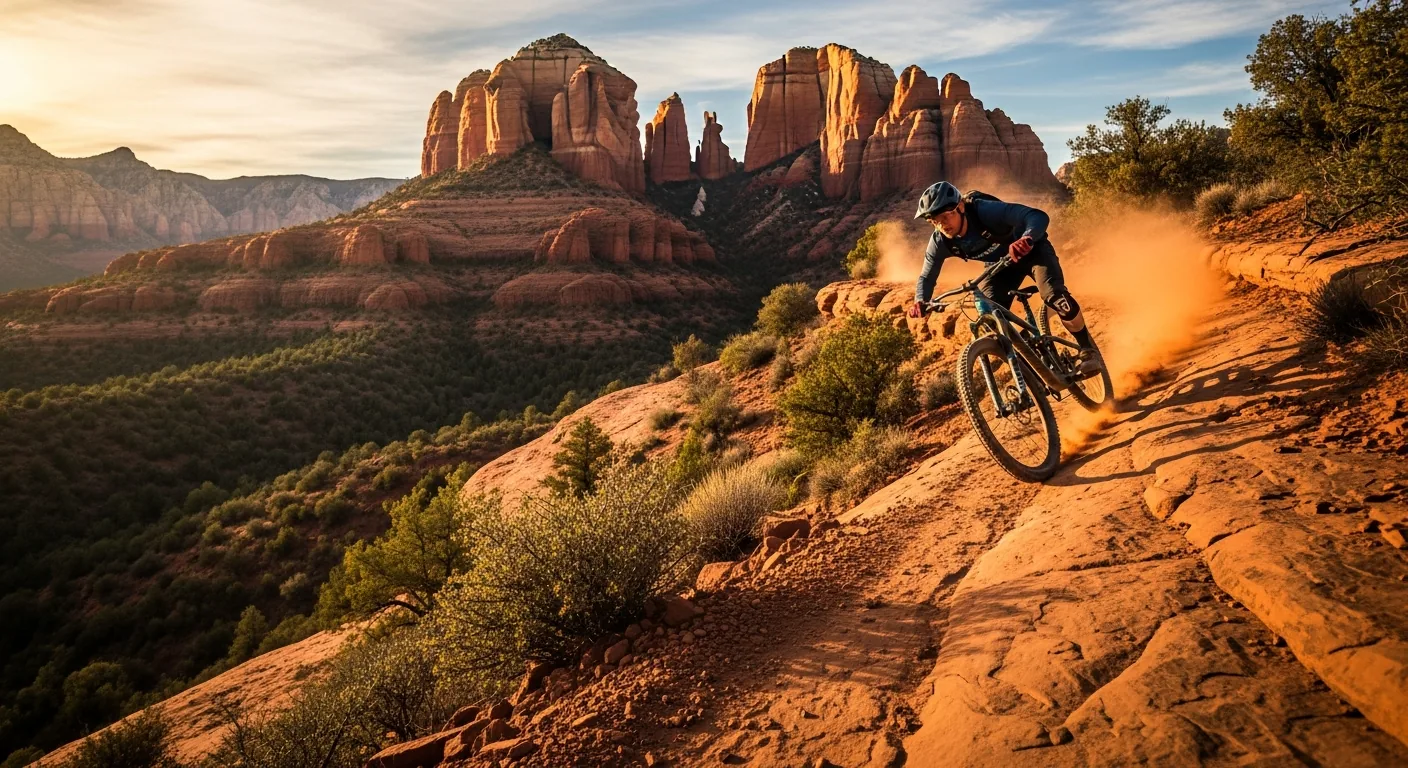
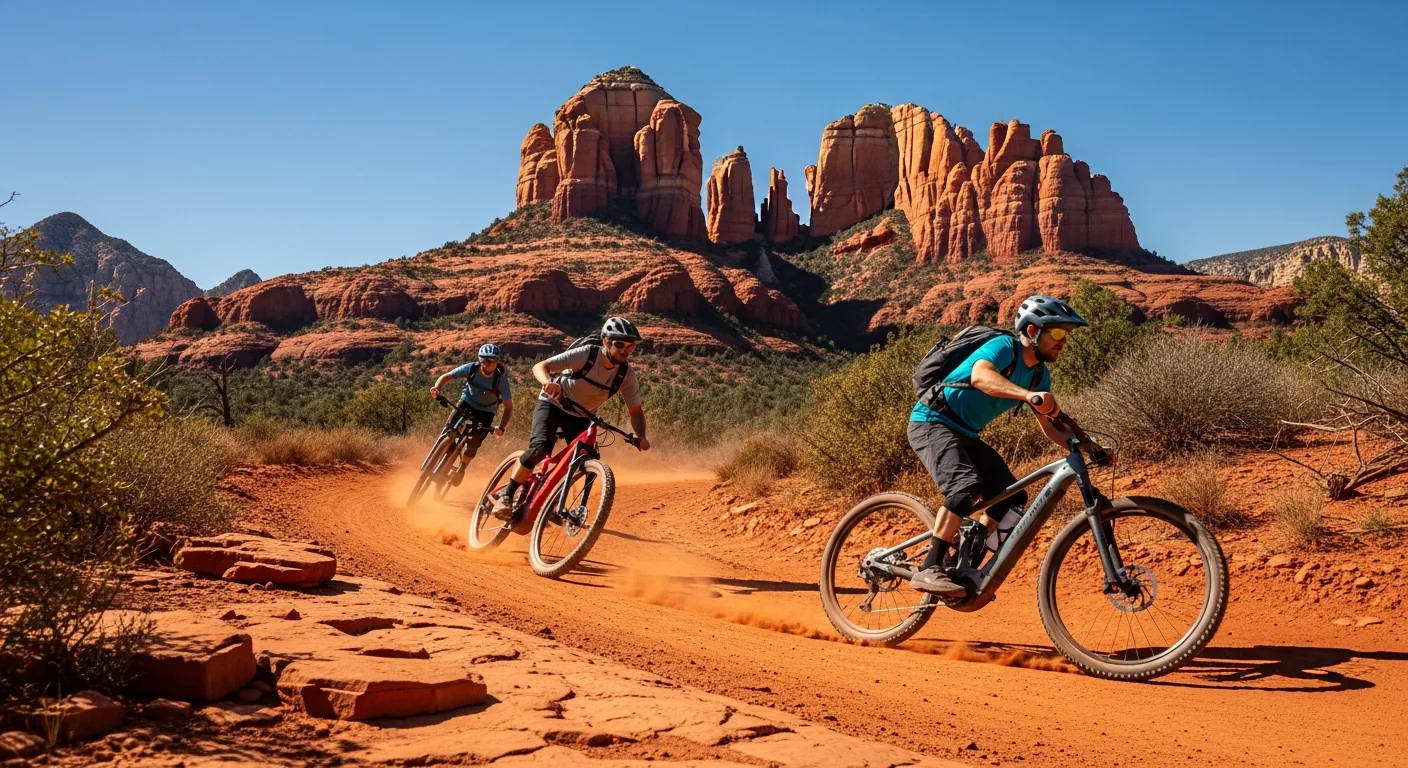
Sedona is one of the best mountain biking towns in the country, and most people who ride here say so without much argument. The draw is the red slickrock: grippy sandstone that lets you climb and descend lines that would be unthinkable on dirt, all of it framed by buttes and spires that make you stop mid-ride just to look. It’s also hot, crowded at the popular trailheads, and home to a handful of trails that genuinely scare experienced riders, so it pays to know what you’re getting into before you clip in.
This guide walks through the trails by difficulty, where to rent a bike, how the passes and parking work, and the practical stuff — heat, water, etiquette, and timing — that makes the difference between a great day and a miserable one.
Why Sedona Rides the Way It Does
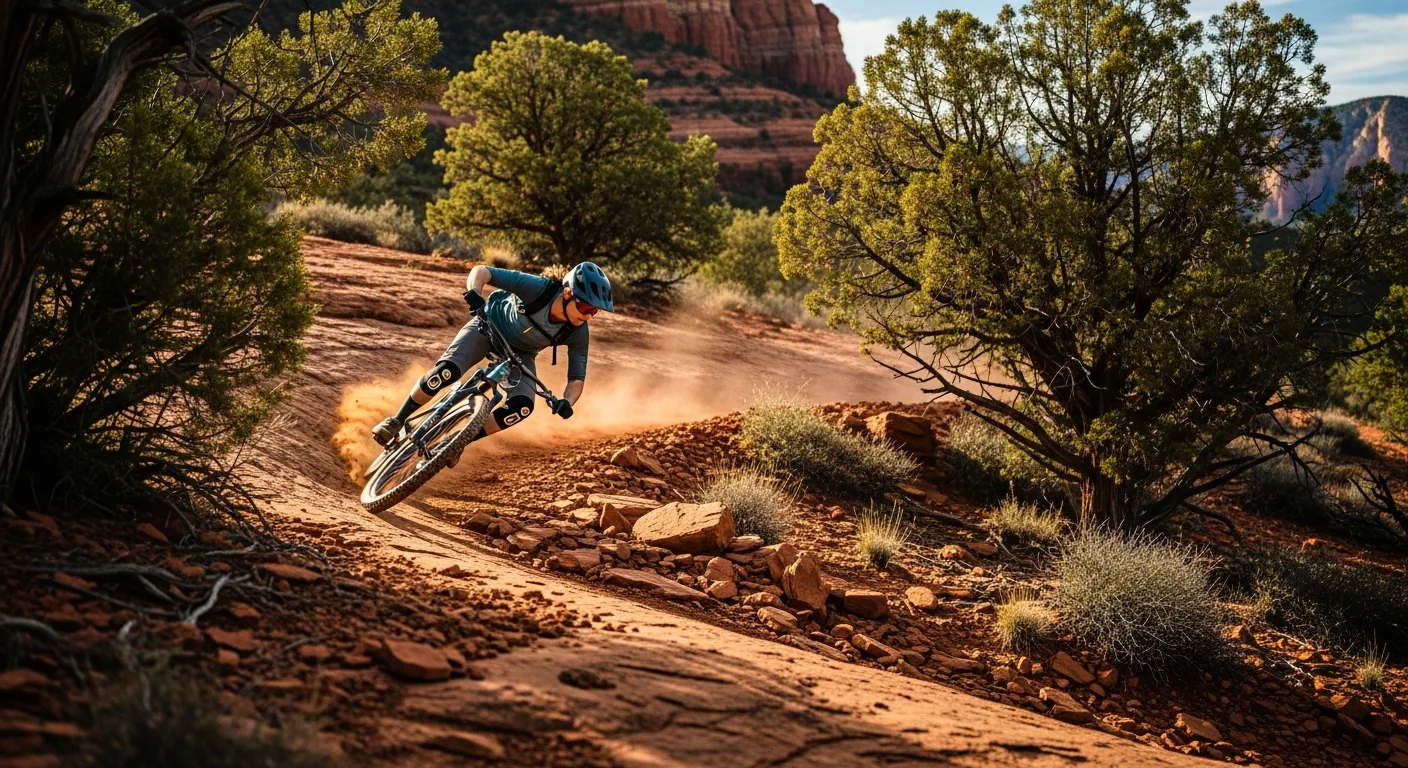
Most mountain bike destinations are dirt. Sedona is rock. The trails here run across broad benches of Schnebly Hill sandstone — that’s the red slickrock — and the friction is extraordinary. You can ride up pitches that look impossible and roll down ledges that would send you skidding on any other surface. Mixed in with the slickrock are sections of packed red dirt, loose rock gardens, and tight singletrack threading through manzanita and juniper.
There are more than 200 miles of singletrack in the Red Rock Ranger District of the Coconino National Forest, and the network is dense. Trails connect to trails connect to more trails, which means you can build a loop to almost any length and difficulty you want. The flip side: it’s easy to wander onto something harder than you meant to ride, because a mellow flow trail can dump you onto an exposed technical line without much warning. Carry a map or a trail app and pay attention to junction signs.
One thing worth setting straight up front: these are shared-use trails. Hikers, trail runners, and horseback riders use the same singletrack you do. That shapes everything from etiquette to crowding, and it’s why a few of the marquee trails feel busy even on weekday mornings.
Trails by Difficulty
Sedona has riding for genuine beginners and riding that will end your trip in the ER. Here’s how the well-known trails sort out. Distances are for the named trail segments; most riders link several together into a loop, so your total mileage will usually be higher.
| Trail | Level | Approx. length | What to expect |
|---|---|---|---|
| Bell Rock Pathway | Easy | ~3.6 mi | Wide, hard-packed, gentle grade; big views of Bell Rock and Courthouse Butte |
| Bike & Bean / Little Horse loops | Easy–Intermediate | varies | Mellow connectors from the Village of Oak Creek into the network |
| Slim Shady | Intermediate | ~1.6 mi (north) | Bermed corners, slickrock wall rides, short punchy climbs; a Sedona classic |
| Llama | Intermediate | varies | Flowy connector that lets you skip the busy Bell Rock Pathway |
| Templeton | Intermediate (one hard section) | varies | Scenic; the steep descent off Cathedral Rock is the technical crux |
| Mescal | Intermediate | varies | Mostly flat sandstone bench with slabby friction moves and rocky corners |
| Hiline | Advanced/Expert | varies | Steep, technical, narrow with serious exposure — experienced riders only |
| Hangover | Advanced/Expert | varies | The most exposed trail in Sedona; high consequence if you fall |
| White Line | Expert stunt | n/a | Not a trail — a narrow ledge feature at Chicken Point; pros only |
Easy: building confidence
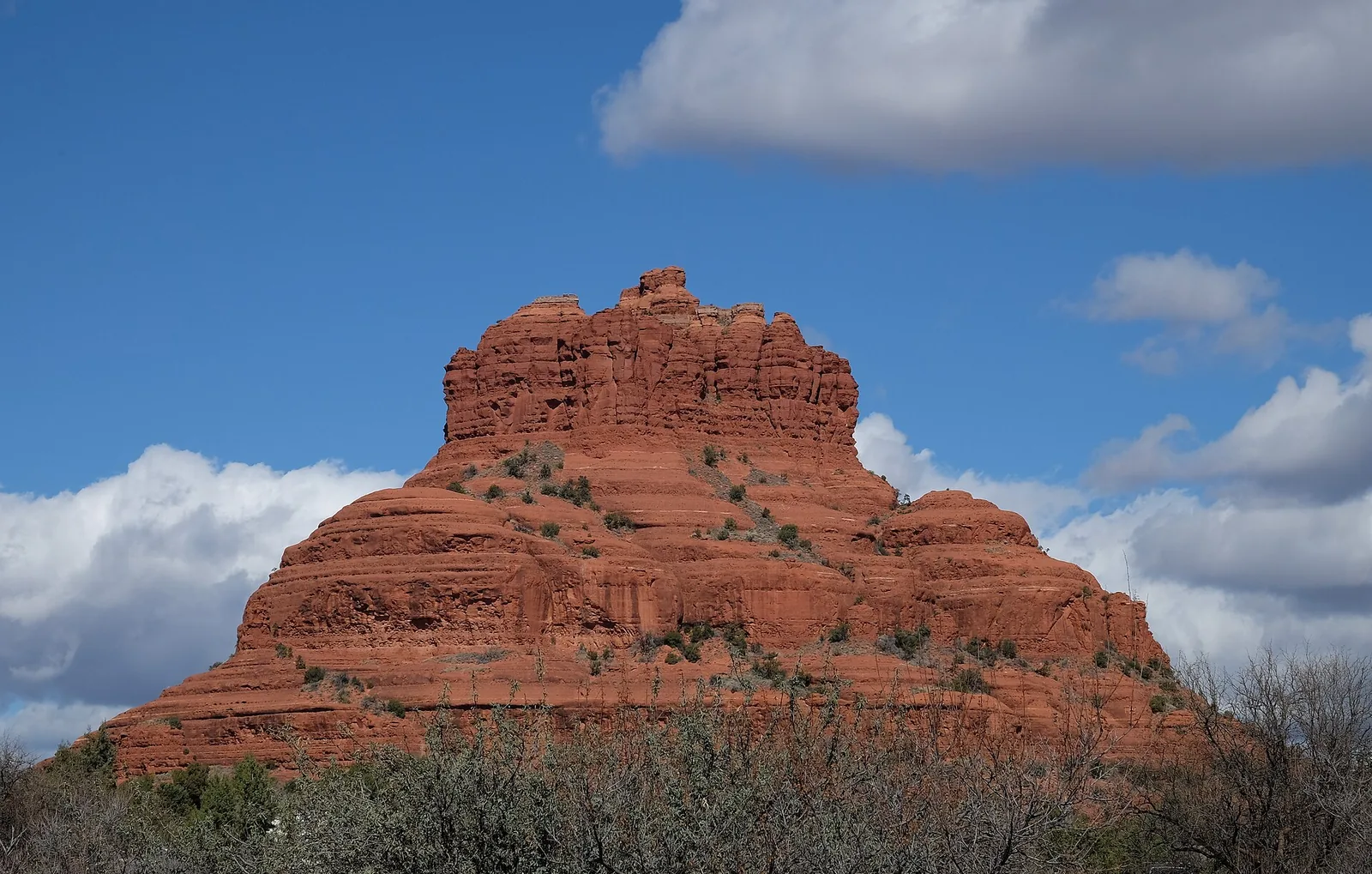
If you’re new to mountain biking, or you’ve got mixed-ability folks in your group, start on the Bell Rock Pathway. It’s about 3.6 miles of wide, hard-surfaced trail with a gentle grade and some of the best scenery in the area — Bell Rock and Courthouse Butte loom right over you. It doubles as a walking path, so expect to share it and keep your speed down.
From the Village of Oak Creek, the easy connectors around the Bike & Bean shop and the Little Horse area let you string together short, mellow loops and bail out whenever you’ve had enough. These are great for getting a feel for slickrock at low stakes before you commit to anything steeper.
Intermediate: the heart of Sedona riding
This is where most visitors spend their time, and for good reason. Slim Shady is the quintessential Sedona intermediate trail — roughly a mile and a half of bermed corners, slickrock wall rides, stacked-rock roll-ins, and short bursts of climbing. The trail starts across from the Bell Rock Vista trailhead and connects to a half-dozen other trails, so it’s almost always ridden as part of a loop.
A popular intermediate loop links Slim Shady, Templeton, Easy Breezy, and Llama — pulling in Little Horse and Bell Rock Pathway, it runs around 10 miles. Llama is a useful flowy connector that lets you avoid the crowded Bell Rock Pathway. Templeton is mostly moderate but includes one genuinely technical section: the steep, rocky descent off Cathedral Rock, which a lot of intermediate riders walk, and that’s fine. Mescal, over on the west side near Dry Creek Road, traces a broad, mostly flat sandstone bench — long stretches of flowing singletrack broken up by slabby friction moves and rocky corners. It’s a great introduction to riding on rock.
Advanced and expert: know what you’re signing up for
Sedona’s hard trails have a reputation, and it’s earned. Hiline is one of the area’s expert pro-lines: steep, very technical, with stretches of narrow singletrack and real exposure where a bad line could put you in the hospital. Most seasoned riders can do it, but it demands focus and commitment.
Hangover is the one people talk about. It isn’t the most technically difficult trail in town, but it has the most exposure of anything in Sedona — narrow ledges across steep sandstone where a fall has serious consequences. Riders walk the scariest sections all the time, and there’s no shame in it.
White Line isn’t even a trail. It’s a stunt: a thin white ledge of sandstone running across a steep face at Chicken Point. You’ll see photos of people riding it. Leave it to the professionals — this is a feature where mistakes are catastrophic.
Local tip: If you’re not sure whether a trail is within your ability, ride a section, turn around, and come back another day. Sedona’s exposed trails punish overreach. Walking a feature is normal here — even strong riders dismount on Hangover and Hiline. There’s no prize for sending something you’re not ready for, and the trail will still be there next trip.
How to Get There, Parking, and the Red Rock Pass
Almost all the riding around Sedona is on Coconino National Forest land, and the busy trailheads require a Red Rock Pass to park. As of this writing it runs about $5 for the day, $15 for seven days, or $20 for the year, but prices change — confirm the current rate before you go. You can buy one at trailhead kiosks (credit card only), Sedona visitor centers, many gas stations, or online at recreation.gov.
A few things worth knowing:
- An America the Beautiful (Interagency) pass works in place of the Red Rock Pass at most Sedona-area Forest Service sites, so if you already have one, you’re covered.
- If you’re stopping for under 15 minutes — a photo, a quick break — you don’t need a pass. But for any real ride, you do.
- The pass is a parking permit, not a trail-use fee. It covers your vehicle at the day-use site.
Trailhead parking is the real headache. The popular lots — Bell Rock Vista, Little Horse, Yavapai/Mescal area — fill early, especially in spring and fall. If a lot is full, don’t park illegally on the shoulder; rangers ticket, and it’s worth it for everyone if people don’t trample the roadside. Either come back later or pick a different trailhead. The Village of Oak Creek trailheads are a good Plan B for the Bell Rock-area network. For broader help getting around town and to trailheads, see our getting around guide.
Rentals, Shops, and Shuttles
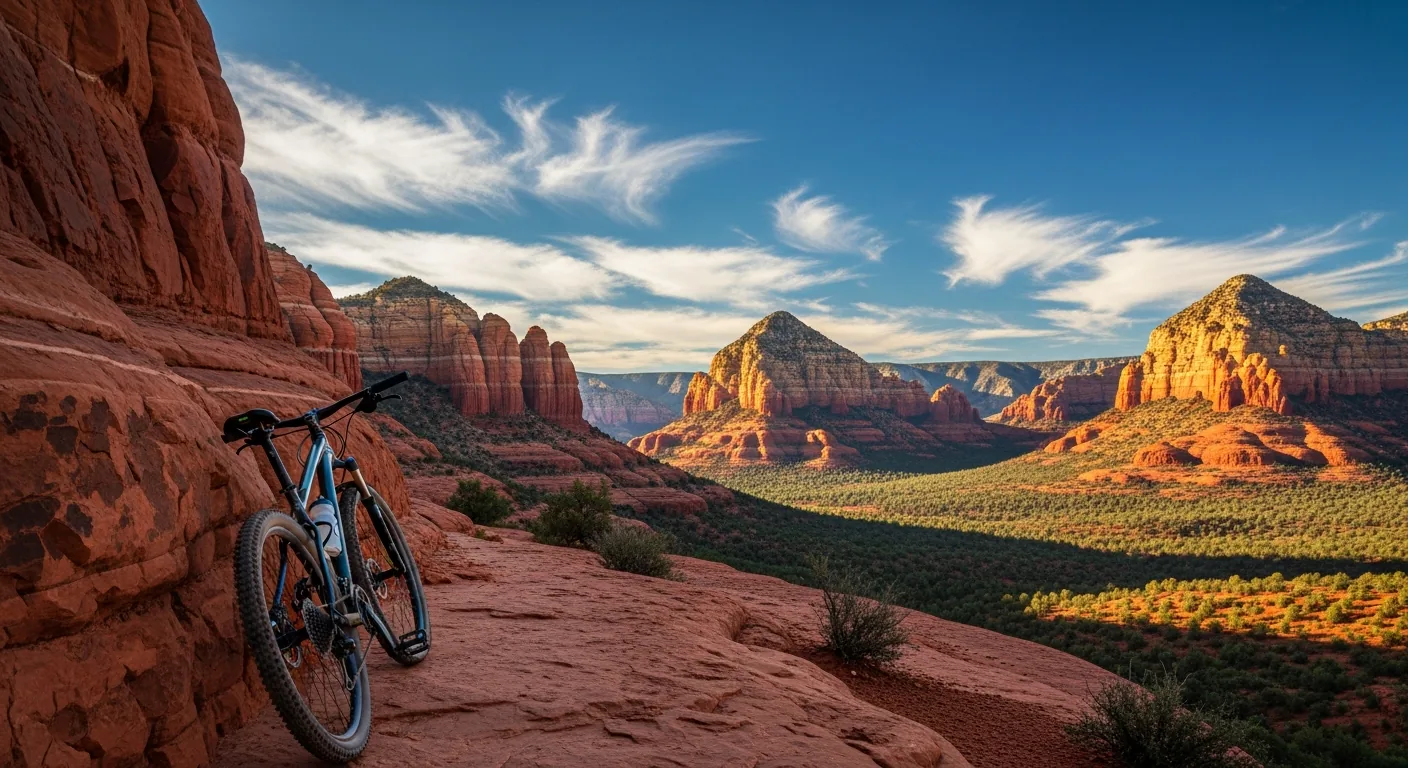
Unless you’ve brought your own rig, you’ll rent — and Sedona’s bike shops are good at it. They know the trails, they’ll fit you properly, and they can steer you toward rides that match your ability. A few established, reputable options:
- Over the Edge Sedona — well-regarded shop with a range of bikes; rental prices span roughly $30 to several hundred dollars a day depending on the bike. Note that they don’t do 24-hour rentals; bikes are due back by 6 p.m. the day you rent.
- Thunder Mountain Bikes — centrally located in West Sedona, close to many trails, with a fleet that runs from economical hardtails to top-end full-suspension bikes. Typically open 9 a.m. to 6 p.m., seven days a week.
- Sedona Bike & Bean — in the Village of Oak Creek, handy if you’re riding the Bell Rock-area network; it’s a bike shop and café in one, and you can ride right onto trails from there.
- Absolute Bikes — also in the Village of Oak Creek. Rentals start around $30 and generally come with a helmet, lock, pump, spare tube, repair kit, and a proper fit. They offer half-day rentals too.
Prices and hours shift with the season, so call or check the shop’s site before you count on a specific rate or a same-day bike. In peak season (spring and fall) the better bikes book up — reserve ahead if you want a nice full-suspension rig.
Some shops and guide services also run shuttles for the more demanding rides, which lets you skip a brutal climb and focus on the descent. If you’re eyeing Hiline or Hangover, a shuttle and ideally a local guide are worth the money. If you’d rather have someone show you the lines, guided rides are available too — ask any of the shops above.
For e-bike and casual cruiser rentals specifically, check our bike & e-bike rentals guide, but read the next section first, because e-bikes come with a big catch in Sedona.
E-Bike Rules: Read This Before You Rent One
This trips up a lot of visitors. E-bikes are not allowed on the single-track trails in the Coconino National Forest around Sedona. The Forest Service classifies them as motorized vehicles, and they’re prohibited on the non-motorized trail system — which is essentially all the good mountain biking.
That doesn’t mean e-bikes are useless here. You can ride them on roads and on paved or designated paths, and rules differ on city or state land. But if your plan is to take an e-mountain-bike out on Slim Shady or Mescal, that plan won’t work, and rangers do enforce it. If you want the e-bike experience, rent one for cruising paved pathways and around town, and rent a regular mountain bike for the dirt. When in doubt, ask the shop exactly where the bike you’re renting is legal to ride.
Best Time of Day and Season
Sedona’s riding seasons are basically spring and fall, with caveats on either end.
- Spring (March–May): Prime time. Comfortable temperatures, trails in good shape. Also the busiest — trailheads fill early and the popular trails get crowded.
- Fall (October–November): Arguably the best window. Heat has broken, light is gorgeous, and crowds thin a little compared to spring. The Sedona Mountain Bike Festival lands in this season.
- Summer (June–August): Hot. Often dangerously so — afternoon highs can push past 100°F, and the slickrock radiates heat. If you ride in summer, you ride at dawn and you’re off the trail by mid-morning.
- Winter (December–February): Underrated. Cool, clear days are excellent for riding. Mornings can be cold and shaded sections may hold ice or mud after a storm, so check conditions and avoid muddy trails (riding mud wrecks them).
Regardless of season, early morning is the move. You beat the heat, you beat the crowds, and the low light on the red rock is unbeatable. A dawn start in spring or fall is about as good as Sedona mountain biking gets.
What to Bring
The desert is unforgiving about preparation. Pack like you mean it:
- Water — more than you think. Carry at least 2–3 liters; in warm weather, more. There’s no water on the trails. Dehydration is the single most common way to ruin a Sedona ride.
- Electrolytes to go with the water — plain water alone isn’t enough when you’re sweating hard.
- Sun protection: sunscreen, sunglasses, and ideally a brimmed helmet liner or cap. The sun here is intense and there’s little shade.
- A repair kit: spare tube, pump or CO2, tire levers, a multi-tool, and a quick link. Cell service is patchy.
- Gloves and proper shoes — the rock is grippy but also abrasive; you’ll want hand and shin protection if you go technical.
- A trail map or app (more on this below), with offline maps downloaded before you lose signal.
- Snacks and a small first-aid kit.
- A fully charged phone for emergencies and navigation.
If you’re renting, most shops include a helmet, pump, spare tube, and repair kit — confirm what’s bundled so you don’t double up.
Trail Apps and Navigation
The Sedona network is a maze, and signage at junctions is helpful but not foolproof. Two apps do the heavy lifting for riders:
- Trailforks — the standard for mountain bikers, with detailed trail maps, difficulty ratings, conditions, and route-building. Download the Sedona region for offline use.
- MTB Project — free, with solid trail descriptions and maps; another good offline option.
Download your maps over Wi-Fi before you head out, because signal drops fast once you’re in the canyons. Combine an app with the paper map you can grab at most shops, and you’ll spend a lot less time standing at junctions guessing.
Etiquette: Sharing the Trail
These trails belong to everyone, and the riding access mountain bikers enjoy here depends on good behavior. The basics:
- Yield to hikers and horses. Always. Slow down, pull over, and let them pass. With horses, slow well in advance and speak so the animal knows you’re a person — sudden movement can spook them.
- Uphill riders generally have right of way over descenders, though common sense applies: if you’re climbing and it’s clearly easier for you to step aside than for a fast descender to stop, pull over.
- Control your speed so you can stop quickly when you come on other trail users around a blind corner.
- Stay on the trail. Don’t cut switchbacks or ride around obstacles — it widens the trail and causes erosion. Ride through puddles, not around them.
- Don’t ride muddy trails. It tears them up and the damage lasts. After rain, give popular trails a day to dry.
- Leash and clean up after dogs, and pack out everything you bring in.
A friendly hello goes a long way. Sedona’s trail community is generally welcoming, and the more riders behave well, the more secure the access stays for the next group.
Safety
The risks here aren’t abstract. People get hurt in Sedona every season, mostly in two ways: heat and exposure.
Heat is the quiet killer. It sneaks up on you, especially if you started in cool morning air and didn’t bring enough water. Ride early, drink constantly, turn around before you’re empty, and know the signs of heat exhaustion (dizziness, nausea, cramping, stopping sweating). If you feel any of them, get to shade and rehydrate immediately.
Exposure is the loud one. Trails like Hangover and Hiline cross narrow ledges where a fall has real consequences. Don’t ride above your skill level on exposed terrain, ride with a partner, and never feel you have to clean a feature — walking is always an option. If you’re newer to slickrock, build up on Slim Shady and Mescal before you go anywhere near the pro-lines.
Other practicalities: tell someone your route and expected return time, carry a charged phone, watch the sky in monsoon season (July–September) for flash-flood and lightning danger, and respect the desert’s other residents — snakes and the occasional javelina. Give wildlife room and you’ll be fine.
What to Pair It With
A ride is usually a morning thing in Sedona, which leaves the rest of the day open. A few natural pairings:
- Cool off in Oak Creek. After a hot ride, Slide Rock State Park up in Oak Creek Canyon is a natural waterslide and swimming hole — cold, clear, and exactly what your legs will want.
- Knock out a hike. Many of the bike trails interlace with the famous hikes. If you’ve got energy left, Cathedral Rock and Bell Rock are right in the same area you’ve been riding around.
- Eat. You’ll have earned it. See our best restaurants guide for where to refuel.
- Drive the scenery. If your legs are toast, the Red Rock Scenic Byway along Highway 179 takes you past much of the country you just rode through, no pedaling required.
And, of course, there’s the option of heading back to the house. After a long, hot day on the slickrock, there’s something genuinely good about cleaning up and getting a no-stakes pickleball rally going on the indoor court at Pickler House — climate-controlled, out of the sun, and a fun way to stay loose. It’s a nice counterweight to a punishing day in the desert.
The Sedona Mountain Bike Festival
If you can time your trip around it, the Sedona Mountain Bike Festival is worth planning for. It’s held at Posse Grounds Park in Sedona, and the 2026 edition is scheduled for November 6–8 — confirm dates and details on the festival’s site, as they’ve shifted the timing in recent years. The festival brings bike demos (a great chance to try high-end bikes on real trails), guided and shuttled rides, skills clinics, gear vendors, food trucks, music, and a beer garden. Pass holders typically get free shuttles to trailheads during the event, which takes the parking headache off the table.
It’s a fun, social way to experience Sedona riding even if you’re not a hardcore rider — and the fall timing means good weather and gorgeous light. Just book lodging early, because the festival fills the town.
A Realistic First Day
If this is your first time riding Sedona and you want a sane plan, here it is:
- Reserve a bike ahead of time from one of the shops above, and buy your Red Rock Pass (or bring your America the Beautiful pass).
- Start at dawn at the Bell Rock Vista or Little Horse trailhead before the lots fill.
- Warm up on Bell Rock Pathway, then drop into Slim Shady to get a feel for the slickrock.
- Link Templeton and the easy connectors into a loop as long as you’re comfortable with — walk the technical crux off Cathedral Rock if you want.
- Be off the trail by late morning in warm months, rehydrate, and save the harder stuff for another day once you’ve got the rock dialed.
Do that, and you’ll come away understanding exactly why Sedona shows up on every “best mountain biking towns” list — and you’ll still have plenty left in the tank to enjoy the rest of your trip.
Frequently asked questions
Do I need a Red Rock Pass to go mountain biking in Sedona?
Are e-bikes allowed on Sedona mountain bike trails?
Which Sedona trails are good for beginners?
How dangerous are trails like Hangover and Hiline?
When is the best time to mountain bike in Sedona?
Where can I rent a mountain bike in Sedona?
Stay where you can rally any season
Sedona Pickler is a private West Sedona vacation home with its own indoor, climate-controlled pickleball court — a short drive from the trailheads, viewpoints and restaurants in this Sedona guide. Play at sunrise or after dark, in any weather.
Check availability on Airbnb