For one evening each December, Tlaquepaque Arts & Shopping Village trades its everyday quiet for a slow-moving crowd, a bell, and about 6,000 small paper-bag candles. The Festival of Lights is the village’s signature winter event, and it is one of the few nights all year when a Sedona shopping center becomes the thing people drive in from Phoenix and Flagstaff to see. Admission is free, the hot cider is free, and the whole thing is built around a single moment: at dusk, the luminarias go up together and the courtyards glow.
This guide covers what the festival actually is, when it happens, how to handle the parking, what else is going on around Sedona in December, and how to plan a weekend so the one evening you came for is not the only thing you do. It leans on plain facts over hype, because the event does not need dressing up. If you have never been, the honest short version is this: it is beautiful, it is crowded, and it rewards showing up early.
What the Festival of Lights actually is
The Festival of Lights is a luminaria event. A luminaria, if you have not seen one, is a simple thing: a small candle set in a couple of inches of sand at the bottom of a plain paper bag. On its own it is nothing. Multiply it by 6,000, line every walkway, staircase, fountain edge, and rooftop of a Spanish-colonial village with them, and light them all at once, and the effect is the reason people come back year after year.
Tlaquepaque places roughly 6,000 luminarias throughout its courtyards and passages. They are lit at dusk, generally around 5 p.m., and the moment is usually marked by the tolling of a bell. The village stays open into the evening afterward, so once the bags are glowing you can wander, listen to live holiday music, and let kids meet Santa. The event itself runs across the afternoon and into the night, with the lighting as the centerpiece rather than the start.
A few concrete things to know before you go:
- Admission is free. There is no ticket and no gate. You walk in.
- The hot cider is free too. Tlaquepaque puts it out for everyone.
- There is live entertainment and music through the event, plus Santa for families.
- Commemorative luminarias are available for purchase. These honor cancer survivors and benefit the American Cancer Society. Buying one is optional; attending costs nothing.
This is a long-running tradition. Tlaquepaque has been putting on the Festival of Lights for more than 45 years, which makes it one of the older continuously held holiday events in the Verde Valley. That longevity is part of why it draws the crowd it does. It is not a new attraction chasing attention; it is a fixture that a couple of generations of Arizonans have grown up attending.
One honest clarification, because it trips people up: the Festival of Lights is a single evening, not a nightly display you can drop in on any night in December. Tlaquepaque decorates for the holidays and strings lights through the season, but the 6,000 luminarias go up for the one festival night. If seeing the luminarias lit is the reason for your trip, you need to be there on that specific date.
When it happens, and why you can’t just wing it
The festival lands on a Saturday in December. The exact date moves year to year, which is the single most common planning mistake visitors make. In recent years it has fallen on December 8 in one year and December 14 in others, so last year’s date is a rough guide at best and a trap at worst. For 2026, Tlaquepaque’s events calendar lists the luminaria lighting as part of its Holiday Sweet Stroll on Saturday, December 19, with guests invited to help light them at 5 p.m. (checked October 9, 2026).
Do not build a trip around a date you found on a third-party blog without checking it. Confirm the current year directly with Tlaquepaque, either through their website at tlaq.com or by calling the village. The date is typically announced well ahead of the season, so there is time to plan once you have it.
The rhythm of the evening looks roughly like this. The village and its shops are open and busy through the afternoon. Music and entertainment build as the light fades. The luminaria lighting happens at dusk, around 5 p.m., and that is the moment you want to be inside the village for, not circling for a parking spot. After the lighting, the courtyards stay glowing for a couple of hours, which is the best time to actually walk the paths, take photos, and let the whole thing sink in without the pre-lighting rush.
Because Sedona sits at about 4,350 feet, dusk in December comes early and the temperature drops with it. The lighting is genuinely a cold-weather event. That is part of the charm, but it means you plan your clothing and your timing around a chilly evening, not a mild one.
About Tlaquepaque itself
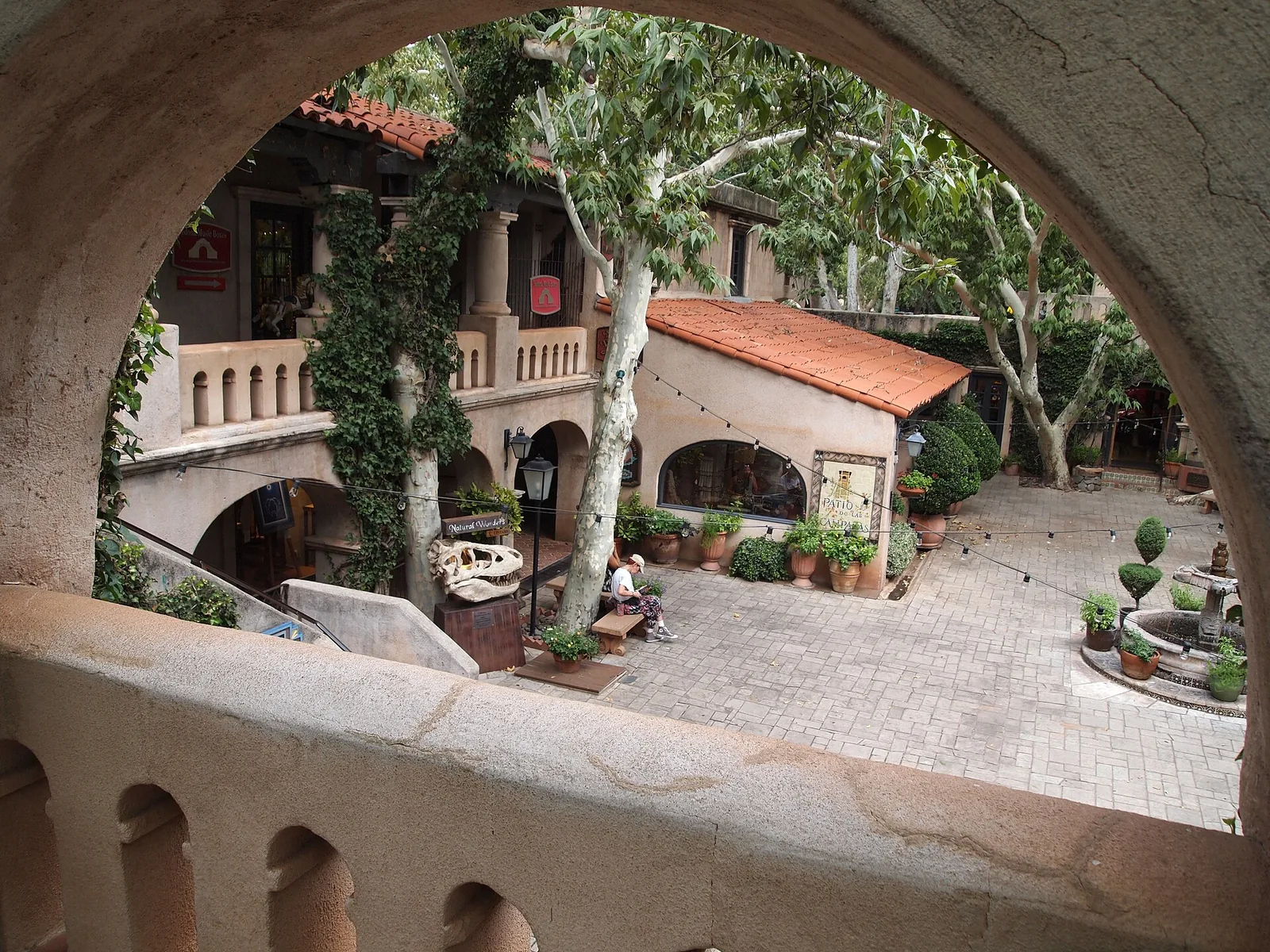
If the Festival of Lights is your first visit to Tlaquepaque, it helps to know what you are walking into. Tlaquepaque Arts & Shopping Village is an arts and shopping complex on State Route 179, just south of the Y roundabout where Sedona’s two main highways meet, set along the banks of Oak Creek under mature sycamores. It was built to feel like a traditional Mexican village, modeled after the town of Tlaquepaque near Guadalajara, with stucco walls, tiled fountains, arched passageways, and open courtyards. The name is pronounced roughly “Tla-keh-PAH-keh.”
Day to day, it is home to galleries, boutiques, and restaurants rather than chain stores. The full Tlaquepaque village guide covers the shops and dining in more detail, and if you are the kind of visitor who likes to browse original work, the Sedona art galleries guide is worth a look before you go. The point for festival night is that the architecture is what makes the luminarias work. Those arched walkways, staircases, and courtyard edges are exactly the surfaces the paper bags line, so the glow follows the shape of the buildings rather than sitting in a flat field. It is a purpose-built setting that happens to have been standing for decades before anyone called it photogenic.
Because it is a working village of independent businesses, the shops are open during the festival, and many stay lit and welcoming through the evening. You can duck inside to warm up, browse, and come back out to the cold and the candlelight. That indoor-outdoor rhythm is a big part of why the event is comfortable even when the temperature is dropping.
Getting there and parking, honestly
Here is the part most guides soft-pedal: the Festival of Lights is packed, and parking is the hardest part of the night. This is one of the most-attended evenings on Sedona’s calendar, the village is compact, and its lots are not large. If you show up at 4:45 hoping to catch the 5 p.m. lighting, you may still be looking for a spot when the bell rings.
A few practical moves that make the night easier:
- Arrive well before dusk. Getting there an hour or more ahead of the lighting gives you time to park, walk in, get cider, and find a spot to watch. It also lets you see the village before the densest crowd arrives.
- Know the lots. Tlaquepaque has its main lot plus the Tlaquepaque North lot on the other side of SR-179. If the main lot is full, go straight to North or the overflow rather than circling the main entrance.
- Consider parking in Uptown and walking. Uptown Sedona sits a short distance up SR-89A, and walking over to Tlaquepaque avoids the worst of the immediate scrum. A rideshare drop-off is another way to skip the parking hunt entirely.
- Expect holiday traffic at the Y. The roundabout where SR-89A and SR-179 meet backs up on busy evenings. Build in extra time.
If you are staying in West Sedona, the village is only a short drive away, which is a real advantage on a night when everyone else is coming from farther out. You can time your arrival to the lighting instead of committing to a long haul in holiday traffic, and you can leave a coat or a warm change of clothes back at the house rather than hauling everything with you.
A note on photos, since a lot of people come for them: the best window is right after the lighting, once it is fully dark but before the deepest crowd builds. Candlelight is dim, so a phone or camera that handles low light helps, and a steady hand or a ledge to brace against beats a flash, which flattens the glow. The arched passageways and staircases photograph better than the open courtyards, because the luminarias stack up the walls and give you depth. Wide shots capture the scale; close shots of a single row of bags against a stucco wall tend to be the keepers.
What else is going on at Tlaquepaque in December
The Festival of Lights is the headline, but Tlaquepaque runs a small slate of holiday events across December, and several are worth catching if your dates line up. The exact schedule changes year to year, so treat these as the usual lineup rather than fixed appointments, and check the village calendar for current dates.
- Tree lighting and Santa visits. Tlaquepaque typically kicks off the season with a tree lighting, often at Tlaquepaque North, with refreshments, entertainment, and a visit from Santa. It is a lower-key evening than the Festival of Lights and easier to attend on a whim.
- The Sweet Stroll. Later in the month, the village hosts a stroll where shops and galleries offer treats, giveaways, and discounts, with carolers in period costume moving through the courtyards. It is a good excuse to do your holiday shopping among local artists rather than online.
- Hanukkah menorah lighting. In recent years Tlaquepaque has co-hosted a menorah lighting with Chabad of Sedona, with latkes, donuts, and hot chocolate. Timing depends on the calendar, since Hanukkah moves each year.
Beyond the scheduled events, the village is simply decorated and lit through the holidays, so an ordinary December afternoon at Tlaquepaque is more festive than the rest of the year. If you cannot make the festival date itself, a regular visit still carries some of the season’s feel.
Other Sedona holiday things while you are in town
A festival that peaks at dusk leaves the rest of the day open, and December is a good month to fill it. A few things pair naturally with a Festival of Lights weekend.
Breakfast with Santa. Separate from Tlaquepaque, Sedona Parks and Recreation typically runs a free Breakfast with Santa at the Sedona Hub in Posse Grounds Park on a Saturday morning in early December. It is a community event with breakfast, photos with Santa, and activities for kids. Dates change each year, so confirm with the city before you count on it, but if you are traveling with children it is an easy add.
Chapel of the Holy Cross. The Chapel of the Holy Cross is a striking stop any time of year, and it takes on extra meaning around the holidays. It is a short drive from Tlaquepaque and works well as a mid-day visit before the evening festival.
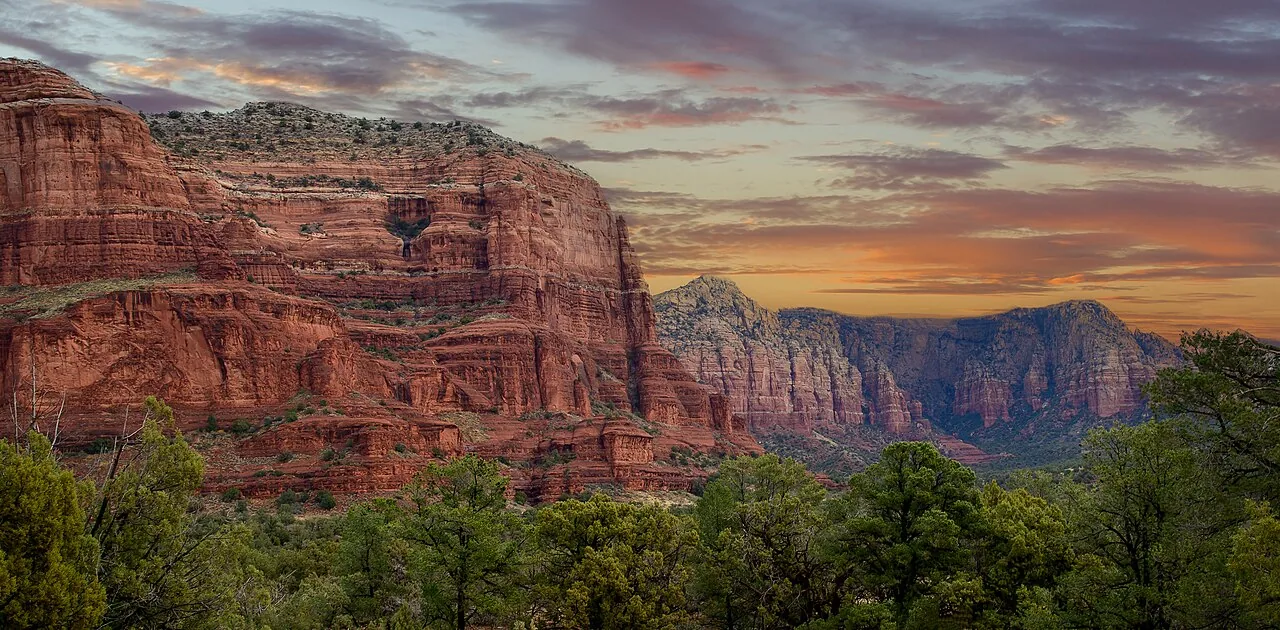
A red-rock drive. December light is clear and low, which flatters the rock. The Red Rock Scenic Byway along SR-179 runs right past Tlaquepaque, so you can turn a drive to the festival into a proper scenic outing. If there has been a recent snow, the contrast of white on red is worth the trip on its own.
A real dinner. After standing in the cold watching candlelight, a warm meal lands well. The Sedona fine dining guide covers the sit-down options, several of which are within a few minutes of the village. Reservations are smart on a festival Saturday.
Cold-night stargazing. Sedona sits under dark skies, and December’s long, clear nights are some of the best for it. The stargazing guide covers where to look. After the festival, a spot away from the village lights is a quiet way to close the night.
For a fuller month-by-month picture of the season, the Sedona in December guide rounds up the weather, crowds, and value, and the Sedona events calendar maps every annual festival across the year if you are trying to time a trip to more than one.
What December is like in Sedona, and what to pack
December is Sedona’s cold, quiet month, and knowing that shapes the trip. Average highs sit near 58°F and nights fall to around 33°F, near or below freezing. Snow is occasional rather than constant, but a light dusting on the red rocks does happen, and it is one of the prettier sights the desert offers. To be clear, those red rocks are a short drive from the West Sedona neighborhoods; the residential streets themselves sit in high-desert terrain rather than under the formations.
The weather has direct consequences for festival night. The luminaria lighting happens right as the temperature is dropping, and you may be on your feet outside for a while. Dress like you would for a cold evening walk, not a mild one:
- A warm coat, plus a hat and gloves for the dusk lighting.
- Layers, so you can shed one indoors in a warm gallery and put it back on outside.
- Closed, warm footwear for standing on stone courtyards.
- Court shoes if your lodging has a place to play, since indoor play is one of the few ways to stay active on a freezing December day.
The upside of December is that it is calm and well-priced outside the immediate holiday peak, with thin crowds on the trails and short waits at restaurants. Cold mornings are actually a fine time to hike, because midday is the warmest window and the low sun is easy on the eyes. If you are trying to decide whether December suits you at all, the best time to visit Sedona guide lays out the trade-offs by season. And if a heated place to play through the winter is part of the appeal, the snowbird guide to wintering in Sedona covers how the season works for longer stays.
For context on how the shoulder months bracket the holidays, the Sedona in November guide covers the quieter, still-mild run-up before December’s chill settles in.
Making a weekend of it: where to stay
The Festival of Lights is a one-night event, but it is worth a full weekend, and a whole-home rental is the natural way to do it with a group. That is where Sedona Pickler fits. It is a West Sedona house that sleeps eight, a short drive from Tlaquepaque, which matters a great deal on a night when parking and traffic are the hard part. You can time your arrival to the lighting, catch the glow, and be back at the house in minutes rather than committing to a long drive home in the cold.
The house is set up for exactly this kind of group holiday. There is a full kitchen for cooking a big meal, a covered deck and firepit for the cold evenings, two outdoor soaking tubs to warm up in after the festival, a media lounge, and a game room with bunk beds that kids tend to claim first. Four bedrooms across two kings, a queen, and the bunk room mean a family or a group of friends fits under one roof without splitting into separate hotels.
The feature that sets it apart in December is the private indoor pickleball court. It is heated, air-conditioned, and lit, so when the night outside is dropping near freezing, the games do not stop. A group of eight can come back from the luminarias, warm up, and play a round-robin at 9 p.m. in shorts while it snows outside. Paddles and balls are provided; you bring court shoes. Because the court is fully enclosed, it also shrugs off the one weather problem winter throws at it, since a cold snap or a snow flurry has no effect on indoor play. If noise is a concern where you usually play, an indoor court also means no neighbors and no complaints, which the quiet pickleball page gets into.
A few house rules worth knowing before you book: the home is whole-home only and booked through Airbnb, guests must be 25 or older to reserve, and there are no pets, parties, or smoking. Parking is free for up to four cars in the driveway, with no street parking, which is a genuine perk during a season when parking anywhere near the festival is a scramble. December, outside the tight holiday peak, also tends to be one of the calmer and better-value windows to visit, so it is a reasonable month to get a group together.
A simple plan for festival day
If you want a loose template for the day, this one works and does not overpack it:
- Morning: A short red-rock hike while the day is at its warmest, or a visit to the Chapel of the Holy Cross. Cold, clear December mornings are good for both.
- Midday: Lunch, then an indoor court session at the house while the outside air is still cold. This is the active hour that a freezing December day otherwise makes hard.
- Late afternoon: Head to Tlaquepaque well before dusk. Park, walk the village, browse the galleries, and get a cup of the free cider before the crowd peaks.
- Dusk: Be inside the village for the lighting, around 5 p.m. Stay after the bell to walk the glowing courtyards once the initial rush thins.
- Evening: Dinner nearby, then back to the house for the soaking tubs, the firepit, and a night of pickleball while the temperature drops outside.
That is a full, unhurried day that treats the festival as the anchor rather than the entire trip. The luminarias are the reason you came, and they earn it, but the rest of a December weekend in Sedona, with cold clear skies, quiet trails, and a warm place to play, is what turns one good evening into a trip worth repeating.
Whatever year you go, confirm the date with Tlaquepaque first, dress for the cold, get there before the light fades, and give yourself the time to stand in a courtyard full of 6,000 small flames without watching the clock. That is the whole point of the night.
Frequently asked questions
When is the Tlaquepaque Festival of Lights?
Is the Festival of Lights free?
How many luminarias are there?
Where do you park for the festival?
Is it a light display you can see any night in December?
What is the weather like for the festival?
What else happens at Tlaquepaque in December?
Stay where you can rally any season
Sedona Pickler is a private West Sedona vacation home with its own indoor, climate-controlled pickleball court — a short drive from the trailheads, viewpoints and restaurants in this Sedona guide. Play at sunrise or after dark, in any weather.
Check dates & book