Hot Air Balloon Rides Over Sedona

Floating a thousand feet over the red rocks at first light is one of those Sedona experiences that lives up to the photos, and then some. You drift in near silence, the desert wakes up below you, and the canyon walls go from gray to pink to that deep iron-red as the sun clears the horizon. It is not cheap, it gets cancelled by weather more often than people expect, and you have to be up well before dawn, but if the morning cooperates, it is worth every bit of the early alarm.
What a Sedona balloon flight actually is
A hot air balloon ride here is a sunrise-only affair. That is not a marketing choice, it is physics: the air is calmest and most stable in the hour around dawn, before the desert heats up and the winds pick up. By mid-morning the thermals make ballooning unsafe, so every legitimate operator flies once a day, at sunrise, weather permitting.
The whole outing runs about three and a half to four hours from pickup to drop-off, but you are only in the air for roughly one to one and a half hours. The rest is the part nobody tells you about: an early-morning pickup, a drive to whatever launch site the pilot has chosen for that day’s wind, watching the crew unroll and inflate the envelope (which is genuinely fascinating), the flight itself, and then the landing, breakdown, and the traditional toast before they shuttle you back.
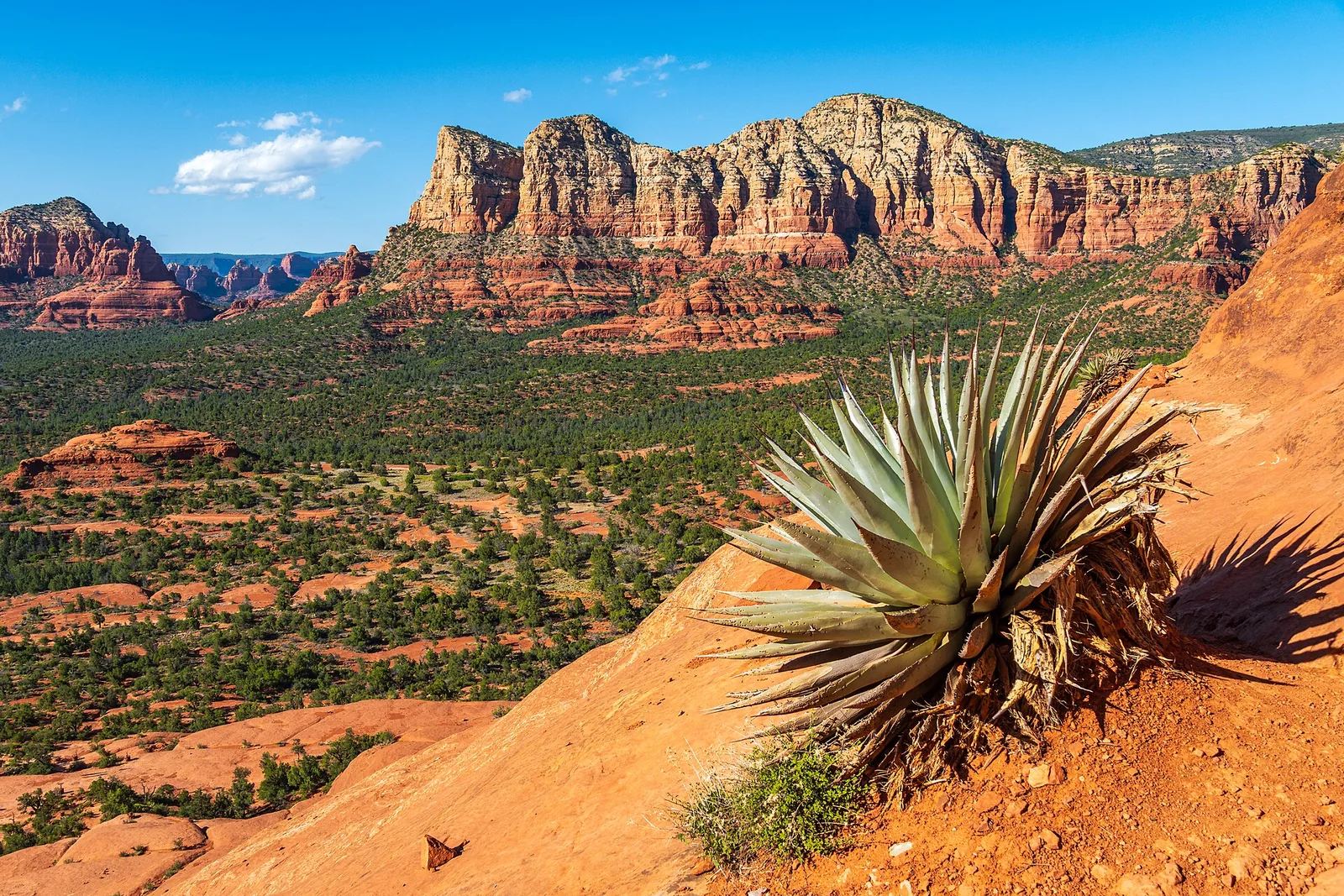
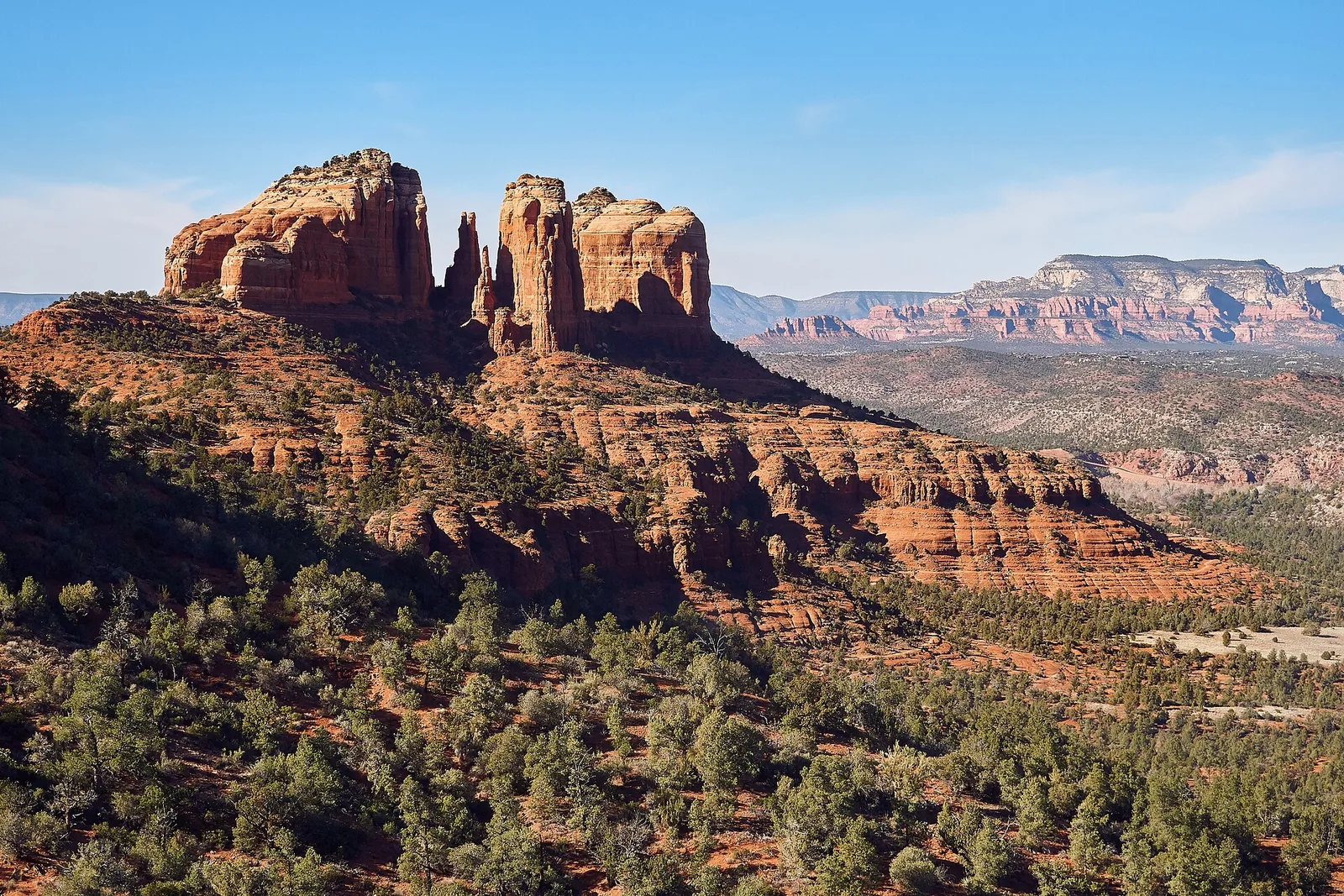
Where you actually fly matters. Only two companies hold U.S. Forest Service permits to operate over the Coconino National Forest around Sedona, which is the part with the famous red rock formations. Flights launch and drift across the high desert and the forest’s open country, and depending on the morning’s wind, you may float near the buttes and mesas or out over the more open terrain west of town. Pilots cannot steer a balloon left or right, only up and down, so they “drive” by finding wind layers moving in different directions at different altitudes. The exact route is never the same twice, which is part of the charm and part of why a guaranteed “we’ll fly right over Cathedral Rock” promise is something to be skeptical of.
What the flight is actually like
If you’ve never been up in a balloon, a few things tend to surprise first-timers. The first is how quiet it is. There’s no engine — just the periodic roar of the burner when the pilot adds heat, and then silence in between. Because you’re moving with the wind rather than through it, there’s no wind in your face and no real sense of speed. It feels less like flying and more like standing still while the whole landscape slides beneath you.
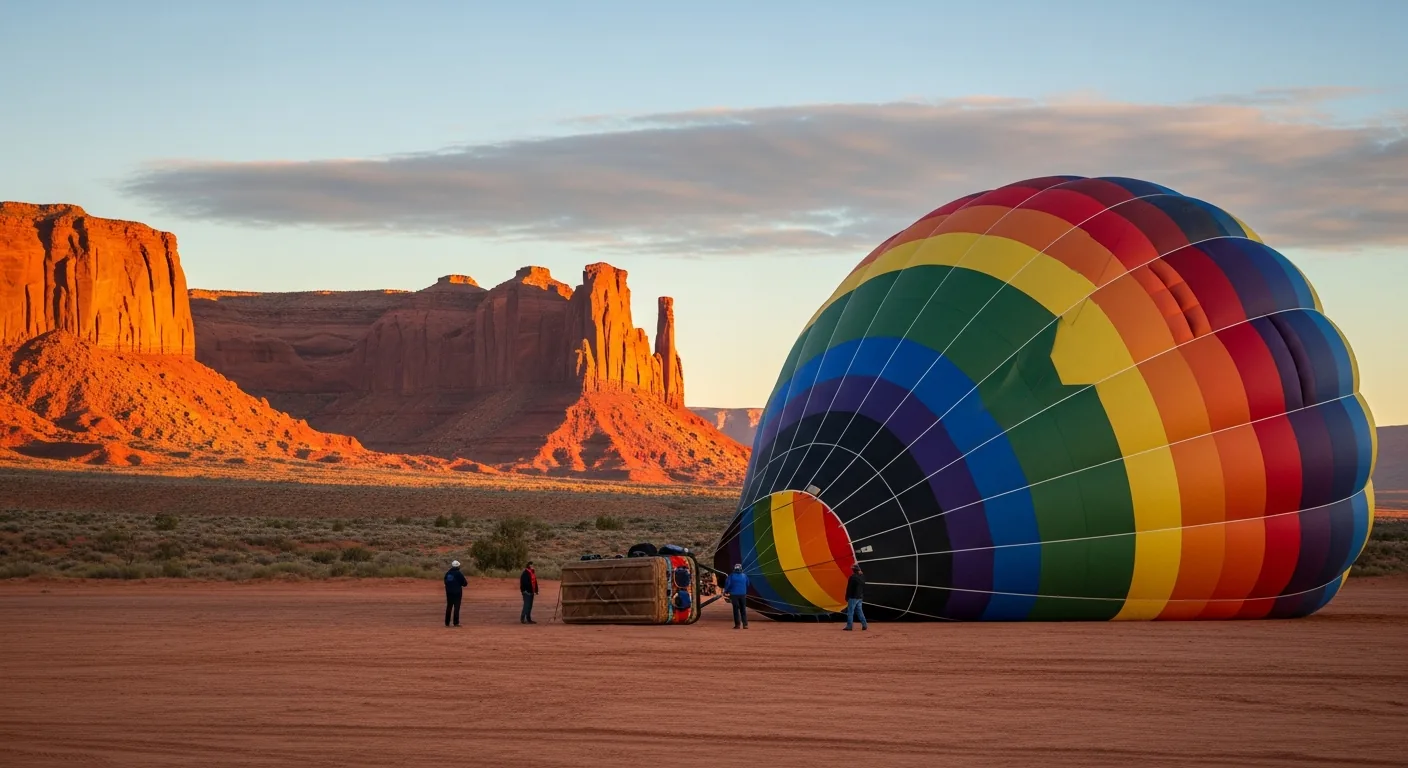
The second surprise is the launch. Watching the crew lay out hundreds of square feet of fabric, run a fan to fill it cold, and then fire the burner to stand the whole thing upright is a genuinely good show, and it happens in the soft light before sunrise. Liftoff itself is so gradual that people often don’t notice the exact moment they leave the ground.
Once aloft, the pilot works the altitude — climbing high for the big-picture view of the red rock country and the San Francisco Peaks in the distance, then dropping low enough to skim over treetops and spot deer, javelina, or other wildlife moving in the early light. You’ll be standing the entire time, sharing a basket with anywhere from a handful to a dozen-plus other passengers depending on the balloon. It’s social, it’s calm, and the hour goes faster than you’d think.
The two permitted operators
There are a lot of websites that will sell you a “Sedona balloon ride,” but only two outfits actually hold the Forest Service permit to fly over the Coconino National Forest. Everything else is a reseller, a different launch area, or a misleading listing. Book direct with one of these two and you know what you are getting.
Northern Light Balloon Expeditions
The original Sedona outfitter, flying here since the early 1970s. They run seven- and fourteen-passenger balloons and have a long safety record. Their favorite launch area is off Red Rock Loop Road, though the day’s actual site depends on the wind. You can reach them at (928) 282-2274 (toll-free 1-800-230-6222) or fly@northernlightballoons.com.
Red Rock Balloon Adventures (Red Rock Balloons)
The other permitted company, also long-established and FAA-licensed, flying seven days a week at sunrise. Their baskets are large “Safety-T” designs, and they typically launch off Dry Creek Road near the Seven Canyons area. Reach them at (928) 284-0040.
Both companies are listed on the official Visit Sedona directory, both hold the Coconino National Forest permit, and both end the flight with the same champagne-toast tradition. Honestly, you can’t go wrong with either. Pick based on availability for your dates, balloon size you’re comfortable with, and current reviews.
Local tip: Don’t book a balloon ride through a generic tour-aggregator site without checking who is actually operating the flight. If it isn’t Northern Light or Red Rock Balloon Adventures, you may be paying a markup, flying a less scenic area, or both. Call the operators directly to confirm pricing and your specific meeting time.
What it costs
Prices have climbed over the years. Older guides quote $250 to $300 per person, but as of 2026 both permitted operators charge around $375 per person for the standard shared sunrise flight. Private balloons run much higher, in the thousands.
| Item | What to expect (2026) |
|---|---|
| Standard shared flight | ~$375 per person |
| Private small balloon | ~$2,600 and up |
| Private large balloon | ~$4,500 and up |
| Total experience | ~3.5–4 hours |
| Time aloft | ~1–1.5 hours |
| Daily departures | Once, at sunrise only |
| Taxes/fees | Generally none added (confirm) |
Prices change, so treat these as a guide and confirm the current rate when you book. The good news is that, unlike some Sedona attractions, you do not need a Red Rock Pass or any parking permit for the balloon ride itself. The operator handles pickup and all the logistics; you just show up.
How booking and pickup work
This is not a same-day, walk-up activity. Here is the realistic sequence:
- Book ahead. Spring and fall mornings fill up, and so do holidays. A week or two of lead time is sensible; for peak season or a specific date, more. Both companies take reservations by phone and online.
- Confirm your meeting time the day before. Pickup time shifts with the season because sunrise does. Expect an early one — often somewhere between 4:30 and 6:30 a.m. depending on the month. The operator will give you an exact time and place.
- Get picked up or meet at the designated spot. Many flights include a complimentary pickup from Sedona-area lodging or a central meeting point. Confirm whether they’ll come to you.
- Watch the inflation. Once at the launch site, the crew lays out and inflates the balloon. This takes a while and is genuinely worth watching.
- Fly. Climb into the basket, lift off, and drift for roughly an hour.
- Land and toast. The chase crew tracks you and meets you at the landing spot. You help pack up (lightly), then there’s the traditional champagne or sparkling toast, sometimes with a light picnic or snacks.
- Ride back. They shuttle you to your vehicle or lodging, wrapping up around mid-morning.
Because it eats the whole first half of your day, it pairs well with a slower afternoon. After a 4:30 a.m. wake-up and a couple hours in the air, you’ll be ready for a long lunch, a nap, and maybe a low-key evening — or, if you’re staying at Pickler House, a few unhurried rallies on the indoor court once you’ve had your coffee and a shower.
Best time of day and season
The time of day is decided for you: sunrise, always. The season is where you have real choices.
- Spring (March–May): Probably the sweet spot. Clear skies, crisp cool mornings, blooming high-desert plants, and a high success rate. Also the busiest, so book early.
- Fall (October–November): The other prime window. Golden cottonwoods along the creek beds, stable air, comfortable temperatures, excellent visibility.
- Winter (December–February): Underrated. Crisp air, exceptional clarity, and occasionally a dusting of snow on the high peaks. Cold on the ground, but flights do run (except Christmas Day for most operators). Dress warm.
- Summer monsoon (July–September): The riskiest window. These are the hottest months and the peak of monsoon storm season, so this is when flights are most likely to be cancelled. Heat also reduces how much weight a balloon can safely carry, which can affect capacity. If you come in summer, build in a backup morning.
Weather and why cancellations are common
This is the part to make peace with before you book: balloon flights get cancelled, and it is not the operator being overly cautious — it is them being responsible. Ballooning depends on a narrow band of calm conditions, and Sedona’s high desert doesn’t always deliver.
For a safe launch and landing, surface winds need to be light — roughly four to eight knots (about four to nine mph) with no gusts. If it’s any windier, the ground crew can’t safely manage the envelope during inflation, and landings get rough. Pilots often release a small biodegradable test balloon at the launch site; if it heads in an unworkable direction or moves too fast, the flight is scrubbed.
What this means for you, the traveler:
- Don’t book the balloon for your last morning. If it’s weather-cancelled, you want another day to try again. Cancelled flights are typically rescheduled or refunded, but they can’t manufacture good weather on demand.
- Expect early-morning go/no-go calls. The decision often comes very early, sometimes after pickup, because conditions are read at the launch site.
- Monsoon season raises the odds of a scrub. July through September especially.
- A clear forecast isn’t a guarantee. Calm-wind requirements are stricter than “is it sunny?” Plenty of bluebird mornings are too breezy to fly.
Local tip: Schedule your balloon ride for the first or second morning of your trip, not the last. That way a weather cancellation leaves you a buffer to rebook before you leave town.
What to wear and bring
Mornings start cold and warm up fast once the sun is up, so layers are the move. The basket has no seats and the burner above your head actually keeps you fairly warm in the air, but you’ll be standing around at the launch site in the pre-dawn chill.
What to wear: - Layers you can peel off — a warm jacket or fleece over a regular shirt works year-round; add more in winter. - Long pants. Comfortable and practical for climbing in and out of the basket. - Closed-toe, flat-soled shoes. Sneakers or hiking shoes. No sandals, heels, or open toes — landing sites can be uneven desert ground. - A hat that won’t blow off, and sunglasses for after sunrise.
What to bring: - Your camera or phone, ideally on a strap or wrist loop so you don’t drop it overboard. - Sunscreen for the post-flight desert sun. - A little cash if you’d like to tip the crew (customary, not required).
What to leave behind: bulky bags, anything loose you can’t secure, and high expectations about staying perfectly still — there’s a bit of jostling on landing, and that’s normal.
Getting good photos
The light at sunrise is the whole point, and it’s also the hardest to shoot. A few practical notes:
- Secure your camera or phone. A wrist strap or lanyard is non-negotiable in an open basket. Dropping a phone over the side means it’s gone.
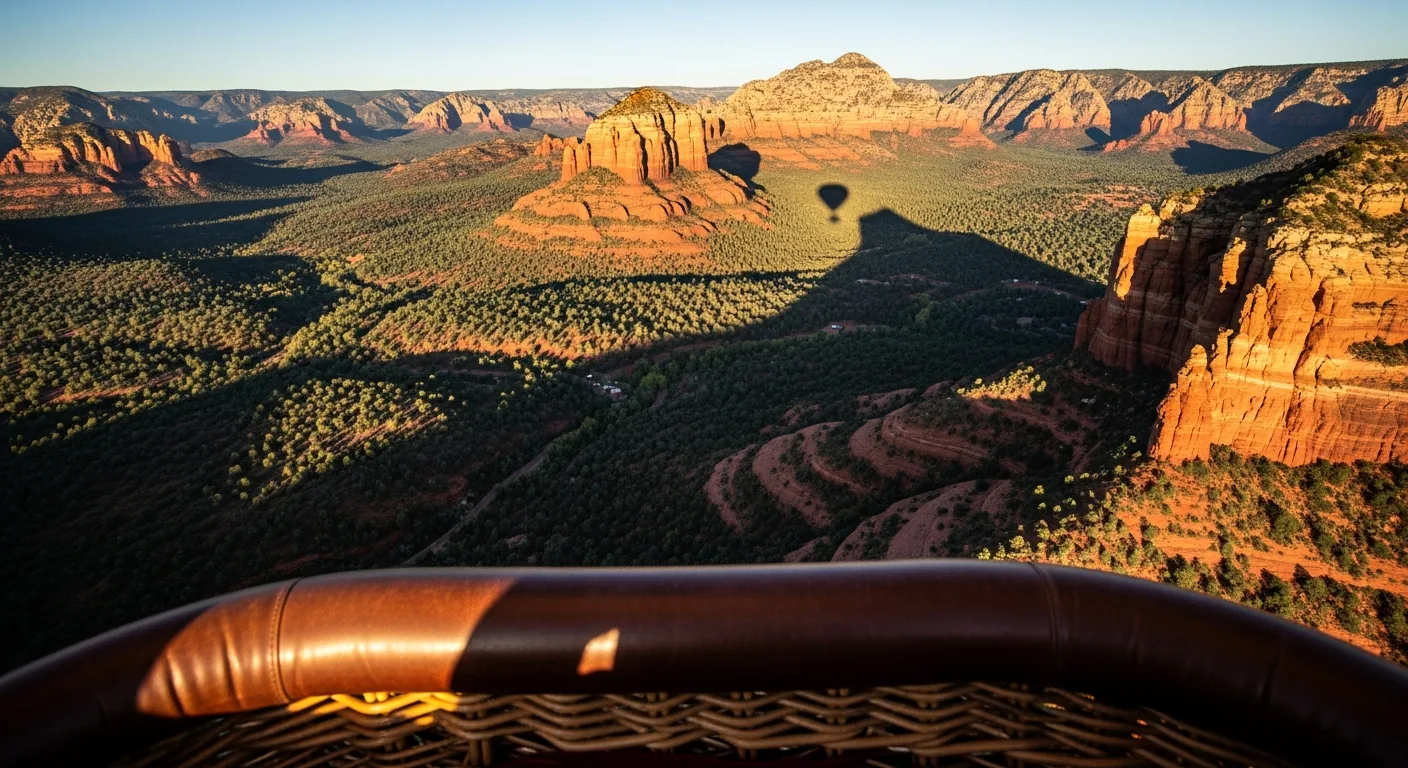
- Shoot wide for the landscape, then look for layers. The most striking balloon photos aren’t just the rocks — they’re other balloons hanging in the sky, the long shadow of your own envelope on the ground, and the chase vehicles trailing far below.
- Don’t spend the whole flight behind the lens. It’s an hour, it goes quickly, and the in-person experience beats any photo. Take your shots in the first and last stretch and just look the rest of the time.
- Mind the burner. When the pilot fires it, the noise and heat are sudden. Time your shots for the quiet glides between burns for steadier framing.
Tipping and etiquette
Tipping the pilot and ground crew is customary, though not required — they do a lot of physical work before dawn and during pack-up. A few dollars per person is a normal gesture if you enjoyed the flight. You’ll also be asked to help a little with packing the envelope after landing; it’s part of the tradition, it’s light work, and it’s oddly satisfying. Bringing accurate weights for everyone in your party isn’t just paperwork — it directly affects the pilot’s safety calculations, so don’t fudge it.
Accessibility and who can’t fly
Ballooning has real physical requirements, and they’re worth knowing before you pay. These come straight from the operators’ own rules.
You generally need to be able to: - Stand for the duration — up to about two hours, including ground time. There are no seats in the basket. - Climb into and out of the basket independently, using a step and a leg-swing motion over the side. - Handle a possible hike out. Landings happen wherever the wind puts you, occasionally in remote spots, so you may need to walk up to about a mile to reach the chase vehicle. - Brace for landing. Landings can be bumpy, and in higher winds the basket can come to rest on its side. The pilot will coach you on the landing position.
Restrictions to know: - No walking aids in the basket — canes, walkers, and crutches aren’t permitted aboard. - Pregnancy: Expectant mothers are not permitted to fly, due to insurance and the jostling on landing. - Children and height minimums: Northern Light sets a minimum of 5 years old and 42 inches tall (so kids can see over the basket and follow instructions); Red Rock Balloons requires passengers to be at least 48 inches tall. Confirm the current minimum with your operator. - Weight: There’s no hard weight limit, but you’ll be asked for an accurate weight because the pilot has to do real weight-and-balance math — exactly like a small aircraft. The hotter the morning, the less total weight a balloon can carry, which is another reason summer flights can be constrained.
If standing for a couple of hours or climbing over the side of a basket isn’t realistic for someone in your group, this isn’t the activity for them — and that’s okay. The scenic-flight alternatives (helicopter and small-plane tours out of the Sedona airport) are seated and have very different requirements.
Balloon vs. helicopter vs. plane
If the physical requirements or the early start rule out ballooning, Sedona has other ways to see the red rocks from above, and they trade off differently:
- Hot air balloon: Slow, quiet, immersive, sunrise only, weather-dependent, and standing-room. Best for the experience itself rather than covering ground. You drift wherever the wind takes you.
- Helicopter tour: Seated, available later in the day, far more weather-tolerant, and you can fly directly to specific formations. Shorter air time, more engine noise, but precise and accessible.
- Small-plane scenic flight: The widest coverage for the money and the option to reach farther afield (including Grand Canyon overflights), but you’re higher up and behind glass, so it feels less intimate.
None is “better” — they’re different experiences. The balloon wins on atmosphere; the aircraft win on reliability, schedule flexibility, and accessibility.
Safety and choosing a good operator
Hot air ballooning is heavily regulated by the FAA, and the pilots flying commercial passengers here are commercially licensed. The two permitted Sedona operators have long safety records — Northern Light has been flying since the early 1970s — and the conservative weather rules that cause all those cancellations are exactly what keeps the activity safe.
A few honest notes on the experience itself: - It’s gentle, but not motionless. The flight is calm and quiet, but takeoff and especially landing involve some movement. Landings range from a soft touch-and-stand to a bump-and-drag depending on wind. - Heights: If you have a strong fear of heights, know that ballooning feels different from a glass elevator or a cliff edge — many nervous flyers find it surprisingly comfortable because there’s no sense of falling. But only you know your limits. - Book direct. Reserving with Northern Light or Red Rock Balloon Adventures directly avoids reseller markups and confusion about who’s actually flying you. Check recent reviews on the usual sites before you commit.
What to pair it with nearby
Because the balloon ride is done by mid-morning, you’ve got a whole day left — and you’ve already seen the red rocks from the most unusual angle possible. Some natural follow-ups:
- A short, scenic drive. You’ll want something easy after the early start. The Red Rock Scenic Byway (Highway 179) past Bell Rock and Courthouse Butte is a gentle, gorgeous option you can do from the car, with pullouts for photos.
- An easy hike to ground-level icons. If you’ve got energy, the Bell Rock pathway or a stroll near Cathedral Rock lets you connect the formations you just floated over to the trail underfoot. Save the strenuous stuff for another day.
- The Chapel and Tlaquepaque. The Chapel of the Holy Cross and the Tlaquepaque arts village are low-effort, high-reward stops that fit a post-flight afternoon nicely.
- A long, well-earned breakfast. You’ve been up since before dawn. See the breakfast and brunch guide and go sit down somewhere good.
- Back home for a rally. If you booked the morning flight and an afternoon nap, the indoor court at the house is the easy way to round out the day without another early start.
For first-timers wondering how to slot this into a wider trip, the 3-day itinerary is a useful starting frame — just remember to put the balloon morning early so you have a rain-day buffer.
The honest bottom line
A Sedona balloon ride is expensive, weather-dependent, and brutally early. It is also, on the right morning, genuinely unforgettable — the kind of thing people talk about long after the trip. Book direct with one of the two permitted operators, pick spring or fall if you can, schedule it early in your stay so you can rebook if the weather scrubs it, dress in layers, and go in knowing it might not happen on the first try. If it does, you’ll spend the rest of the trip recognizing the formations you drifted over at sunrise.
Frequently asked questions
Why do Sedona balloon flights only happen at sunrise?
How much does a Sedona hot air balloon ride cost?
Do I need a Red Rock Pass for a balloon ride?
How often do flights get cancelled?
Who can't go on a hot air balloon ride in Sedona?
Which Sedona balloon company should I book?
Stay where you can rally any season
Sedona Pickler is a private West Sedona vacation home with its own indoor, climate-controlled pickleball court — a short drive from the trailheads, viewpoints and restaurants in this Sedona guide. Play at sunrise or after dark, in any weather.
Check availability on Airbnb