Fay Canyon Trail: An Easy, Shady Family Hike with a Hidden Arch
Fay Canyon is the hike I send people on when they want Sedona’s red-rock walls up close without the burning calves, the crowds of Devil’s Bridge, or the white-knuckle scrambling. It’s a short, mostly shaded walk up a flat-bottomed canyon that dead-ends at a tall sandstone cliff, with a sneaky little arch hiding partway up the wall that most people stroll right past. If you’ve got kids, grandparents, a recovering knee, or you just want a relaxed morning before the day heats up, this is close to the perfect Sedona trail.
What Fay Canyon Is, and Why It’s Worth Your Morning
Fay Canyon Trail No. 53 sits in the Coconino National Forest on the west side of Sedona, tucked into the same cluster of canyons as Boynton Canyon and Doe Mountain off Boynton Pass Road. It runs roughly 2.4 miles round trip as an out-and-back, though you’ll see distances quoted anywhere from about 2.1 to 2.6 miles depending on whether someone counts the optional spurs at the end. Either way, it’s short and it’s flat. The main trail gains only around 144 feet over its entire length, which in Sedona terms is basically nothing — most of that creeps up so gently you won’t notice you’re climbing.
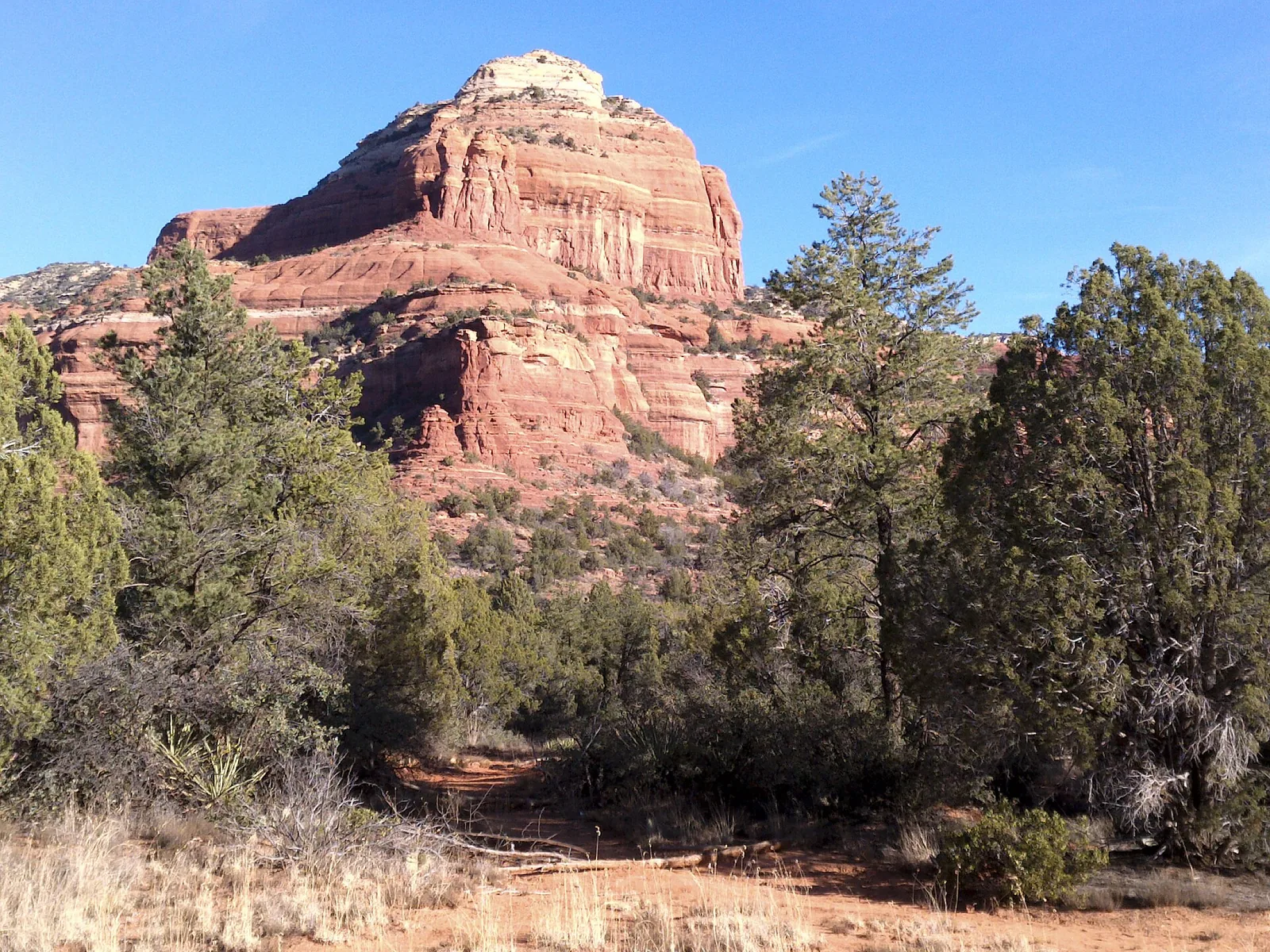
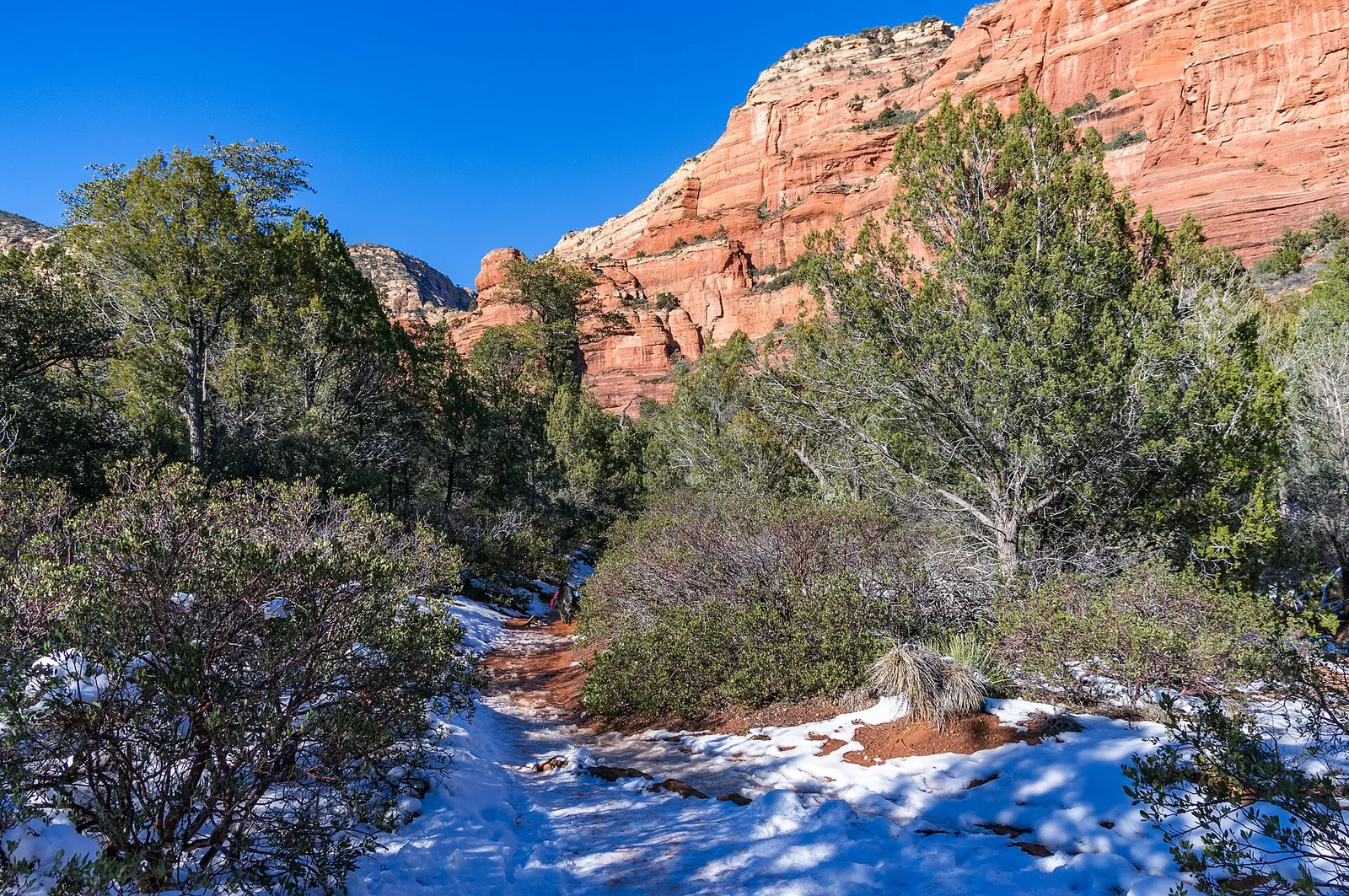
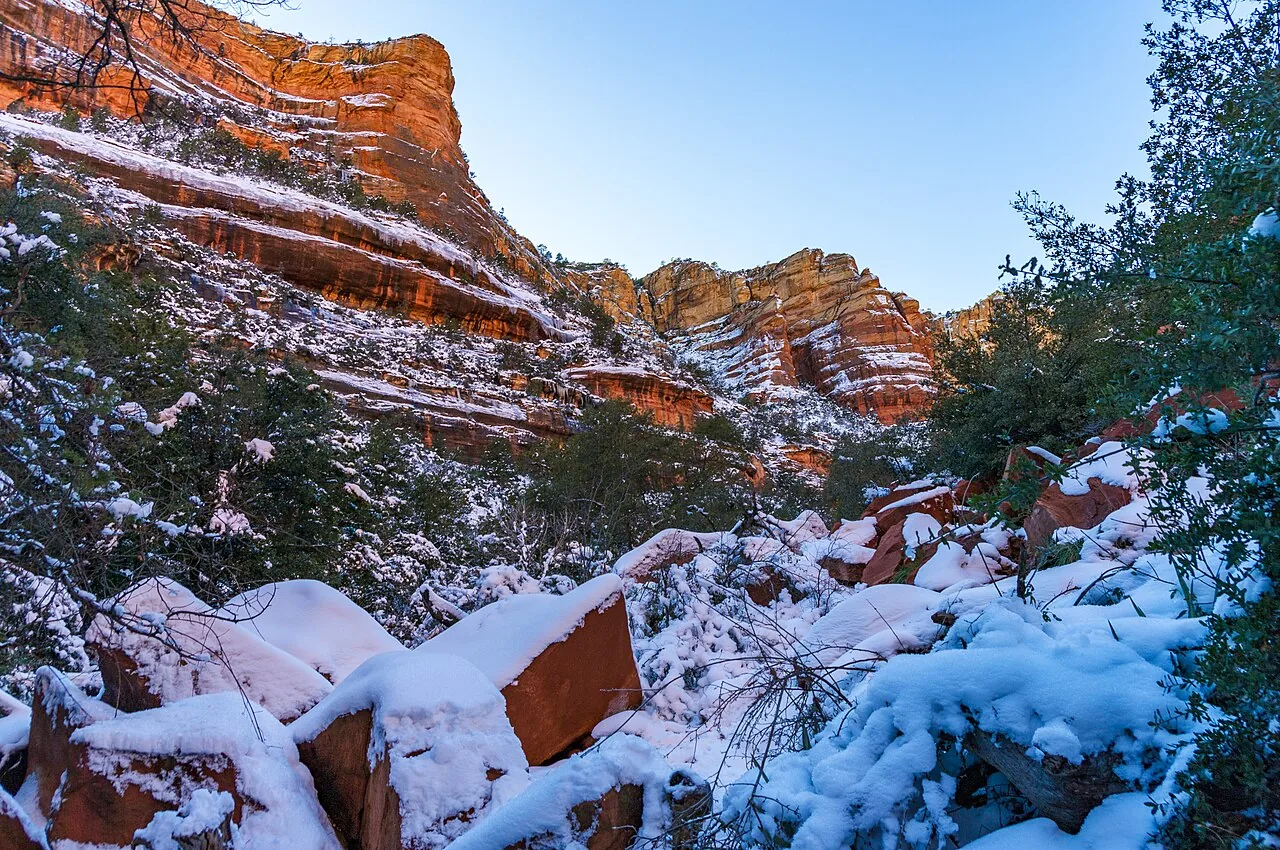
What makes Fay special isn’t a single dramatic overlook. It’s the experience of walking into a canyon rather than up and over a ridge. The trail starts in open high-desert scrub and then slips between two big red walls, where junipers, cottonwoods, and manzanita give you real shade for stretches of the hike. The soft red dirt underfoot, the towering Supai sandstone on both sides, the quiet — it’s a gentler, more intimate side of Sedona than the postcard summits everyone fights over.
Two things reward the curious. The first is the Fay Canyon Arch, a natural sandstone span set high in the east wall about halfway up the canyon. It’s genuinely easy to miss — there’s no sign, just an unmarked side path and a few stacked-rock cairns. The second is the end of the canyon itself, where the trail runs out at a soaring wall of red rock, and stronger hikers can scramble a bit higher for a wide-open view back toward Sedona.
How to Get There, Parking, and the Pass You Need
Fay Canyon is about a 15-to-20-minute drive from West Sedona, and the route is straightforward.
- From the “Y” intersection where AZ-89A and AZ-179 meet, head west through Sedona on AZ-89A.
- Turn north (right) onto Dry Creek Road (Forest Road 152C) at the west end of town.
- Follow Dry Creek Road to the Boynton Canyon / Boynton Pass intersection and turn left.
- The Fay Canyon trailhead and parking lot are a short distance down on the left, before you reach the Doe Mountain and Bear Mountain trailheads.
The good news: the road is fully paved all the way to the lot, so you don’t need a high-clearance vehicle or any kind of off-road nerve to get here. That’s not true of every Sedona trailhead, and it’s one more reason Fay is friendly for families and rental cars.
The Red Rock Pass
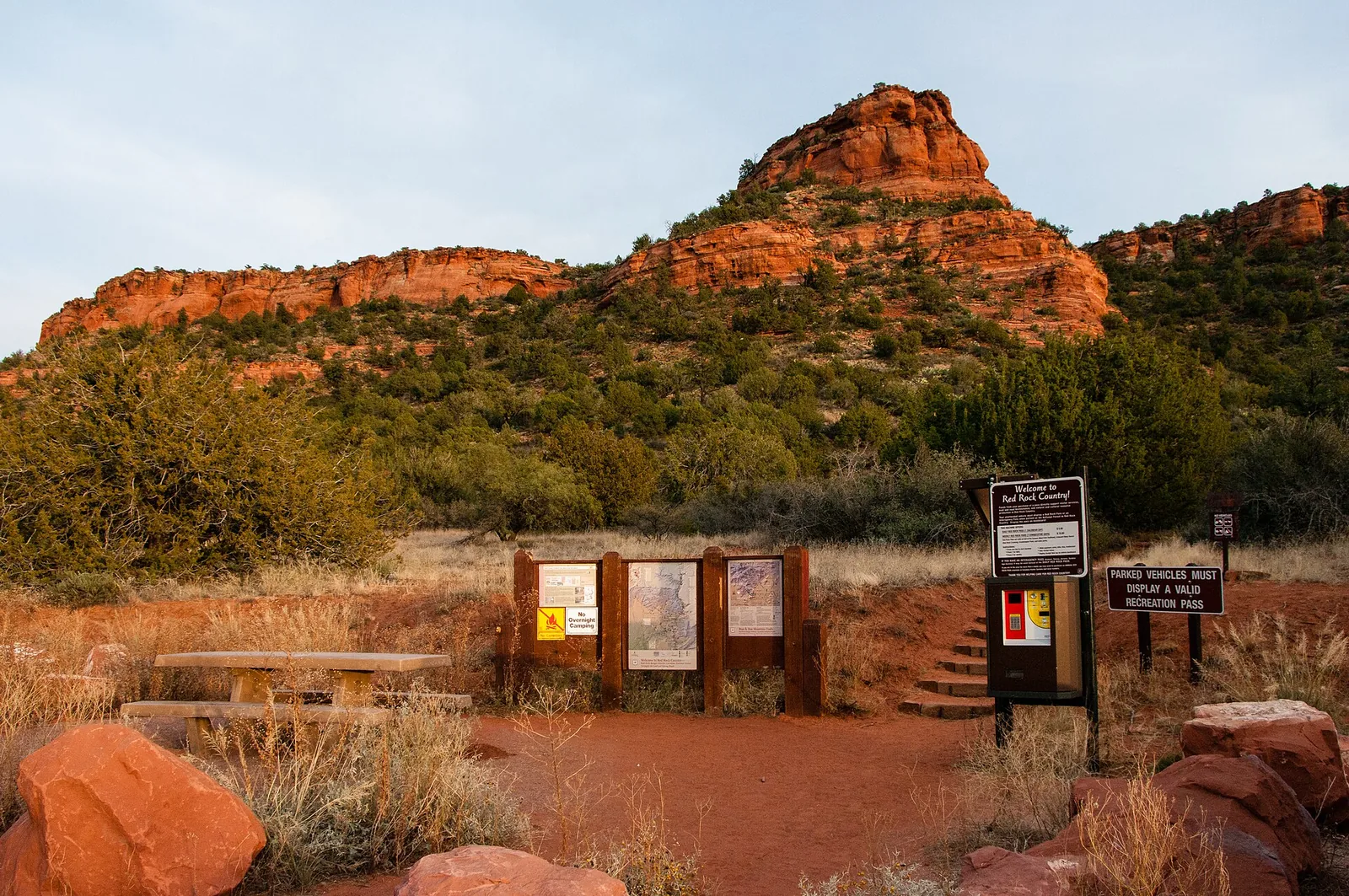
You need a Red Rock Pass to park at the Fay Canyon lot. This is the Coconino National Forest’s day-use parking fee for the popular Sedona recreation sites, and it’s enforced — rangers do check, and a ticket will cost you a lot more than the pass.
At the time of writing, Red Rock Pass pricing runs:
| Pass | Approx. cost | Good for |
|---|---|---|
| Daily | $5 | One calendar day |
| Weekly | $15 | Seven consecutive days |
| Annual | $20 | One year |
A few things worth knowing:
- You can usually buy a daily or weekly pass right at the self-serve kiosk in the parking lot. Bring a card and a little cash as a backup, since machines occasionally act up.
- If you already hold an America the Beautiful (Interagency) Pass — the national parks annual pass — it’s accepted here in place of a Red Rock Pass. Just display it on your dash.
- Prices and what’s accepted can change, so confirm current rates on the Coconino National Forest or Visit Sedona site before you go. Treat the numbers above as a guide, not gospel.
Local tip: If you’re in Sedona for more than a day and plan to hike a few of the popular trailheads — Fay Canyon, Boynton, Doe Mountain, Bell Rock — the weekly Red Rock Pass at around $15 quickly beats paying $5 every single day. Buy it once, leave it on the dash, and stop thinking about it.
The lot is decent-sized, but Fay is no secret. On weekends, holidays, and spring break it fills up, and there’s no good roadside overflow. If the lot’s full when you arrive, the simplest move is to drive a couple minutes up to Doe Mountain or Bear Mountain and start there instead, or come back later — turnover is constant on a short hike like this.
Difficulty and What to Actually Expect
Let’s be honest about what “easy” means here, because Sedona stretches that word.
The main Fay Canyon trail is genuinely easy. It’s wide, the surface is mostly packed red dirt with a few rocky patches, and the grade is gentle the whole way. There’s no exposure, no real climbing, and no spots where you’d worry about a kid or an unsteady adult. Most people walk the round trip to the end-of-canyon area in under two hours, and a brisk hiker can do it in an hour or so without rushing.
Where it stops being easy is the two optional add-ons, and you should know about both before you decide.
The Arch Spur
Almost all the real elevation gain on this hike is packed into the short, steep climb up to the Fay Canyon Arch. The spur leaves the main trail on the right at roughly the half-mile mark, and from there it climbs something like 200 feet in well under a quarter mile. That’s steep. The footing turns to loose rock and slickrock, the “trail” gets faint, and you’ll be picking your own line in places. It’s short — five to ten minutes of effort each way — but it’s a real scramble, not a stroll.
The arch itself is wide and graceful, set right into the cliff face, and honestly a little hard to see at first because it blends into the rock behind it. You don’t have to climb all the way up to enjoy it; plenty of people spot it from the main trail and skip the scramble entirely, especially with small kids.
The End-of-Canyon Scramble
The maintained trail ends about a mile in, where you reach a tall red sandstone wall and usually a tree marked with an end-of-trail sign. From there, confident hikers can scramble up unmaintained slickrock routes to a higher overlook with views stretching back south toward Sedona. This is genuinely optional and genuinely rougher — narrow spots, steep steps, choose-your-own-path footing. If you’re not comfortable scrambling, the view from the canyon floor is plenty, and there’s no shame in turning around at the sign.
So: think of Fay as an easy hike with two short, hard, totally skippable bonuses. You control how much you bite off.
A word on what you’ll actually feel underfoot. The main trail surface shifts as you go — it starts as firm packed dirt through the open scrub, softens into looser red sand where the cottonwoods take over, and picks up some rocky, root-laced patches deeper in the canyon. None of it is technical, but if you’ve got a fresh ankle injury or you’re hiking with someone who shuffles, the uneven bits are worth knowing about. Trekking poles are overkill for most people here, though one pole isn’t a bad idea if balance is a concern. The flip side of all that flatness is that Fay is a relaxing hike to talk on — you can walk side by side for long stretches, which you can’t say for most Sedona trails.
Finding the Hidden Arch (the Part People Miss)
This is the question everyone asks, so here’s the plain version.
- The arch spur splits off the right side of the main trail at roughly 0.5 to 0.6 miles in — call it 10 to 15 minutes of walking.
- There’s no sign. Look for a narrow path peeling uphill and a few cairns (small stacks of rocks) marking the turnoff.
- Once you’re on the spur, look up and to your right; the arch becomes obvious as you get closer.
- If you reach the end-of-canyon wall (about a mile in), you’ve gone too far — backtrack and watch the right side more carefully.
A downloaded trail map helps a lot here, since the turnoff is genuinely subtle. If you use a navigation app, save the map offline before you arrive — cell signal in these canyons is spotty at best.
Here’s the honest part: a lot of people hike all the way to the end and back and never realize they walked right past an arch. If spotting it matters to you, slow down on the way in and keep glancing up at the east (right-hand) wall after the half-mile point.
A couple of practical notes on the spur itself. Because almost all of Fay’s elevation is crammed into this stretch, it’s a sharp little workout — short, but your heart rate will notice. The footing is loose decomposed sandstone over slickrock, the kind that rolls under your shoe, so take it slow and deliberate, especially on the way down, where most slips happen. You also don’t have to go all the way to the base of the arch to appreciate it; many hikers climb partway, get a clear view, snap their photos, and turn around rather than fight the steepest, faintest top section. There’s no “right” amount to climb — get to wherever the view satisfies you and call it good. If the rock is wet from recent rain or snowmelt, skip the spur entirely; wet slickrock is genuinely slippery and not worth a fall.
Best Time of Day and Season
Sedona’s climate runs hot in summer and surprisingly cold on winter mornings, and Fay Canyon has its own quirks worth planning around.
Time of Day
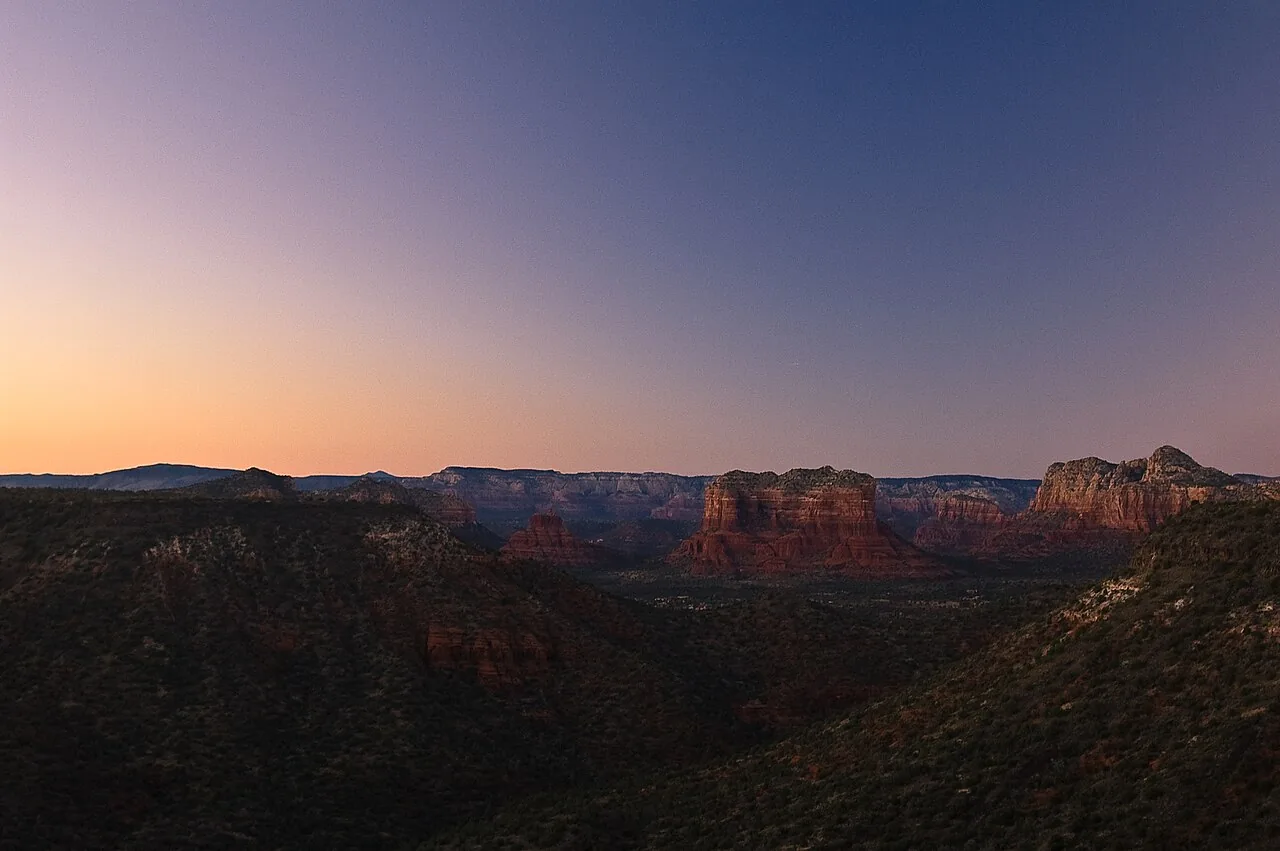
Early morning is the answer for almost everyone. You get cooler temperatures, the best chance at an empty lot, softer light on the red walls, and you’re back before the midday heat. Because the canyon runs roughly east-west with tall walls, you’ll find real shade in the morning along sections of the trail — a genuine advantage in warm months.
Late afternoon can be lovely too, with warm light on the cliffs, but the lot is more likely to be full and you’ll share the trail with more people. Midday in summer is the one combination to avoid.
Season
- Spring (March–May) and fall (October–November) are ideal: mild temperatures, comfortable footing, and the canyon at its prettiest. These are also the busiest seasons, so the early-morning advice matters most then.
- Summer (June–August) is doable here precisely because Fay is short and partly shaded, which is why it lands on so many “best summer hikes in Sedona” lists. But don’t get cocky — exposed stretches and the arch scramble bake, and afternoon highs routinely top 90°F. Start at or before sunrise and carry more water than you think you need.
- Winter (December–February) is quiet and often gorgeous, with the occasional dusting of snow on the red rock. Mornings can be genuinely cold and the shaded canyon floor holds ice and mud in spots, so expect slick footing early in the day.
What to Bring
For the easy main trail you don’t need much, but Sedona’s dry heat catches people off guard constantly. Pack like the desert means it.
- Water — more than you’d guess. At least a liter per person for the main hike, more in summer or if you’re adding the scrambles. There’s no water on the trail.
- Sun protection. Hat, sunglasses, sunscreen. The shade is real but it isn’t continuous.
- Closed-toe shoes with grip. Trail runners or hiking shoes. If you plan to do the arch or end-of-canyon scramble, decent tread matters on the slickrock — skip the flip-flops.
- Snacks, especially with kids.
- A downloaded trail map for finding the arch turnoff.
- A light layer in the cooler months; the canyon floor stays chilly in morning shade.
- A small first-aid kit if you’ve got little ones who like to test gravity on rocks.
Leave the heavy pack at home — this isn’t that kind of hike. Just don’t underestimate the sun and the dryness.
Accessibility and Hiking with Kids
Fay Canyon is one of the more forgiving Sedona trails, but it’s still a natural dirt trail, not a paved path.
The main trail is wide, mostly flat, and free of dangerous drop-offs, which makes it a strong pick for families with young kids, older walkers, or anyone easing back into hiking. There are rocky and uneven sections, a few roots, and patches of sand, so it’s not wheelchair- or stroller-friendly in the usual sense — a rugged all-terrain stroller might manage parts of it on a dry day, but expect to lift it over rough spots. For toddlers, a child carrier is the easier call.
For kids specifically, Fay is a winner: it’s short enough that little legs don’t give out, there’s room to wander and look for lizards, and the “hidden arch” turns the whole thing into a treasure hunt. Just hold the line on the two scrambles — the arch spur and the end-of-canyon climb are loose and steep, and they’re firmly an adults-decide, hold-hands-or-skip-it situation, not a free-for-all for excited eight-year-olds.
After a morning out here, the kids are usually wiped out in the best way — which is when it’s nice to head back, let them cool off, and burn the last of their energy with a few rallies on the indoor court back at Pickler House before lunch.
How to Beat the Crowds
Fay is popular, and on a busy spring Saturday the lot fills and the trail gets a steady stream of people. None of that ruins the hike — it’s wide enough to feel uncrowded once you’re moving — but a full lot can sink your whole morning. Here’s how to stay ahead of it.
- Arrive early. Before 8 a.m., ideally before 7 in peak season. This solves parking and gives you a quieter trail.
- Go midweek if you can. Tuesday through Thursday are dramatically calmer than weekends.
- Have a backup trailhead. Doe Mountain and Bear Mountain are minutes away on the same road. If Fay’s lot is jammed, start there and circle back, or just hike those instead.
- Skip holiday weekends and spring break for any of the Boynton Pass trailheads if you possibly can. They get slammed.
- Use the late-day window if mornings don’t work. Many hikers clear out by mid-to-late afternoon, freeing up parking, and the evening light is beautiful.
For a deeper look at the area’s gentler routes, see our roundup of easy hikes — Fay sits comfortably near the top of that list.
Safety Notes
Nothing about the main trail is dangerous, but Sedona’s environment deserves respect.
- Heat and dehydration are the real risks here, not cliffs. The desert pulls moisture out of you fast and you may not feel thirsty until you’re already behind. Drink steadily and turn around if anyone’s flagging.
- The scrambles are where injuries happen. The arch spur and end-of-canyon climbs are loose, steep, and unmaintained. Test your footing, don’t push past your comfort level, and remember that downclimbing is usually harder and scarier than going up.
- Flash flooding is possible in any Sedona canyon during monsoon season (roughly July through September). If thunderstorms are in the forecast, stay out of the canyon — water can arrive from rain you can’t even see.
- Wildlife is generally shy. You might see lizards and birds; rattlesnakes are around in warm months, so watch where you put hands and feet on the rocky spurs.
- Stay on the trail and pack out everything you bring. This is a heavily used corridor, and it stays beautiful only because most people tread lightly.
- Cell service is unreliable. Tell someone your plan, and don’t count on your phone to bail you out.
What to Pair Fay Canyon With Nearby
The best thing about Fay’s location is how much sits within a few minutes’ drive, which makes it easy to build a half-day or full day around it.
Doe Mountain (right next door)
The natural pairing. Doe Mountain is just up Boynton Pass Road and offers the opposite of Fay: instead of walking into a canyon, you climb a switchbacked trail roughly 1.5 to 2.4 miles round trip (depending on how much of the mesa-top loop you do), gaining around 500 to 600 feet to the flat top of a mesa. The reward is a 360-degree view taking in Boynton Canyon, Fay Canyon, Capitol Butte, and the distant Mogollon Rim. It’s still short and manageable, and doing both in one morning gives you a complete picture of this corner of Sedona — one hike below the rocks, one on top of them.
Boynton Canyon
A little farther along the same road, Boynton Canyon is a longer, more famous hike — about 6 miles round trip — with its own arch-and-cave feature and a well-known vortex site near the trailhead. It’s a bigger commitment than Fay, but if you want to spend a full day in this area and have the legs for it, it’s a classic.
Other Easy Options
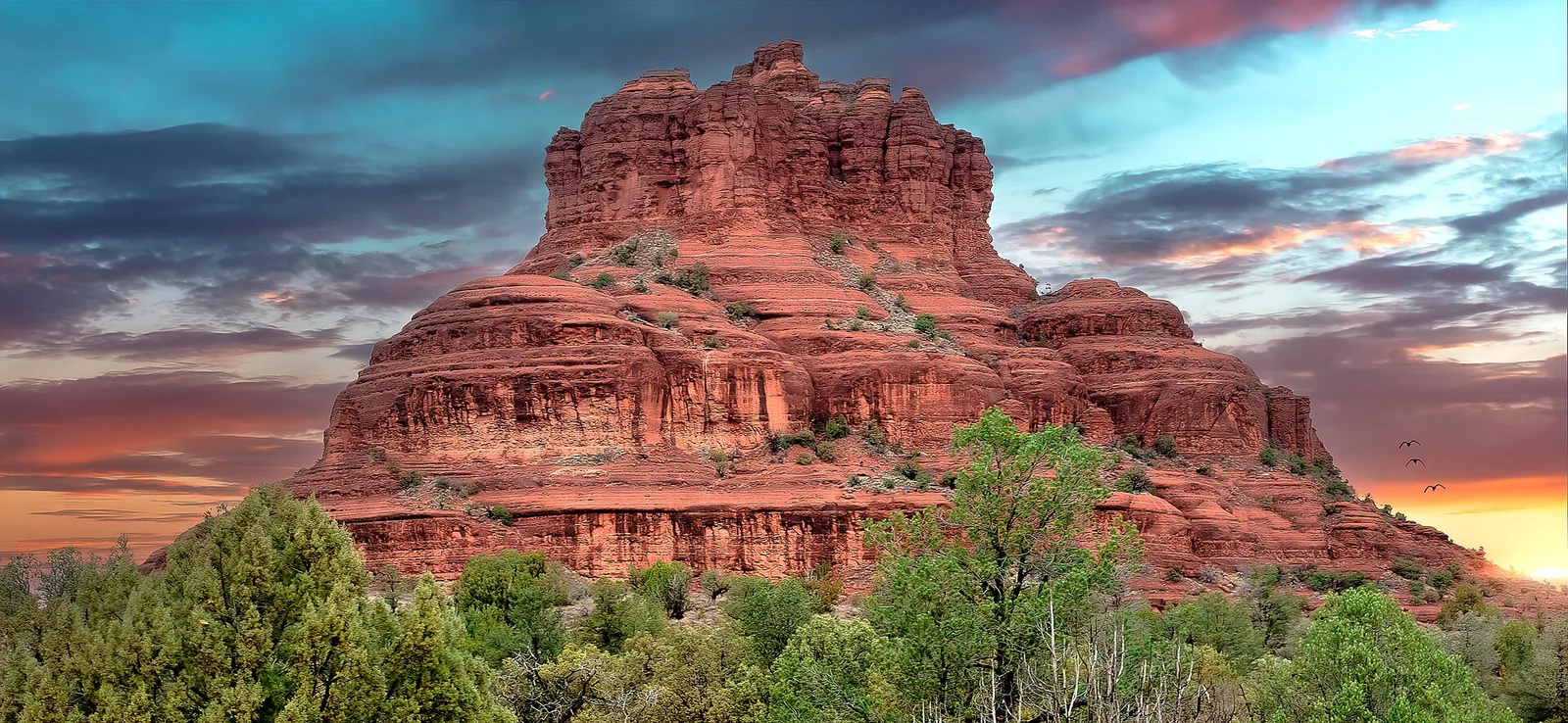
If Fay leaves you wanting more gentle red-rock walking, the easy hikes guide rounds up the best low-effort trails in town. And if you’re chasing the famous formations, Bell Rock on the other side of town offers a similarly flexible, family-friendly outing where you choose your own difficulty.
Make It a Bigger Loop of Sights
If you’re building a full day, the west-Sedona corridor has more than just trails. The same Boynton Pass area is rich with the region’s deeper history — and a short drive beyond the trailheads takes you toward Palatki and Honanki, ancient cliff dwellings and rock-art sites that are a fascinating, low-effort counterpoint to a morning of hiking. They’re a great pairing if you’ve got mixed company, since they reward curiosity rather than fitness. For drivers more than hikers, the broader scenic byway and Sedona’s classic photography spots round out a day that doesn’t ask much of your legs.
Refuel After
This side of Sedona is residential and quiet, so for food you’ll head back toward West Sedona or Uptown. Our best restaurants guide covers the standouts, and if you started early, a proper breakfast or brunch is a well-earned reward for being on the trail before everyone else.
The Bottom Line
Fay Canyon doesn’t try to impress you with one big money shot, and that’s exactly its charm. It’s a short, shady, low-stress walk into a beautiful red canyon, with a hidden arch and an optional scramble for the curious — easy enough for almost anyone, with just enough adventure to keep it interesting. Get there early, bring more water than you think you need, slow down to spot the arch, and pair it with Doe Mountain next door for a morning that shows you Sedona from the floor of a canyon and the top of a mesa in the same breath.
Frequently asked questions
How long is the Fay Canyon hike and how hard is it?
Where is the hidden Fay Canyon Arch and how do I find it?
Do I need a permit or pass to hike Fay Canyon?
When is the best time to hike Fay Canyon?
Is Fay Canyon good for kids and beginners?
What can I combine with Fay Canyon nearby?
Stay where you can rally any season
Sedona Pickler is a private West Sedona vacation home with its own indoor, climate-controlled pickleball court — a short drive from the trailheads, viewpoints and restaurants in this Sedona guide. Play at sunrise or after dark, in any weather.
Check availability on Airbnb