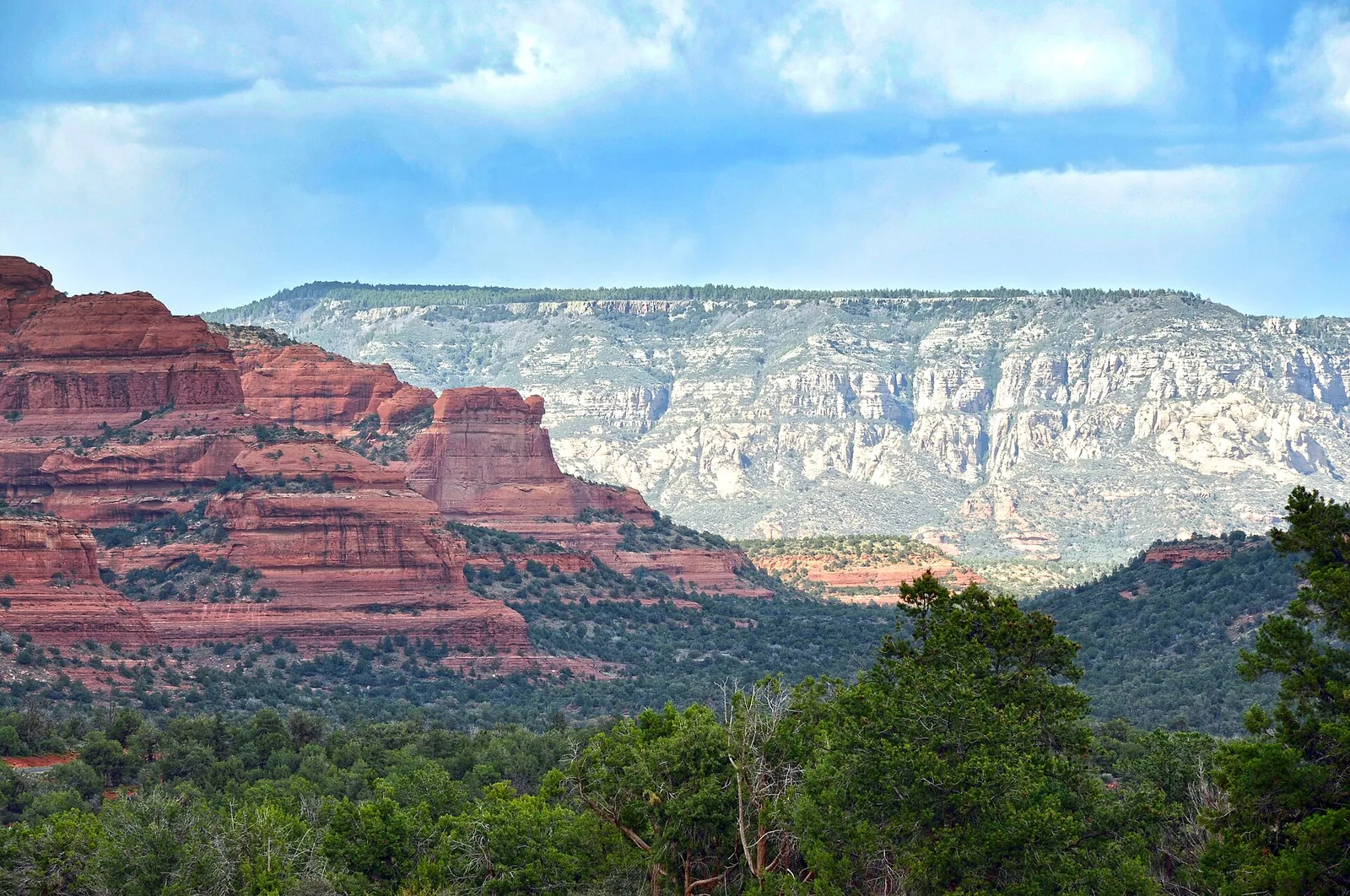
Sedona is famous for red rock, so the first thing to understand about fall color here is that the red rock does not change. The formations stay the same rust and vermilion all year. The autumn show happens somewhere else entirely: down along Oak Creek, in the ribbon of water and shade that runs north out of town toward Flagstaff. That is where the maples, cottonwoods and sycamores grow, and that is where they turn. Once you know to follow the water instead of the rock, planning a fall trip gets simple.
This guide covers when the color peaks, why it lands later here than in Flagstaff, where to go to actually see it, and how to deal with the parking and crowds that come with one of Sedona’s two busiest seasons. Every date, distance and fee below was checked against the Coconino National Forest and Arizona State Parks before it went on the page, but the exact peak week shifts a little each year and fees change, so treat this as a strong starting point and confirm current details close to your trip.
When Sedona’s fall color peaks
For Sedona and Oak Creek Canyon, the reliable window is mid-October into early November. Some years the canyon is at its best around the third week of October; a warm autumn can push the strongest color into the first days of November. Visit Sedona puts the peak from mid-October well into November, which matches what most locals will tell you: late October is the safe bet, but the season has a tail on both ends.
The reason the timing is a little later here than at higher spots comes down to elevation. Sedona sits at roughly 4,350 feet. Flagstaff, an hour up the road, sits near 7,000 feet. Cold arrives at altitude first, so Flagstaff’s aspens usually peak in the first two weeks of October, sometimes earlier up on the San Francisco Peaks. The color then works its way downhill like a slow wave, reaching Oak Creek Canyon and Sedona a week or two behind. If you have driven up to Flagstaff and found the aspens already past, that is normal — and it is also the best argument for timing a trip to catch Sedona right as it turns.
What actually triggers the change is temperature, specifically cool nights. Through October, Sedona’s overnight lows drop to around 51°F, and by November they slide into the low 40s. Those cold nights, paired with shortening days, tell the deciduous trees along the creek to pull chlorophyll back and let the reds and golds show. Daytime stays pleasant — October highs run near 79°F and November near 67°F — which is part of why fall is such a good hiking season here. You get warm afternoons for the trail and cold enough nights to keep the color coming. For a fuller month-by-month breakdown, the October guide and November guide go deeper on weather and events.
If you are trying to pick a month, September is generally too early down at Sedona’s elevation — the creek is still mostly green, though it is a fine, quieter time to visit for other reasons, as the September guide explains. October is the heart of it. Early November can still be excellent along the lower creek, with the bonus of thinner crowds once the peak-weekend rush has passed.
One honest caveat: fall color in Sedona is real, but it is concentrated. This is not New England, where whole hillsides light up. Here the display follows the creek corridor and a few side canyons. That concentration is exactly why the West Fork Trail and the SR-89A drive matter so much — they take you right into the best of it rather than leaving you hoping the color comes to you.
Why the color lives along Oak Creek
Sedona is high desert. Most of what grows on the open slopes — juniper, pinyon pine, agave, prickly pear — stays green or gray through the seasons and gives you no fall show at all. The deciduous trees that do turn need steady water, and in this landscape that means the creek. Oak Creek runs year-round through a shaded canyon, and its banks support a riparian forest that behaves more like a mountain stream in the Northeast than anything you would expect in Arizona.
The trees doing the work are worth knowing by name, because they turn at slightly different times and in different colors:
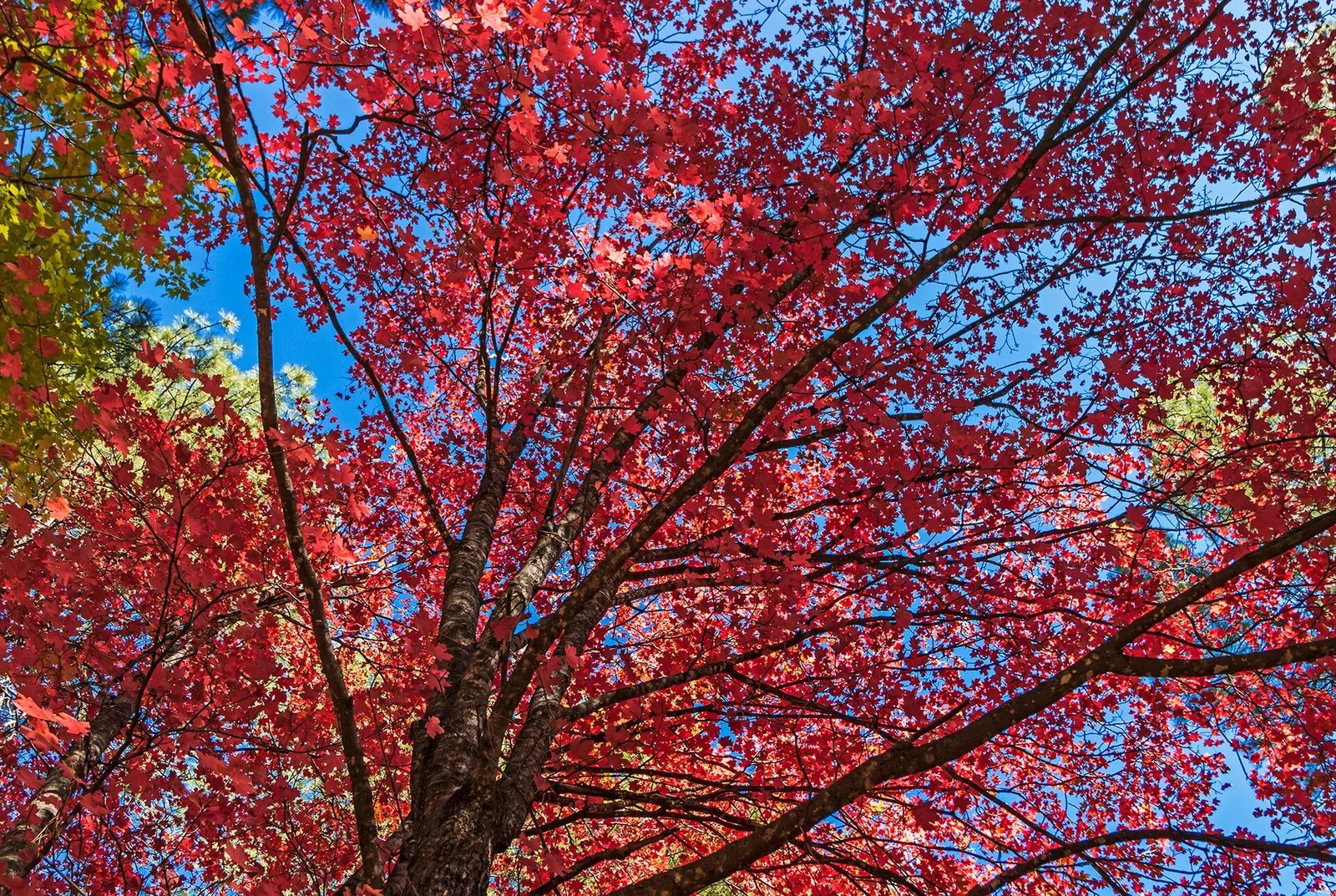
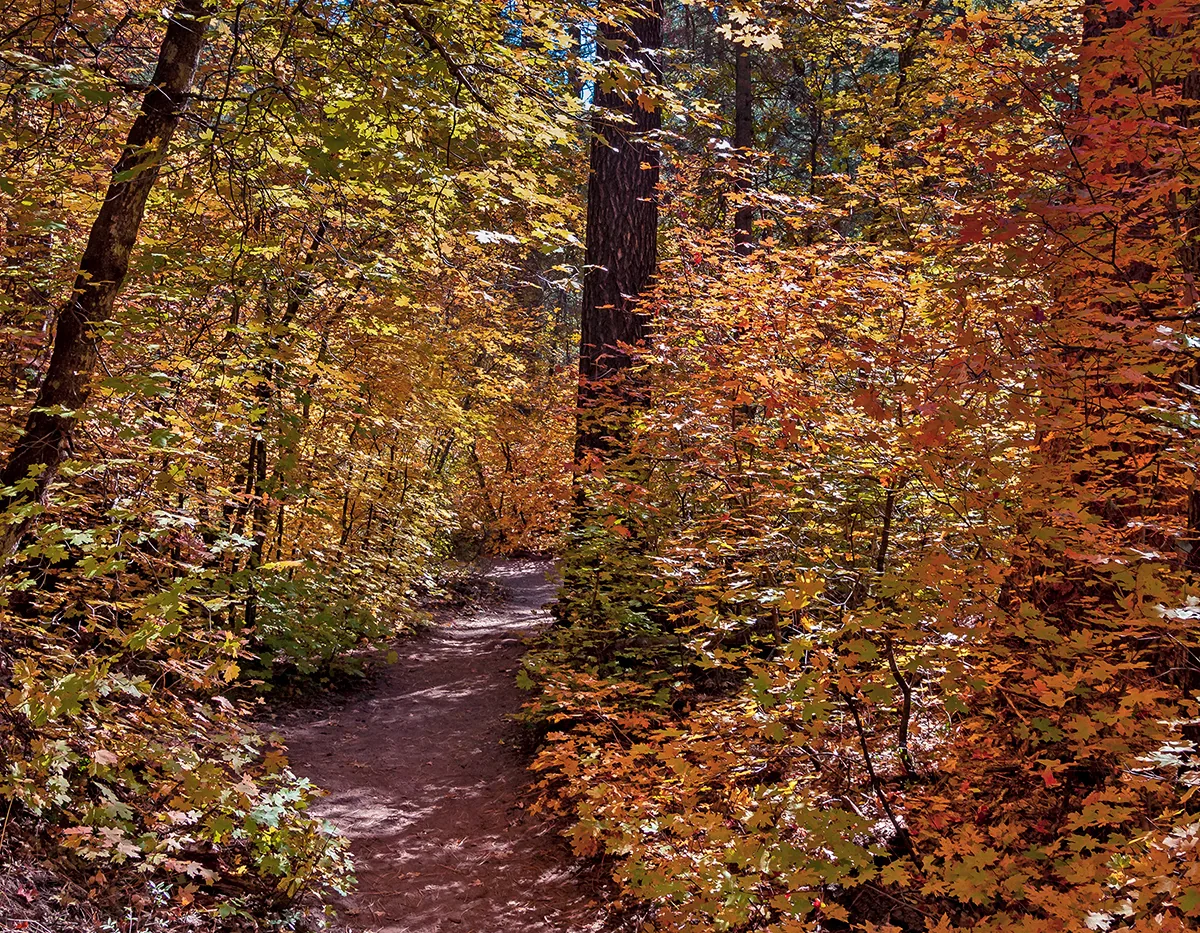
- Bigtooth maple is the star. These are the trees that go scarlet and deep orange, and they are what people picture when they picture Sedona fall color. West Fork has them in quantity.
- Cottonwood turns bright, clean yellow and gold, often the first big color you notice from the road.
- Arizona sycamore goes gold to tan, with big leaves and pale, mottled bark that photographs well against the red rock.
- Boxelder, a member of the maple family, adds more yellow along the water.
- Velvet ash and willow fill in the understory with softer yellows.
You will also see color from plants you may not want to touch. Poison ivy grows thick along parts of these creek trails and turns a pretty red in fall while staying just as potent, and Virginia creeper and sumac add red at ground level too. The rule is simple: enjoy the low red color with your eyes, keep to the trail, and do not grab a handful of leaves for a photo.
Put it together and you get the thing that makes Sedona’s fall distinct. In one frame you can have scarlet maple, gold cottonwood, green pine that never changes, blue sky and a wall of red sandstone behind all of it. That layered contrast — red leaves against red rock, gold against green — is the reason photographers plan whole trips around this window. The photography spots guide has more on where to set up, and the color along the creek is a natural pairing with the sunset spots once the light goes low.
West Fork Trail: the premier foliage hike
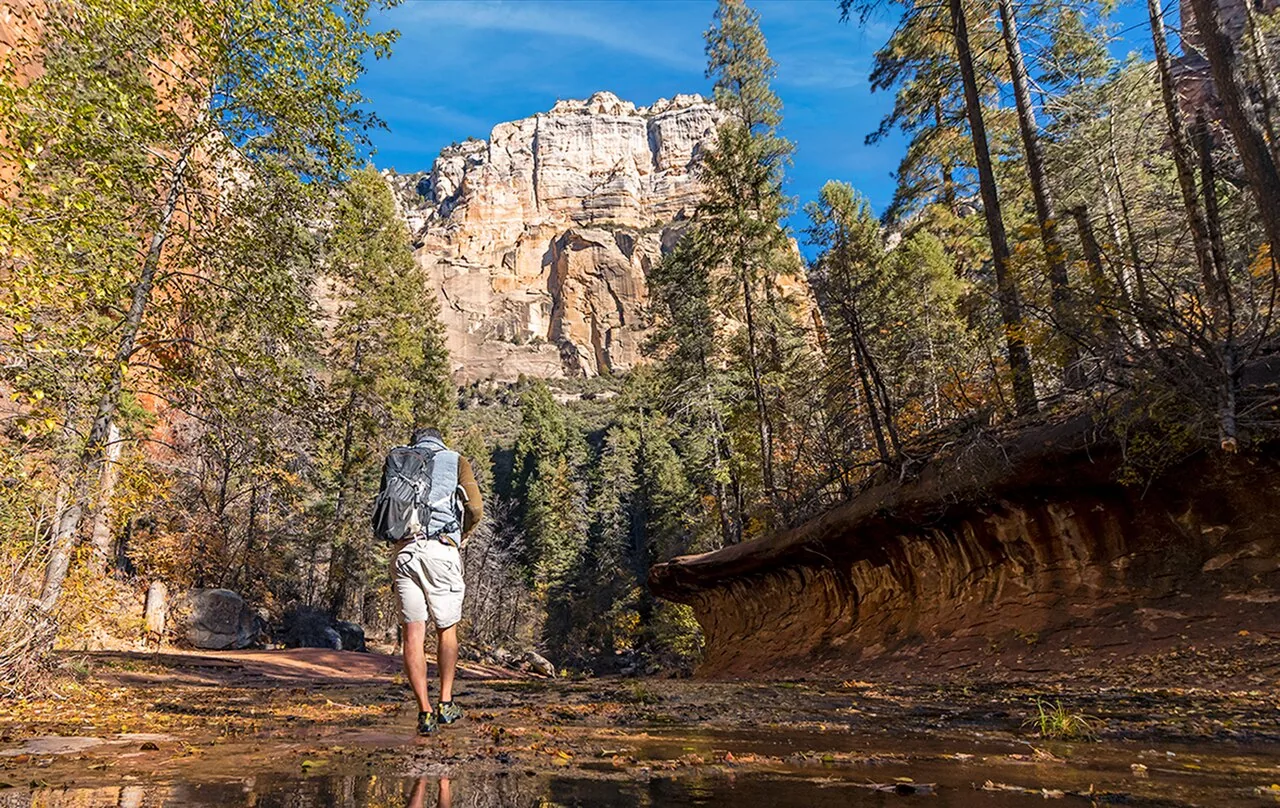
If you do one thing for fall color in Sedona, do the West Fork Trail, also called the Call of the Canyon trail. Visit Sedona describes it as the closest thing Arizona has to a New England display of fall foliage, and in late October it earns that. The trail runs along the West Fork of Oak Creek beneath a canopy of bigtooth maple and sycamore, with the creek reflecting the color and towering canyon walls closing in overhead.
The practical details, per the Coconino National Forest:
- Location: about 10 miles north of Sedona up SR-89A, roughly a 20-to-25-minute drive into Oak Creek Canyon.
- Length: the maintained, easy portion runs about 3 miles one way (a little over 6 miles round trip), with very little elevation gain. Ambitious hikers can continue much farther up the canyon, but that stretch is unmaintained, involves wading, and is a serious outing — not what most fall visitors are here for.
- Terrain: you cross the creek repeatedly on stepping stones and shallow spots. Wet feet are common, so wear shoes you do not mind getting damp, and be careful on slick rocks.
- Fee: the trailhead is run as a day-use site with a per-vehicle fee, recently around $15 for up to five people, plus a lower rate for walk-ins and cyclists. Importantly, the standard Red Rock Pass is not accepted here — this site takes its own fee. Confirm the current amount before you go.
The catch with West Fork is that everyone else has read the same advice. During foliage season the parking lot often fills by about 9:30 in the morning, and once it is full, it is full — there is limited roadside options and rangers discourage unsafe parking along the highway. Two moves solve this. First, go early, ideally rolling in not long after the gate opens. Second, go on a weekday if your schedule allows; midweek is dramatically calmer than a fall Saturday, and it is far better for unhurried photography. Give yourself two to four hours for the round trip if you want to linger, take photos and let the crowd thin out ahead of you. The West Fork trail guide covers the hike itself in more detail.
The Oak Creek Canyon scenic drive on SR-89A
The second essential is a drive rather than a hike, and it is the easiest way to see a lot of color without much effort. State Route 89A through Oak Creek Canyon runs about 15 miles between Sedona and Flagstaff and climbs roughly 2,200 feet from the canyon floor to the rim. The whole thing takes about an hour without stops, but you will want to stop, so plan on half a day if you do it properly.
Heading north out of Sedona, the road threads along the creek through the shaded, tree-lined heart of the canyon — the section with the most reliable fall color — before switchbacking up to the rim near the top. Worthwhile pullouts and stops along the way include:
- Midgley Bridge, a short drive north of town, with a parking area and views down into the canyon.
- Slide Rock State Park, home to the historic Pendley Homestead apple orchard and the natural rock waterslide; a popular fall stop with its own day-use fee. The Slide Rock guide has the details.
- Allens Bend Trail, a short, flat walk near Grasshopper Point beneath old orchard and creekside trees — an easy way to get among the color if you are not up for West Fork. Watch for poison ivy here.
- Oak Creek Vista at the top of the switchbacks, an overlook and Forest Service site that lets you look back down the canyon you just climbed. It is also where the aspen country of Flagstaff begins, so it is the natural turnaround if you are chasing both elevations in one day.
The switchbacks near the north end are genuinely winding — the road climbs a mile of hairpins after Pumphouse Wash — so this is not a drive to rush, especially with fall traffic. Go early in the day to beat the parade of cars, and be patient behind slower vehicles taking in the view. For a broader look at the region’s classic routes, the Oak Creek Canyon drive guide and the Red Rock Scenic Byway guide are both worth a read; the Scenic Byway is more about red rock than foliage, but it rounds out a fall itinerary nicely.
More places to catch the color
West Fork and the SR-89A drive cover most people’s needs, but a few other spots reward anyone with extra time or a desire to dodge the biggest crowds.
Huckaby Trail climbs an elevated ridge overlooking Oak Creek and drops down to the stream banks, mixing red rock views with creekside trees. It is closer to town than West Fork and often less mobbed.
Secret Canyon, on the west side of Sedona off Dry Creek Road, is a forested ravine that funnels into red rock narrows. It holds pockets of maple and other deciduous trees and stays quieter than the Oak Creek corridor because it is out of the direct SR-89A flow.
Allens Bend deserves a second mention as the low-effort option: a short, mostly flat creekside walk that gets you among the leaves without a real hike, good for families or a quick stop on the drive.
Around town, the cottonwoods and sycamores along the creek near Red Rock Crossing and the lower Oak Creek stretches also color up, giving you the classic combination of gold leaves, flowing water and red rock in the background. None of these rival West Fork at peak, but together they let you spread out, avoid the worst of the parking crunch, and still come home with the color you came for. Because fall foliage tracks the same cool-night trigger everywhere along the creek, if one spot is a few days early or past, another nearby is often right on time.
Chasing two elevations in one day
One of the smartest fall moves in this part of Arizona is to treat elevation as a feature. Because SR-89A links Sedona to Flagstaff and climbs about 2,200 feet along the way, you can drive through two distinct fall seasons in a single afternoon. Start in Oak Creek Canyon among the maples and cottonwoods, climb the switchbacks past Oak Creek Vista, and by the time you reach the ponderosa and aspen country near Flagstaff you are in a different, earlier stage of autumn — or a later one, depending on the week.
The timing math is worth planning around. Flagstaff’s aspens, up near 7,000 feet, usually peak in the first two weeks of October and lean gold. If you visit Sedona in mid-October and find the canyon not quite turned yet, a drive up top may catch Flagstaff at or just past its best. Come in late October or early November and the reverse is often true: Flagstaff has dropped its leaves while Oak Creek Canyon is glowing. Either way, the road between them means you rarely strike out entirely. If you want the full breakdown on the northern neighbor, the Flagstaff getaway guide covers the drive and what to do once you are up there. It is a genuine advantage of basing in Sedona for fall: you sit right at the hinge point between the high country and the desert, with color on both sides of you for weeks.
Beating the crowds, parking and timing
Fall is not a quiet season in Sedona. It rivals spring as the year’s busiest stretch, which means the same things that make it wonderful — perfect weather, peak color, a full events calendar — also fill the trailheads and the lodging. A little strategy goes a long way.
Book lodging early. The best fall dates go months in advance. If you have a specific foliage week in mind, lock in a place before you finalize anything else.
Start your days early. This is the single most useful habit. An arrival before the crowds means you get the West Fork lot, you get quiet trails, and you get the soft morning light that makes fall photos work. By late morning on a weekend, the popular sites are packed and the light is flat.
Favor weekdays. If your schedule has any flexibility, a Tuesday in Oak Creek Canyon is a different, calmer experience than a Saturday. Fewer cars on the switchbacks, open parking, and room to take your time on the creek crossings.
Have a backup. If West Fork is full, pivot to Allens Bend, Huckaby, or simply drive the canyon and stop at the overlooks. The color is not confined to one trailhead.
Keep an eye on the sky. Fall is generally dry and stable here, but an early-season storm can roll through. That is less of a heat concern than in summer and more about slick creek crossings and cold, so pack accordingly.
For help sequencing all of this, the best-time-to-visit guide lays out how the seasons trade off, and the Sedona events calendar maps the fall festivals — October in particular stacks art festivals and community events on top of the foliage, which is part of why the town fills up.
What to pack and how to plan the day
Fall weather in Sedona is a study in range. A late-October morning might start around 45°F to 51°F, and by mid-afternoon you are in the mid-70s in full sun. November mornings can be colder still, dipping into the low 40s or below at dawn. The practical answer is layers you can shed and re-add: a warm top for the morning, a t-shirt for midday, and something for cool evenings.
For West Fork and other creek trails, wear sturdy shoes that can handle wet stepping-stone crossings — this is not a place for brand-new white sneakers. Bring water, sun protection even in fall, and a camera or a phone with room on it, because you will use it. If you are driving the canyon, a full tank and patience for slow traffic on the switchbacks round out the list.
A good fall day here often looks like this: an early start up SR-89A to beat the West Fork rush, a couple of hours on the trail among the maples, a picnic or a stop at Slide Rock on the way back, and an easy afternoon in town before the temperature drops. Evenings turn cool fast once the sun is behind the rocks, which is the cue to head back to wherever you are staying, warm up, and let the next morning’s cold do its work on the leaves.
Making a basecamp of it
Because fall trailheads fill early and the color is best in the morning, where you stay matters more than it does in a slower season. A rental on the West Sedona side of town keeps you close to the SR-89A turnoff, so an early run up Oak Creek Canyon is a short drive rather than a cross-town slog. It also gives a group a place to regroup between outings instead of scattering to separate hotel rooms.
That is the practical case for Sedona Pickler, a whole-home rental in West Sedona that sleeps eight, a short drive from the Oak Creek Canyon foliage. Beyond the bedrooms, the firepit and covered deck, its standout feature earns its keep in fall specifically: a private indoor, climate-controlled pickleball court. On a cold October morning before the canyon warms up, or on the rare afternoon a storm moves through and closes the creek trails, a group has somewhere to stay active and together without leaving the house — heated, lit, and quiet, since it is indoors with no neighbors to bother. Play a round-robin, wait out the weather, then head back out when the light is good. The indoor court is a genuinely rare thing in a vacation rental, and it turns a foliage trip into something a mixed group of hikers and non-hikers can all enjoy.
Sedona’s fall is short and it is worth timing well. Aim for mid-October into early November, start your days before the crowds, follow the water up Oak Creek, and give yourself a comfortable base to come back to each night. When you are ready to lock in dates, Sedona Pickler books through Airbnb — reserve the whole home there and build your fall-color weekend around it.
Frequently asked questions
When do fall colors peak in Sedona?
Where is the best place to see fall foliage in Sedona?
How much does it cost to park at West Fork Trail?
How is Sedona's fall different from Flagstaff's?
Can you see fall color without hiking?
What should I pack for a fall trip to Sedona?
Is fall a busy time to visit Sedona?
Stay where you can rally any season
Sedona Pickler is a private West Sedona vacation home with its own indoor, climate-controlled pickleball court — a short drive from the trailheads, viewpoints and restaurants in this Sedona guide. Play at sunrise or after dark, in any weather.
Check dates & book