If you play pickleball in Tucson, you already know the summer routine. You’re at the courts by 6 AM or you’re not playing outdoors at all, because by mid-morning the surface is hot enough to soften your shoes and the air is over 100°F. The National Weather Service puts Tucson’s normal July high at 100.2°F, and June is worse at 101.2°F. That’s four months a year where the sport you love gets squeezed into a two-hour window at dawn.
Here’s the fix a lot of Tucson groups haven’t considered: drive 232 miles north. Sedona sits at about 4,350 feet, roughly 2,000 feet higher than Tucson, and there’s a vacation rental in West Sedona with a private indoor pickleball court — climate-controlled, lit, and yours alone for the whole stay. No sign-up sheets, no paddle stacking, no 5 AM alarm to beat the heat. This is the full plan for a three-night, Thursday-to-Sunday run from Tucson, and if you want the condensed version of the route and the pitch, the Tucson getaway page covers it.
The drive: 232 miles, two interstates, one decision
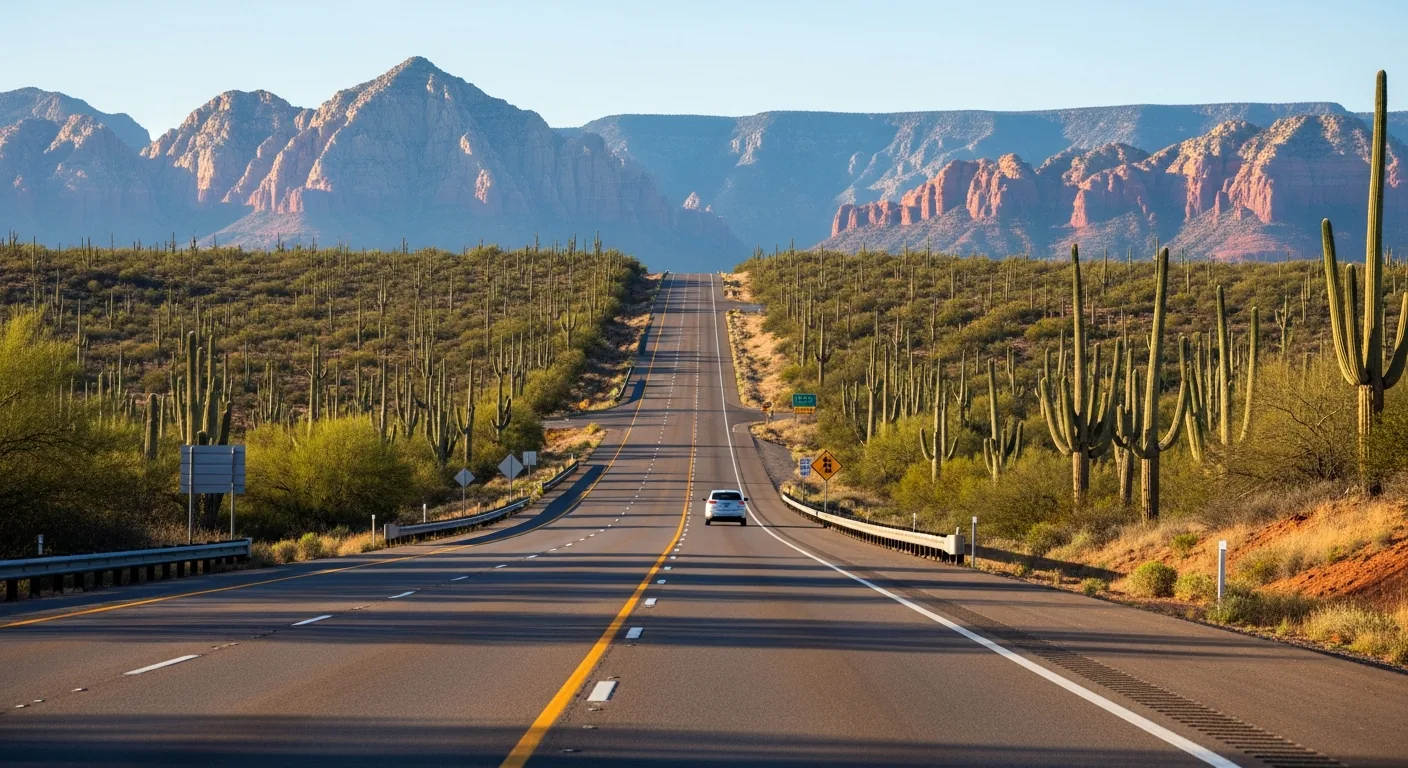
The route is about as simple as Arizona driving gets. From Tucson you take I-10 West toward Phoenix, pick up I-17 North on the west side of downtown, and ride it up the climb to Exit 298, where AZ-179 carries you the last 15 or so miles into Sedona past Bell Rock and Cathedral Rock. Total distance is about 232 miles, and mapping sites put the nonstop drive at roughly 3 hours 30 minutes to 4 hours depending on traffic and how you hit Phoenix.
That “how you hit Phoenix” part is the one variable worth planning around. I-10 through central Phoenix and the I-17 interchange is the only congested stretch of the whole trip. On a weekday, the afternoon rush builds from mid-afternoon into early evening, and it can add 30 to 45 minutes of stop-and-go if you time it badly.
For a Thursday departure, two windows work well:
| Departure from Tucson | Phoenix pass-through | Sedona arrival | Notes |
|---|---|---|---|
| Leave by 11 AM | Around 12:30–1 PM | About 3–3:30 PM | Clears Phoenix before the rush; arrive right around 4 PM check-in |
| Leave by 7 AM | Around 8:30–9 AM | About 10:30–11 AM | Misses the worst of morning traffic; leaves a Sedona afternoon for lunch and a short hike before check-in |
The late-morning option is the natural one for a group taking a half day off work: check-in at the house is 4 PM, so an 11 AM departure with one gas-and-snacks stop lands you at the door almost exactly on time. If your group is retired or works remote, the early start buys you a bonus afternoon — grab lunch in the Village of Oak Creek or Uptown, walk a flat trail, and check in at 4 with the hard part done.
The drive itself is a good one: saguaro desert outside Tucson, the flat Phoenix basin, then a long climb on I-17 through high desert grassland before AZ-179 drops you into red rock country. The Verde Valley overlooks on the descent are worth the slower right lane.
What changes at 4,350 feet
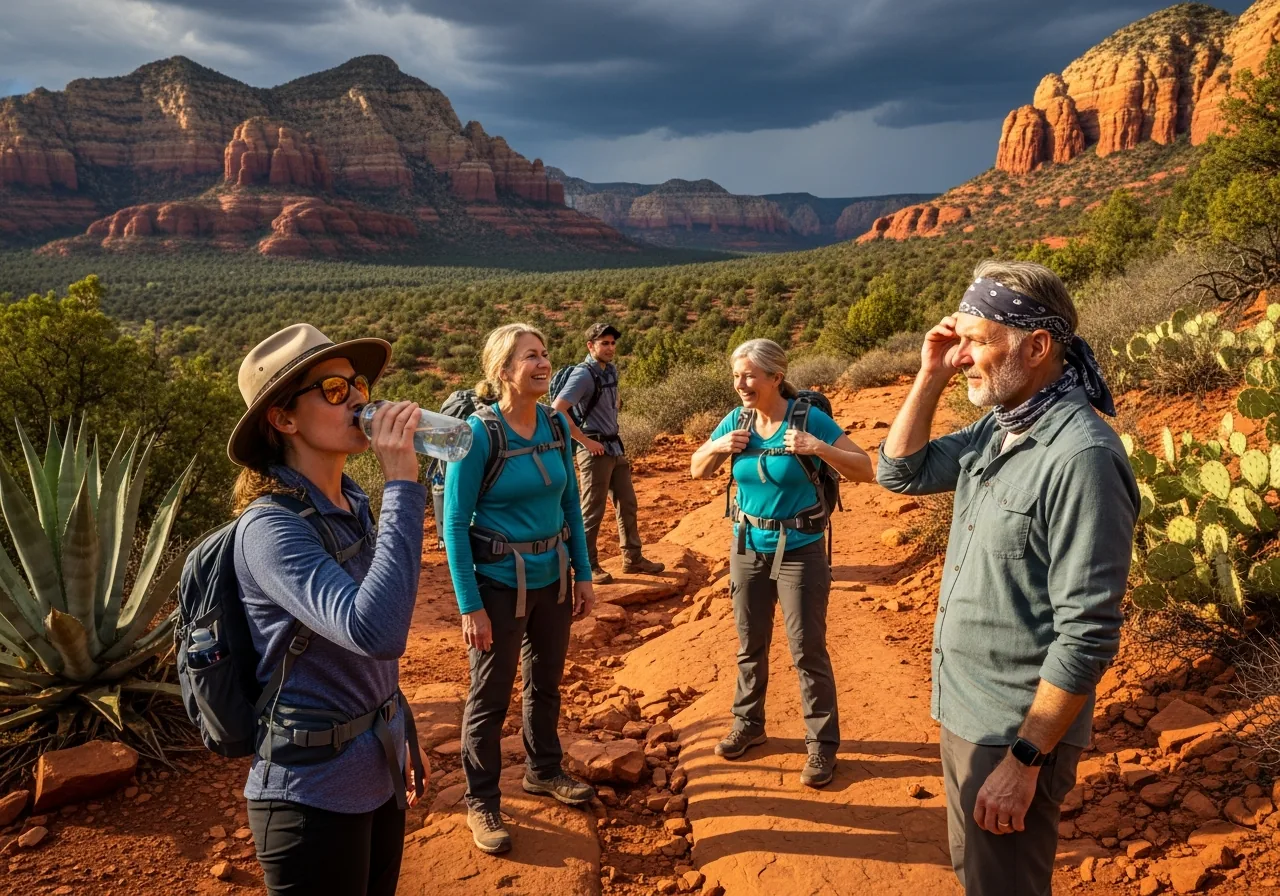
Sedona in July isn’t cool, exactly — average highs run around 96°F — but the shape of the day is completely different from Tucson’s. The number that matters is the overnight low: Sedona averages around 66°F on July nights, which means 6–9 AM feels like a Tucson morning in late October, and evenings on a deck are actually pleasant instead of something you endure. Tucson’s normal July high of 100.2°F comes with overnight temperatures that never really reset; Sedona’s elevation resets the day every night.
For pickleball specifically, three things change:
- Mornings and evenings are genuinely playable outdoors. Not “playable if you hydrate aggressively” — playable in the way Tucson gets in spring.
- The ball behaves a little differently. At 4,350 feet the air is thinner than at Tucson’s roughly 2,400 feet, so the ball comes through slightly faster and carries a touch more. Most players adjust within a game or two; just expect your first few drives to sail.
- None of it matters on this trip anyway, because the court you’re playing on is indoors with air conditioning. July afternoon monsoon storm rolling through? Doesn’t matter. 96°F at 2 PM? Doesn’t matter. The court plays the same at noon in July as it does at 9 PM in January.
That last point is the honest reason this trip works in summer. Sedona’s July afternoons still crack the mid-90s, and monsoon season brings real afternoon thunderstorms — July averages about 1.6 inches of rain, mostly in dramatic bursts. An outdoor-court trip in July would still mean scheduling around heat and weather. An indoor court means you schedule around nothing.
You already play — here’s how the home court compares
Tucson has a legitimately strong pickleball scene, which is exactly why this trip makes sense for a Tucson group. Morris K. Udall Park on the east side has a dozen dedicated outdoor courts, free to play, kept up largely through volunteer work by Tucson Area Pickleball — and if you’ve played there in summer, you know the courts are packed at 6 AM and again after 5:30 PM because those are the only humane hours. Kino Sports Complex on the south side runs 20 lighted competition-style courts and takes reservations. Between those two facilities, most serious Tucson players have plenty of places to play — from October through April.
The gap is summer, and the gap is privacy. Even at the best public facility, a group of six or eight is rotating through open play with strangers, negotiating court time, and working around everyone else’s schedule. On this trip, the court schedule is your group’s schedule. Round robin at 9 PM after dinner? Fine. Drills at 2 PM while a storm dumps rain outside? Fine. Nobody waiting on the fence, nobody’s music but yours. If part of your group’s motivation is escaping noise complaints or court politics back home, the quiet pickleball page explains why an indoor private court solves problems outdoor courts structurally can’t.
The Thursday–Sunday shape
Three nights is the sweet spot for this trip: long enough for a real hike day and a real rest day, short enough to only burn one day of PTO. Here’s a shape that has worked, adjustable to your group’s legs and appetite.
Thursday: drive up, settle in, night session
Leave Tucson by 11 AM, clear Phoenix by early afternoon, check in at 4 PM. Unload, claim bedrooms (two kings, a queen, and twin-over-twin bunks in the game room — sort that out before anyone gets attached), and get dinner early. West Sedona has plenty of casual options within a few minutes of the house; the Sedona restaurant guide sorts them by what you’re after.
Then the arrival-night court session. This is the moment the trip clicks: it’s 8:30 PM, you drove four hours today, and you’re playing pickleball in shorts under good lighting while it’s still 90-something in Tucson. Keep it light — an hour of casual games to shake out the drive. Save the competitive bracket for later in the weekend.
Friday: the big hike day
Go early, both for temperature and monsoon timing. Two good candidates depending on your group:
- Cathedral Rock — short but steep, about 1.2 miles round trip with sections of hands-and-feet scrambling. Big payoff for the effort, and you’re done by mid-morning.
- Soldier Pass — around 4.5 miles round trip past sinkholes, natural pools, and arches, with less scrambling. Better for mixed-fitness groups.
Back at the house by early afternoon for lunch, then the split most groups settle into naturally: some nap or soak, some play. Late afternoon is a good slot for structured court time — run a few games of king of the court or work through drills while the day’s storm (if one shows) rolls past outside. Evening: firepit, hot tub, whoever lost at cards does the dishes.
Saturday: the lazy Verde Valley day
The recovery day is what separates a good group trip from a forced march. The Verde Valley sits just below Sedona and fills a slow day perfectly. The classic version: drive 40 minutes over to Jerome, the former copper-mining town stacked on the side of Cleopatra Hill, for a couple of hours of wandering, then come back down through Cottonwood for a late lunch. If your group leans more wine than history, flip the day toward the Verde Valley wineries around Cottonwood and Cornville and appoint a driver.
You’ll be back by late afternoon with energy left, which is the point. Saturday evening is the night for the real competition — seed a bracket, run a proper round robin, settle whatever’s been simmering since Thursday. Nobody’s driving anywhere, the court is 30 feet from the kitchen, and checkout isn’t until Sunday.
Sunday: morning games and the drive home
Checkout is 10 AM, so the move is a 7 AM court session — the trip’s last games, winners buy coffee. Pack the cars, check out, and grab breakfast on the way out of town (the breakfast and brunch guide has the standbys). Leaving Sedona by 11 AM puts you through Phoenix in the early afternoon on a Sunday, which is about as painless as that stretch gets, and home in Tucson by 3 PM with time to unpack before the work week.
Making the group logistics painless
Carpool math: the house has free driveway parking for four cars and no street parking, so a group of eight fits comfortably in two vehicles — which also lets the group split on Saturday if half want wineries and half want the hot tub.
Who’s invited: guests must be 25 or older to book, and the house rules are no pets, no parties, no smoking. For the standing 6 AM crew at Udall or your Kino league group, that’s rarely an issue.
What to bring: court shoes (paddles and balls are provided at the house), hiking shoes, a layer for mornings — at 4,350 feet, even July mornings can start in the 60s, which no Tucson bag packed in July accounts for. Swimsuits for the hot tub and outdoor soaking tubs.
Money and planning: decide the split before anyone books anything. The group trip planning guide covers the whole framework — collecting money, meal planning, court scheduling — and most of it maps directly onto this weekend. If your dates are flexible, check availability a couple of months out; three-night weekends are the most common booking pattern, so holiday weekends go first.
Why this beats a Phoenix-area pickleball weekend
Worth addressing, since Phoenix is closer and has resorts with courts. Three reasons Sedona wins in summer: Phoenix in July is hotter than both Tucson and Sedona, so you’d be driving toward the heat. Resort courts are shared amenities with time limits; this one is private for the whole stay. And Sedona gives the non-pickleball hours — the hike, Jerome, the sunsets from the deck — a weight a metro resort weekend doesn’t have.
The drive costs you about 90 minutes more than north Scottsdale. What it buys is a house where the court, the kitchen, the hot tub, and the bunk room trash talk all happen under one roof, with nobody else on the schedule.
Frequently asked questions
How long is the drive from Tucson to Sedona?
About 232 miles, and most groups should plan on 3.5 to 4 hours. The route is I-10 West to Phoenix, I-17 North up the climb, then AZ-179 at Exit 298 into Sedona. The only traffic variable is metro Phoenix, so time your departure to pass through outside weekday rush hours.
Is Sedona actually cooler than Tucson in summer?
Daytime highs are only a few degrees apart in July — around 96°F in Sedona versus a normal 100.2°F in Tucson — but the nights are a different story. Sedona’s July overnight low averages around 66°F, so mornings and evenings are comfortable in a way Tucson’s aren’t from June through September. And the pickleball court at the house is indoors with air conditioning, so afternoon heat never touches your game schedule.
Do we need to bring pickleball gear from Tucson?
Bring your court shoes — that’s the one requirement. Paddles and balls are provided at the house. Most regulars bring their own paddles anyway, and a few extra balls never hurt, but nobody has to make a gear run before the trip.
What's the best day structure for a 3-night trip?
Arrive Thursday for check-in at 4 PM and play a light night session. Friday is the big hike day with court time in the late afternoon. Saturday is a slow Verde Valley day — Jerome or the Cottonwood-area wineries — with the competitive bracket that evening. Sunday is early-morning games, 10 AM checkout, and a Phoenix pass-through before the Sunday evening traffic builds.
Where do Tucson players usually play, and how does the house court compare?
Tucson’s big public options are Morris K. Udall Park on the east side, with a dozen free outdoor courts, and Kino Sports Complex on the south side, with 20 lighted courts. Both are good facilities with real summer limitations: outdoor surfaces, peak crowds at dawn and dusk, and shared court time. The house court is indoor, climate-controlled, and private to your group for the whole stay.
How many cars can we bring?
The driveway fits four cars free, and there’s no street parking. For a group of eight from Tucson, two vehicles is the practical setup — it also lets the group split up on the lazy day if half want wineries and half want the hot tub.
Play year-round in red rock country
Sedona Pickler is a private Sedona home with its own indoor, climate-controlled pickleball court. Rally any season, any hour — heated, cooled and lit, with paddles and balls provided.
Check dates & book