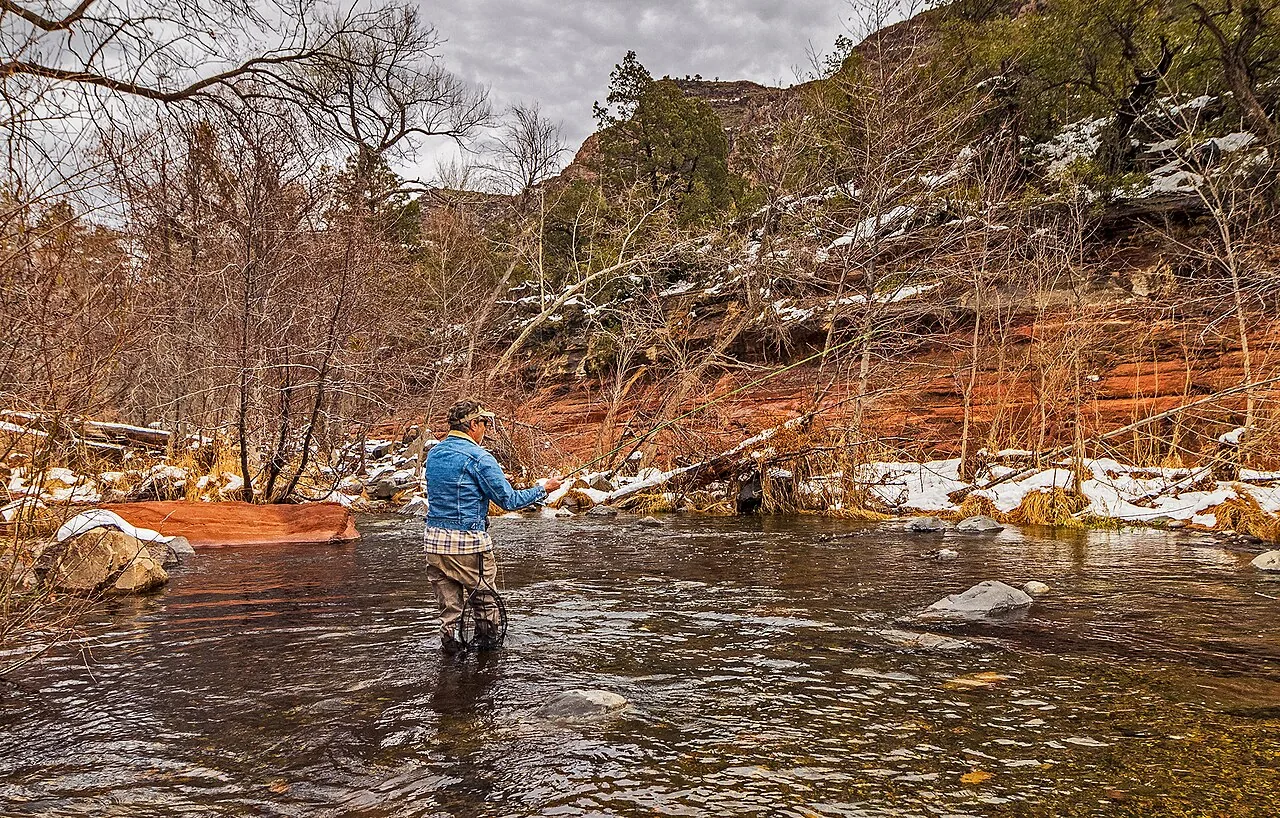
Ask ten people what a Sedona trip costs and you will get ten different numbers, because Sedona is not one price. It is a set of choices. The red rocks themselves are free. Most of the trails are free. The famous overlooks and the scenic drives cost nothing but gas. What you actually pay for is how you get here, where you sleep, how often you eat out, and which of the paid extras — a jeep tour, a balloon ride, a train through the canyon — you decide are worth it.
That is good news for a budget, because it means you have real control. Two couples can visit the same weekend and one spends $700 while the other spends $2,500, and both can have a great trip. The gap is almost never the scenery. It is the rental car class, the hotel-versus-rental decision, and how many dinners land on a restaurant bill instead of a kitchen counter.
This is a plain-English, category-by-category breakdown of what a Sedona trip runs in 2026 — getting there, lodging, passes and parking, activities, and food — with two sample budgets you can copy and adjust. Every dollar figure here is a rough range, not a quote, and prices move constantly, so treat these as planning numbers and check current rates before you book. We will also be honest about the single biggest lever most visitors miss: for a group, sharing one whole home with a kitchen is usually the cheapest comfortable way to do Sedona, and it is not close.
The five things that decide your Sedona budget
Before the line items, it helps to see the shape of the whole thing. Five decisions do most of the work on your final number, and they are roughly in order of impact:
- How many of you are splitting the fixed costs. A car, a home, and even some tours cost about the same for two people or six. The more people share them, the lower everyone’s share. This is why group trips are cheaper per person, and why a solo or two-person trip is the most expensive way to see Sedona per head.
- Where you sleep. Lodging is usually the biggest single line on the trip, and it swings the most — from a budget motel room to a luxury resort suite is close to a tenfold spread. This is also where a group’s whole-home rental changes the math the most.
- How you get here. Flights vary by where you start and when you book. On the ground, a rental car is close to mandatory, and the car plus gas is a real line you cannot skip unless you take the shuttle and stay put.
- How often you eat out. Restaurants are the quiet budget-killer. A group that cooks breakfast and half its dinners at the house can cut its food spend in half without feeling deprived.
- Which paid activities you choose. These are almost entirely optional. You can spend nothing on activities and still have a full, beautiful trip, or you can add a $300-per-person balloon ride. Both are valid; just know that this bucket is the one most within your control.
Get those five right and the rest is rounding. The sections below put rough 2026 numbers on each.
Getting there: flights, the rental car, and the shuttle option
Most visitors fly into Phoenix Sky Harbor (PHX) and drive up. It is about a two-hour trip covering roughly 120 miles, mostly up I-17, and it is a genuinely pretty drive once you climb off the desert floor. Flagstaff has its own airport (FLG) that is closer to Sedona — around 40 minutes away — but fares into Flagstaff are usually higher and the flight options are thinner, so most people still choose Phoenix and eat the extra driving time to save on airfare. Compare both before you book; once in a while the Flagstaff premium is small enough to be worth the shorter drive.
Flights are the wildcard. What you pay depends almost entirely on where you start and how far ahead you book, so there is no honest national number to give you. Someone flying from Denver or Dallas in a quiet month might pay a little; someone flying from the East Coast during spring break will pay a lot more. Set a fare alert, stay flexible on your travel days if you can, and price it yourself — that is the only figure that matters for your trip.
A rental car is essentially required. Sedona’s sights are spread across a wide area — trailheads, overlooks, the arts village, Oak Creek Canyon, the state park — and there is no comprehensive public transit connecting them. Budget for the car itself plus gas for the round trip from Phoenix and all the local driving, which adds up faster than people expect because you will drive somewhere almost every day. A standard car is fine for the paved sights; you do not need a 4x4 unless you plan to self-drive rough backcountry roads, and for the famous off-road spots a guided jeep tour is usually the smarter buy anyway. Our guide to getting around Sedona walks through the parking and driving details.
If you would rather not rent, there is one real alternative. Groome Transportation runs a shared shuttle between Phoenix Sky Harbor and Sedona, and as of 2026 it runs roughly $53 to $76 per person each way — reserve ahead, because seats are limited and it does sell out. The shuttle makes sense if you are staying in one place, plan to walk or use the occasional rideshare locally, and do not need to chase sunrise at a distant trailhead. For most groups who want to explore freely, though, the math and the flexibility still favor renting a car and splitting it. A single car shared four ways is cheaper per person than four shuttle fares each way, and it goes where you want when you want.
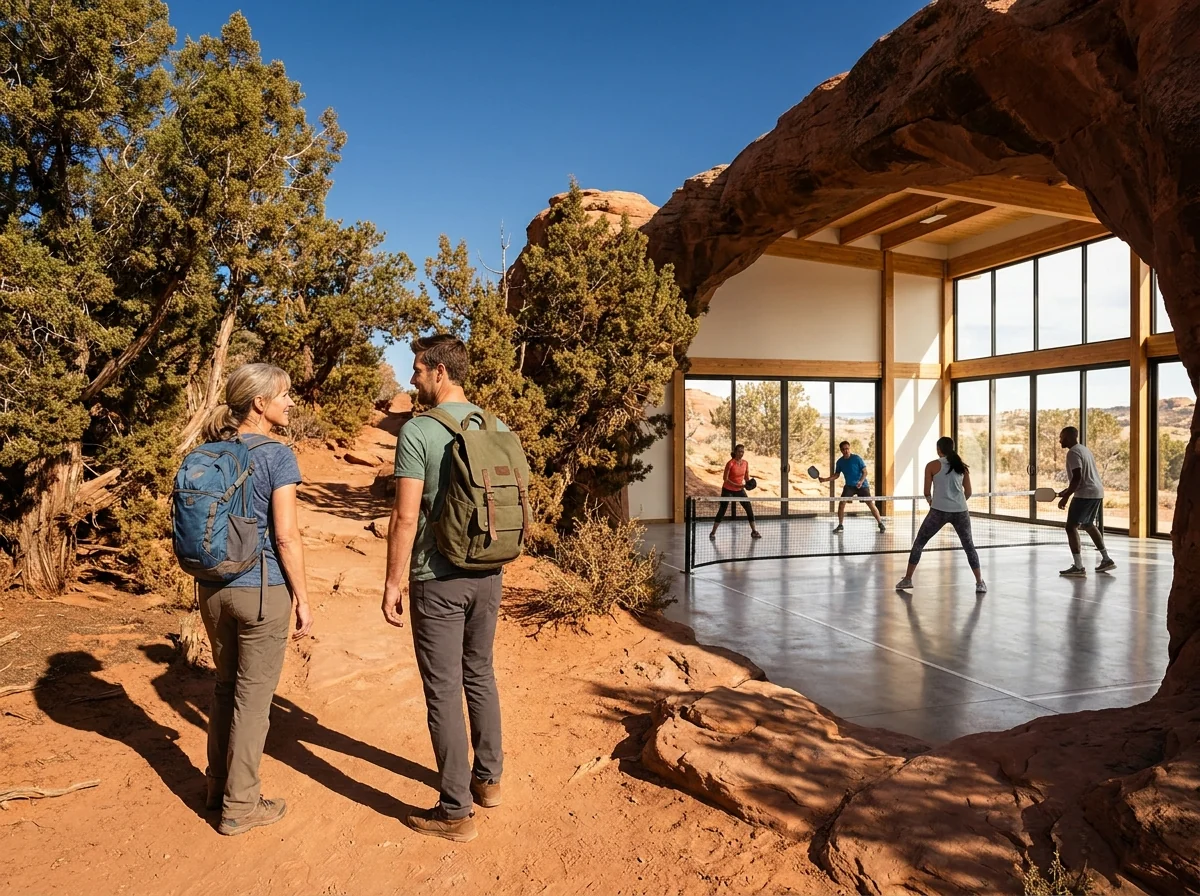
Where you sleep: hotels, resorts, and splitting a whole home
Lodging is where Sedona’s price range really opens up, and it is usually the biggest line on your trip. On the low end, there are budget motels and simpler chain hotels. In the middle, there are comfortable hotels and boutique inns. At the top, there are destination resorts and spa properties that can cost as much per night as some people’s monthly rent. All of them exist here, and all of them can be the right call depending on your trip and your group.
The honest way to think about lodging is not the sticker price per night. It is the cost per person, per night, for the whole group. That single reframe changes almost every decision.
Hotels charge by the room, and a room sleeps two comfortably. So a group of four needs two rooms, a group of six needs three, and a group of eight needs four. The per-night cost scales almost in lockstep with your group size, and you are paying resort rates for each of those rooms. You also get no kitchen, no shared living space to hang out in together, and often a resort fee stacked on top.
A whole-home vacation rental flips that math. You pay for one home, not one room per couple, and then you split it. A four-bedroom house that sleeps eight, divided among the people actually in it, very often lands below what two or three hotel rooms would cost for the same group — and it comes with a full kitchen, a living room, usually a hot tub or a firepit or a game room, and a place to eat breakfast together instead of scattering to a lobby. The more people you have and the more nights you stay, the more decisively the rental wins. It is generally the best value once you hit four-plus people and three-plus nights.
There are real tradeoffs, and we will name them. A hotel gives you daily housekeeping, a front desk, and the ability to book one room for one night without coordinating anyone. A rental asks you to organize the group, usually wants a multi-night minimum, and you make your own bed. If you are two people in for a single night, a hotel is often simpler and can be cheaper. But for a family or a friend group staying a few nights, the whole-home route is usually both nicer and cheaper per head. We lay out the full comparison in vacation rental vs. hotel in Sedona, and the broader case for renting a home in why rent a vacation home in Sedona.
We will not print a nightly rate here, because rates move with the season and the calendar and anything we quote would be stale by the time you read it. The reliable move is to price a specific home for your specific dates and divide by your group, then compare that per-person number to the stack of hotel rooms you would otherwise book. If you want to run that math on this house, check dates and see the total and split it by your group size.
Parking and passes: the small fees that surprise people
Here is a category people forget until they are standing at a trailhead reading a sign. Much of Sedona’s best hiking and viewing sits on Coconino National Forest land, and popular trailheads require a parking pass. The good news is that it is cheap.
- The Red Rock Pass is the local pass for trailhead and day-use parking. As of 2026 it runs about $5 for a day, $15 for a week, or $20 for a year. For most trips, the weekly pass is the obvious buy.
- If you already hold an America the Beautiful federal pass — the $80-a-year interagency pass — it covers most Forest Service day-use sites here in place of the Red Rock Pass. If you visit national parks and forests a few times a year anyway, it can pay for itself, and it will cover you at plenty of federal sites well beyond Sedona.
- Not everything is covered by those passes. Arizona state parks charge their own fee. Slide Rock State Park, the popular natural water slide in Oak Creek Canyon, charges a per-vehicle entry fee — roughly $30 per vehicle in summer (about May through August) and around $20 the rest of the year. That is per car, not per person, so carpooling helps. A few concessionaire-run spots also sit outside the federal passes. Our Slide Rock guide covers the seasonal fee and the best times to go.
- A lot of Sedona costs nothing to park at and nothing to enter. Many overlooks, pullouts along the scenic drives, and some trailheads are free. The Chapel of the Holy Cross is free to visit. Wandering the arts village costs only what you choose to buy.
The passes are small money, but the mismatch is the trap: buying the wrong one, or buying a federal pass and then getting charged again at the state park because you assumed it covered everything.
Things to do: what’s free and what you pay for
This is the most misunderstood part of a Sedona budget, so we will say it plainly: most of the best things to do in Sedona are free or nearly free. You do not have to buy a single tour to have a full trip.
Free or nearly free:
- Hiking. The trails are the main event, and once you have your parking pass, they cost nothing. Cathedral Rock, Bell Rock, Devil’s Bridge, the West Fork of Oak Creek — world-class hikes with no ticket booth.
- The vortex sites. The well-known energy sites are simply spots on public land; visiting them is free.
- Scenic drives. The Red Rock Scenic Byway and the drive up Oak Creek Canyon cost only gas, and they are genuinely among the best things you will do here.
- The Chapel of the Holy Cross. Free to enter.
- Sunrise and sunset viewing. The best show in town, every day, no charge. Pick an overlook and go.
- The arts village and uptown. Window-shopping and gallery-wandering cost nothing; you only spend if you choose to.
Where the money is (all optional):
- Jeep and off-road tours. The signature paid activity. A typical two-hour tour runs roughly $100 to $150 per person in 2026, with shorter trips costing less and full-day expeditions — say, out to Antelope Canyon and Horseshoe Bend — running $280 or more per person. Worth it for terrain you cannot reach in a rental car and a guide who knows the geology. See Sedona jeep tours for the range of operators and trip lengths.
- Hot air balloon rides. A sunrise balloon flight is the classic Sedona splurge, generally $275 to $400 per person as of 2026. Pricey, weather-dependent, and for many people worth every dollar once.
- The Verde Canyon Railroad. A scenic train ride through a canyon you cannot otherwise reach, starting from about $139 per person and climbing with the premium car classes.
- Wine tasting, spa treatments, and guided experiences. All available, all optional, all priced like the upscale experiences they are.
The pattern is clear. You can build a trip that spends nothing on activities and still fills every day, or you can add one or two paid experiences as the highlights. Our advice is to pick one splurge you will remember and do the rest for free, rather than stacking three expensive tours into a single weekend.
One timing note that affects both price and availability: Sedona’s peak seasons are spring and fall, when the weather is perfect, the crowds are thickest, and lodging and tours cost the most and book out earliest. Summer and winter are quieter and generally cheaper. If your dates are flexible, shifting to a shoulder or off-season window saves money on almost every line of this budget at once — the full breakdown is in our guide to the best time to visit.
Food: the easiest place to overspend (or save)
Food is the sneaky line item, because it is easy to spend without noticing — a coffee here, a $60 lunch there, a $200 group dinner — and it adds up to more than most people budget for. It is also the line you have the most day-to-day control over.
The range in Sedona runs from moderate to expensive. Casual spots — cafes, taco places, breakfast joints, brewpubs — are moderately priced and honestly some of the best eating in town. Sit-down mid-range restaurants are comparable to what you would pay in any tourist town. And the upscale rooms, especially the ones with red-rock views, climb fast; a dinner for two with drinks at the high end can rival a night’s lodging. All of that is available, and a great meal out is one of the more defensible splurges on a trip.
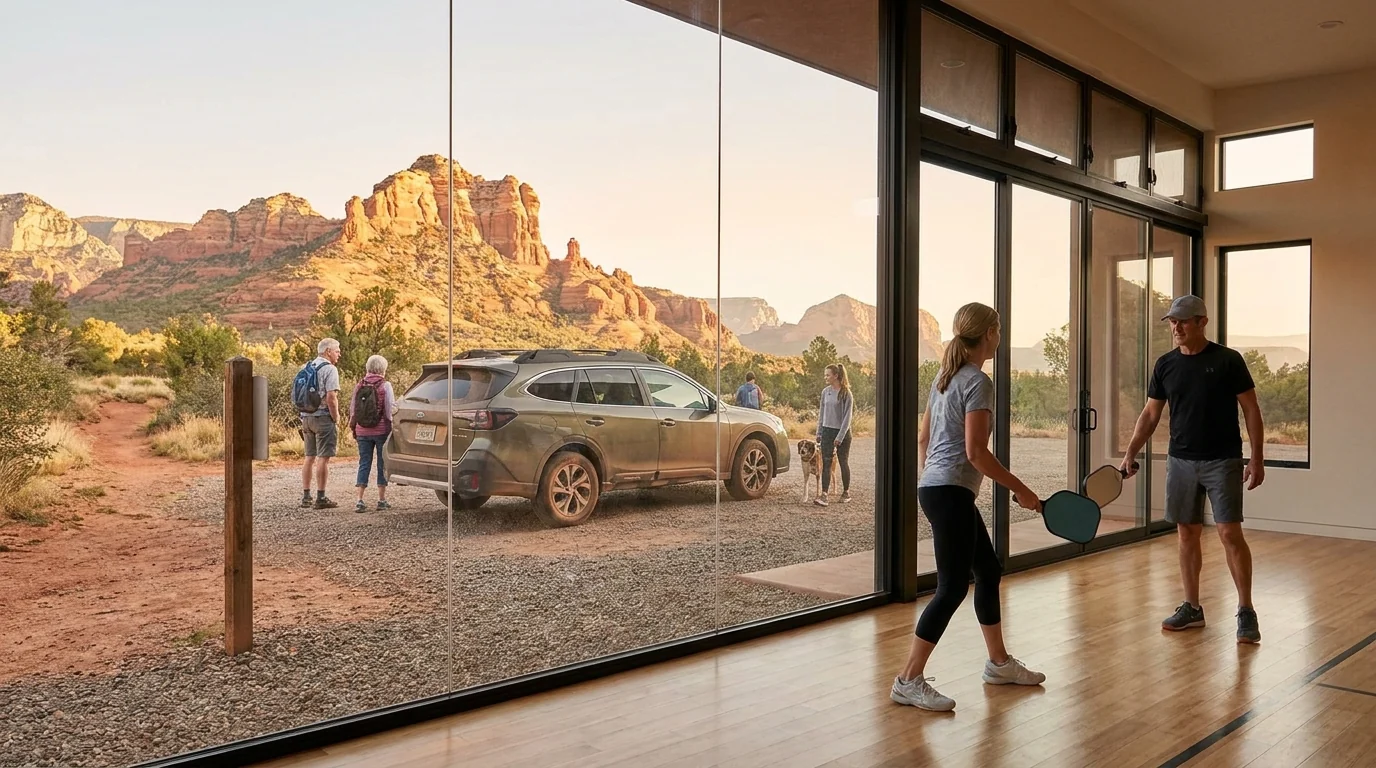
The single biggest food lever for a group is a kitchen. This is where a whole-home rental quietly pays for itself a second time. A group that cooks breakfast at the house every morning, packs sandwiches and snacks for the trail, and cooks dinner in a few nights — while still going out for a couple of memorable meals — will spend a fraction of what the same group spends eating three restaurant meals a day. You are not giving up the good dinners; you are cutting the forgettable ones. Grocery-store breakfast and trail lunches are cheap, fast, and often exactly what you want when you are up early to beat the crowds and the heat.
A few specific money-savers that add up:
- Bring or buy a case of water and reusable bottles. You will drink more than you expect in the dry, high-desert air, and refilling from the tap beats buying bottled water all day.
- Pack trail snacks from the grocery store, not the trailhead gift shop.
- Make breakfast the meal you always cook. It is the easiest to do at home and the most overpriced to buy every day.
- Pick your restaurant nights on purpose. Decide in advance which dinners are your “out” nights, so the group is not defaulting to a restaurant every evening because nobody planned otherwise.
None of this means eating badly. Sedona has food worth spending on. It means spending on the meals you will remember and cooking the ones you will not.
Two sample budgets (rough 2026 estimates)
Here are two illustrative budgets to make the numbers concrete. These are rough 2026 planning estimates, not quotes. Every figure is a range, prices move constantly, and your real numbers will depend on your dates, your origin airport, and your choices — so use these as a starting shape and replace each line with a real quote as you book. Flights are shown separately because they vary too much by origin to fold into a single number honestly.
Budget 1 — A weekend for two (2 nights, 3 days), on the ground:
| Item | Rough cost (couple) | Notes |
|---|---|---|
| Rental car + gas (3 days) | ~$150–300 | Standard car; more for an SUV |
| Lodging (2 nights, mid-range) | ~$250–650 | Wide swing by season and property |
| Red Rock Pass (weekly) | ~$15 | Covers Forest Service trailhead parking |
| Food (some cooking, casual meals, one nice dinner) | ~$200–400 | Add more for fine dining |
| One paid activity (two 2-hour jeep seats) | ~$200–300 | Or skip it and spend $0 here |
| Free hikes, drives, Chapel, sunsets | $0 | The bulk of the trip |
| On-the-ground subtotal | ~$800–1,650 | Excludes flights |
| Flights (2 people, round trip) | Varies widely | Price your own origin |
So a couple can realistically do a Sedona weekend on the ground for well under $1,000 if they cook a little, pick one activity, and travel in the off-season — or push past $1,600 with a nicer hotel and a couple of restaurant dinners. Neither is wrong.
Budget 2 — A group of eight, 4 nights, per person:
| Item | Rough cost (per person) | Notes |
|---|---|---|
| Rental car share (two vehicles, split 8) | ~$75–150 | Cheaper per head than the shuttle |
| Whole-home rental, 4 nights, split 8 ways | ~$150–400 | Varies a lot by season and home |
| Red Rock Pass (weekly, per vehicle, split) | ~$2–4 | $15 divided by the people in each car |
| Groceries plus a couple of dinners out | ~$120–220 | Cooking most meals is the saver |
| One or two paid activities | ~$100–250 | Optional; pick your highlights |
| Free hikes, drives, Chapel, sunsets | $0 | Still the main event |
| Per-person subtotal | ~$450–1,000 | Excludes flights |
| Flights (per person, round trip) | Varies widely | Price your own origin |
Put the two subtotals side by side and the whole argument of this article shows up in the math: the group of eight, sharing a home and a couple of cars and a kitchen, can come in around $450 to $1,000 per person for four nights, while the couple pays nearly that much each for a long weekend. Fixed costs split more ways get cheaper per person, every time. If you are organizing the group, our pickleball group trip planning guide covers how to divide costs, collect money, and keep the logistics from falling on one person.
The biggest money-saving moves
If you want to spend less without your trip feeling smaller, these are the moves that actually shift the number, in order:
- Split a whole-home rental instead of booking hotel rooms. This is the biggest single lever for any group of four or more. One home divided by your group beats a stack of rooms at resort rates, and it comes with everything the rooms do not.
- Cook in. A kitchen turns the second-biggest budget line — food — into a fraction of itself. Breakfast every morning and dinner a few nights, with a couple of restaurant meals kept as the highlights.
- Do the free stuff, which is most of the good stuff. Hikes, scenic drives, the Chapel, sunrise and sunset overlooks, the arts village. Build the trip around these and treat paid activities as occasional extras.
- Go in the shoulder or off-season. Peak spring and fall cost the most and book out first. Summer and winter are quieter and cheaper across lodging, tours, and sometimes flights. Winter especially is underrated — clear, crisp, and far less crowded; our snowbird guide to wintering in Sedona makes the case.
- Buy the right parking pass and carpool. The $15 weekly Red Rock Pass covers most trailheads; carpooling means fewer vehicles paying the state-park fee and less gas per person.
- Share the car. One or two rentals split among a group is far cheaper per person than individual shuttle fares, and it goes where you want.
Stack those and the savings compound. The same group that would spend heavily on separate hotel rooms and three restaurant meals a day can cut the trip cost dramatically by sharing a home, cooking most meals, and building the days around free hikes — without giving up a single view.
Where it’s worth spending
Saving money everywhere is not the goal; spending it well is. A trip that cuts every corner can feel thin, and Sedona has a few things genuinely worth paying for. The trick is to choose your splurge on purpose instead of leaking money across a dozen small ones.
Pick one big experience. For most people that is either the sunrise hot air balloon ride (roughly $275–400 per person in 2026, and one of the more memorable mornings you can buy anywhere — see hot air balloon rides) or a jeep tour out to terrain you cannot otherwise reach. One of these as the centerpiece of the trip is money well spent. Two or three stacked into one weekend is where it starts to feel like you are just spending.
Spend on one great dinner. Sedona has restaurants with real cooking and real views, and one standout meal is a better memory than three mediocre ones. Book the nice dinner, cook the other nights, and enjoy it without the running tab.
Spend on time, not stuff. The souvenir bill in the arts village is easy to run up and easy to forget. If you are going to spend, spend on an experience you will still be talking about — the flight, the guided drive, the meal — rather than on things that end up in a drawer.
Do not skimp on water, snacks, or the right shoes. These are cheap, and being under-provisioned in the high desert is the one place where saving money actively makes the trip worse. Buy the case of water. Pack the snacks. Wear real hiking shoes.
The honest rule of thumb: be frugal on the things that repeat every day — the lodging split, the meals, the parking — and generous on the one or two experiences you will remember for years.
The bottom line
So, how much does a Sedona trip cost? Honestly, whatever you decide it does. The land is free, the trails are cheap, and the views cost nothing, which means your budget is set almost entirely by the choices around them: how many of you split the fixed costs, where you sleep, how often you eat out, and which optional extras you say yes to.
A couple can do a comfortable long weekend for well under $1,000 on the ground, or spend two or three times that with a resort and nightly dinners out. A group of eight sharing a home can land somewhere around $450 to $1,000 per person for four nights — and that group, splitting one whole home with a kitchen, is usually the cheapest comfortable way to see Sedona. The per-person math simply favors sharing, every time.
Whatever your number, treat every figure here as a rough 2026 range and check current rates before you book, because prices move and these are planning estimates, not quotes. Get the big levers right — share the fixed costs, cook some meals, build the days around free scenery, and pick one splurge worth remembering — and Sedona turns out to be one of the more affordable world-class trips you can take. When you are ready to price it for your group, check current dates and rates.
Frequently asked questions
Is Sedona expensive?
It can be, but it does not have to be. The scenery, hiking, scenic drives, and the Chapel of the Holy Cross are free, and a roughly $15 weekly parking pass covers most trailheads. Your budget is driven by lodging, food, and optional tours, so a group that shares a home, cooks some meals, and sticks to free hikes can visit affordably, while a couple at a resort eating out nightly will spend far more.
How much does a Sedona trip cost for a group or family?
As a rough 2026 estimate, a group of eight sharing a whole-home rental for four nights can come in around $450 to $1,000 per person before flights, because the home, the cars, and the kitchen all split across everyone. Cooking most meals and choosing one or two paid activities keeps it near the low end. These are planning ranges, not quotes — price your specific dates and divide by your group.
Do you have to pay to hike in Sedona?
The trails themselves are free, but many popular trailheads on Coconino National Forest land require a parking pass. A Red Rock Pass runs about $5 a day or $15 a week as of 2026, and an $80 America the Beautiful federal pass also covers most Forest Service sites. Plenty of overlooks and some trailheads are free to park at, while Slide Rock State Park charges its own separate vehicle fee.
What is the cheapest way to visit Sedona?
Bring a group, split a whole-home rental with a kitchen, cook most of your meals, build your days around free hikes and scenic drives, share one or two rental cars, and travel in the shoulder or off-season. Those moves attack the biggest lines — lodging and food — at the same time. The per-person cost of sharing fixed expenses is what makes a group trip the cheapest comfortable way to go.
Do I need a rental car in Sedona?
For most visitors, yes. The sights are spread out and there is no comprehensive public transit connecting them, so a car plus gas is close to a required line in the budget. The main alternative is the Groome shuttle from Phoenix — roughly $53 to $76 per person each way in 2026 — which works if you are staying put, but a shared rental car is usually cheaper per person for a group and far more flexible.
Is a Red Rock Pass required, and does my national parks pass cover it?
A Red Rock Pass or a valid federal pass is required to park at many Sedona trailheads and day-use sites. An America the Beautiful federal pass does cover most Forest Service sites here in place of the Red Rock Pass. Neither one covers Arizona state parks, though, so you will still pay Slide Rock State Park’s separate vehicle fee — about $30 in summer and $20 off-season as of 2026.
Play year-round in red rock country
Sedona Pickler is a private Sedona home with its own indoor, climate-controlled pickleball court. Rally any season, any hour — heated, cooled and lit, with paddles and balls provided.
Check dates & book