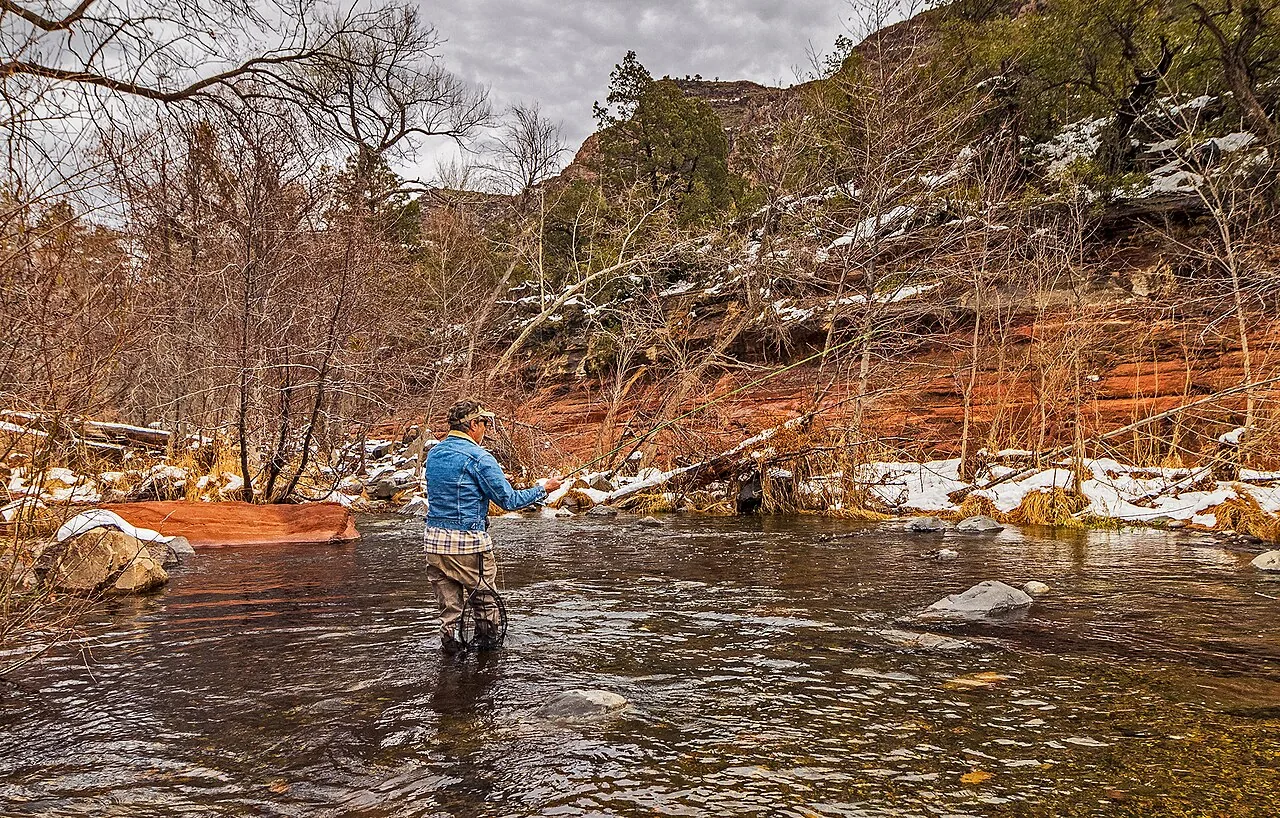
Sedona lands on almost every “best hikes in America” list, and that reputation does something unfortunate: it convinces a lot of people that if they can’t hike, the town isn’t for them. That’s just not true. The red rocks that make this place famous are enormous, close to the road, and visible from all over town. You can spend three full days here, see the scenery that fills the postcards, and never set foot on a real trail.
This guide is for the travelers the hiking articles leave out. Maybe your knees are done with switchbacks. Maybe you’re traveling with a parent who uses a walker, or a toddler who lasts about four minutes on any path. Maybe you’d simply rather sip a coffee at an overlook than earn the view with a climb. Whatever the reason, Sedona has far more to offer non-hikers than most first-time visitors realize, and a surprising amount of it is free, flat, and genuinely spectacular.
We’ll walk through the scenic drives where the best views are a windshield away, the overlooks you can drive right up to, the famous chapel with a paved path instead of a trail, the arts village under the sycamores, and the guided rides that do the getting-out-there for you: a trolley, a jeep, a train, even a balloon. We’ll be straight with you about what “easy” really means, where parking gets tight, and what to check before you go. Then, because so many of you travel in mixed groups, we’ll cover how to plan a trip where the hikers hike and everyone else has an equally good day.
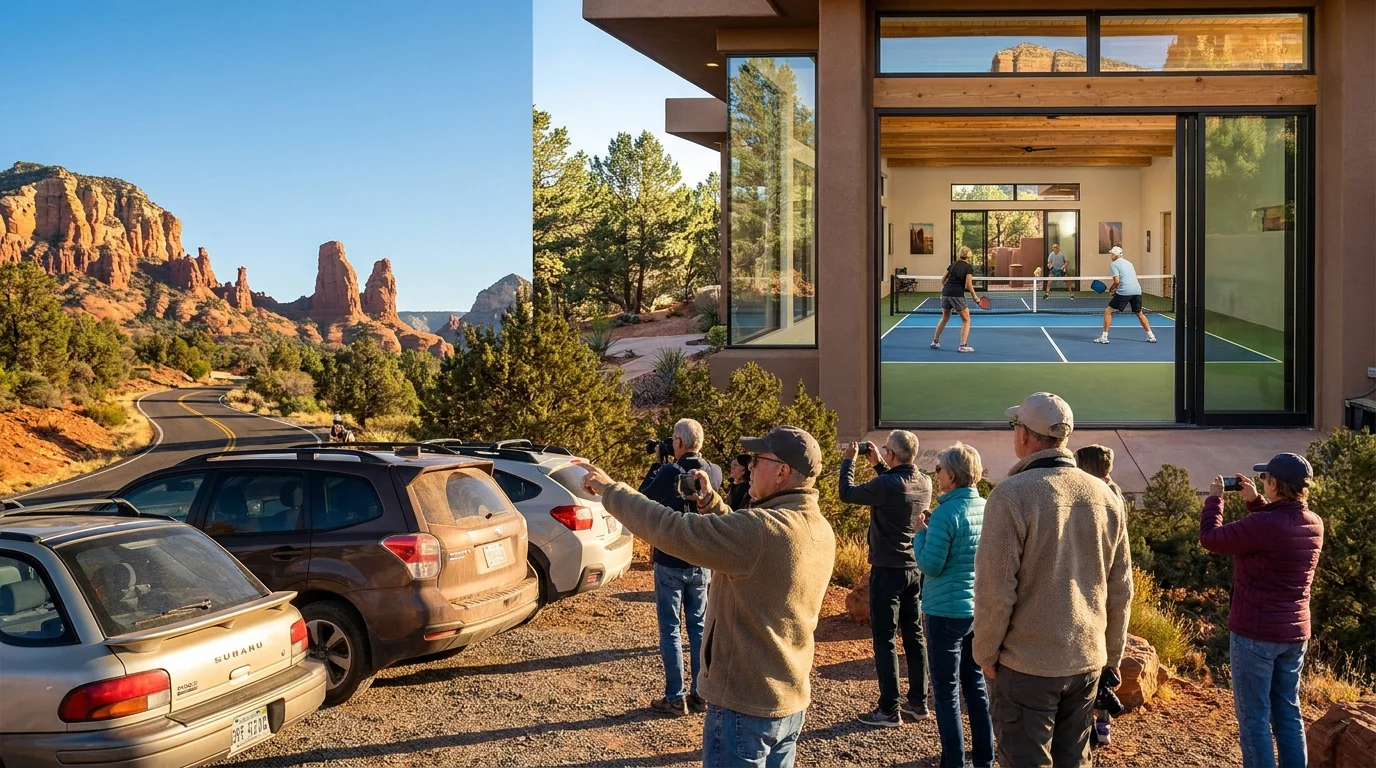
The red rocks come to you: Sedona’s three scenic drives
Here is the single most useful fact for a non-hiker planning a Sedona trip: the scenery is roadside. Sedona’s geography does you an enormous favor. The big formations — the buttes, the spires, the canyon walls — sit right along the main roads, not miles back in the wilderness. That means the highest-value thing you can do here needs nothing more than a car, a tank of gas, and a willingness to pull over often. Three drives cover most of the greatest hits, and you can do all three in a relaxed day or spread them across a trip.
The Red Rock Scenic Byway (State Route 179). If you do only one drive, make it this one. It runs about 7.5 miles through the heart of the red-rock country south of the Village of Oak Creek, and it isn’t just pretty by accident. It carries the country’s top scenic designation, an All-American Road, which is the highest tier in the national byway system. The route passes close to Bell Rock and Courthouse Butte, two of the most recognizable formations in the area, and there are roadside pullouts and small parking areas where you can stop, get out, stretch, and simply look. You can drive the whole thing in fifteen unhurried minutes or turn it into an afternoon of short stops. Our Red Rock Scenic Byway guide has the details, including which pullouts are easiest to reach. One heads-up: many of those parking areas ask for a Red Rock Pass, which we cover further down.
Oak Creek Canyon Scenic Drive (State Route 89A, north of Uptown). This is the cool, green counterpoint to the red-rock drive. Heading north out of Uptown Sedona, 89A follows Oak Creek up into a forested canyon, trading open red rock for shade, running water, and tall canyon walls. It’s a favorite in summer because the temperature drops noticeably as you climb, and in fall because the canyon fills with color. The road climbs a set of switchbacks near the top of the canyon, where there’s a well-known pull-off with a long view back down. You never have to leave the car to enjoy it, though there are picnic spots and pull-offs if you’d like to sit by the creek. See our Oak Creek Canyon drive write-up for stops along the way.
Red Rock Loop Road. This one is a roughly 13-mile round trip that swings you past some of the most photographed angles on Cathedral Rock. It also leads to the Crescent Moon area, the day-use spot along Oak Creek known as Red Rock Crossing, where one of the classic creekside views of Cathedral Rock sits a short, mostly level walk from the parking area. There’s a small day-use fee to enter Crescent Moon, and it’s separate from the Red Rock Pass. If a short stroll to a bench by the water sounds good, this is the drive that rewards it; if not, the road itself still delivers the views.
| Drive | Route | Length | You’ll see | Good to know |
|---|---|---|---|---|
| Red Rock Scenic Byway | SR 179 | ~7.5 miles one way | Bell Rock, Courthouse Butte | All-American Road; roadside pullouts; Red Rock Pass at many lots |
| Oak Creek Canyon | SR 89A north of Uptown | Canyon drive, varies | Forested canyon, Oak Creek, top-of-canyon vista | Cooler and shaded; best in summer heat and fall color |
| Red Rock Loop Road | Red Rock Loop Rd | ~13 miles round trip | Cathedral Rock, Red Rock Crossing | Small separate day-use fee at Crescent Moon area |
The honest summary: between these three roads, you can see the formations that put Sedona on the map without walking more than the distance from a parking spot to a viewpoint. Go slowly, roll the windows down, and give yourself permission to turn around and do a stretch twice if the light changes.
Overlooks you can drive right up to
A few of Sedona’s best panoramas don’t require a drive at all so much as a short climb in the car. The best known is the Airport Mesa overlook. Sedona’s airport sits on top of a long ridge near the middle of town, and the road climbs up to a panoramic viewpoint that takes in red rocks in nearly every direction. The airport itself is general-aviation only, so there’s nothing there to tour, but the overlook is the real draw, and it’s one of the most popular sunset spots in town for a reason.
That popularity is the catch. On a clear evening the parking near the top fills well before the sun goes down, and the approach road can back up. If sunset is your goal, treat it like getting to a concert: arrive early, be patient, and have a backup. The good news is that Sedona hands out sunset views generously, and you don’t have to fight for the marquee spot. Many of the roadside pullouts along the Red Rock Scenic Byway face west or catch the last light beautifully on the rock faces, and you can watch the whole show from a folding chair beside your car. Our guide to the best sunset spots around town lists a range of them, including ones with easy parking and level ground.
A practical note on timing: the rocks often look their richest not at the exact moment of sunset but in the twenty or thirty minutes before it, when the low sun sets the stone glowing. Get in position early and you’ll catch that window whether or not you snag the most famous parking lot.
The Chapel of the Holy Cross
If there is one built attraction that belongs at the top of a non-hiker’s Sedona list, this is it. The Chapel of the Holy Cross is a striking modern chapel set directly into the red rock, opened in 1956, and it has become one of the most visited and most photographed places in the region. Admission is free. It is a working chapel and a quiet, welcoming space, and the views from its setting are the kind people plan a whole day around.
Here is the part that matters most for this guide: getting to it is a walk, not a hike. A paved, ramped path leads up from the parking lot to the chapel. It does climb, so it isn’t dead flat, but it’s a designed walkway rather than a trail, and the chapel offers wheelchair and golf-cart assistance for visitors who need help with the grade. If that applies to you or someone in your group, it’s worth a quick call ahead so they know you’re coming.
The genuine challenge here is parking, not walking. The lot holds only about 45 vehicles, and demand far outstrips that on a nice day. The fix is timing. Come early in the morning or later in the afternoon and you’ll have a much easier time; roll up at midday in peak season and you may circle for a while or get turned away. Build the chapel into your plan as a first stop or a late-day one rather than a midday drop-in. Our Chapel of the Holy Cross guide has current visiting hours and more on the accessibility assistance.
One more honest word: because it’s beloved, it’s rarely empty. If you’re hoping for a peaceful moment, the early slot does double duty, thinner crowds and easier parking at the same time.
Tlaquepaque and the arts district
When you want beauty without any climb at all, Tlaquepaque Arts & Shopping Village is the answer. It has been a Sedona landmark since the 1970s, a village of galleries, shops, restaurants, and shaded courtyards built along Oak Creek beneath tall sycamores. The whole point of the place is to wander slowly, duck into an air-conditioned gallery, sit on a bench in the shade, and have a long lunch. It is arguably the most restful few hours a non-hiker can spend in Sedona, and it costs nothing to walk through.
There’s accessible parking and there are accessible restrooms on site. We’ll be straight about one thing, because it matters: the village is built with cobblestone and paver paths, and those surfaces can be uneven for wheelchairs and strollers in spots. It’s very doable, but if smooth footing is important for someone in your group, call ahead and ask about the easiest routes between courtyards; the staff know which paths are gentlest and where to enter. Our Tlaquepaque guide covers parking, the layout, and where to eat.
Tlaquepaque isn’t the only place to browse. Uptown Sedona is packed with galleries, shops, and cafes along a walkable, mostly level main stretch, and the town’s wider arts scene gives you plenty of indoor, climate-controlled places to spend a hot afternoon. That also makes this district your best friend on a rainy or too-hot day; our rainy-day Sedona guide leans heavily on exactly these spots. Shade, art, coffee, and a creek: it’s a full, satisfying day that never asks anything of your knees.
Let someone else drive: trolley, jeep, balloon, and train
Sometimes the best way to get out among the scenery is to let a guide handle the getting-there while you sit back and look. Sedona has a whole category of experiences built on exactly that idea, and they range from gentle to adventurous.
-
Narrated trolley tours. A classic no-walking option. Open-air trolley tours loop past the sights with live narration, so you learn the names and the stories without covering any ground on foot. One important accessibility note: the standard Sedona Trolley is not wheelchair accessible. A separate operator in town runs an accessible trolley, so if you need a lift or ramp, call ahead and book with the right company rather than assuming; it’s worth the phone call to line up the correct vehicle.
-
Jeep tours. This is how you get out into the rough backcountry without hiking it. A guide drives you over terrain you’d otherwise have to walk, and you take in the up-close red rock from your seat. It’s the closest a non-hiker can get to the “out there” feeling of a trail. Fair warning: the ride is genuinely bumpy by design, since that’s the appeal. If anyone in your group has back, neck, or other concerns, ask the operator about their gentler routes and which vehicles have the most supportive seating. Our jeep tours guide breaks down the different tour styles.
-
A hot-air balloon ride. For the biggest view of all, go up. A dawn balloon flight shows you the red rocks from above, floating and quiet, with no walking involved once you’re aloft. Do note that you ride standing in the basket and have to step in and out of it, so if mobility is a concern, call the operator and ask directly about boarding; some can accommodate more than others. Flights launch early, when the air is calm. See our hot-air balloon guide for what to expect.
-
The Verde Canyon Railroad. This one is a favorite for exactly the audience this article is written for. It’s a roughly four-hour narrated scenic train ride that departs from Clarkdale, about 45 minutes from Sedona, and carries you through canyon country you can’t easily reach any other way. You sit, you watch, and open-air viewing cars let you feel the scenery without walking to it. Tickets start around $139 as of 2026, though prices change and premium cars cost more, so check current rates and book ahead, especially in the busy seasons. It’s a genuinely relaxing half-day and one of the best no-hiking ways to see canyon scenery in the whole region. Our Verde Canyon Railroad guide covers seating classes and how to plan the drive over.
Any one of these can anchor a day. Two of them, say a morning trolley loop and an afternoon at Tlaquepaque, make a full and easy itinerary with zero trail time.
Wellness and wine
Sedona has a deep well of slow-paced pleasures that have nothing to do with elevation gain. It’s long been a wellness destination, and the town is full of spas, from resort day-spas to smaller independent studios, offering massage, soaking, and quiet. A spa morning is a perfectly legitimate way to spend part of a Sedona trip, and for many visitors it’s the whole point. Our spas and wellness guide rounds up options across price ranges.
Then there’s the wine. The Verde Valley below Sedona has grown into a real wine region, with tasting rooms clustered in Old Town Cottonwood and scattered across the valley, most of them an easy, flat walk from a parking spot or from each other. A tasting-room afternoon pairs beautifully with a morning drive: see the rocks from the car, then settle into a comfortable chair with a flight. The only rule is the obvious one, so plan a designated driver or book a wine-tour van that handles the driving for you. Our wineries guide lists tasting rooms and the towns to base yourself in.
Put those two together and you have a template for a wonderful non-hiking day: a spa in the morning, lunch, and wine in the afternoon, with a scenic drive threaded between them. No trail required, and you’ll sleep well that night.
Gentle strolls that aren’t real hikes
Maybe you don’t want zero walking. Maybe you’d like a little movement and some ground under your feet, just nothing that qualifies as a climb. Sedona has options here too, but this is exactly the place where we have to be careful with words, because “easy” in a hiking article can still mean uneven rock, no railings, full sun, and a mile of it.
A few paths are honestly gentler than the rest. Parts of the Bell Rock Pathway, for example, are wide, well-graded, and mostly level, which lets you get out near a famous formation on relatively forgiving ground and turn back whenever you like. Some resort grounds and creekside paths offer short, shaded, mostly flat walking as well. The key word in all of this is “gentler,” not “flat” or “paved.” We won’t tell you any of these are fully accessible end to end, because conditions and surfaces vary and only the current, on-the-ground reality counts.
So here’s the honest approach: treat these as strolls you can sample and abandon freely. Go a few hundred yards, see how it feels, and turn around with no guilt if the footing or the grade isn’t right that day. Wear real shoes, bring water, and go in the cooler hours. Our easy hikes guide describes the gentler routes in more detail, and it’s the right place to check specifics before you count on any single path for your needs.
One more piece of housekeeping that applies to trailhead and pullout parking: many of these lots require a Red Rock Pass. More on that next.
Accessibility and logistics
A little planning removes most of the friction from a non-hiking Sedona trip. Here are the practical pieces worth knowing before you go.
- The Red Rock Pass. Many trailhead and scenic-pullout parking areas around Sedona require a Red Rock Pass, which runs about $5 for a day. You can buy one at self-serve machines at the lots, at the visitor center, and online. You generally don’t need it just to drive the roads or to park at businesses, restaurants, or Tlaquepaque, but the moment you pull into a Forest Service pullout or trailhead lot, you’ll want one on the dash. The Crescent Moon day-use area charges its own separate fee.
- Parking fills early, everywhere. This is the recurring theme of a Sedona visit. The popular lots, the chapel, and the sunset overlooks all fill up, and there is no trick that beats simply going early or late. Mornings are cooler, calmer, and far easier for parking; the last couple of hours before sunset are the second-best window.
- Elevation and heat are real. Sedona sits at roughly 4,350 feet. The air is a little thinner than most visitors are used to, and the high-desert sun is strong. None of this is dramatic, but it means you should take the drives at a relaxed pace, drink more water than you think you need, and not schedule a packed day the moment you arrive. Give yourself a slow first day.
- Call ahead for anything mobility-related. Accessibility assistance, accessible vehicles, and the smoothest routes are all things the venues and operators know best, and they change. A five-minute phone call is the single most reliable planning tool you have.
A rental car makes all of this far easier, since the drives and overlooks are the heart of a non-hiking Sedona trip and most sit a short drive apart. If someone in your group would rather not drive, look into shuttle and tour options before you arrive so the whole day doesn’t hinge on one driver.
Planning a trip for a mixed-ability group
A lot of Sedona trips aren’t all-hikers or all-non-hikers. They’re a mix: one person wants to summit something at dawn, another can’t manage stairs, a couple of kids need a nap by two o’clock, and grandma wants a good chair and a great view. The mistake groups make is trying to force everyone onto the same schedule, which usually satisfies no one. Sedona is unusually good at letting a group split up during the day and come back together at night.
Think of it as one base camp and two kinds of day. The hikers can chase their trail early, while everyone else takes the scenic byway, visits the chapel, and settles in for a long lunch and some gallery browsing at Tlaquepaque. Add a spa appointment or a tasting-room afternoon and the non-hikers have a full, rich day of their own, not a consolation prize. The trick that makes it work is a shared home base rather than separate hotel rooms with separate schedules, so the group has a natural place to reconvene and compare days.
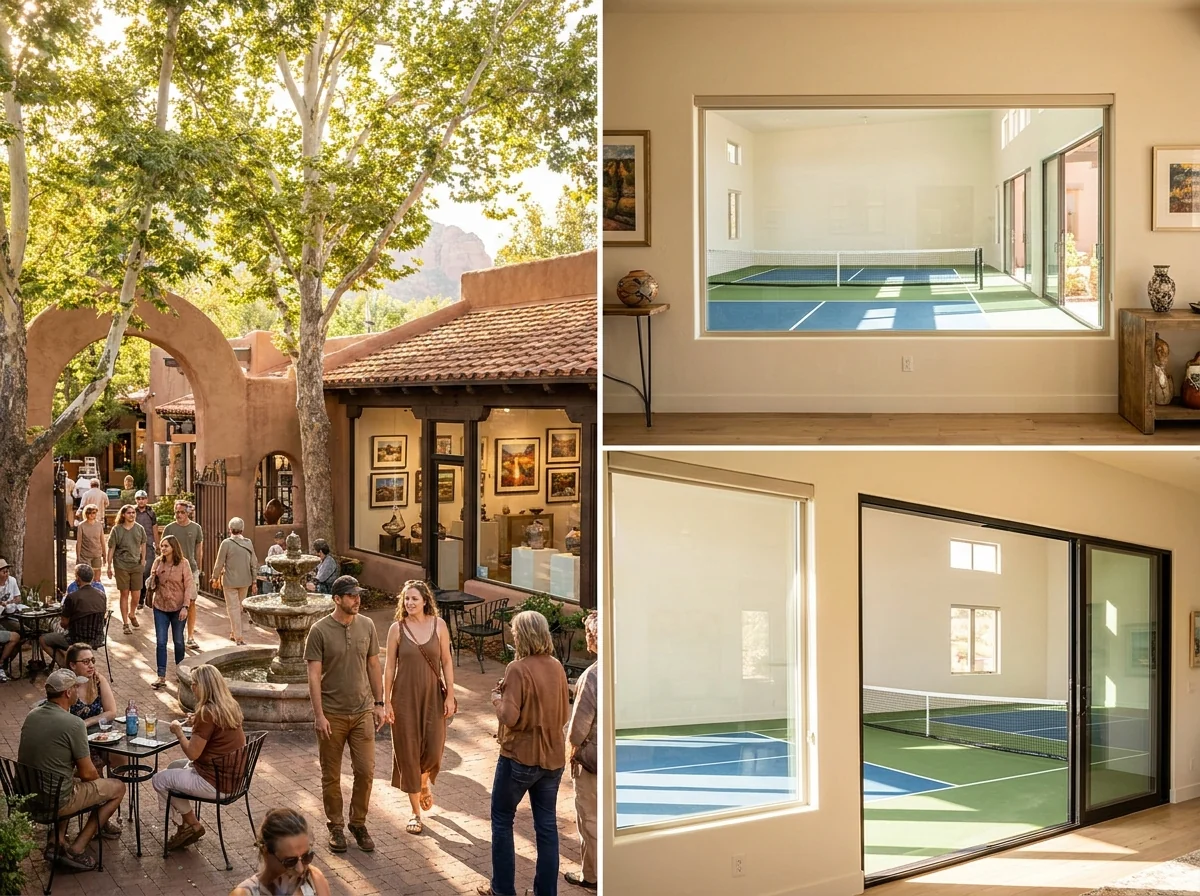
That last point is worth underlining for this audience, because “non-hiker” doesn’t have to mean “inactive.” A relaxed game of pickleball on a flat, climate-controlled indoor court is a genuinely low-impact way to move around, laugh, and get some exercise without a single rock or incline involved, and it puts everyone on the same court at the end of the day, hikers and non-hikers alike. When you’re ready to price it out for your group, check dates and see how the calendar lines up.
The bottom line
You do not have to hike to fall for Sedona. The formations are big, they’re close to the road, and the best of them come to you through a windshield, from a chapel terrace, along a shaded shopping village, out the window of a scenic train, or from a folding chair at a sunset pullout. Add a spa, a tasting room, a jeep, or a balloon and you have days that are full, beautiful, and easy on the body. Be honest about grades and surfaces, call ahead for anything accessibility-related, buy the Red Rock Pass, and go early to beat the parking, and the town opens right up.
If you’re traveling with a mixed group, a private home makes the whole thing simple: everyone spends the day at their own speed and reconvenes at night. When you’re ready to plan it, check dates and build the trip around the Sedona you actually want, climb optional.
Frequently asked questions
Can you enjoy Sedona without hiking?
Absolutely. The famous red-rock formations sit close to the main roads, so you can see the best of them from scenic drives, roadside pullouts, and drive-up overlooks without ever hitting a trail. Add the free Chapel of the Holy Cross, the Tlaquepaque arts village, a scenic train ride, and spas and wineries, and you have several full days of no-hiking sightseeing.
Is Sedona wheelchair accessible?
Parts of it are, with planning. The Chapel of the Holy Cross has a paved, ramped path and offers wheelchair and golf-cart assistance, and Tlaquepaque has accessible parking and restrooms, though some of its cobblestone paths are uneven. Note that the standard Sedona Trolley is not wheelchair accessible, but a separate operator runs an accessible trolley. Because details change, call each venue or operator ahead to confirm what fits your needs.
What can you see in Sedona from the car?
A lot. The Red Rock Scenic Byway (SR 179) runs about 7.5 miles past Bell Rock and Courthouse Butte with roadside pullouts, Oak Creek Canyon (SR 89A) is a forested drive along the creek, and Red Rock Loop Road delivers Cathedral Rock views. You can also drive up to the Airport Mesa overlook for a panorama that’s especially popular at sunset.
Is the Chapel of the Holy Cross free?
Yes, admission is free. It’s a modern chapel built into the red rock, opened in 1956, reached by a short paved and ramped path rather than a trail. The main challenge is parking: the lot holds only about 45 vehicles, so go early in the morning or later in the afternoon.
What is there to do in Sedona for seniors or non-hikers?
Plenty. Scenic drives, the drive-up sunset overlook at Airport Mesa, the Chapel of the Holy Cross, browsing Tlaquepaque and the Uptown galleries, narrated trolley tours, jeep tours that do the rough driving for you, a hot-air balloon, the Verde Canyon Railroad, and spa and wine afternoons are all low-effort or no-walking options. Take the elevation and heat into account, go early for parking, and pace the days.
What's the best no-hike way to see the red rocks?
For most people, the Red Rock Scenic Byway is the single best no-hike experience, since it packs the marquee formations into a short, pullout-friendly drive. If you’d rather be a passenger, a jeep tour gets you out among the rocks over terrain you’d otherwise have to walk, and the Verde Canyon Railroad is the top pick for canyon scenery with no walking at all.
Play year-round in red rock country
Sedona Pickler is a private Sedona home with its own indoor, climate-controlled pickleball court. Rally any season, any hour — heated, cooled and lit, with paddles and balls provided.
Check dates & book